Alocasia vs colocasia in Northeast Florida: choosing elephant ears for your yard
Elephant ears can give a Florida yard a tropical feel without requiring a large planting area. Their broad leaves stand out beside palms, soften fences, and add depth to shaded patios. However, plants sold under the elephant ear name do not all want the same conditions.
When comparing alocasia vs colocasia in Northeast Florida, start with your planting site's light, drainage, wind exposure, and winter conditions. Both genera include striking foliage plants, but their water preferences and growth habits can differ enough to affect your choice.
Tropical Yards is a supplier of tropical plants and coquina shell, with dump trailer delivery from St. Augustine to Daytona Beach. This guide helps you choose plants, prepare for delivery, and handle planting and care yourself. Ask about current availability before planning around a particular elephant ear variety.
Alocasia And Colocasia: The Differences That Matter
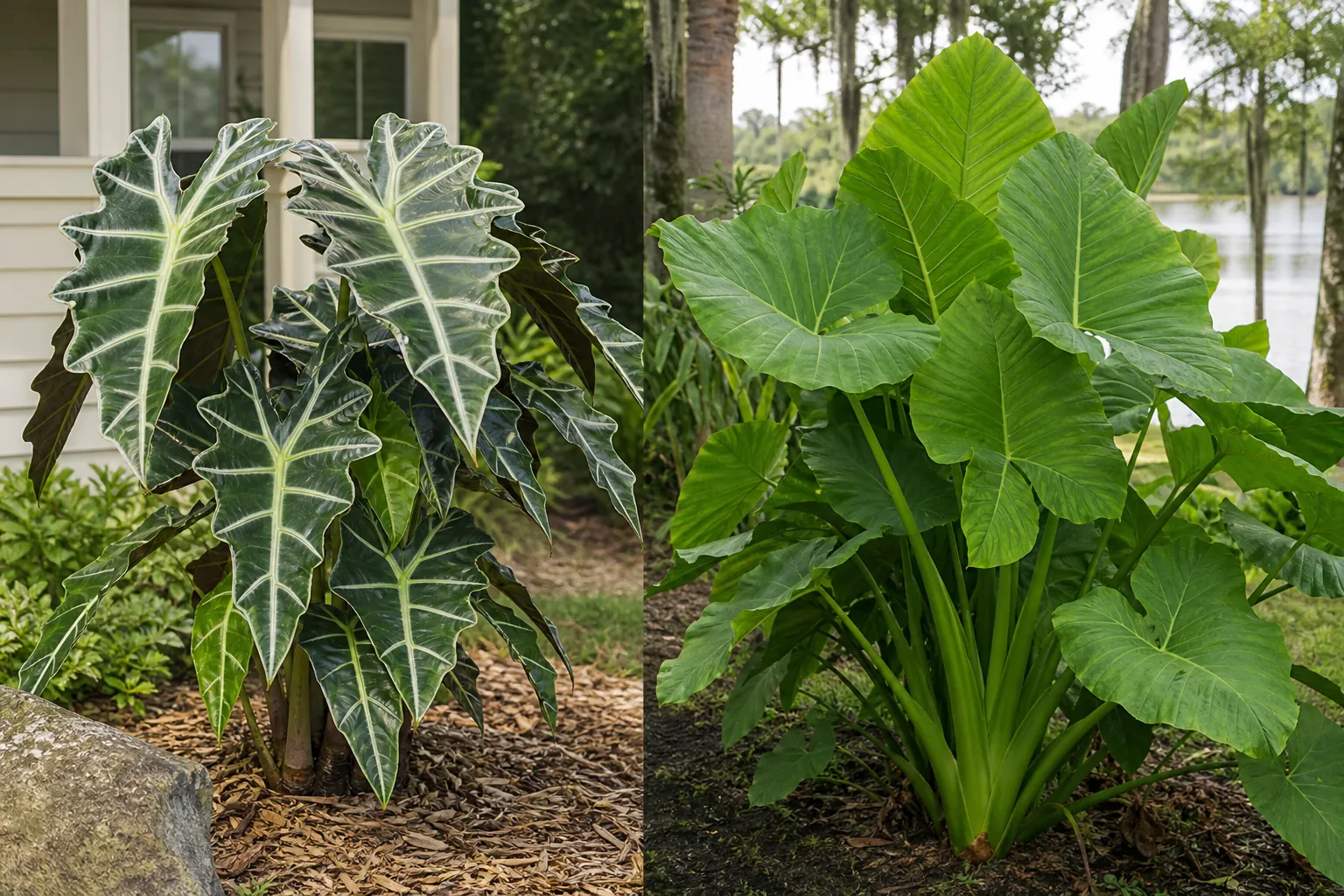
Alocasia and colocasia belong to the aroid family, but they are separate genera. Both are commonly called elephant ears because of their large leaves. That shared nickname is useful for describing the look, but less useful when deciding where a plant should grow.
Many alocasias carry their leaves more upright, creating a vertical, architectural shape. Many colocasias hold leaves outward or downward, producing a broader, spreading effect. These are general tendencies, not dependable identification rules for every species or cultivar.
Leaf attachment can offer another clue. Colocasia leaf stalks generally attach to the underside of the leaf blade, inward from the edge. In many alocasias, the stalk attaches closer to the notch at the leaf base. A labeled plant is still a better starting point than guessing from appearance alone.
For buyers, the most important differences are practical:
- Many alocasias prefer evenly moist soil that drains well rather than soil that remains saturated.
- Many colocasias tolerate wetter conditions, although water needs vary by cultivar and growing setup.
- Some colocasias spread through runners or offsets, so their mature footprint can exceed the original planting space.
- Both groups contain plants with very different mature sizes, sun tolerances, and cold responses.
Ask for the botanical name and cultivar whenever possible. A compact alocasia for a sheltered container and a large landscape alocasia should not be treated as interchangeable purchases.
Match The Plant To Northeast Florida Conditions
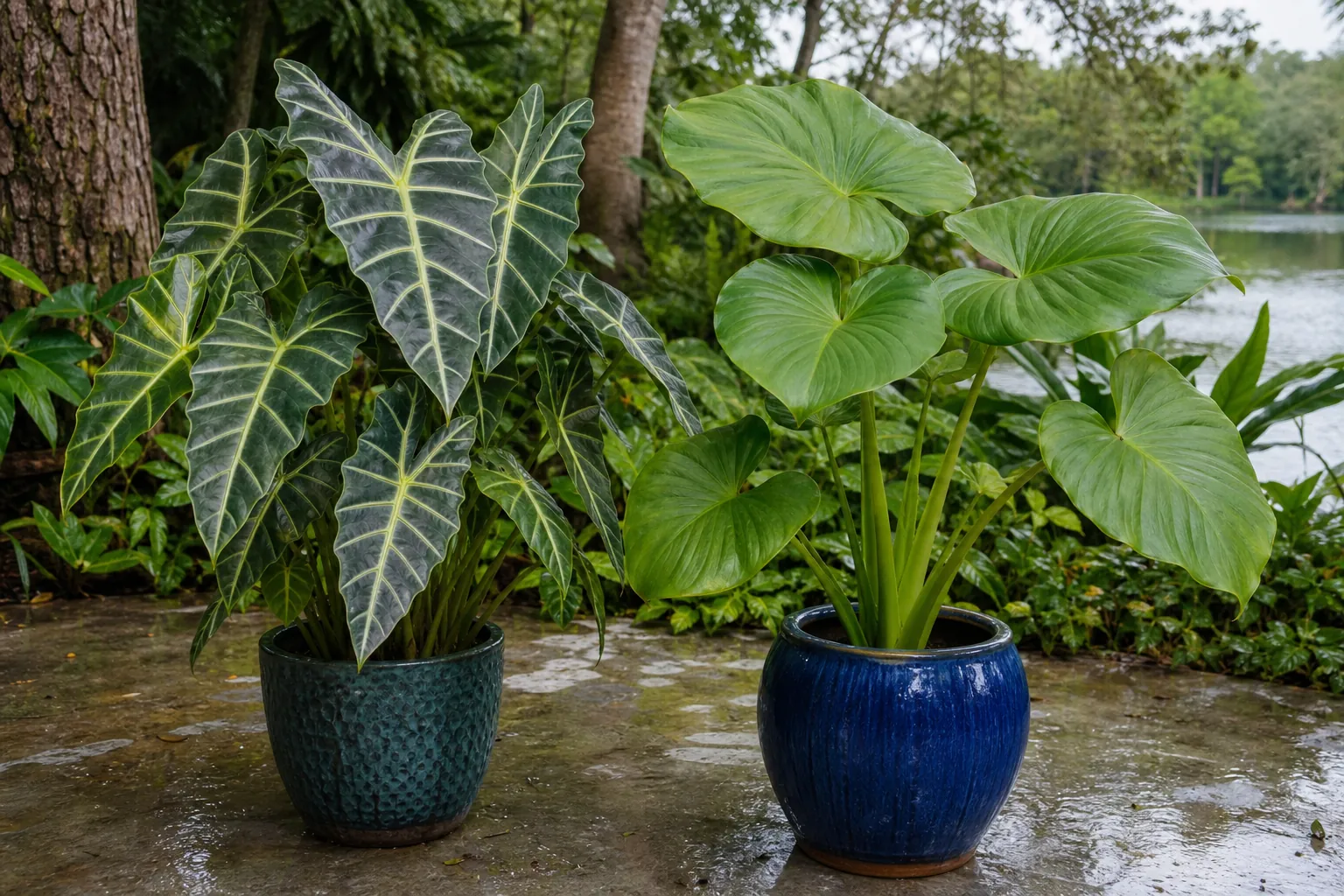
Northeast Florida combines humid summers with winter weather that can interrupt tropical growth. Conditions also change considerably between an exposed coastal property and a protected inland courtyard. Your specific planting spot matters more than a broad regional label.
Summer rainfall can leave low areas saturated while nearby sandy beds dry rapidly. Before choosing an elephant ear, observe the proposed location after a substantial rain. Persistent standing water calls for a different decision than a bed that drains quickly and becomes dry between showers.
For many alocasias, a sheltered bed with organic matter and reliable drainage is a useful starting point. For moisture-loving colocasias, a naturally damp location may work better, provided the selected variety suits those conditions. Do not assume every elephant ear can grow indefinitely in stagnant water.
Coastal wind deserves attention, too. Large leaves can tear or become ragged in exposed locations. A spot protected by a fence or established plants may preserve their appearance better than an open lawn edge. Avoid positioning foliage where it will constantly rub against walls or railings.
Winter exposure should influence your buying decision. A plant beside a sheltered building may experience different conditions from one in an open, low-lying yard. Neither setting eliminates freeze risk, so plan for possible foliage loss instead of expecting year-round perfection.
Choose Light Exposure Before Choosing Leaf Color
Dark leaves, pale veins, and unusually large foliage are appealing, but light suitability should come first. A dramatic cultivar will not perform well simply because its color matches the rest of the yard.
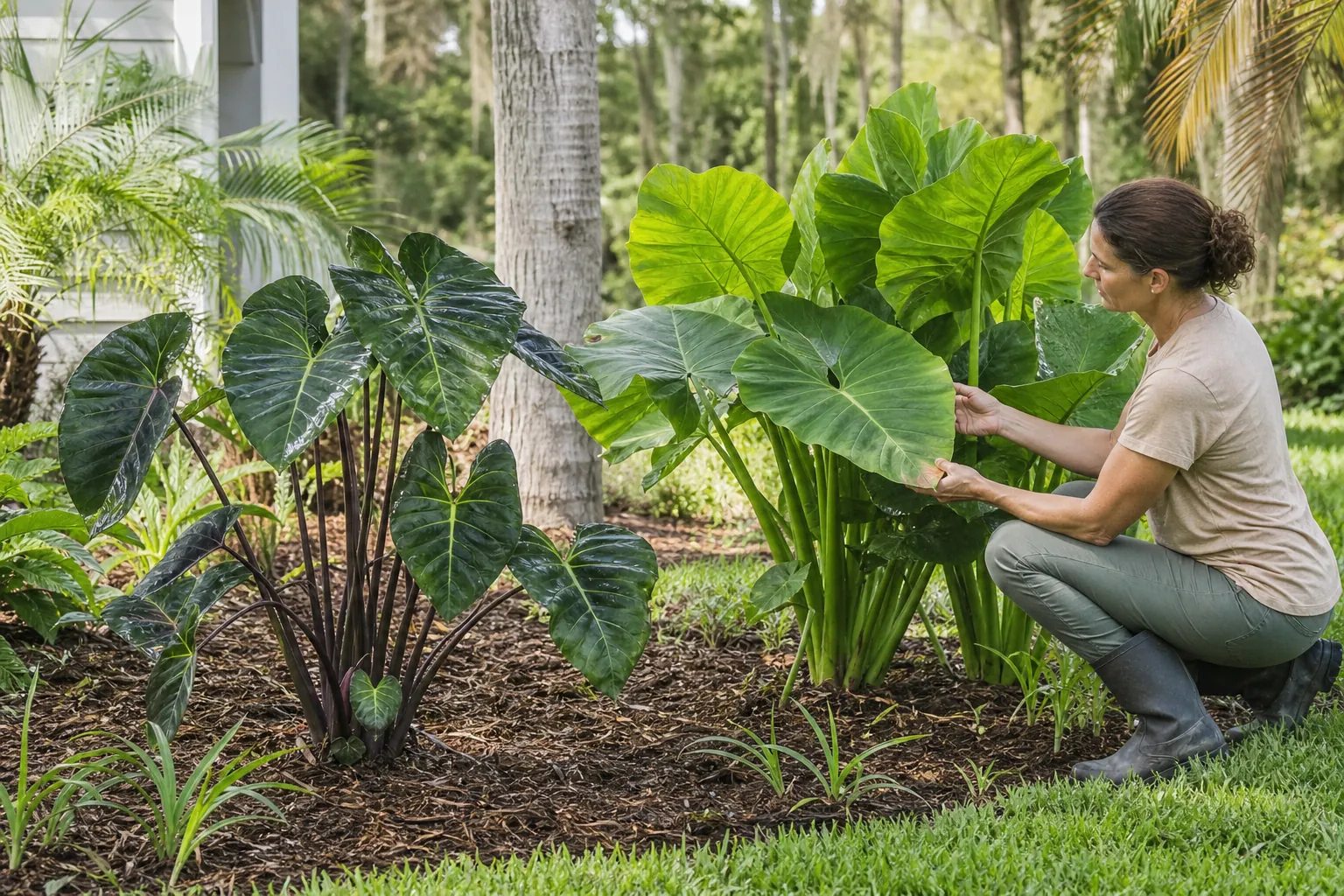
Many alocasias do well in bright filtered light or morning sun with afternoon protection. Some larger landscape types tolerate more sun when established and adequately watered. Smaller or more shade-adapted selections may scorch in strong afternoon exposure.
Colocasias often handle more sunlight when moisture is sufficient, but this is not universal. A sun-tolerant cultivar in consistently moist soil may perform differently from the same plant in a hot container that dries out daily.
Check the site's light at several times of day before buying. A location described as partial shade may receive gentle morning light, harsh late-afternoon sun, or shifting shade beneath trees. Those differences affect leaf condition and watering demands.
- Choose a cultivar with stated light requirements that match the actual site.
- Introduce a plant grown under shade to stronger sunlight gradually rather than moving it directly into all-day exposure.
- Leave enough room for mature leaves so neighboring plants do not crowd or heavily shade them.
- Reassess exposure seasonally because the sun's angle and nearby tree cover can change.
If the location is unusually sunny, dry, or windy, consider another tropical plant instead of forcing an elephant ear into an unsuitable spot.
Use Drainage And Water Needs To Narrow Your Choice
The clearest practical distinction between many alocasias and colocasias is how they respond to wet soil. Alocasias commonly need moisture without prolonged saturation. Many colocasias are better candidates for consistently damp growing conditions.
That does not make colocasia a universal solution for a drainage problem. Water depth, oxygen availability, temperature, and cultivar all matter. For a pond margin or aquatic container, confirm that the specific plant is suitable for that use.
In sandy Florida soil, organic matter can improve moisture retention around the roots. Incorporate it through the intended planting area rather than creating a small pocket with dramatically different soil. The goal is a usable root zone, not a planting hole that collects water.
Water newly planted elephant ears attentively while roots establish, then adjust to rainfall and soil moisture. Check beneath the surface instead of relying only on how the top layer looks. A dry-looking surface can cover wet soil, particularly in containers.
Drooping leaves do not automatically mean the plant needs more water. Heat, transplant stress, root damage, and overly wet soil can produce similar symptoms. Check moisture and drainage before adding another soaking.
A thin organic mulch layer can help moderate moisture loss in a bed. Keep mulch away from direct contact with the crown and avoid burying growing points. During cool weather, reduce watering as growth slows and the soil takes longer to dry.
Plan For Mature Size, Spread, And Safe Placement
An elephant ear that looks manageable in a nursery pot may become a substantial plant. Buy according to the labeled mature height and spread, not the size of the specimen on purchase day.
Upright alocasias can provide a strong focal point beside a patio or behind lower foliage. Broad colocasias can create a lush mass, but spreading selections need room and observation. Growth habits vary within both groups, so confirm whether the chosen plant forms a restrained clump or produces runners.
Leave clearance beside paths, doors, hose connections, and utility access points. Wet leaves can be heavy, and mature foliage may extend well beyond the crown. Crowded placement can make ordinary access inconvenient even when the plant is healthy.
Some elephant ears can spread beyond their intended area. Check the current UF/IFAS Assessment and relevant local guidance for the exact species before buying or planting, especially near wetlands, drainage channels, or natural areas. Do not discard unwanted plants or plant fragments in those locations.
Alocasia and colocasia contain calcium oxalate crystals that can irritate skin and cause significant irritation if chewed. Keep them away from pets and children who may mouth foliage. Wear gloves when handling damaged stems or dividing plants, and wash your hands afterward.
Do not treat ornamental elephant ears as food plants. Although certain colocasias have traditional food uses after specific preparation, an ornamental purchase is not a safe basis for harvesting or eating.
Buying And Planting Elephant Ears Yourself
Before shopping, write down your available space, daily light exposure, and typical soil moisture. Decide whether you want a container specimen, a single focal plant, or a group. This makes it easier to compare plants based on fit rather than leaf size alone.
Look for firm growth, healthy emerging leaves, and a container that drains. A few older blemished leaves are not necessarily a problem, but persistent wilting, soft tissue, or obvious pest activity deserves closer inspection.
Ask how the plant has been grown. A specimen raised under protective shade may need time to adapt to a brighter yard. Also confirm the cultivar's expected size, cold sensitivity, and tendency to spread.
- Prepare the planting area before the plant arrives so it does not sit unnecessarily in an exposed location.
- Check for underground utilities before digging, and choose a spot clear of essential access areas.
- Plant a potted specimen at approximately its existing soil level unless its growing instructions specify otherwise.
- Water the root zone after planting, then monitor moisture rather than following an inflexible daily schedule.
- Leave space between plants based on their expected mature spread.
Instructions for dormant corms differ from instructions for established potted plants. Follow guidance for the particular type rather than applying one planting depth to all elephant ears.
For containers, use drainage holes and a suitable potting mix rather than heavy yard soil. Choose a stable pot that can support the mature foliage. Large leaves catch wind, making a lightweight, top-heavy container vulnerable to tipping.
Care Through Summer Growth And Winter Slowdowns
During active growth, elephant ears need consistent attention to water and nutrition. Use a fertilizer appropriate for the plant and follow its label. More fertilizer does not compensate for poor drainage, insufficient light, or damaged roots.
Inspect leaves regularly, including their undersides. Spider mites, aphids, and other pests can affect elephant ears, particularly stressed plants. Identify the problem before selecting a treatment, and follow any product's labeled use and safety directions.
Remove badly damaged or declining leaves yourself with clean tools when appropriate. Do not remove healthy foliage simply because one older leaf is yellowing. Individual leaves naturally age, and the overall pattern matters more than a single blemish.
Cool weather can slow growth, and frost or freezing temperatures may damage foliage. Survival and recovery depend on the species, cultivar, root conditions, and severity of exposure. Avoid assuming that a plant will return simply because another elephant ear survived nearby.
- Move manageable containers to a protected location before forecast cold when practical.
- Use an appropriate frost cloth over outdoor plants, supporting it where necessary and securing it near the ground.
- Reduce watering when growth slows while avoiding prolonged, complete drying of plants that still require moisture.
- Wait until cold damage is clear before making decisions about affected growth.
For an uncertain cultivar, consult UF/IFAS Extension guidance on identification and cold care. Local advice is especially useful when deciding whether a plant belongs outdoors year-round or should remain movable.
Using Coquina Shell Around Tropical Plantings
Coquina shell can provide a contrasting surface beside tropical foliage, but it should not be treated as a substitute for suitable soil. Elephant ear roots still need the right combination of moisture, drainage, and organic matter.
Keep shell out of planting holes and away from crowns. Consider using it in a separate decorative area or path rather than as the main surface immediately around moisture-sensitive roots. Edging can help keep shell from migrating into planted soil.
Shell contains calcium carbonate and can influence soil chemistry over time. If soil pH is a concern, test the soil and seek recommendations before placing shell extensively around plants with particular pH needs.
Plan the shell area's dimensions and intended depth before ordering. Measure irregular spaces in smaller sections, and account for existing roots, drainage routes, and access points. Ask Tropical Yards about available coquina shell and the ordering information needed for your project.
For a DIY project, prepare the receiving area and arrange your own tools or separate labor before delivery. Dump trailer delivery brings material to an agreed, accessible location; it does not include spreading shell, planting, or yard preparation.
Plan Your Order And Dump Trailer Delivery
Tropical Yards offers tropical plant sales, including palm trees, hibiscus, bougainvillea, ferns, and other tropical plants, along with coquina shell sales. Dump trailer delivery is available from St. Augustine to Daytona Beach. Confirm current plant availability and delivery details when ordering.
Describe the delivery location clearly, including driveway width, gates, overhead branches, surface conditions, and potential obstructions. Ask what access and clearance are required rather than assuming a trailer can reach a backyard or narrow side passage.
Agree on a receiving or unloading location before delivery. Keep the area clear, and consider how you will move plants or shell from that point to the project area. Protect access to vehicles, doors, and utilities.
If plants arrive before you can plant them, place them in suitable light and check container moisture. Avoid leaving shade-grown foliage in strong sun or allowing pots to sit in standing water.
For questions about tropical plant availability, coquina shell, or dump trailer delivery from St. Augustine to Daytona Beach, call Tropical Yards at 772-267-1611. Bring your measurements and site observations so you can discuss a supply order that fits your DIY project.
Call 772-267-1611 to talk through next steps.