Boston fern vs macho fern in Florida: which should you buy?
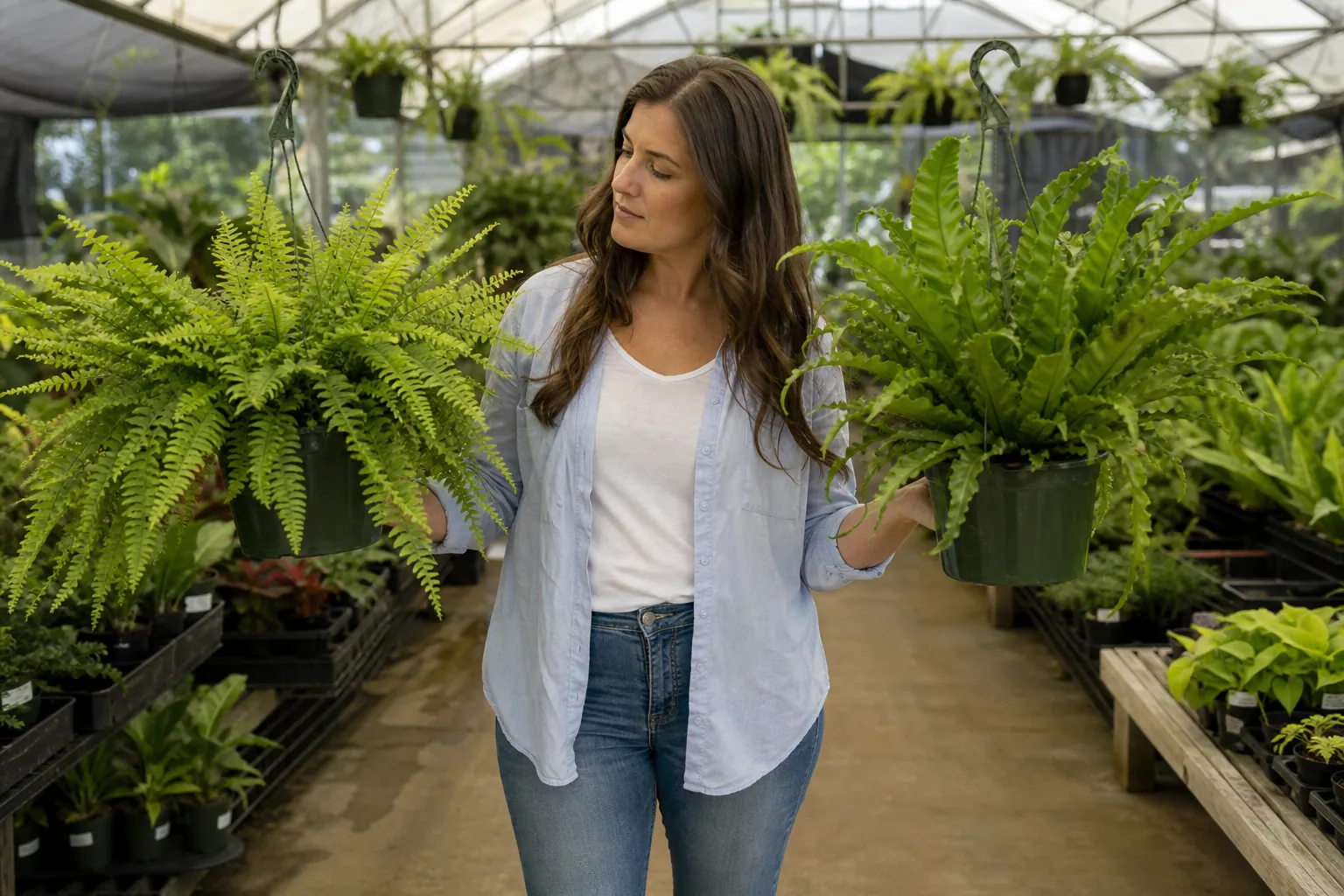
A fern can soften a shaded porch, fill a large container, or bring leafy texture beneath taller tropical plants. In Florida, Boston ferns and macho ferns are both familiar choices, but they are not interchangeable. Their size, growth habit, and watering needs can make one a better fit for your space than the other.
If you are comparing boston fern vs macho fern florida options before buying, start with the mature plant rather than the nursery pot. A compact-looking fern can eventually crowd a walkway or outgrow a hanging basket. Matching the plant to its light, root space, and everyday care makes the decision easier.
Tropical Yards supplies tropical plants and coquina shell, with dump trailer delivery from St. Augustine to Daytona Beach. This guide focuses on choosing plants, planting them yourself, and planning a practical supply order.
Boston Fern And Macho Fern: The Main Differences
Boston fern generally refers to cultivars of Nephrolepis exaltata, especially the familiar arching forms sold for hanging baskets. Macho fern is commonly sold as Nephrolepis biserrata. Both are sword ferns, but macho fern typically develops larger, broader fronds and a more substantial overall presence.
Plant labels matter. Fern names are sometimes used loosely in retail settings, and different Boston fern cultivars can vary in size and texture. Ask which plant you are buying and check its expected mature dimensions before choosing a container or bed location.
- Boston fern usually suits hanging baskets, smaller porch containers, and spaces where finer-textured foliage is desirable.
- Macho fern usually suits large pots and roomy shaded beds where its long fronds have space to spread.
- Both prefer moisture that is reasonably consistent, but neither benefits from roots sitting in stagnant water.
- Both generally perform best with protection from intense afternoon sun, especially during Florida's hottest months.
- Both need room for air movement, access for watering, and occasional removal of damaged fronds by the homeowner.
Think of Boston fern as the lighter, more delicate-looking option and macho fern as the larger visual anchor. Neither is automatically better. The right choice depends on how much space and attention you can provide.
Choose By Mature Size, Not Nursery Size
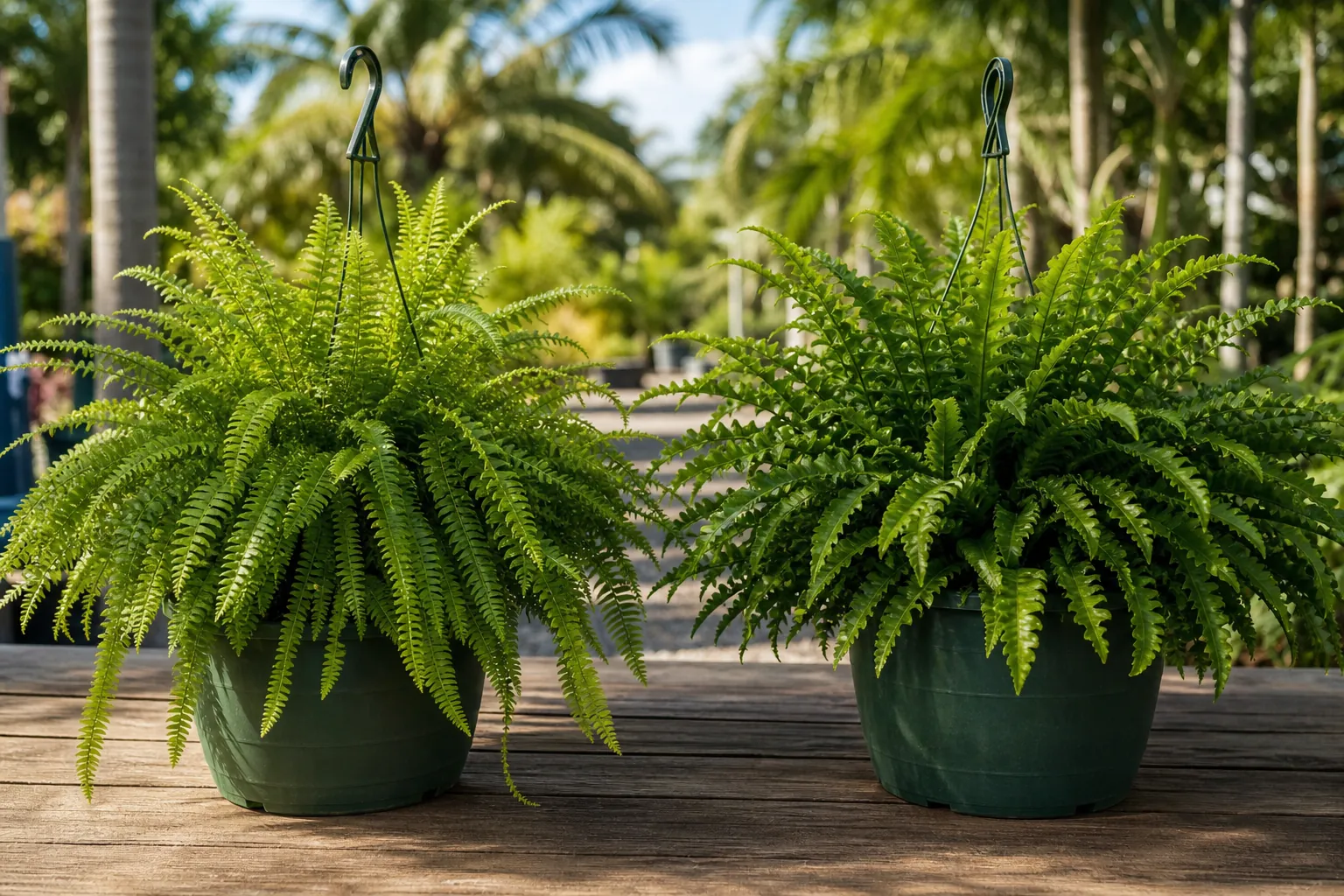
A Boston fern often stays within a smaller footprint than a macho fern, although vigorous plants can still become quite full. Its arching fronds look natural spilling over a basket or raised pot. This makes it useful where you want foliage above ground level without a massive container.
Macho fern can develop fronds several feet long and may spread several feet across in favorable conditions. A small nursery specimen can therefore be misleading. Leave room around it so the mature fronds do not constantly brush people, doorways, or neighboring plants.
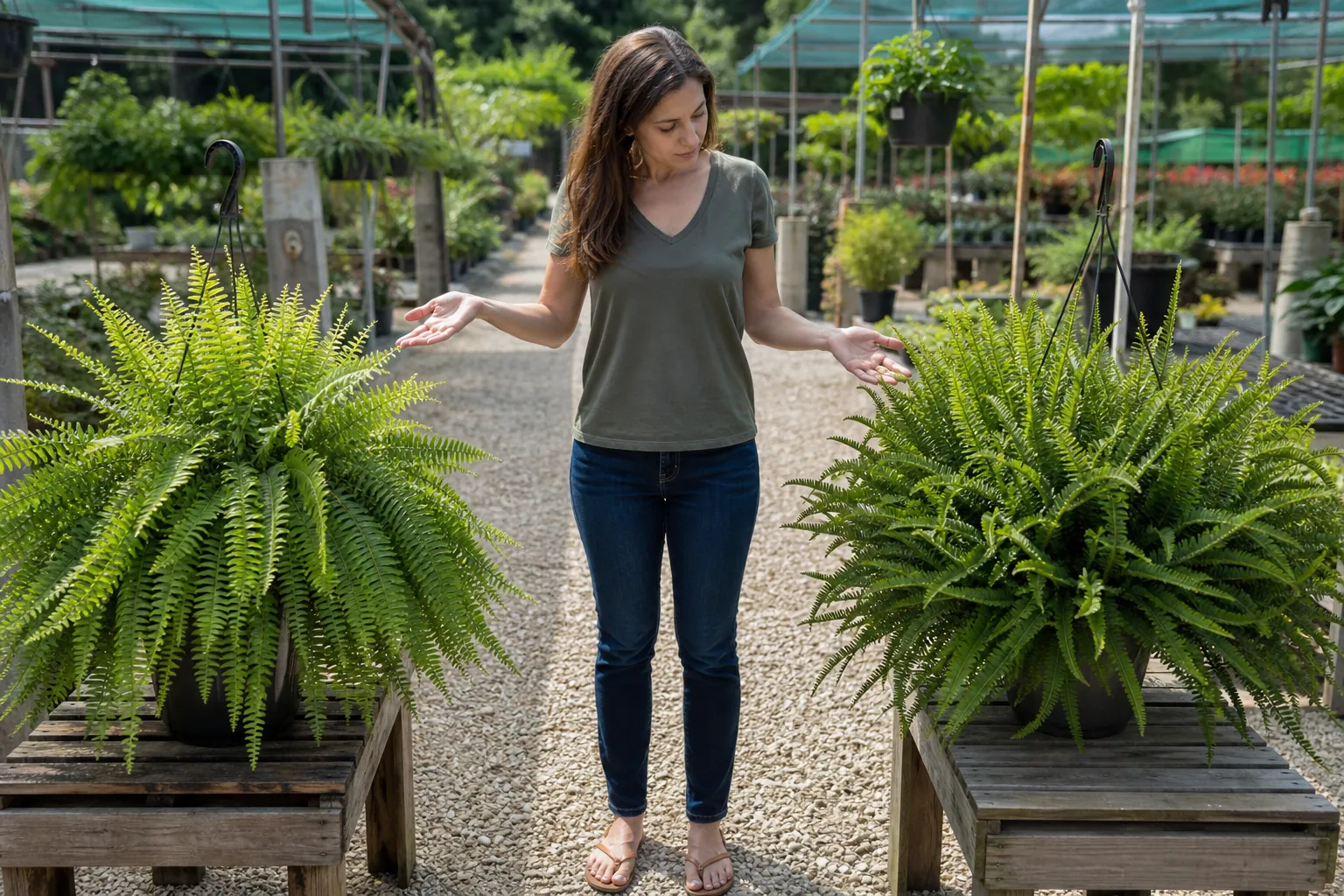
For either fern, measure the usable area rather than the entire bed. A narrow strip between a wall and a sidewalk may have enough soil but insufficient room for arching foliage. Similarly, a porch corner may fit a pot while leaving too little clearance for a full-grown plant.
- Choose Boston fern when you want a hanging display that remains easier to lift, rotate, and inspect.
- Choose macho fern when a large container or generous bed needs a strong foliage feature.
- Keep either fern back from frequently used paths so fronds are less likely to be bent or broken.
- Allow enough access to reach the soil when watering instead of relying on wetting the foliage alone.
In beds, both types can expand through runners under favorable conditions. Inspect their edges periodically and decide whether spreading growth suits your space. A container is often the simpler choice when you want a clearly defined footprint.
Florida Light, Heat, Wind, And Cold
Bright filtered light is a useful starting point for both ferns. An open porch, a shaded courtyard, or a bed beneath a high tree canopy can provide enough light without exposing fronds to the harshest sun. Dense shade may reduce fullness, while excessive sun can scorch or bleach foliage.
Gentle morning sun may be workable, depending on the site and how the plant was grown. Afternoon exposure is more demanding because heat and strong light occur together. Do not assume that a fern tolerates a location simply because another tropical plant thrives there.
Acclimate a newly purchased plant gradually if its destination is brighter than its previous growing conditions. Watch for fading, dry patches, or crisp edges. Moving a container into more protection is easier than correcting an unsuitable location after planting in the ground.
Florida humidity does not eliminate watering needs. Hanging baskets exposed to moving air can dry rapidly, and a covered porch may receive no useful rainfall. Wind can also tear or dry fronds, making a sheltered placement especially valuable near the coast.
Cold exposure varies across Florida. Along the St. Augustine to Daytona Beach corridor, winter cold snaps can damage tender fern foliage. Keep container plants movable where practical, and have a sheltered location ready when freezing weather is forecast. In-ground plants may suffer damage even where summers are ideal.
Salt spray is another consideration on exposed coastal properties. Avoid treating either fern as a first-line plant for direct ocean wind and salt exposure. A protected courtyard or porch may offer much better growing conditions than an open seaside bed.
Watering And Drainage: The Biggest Everyday Considerations
Both Boston and macho ferns prefer evenly moist root zones. That does not mean watering on a rigid daily schedule. Check the growing medium and respond to actual conditions, including heat, wind, rainfall, pot size, and drainage.
For containers, feel the surface and just beneath it. Water when the upper layer begins to dry, before the entire root ball becomes parched. Apply enough water to moisten the root zone, and let excess drain away. Empty saucers that retain water around the pot's base.
Boston ferns in hanging baskets can be particularly demanding because baskets have limited growing medium and greater exposure to air. A macho fern in a large pot may have more moisture reserve, but its larger canopy can also use substantial water. Size alone does not determine watering frequency.
Florida's sandy soils often drain quickly, while compacted areas or poorly drained pockets may stay wet after rain. Test the intended site before planting. If water persists around the root zone, consider a well-drained container instead of forcing a fern into unsuitable ground.
- Check sheltered pots after rain because roof cover may prevent their soil from receiving any water.
- Water the growing medium directly rather than assuming damp fronds mean hydrated roots.
- Use containers with open drainage holes, and check that roots or debris have not blocked them.
- Keep an eye on plants during hot, windy periods because their watering needs may change quickly.
- Avoid letting pots stand in water, even when the foliage appears thirsty.
Brown fronds do not identify a single problem. Dry roots, excessive moisture, sun exposure, cold, and ordinary aging can produce overlapping symptoms. Check the site and root-zone conditions before changing several care practices at once.
Buying A Healthy Fern And Choosing A Container
Look for a plant with healthy new growth, a reasonably full crown, and fronds appropriate to its variety. A few older brown fronds are not unusual, but extensive decline deserves closer inspection. Examine the foliage and pot surface rather than judging only the plant's silhouette.
Check for insects, sticky residue, unusual spotting, or clusters of damaged fronds. If you can inspect the root ball without harming the plant, look for roots that are not extensively soft or decayed. Ask about recent watering and the light conditions where the plant has been held.
Choose a container that accommodates the current root ball with some room for growth. An oversized pot full of slowly drying medium can make moisture management harder. For a large macho fern, also consider stability: a lightweight, narrow pot may be awkward once long fronds extend beyond its rim.
- Use a draining potting mix formulated for containers rather than filling a pot with dense yard soil.
- Confirm that hanging hardware can support the basket, wet growing medium, and mature plant.
- Choose a pot you can realistically move if winter protection will be necessary.
- Leave space around a large container so you can inspect the plant and reach its soil.
Before ordering from Tropical Yards, describe the light exposure, available space, and whether the fern will go in a basket, pot, or bed. Ask about current fern availability and plant sizes rather than assuming every variety is always in stock.
Planting Your Fern Yourself
Prepare the destination before taking the fern out of its nursery pot. For containers, have the pot, draining mix, and water ready. For beds, check drainage and clear enough space to handle the root ball without crushing nearby plants.
Slide the plant out gently. If roots are tightly circling the outside, loosen them carefully without tearing apart the entire root ball. Position the fern at approximately the same depth at which it grew in its nursery container. Do not bury the crown beneath extra soil.
Backfill around the roots, settle the medium gently, and water thoroughly. Avoid packing soil so tightly that drainage and air movement are restricted. In a container, leave enough space below the rim to water without immediate overflow.
For an in-ground fern, a light organic mulch can help moderate soil moisture, but keep mulch away from the crown. Do not pile material over new shoots. Watch moisture closely while the plant establishes, particularly if the surrounding soil dries faster than the original root ball.
Give a new fern time to adjust before making aggressive changes. Some damaged fronds from transport or handling can be removed with clean tools. Major division or heavy cutting is better reserved for a healthy plant when conditions support recovery.
Routine Care And Common Problems
Fern care is mostly observation and small adjustments. Remove dead or badly damaged fronds near their base without cutting into the crown. Rotate porch containers when uneven light causes growth to lean strongly in one direction.
Feed conservatively with a product labeled for the intended use, following its directions. More fertilizer is not a shortcut to healthier growth. Excess fertilizer salts can damage roots, particularly in pots that repeatedly dry out or drain poorly.
If a fern becomes crowded or dries unusually fast despite thorough watering, inspect its roots and container size. Repotting or division may help a healthy, root-bound plant. Use clean tools and give each division a viable portion of roots and growing points.
- If frond tips turn crisp, check for dry growing medium, strong wind, excess sun, or fertilizer buildup.
- If foliage yellows while the soil stays wet, investigate drainage before adding more water.
- If only older outer fronds decline, distinguish normal aging from a problem affecting new growth.
- If pests appear, identify them before choosing a treatment and follow the product label carefully.
Neither fern is a no-care solution. If you travel frequently or cannot check hanging baskets during hot weather, reconsider that placement. A larger, accessible container in protected light may be more manageable, though it still needs regular attention.
Using Coquina Shell Near Ferns
Coquina shell can provide a contrasting surface in a Florida yard, but it should not be treated as fern potting medium or a universal soil amendment. Fern roots need suitable growing conditions regardless of the decorative material nearby.
Because shell is calcium carbonate, it can influence soil pH over time. The effect depends on the material, soil, and exposure. Ferns generally prefer slightly acidic growing conditions, so avoid mixing coquina shell directly into their root zones without understanding your soil.
A practical option is to keep ferns in draining containers beside a separate coquina shell area. This separates the growing medium from the shell while preserving the visual contrast. Keep shell away from fern crowns and avoid covering container drainage openings.
Before ordering shell, measure the area and decide on the intended depth. Note edging, slopes, access, and nearby plants. Ask Tropical Yards about available material and quantity planning rather than estimating from appearance alone.
Planning Plant And Shell Delivery
Tropical Yards offers tropical plant sales, including palm trees, hibiscus, bougainvillea, ferns, and other tropical plants, plus coquina shell sales. Dump trailer delivery of plants and coquina shell is available from St. Augustine to Daytona Beach.
When planning delivery, explain your address, access conditions, and intended receiving area. Mention narrow gates, overhead branches, tight turns, slopes, or soft ground so delivery arrangements can be discussed before the order is finalized.
Prepare a shaded holding area for ferns and have water available. Decide separately where shell can be received without blocking walkways or burying vegetation. Do not assume delivered material will be spread or plants placed in their final growing locations.
Tropical Yards is a supplier, not an installation, design, or yard-maintenance service. Plan your own planting and material handling accordingly. To discuss available ferns, coquina shell, and delivery details, call 772-267-1611.
Which Fern Is The Better Fit?
Choose Boston fern for finer texture, hanging baskets, and smaller-scale container displays. Choose macho fern when you have generous room and want a larger foliage feature. For either choice, protected light, dependable watering, and good drainage matter more than the name alone.
Measure first, evaluate the site, and buy a plant whose mature size fits your plans. That approach gives your DIY Florida planting a practical foundation without expecting either fern to thrive in conditions it does not suit.
Call 772-267-1611 to talk through next steps.