Choosing bromeliads for outdoor gardens in Northeast Florida
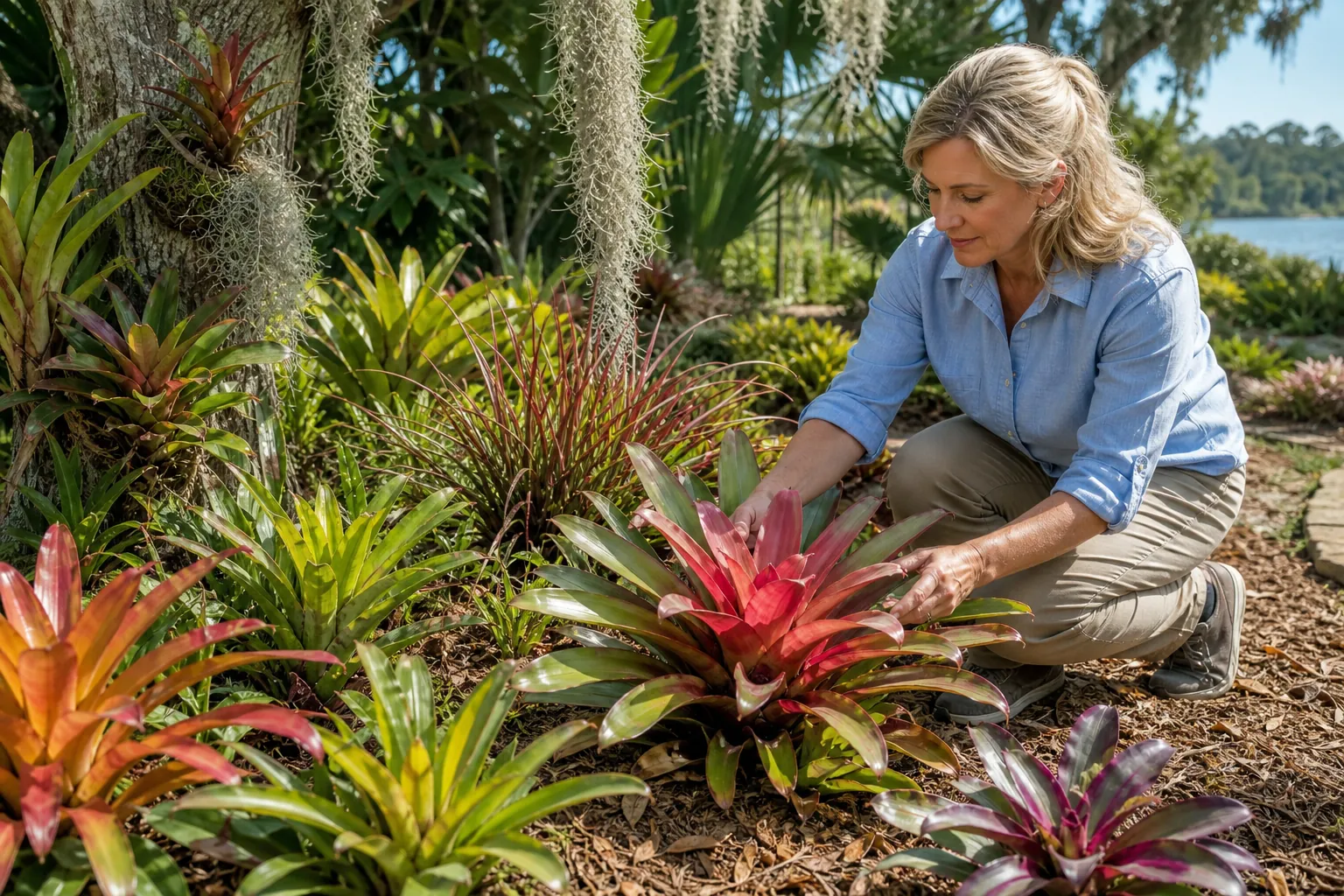
Bromeliads bring sculptural leaves, patterned foliage, and colorful accents to Florida gardens without requiring a large planting area. They can soften the edge of a shady bed, fill a sheltered courtyard container, or add interest beneath palms. In Northeast Florida, however, choosing a bromeliad involves more than finding an attractive leaf color. Winter temperatures, drainage, sun exposure, and the ability to protect plants during a freeze all matter.
If you are shopping for bromeliads for outdoor gardens in Northeast Florida, start with your actual growing conditions rather than a photograph of a tropical landscape. A protected coastal patio and an exposed inland yard can present very different challenges, even within the same region.
Tropical Yards is a plant and coquina shell supplier offering tropical plant sales and dump trailer delivery of plants and coquina shell from St. Augustine to Daytona Beach. This guide helps you evaluate bromeliads, prepare for a purchase, and handle planting and care yourself.
Understand Northeast Florida’s Growing Conditions
Northeast Florida offers a long growing season, humid summers, and periods of heavy rainfall. It also experiences cold fronts and occasional freezing temperatures. Those winter events are important because many bromeliads commonly sold for tropical displays are not dependable outdoor plants in every local setting.
Do not assume that a plant described as suitable for Florida will tolerate your yard through winter. Florida spans several growing climates. Ask for the botanical name, cultivar when available, and specific cold-tolerance information before deciding whether a plant belongs permanently in the ground.
Your yard’s microclimates also influence the decision. A sheltered location near a building may receive less wind than an open lawn. An area beneath a tree canopy may experience less radiational cooling, although neither setting guarantees protection during a hard freeze.
- Observe whether the proposed bed receives direct afternoon sun or mostly filtered light.
- Check whether water collects after rainfall or drains away promptly.
- Identify exposed areas where winter wind can reach plants without interruption.
- Choose containers if you need the option to move tender plants into a protected location.
Salt exposure deserves attention near the coast. Windborne salt and direct saltwater intrusion are different problems, and bromeliad tolerance varies. For an exposed coastal site, ask about the particular plant rather than treating all tropical foliage as salt tolerant.
Choose Bromeliads By Growth Habit, Not Just Color
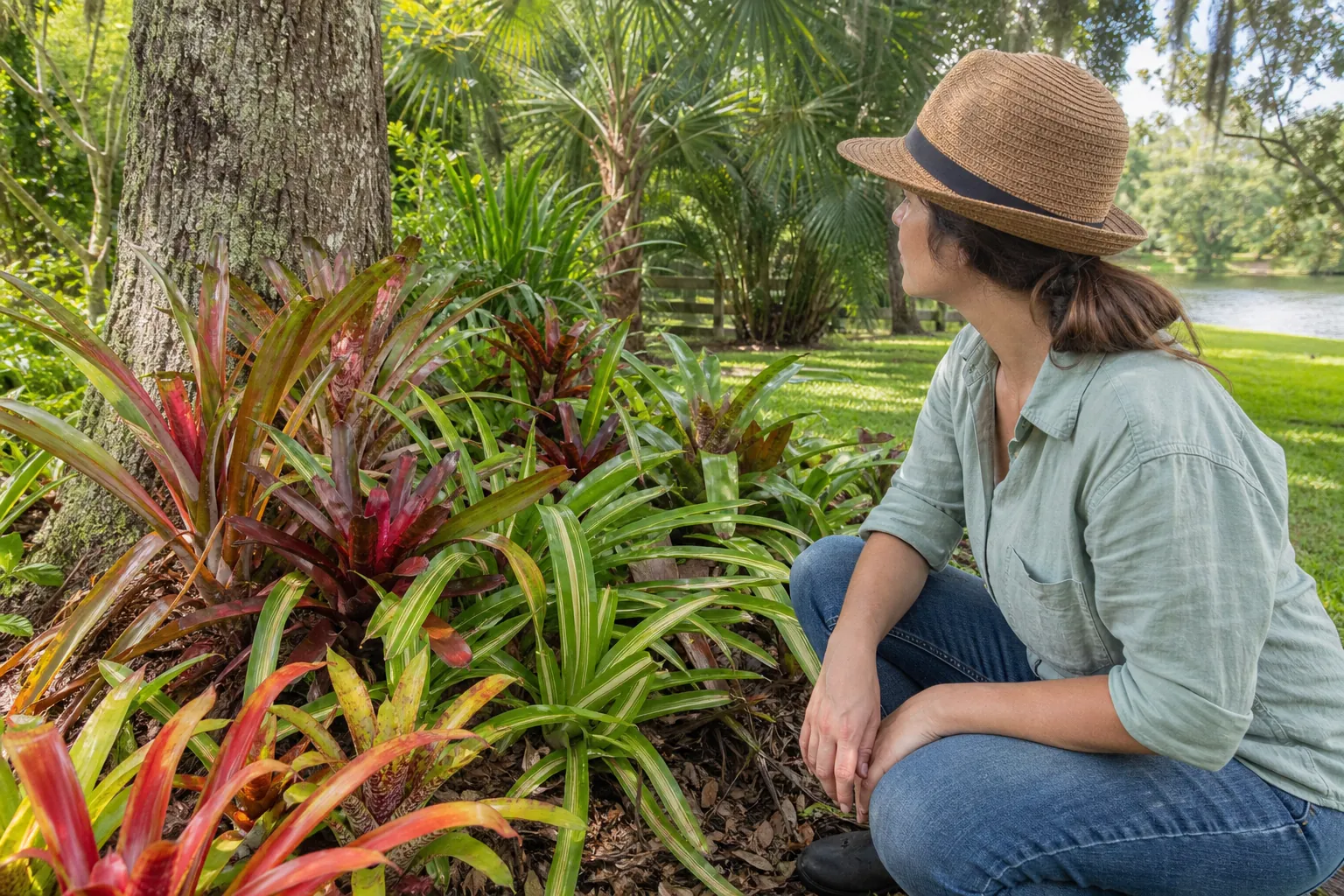
Bromeliads include plants with very different needs. Some grow naturally attached to trees, while others are terrestrial and grow in soil. Many form central cups that collect water, but not every bromeliad should receive identical watering or planting treatment.
Neoregelia varieties are often selected for colorful rosettes and foliage patterns. Many suit bright filtered light, although their ability to handle direct sun depends on the selection and acclimation. Their mature width matters when planning a bed because offsets can eventually form a broader clump.
Some Aechmea species and selections have sturdy leaves and pronounced flower structures. Their light preferences and cold tolerance differ considerably. A familiar genus name is not enough information to confirm suitability for an exposed Northeast Florida garden.
Guzmania and Vriesea types often appear in colorful retail displays. Many prefer sheltered conditions and can be more practical as movable container plants than permanent outdoor subjects where freezes occur. Do not confuse an attractive indoor flowering plant with a cold-hardy landscape choice.
More sun-tolerant terrestrial types, including certain Dyckia, can serve a different role. They generally need excellent drainage, and many have sharp leaf margins. Position spiny plants away from paths, children’s play areas, and places where you routinely reach into a bed.
Use these groups as starting points for questions, not universal planting instructions. Before buying, confirm mature size, light requirements, growth habit, and cold sensitivity for the exact plant. Ask Tropical Yards about current bromeliad availability rather than assuming a particular species or cultivar is in stock.
Match Light Exposure To The Plant You Buy
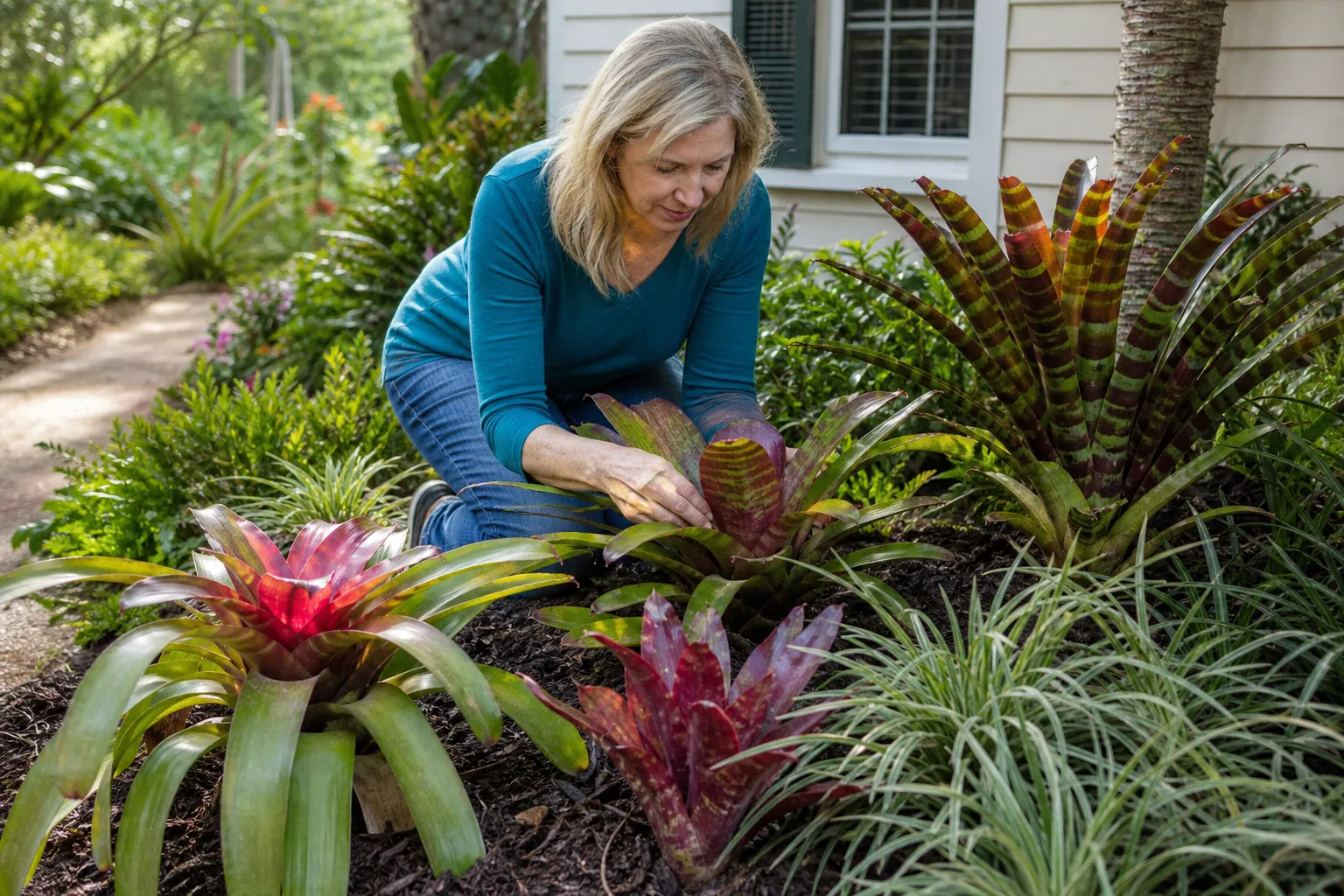
A bromeliad’s foliage can change noticeably with light exposure. Too little light may reduce color intensity in some selections, while excessive direct sun can cause bleaching or scorched patches. The right balance is species-specific and also depends on how the plant was grown before purchase.
Walk through the intended planting area in the morning, at midday, and in the afternoon. A bed that looks shady early in the day may receive intense western sun later. Seasonal changes in sun angle can also expose plants differently during winter and summer.
Bright filtered light is a useful starting condition for many foliage bromeliads, but it is not a rule for every type. Read the plant information and ask how much direct sun the selection can tolerate. Avoid moving a shade-grown plant straight into an exposed sunny bed.
- Introduce stronger light gradually when moving a plant from sheltered growing conditions.
- Watch for pale, dry patches that may indicate sun damage rather than normal color development.
- Keep enough space around rosettes for airflow instead of crowding them into a dense border.
- Check irrigation coverage so plants do not receive frequent spray simply because nearby turf needs water.
Light planning also helps with companion plants. Palms may eventually create shade, while bougainvillea generally needs strong sun to perform well. Group plants by compatible growing needs instead of combining them solely because they create a tropical appearance.
Prepare A Well-Drained Bed Or Container
Drainage is one of the most important practical considerations for outdoor bromeliads. A spot that stays soggy after summer rain can be unsuitable even if its light exposure is ideal. Roots and plant bases need conditions appropriate to the species, not persistently saturated soil.
Before planting, inspect the location after a substantial rain. Note standing water, runoff from roofs, and low spots beside hard surfaces. If drainage is poor, consider a container or a better-drained location rather than assuming a decorative surface layer will solve the problem.
For containers, choose pots with open drainage holes and a growing medium suited to the bromeliad’s growth habit. Many epiphytic types benefit from an airy mix containing coarse components, while terrestrial types may require a different approach. Ask for guidance specific to the plant you purchase.
Avoid oversized pots that hold more wet growing medium than the root system can use. Also avoid leaving pots in saucers full of water. Containers should be stable enough for windy weather and manageable enough to move if winter protection is part of your plan.
For in-ground planting, keep the plant at an appropriate depth and avoid burying the crown. Bromeliad roots can be relatively small, so handle them gently. If the plant is top-heavy, provide temporary support without packing wet soil tightly against the base.
Use gloves when handling plants with toothed leaf margins. Lay out the plants before digging so you can check mature spacing and access. Leave room to reach individual plants for inspection, watering adjustments, and future division.
Water And Feed Without Overdoing It
Bromeliad care is not the same as care for a thirsty flowering shrub. Water needs depend on the species, weather, growing medium, and whether the plant forms a water-holding cup. A rigid schedule can be less useful than regularly checking the plant and its surroundings.
During rainy periods, outdoor plants may receive ample moisture without additional irrigation. In containers under a roof, however, plants may dry out even while nearby garden beds are wet. Check both the growing medium and the plant’s condition before adding water.
For tank-forming bromeliads, follow species-appropriate guidance for water in the central cup. Refreshing cup water periodically can remove accumulated debris and reduce stagnation. Do not apply tank-watering advice to terrestrial bromeliads that do not use water in the same way.
Water held in rosettes can also create mosquito habitat. Inspect plants regularly and follow local mosquito-control guidance. If considering a mosquito-control product, confirm that its label permits the intended use and follow all directions.
- Keep growing media from staying continuously saturated unless the specific plant requires unusually moist conditions.
- Remove fallen leaves from rosettes gently so decaying debris does not accumulate.
- Use fertilizer conservatively and follow directions appropriate to the species and product.
- Avoid assuming that more fertilizer will produce better leaf color or stronger flowering.
Excess fertilizer can alter foliage appearance and encourage growth that does not suit the plant’s conditions. If a bromeliad looks stressed, review light, drainage, and recent weather before adding nutrients. Fertilizer does not correct cold damage or root problems caused by excessive moisture.
Plan For Cold Weather Before You Plant
Winter planning should be part of the purchase decision, not a reaction to the first freeze forecast. For tender bromeliads, a container that you can relocate may be the most practical choice. Large pots and extensive in-ground collections require more effort to protect.
Check forecasts for your specific location rather than relying only on a regional temperature estimate. Inland locations, low areas, and exposed yards can behave differently from sheltered coastal settings. Cold duration, wind, and plant condition can influence damage as well as the minimum temperature.
When frost protection is appropriate, use materials intended for that purpose and follow recommended practices. Covering plants before temperatures fall helps retain warmth from the ground. Avoid allowing plastic to rest directly against foliage, and secure coverings against wind.
For movable plants, choose a protected location with suitable light and temperatures. Avoid placing them beside heating equipment or in a dark storage area for extended periods. Reduce watering as appropriate when cooler conditions slow growth.
After a cold event, assess damage patiently. Brown foliage does not always reveal the condition of the entire plant immediately. Keep severely damaged tissue from becoming a persistent wet mass around healthy growth, but avoid aggressive cutting before you understand which portions remain viable.
Use Coquina Shell Thoughtfully Around Tropical Plants
Coquina shell can provide a textured surface for selected garden areas, borders, and paths. Tropical Yards sells coquina shell and offers dump trailer delivery within its St. Augustine to Daytona Beach delivery area. For a DIY project, decide how the material will function before ordering.
Coquina shell is calcium-carbonate based and can influence nearby soil chemistry, particularly over time. That matters when choosing plants sensitive to alkaline conditions. Do not assume every bromeliad or tropical companion plant will respond the same way to shell near its roots.
Consider separating shell paths from planting pockets when soil compatibility is uncertain. Keep shell away from the crown and avoid filling bromeliad cups with material during spreading. Shell should not be used as a substitute for correcting drainage problems beneath a bed.
- Measure the length and width of the area you want to cover before discussing material quantity.
- Choose an intended depth based on the project’s purpose and the material’s characteristics.
- Allow for edging if shell needs to remain separate from soil, lawn, or adjacent beds.
- Plan how you will move and spread the material after delivery.
Discuss the material’s current characteristics when ordering, including any questions about texture or suitability for your intended use. Wear gloves and appropriate footwear when handling shell. Keep delivery and spreading activities away from established plants that could be damaged by traffic or burial.
Buy Plants And Prepare For Dump Trailer Delivery
A useful shopping list includes more than plant names. Record your light exposure, available bed dimensions, container sizes, drainage conditions, and willingness to protect plants in winter. Photos of the intended area can help you explain your needs when asking about available plants.
Tropical Yards offers tropical plant sales, including palm trees, hibiscus, bougainvillea, ferns, and other tropical plants. Ask about current availability and the growing requirements of each selection. When combining plants, choose compatible light and moisture needs rather than expecting one watering routine to suit everything.
For dump trailer delivery of plants or coquina shell from St. Augustine to Daytona Beach, discuss access before finalizing your order. Mention narrow gates, low branches, driveway slopes, overhead obstructions, soft ground, and any restrictions affecting where a trailer can safely approach.
Confirm how plants will be handled at delivery and where shell can be unloaded. Keep the agreed receiving area clear of vehicles and other obstacles. Avoid selecting a shell drop location that blocks access to plants or requires repeated movement through a finished bed.
Have your own tools and help ready for the work that follows. Tropical Yards supplies plants and coquina shell with delivery; planting, spreading materials, and ongoing plant care remain your responsibility. Preparing pots, growing media, and a temporary shaded holding area can make delivery day easier.
Start With A Manageable Bromeliad Collection
A small group of carefully selected bromeliads is often more useful than a large purchase made before you understand the site. Start in a location you can monitor, observe how plants respond through summer rain and winter weather, and expand once you know which selections suit your conditions.
Many bromeliads produce offsets as part of their growth cycle. The parent rosette generally declines after flowering, while healthy offsets can continue the clump. Learn the appropriate separation timing for your plant before dividing it, and do not mistake normal post-flowering decline for a problem that requires heavy feeding.
For help with purchasing tropical plants, checking bromeliad availability, ordering coquina shell, or discussing dump trailer delivery from St. Augustine to Daytona Beach, call Tropical Yards at 772-267-1611. Bring your measurements and site observations so you can make a practical purchase for your own Northeast Florida garden.
Call 772-267-1611 to talk through next steps.