Which Landscape Lighting Fixture Materials Hold Up Best Near Florida's Coast?
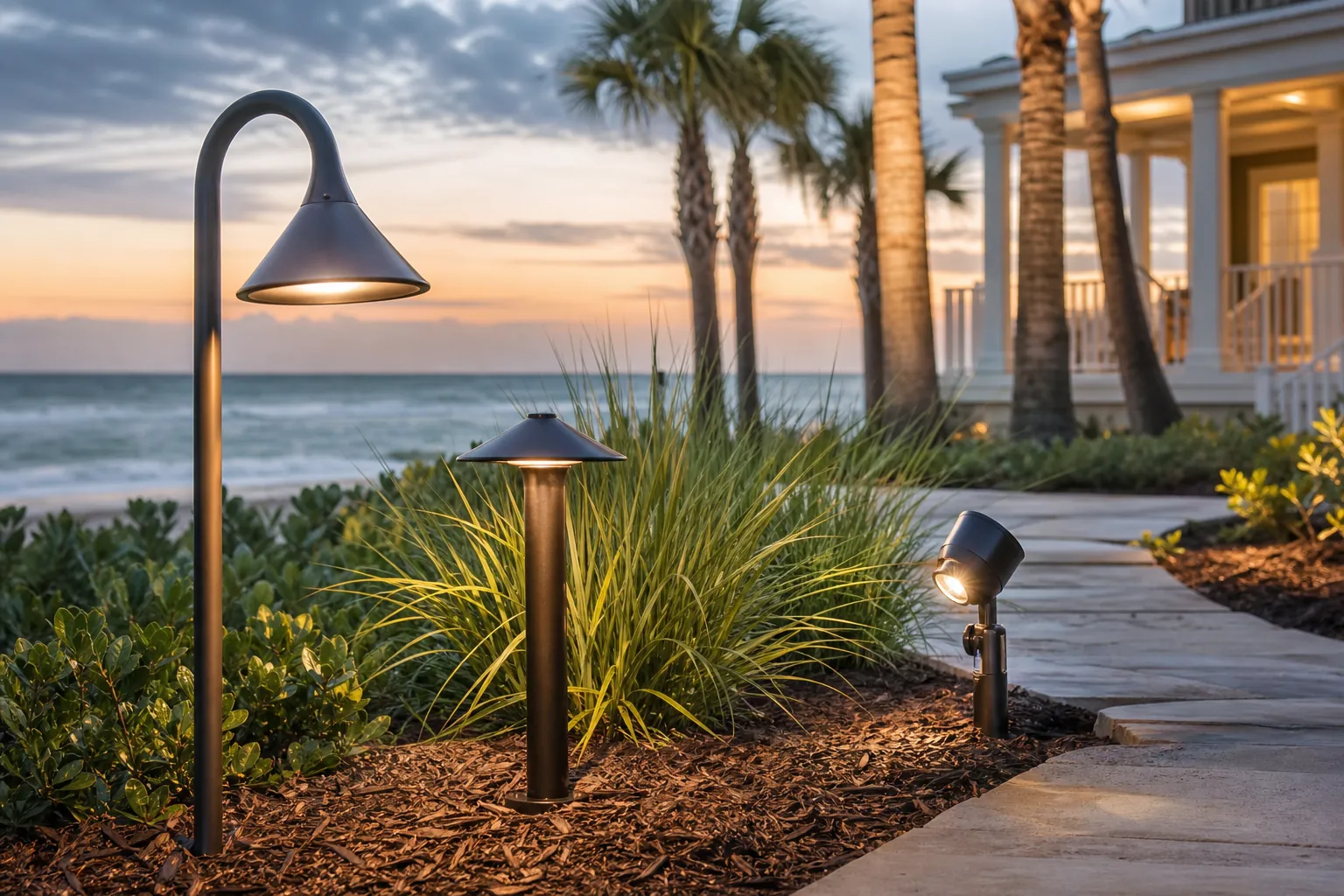
Choosing landscape lighting near Florida's coast requires more than comparing fixture shapes and finishes. Salt carried by air and water can settle on exposed metal, fasteners, seams, and electrical connections. Moisture, heat, irrigation, and debris add further stress. The best material depends on the property's exposure, the fixture's construction, the desired appearance, and the owner's willingness to perform routine care. Use the following points to compare options carefully before buying.
Start by Assessing the Property's Coastal Exposure
Not every Florida property faces the same conditions. A fixture near open water may receive more salt than one shielded by buildings or dense planting. Wind direction matters because salt can travel inland and collect on surfaces that rarely receive direct rain. Irrigation can also leave moisture or mineral deposits on fixtures, especially when sprinkler heads spray them repeatedly.
Walk the property and note where fixtures would sit. Look for low areas that hold water, exposed beds, roof runoff, sprinkler coverage, mulch buildup, and places where lawn equipment could strike a fixture. Then identify which locations are hardest to access for cleaning. A less expensive material may become a poor value if it needs frequent refinishing or early replacement.
Exposure also varies across one yard. Fixtures near a protected entry may have different material needs than lights along an open walkway. Treat each zone according to its conditions rather than assuming one choice automatically belongs everywhere.

Compare Brass and Copper for Long-Term Appearance
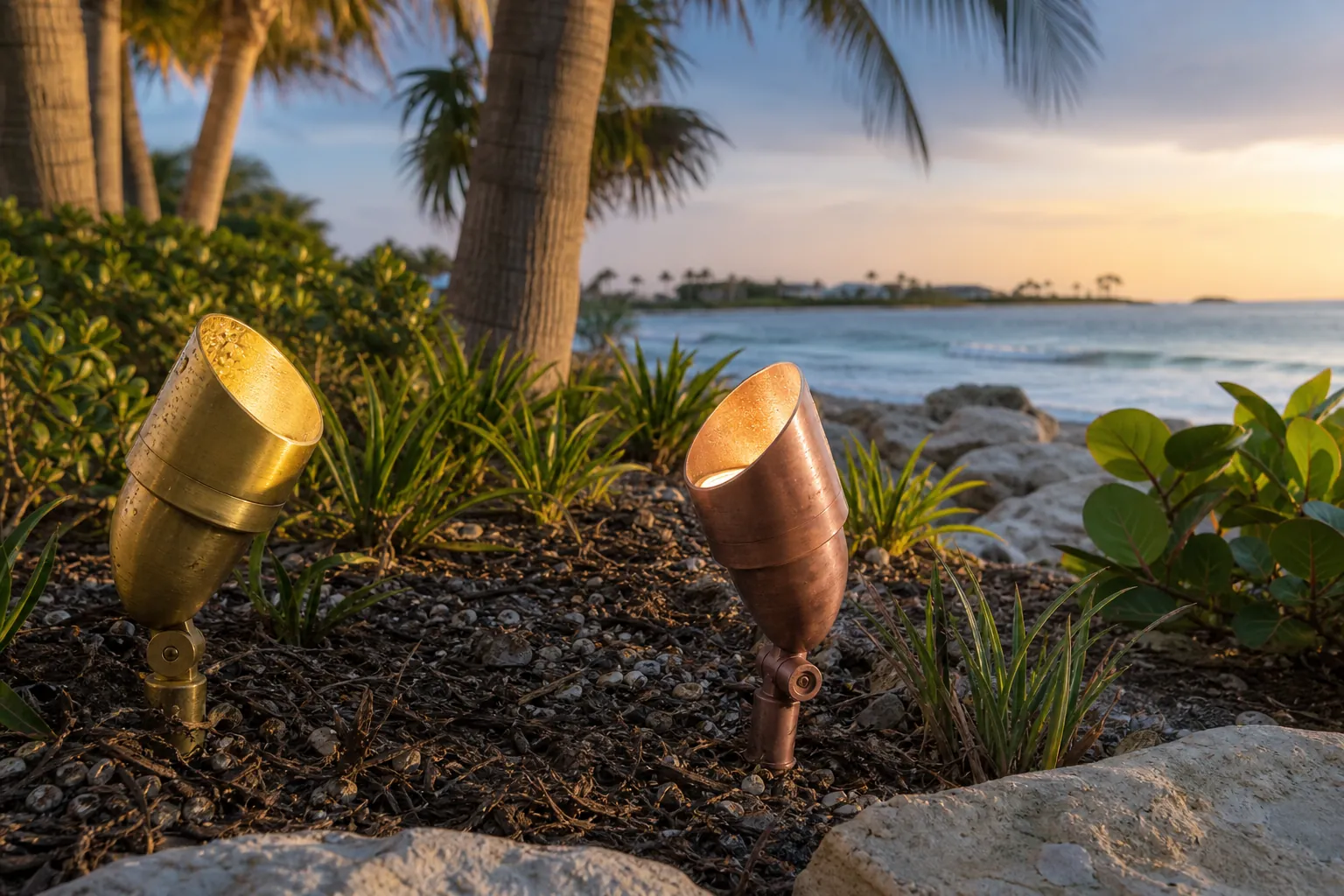
Brass and copper are common candidates when corrosion resistance and changing appearance are priorities. Both materials can develop a patina rather than retaining the bright look they had when new. Some homeowners value that natural, aged surface because it blends with planting beds and hardscape. Others may prefer a finish that stays visually consistent, making patina an important consideration before purchase.
Confirm that a fixture advertised as brass or copper is made from the stated material rather than simply coated to resemble it. Ask what the body, cap, stake, screws, and other exposed components are made from. A durable housing can still be undermined by fasteners or connection points that are less suited to salt and moisture.
Also compare wall thickness, seams, drainage, and access for cleaning. Material name alone does not establish overall quality. A well-constructed fixture should manage water sensibly and allow practical maintenance without unnecessary disturbance to nearby plants or wiring.
Evaluate Aluminum and Stainless Steel Carefully
Aluminum fixtures are available in many styles and finishes, but coastal performance depends heavily on construction and finish integrity. Once a coating is scratched, chipped, or worn, the exposed area may deteriorate differently from the surrounding surface. Edges, threads, mounting points, and places struck by trimmers deserve particular attention. If aluminum fits the design or budget, ask how the finish is applied and how damaged areas should be handled.
Stainless steel can be another option, but the broad label does not tell the entire story. Different grades and surface treatments can behave differently, and salt deposits can still require cleaning. Verify the specific material used for the fixture body and hardware instead of relying on appearance. A polished surface is not proof that every component offers the same resistance.
When comparing either material, review finish-care instructions and replacement-part availability. Consider whether the fixture can be opened, cleaned, and reassembled without damaging seals, threads, or coatings.
Inspect the Entire Fixture, Not Just Its Housing
A fixture is a system of parts. Housing material receives attention, but water often reaches seams, lenses, sockets, cable entries, fasteners, and underground connections first. Before selecting a product, examine how those areas are protected and whether components can be serviced. Installation details should follow the manufacturer's instructions and applicable requirements.
Use a consistent checklist when comparing fixtures:
- Identify the material used for the body, stake, mount, screws, and trim.
- Check whether the finish is integral, plated, painted, powder coated, or otherwise applied.
- Review seals, drainage paths, cable entries, and instructions for wet conditions.
- Ask how salt deposits should be removed without harming the surface.
- Confirm whether lenses, seals, fasteners, and other parts can be replaced.
- Consider exposure to sprinklers, standing water, mulch, fertilizers, and lawn equipment.
This comparison helps separate a fixture that merely looks suitable from one whose complete construction fits its intended location.
Plan Maintenance Before Making the Final Choice
Coastal fixtures benefit from inspection and cleaning, regardless of material. Check surfaces for salt, soil, plant debris, discoloration, loose hardware, damaged finishes, and trapped moisture. Use the manufacturer's approved cleaning method. Abrasive tools or unapproved chemicals may alter a finish, remove a protective coating, or create scratches where deposits collect.
Keep mulch and fast-growing plants from pressing against fixtures or blocking drainage. Correct sprinkler aim when water repeatedly hits housings, lenses, or connections. After strong coastal weather, inspect exposed areas and address visible damage promptly. Turn off power and seek appropriate help before opening, moving, or repairing electrical components.
Landscape planning can also reduce avoidable contact and make inspections easier. Plant placement should leave room around lights while accounting for mature growth. Florida property owners considering broader seasonal plant care can also read how to protect young palms from frost in St. Augustine.
Discuss Your Landscape Priorities
Material selection should reflect the specific exposure, appearance, and maintenance expectations of your property. To discuss your landscape priorities with Tropical Yards, call 772-267-1611.
Call 772-267-1611 to talk through next steps.