Commercial landscaping built for St. Augustine properties
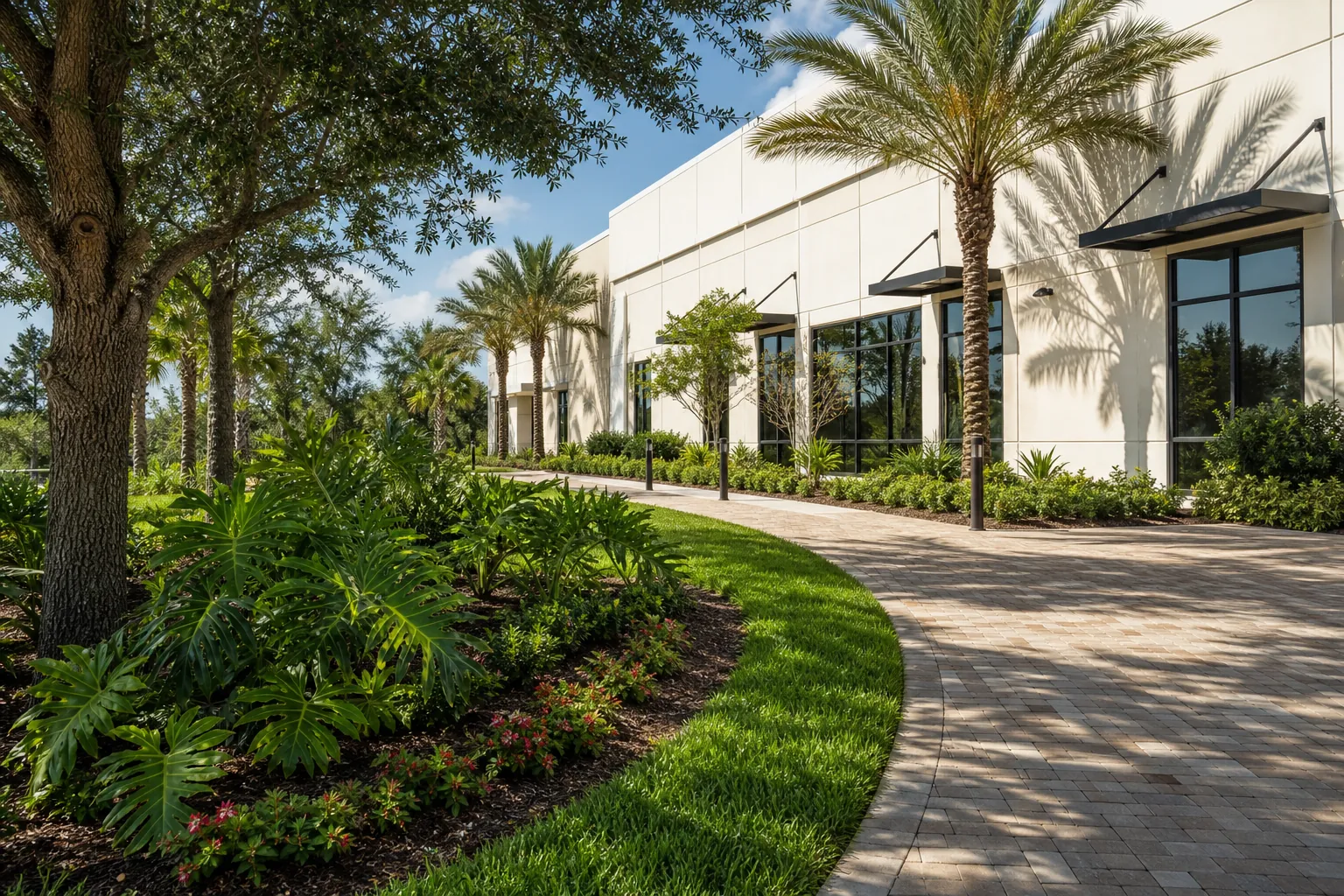
A commercial landscape does more than fill space around a building. It shapes first impressions, guides visitors, supports safe access, and influences how well a property handles Florida's heat and heavy rain. Tropical Yards provides commercial landscaping in St. Augustine, FL, with practical plans designed around local conditions and the daily needs of each property.
From welcoming entrances to low-maintenance planting areas, every part of the landscape should have a purpose. Thoughtful design and consistent care can help businesses present a polished appearance while reducing preventable issues such as overgrown shrubs, irrigation waste, standing water, and struggling plants.
Landscaping That Reflects Your Business
Customers, tenants, employees, and vendors notice the exterior before they walk through the door. A neat, healthy landscape communicates attention to detail. Faded beds, blocked signs, and uneven growth can send the opposite message, even when the building itself is well maintained.
Tropical Yards approaches commercial properties as working environments. Plant placement must support visibility, pedestrian movement, parking access, and routine maintenance. The goal is not simply to add more plants. It is to create a cohesive setting that complements the architecture and remains manageable as it matures.
This approach works for office buildings, retail centers, restaurants, medical properties, multifamily communities, and other commercial sites in the St. Augustine area. Each plan can be adapted to the property's customer traffic, sun exposure, available space, and desired level of upkeep.
Planning For St. Augustine's Coastal Climate
Landscapes in Northeast Florida face intense summer sun, humid conditions, seasonal downpours, occasional cold snaps, sandy soils, and coastal influences. Plants that look appealing at installation may perform poorly if they are not suited to the site's drainage, light, and exposure.
A site-focused plan starts by observing how water moves, where reflected heat builds, and which areas receive full sun or prolonged shade. Plant selection can then account for mature size, salt tolerance where relevant, irrigation needs, and resistance to common stressors. This reduces the need to replace plants simply because they were installed in the wrong location.
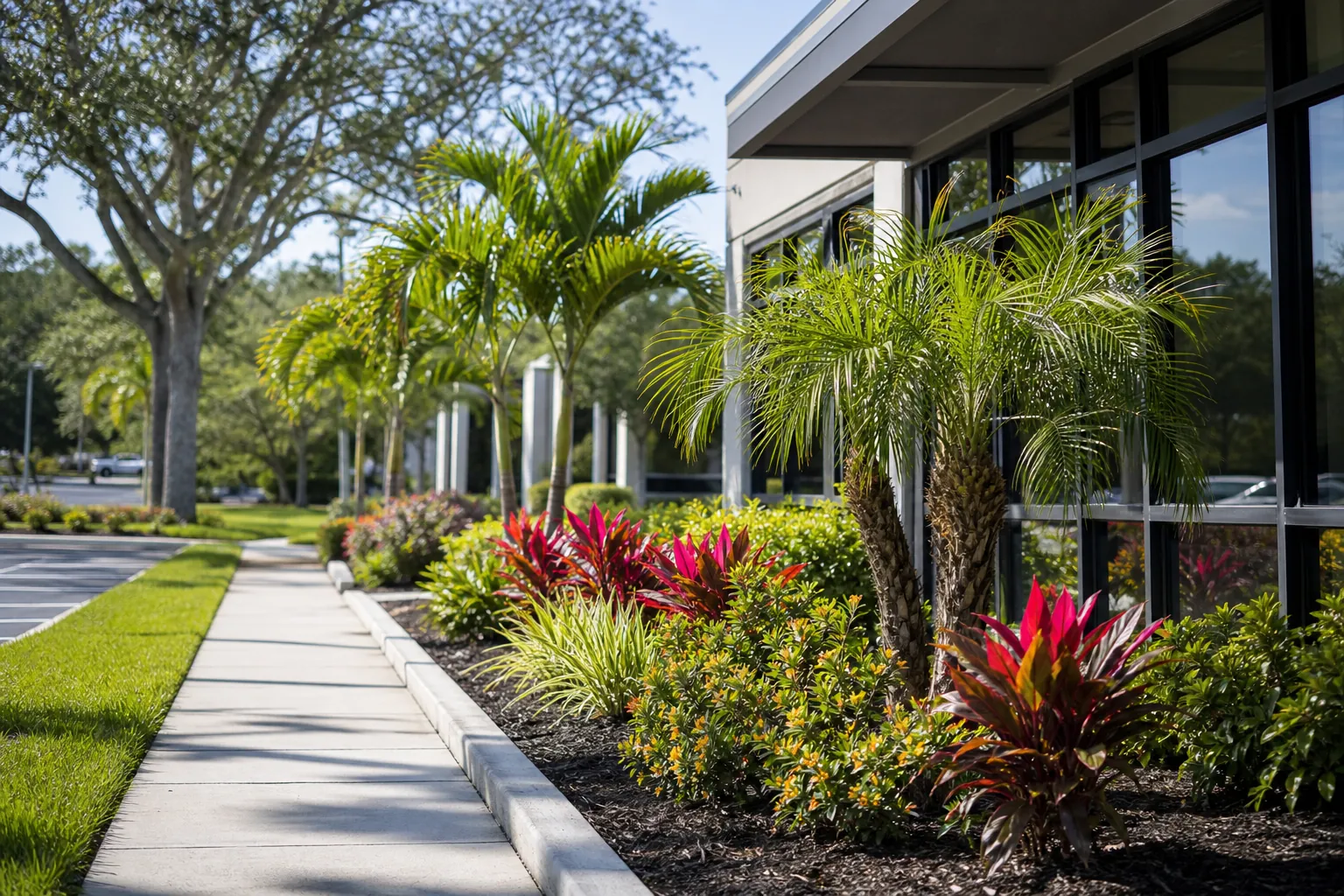
Tropical landscaping can still feel distinctive without becoming difficult to maintain. Palms, ornamental grasses, colorful foliage, flowering shrubs, and structured foundation plants can be combined in layers. The result can deliver seasonal interest and a Florida character while keeping walkways, windows, and signs clear.
Core Services For Commercial Properties
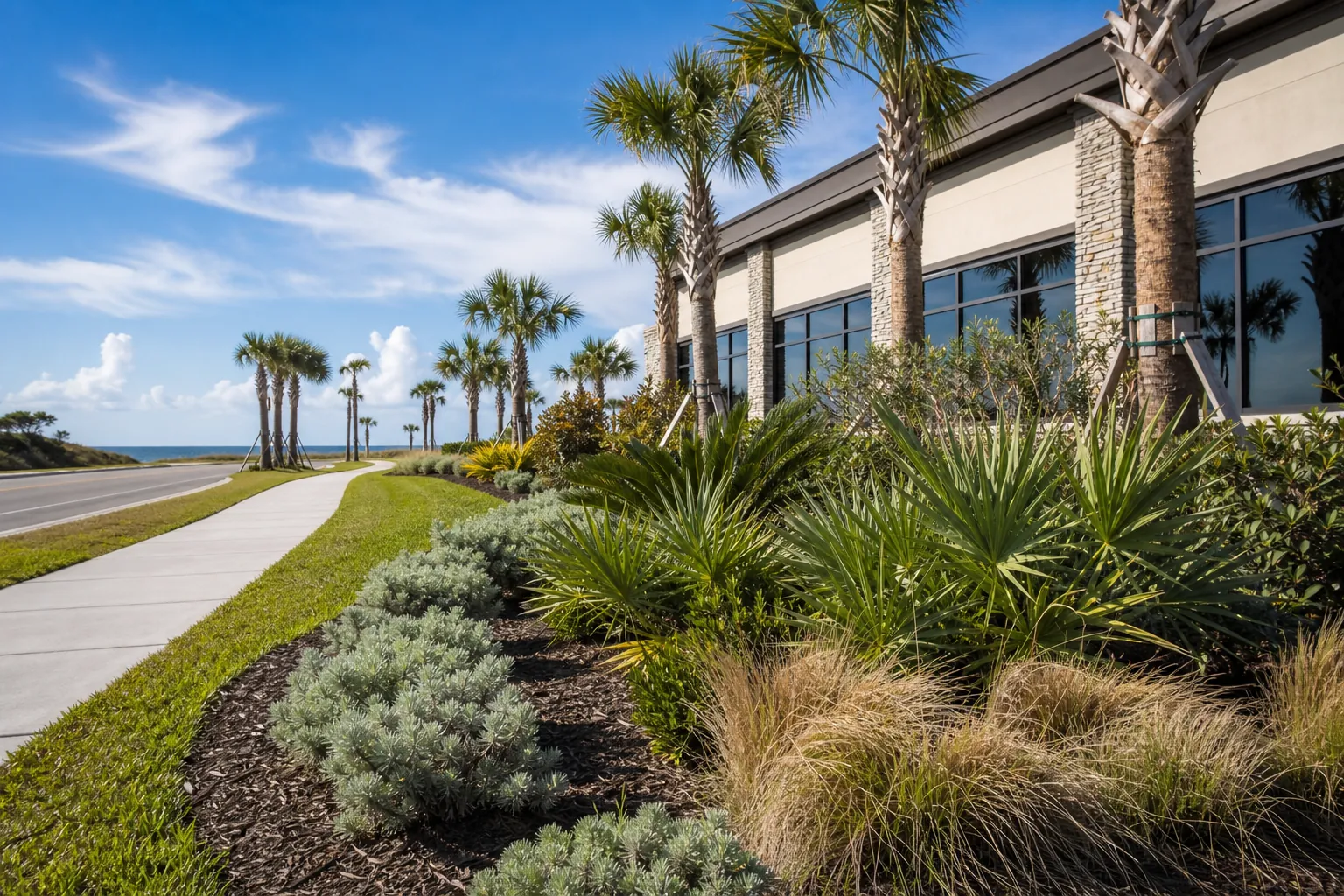
Commercial landscaping should address both visual quality and long-term performance. Depending on the property, work may involve improving an established landscape, replacing unsuccessful plantings, or developing a fresh layout for a new or renovated site.
Useful commercial landscape services may include:
- Landscape planning and installation: Planting layouts developed around site conditions, brand presentation, traffic patterns, and realistic maintenance needs.
- Tropical plant selection: Appropriate palms, shrubs, grasses, groundcovers, and accent plants chosen for Florida growing conditions.
- Bed renovation: Removal of declining or overcrowded material, soil preparation, reshaping, and updated planting combinations.
- Mulch installation: Clean bed coverage that helps retain moisture, moderate soil temperature, and create a finished appearance.
- Pruning and detail work: Selective care that maintains plant health, preserves natural form, and prevents blocked sightlines.
- Irrigation evaluation: Review of coverage, scheduling, and obvious inefficiencies that may contribute to dry areas or unnecessary water use.
- Property enhancement: Focused upgrades for entrances, monument signs, patios, walkways, and other high-visibility areas.
A coordinated scope helps property managers prioritize work instead of reacting to one issue at a time. It can also establish a clearer standard for how the grounds should look throughout the year.
Water Management And Irrigation Efficiency
Water is one of the most important considerations in a Florida landscape. Too little irrigation can stress new plantings, while excessive watering can encourage weak roots, fungal problems, weeds, and waste. Rainfall also varies considerably through the year, so a fixed schedule may not serve the property well in every season.
Efficient irrigation begins with appropriate plant grouping. Species with similar moisture needs should share planting zones whenever possible. Coverage should reach root areas without repeatedly spraying pavement, walls, or parked vehicles. Scheduling can then be adjusted for rainfall, temperature, plant establishment, and local watering requirements.
Drainage deserves equal attention. Low areas that remain saturated can damage turf and roots, create muddy entrances, and make maintenance more difficult. Although every drainage concern requires individual assessment, grading, plant choice, bed design, and irrigation corrections may all contribute to a more resilient solution.
Designing For Safety And Easier Maintenance
A visually appealing landscape should not interfere with the way a commercial site functions. Shrubs near driveways should stay low enough to preserve visibility. Thorny or rigid plants are usually better kept away from narrow walkways. Trees and palms need adequate room so their canopies do not crowd buildings, lighting, or overhead features as they grow.
Maintenance access is another important design factor. Crews need to reach beds and equipment without damaging plants or disrupting customers. Defined edges, sensible spacing, and fewer mismatched plant varieties can simplify routine care. Selecting plants based on mature size also reduces constant shearing and the long-term labor required to control overcrowding.
For active properties, work can be planned to limit disruption around entrances and peak business periods. Clear priorities help ensure that high-visibility and safety-related areas receive attention first.
When To Refresh A Commercial Landscape
A full redesign is not always necessary. Strategic improvements can make a noticeable difference when the basic layout still works. Common signs that a property needs attention include repeated plant failure, bare or washed-out beds, shrubs covering windows or signage, inconsistent irrigation coverage, and an entrance that no longer matches the quality of the business.
Renovation can be phased to align with operational needs and budget. An initial phase might focus on the main entrance and sign, followed by foundation beds, parking areas, or employee spaces. This approach allows the property to improve steadily while maintaining a consistent overall direction.
Start With A Practical Property Review
The right commercial landscape balances appearance, durability, water use, safety, and ongoing care. Tropical Yards helps St. Augustine businesses identify opportunities and develop improvements suited to their sites rather than relying on a one-size-fits-all plan.
If your property needs a landscape refresh, tropical planting plan, or a more functional approach to exterior spaces, call Tropical Yards at 772-267-1611. A straightforward conversation can help clarify your goals and the next sensible step for your commercial property.
Call 772-267-1611 to talk through next steps.