Choosing coquina shell for hibiscus in Daytona Beach, FL
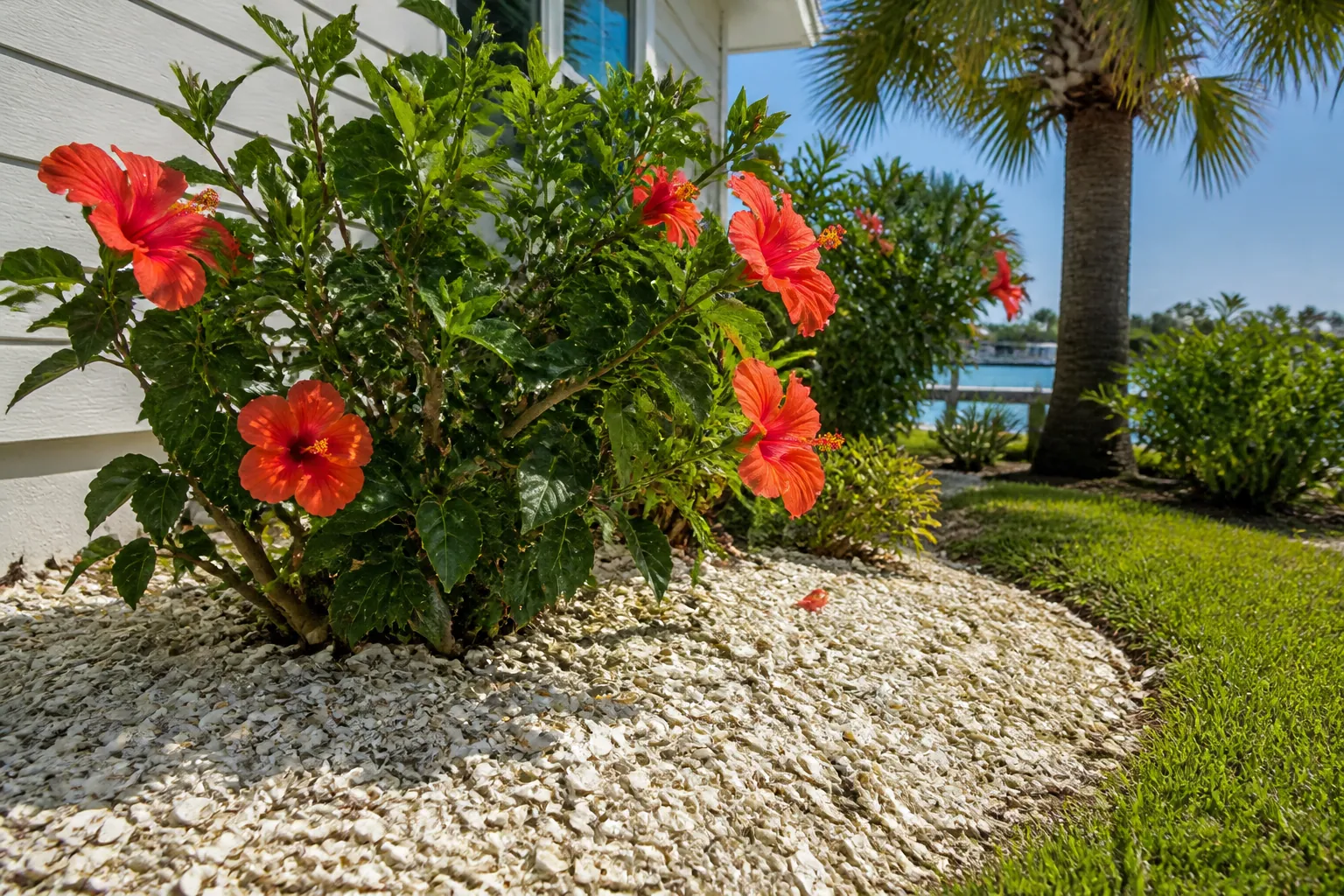
Coquina shell around hibiscus plants can give a tropical garden a light, coastal-looking finish. For Daytona Beach homeowners, however, appearance should come after root health. Hibiscus needs suitable soil, reliable moisture, and room for its roots to breathe. A shell covering should support your planting arrangement without burying stems, interfering with watering, or hiding drainage problems.
Tropical Yards supplies coquina shell and tropical plants, with dump trailer delivery of plants and coquina shell from St. Augustine to Daytona Beach. The guidance below is for buyers and homeowners doing their own planting and material placement. Tropical Yards provides the materials and delivery, not landscape design, installation, or maintenance.
Use this guide to decide whether shell belongs beside your hibiscus, estimate an order, prepare a delivery location, and place the material yourself. For broader material information, visit the coquina shell page. Here, the focus is specifically on the decisions that matter around living hibiscus plants.
Is Coquina Shell A Good Fit Around Hibiscus?
Coquina shell can work as a decorative surface near hibiscus, but it is not a substitute for appropriate planting soil or organic matter. Its suitability depends on the existing soil, drainage, irrigation, sunlight, and how closely the shell sits to the plant.
Hibiscus generally performs best in well-drained soil with adequate moisture and a slightly acidic root environment. Shell contains calcium carbonate, which can influence soil chemistry over time. The effect varies with the material, soil conditions, water, and weathering. Avoid assuming that shell will be chemically neutral in every planting bed.
If you already struggle with high soil pH or yellowing leaves, test the soil before adding shell across the root zone. A soil test gives you a better basis for decisions than judging soil by its color or texture. Your local extension office can help explain testing options and interpret results.
A practical compromise is to use shell in the outer portion of the bed while retaining an organic mulch area around the hibiscus. This keeps the coastal appearance without making shell the only surface covering immediately beside the plant.
- Choose shell when you want a decorative mineral surface and your bed already drains appropriately.
- Keep an organic mulch option available when moisture retention and soil improvement are your main priorities.
- Address standing water, unhealthy roots, or unsuitable soil before adding a decorative covering.
- Check soil pH when plant symptoms or previous test results suggest that alkalinity could be a concern.
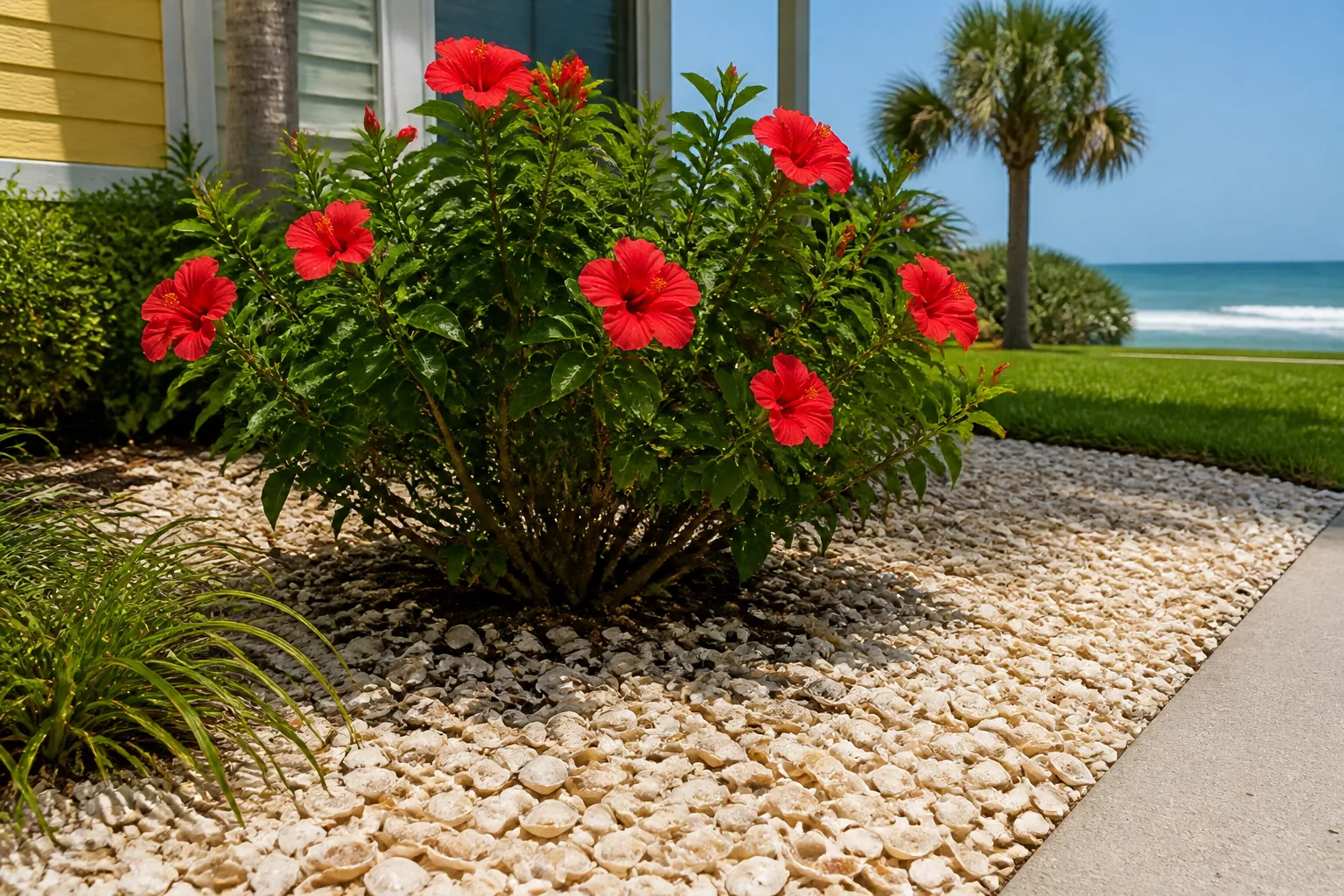
Check Your Daytona Beach Planting Site First
Daytona Beach gardens can experience intense sun, heavy rain, and drying weather between storms. Individual properties differ considerably. A sheltered backyard bed can behave differently from an exposed planting beside pavement, even within the same neighborhood.
Watch the proposed area after rain. Water should move through the soil rather than linger around the hibiscus base. Shell placed on top of compacted or poorly drained soil does not correct the underlying problem. A decorative layer can actually make it harder to notice wet soil beneath it.
Consider reflected light and heat as well. Pale shell can reflect sunlight toward foliage, while adjacent walls and paving may already create a hot location. Check the plant during the warmest part of the day before deciding how much exposed shell to use.
Hibiscus also needs access to water that reaches the soil rather than merely wetting the surface. Identify where irrigation currently lands and whether a shell layer could obscure a drip emitter or make hand watering less effective.
For a new plant, confirm its mature size, light requirements, and growth habit before purchasing. Tropical hibiscus and other plants sold under the hibiscus name can have different tolerances. Ask about the specific plant rather than relying on a general label.
Choose Shell With The Planting Bed In Mind
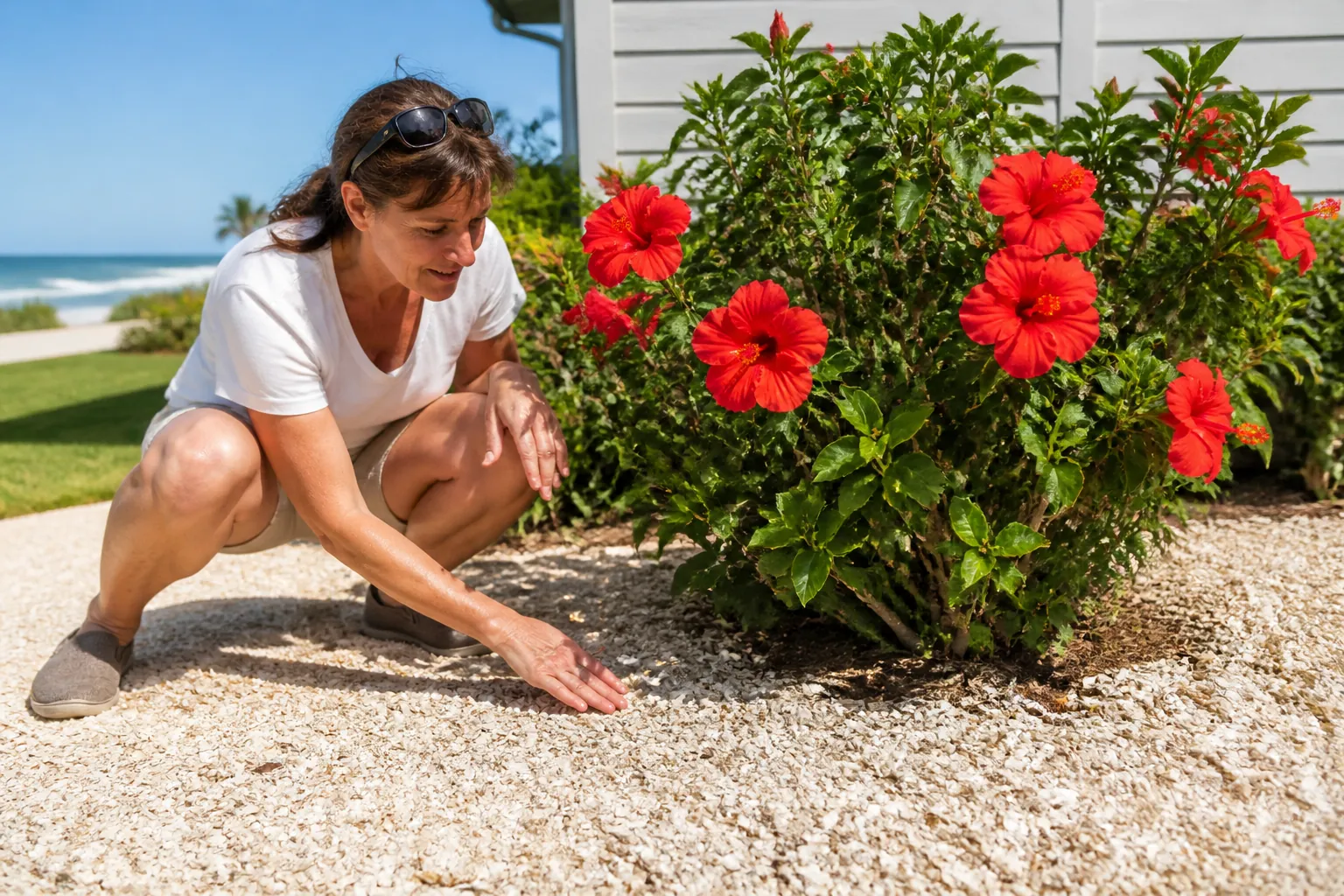
Ask what the available coquina shell looks like before ordering. Shell materials can vary in fragment size, color, fine particles, and the proportion of broken pieces. Those differences affect appearance, handling, and how easily you can move the material during future DIY planting.
For a hibiscus bed, consider maintenance access as part of the purchase. You should be able to reach the soil for checking moisture, inspecting irrigation, and applying products according to their labels. A very thick decorative covering makes those tasks more awkward.
Do not assume that shell provides fertilizer for hibiscus. Even when a mineral material contributes something to soil chemistry, it does not replace balanced nutrition based on plant needs. Choose fertilizer separately and follow the product directions.
Shell can also have sharp edges. Think about children, pets, bare feet, and nearby walking routes before choosing its placement. Keep it within a defined bed rather than allowing fragments to scatter onto paths or lawn areas.
- Ask about the current shell material rather than expecting every load to match an old photograph.
- Confirm the unit used for ordering so your quantity estimate matches the supplier's sales method.
- Explain that the shell will be used around hibiscus so material questions stay focused on a planting-bed application.
- Ask about material characteristics and any preparation recommended before you place it yourself.
Measure The Bed And Estimate Your Order
Measure the area you intend to cover, not the entire garden. Subtract the open space you will keep around hibiscus stems, existing organic mulch zones, and any other sections that will remain shell-free. This avoids ordering for areas you should not cover.
For a rectangular section, multiply length by width to calculate square feet. For an irregular bed, divide it into smaller rectangles or triangles and add their areas. A rough sketch helps you track measurements and prevents counting the same section twice.
Next, decide on the intended depth. The appropriate covering depends on the shell material and the purpose of the bed. Around plants, more material is not automatically better. Discuss the available shell with the supplier before settling on a depth.
To estimate cubic yards, multiply square feet by depth in inches, then divide by 324. For example, a 120-square-foot area covered to a depth of 2 inches has a calculated volume of about 0.74 cubic yard. This is a measurement example, not a recommended depth for every hibiscus planting.
If shell is sold using another unit, ask how your volume estimate translates to an order. Do not convert volume to weight using an arbitrary online density. Moisture, fines, and material composition can affect that relationship.
Allow for the bed's actual shape and your handling plan, but avoid an oversized order without a place to keep the remainder. Extra material should not become a reason to pile shell against plants or make the covering unnecessarily deep.
Plan Dump Trailer Delivery Before Ordering
A good delivery plan starts with access. Identify a location where a dump trailer can safely approach and unload, then discuss it with Tropical Yards before the delivery is scheduled. Driveway width, overhead clearance, slopes, gates, and the available turning space can affect the plan.
Do not assume the trailer can drive across a lawn or reach the planting bed. Soft ground, irrigation components, septic systems, buried utilities, and other site conditions may make an apparently convenient location unsuitable. Describe any known concerns when arranging delivery.
Choose a drop location that keeps shell away from storm drains and does not block access you need afterward. If you want to protect the surface beneath the pile, discuss a suitable protective covering and how it should be positioned. Keep your own wheelbarrow route in mind.
Dump trailer delivery places the material at an agreed accessible location. It does not mean the shell will be spread around plants. Plan the tools, time, and help you need for that DIY work separately.
- Confirm the delivery address and describe the proposed unloading location clearly.
- Move vehicles and personal items out of the access and unloading areas before arrival.
- Keep children and pets away from the trailer and material pile during unloading.
- Have a wheelbarrow, shovel, rake, gloves, and sturdy footwear ready for your own material placement.
- Review access and unloading questions through the coquina shell delivery page and confirm site-specific details when ordering.
Place Coquina Shell Around Hibiscus Yourself
Start with a healthy, properly planted hibiscus. If you are planting a new specimen, follow guidance for that specific plant and keep the root flare or original soil level from being buried. Do not use shell to conceal a plant that sits too low in the bed.
Prepare the surface before bringing shell into the planting area. Remove existing weeds yourself and inspect irrigation. Avoid deep digging around an established hibiscus, since roots may extend into the surrounding bed. Work gently near the plant.
Leave a visible, shell-free space around the stems. The important goal is to prevent material from touching or accumulating against the plant base. Allow enough space to inspect the stems, check soil moisture, and adjust the boundary as the plant grows.
If you retain organic mulch in the inner root area, keep that mulch off the stems too. A simple edging boundary can help separate shell from mulch, provided you place it without cutting through major roots. A physical boundary is useful when watering or foot traffic tends to shift materials.
Move shell into the bed in small batches. Spread it gently to your planned depth instead of dumping a large load beside the hibiscus and pulling it outward. This reduces the chance of damaging branches or accidentally burying the base.
Landscape fabric is not automatically necessary. Around living plants, it can complicate future soil access and does not prevent every weed. Consider those tradeoffs before using it, and avoid tightly enclosing the stems or covering irrigation components.
Water And Feed The Plant, Not Just The Surface
After placing shell, check how water reaches the root zone. A damp-looking shell surface does not prove that the soil below is adequately moist. Carefully move a small section aside and check the soil when deciding whether to water.
Newly planted hibiscus usually needs closer moisture monitoring than an established plant. Weather, soil texture, root development, and container-grown planting stock all influence watering needs. Avoid adopting a fixed schedule without observing the actual soil.
If you use drip irrigation, keep emitters accessible for inspection. Verify that water reaches the intended root area and that the system is not leaking or clogged. Do not bury components so deeply under shell that checking them becomes difficult.
Apply fertilizer according to the product label and the needs of your particular hibiscus. Shell should not prevent the product from reaching its intended application area. Never increase a fertilizer rate simply because the plant is surrounded by a mineral covering.
Watch for changes in growth and leaf color over time. Yellow leaves can have several causes, including watering problems, root stress, nutrient issues, or pests. If you suspect a pH-related nutrient problem, test before attempting to correct it.
Avoid Common Shell-Bed Mistakes
The most common mistake is treating decorative shell as a solution to every bed problem. It does not fix poor drainage, eliminate weeds permanently, or remove the need to monitor hibiscus. Make those limitations part of your buying decision.
Another mistake is repeatedly topping up the bed without checking the existing depth. Material can gradually build up around stems or spill beyond edging. Before adding more, inspect the bed and redistribute what is already there if appropriate.
Shell also collects leaves and other organic debris. For your own routine care, use methods that do not damage the plant or scatter fragments into the lawn. Remove unwanted seedlings while they are small rather than allowing their roots to become established.
- Keep shell out of lawn areas where mowing equipment could strike loose fragments.
- Recheck the plant base after heavy rain or watering that shifts the surface material.
- Leave access to irrigation fittings instead of covering every visible component.
- Do not add lime or other pH-changing amendments without a clear reason supported by testing.
- Reassess the shell boundary as hibiscus grows rather than preserving a narrow opening indefinitely.
Order Shell And Hibiscus With A Clear DIY Plan
Before contacting Tropical Yards, gather your bed measurements, intended shell depth, delivery address, and access notes. If you are also buying hibiscus, note the sunlight conditions and available growing space so you can ask about suitable stock.
Tropical Yards offers coquina shell sales and tropical plant sales, including palm trees, hibiscus, bougainvillea, ferns, and other tropical plants. Ask about current availability and delivery coordination rather than assuming every plant or shell quantity is ready at all times.
Keep the responsibilities clear: Tropical Yards supplies plants and coquina shell and provides dump trailer delivery within its service corridor. You arrange your own planting, spreading, ongoing plant care, and any site preparation needed for your project.
For coquina shell around hibiscus plants in Daytona Beach, begin with drainage, soil suitability, and a sensible shell-free area at the stems. Then order a measured quantity and prepare an accessible drop location. Call Tropical Yards at 772-267-1611 to discuss coquina shell, hibiscus availability, and dump trailer delivery for your DIY project.
Call 772-267-1611 to talk through next steps.