Using coquina shell near trees in Flagler Beach, FL
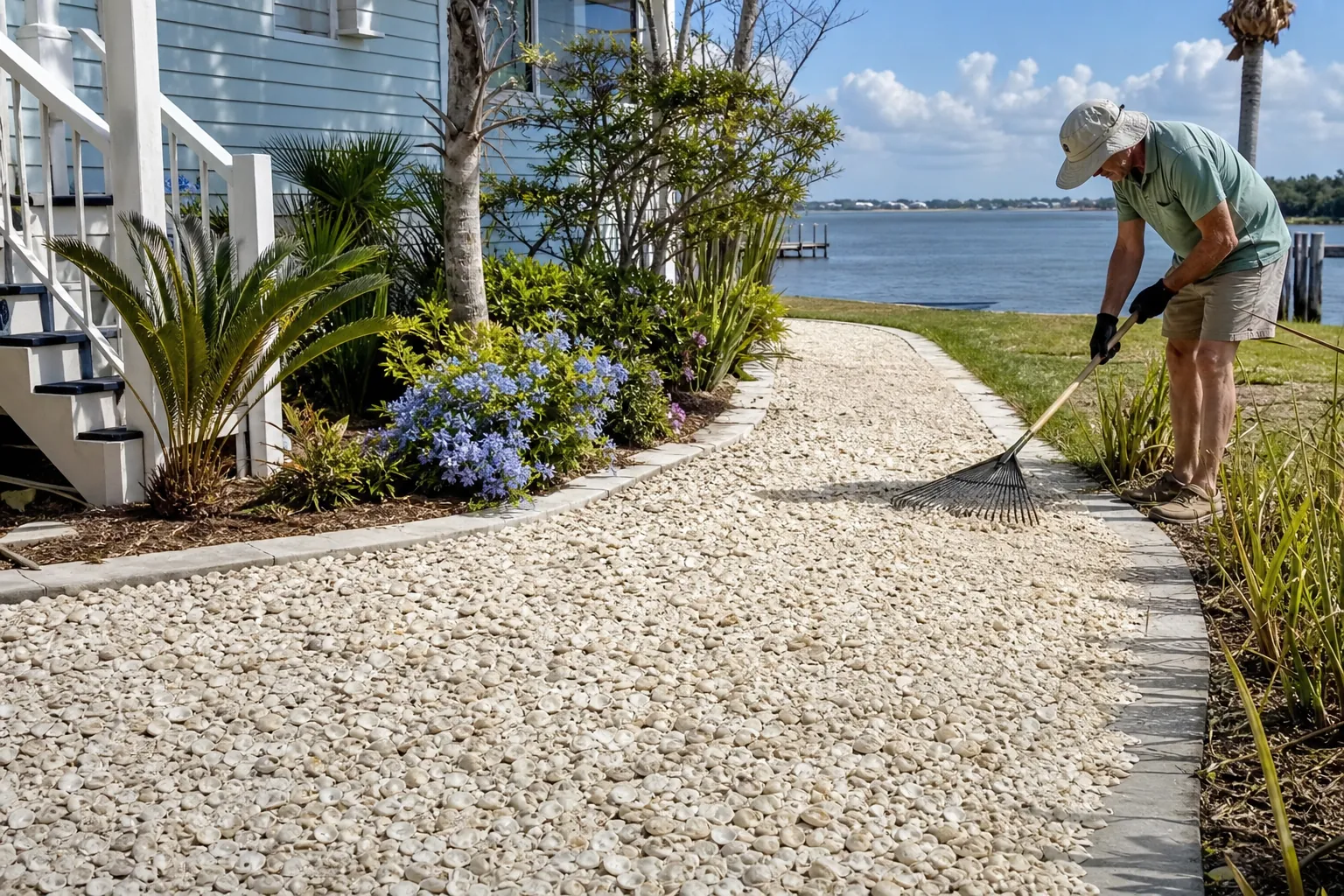
Coquina shell around trees needs careful site review. UF/IFAS does not recommend crushed shell as mulch in planted beds. Start with organic mulch for the tree root zone, and consider shell separately for a nearby path. Keep the root flare visible and seek tree-specific advice before changing existing ground levels.
This guide helps Flagler Beach buyers plan a shell bed near established trees; it covers spacing, soil checks, order planning, and safe delivery access. Tropical Yards supplies coquina shell and tropical plants; you handle the site plan, spreading, planting, and ongoing care yourself.
Planning Coquina Shell Around Trees
Coquina shell may work near trees when the site suits both materials; the key checks are soil pH, drainage, root depth, and trunk clearance. A shell bed should never bury the tree’s base; start with the tree’s needs, then decide where shell can fit safely. Review dump trailer delivery planning.
Shell creates a pale, textured ground cover; that can suit a sunny coastal yard. Yet a good look does not mean a good growing space; trees need access to air, water, and enough soil for roots.
A tree ring is also part of a larger root zone; roots often reach beyond the outer edge of the branches. A small shell ring does not define where those roots stop; work near the whole tree with care.
Coquina shell is a mineral cover, rather than a source of organic matter; wood mulch breaks down and adds organic material over time. Shell does not serve that same role; think about what you want the ground cover to do.
You may want a shell area beside a tree without covering its base; that gives you more room to protect the trunk and surface roots. A separate mulch ring can leave the tree’s immediate growing space clear.
Before choosing shell, look at the tree’s health; sparse leaves, dead branches, or a soft trunk base deserve attention. Do not cover those clues with fresh material; seek a qualified tree professional if the tree shows signs of stress.
A tree already struggling with wet soil needs a drainage review first; shell alone will not correct poor drainage beneath the surface. It also cannot fix deep planting, damaged roots, or a trunk buried under old fill.
For a mixed yard, shell need not cover every bed; use different ground covers where plants have different needs; that approach can protect sensitive trees while keeping shell in areas better suited to it.
How much space should you leave around the trunk?
Leave a clear gap around the trunk and keep the root flare visible; the root flare is where the trunk widens into major roots. Do not pile shell against bark or build a raised ring over roots; the right clearance depends on the tree and its condition. Review coquina shell choices and dump trailer delivery planning.
Start by finding the trunk’s natural base; on many trees, it widens before meeting the soil. A trunk that looks like a straight pole may have a buried flare; do not assume its current soil level is correct.
If you cannot see the flare, pause before adding shell; avoid digging blindly to find it. Roots and bark can be harmed during that work; a qualified tree professional can assess a buried base and advise on next steps.
Keep visible surface roots in mind as you plan the edge; do not shave them down to make a neat circle. Do not cut roots to fit edging either; adjust the bed shape around roots instead.
- Keep shell away from the trunk so bark stays visible and easy to check.
- Leave exposed roots uncovered rather than raising the whole bed to hide them.
- Use a wider clear area when trunk growth or root spread needs more room.
- Choose a bed shape that avoids cutting roots for a straight border.
There is no single gap that suits every tree; a narrow young trunk and an old spreading tree differ. Plan for future trunk growth, too; a clear gap today should not become a tight collar later.
Do not stack edging, stones, or shell into a raised bowl; a high ring can hold added material against the tree. It may also change how rain reaches the base; keep the existing grade unless expert advice supports a change.
Palm bases need care as well; do not bury a palm’s trunk to match a new shell level. Each species and site can need a different approach; check planting depth and growing needs before changing the ground cover.
Check the gap after spreading and after heavy rain; loose shell may shift toward the trunk. Move it back by hand without scraping the bark; keeping the base visible makes future checks much easier.
What soil and water checks should come first?
Check soil pH and drainage before placing shell near a tree; shell contains calcium carbonate, which can affect soil chemistry over time. Trees vary in their tolerance for higher pH; a soil test and a review of water flow help you make a sound choice. Review coquina shell choices and dump trailer delivery planning.
Do not judge soil pH by its color or texture; sandy soil can still have chemistry that does not suit a plant. Use a soil test for the planned bed; follow the sampling steps supplied by the testing service.
Tell the testing service which tree grows in that spot; ask how to read the result for that species. Some plants handle alkaline soil better than others; a broad label like tropical does not settle that question.
Shell may be a poor fit near plants that need acidic soil; keep those plants’ needs separate from your preferred yard finish. Trying to offset shell with repeated soil treatments can add work; another ground cover may be simpler.
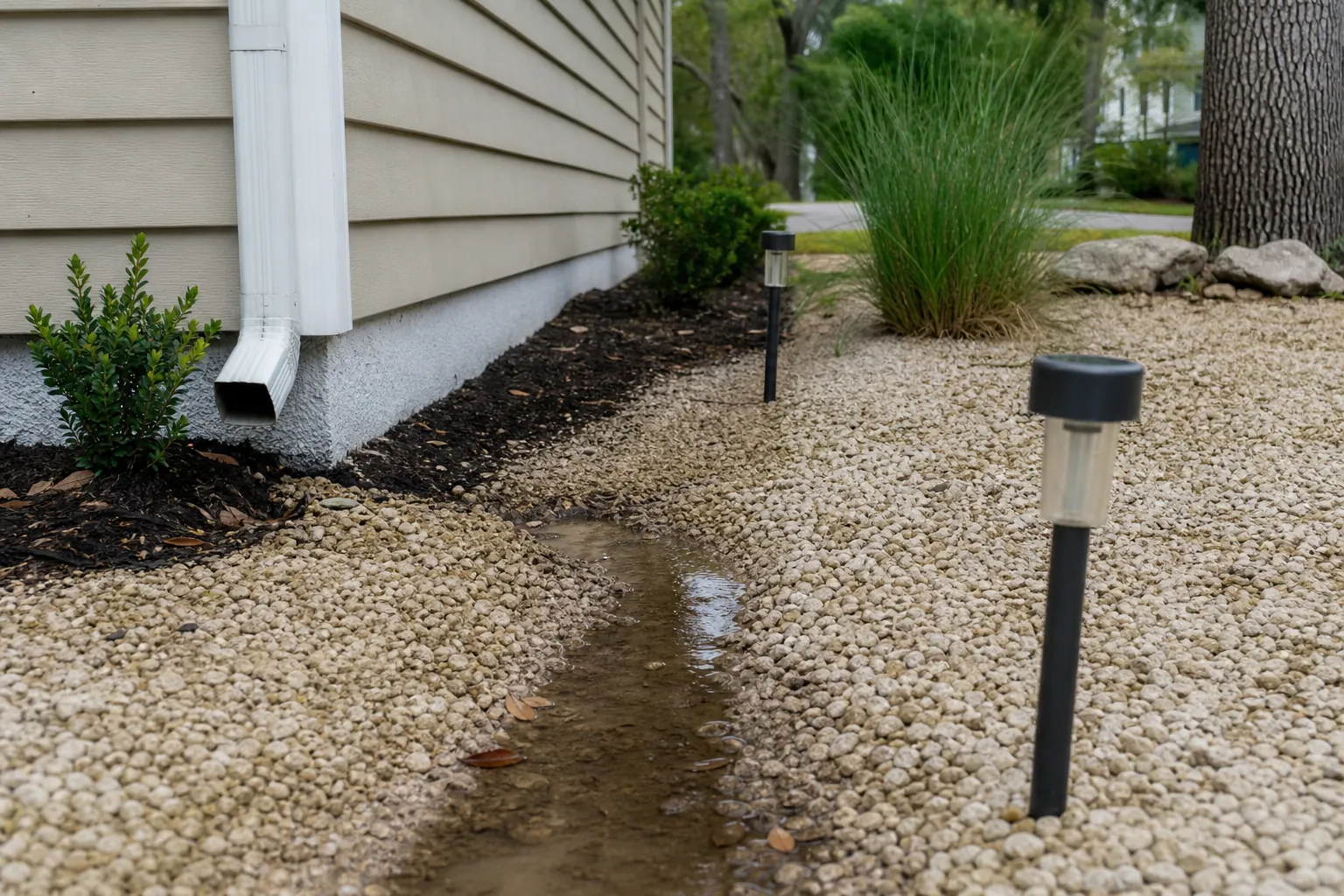
Watch the area after rain before ordering material; note where water pools and how long the soil stays wet. Look for runoff from roofs, paved areas, and nearby beds; those flows can change conditions around a tree.
A shell layer may let water pass through, depending on its makeup; that does not mean the soil below drains well. Dense soil, compacted ground, and high water levels can still hold water; check the full site, not the top layer alone.
Review irrigation before covering the bed; find emitters, spray heads, and any shallow lines. Keep access points easy to reach; do not hide a leak under shell or assume rain always meets the tree’s needs.
In sunny Florida yards, light-colored shell can reflect light toward nearby plants; the effect depends on the site, shade, and bed size. Watch sensitive foliage after making changes; avoid placing a broad shell area beside plants already showing heat stress.
If soil testing or tree health leaves doubts, delay the order; a smaller shell area away from the tree may still work. You can also keep a wood mulch ring beneath the canopy; match each choice to the growing conditions.
How do you measure and order a shell bed?
Measure the planned shell area after marking trunk gaps and root exclusions; then choose a modest depth suited to the site and material. Area and depth determine volume; confirm the supplier’s selling unit before ordering, and do not add depth simply to use leftover shell. Review coquina shell choices and dump trailer delivery planning.
First mark the outer bed edge with stakes or a hose; leave the tree’s protected area out of that shape. Walk the outline and check access to taps and irrigation; make sure you can still inspect the trunk.
For a rectangular bed, multiply length by width to find square feet; split an uneven bed into smaller shapes. Measure each shape, then add the areas; subtract areas where shell will not be placed.
For a round bed, use the radius, half the width; area equals pi multiplied by the radius squared. If there is a clear center ring, calculate its area too; subtract that inner area from the outer area.
To estimate cubic yards, multiply square feet by depth in inches; divide that result by 324. This converts your planned area and depth into a volume estimate; it is a planning tool, not a reason to bury roots.
For example, 120 square feet at one inch deep equals about 0.37 cubic yard; that example explains the math, not a recommended depth for every tree. Site conditions and shell size affect the right layer; check those details before buying.
- Write down the measured area after subtracting trunk gaps and protected root spaces.
- Ask about current shell size, texture, and the unit used for sales.
- Confirm how your volume estimate relates to the amount you plan to order.
- Plan a suitable use for extra shell without deepening the tree bed.
- Check delivery access before placing an order for your measured area.
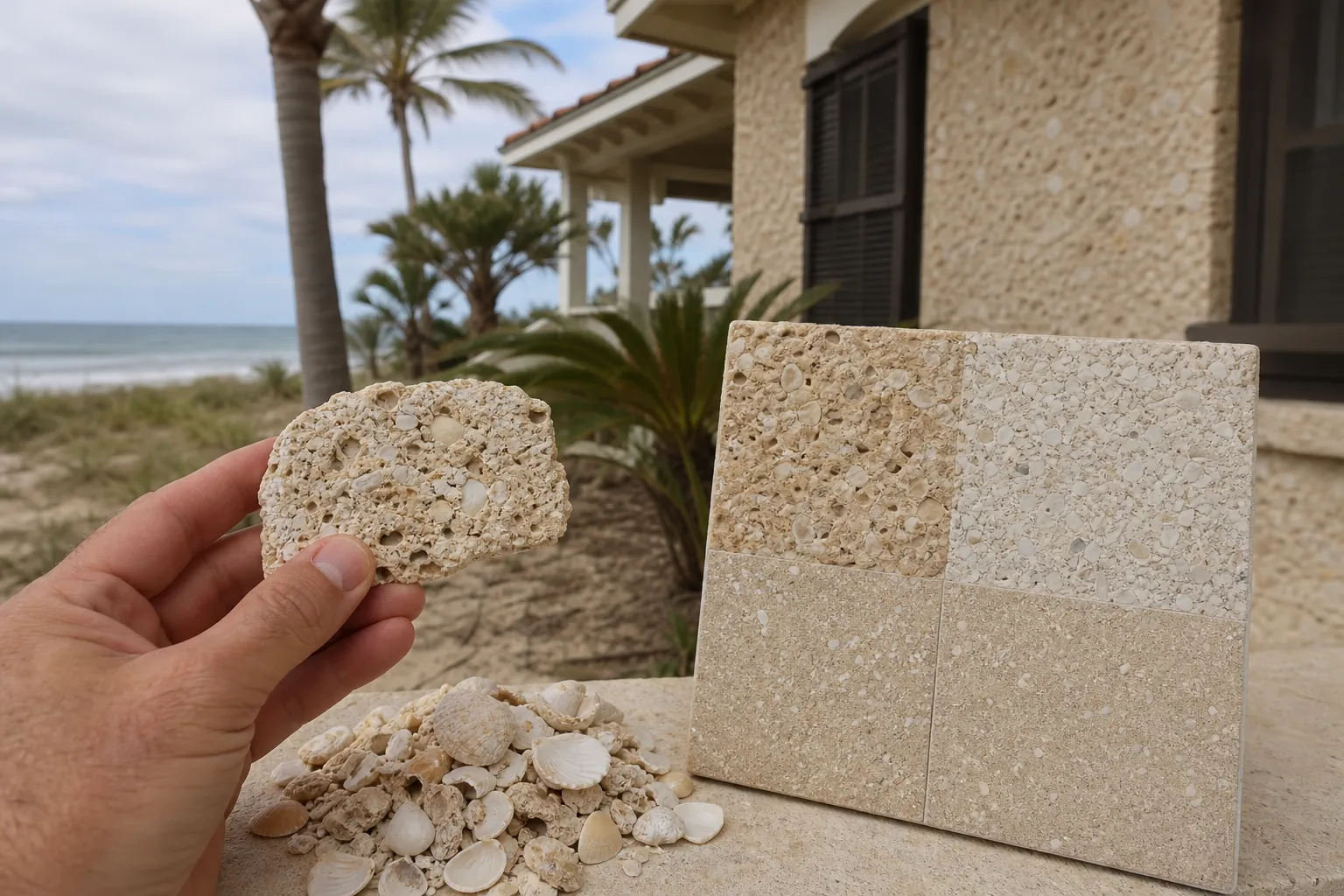
Ask to see the available material when practical; natural shell can vary in shade, fragment size, and texture. Your chosen depth may look different with coarse or fine pieces; make that choice before preparing a large bed.
Tropical Yards sells coquina shell for buyer-managed yard projects; share your measurements and ask about current supply and delivery options. You remain responsible for choosing the site and preparing the area; spreading and care are also DIY tasks.
How should you prepare for dump trailer delivery?
Plan a firm, accessible drop spot outside the tree’s root area; keep heavy vehicles and shell piles away from trunks and surface roots. Tropical Yards offers dump trailer delivery from St. Augustine to Daytona Beach; confirm access and unloading needs before scheduling a Flagler Beach order. Review coquina shell choices.
A convenient drop spot is not always a safe one; driving over roots can compact the soil. A large pile can place weight over them, too; choose a staging area that protects the tree and nearby plants.
Think through the route from the road to the drop point; check gates, narrow turns, low branches, and overhead lines. Mention slopes, soft ground, or tight spaces before delivery; the driver needs an accurate picture of the site.
Do not assume a dump trailer can reach every backyard; access depends on space, ground conditions, and safe unloading clearance. Ask what the current delivery setup needs; resolve access limits before the load arrives.
- Choose a drop point away from tree roots, drains, and buried utility access.
- Keep parked cars and loose items clear of the agreed delivery route.
- Tell the supplier about gates, overhead obstructions, slopes, and soft ground.
- Plan your wheelbarrow route so repeated trips avoid the main root area.
A tarp may help keep a suitable staging area easier to clear; use one only where unloading can happen safely. Keep its edges out of travel paths; do not use a tarp to justify dumping over roots.
Plan for weather and your own work pace; moving shell by hand takes effort, even across a short yard. Have tools ready and choose manageable work sessions; leave the shell in the agreed staging area until you can spread it.
Dump trailer delivery brings materials to an agreed drop point; it does not include bed building or spreading. Tropical Yards does not install, design, maintain, trim, or clean up yards; arrange your own help if the DIY work exceeds your limits.
What is the safest DIY approach after delivery?
Spread shell gently in the marked area without digging through roots; keep the trunk gap clear and preserve the existing soil level. Use small loads rather than pushing a heavy pile across the bed; finish by checking root clearance, drainage paths, and access to irrigation. Review coquina shell choices and dump trailer delivery planning.
Wear gloves, closed shoes, and eye protection while handling shell; broken pieces can have sharp edges. Avoid raising dust, and follow safe handling advice for the material; keep children and pets away from the work area.
Use a hand tool with care near the tree; do not scrape bark or strike exposed roots. Work outward from the clear trunk area; stop if roots prevent you from spreading the layer as planned.
Avoid deep tilling or digging to flatten the bed; that can damage feeder roots close to the surface. Accept some uneven ground where roots grow; a neat finish should not come at the tree’s expense.
Do not assume landscape fabric belongs under every shell bed; fabric can make later planting and root checks harder. Exposed edges can also become a trip risk; consider access, weeds, and plant needs before choosing any underlayer.
Shell does not remove the need for weed checks; seeds can settle between pieces and grow in trapped organic matter. Pull small weeds with care before they gain strong roots; avoid digging into tree roots during that work.
After spreading, check the bed during normal watering and after rain; look for shell shifting into the trunk gap. Note any blocked emitters or standing water; correct placement issues before adding more material.
Tropical Yards also sells palms, hibiscus, bougainvillea, ferns, and other tropical plants; if adding plants near a tree, check mature size and light needs. Avoid digging through major roots for new planting holes; plan each plant’s care separately from the shell finish.
Frequently asked questions
Can coquina shell touch a tree trunk?
Keep coquina shell away from the trunk; leave the root flare and bark visible for routine checks. A pile against the base can hide moisture problems or damage; if shell shifts after rain, move it back gently without scraping the tree or covering nearby exposed roots.
Can I cover exposed tree roots with shell?
Do not cover exposed roots simply to create a level bed; added material can change conditions around roots near the surface. Adjust the shell area to leave them clear; if roots create a trip concern, ask a qualified tree professional about options that protect the tree.
Will coquina shell stop weeds around trees?
Shell is not a complete weed barrier; windblown seeds and organic debris can settle between pieces. Some weeds may then grow within the bed. Check the area often and remove small weeds carefully; keep those checks gentle so you do not disturb shallow roots or damage bark.
Should I remove old mulch before adding shell?
Check the current bed depth and root location first; do not simply bury old mulch beneath a new shell layer. Avoid scraping soil or roots while removing loose material; if the tree’s base is already buried, get advice before changing the grade or covering the area again.
Does Tropical Yards spread shell around trees?
No; Tropical Yards supplies coquina shell and tropical plants, with dump trailer delivery. Customers handle planning, site preparation, spreading, planting, and care. For a Flagler Beach order, confirm material needs and safe delivery access first; seek separate qualified help when tree health or root protection needs expert review.
Ready to discuss your supply needs? Call Tropical Yards at 772-267-1611 to ask about coquina shell, tropical plants, and dump trailer delivery. Bring your measurements and access details so you can plan your DIY project.
UF/IFAS guidance on landscape mulch does not recommend shells as mulch in planted garden beds. Shell does not add nutrients or improve soil water storage. Consider organic mulch around plants and assess shell separately for decorative surfaces or pathways. The UF/IFAS walkway guide discusses material selection and keeping loose surfaces contained.
UF/IFAS guidance on liming materials explains that calcium carbonate can increase soil pH. Use a soil pH test and plant-specific guidance before making soil changes; shell cover should not be used as an unmeasured soil amendment.
Call 772-267-1611 to talk through next steps.