Choosing coquina shell for vegetable garden borders in Palm Coast, FL
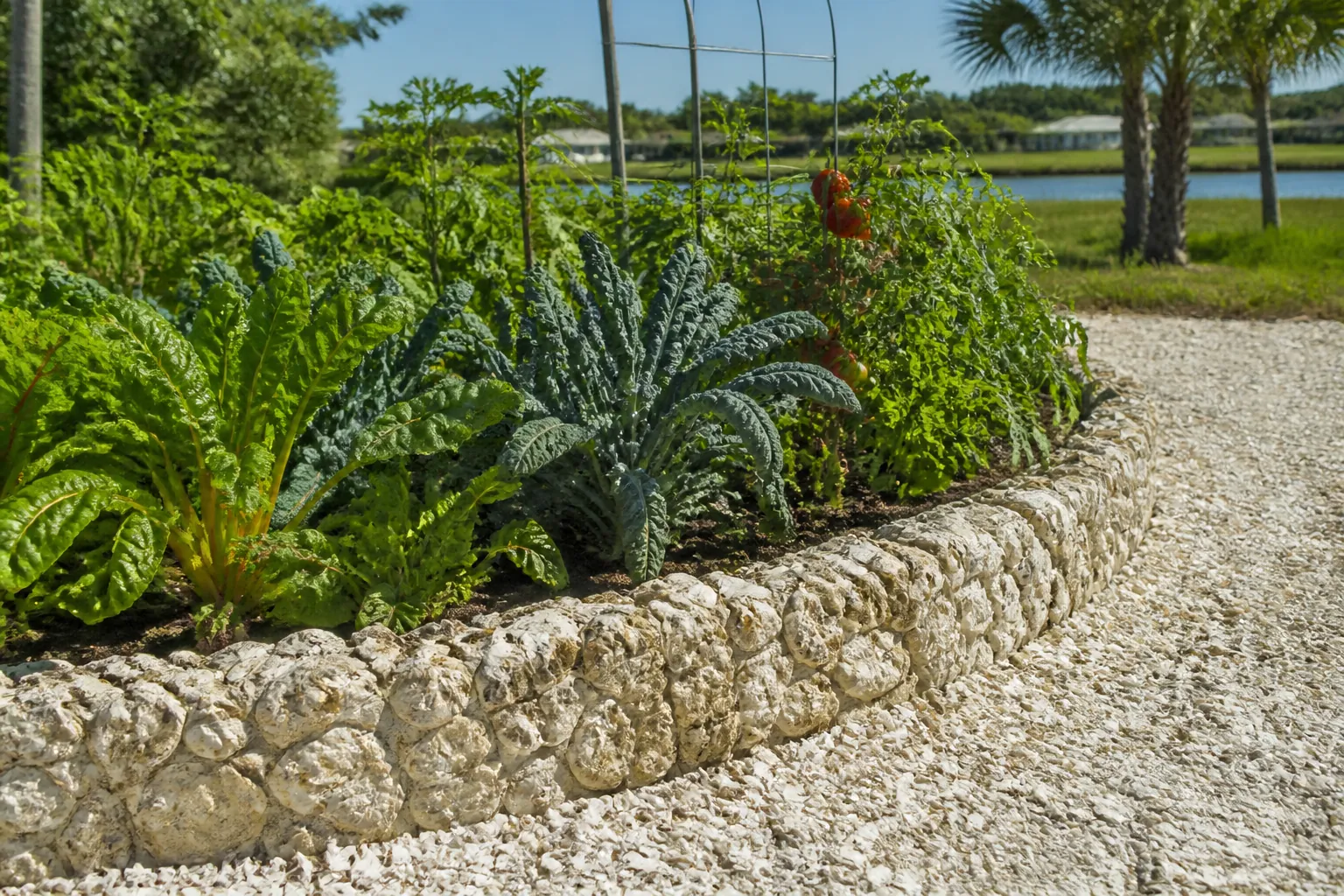
Using coquina shell around vegetable gardens can create a defined border or walking area without covering the soil where vegetables grow. For Palm Coast gardeners, the important questions are practical: Where should the shell go, how will it stay out of the beds, and can water still move where it needs to go?
Coquina shell is a calcium-carbonate-rich material, not a universal vegetable mulch. Its suitability depends on the supplied material, your soil, and how you separate the growing area from the surrounding surface. A well-planned DIY layout keeps the shell accessible for use while protecting the soil you manage for crops.
Tropical Yards supplies coquina shell and tropical plants, with dump trailer delivery from St. Augustine to Daytona Beach. This guide focuses on buying, placing, and managing shell yourself around a vegetable garden in Palm Coast, rather than treating it as an amendment for every planting bed.
Choose A Role For Shell Before You Order
Start by deciding what you want the shell to accomplish. A narrow border marks the outside of a bed, while a wider path provides room for walking, carrying harvest baskets, or working beside raised beds. These uses need different quantities and different preparation.
For many vegetable gardens, the simplest arrangement is to keep coquina shell outside the growing soil. Raised beds with intact sides make that separation easier. In-ground beds need an intentional boundary so shell does not migrate into soil during hoeing, watering, or seasonal replanting.
- Use shell on exterior paths when you want a distinct walking surface between vegetable beds.
- Use shell beside raised beds when the bed walls and edging can contain the material.
- Keep shell away from seed rows and areas you regularly cultivate or dig.
- Leave sufficient space for watering, harvesting, and moving garden tools without stepping into growing soil.
Sketch the garden before buying material. Include gates, hoses, faucets, compost access, and the route you use with a wheelbarrow. A border that looks generous on paper may feel cramped once a mature tomato plant leans into it.
For broader material information, start with the coquina shell supply page. This garden guide addresses placement near vegetables, rather than repeating general shell uses throughout a yard.
Understand Soil Chemistry Near Edible Plants
Coquina contains calcium carbonate, which can influence soil pH as it weathers and interacts with acidic conditions. The effect is not the same in every garden. Particle size, existing soil chemistry, moisture, and the amount of contact between shell and growing soil all matter.
Many common vegetables grow best in slightly acidic to near-neutral soil, although preferred ranges vary by crop. If your garden soil is already alkaline, introducing shell directly into it may complicate nutrient availability. Shell should not be added simply because a plant appears to need calcium.
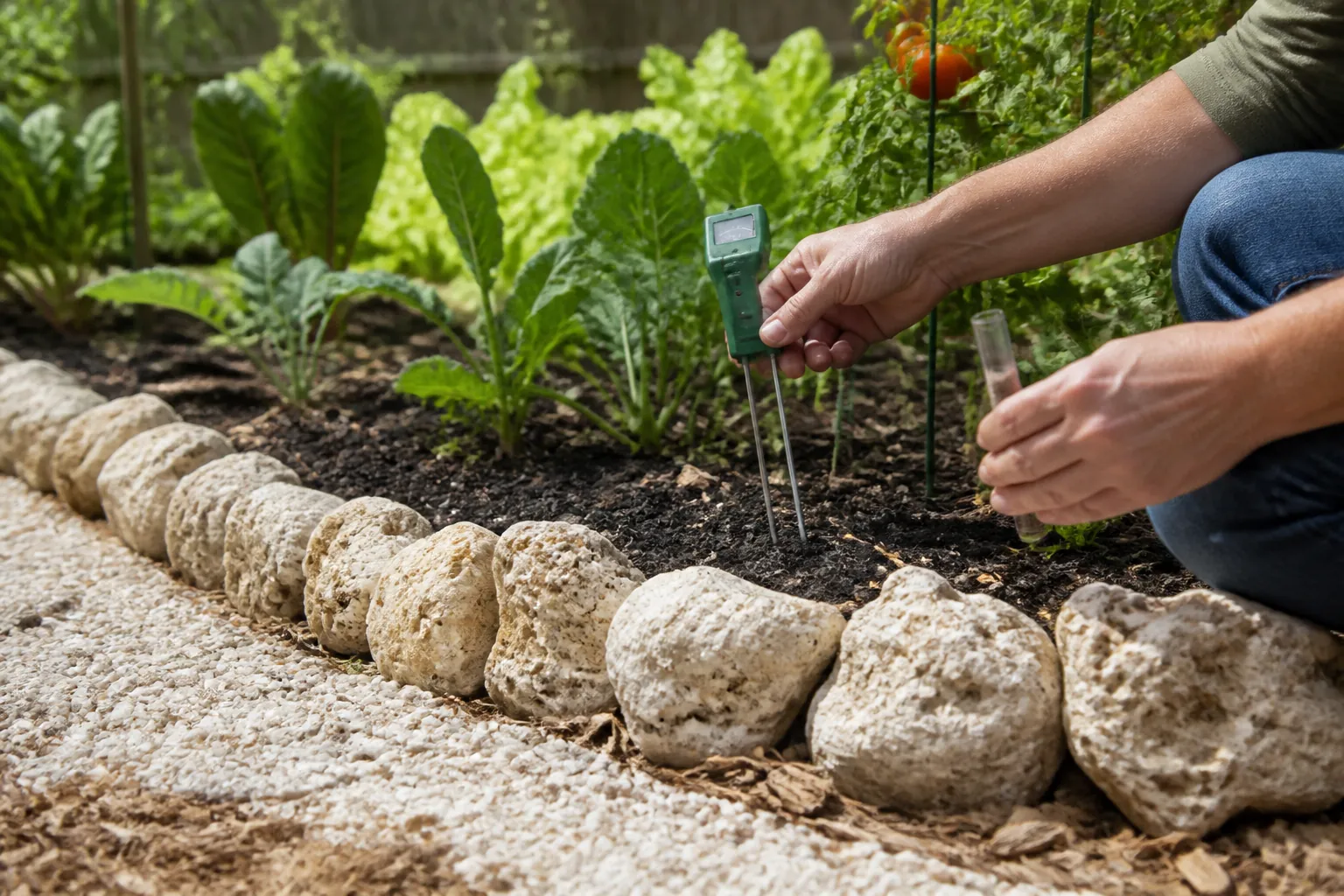
Before making changes to growing soil, obtain a soil test that includes pH and follow crop-specific recommendations. Your county Extension office can help you understand testing options and results. Test the actual bed soil rather than assuming it matches the surrounding yard.
Raised beds filled with imported soil or compost can behave differently from native ground. Keep a record of your starting pH and any amendments you apply. If shell borders are close to an in-ground bed, occasional follow-up testing can help you identify changes instead of guessing from leaf color.
- Do not mix coquina shell into vegetable soil without a soil-based reason and appropriate guidance.
- Keep loose fragments outside the growing area when turning soil or refreshing beds.
- Do not rely on shell borders to correct blossom-end rot, which is often associated with inconsistent moisture and calcium uptake.
- Use crop-appropriate soil management rather than treating shell as fertilizer.
A physical border reduces mixing, but it does not make soil chemistry irrelevant. Fine material and water can still move. Where pH is a concern, increase separation or choose a different path material instead of forcing shell into an unsuitable location.
Check The Material You Are Buying
The term coquina shell does not tell you everything about a particular load. Before ordering, ask what the supplied material looks like and whether it includes fine particles, larger fragments, or a mixture. Those details affect handling, appearance, and how the surface feels underfoot.
A photograph or available sample can help you evaluate the material against your garden's use. Shell fragments may be uncomfortable for bare feet, and a loose surface can make narrow wheels harder to push. Choose with actual users in mind, including children and anyone who needs a steadier walking surface.
For use near food-growing areas, ask about the material's source and any relevant handling information. Do not assume shell is washed, salt-free, screened to a particular size, or certified for edible gardens unless the supplier confirms it. If salinity is a concern, seek advice about suitable testing before placing it near sensitive crops.
Avoid relying on a heavy garden rinse to resolve unknown material quality. That can move sediment or salts toward the very beds you want to protect. It is better to clarify suitability before delivery and keep questionable material away from growing soil.
Ask Tropical Yards about the coquina shell currently available and how it is sold. Product characteristics can influence your plan, so settle those questions before calculating an order or preparing the receiving area.
Plan For Rain, Runoff, And Irrigation
Palm Coast vegetable gardens need a layout that accounts for Florida rain as well as regular irrigation. Shell alone does not fix poor drainage. Water movement depends on the ground beneath it, the slope, surrounding surfaces, and whether fine material becomes compacted.
Observe your garden after rain before changing anything. Look for standing water, sediment trails, and places where runoff crosses a bed edge. If a proposed shell path already collects water, address the underlying drainage issue rather than simply filling the low area.
Keep runoff from a shell surface from being deliberately directed into vegetable beds. Bed walls and edging can help contain fragments, but avoid creating a closed basin beside them. Existing drainage routes should remain open, and changes should not send water onto a neighboring property.
- Keep shell clear of drain openings and places where roof runoff strikes the ground.
- Check whether irrigation overspray will repeatedly wash fine particles toward your crops.
- Maintain clearance around bed drains or openings that allow excess water to escape.
- Test the planned walking route during wet conditions before committing to its final footprint.
Shell can become warm in direct sun, particularly along exposed paths. Give vegetable foliage room so it does not rest on the surface. Use suitable mulch inside the beds to help manage soil moisture, while treating the shell outside them as a separate surface.
Use Edging To Keep Shell Out Of Growing Soil
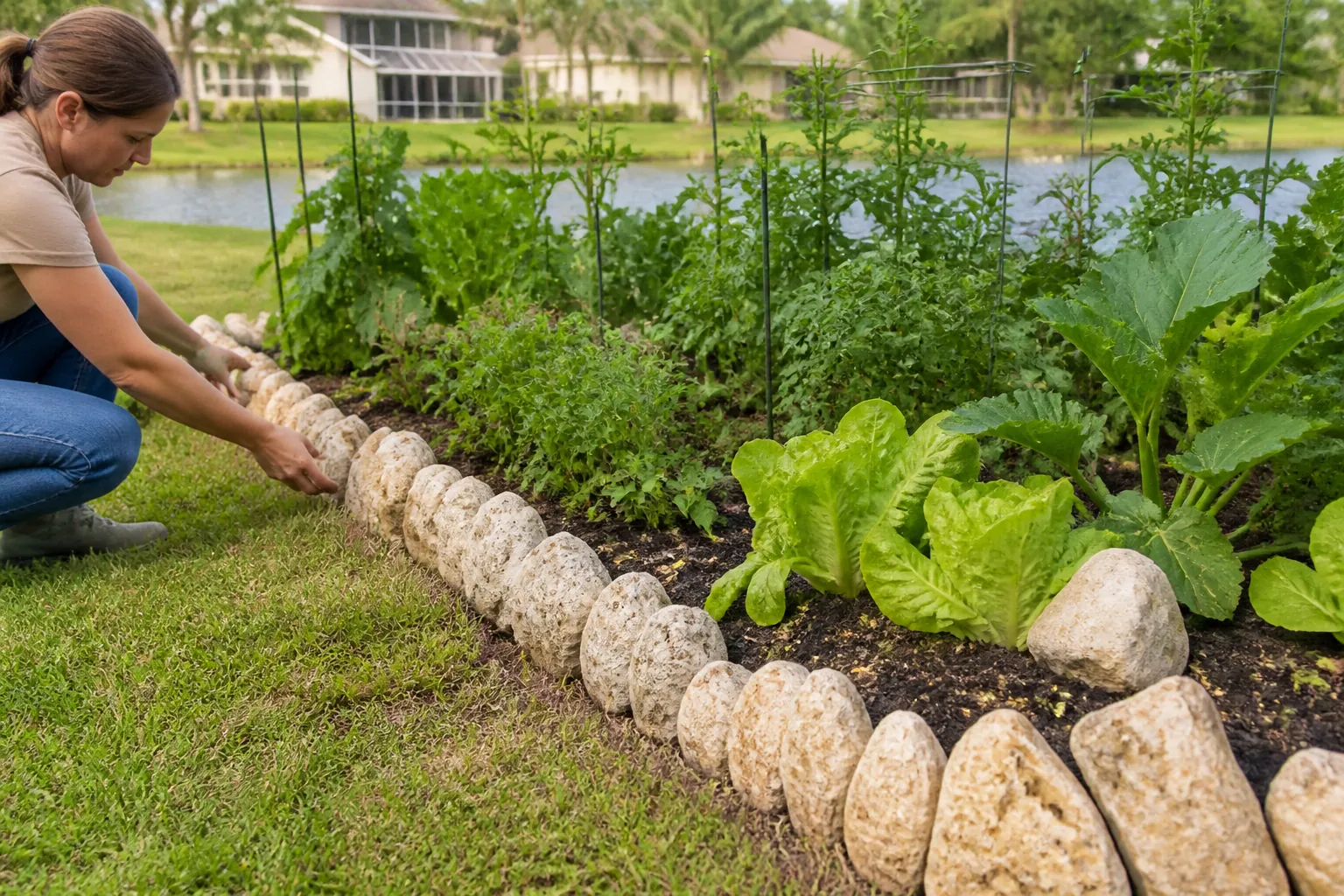
Containment matters because vegetable gardens are active spaces. You pull weeds, carry soil, move hoses, and harvest repeatedly. Without a boundary, everyday activity can gradually push shell into a bed or scatter it across adjacent lawn areas.
Choose edging that suits your bed construction and can withstand your intended use. The top should retain loose material without becoming a difficult step or trip hazard. Check the manufacturer's guidance for securing the edging and consider how it will behave in wet ground.
For raised beds, do not pile shell high against the outside wall. Leave the bed's top edge clearly above the path surface, and keep shell away from joints or access points you need to inspect. If you use wood beds, avoid treating shell as a solution to moisture-related deterioration.
In-ground beds require extra care. Mark the cultivated area clearly and leave room to work without pulling shell inward. If the border makes future digging awkward, revise the layout while it is still easy to change.
Landscape fabric is optional, not automatic. It may help separate material from the underlying soil in some path layouts, but it does not prevent all weeds. Seeds can germinate in debris that accumulates on top, and exposed fabric can snag tools or complicate later changes. Consider drainage, anchoring, and removal before using it.
Calculate Quantity From The Actual Footprint
Measure only the area that will receive shell. A rectangular garden with raised beds does not need shell beneath the beds if your plan is limited to surrounding paths. Break irregular layouts into simple rectangles, calculate each one, and add the results.
Use a placement depth suited to the material and your intended surface. Ask the supplier what depth is appropriate for the available shell rather than assuming that every product behaves alike. Deep loose material may be harder to walk through, while a very thin layer may leave the underlying surface exposed.
For a rectangular section, multiply length by width to find square feet. Convert depth from inches to feet, then multiply area by depth to estimate cubic feet. Divide cubic feet by 27 to estimate cubic yards.
For example, a path measuring 20 feet long and 3 feet wide covers 60 square feet. At a hypothetical depth of 2 inches, the calculation is 60 multiplied by 2/12, or 10 cubic feet. Dividing by 27 gives approximately 0.37 cubic yard. That illustrates the math, not a recommended depth or an available order size.
- Measure path widths at several points if the edges are not parallel.
- Subtract bed footprints and other areas that will remain uncovered.
- Include separate working areas only if you intend to cover them with shell.
- Confirm the supplier's selling unit before converting your estimate into an order.
Share your measurements and intended use when asking about an order. If material is sold by weight rather than volume, do not apply a generic conversion without confirming the relevant product information.
Prepare For Dump Trailer Delivery
Delivery planning should happen before checkout, not after the trailer arrives. Tropical Yards offers dump trailer delivery of plants and coquina shell from St. Augustine to Daytona Beach, including Palm Coast. Confirm your address, order details, and receiving conditions when arranging delivery.
A dump trailer needs a suitable approach and unloading location. Access width, overhead clearance, slopes, surface strength, and turning space can affect whether a proposed spot is usable. Describe these conditions accurately and ask the supplier what clearance is required.
Choose a drop location that keeps loose shell away from vegetable beds, public walkways, drains, and irrigation equipment. A nearby staging area may reduce your wheelbarrow trips, but convenience should not override safe access or property protection.
- Identify buried irrigation, septic components, and other areas that should not carry vehicle loads.
- Move vehicles and personal items out of the agreed access route before arrival.
- Ask whether a ground covering is appropriate for the unloading location and material.
- Plan how you will move the delivered shell from the pile to the garden yourself.
For delivery-focused information, visit the coquina shell delivery page. Delivery supplies the material to an agreed accessible location; it does not mean spreading, edging, garden construction, or yard cleanup is included.
Place The Shell And Care For The Border Yourself
Complete bed construction and edging before spreading shell. Remove unwanted vegetation from the path area yourself, establish the intended grade, and protect nearby crops from accidental contact. Do not cover persistent weeds and assume the shell will eliminate them.
Wear gloves, sturdy footwear, and eye protection when handling rough fragments. Avoid creating airborne dust, and follow appropriate safety guidance if the material is dusty. Use manageable wheelbarrow loads rather than rushing with loads that are difficult to control.
Spread small amounts at a time and check the surface regularly. Keep the agreed depth reasonably consistent, leave edging visible, and avoid blocking drainage openings. Walk the finished route with the tools you normally carry to check whether the width and footing are comfortable.
After rain, inspect the border for displaced fragments or fine material near the beds. Return scattered shell to the path yourself and correct the cause of movement where possible. Remove weeds before their roots become established, and clear accumulated leaves so they do not gradually create a growing layer above the shell.
If you later change the garden layout, collect shell separately rather than digging it into vegetable soil. Keeping it contained from the beginning makes that work easier. Border upkeep is a DIY responsibility, not a maintenance service provided by Tropical Yards.
Order With A Clear Garden Plan
Coquina shell around vegetable gardens works best as a deliberate exterior material, with attention to soil chemistry, drainage, containment, and everyday access. The goal is not to surround every plant with shell. It is to select a useful location where the material fits your garden and remains separate from cultivated soil.
Before ordering, have your measurements, desired use, soil concerns, and delivery access details ready. Tropical Yards supplies coquina shell and also sells palm trees, hibiscus, bougainvillea, ferns, and other tropical plants for customers to plant themselves.
Call Tropical Yards at 772-267-1611 to discuss available coquina shell and dump trailer delivery to Palm Coast. Clarifying the material and receiving location first helps you approach your DIY vegetable garden border with a practical, informed plan.
Call 772-267-1611 to talk through next steps.