A practical guide to coquina shell around vegetable gardens
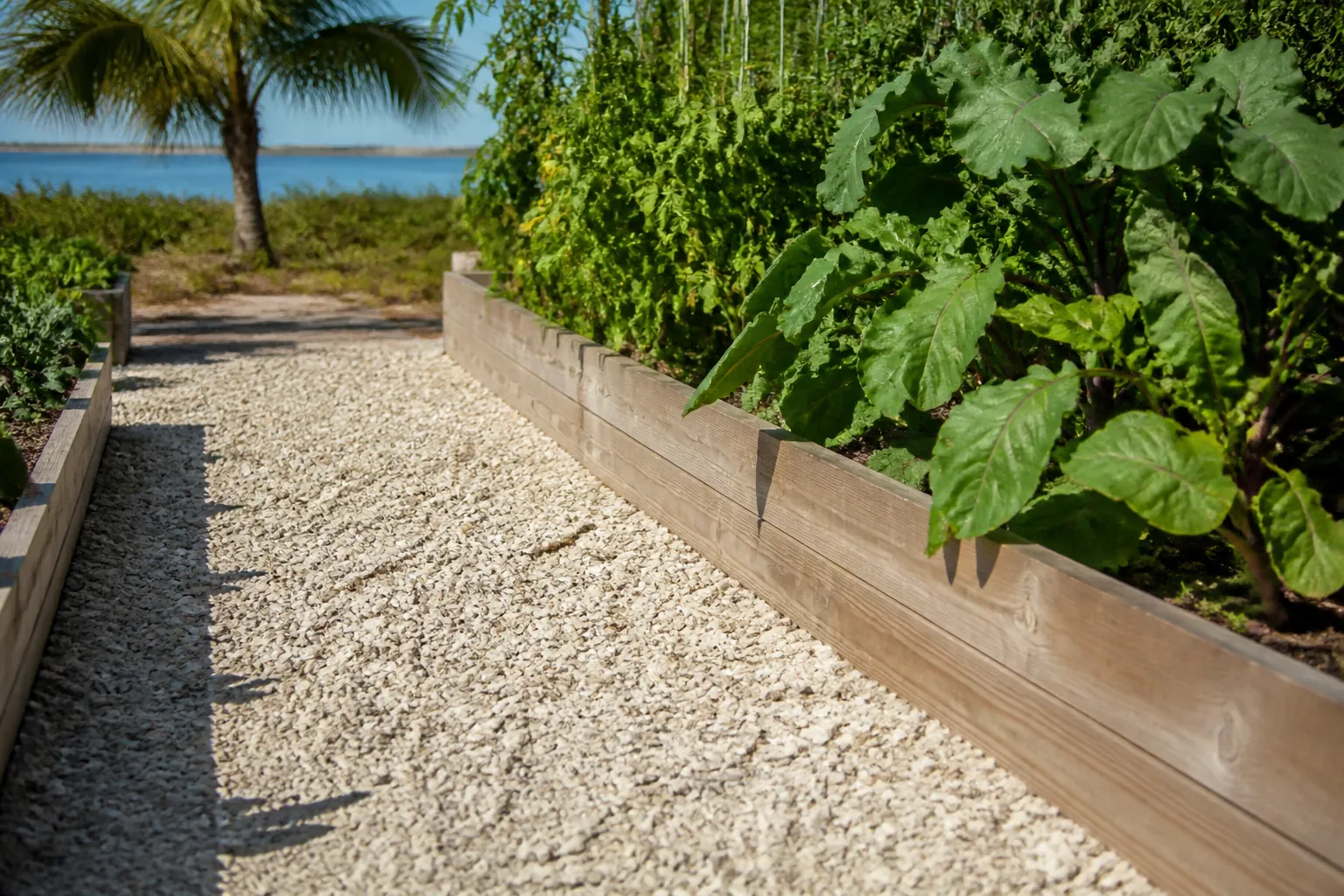
Coquina shell can give the paths around a Florida vegetable garden a light, natural appearance while separating walking areas from growing beds. The important distinction is where you put it. Shell used outside a bed serves a different purpose from mulch placed directly around vegetable roots.
If you are considering coquina shell around vegetable gardens, start with the layout, the soil conditions, and how you use the space. A route for carrying watering cans needs different planning from a narrow border beside lettuce. You also need to think about drainage, wheelbarrow access, and keeping shell fragments out of planting soil.
Tropical Yards supplies coquina shell and tropical plants, with dump trailer delivery from St. Augustine to Daytona Beach. This guide focuses on choosing material, planning your order, and completing the garden project yourself.
Where Coquina Shell Makes Sense Around Vegetable Gardens
The most straightforward use is a defined walking surface outside raised beds or in-ground growing areas. Shell can help distinguish paths from cultivated soil, making it easier to avoid stepping into the root zone. A clear path also gives you a place to stand while harvesting, checking irrigation, or carrying supplies.
It can also work as a border surface between a vegetable garden and another yard area. That border should remain physically separate from soil you regularly turn, amend, or replant. Without a defined edge, fragments can migrate into the beds when you rake paths or pull weeds.
Not every garden needs shell. If you frequently change bed locations, a permanent-looking mineral surface may create extra work. Organic path materials can be easier to move or incorporate into a changing layout. Choose shell because it suits a stable, clearly bounded area, not simply because it is available.
- Use shell on established paths where the bed boundaries are unlikely to move.
- Keep shell outside areas where you dig planting holes or mix compost into the soil.
- Leave enough path width to carry tools and reach crops without stepping into beds.
- Plan a separate, smooth route if small wheels or mobility equipment struggle on loose material.
Keep Shell Separate From Vegetable Growing Soil
Coquina shell is largely calcium carbonate. Its effect on nearby soil depends on factors such as particle size, contact with soil, moisture, and existing soil chemistry. Fine particles have more exposed surface area than larger pieces. Do not assume that all shell products behave identically or that a shell path will leave adjacent soil chemistry unchanged.
Many vegetables grow well in mildly acidic to near-neutral soil, but crop preferences vary. Raising an already high soil pH can make some nutrients less available. Conversely, acidic soil may need a measured amendment, but a shell path is not a substitute for a soil-test-based liming recommendation.
Before placing shell close to in-ground beds, get a soil test through an appropriate Florida soil testing service or contact your local UF/IFAS Extension office for guidance. Use the results to manage the growing soil separately. Do not add shell to vegetable beds as a calcium treatment without knowing whether that amendment is appropriate.
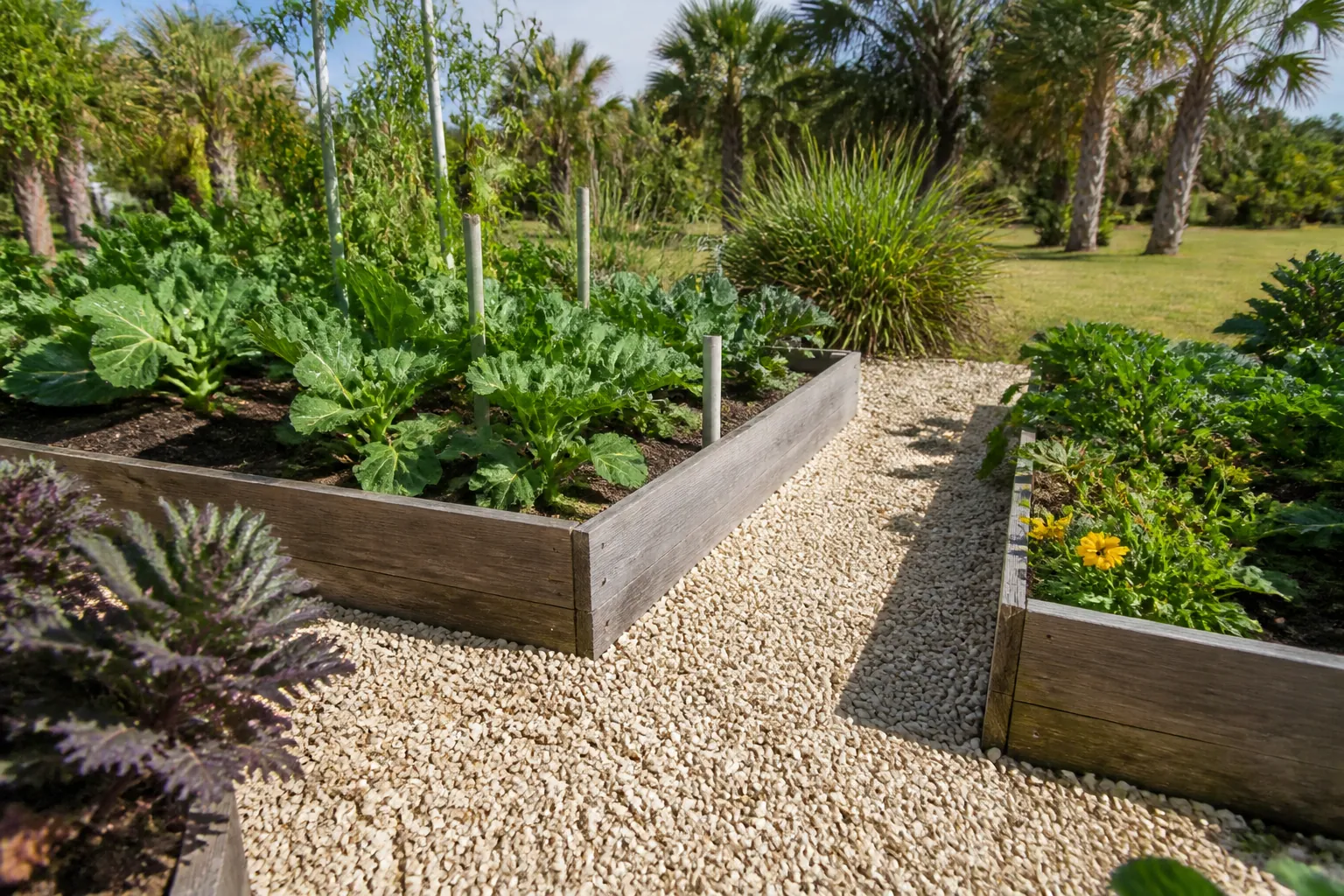
Raised beds make separation easier, especially when their sides extend above the finished path. However, edging and bed walls are containment tools, not chemical barriers. Water can still move between areas. Keep shell dust and fragments out of the bed during placement, and avoid directing path runoff into the growing soil.
For the bed surface itself, choose a mulch appropriate for your crops and growing method. Keep that decision separate from your path-material purchase. Shell around a garden does not replace compost, balanced fertilization, or a suitable planting mix.
Check The Shell Material Before You Order
The name coquina shell does not tell you everything about a load. Materials may differ in fragment size, the amount of fines, color, and the proportion of other naturally occurring material. Those differences affect appearance, handling, and how the finished path feels underfoot.
For a vegetable garden, prioritize practical use over appearance alone. Large or sharp fragments may be uncomfortable for barefoot walking. Very loose material may shift under narrow wheels. Finer material may behave differently after rain or repeated foot traffic. Ask what the currently available shell looks like and how it is sold.
Also ask about the material's source and processing. Do not assume shell is washed, screened, salt-free, or suitable for direct contact with food-growing soil unless the supplier can support those descriptions. Garden paths should remain separate from crop beds regardless.
- Ask about the typical fragment size and whether the material contains noticeable fines.
- Request a current photo or view the material before deciding on its appearance.
- Explain whether the intended area is a walking path, a bed border, or both.
- Confirm the ordering unit and how to translate your measurements into that unit.
- Ask whether there are handling considerations for the material currently available.
Use the Tropical Yards coquina shell page as the starting point for general material information. For this garden-specific project, have your bed layout and intended use ready when asking questions about a purchase.
Plan Florida Drainage Before Covering The Paths
Florida gardens can experience intense rain, sandy soil, compacted areas, or seasonally wet ground. Shell does not automatically solve drainage problems. Water movement depends on the underlying soil, grade, path construction, and where runoff can go.
Walk the proposed path after rain before ordering material. Look for standing water, soil washing toward beds, and low spots near gates. If water already collects there, covering the surface can hide the problem without fixing it. Resolve the cause before adding a finished path layer.
Keep the path below the top of the garden bed so shell and runoff are less likely to move into the growing area. Avoid building a raised strip that traps water beside a bed. Also keep the finished grade away from structures and drainage features that need to remain open.
Do not assume landscape fabric is always necessary. It may help separate shell from some underlying soils, but it does not prevent every weed and can complicate future changes. Roots and debris can accumulate above it. If you use a separation layer, choose it for the site conditions rather than treating it as a drainage solution.
Work carefully around irrigation lines. Mark their routes before clearing or grading a path, and preserve access to valves and connections. A garden surface should make routine checks easier, not bury the parts you need to inspect.
Measure The Area And Estimate Your Shell Order
Measure only the space that will receive shell. Do not calculate the entire garden footprint and then subtract beds from memory. Sketch the layout and divide irregular paths into rectangles or other simple shapes. Measure each section separately, then add the areas together.
For a rectangular section, multiply length by width to get square feet. Once you have selected a suitable finished depth, multiply the area by that depth in feet to estimate cubic feet. Divide cubic feet by 27 to convert the result to cubic yards.
For example, a path area of 120 square feet at a planned depth of 2 inches has a calculated volume of about 20 cubic feet, or 0.74 cubic yard. This is a geometry example, not a recommended depth or an ordering guarantee. The appropriate depth depends on the material and the condition of the prepared surface.
If shell is sold by weight, you will need supplier guidance to convert your volume estimate. Do not use a random online density value as though it precisely describes the available load. Moisture, fragment size, and material composition can affect the relationship between weight and volume.
- Include side paths and turning areas that belong in the finished layout.
- Exclude bed interiors and any areas that will use a different surface.
- Discuss uneven ground or expected settling before finalizing the quantity.
- Keep your measurements available when confirming the order with Tropical Yards.
Do not automatically order a large extra amount. Surplus shell needs a storage location and can become difficult to keep separate from planting soil. Ask how your estimate should be adjusted for the actual project and available material.
Prepare For Dump Trailer Delivery
Delivery planning matters because the best unloading location is not necessarily beside the vegetable beds. A dump trailer needs appropriate access and space to operate. Soft ground, tight turns, low branches, overhead lines, and narrow gates can limit where a load can be placed.
Tropical Yards offers dump trailer delivery of plants and coquina shell from St. Augustine to Daytona Beach. Confirm your address, access conditions, and proposed unloading spot when arranging your order. Do not assume a trailer can enter a fenced garden or cross a lawn without affecting the surface.
Choose a staging location from which you can move the material yourself. A driveway or another suitable accessible surface may be more practical than a narrow garden entrance. If you plan to use a tarp or protective sheet, discuss that arrangement beforehand and make sure it will not create an unloading hazard.
- Describe driveway width, gate openings, and any turns along the access route.
- Identify overhead obstacles and underground features that could affect safe access.
- Keep vehicles, tools, and other objects out of the agreed unloading area.
- Plan a wheelbarrow route that does not cross vegetable beds or damage irrigation.
- Confirm delivery details before preparing a receiving area around assumed equipment dimensions.
Dump trailer delivery brings the purchased material to an agreed accessible location. It does not include spreading shell, installing edging, preparing paths, or cleaning up the project area. Arrange your own tools and help before the load arrives.
Place The Shell Yourself With Clear Bed Boundaries
Begin by marking the path edges and checking that the layout works with a wheelbarrow, watering equipment, and normal harvesting movements. A path that looks generous on paper can feel cramped once mature plants extend beyond the bed.
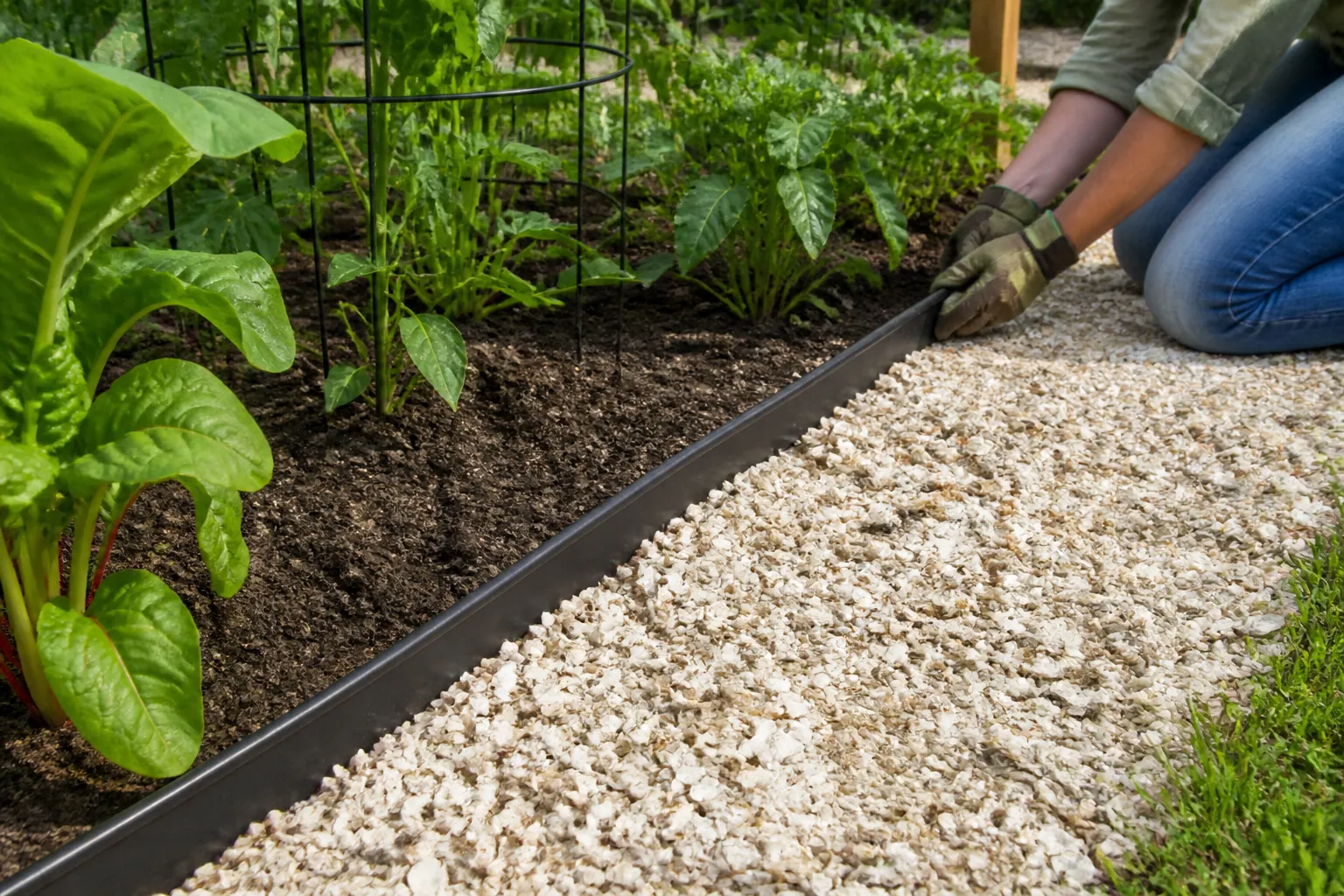
Remove unwanted vegetation from the path area yourself and prepare a reasonably even surface without digging into nearby crop roots. Follow any chosen edging manufacturer's directions. The edge should contain shell without creating a trip hazard or blocking water where it needs to move.
Move shell in manageable loads. Wear gloves, sturdy closed-toe footwear, and eye protection when handling material that may scatter. If dusty conditions develop, reduce dust where practical and use respiratory protection appropriate to the exposure and product guidance. Keep children and pets away from the active work area.
Spread the material gradually rather than dumping large piles against bed walls. Check the depth at several points and keep the finished surface below the bed edge. Avoid burying irrigation fittings, gate clearances, and inspection points.
Walk the finished route in your usual gardening footwear and test it with the equipment you actually use. Adjust uneven spots before making the path part of your daily routine. Keep tools used for moving shell separate from soil-mixing work until loose fragments have been removed.
Care For The Garden Without Mixing Materials
A shell path still needs owner attention. Windblown soil, fallen leaves, and decomposing debris can collect between fragments and provide places for weeds to grow. Pull small weeds before they establish and avoid tossing them into the vegetable beds if they carry seeds.
Use care when raking near a bed edge. Pulling material toward the growing area can introduce shell fragments into the soil. When adding compost or replacing bed mulch, work from a container or tarp so loose material does not build up throughout the path.
Check edges after heavy rain and after moving loaded equipment. Correct displaced shell before it reaches the planting area. If the path repeatedly washes out, reassess the grade or runoff pattern rather than simply adding more material.
Do not use herbicides near edible crops without checking the label for that exact setting and application method. Spray drift and runoff deserve particular attention around vegetable gardens. Hand removal may be a practical option for small, clearly defined paths.
Continue testing and managing your vegetable soil according to crop needs. Leaf yellowing, weak growth, or poor fruit development can have several causes. Do not assume shell is responsible, and do not add amendments blindly in response.
Build A Purchase Plan That Fits Your Garden
Before buying, bring together three decisions: the exact shell-covered area, the separation between paths and growing soil, and the accessible delivery location. Those details make it easier to discuss material suitability and quantity without confusing the path project with the needs of the vegetables.
If you are also choosing plants for other parts of the property, Tropical Yards sells palm trees, hibiscus, bougainvillea, ferns, and other tropical plants. Consider their mature size and light requirements separately so future growth does not crowd the vegetable garden or shade crops unexpectedly.
For coquina shell sales and dump trailer delivery questions, call Tropical Yards at 772-267-1611. Share your measurements, intended garden-path use, and delivery access details. You can then plan your purchase and DIY work with a clear understanding of the material and how it will reach your property.
Call 772-267-1611 to talk through next steps.