A Florida DIY guide to renting compaction equipment for coquina shell
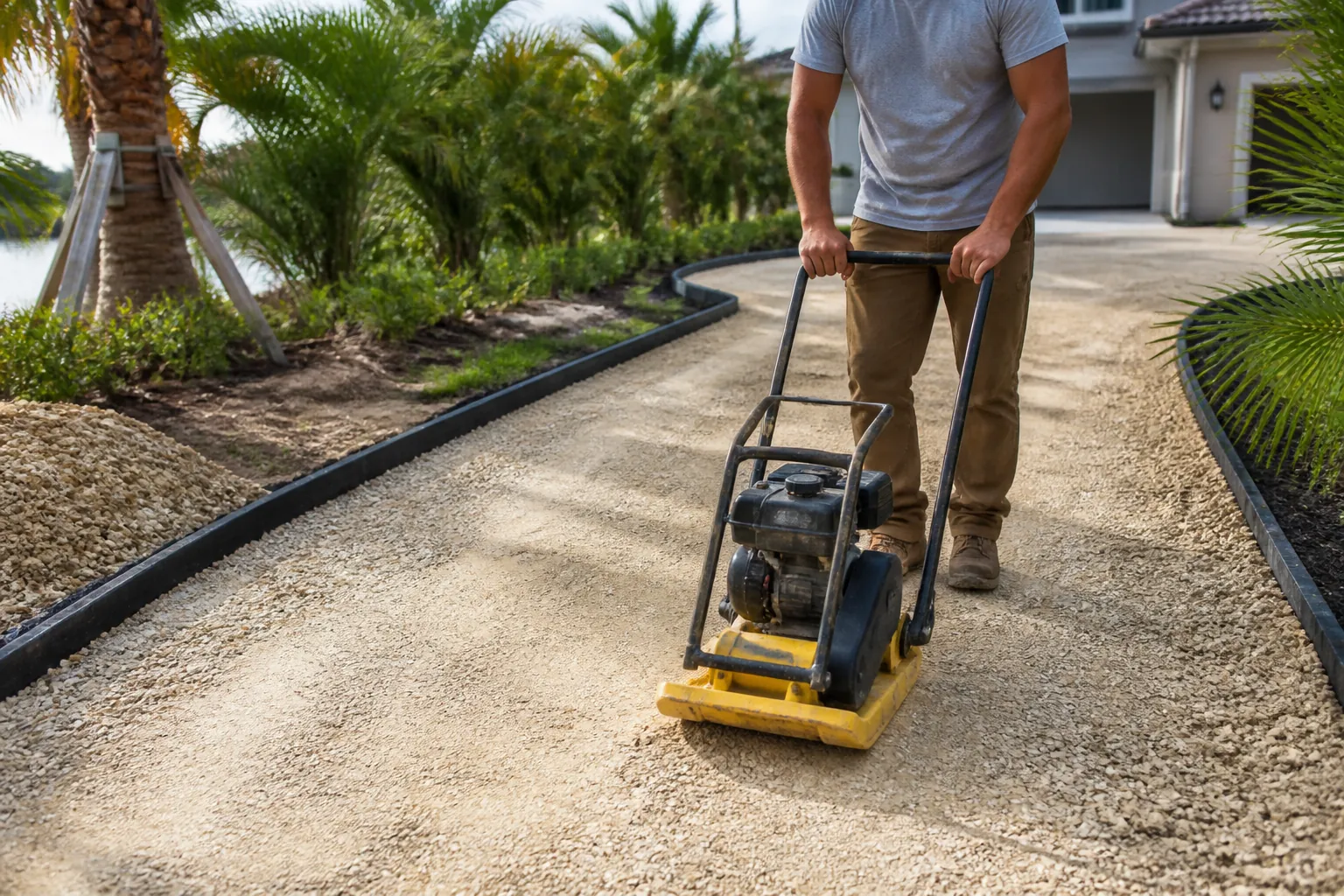
A coquina shell surface depends on more than the material you order. The condition of the ground, drainage, shell gradation, moisture, and compaction method all affect how the finished surface behaves. For Florida homeowners handling a project themselves, choosing rental equipment should come after understanding the material and preparing the site.
This guide to coquina shell compaction equipment rental explains what to ask a rental provider, how to match a machine to your project, and how to avoid common DIY mistakes. Tropical Yards supplies coquina shell and tropical plants, with dump trailer delivery from St. Augustine to Daytona Beach. Equipment rental and landscaping labor are not services provided by Tropical Yards.
Start With The Shell And The Intended Use
Before reserving a compactor, decide what the surface needs to do. A lightly used garden path has different requirements from an area intended for vehicle traffic. A decorative shell bed may not need machine compaction at all, especially when loose texture is part of the intended appearance.
Coquina shell materials can differ in particle size, the amount of finer material, and how readily they settle together. A blend containing smaller particles may pack differently from a product dominated by larger shell pieces. Do not assume that every shell product will form the same firm surface under the same machine.
Start with the coquina shell information page when considering material for your project. Then ask about the characteristics of the material currently available before choosing your compaction approach. Keep purchasing questions separate from equipment questions: the supplier can describe the shell, while the rental provider should explain machine selection and operation.
- Identify whether the project is a walking path, decorative area, or surface expected to carry heavier loads.
- Ask whether the available shell contains fines and whether it is commonly selected for compacted applications.
- Check that the intended surface and drainage arrangement comply with any applicable local or community requirements.
- For vehicle-bearing areas or unstable ground, obtain qualified guidance rather than relying on a small rental compactor alone.
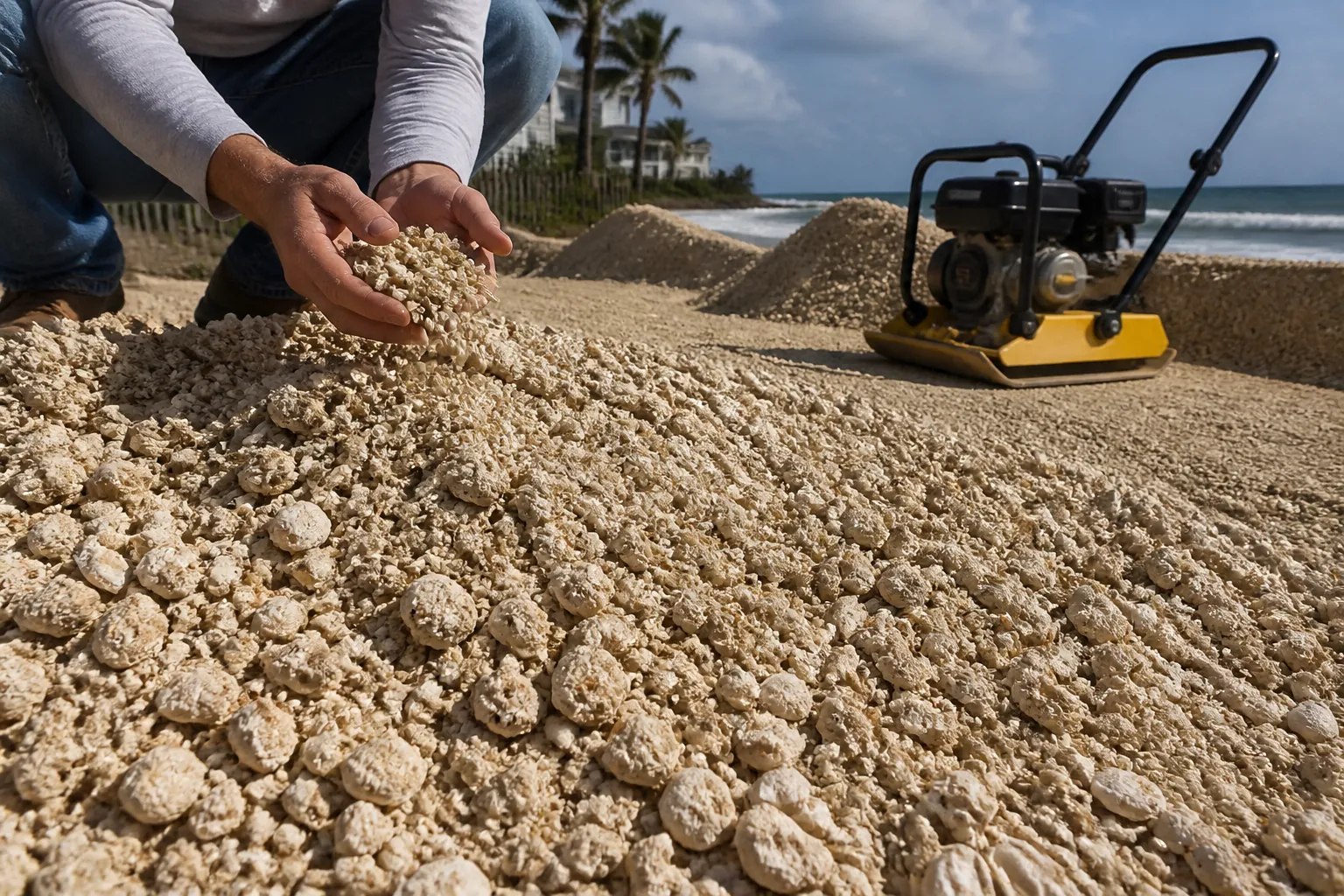
Understand What Compaction Can And Cannot Do
Compaction reduces empty spaces within suitable material and helps particles settle into closer contact. It can improve firmness, but it does not turn an unsuitable shell blend into a structural base. It also cannot correct organic soil, hidden debris, or drainage problems beneath the surface.
A machine that makes the top look smooth may leave deeper material loose. Likewise, repeated passes cannot reliably stabilize ground that is saturated or pumping water. If the underlying soil moves underfoot or develops ruts easily, stop and investigate before adding more shell.
Florida sites often combine sandy soils, seasonal downpours, and low areas where water collects. Conditions can vary substantially across one property. The preparation that works on a well-drained patch of firm sand may not work several feet away where runoff gathers.
Think of compaction as one step within a larger DIY sequence: confirm the intended use, evaluate drainage, prepare a suitable foundation, place manageable layers, and compact according to equipment guidance. Skipping the earlier steps usually leaves the machine trying to solve the wrong problem.
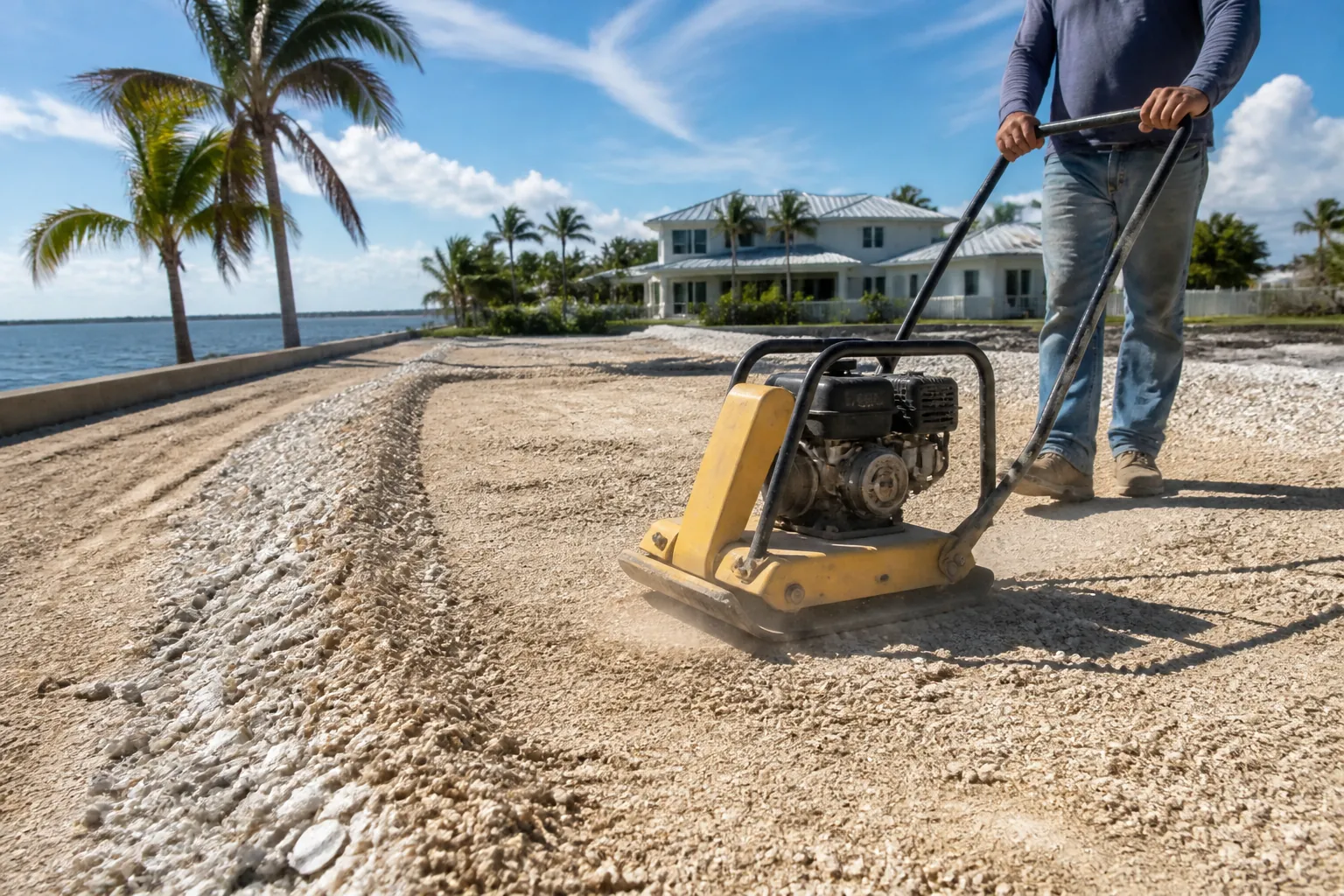
Compare Common Rental Equipment Options
Rental yards may carry several machines described as compactors, but they are not interchangeable. Tell the provider that you are working with coquina shell and describe its particle sizes, your project dimensions, and the underlying soil. Ask for a recommendation based on those details rather than selecting equipment by appearance.
Forward plate compactors
A forward plate compactor uses a vibrating base plate and moves primarily forward. It is commonly considered for granular materials in accessible, relatively small areas. Whether a particular model suits your shell depends on the material, layer thickness, machine specifications, and site conditions.
Ask about the machine's weight, approved applications, and recommended lift thickness. Also ask how to turn it, stop it, and handle edges safely. A plate that is convenient for a narrow path may be inefficient across a much larger open area.
Reversible plate compactors
A reversible plate compactor can move forward and backward. Some models are heavier and offer greater compaction capability than smaller forward plates. That can be useful in suitable conditions, but more force is not automatically better for shell.
Heavier equipment may be harder to transport and maneuver. Excessive vibration or repeated passes can also change shell texture by breaking particles. Discuss both the performance requirements and the finished appearance you want before choosing this type of machine.
Rammers and rollers
A rammer applies concentrated impact and is often selected for specific soil or confined-space applications. It is not automatically the right choice for a broad shell surface. Ask the rental provider whether it is appropriate for your material rather than substituting it for a plate compactor.
Rollers can cover larger areas, but their suitability depends on access, operating space, soil conditions, and load requirements. They also bring additional transport and operating considerations. If the project requires substantial equipment or structural performance, professional assessment may be more appropriate than trial-and-error DIY rental.
Ask These Questions Before Booking A Rental
A useful rental conversation starts with a clear project description. Bring measurements, photographs, and any available information about the shell. Explain whether access is level, whether there are narrow gates, and whether the work area is near structures or buried utilities.
- Ask which machine is suitable for the specific shell gradation and the soil beneath it.
- Ask what layer thickness the selected machine can handle under your conditions.
- Request an operating demonstration and the manufacturer's safety instructions.
- Confirm the machine's weight and the approved method for loading, unloading, and securing it during transport.
- Ask whether the rental includes any loading assistance and which transport equipment you must provide.
- Confirm fuel requirements, return conditions, and what to do if the machine stops working.
- Ask whether the machine has operating restrictions on slopes or near walls, utilities, and other sensitive features.
Do not assume two compactors with similar dimensions have the same capabilities. Machine specifications matter, and the provider should be able to explain the model being offered. If the equipment recommendation is unclear, resolve that uncertainty before scheduling delivery of your shell.
Prepare The Site Before The Rental Clock Starts
Finish your layout and site preparation before collecting the compactor. Mark the proposed surface, identify drainage paths, and decide where the shell will be unloaded. Having these decisions settled reduces the temptation to rush because rental time is running out.
Locate buried utilities before excavation or driving stakes. Florida homeowners can contact the appropriate utility-location service and should also account for private irrigation, lighting, and other lines that may not be included in standard utility marking. Do not compact over uncertain shallow infrastructure.
Remove unsuitable organic material yourself or arrange any needed work separately. Avoid placing shell over vegetation, loose debris, or soft spots simply to hide them. A buried weak layer remains a weak layer after the surface is compacted.
Where edging is part of your plan, make sure it is compatible with the intended loads and compaction method. Decide whether the machine can reach the edges safely. Keep adequate clearance from walls, posts, and irrigation components, following the equipment provider's instructions.
For persistent drainage problems, steep grades, or surfaces carrying vehicles, seek advice from a qualified professional. Tropical Yards supplies materials and plants; it does not provide site design, excavation, installation, or yard cleanup.
Coordinate Shell Delivery With Equipment Access
Dump trailer delivery needs a practical unloading location. The delivery vehicle and trailer need suitable access, space to maneuver, and a safe place to unload. Describe gates, overhead branches, driveways, soft ground, and other potential obstacles when discussing your order.
Review coquina shell delivery information before selecting a drop location. Confirm the delivery arrangements directly rather than assuming material can be unloaded anywhere on the property. Conditions at the site may limit available unloading options.
Keep the shell pile from blocking the route you will use to move material or transport the compactor. If you plan to distribute shell by wheelbarrow, consider the distance, turning space, and ground conditions between the unloading point and the project area.
Coordinate timing carefully. Ideally, the site is ready and delivery details are confirmed before the rental begins. Leave room in your schedule for weather or access changes rather than arranging every step with no flexibility.
- Confirm that the selected unloading area is accessible and acceptable before delivery day.
- Keep people, pets, and parked vehicles away from the unloading area.
- Provide clear information about gates, driveway limitations, and overhead obstructions.
- Plan material handling so the shell pile does not obstruct drainage or neighboring property access.
Place Shell In Manageable Layers
A frequent DIY mistake is spreading the full planned depth and expecting a small compactor to firm everything in one operation. Compaction effectiveness decreases with depth. The appropriate lift thickness depends on the machine, the shell, and the foundation beneath it.
Follow the rental provider's and manufacturer's guidance for the specific machine. If your project requires multiple layers, spread and compact each lift before adding the next. Keep each layer reasonably uniform so the machine is not working across alternating deep pockets and thin patches.
Begin with a small test area where possible. Observe how the shell responds, whether particles shift excessively, and whether the ground beneath remains stable. A test area can reveal problems before you distribute the entire order.
Rake out obvious high spots and hollows before operating the machine. Do not use repeated compactor passes as a substitute for distributing material evenly. Maintain the intended drainage direction, and avoid creating a depression that will collect water.
If the shell becomes excessively crushed, the surface develops ridges, or the soil underneath begins moving, stop. Reassess the material, moisture, lift thickness, and equipment choice before continuing.
Manage Moisture And Florida Weather
Moisture can influence how fine particles settle, but there is no universal watering rule for every coquina shell product. Ask about the supplied material and follow appropriate equipment guidance. A light application may be useful for some blends, while saturating the area can create entirely different problems.
Avoid compacting visibly waterlogged ground. If water squeezes upward, footprints fill with water, or the surface behaves like a soft sponge, let conditions improve and investigate drainage. More machine passes are unlikely to resolve saturation.
Watch the forecast before scheduling delivery and rental. Heavy rain can interrupt spreading, wash fines from exposed areas, or make equipment access unsafe. Very dry conditions may increase dust, especially around material containing fine particles.
Use sensible dust controls that do not flood the work area. Follow the equipment instructions and applicable safety guidance for respiratory protection. Keep bystanders away, and avoid working when wind carries dust toward neighboring homes or occupied outdoor spaces.
Operate Safely And Check Progress
Read the operating instructions before starting. Wear the protective equipment recommended for the machine, including suitable footwear, eye protection, and hearing protection. Keep loose clothing and other items clear of moving parts, and maintain control of the handles while the equipment is running.
Use combustion-powered equipment only in locations permitted by the manufacturer. Never run it in a garage, enclosed courtyard, or other inadequately ventilated space. Stop the machine before refueling and follow the provider's instructions for cooling and fuel handling.
Plan a systematic pattern with the overlap recommended for the machine. Avoid concentrating many passes in one spot while leaving adjacent areas untreated. There is no single pass count that proves every shell surface is adequately compacted.
- Check for movement, rutting, and soft spots rather than judging progress only by surface appearance.
- Stop if the compactor becomes difficult to control or the foundation begins shifting.
- Keep hands and feet away from the plate, moving components, and pinch points.
- Use approved loading methods instead of trying to lift a heavy machine without suitable help or equipment.
- For structural or vehicle-bearing applications, use specified verification methods rather than a visual inspection alone.
Check The Finished Area And Plan Your Purchase
After compaction, inspect the surface for uneven transitions, displaced edging, and areas that hold water. Walk the area cautiously and note spots that move underfoot. Correct the underlying cause of a weak area rather than covering it with a thin scattering of additional shell.
Observe the project after its first significant rain. Water movement may reveal a low spot or runoff path that was not obvious during dry weather. Address localized issues through appropriate DIY adjustments or independent professional advice when the problem exceeds your experience.
Keep your equipment decision tied to the actual material and intended use. A suitable compactor, careful preparation, manageable layers, and realistic weather planning are more useful than choosing the largest available machine.
For coquina shell purchasing questions and dump trailer delivery planning from St. Augustine to Daytona Beach, call Tropical Yards at 772-267-1611. Tropical Yards also sells palm trees, hibiscus, bougainvillea, ferns, and other tropical plants. Arrange equipment rental separately with a rental provider, and complete your own project work or coordinate it independently.
Call 772-267-1611 to talk through next steps.