A practical plan for buying and using coquina shell in Florida
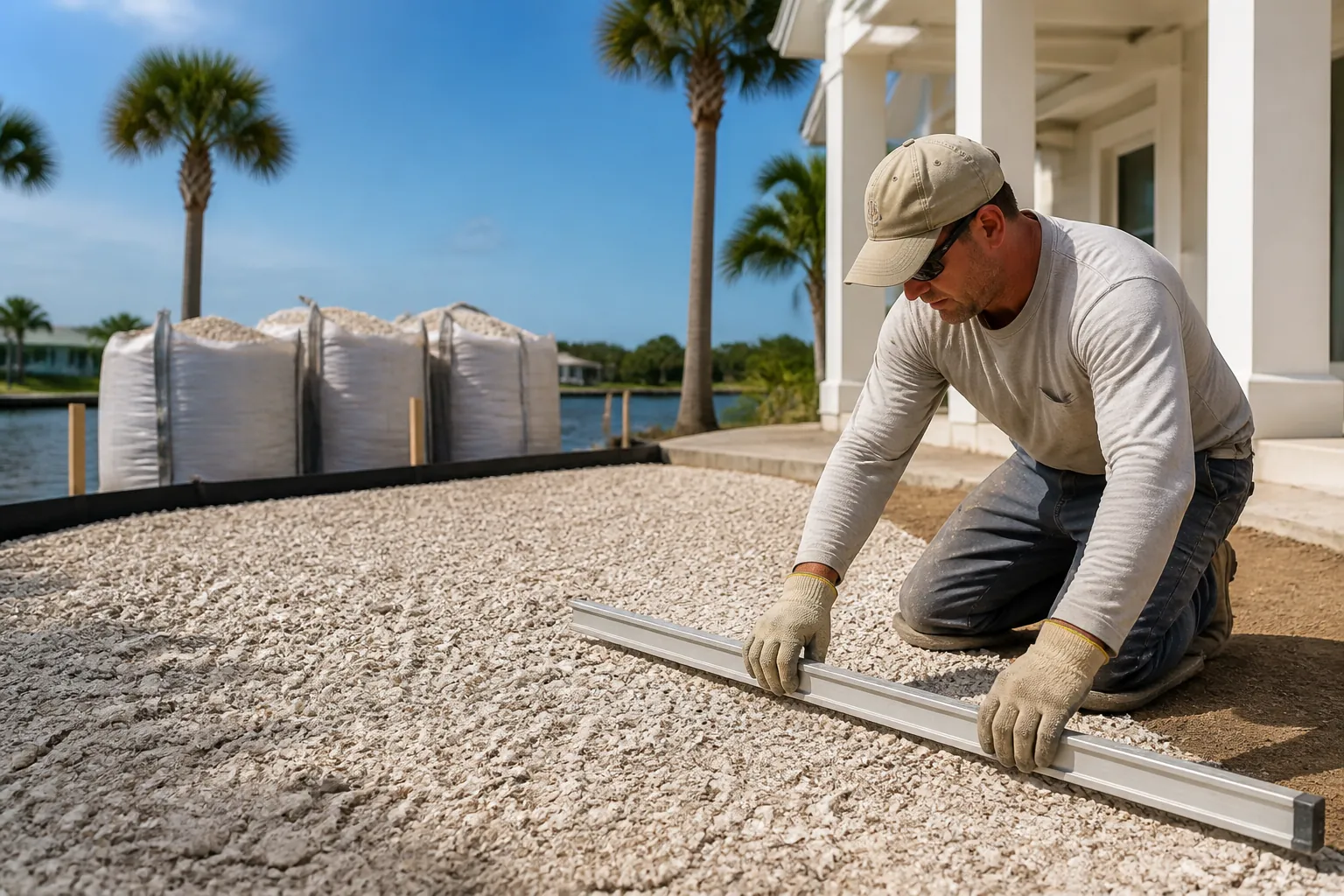
A successful coquina shell project starts before material reaches your property. You need a defined area, a realistic depth, a suitable base and a delivery location that works for a loaded dump trailer. Those decisions help connect your material order to the work you or your independently hired contractor will actually perform.
This guide to coquina shell contractor project planning focuses on the buying side: measuring, checking site conditions, coordinating delivery and preparing to use the material. Tropical Yards supplies coquina shell and tropical plants, with dump trailer delivery from St. Augustine to Daytona Beach. Tropical Yards does not design landscapes, install materials, prepare sites or maintain yards.
Start with the coquina shell material page for the main product overview. Then use the focused planning sections below to organize your measurements, delivery arrangements and DIY work without confusing material supply with installation services.
Define The Project Before Choosing A Quantity
Begin by writing down what the area needs to do. A decorative bed surface, a lightly used garden path and a utility area do not necessarily need the same preparation. Appearance matters, but traffic, drainage and the condition of the ground underneath also shape the project.
Sketch the space and mark doors, gates, downspouts, irrigation equipment and existing plants. Include any location where shell could migrate onto a sidewalk or into turf. A simple drawing makes it easier to discuss material needs without relying on a rough impression of the yard.
For areas that support vehicles, receive concentrated runoff or connect to public drainage, seek appropriate professional guidance before choosing a construction method. Material availability alone does not establish whether a particular surface is suitable or permitted.
- Describe the intended use in a complete project note, such as a walking path between two garden beds.
- Identify the boundaries so that your measurements match the area you intend to cover.
- Record existing surface conditions, including exposed soil, old aggregate, roots and low spots.
- Decide who will prepare the area and spread the shell before arranging delivery.
Keep the first material order tied to a defined phase. If you are improving several separate areas, measure them individually. That approach makes it easier to change one part of the plan without recalculating the entire property.
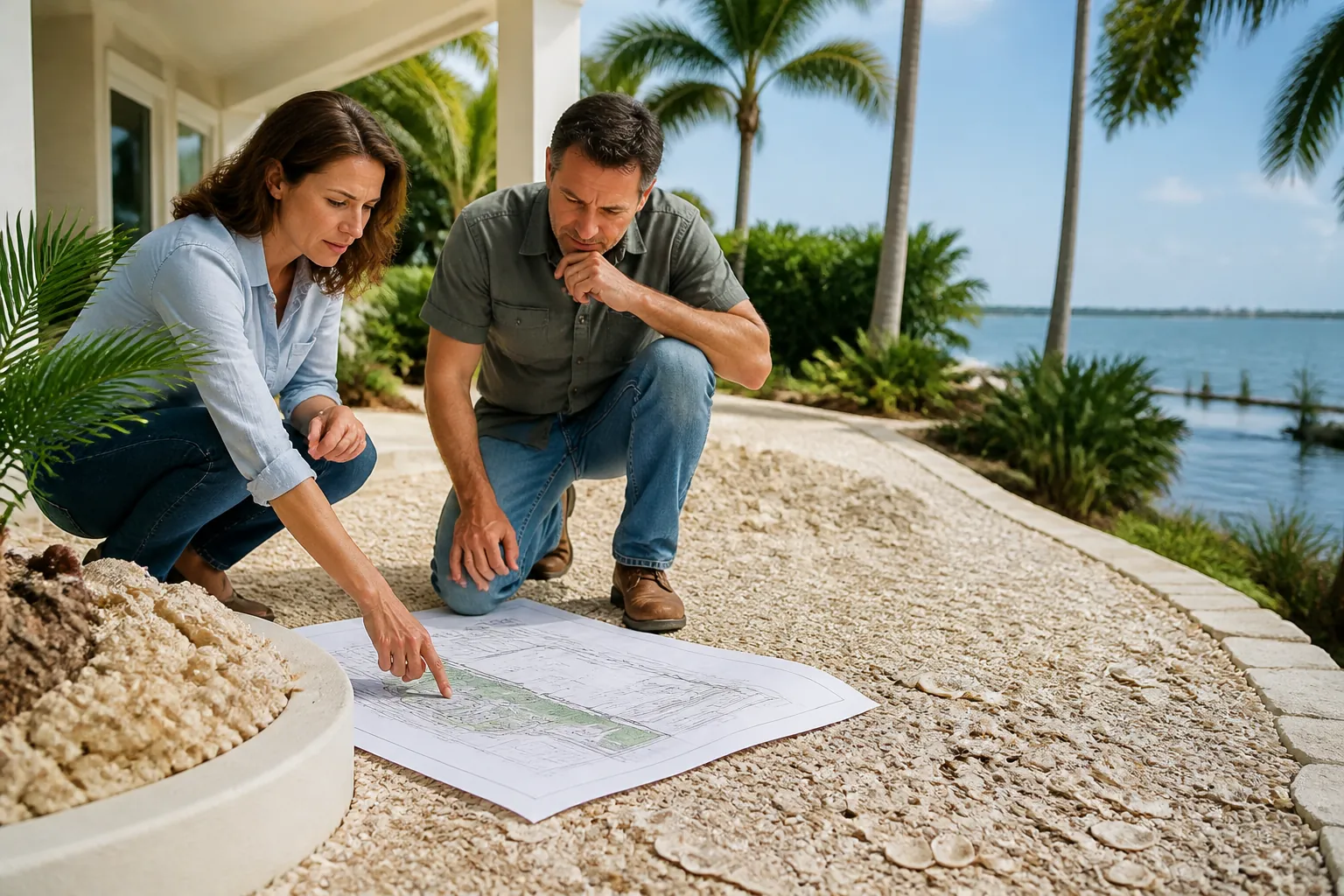
Inspect Drainage, Soil And Nearby Plants
Florida properties can have sandy ground, compacted fill or pockets of slower-draining soil within the same yard. Walk the project area after rain and look for standing water, erosion channels and sediment movement. Shell should not be used as a substitute for addressing an underlying drainage problem.
Check the finished height against neighboring surfaces. Adding material can create a raised edge that redirects water or traps it against a structure. Do not cover drainage openings, raise material against siding or obstruct access to irrigation and utility components.
Shell-based materials can influence soil chemistry because they contain calcium carbonate. Before placing shell near established plants, consider their preferred soil conditions. A soil test is more useful than assuming every tropical plant will respond well to the same surrounding material.
Keep the root flare of trees and the crowns of smaller plants exposed. Avoid piling shell against trunks or stems. If the proposed surface surrounds existing roots, discuss preparation methods with a qualified professional rather than cutting roots to achieve a perfectly level base.
- Observe where roof runoff enters the area and whether it carries material toward drains.
- Locate irrigation heads so the finished surface will not bury or block them.
- Check whether nearby plants prefer acidic soil before using shell throughout their beds.
- Resolve persistent pooling or erosion before treating the surface as ready for material.
If you are working near wetlands, a shoreline, an easement or a regulated drainage feature, check applicable local requirements first. A modest-looking surface project can still affect water movement or protected areas.
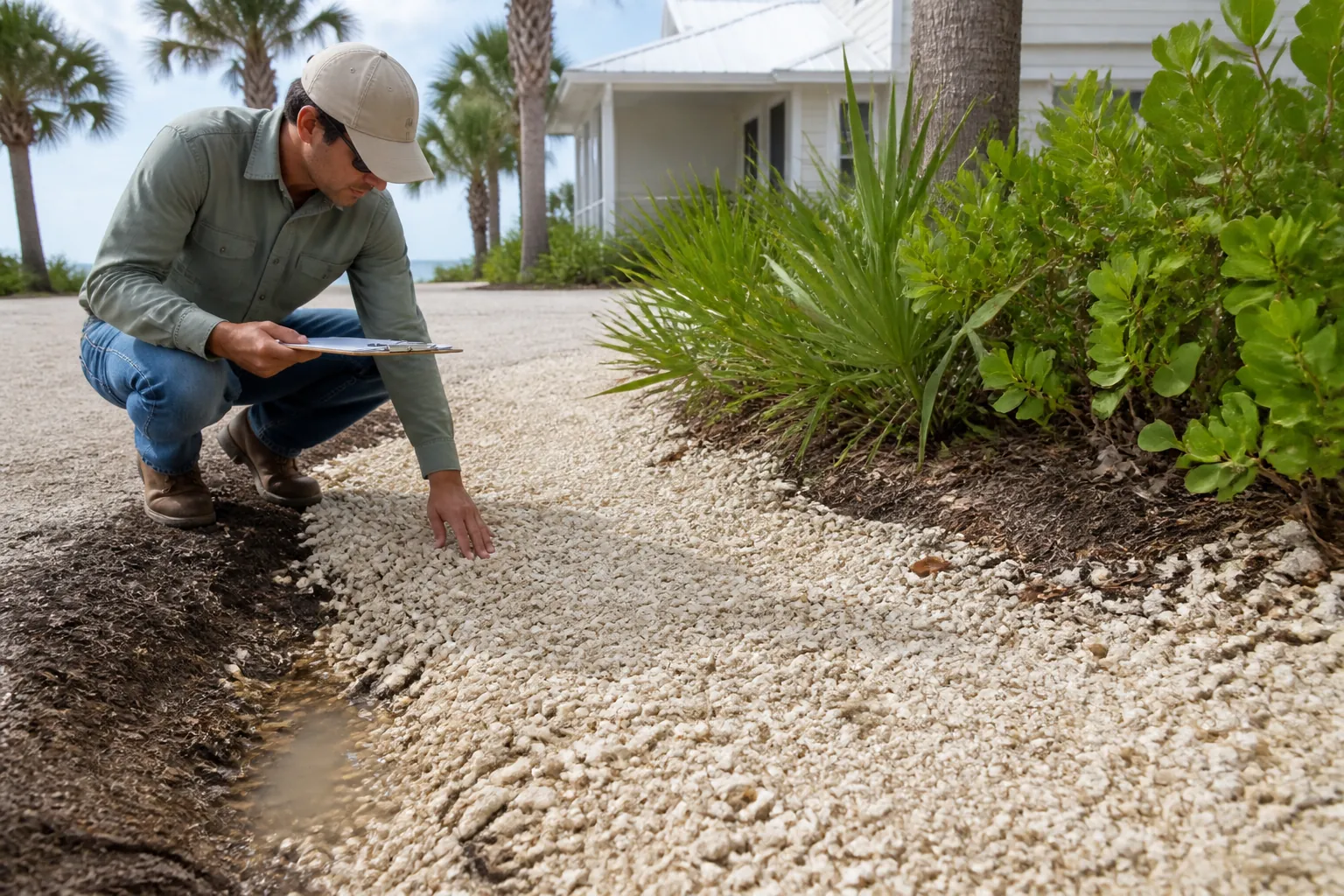
Measure Area And Calculate A Working Volume
Measure in feet and divide complicated spaces into simple shapes. For a rectangle, multiply length by width. For a triangle, multiply the base by the perpendicular height and divide by two. For a circle, multiply the squared radius by pi. Add the separate areas for your total square footage.
For curved paths, take width measurements at several points instead of using only the widest section. Subtract substantial spaces that will remain uncovered, but do not spend excessive time deducting every small plant opening. Note where your figures are estimates.
Once you have a target depth, calculate a preliminary volume using this formula: square feet multiplied by depth in inches, divided by 324, equals cubic yards. This is a geometric estimate, not a promise of final coverage.
For example, an area measuring 12 feet by 18 feet contains 216 square feet. At an illustrative depth of 2 inches, the calculation is 216 multiplied by 2, divided by 324, or approximately 1.33 cubic yards. The example demonstrates the math; it does not recommend a universal installation depth.
Actual needs can change with uneven ground, settling, preparation methods and the material's composition. Ask how the supplier measures the product and what ordering units are available. If sales are measured by weight, request product-specific guidance rather than using a generic online weight conversion.
- Write down the measured area and the assumed depth so someone else can check the calculation.
- Separate decorative coverage from areas that require a different base or construction method.
- Discuss settling and uneven surfaces before deciding whether to include an allowance.
- Confirm the quantity being ordered in the supplier's actual sales unit.
Avoid selecting an arbitrary extra amount without a place to use or store it. Excess shell still needs space and handling, while an undersized order can interrupt your work. Clear measurements support a more practical purchasing conversation.
Confirm The Material Before You Buy
Common names can describe materials with different particle sizes and proportions of shell fragments and fines. Ask what the current coquina shell product looks like and how it is typically used. Do not assume a photograph from another property represents the exact material available for your order.
If appearance is important, ask whether you can review a current photo or inspect available material. Look at the range of fragment sizes and the overall texture, not just color. Natural material may look different when wet, dry, freshly spread or settled.
Discuss intended use rather than requesting a product solely by a decorative description. A surface that looks attractive in a garden bed may feel different underfoot on a frequently used path. Barefoot areas, pet routes and spaces used by people with mobility needs deserve particular attention.
- Ask about the current material's particle range and the presence of finer pieces.
- Explain whether the shell is intended for decorative coverage or a walking surface.
- Ask how the material is sold and what information is needed to confirm an order.
- Check current availability before committing to a separate contractor's work schedule.
Use the product overview as the hub for material research, but keep project-specific questions with your measurements and delivery notes. This prevents general descriptions from becoming unsupported assumptions about your particular site.
Plan Dump Trailer Access And The Unloading Spot
Delivery planning is not just a question of whether a truck can reach your street. The delivery vehicle and dump trailer need an appropriate approach, room to maneuver and a suitable place to unload. Access that works for a passenger car may not work for loaded delivery equipment.
Tropical Yards offers dump trailer delivery of plants and coquina shell from St. Augustine to Daytona Beach. Confirm your address, the order details and site access directly before scheduling. Do not assume delivery includes spreading material or moving it from the unloading location to the project area.
Choose a proposed unloading spot that is stable, reasonably level and clear of overhead obstructions. Dumping involves raising the trailer bed, so tree limbs, wires and other overhead features matter. The delivery provider must determine whether a proposed location is appropriate.
Identify septic components, irrigation lines, concealed utility features and surfaces that may not support delivery equipment. Tell the supplier about tight corners, steep grades, soft shoulders or recent heavy rain. Photos can help explain access, but they do not replace the driver's assessment.
- Provide gate dimensions and describe any restricted turns along the approach.
- Identify overhead wires and branches near both the route and unloading spot.
- Keep parked vehicles, tools and movable obstacles out of the agreed access area.
- Confirm who will be available to identify the intended drop location.
- Discuss whether weather or soft ground could require a different delivery arrangement.
Do not plan to unload onto a public road, sidewalk or shared access lane without checking permission and applicable rules. Keep emergency access open. Where protection for a driveway or other surface is a concern, discuss it before delivery rather than improvising when the trailer arrives.
Coordinate Clearly With An Independent Contractor
If someone else will prepare and install your surface, separate their work agreement from your material purchase. Tropical Yards is the supplier, not the installer or project manager. Your independently hired contractor should specify the preparation, target depths, edging and any equipment needed for their work.
Ask the contractor to review the measured quantity before you order. Confirm whether their figure describes loose delivered volume or the expected finished layer. Those are not automatically interchangeable, especially when preparation and compaction are part of the plan.
Agree on who orders the material, who receives it and who handles any changes. A contractor arriving before the site is ready or a delivery arriving before access is cleared can create avoidable confusion. Put the responsibilities in writing, even for a relatively small project.
- The installer should identify the construction method and the material quantity they expect to use.
- The buyer should confirm product availability, ordering units and delivery arrangements with the supplier.
- The property owner should identify access restrictions and approve the proposed unloading location.
- Everyone involved should know who can authorize an order adjustment or schedule change.
Keep the material description consistent across messages and documents. If the contractor requests a specific grading or composition, confirm whether the available coquina shell matches that request before purchasing. A similar product name is not enough to settle a technical requirement.
Organize The DIY Work Before Delivery
For a DIY project, plan the sequence as carefully as the purchase. Determine how you will prepare the area, establish boundaries and move shell from the stockpile. Any excavation should begin only after appropriate utility checks and a review of known irrigation or private lines.
Preparation depends on the use and ground conditions. Address unwanted vegetation and uneven ground using a method suited to the site. Do not assume that laying fabric over an unprepared surface will solve drainage, stability or weed problems.
If you are considering a separator fabric, choose it for the intended function and follow its instructions. Fabric is not a universal requirement, and it does not eliminate every future weed. Edging also needs to suit the location without creating a trip hazard or blocking runoff.
Set up safe handling routes before the pile arrives. A wheelbarrow route with tight turns, steps or soft ground can make a small project much harder. Protect nearby plants from repeated foot traffic and avoid pushing loaded equipment across vulnerable roots.
- Gather suitable shovels, rakes, handling equipment and personal protective gear.
- Use gloves and eye protection when handling shell fragments or working around dust.
- Move manageable loads and take breaks appropriate to Florida heat and humidity.
- Keep children and pets away from the unloading area and active work zone.
- Spread material in controlled sections so you can check depth and boundaries as you proceed.
If the construction method calls for compaction, obtain suitable instructions for the material and application. Do not rent equipment based only on the assumption that all shell surfaces require the same treatment. Check the finished surface for exposed hazards, blocked drainage and uneven transitions.
Keep Plant Purchases Separate But Coordinated
Shell and plants can be part of the same purchasing plan without being treated as one installation service. Tropical Yards sells palm trees, hibiscus, bougainvillea, ferns and other tropical plants. Ask about current plant availability and delivery arrangements when coordinating your order.
Choose plants according to mature size, sunlight, drainage and exposure at your property. Coastal conditions and sheltered inland locations can create different challenges. A plant's tropical appearance does not establish that it belongs in every Florida yard.
If you will plant them yourself, prepare an appropriate location and follow plant-specific planting and watering guidance. Keep new plants out of the material-handling route, and do not use shell to conceal a planting hole that has been filled or graded incorrectly.
Discuss the unloading needs of plants separately from the shell stockpile. Plants should have a suitable temporary holding location until you are ready to plant them. Confirm how a combined order will be handled rather than assuming both products will be unloaded in the same way.
Review The Plan And Place Your Order
Before calling, gather your project sketch, measurements, intended use, proposed depth and delivery address. Add clear notes about gates, overhead clearance and the unloading location. If an independent contractor is involved, have their material requirements available too.
After you spread the shell, observe how the area behaves during rain and normal use. Correct material migration, keep drainage openings clear and reassess any settling before adding more. These are owner or independently arranged contractor tasks, not services provided by Tropical Yards.
For coquina shell sales, tropical plant purchases and dump trailer delivery from St. Augustine to Daytona Beach, call Tropical Yards at 772-267-1611. Bring your measurements and access questions so the conversation can focus on the material order and a workable delivery plan.
Call 772-267-1611 to talk through next steps.