Coquina shell cubic yards versus tons: a buyer’s guide
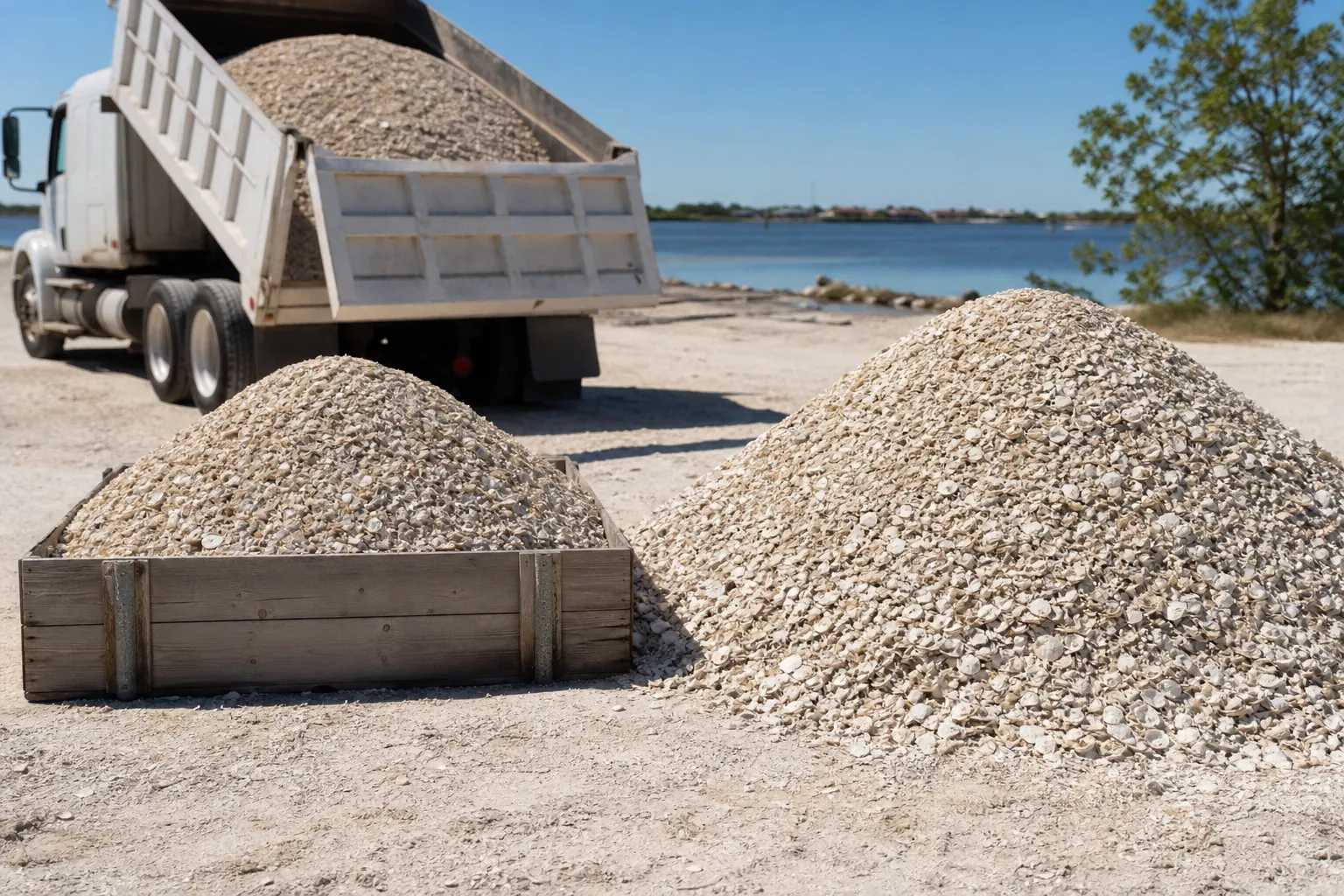
Ordering coquina shell becomes easier when you separate two questions: how much space your project needs to fill, and how much the supplied material weighs. Cubic yards answer the first question. Tons answer the second. They describe the same load in different ways, but they are not interchangeable without a reliable conversion factor.
For Florida homeowners comparing coquina shell cubic yards versus tons, the safest starting point is the project’s measured volume. Then ask the supplier how that volume relates to the material being sold. A generic conversion found online may not represent the shell, moisture conditions, or loading method used for your order.
Tropical Yards supplies coquina shell and tropical plants, with dump trailer delivery from St. Augustine to Daytona Beach. This guide explains how to measure a DIY project, compare quantity descriptions, and prepare for delivery without confusing purchasing guidance with installation services.
Cubic Yards And Tons Measure Different Things
A cubic yard is a unit of volume. Imagine a space three feet long, three feet wide, and three feet high. That space holds one cubic yard, equivalent to 27 cubic feet. For a shell project, volume comes from the area you intend to cover multiplied by the intended layer depth.
A ton is a unit of weight. In ordinary U.S. material sales, a short ton equals 2,000 pounds. Confirm the unit when discussing an order, especially if you are comparing quotes that describe quantities differently.
The connection between these units is bulk density: the weight of material within a given volume. Coquina shell consists of particles and the spaces between them, so its bulk density is not simply the density of a solid shell fragment.
- Cubic yards help you describe the space your shell layer needs to occupy.
- Tons describe the weight of the material supplied or transported.
- A conversion between the two requires a bulk-density factor appropriate to the material.
- A delivery quantity still needs to be checked against access conditions and the supplier’s loading arrangements.
Neither unit is automatically better. The useful unit is the one that lets you connect your measured project with a clearly defined order. If your supplier sells by weight, calculate volume first and ask the supplier to explain the conversion.
Why There Is No Universal Coquina Shell Conversion
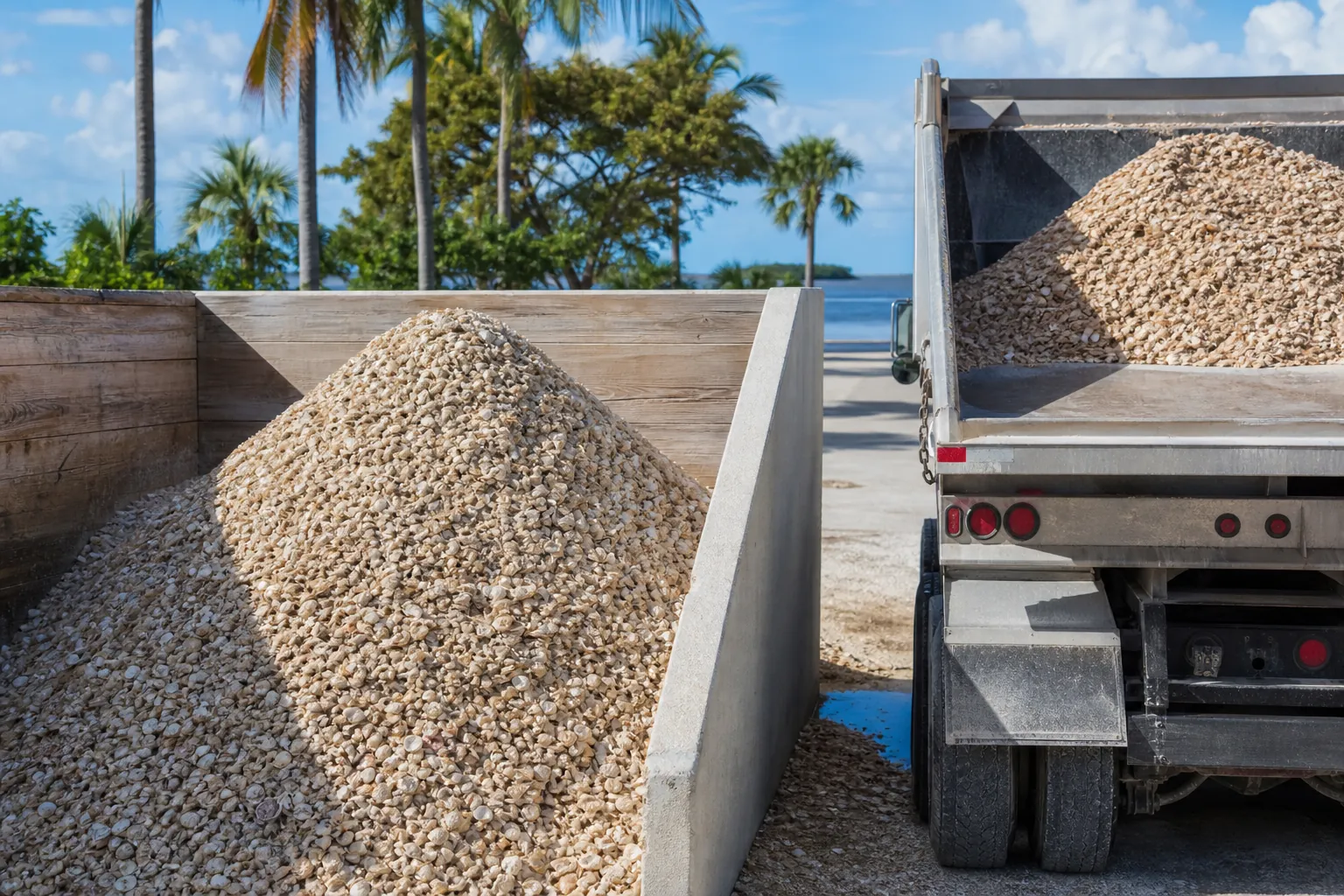
Two loads occupying similar volumes can weigh differently. Particle size, the mix of shell fragments and finer material, moisture, and how tightly the material settles all influence bulk density. These differences matter when someone presents a single tons-per-yard figure as universally accurate.
Water contributes weight without contributing usable dry shell. A damp load may therefore have a different weight-to-volume relationship than a drier load. That does not make either load unsuitable, but it does make a generic conversion less dependable.
Particle arrangement also matters. Loosely loaded shell contains spaces between particles. After spreading, traffic or other project-specific preparation may change those spaces. The volume delivered in a loose load is not necessarily identical to the volume of the finished layer.
Ask whether a stated conversion describes loose material, an estimated delivered volume, or a finished condition. Those terms should not be treated as synonyms.
Instead of requesting an exact universal answer to “How many tons are in a cubic yard of coquina shell?”, ask a more useful question: “What conversion factor do you use for the coquina shell you are supplying, and what conditions does that factor assume?” That keeps your calculation connected to the actual purchase.
Measure Your Project Before Comparing Quantities
Start with the footprint of the area you plan to cover. Measure in feet and record each dimension. For a rectangle, multiply length by width to find square feet. For a circle, multiply pi by the radius squared. The radius is half the diameter.
For an irregular area, divide the footprint into simpler rectangles or triangles. Calculate each section separately, then add the results. Subtract spaces that will not receive shell, such as existing slabs, planted areas, or other features you intend to leave uncovered.
Next, decide on the intended finished depth. Depth should follow the purpose of the project and its preparation requirements, not a universal shell recommendation. A decorative surface and an area expected to support regular foot traffic may require different planning.
Use this formula when your area is in square feet and your depth is in inches:
Cubic yards = square feet × depth in inches ÷ 324.
The divisor combines two unit conversions: 12 inches per foot and 27 cubic feet per cubic yard. Keeping those conversions together reduces the chance of mixing inches and feet.
- Measure narrow passages at several points if their width changes.
- Calculate separate depths separately instead of averaging them without checking the result.
- Keep measurements and rounding notes so you can explain your estimate to the supplier.
- Resolve the intended finished level before ordering, particularly near doors, paving, and drainage routes.
A careful sketch is often more useful than a rough overall dimension. It also helps you distinguish the shell-covered area from the larger yard surrounding it.
A Worked Example: From Square Feet To Cubic Yards
Suppose a hypothetical rectangular DIY area measures 24 feet long and 6 feet wide. Its area is 144 square feet. For illustration, assume the project calls for a 3-inch layer. This is a calculation example, not a recommended depth for every use.
Multiply 144 square feet by 3 inches, then divide by 324. The result is approximately 1.33 cubic yards. You can check the answer another way: 3 inches equals 0.25 feet, and 144 multiplied by 0.25 equals 36 cubic feet. Dividing 36 by 27 gives the same result.
Now suppose your project includes another 72-square-foot section at the same assumed depth. That section requires approximately 0.67 cubic yard. Together, the two measured sections total 2 cubic yards before any project-specific allowance.
This calculation does not yet tell you the order weight. To convert it to tons, you still need the supplier’s applicable tons-per-cubic-yard factor.
It also does not establish whether the measured volume represents loose material or the desired finished layer. Tell the supplier which one you calculated. If settlement, uneven ground, or preparation affects your project, discuss those details rather than silently increasing the quantity.
Keep the original calculation visible. A clear base quantity makes any later allowance easier to understand and prevents unexplained rounding from becoming part of the order.
Convert Cubic Yards To Tons Without Guessing
Once the supplier provides an appropriate conversion factor, the arithmetic is straightforward:
Tons = cubic yards × supplier-confirmed tons per cubic yard.
For the reverse calculation, use:
Cubic yards = tons ÷ supplier-confirmed tons per cubic yard.
If the supplier expresses density in pounds per cubic yard, divide that figure by 2,000 to express it in short tons per cubic yard. Confirm that the density and ton definition match the quantity being quoted.
For the example above, write the weight calculation as 2 cubic yards multiplied by the supplier’s confirmed factor. Leaving the factor blank until you have that information is more responsible than substituting an unrelated aggregate figure.
Do not borrow a conversion for crushed stone, sand, or another shell product simply because it appears in a nearby search result. Different materials can have different particle distributions and moisture conditions.
When comparing two suppliers, ask each to describe the material and quantity basis. A quote for a stated volume and a quote for a stated weight cannot be compared fairly until you understand how each maps to the amount your project requires. The objective is a usable quantity comparison, not a falsely precise conversion.
Plan For Settlement And Uneven Ground Separately
The basic formula assumes a consistent depth across the measured footprint. Real projects often include shallow depressions, slopes, or surfaces that are not level. Those conditions can change how much shell you use.
Walk the area before ordering. Identify low spots and decide whether they belong in the shell calculation or need separate preparation. Shell should not be treated as an automatic solution to drainage or grading problems.
Likewise, distinguish settlement from waste. Settlement concerns how the material occupies space after placement. Waste concerns material that does not remain in the intended project, such as shell scattered beyond an edge during DIY handling. They are different reasons an estimate might need adjustment.
- Ask whether the supplier’s volume description refers to loose material.
- Explain whether your measured depth is a planned finished depth.
- Identify low areas individually rather than adding an arbitrary blanket allowance.
- Discuss any extra quantity in relation to your actual measurements and intended use.
There is no single overage percentage that suits every project. A small, clearly bounded area may behave differently from a long irregular surface. Ordering extra without a purpose can leave you with material that needs storage, while ordering too little can interrupt the project.
The practical approach is to document your base calculation, list the conditions that may change it, and confirm a sensible ordering quantity with the supplier.
Confirm What Your Coquina Shell Order Includes
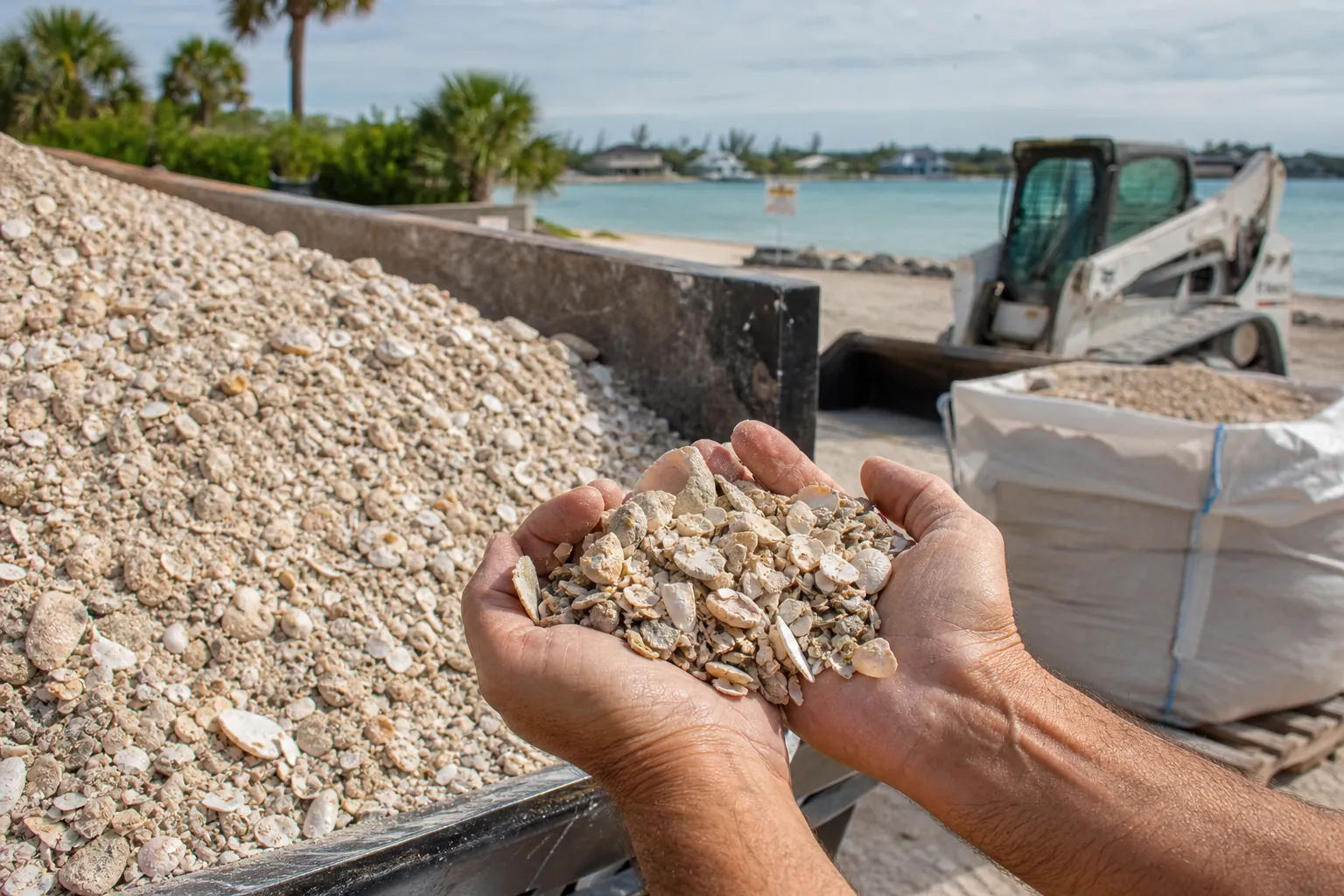
Quantity is only one part of a useful order. Before purchasing, review the shell’s appearance and general characteristics with the supplier. Ask about particle size, the presence of finer material, and whether the available shell matches the look and function you have in mind.
For an overview of the material, visit the Tropical Yards coquina shell page. Keep this guide focused on measurement and unit conversion, then use product information to evaluate the shell itself.
Be clear about how you intend to use it. A decorative area, a DIY path, and a planting-area surface raise different questions about preparation and upkeep. Buying the correct quantity does not by itself establish that a material is appropriate for every setting.
- Ask whether the order quantity is recorded in cubic yards, tons, or another clearly defined unit.
- Ask how the supplied quantity is determined and how any weight-to-volume estimate is described.
- Confirm whether the requested quantity can be handled in the planned delivery arrangement.
- Review delivery access and unloading expectations before finalizing the order.
Tropical Yards provides coquina shell sales, tropical plant sales, and dump trailer delivery. Customers should arrange their own project preparation, spreading, and other site work. Keeping those responsibilities clear helps you plan tools, time, and any separate assistance you choose to obtain.
Prepare For Dump Trailer Delivery In Florida
A correct quantity still needs a workable delivery location. Tropical Yards offers dump trailer delivery of plants and coquina shell from St. Augustine to Daytona Beach. Confirm your address and delivery details directly rather than assuming every property has suitable access.
Describe gates, tight turns, narrow driveways, slopes, overhead branches, and nearby structures. Include anything that could limit maneuvering or safe unloading. Do not assume a dump trailer can reach a backyard simply because a passenger vehicle can enter the driveway.
Choose a proposed unloading area that allows you to move the shell to the project yourself. A convenient stockpile location can reduce repeated trips with a wheelbarrow, but convenience should not override access requirements.
- Discuss the proposed unloading surface and any concerns about its condition.
- Keep the delivery route and agreed unloading area free of vehicles and movable obstacles.
- Keep children and pets away from the delivery and unloading area.
- Ask whether multiple loads or a different unloading arrangement may be necessary for your order.
Florida rain can change ground conditions quickly. Check the site before delivery and communicate if the access surface has become soft or standing water affects the route. Delivery should not be assumed to include spreading shell, preparing ground, or moving material around the property after unloading.
Use Your Measurements To Organize The DIY Work
After delivery, your original sketch can guide distribution. Divide the project into manageable sections and allocate material according to each section’s calculated volume. This helps prevent the first section from becoming too deep while later sections run short.
Use a marked measuring tool to check depth at several locations as you work. The height of a pile is not a reliable guide to how evenly shell has been distributed across an area. Follow preparation and placement requirements appropriate to your particular project.
If shell is being used near plants, consider plant needs separately from quantity calculations. Shell-based material can affect the surrounding soil chemistry, so assess whether it suits the species and site. Avoid piling material against plant stems or palm trunks, and preserve access for watering and inspection.
Tropical Yards also sells palm trees, hibiscus, bougainvillea, ferns, and other tropical plants. If you are purchasing plants alongside shell, consider light, drainage, mature size, and your own planting and care plans before combining them in the same area.
Store any remaining shell where it will not obstruct drainage or access. Keeping unused material contained also makes it easier to evaluate whether you truly have a surplus after the project settles.
A Final Checklist Before You Order
The best coquina shell estimate starts with measured dimensions and ends with a clearly defined supplier quantity. You do not need to memorize a universal density figure. You need to know what your project requires and what the supplier’s units mean.
- Calculate each project section using its actual area and intended depth.
- Add the section volumes to establish your base cubic-yard requirement.
- Obtain the supplier’s applicable conversion factor if the order is described in tons.
- Discuss settlement, uneven areas, and any extra quantity explicitly.
- Confirm the material, delivery access, unloading location, and your DIY responsibilities.
For coquina shell purchasing questions and dump trailer delivery planning from St. Augustine to Daytona Beach, call Tropical Yards at 772-267-1611. Have your measurements, intended use, and access details ready so the conversation can focus on the right material quantity for your project.
Call 772-267-1611 to talk through next steps.