How to plan coquina shell delivery after rain in Florida
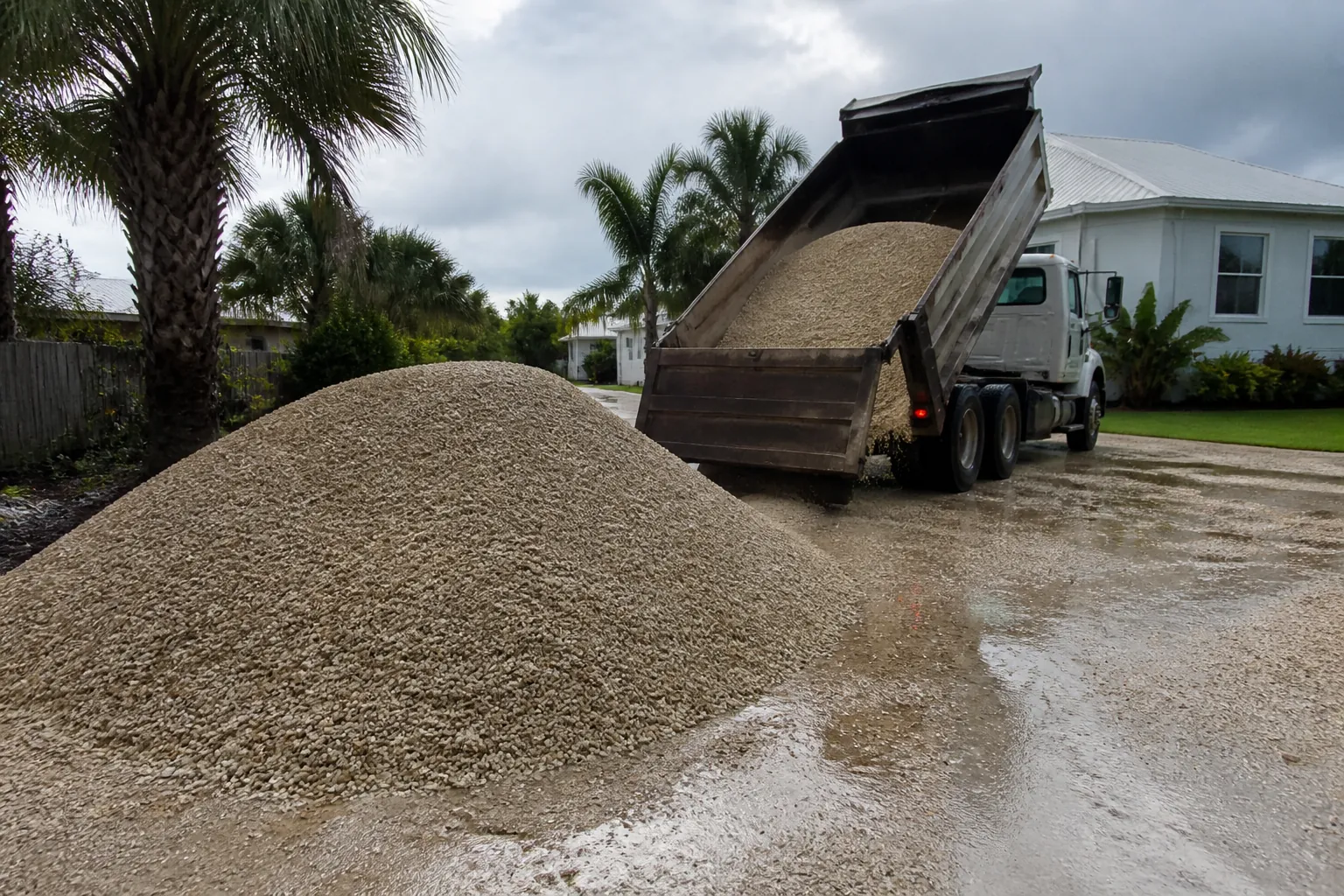
A Florida rainstorm can change a straightforward material delivery into a decision about soft ground, driveway access and where a load can safely be unloaded. The important question is not simply whether the rain has stopped. It is whether your property can accommodate a loaded dump trailer and provide a suitable place for the coquina shell.
Planning coquina shell delivery after rain starts with a fresh look at the delivery route. A driveway that appears dry may have a saturated shoulder. A grassy unloading area may look firm while holding water beneath the surface. Those details matter more than a fixed number of hours since the last shower.
Tropical Yards supplies coquina shell and tropical plants, with dump trailer delivery from St. Augustine to Daytona Beach. This guide helps buyers prepare for wet-weather delivery and plan their own material handling. Tropical Yards is a supplier, not an installation or yard cleanup service.
Start With The Ground, Not The Forecast
A clear forecast is useful, but it cannot tell you whether your particular unloading area is ready. Soil type, drainage, recent rainfall and the amount of shade all influence how quickly a site dries. Along Florida's northeast and east-central coast, conditions can vary considerably between nearby properties.
Sandy soil may drain readily in one area while a compacted section nearby holds water. Low spots can remain wet after the driveway surface has dried. Water may also collect beside pavement, near drainage outlets or along the route you expect to use for moving material.
Before requesting a delivery window, walk the proposed access and unloading areas from a safe position. Look for puddles, newly washed-out edges and soft ground. Do not assume that ground supporting a person will support a loaded delivery vehicle.
- Check the driveway entrance for erosion, loose edges and standing water.
- Look at the full access route rather than judging conditions from the street.
- Identify areas where runoff crosses the driveway or flows toward the proposed pile.
- Notice whether nearby vehicles have left fresh ruts in unpaved ground.
- Tell the supplier about visible wet areas before the delivery is dispatched.
A simple footstep check can reveal obviously soft soil, but it is not a vehicle-bearing test. If the surface shifts, sinks or releases water underfoot, describe that condition when discussing delivery. Leave the decision about vehicle access to the delivery operator, and seek qualified advice if you are unsure about a driveway or structure's load capacity.
Why There Is No Universal Waiting Period After Rain
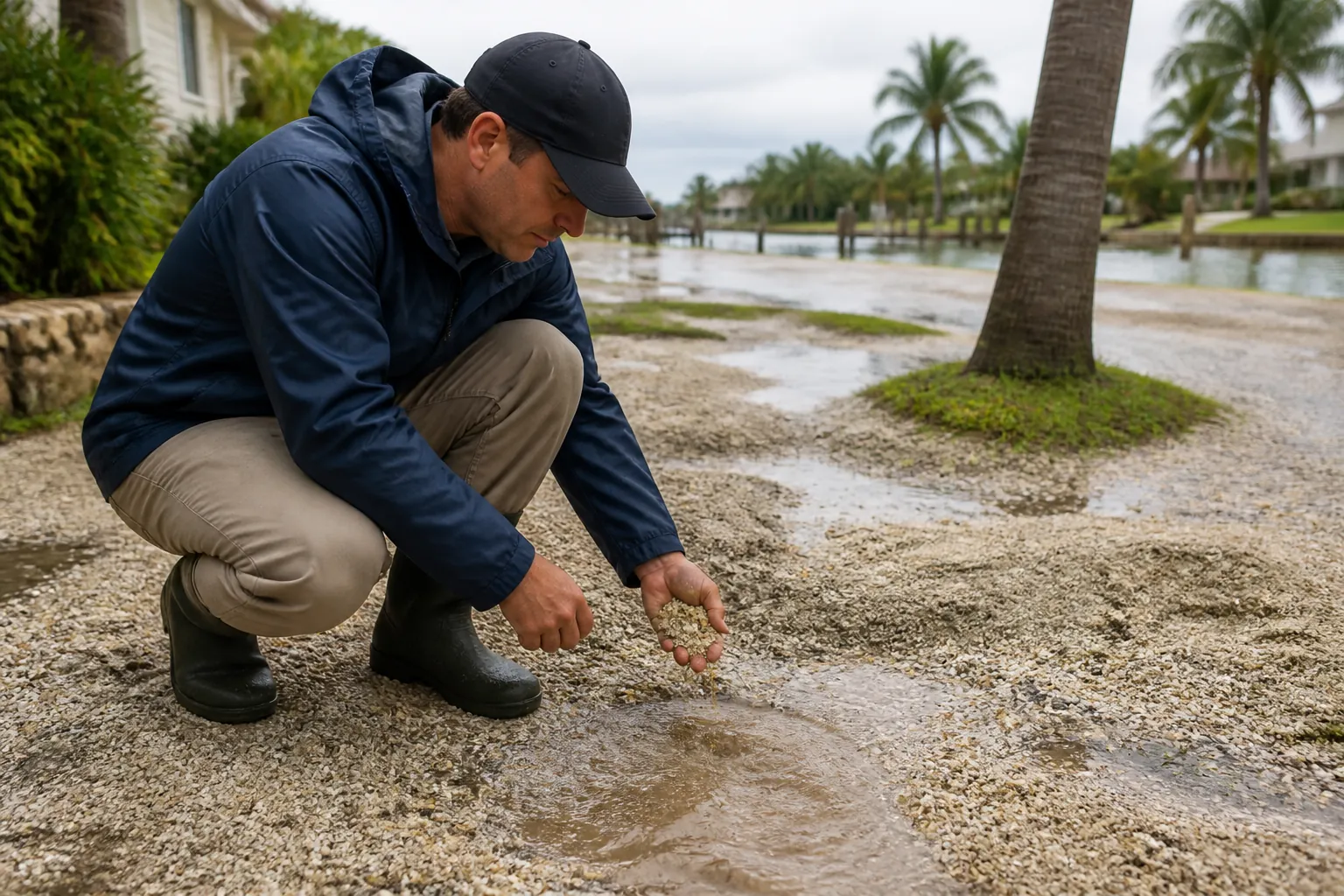
Waiting a set number of hours does not establish that a property is ready. A brief shower on an established paved driveway creates different conditions from several days of rain around an unpaved entrance. The same amount of rainfall can also have different effects depending on how wet the ground was beforehand.
Think in terms of observable conditions instead of a countdown. Has standing water receded? Is runoff still moving across the access route? Are the driveway shoulders soft? Is more rain expected before you can spread the shell yourself?
Repeated storms deserve particular attention. The top layer can appear improved between showers while the ground underneath remains saturated. That is especially relevant if the proposed delivery requires leaving a paved surface.
If conditions are uncertain, contact Tropical Yards before assuming the scheduled delivery can proceed unchanged. Explain what you can see and ask which details are needed to assess access. Rescheduling may be more practical than attempting an unsuitable route, but timing and availability should be discussed directly.
The goal is not to find a perfectly dry day. It is to coordinate a delivery with workable access, an appropriate unloading location and a realistic plan for handling the material afterward.
Check Access For A Dump Trailer Delivery
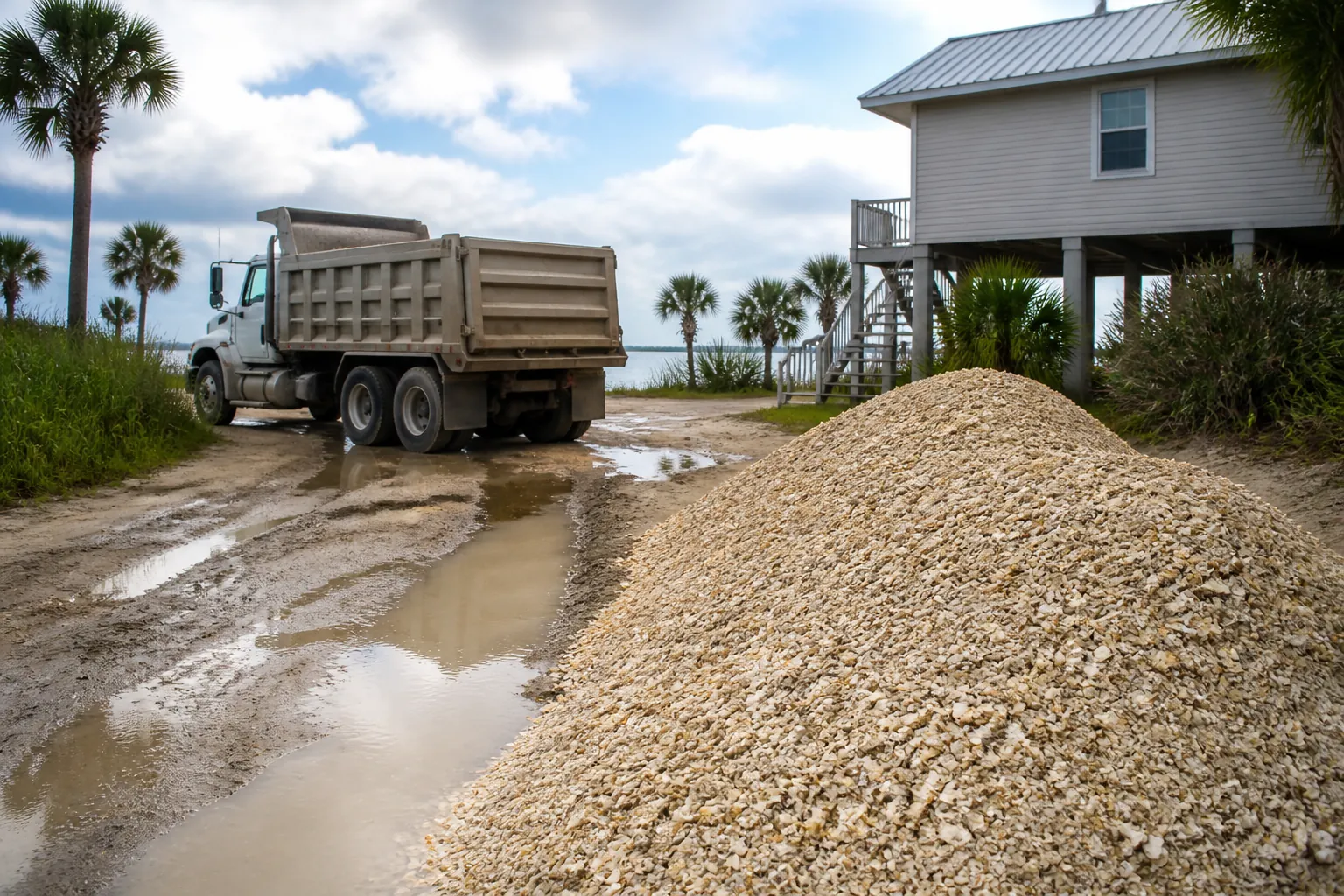
Dump trailer delivery requires more room and a different unloading setup than a passenger vehicle. An entrance that is easy to drive through in a car may not provide sufficient clearance, turning space or a suitable unloading position for delivery equipment.
Rain can make those existing limitations more significant. A narrow driveway may leave little room to avoid a wet shoulder. A tight turn might require using ground that is normally firm but currently soft. Describe these constraints before choosing a drop location.
Photographs can help explain the property layout if the supplier requests them. Include the entrance, the approach, the unloading area and any overhead obstructions. Photos support the conversation, but they do not establish ground strength or replace the operator's assessment on arrival.
- Explain whether the access surface is paved, gravel, shell, sand or grass.
- Report narrow gates, sharp turns and limited space for maneuvering.
- Identify overhead branches, wires, roof edges or other potential obstructions.
- Point out drainage ditches, culverts and visibly weakened driveway edges.
- Keep parked vehicles and movable obstacles away from the agreed access area.
- Tell the supplier if reaching the unloading spot would require crossing a lawn.
Never direct a loaded vehicle over a septic tank, drainfield, underground utility feature or another area with uncertain load capacity. Make those locations known even when they are not visible from the driveway.
The unloading position also needs attention. Raising a dump trailer changes the equipment's clearance and stability requirements. The delivery operator must determine whether the available surface, slope and overhead clearance are suitable. A buyer's preferred location is not automatically an acceptable unloading location.
Choose A Drop Location That Still Works When Wet
The best drop location balances delivery access with your ability to move the coquina shell afterward. Placing the pile close to the project can reduce wheelbarrow trips, but that convenience should not require a delivery vehicle to cross saturated ground.
A firm, accessible location may be preferable to a softer spot beside the project. Discuss the options with the supplier rather than assuming a backyard or side yard can be reached. Consider where water will flow if another storm arrives before you finish spreading the material.
Avoid choosing an active drainage path or low spot where water already collects. Loose material should not obstruct storm drains, roadside drainage or a route needed to move water away from the property. Keep the pile clear of access needed by residents, emergency responders and other vehicles.
Also consider what lies beneath the pile. Coquina shell placed directly on grass or soil may become mixed with the underlying material as you shovel it. If you want to use a protective ground covering, ask whether it is appropriate for the proposed unloading setup. Do not place a loose covering where the delivery vehicle must drive or where it could interfere with unloading.
- Choose a location outside visible runoff channels and drainage openings.
- Leave enough room to approach the pile safely with your own tools.
- Keep the unloading area separate from spaces children or pets use.
- Preserve access to doors, gates, utilities and regularly used parking spaces.
- Plan an alternative location if the first choice remains too wet.
Confirm the intended location before arrival and keep the area available. A last-minute change from a driveway to an unpaved side yard can introduce access problems that were not part of the original discussion.
Estimate Your Order Before Weather Changes The Plan
Rain does not change the basic amount of coquina shell your project needs. Measure the intended coverage area and decide on a suitable finished depth for the use. Keep your measurements separate from questions about delivery access so both decisions receive proper attention.
For a rectangular area, multiply length by width to find square footage. Divide an irregular project into manageable shapes and add their areas. Convert the planned depth to feet before multiplying by square footage to estimate volume.
For example, an area measuring 10 feet by 12 feet has 120 square feet. A planned depth of 2 inches equals one-sixth of a foot, giving an estimated volume of 20 cubic feet. This demonstrates the calculation, not a recommended depth for every application.
Ask Tropical Yards how the shell is sold and how your estimated volume translates into an order. Confirm the material's characteristics and whether your intended use calls for a different depth or preparation approach. Do not assume that a decorative bed, walking area and vehicle-use area have identical requirements.
For broader material-selection information, start with the coquina shell guide. Use the coquina shell delivery page for general delivery planning. This wet-weather guide addresses the separate question of how recent rain affects site readiness.
Before finalizing an order, make sure the planned quantity can be accommodated at the unloading location. A suitable place for a small amount may not offer enough space for the full pile while keeping access and drainage clear.
Prepare Your DIY Work Area Without Trapping Water
Delivery readiness and project readiness are related, but they are not the same thing. A driveway may be suitable for unloading while the area where you intend to spread shell is still too wet to work. Plan for that possibility before the material arrives.
For your own project, inspect the intended surface for standing water, soft spots and concentrated runoff. Coquina shell should not be treated as a remedy for an unresolved drainage problem. Adding material over saturated soil can hide the condition without addressing why water collects there.
If the project includes excavation, edging or work near buried utilities, arrange the appropriate utility-location process before digging. Check any applicable property rules, association requirements or local requirements for your intended use. Larger grade changes and drainage concerns may require qualified guidance beyond material purchasing.
When preparing the area yourself, avoid repeatedly hauling tools or loaded wheelbarrows over soft ground. Doing so can create ruts that complicate the project and direct water where you do not want it. A longer route over firmer ground may be easier to manage.
If you plan to use a separation fabric, choose it for the application rather than assuming any sheet will work. Product permeability, overlap, edge treatment and underlying surface preparation all matter. Follow the product instructions and obtain application-specific advice where needed.
Tropical Yards supplies the material. Ground preparation, spreading, compaction where appropriate and subsequent project care remain the buyer's responsibility or the responsibility of a separately hired professional.
Handle Damp Coquina Shell After It Arrives
Coquina shell may arrive damp or become wet while stored outdoors. Moisture can affect how readily material moves off a shovel and how it behaves in a wheelbarrow. Adjust your handling plan to the actual condition rather than assuming every load will feel the same.
Wear gloves and suitable footwear when handling shell. Eye protection is sensible when shoveling or working with particles that could scatter. Follow safe lifting practices and use smaller loads when the material or route makes a full wheelbarrow difficult to control.
Move material in manageable stages. Keeping a wheelbarrow route stable and clear is more useful than trying to finish quickly on slippery or soft ground. Pause outdoor work during lightning or other unsafe weather.
- Use tools suited to moving loose material and keep them in sound condition.
- Fill wheelbarrows to a level you can safely push and stop.
- Keep loose shell off steps and walkways used by other people.
- Recheck the pile and work route after another substantial rain.
- Stop spreading if the underlying surface begins to rut or shift.
After spreading shell yourself, observe the area during the next rainfall. Look for material moving with runoff, water collecting against edging or a surface that remains unexpectedly soft. Those observations can help you identify a preparation or drainage issue before adding more material.
Do not assume all coquina shell products compact or drain identically. Particle size, finer material, depth and the underlying surface influence performance. Ask about the supplied material and match your DIY method to the intended use.
Share These Details When You Call To Order
A useful ordering conversation covers the material, the property and the recent weather. Saying that it rained yesterday is less informative than explaining that the paved driveway is clear but the adjacent grass remains soft.
Have your project measurements available, along with the delivery address and a description of the preferred unloading location. Explain whether the delivery route has changed since you first planned the order.
- State the intended use and the approximate area you want to cover.
- Describe recent rainfall and any standing water still on the property.
- Explain the driveway surface, entrance layout and turning limitations.
- Identify overhead obstacles and underground areas that must be avoided.
- Describe your preferred unloading spot and any practical alternative.
- Ask how to communicate changing site conditions before delivery day.
Tropical Yards offers coquina shell sales and tropical plant sales, including palm trees, hibiscus, bougainvillea, ferns and other tropical plants. Dump trailer delivery of plants and coquina shell is available from St. Augustine to Daytona Beach. Confirm the arrangements for your address and order directly.
If you are also buying plants, keep that discussion distinct from shell placement. Ask about plant availability and delivery arrangements, then plan your own planting according to the plants' needs and the condition of your soil.
Make A Final Check Before Delivery
On delivery day, take one more look at the entrance, access route and unloading area. Overnight rain may have changed conditions since your last conversation. Remove movable obstructions yourself and make sure the agreed location has not become blocked.
If you find new puddles, erosion or soft ground, report it before the vehicle arrives whenever possible. Do not conceal a concern in the hope that unloading will still work. Clear information helps everyone make a better decision.
Coquina shell delivery after rain is primarily a coordination task: confirm the material you need, evaluate current access and choose an unloading location that remains practical for your DIY work. For coquina shell purchasing and dump trailer delivery questions, call Tropical Yards at 772-267-1611. Describe your site conditions so you can discuss the next step without guessing.
Call 772-267-1611 to talk through next steps.