How to plan coquina shell delivery when you are not home
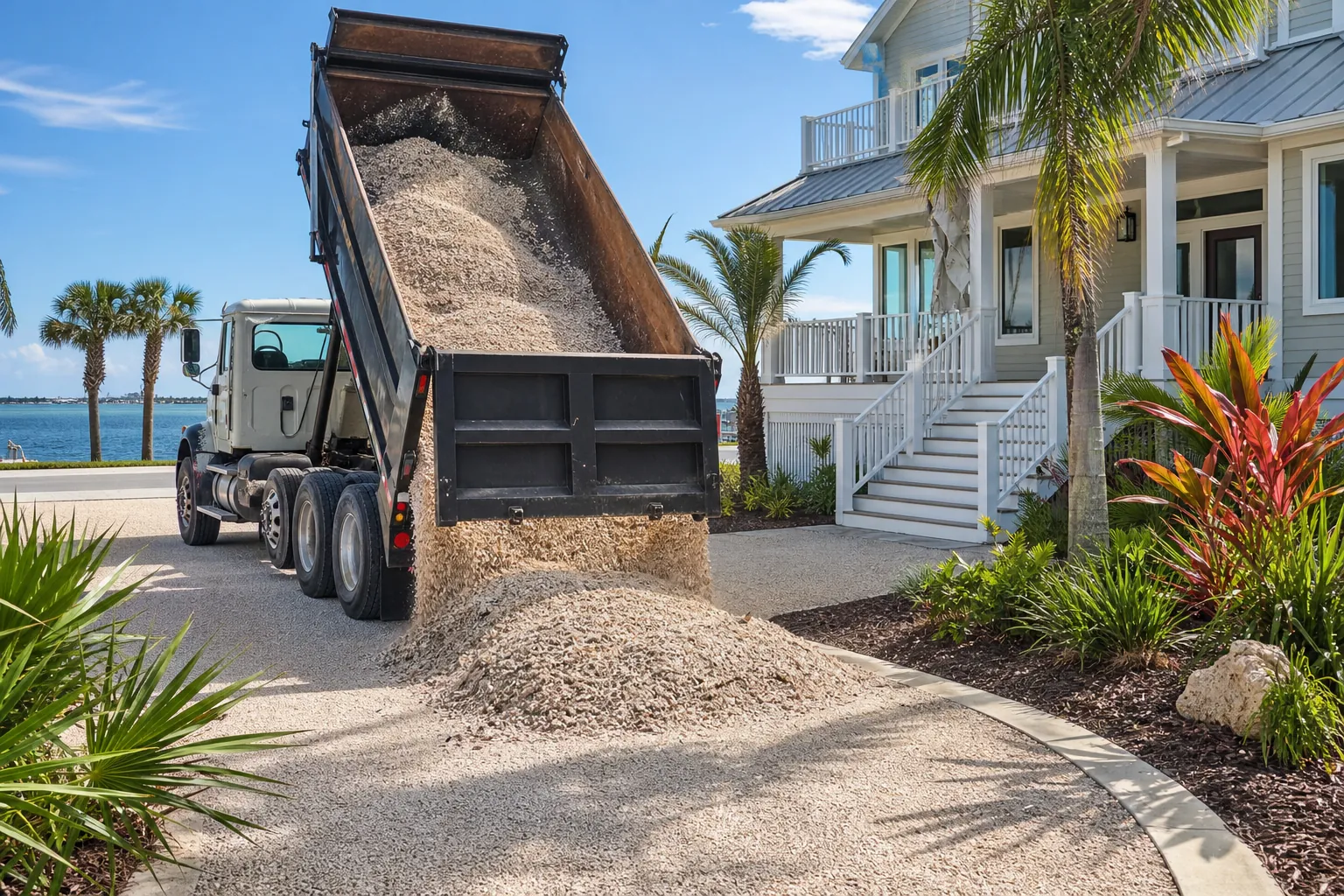
You do not necessarily need to spend the day watching your driveway to prepare for a coquina shell delivery. You do need a clear plan. When nobody will be home, the important questions are whether an unattended delivery can be accepted, how the dump trailer will reach the property, and exactly where the material should go.
Before arranging coquina shell delivery with the homeowner absent, discuss the situation with Tropical Yards. Do not assume an order automatically includes permission to unload without someone present. Confirm the delivery arrangement, share access details, and agree on a practical drop location before the delivery day.
Tropical Yards supplies coquina shell and tropical plants, with dump trailer delivery from St. Augustine to Daytona Beach. Delivery brings the purchased material to an agreed location; it does not include spreading shell, installing plants, preparing beds, or cleaning up a yard. This guide focuses on making a shell delivery easier to receive and manage yourself.
Start with permission and a workable delivery plan
The first step is asking whether your particular delivery can proceed while you are away. Property access, available space, weather, and the proposed unloading area all matter. An open driveway alone does not establish that the delivery is suitable for unattended unloading.
Explain whether you will be absent for the entire delivery window or only part of it. If a household member or another authorized adult can be available, ask whether that arrangement would help. Identify who may approve a change if the original drop spot cannot be used.
Keep your phone available if you have agreed to be the contact. A driver may need clarification about a gate, parked vehicle, or unloading location. Written directions help, but they cannot anticipate every condition at the property.
- Confirm whether unattended unloading is acceptable for your order before finalizing the arrangement.
- Give the full delivery address, including any unit information or entrance instructions that affect access.
- Identify one person who can answer delivery questions and authorize any agreed changes.
- Ask what will happen if access is blocked or the designated unloading location is unsuitable.
For material selection and broader project planning, start with the coquina shell information page. Keep the unattended-delivery conversation focused on receiving the order rather than assuming that material selection also settles access or placement.
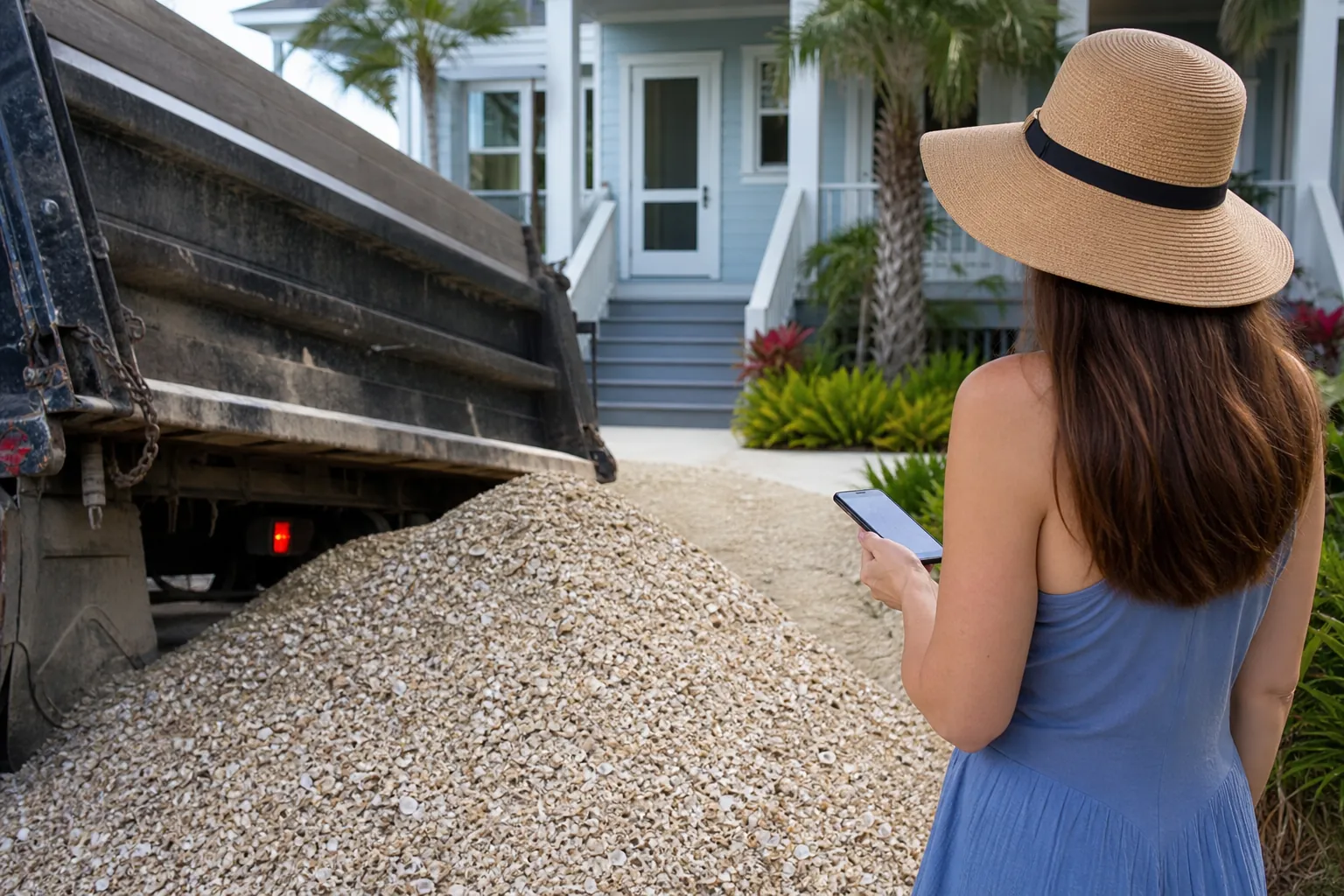
Choose a drop spot that a dump trailer can actually reach
Your eventual project area and the best unloading location may be different places. A narrow side yard might be ideal for a finished shell path but unsuitable for a delivery vehicle and trailer. Plan around vehicle access first, then decide how you will move the shell after delivery.
Describe the route from the street to the proposed drop spot. Mention tight turns, sloped approaches, low branches, overhead wires, gates, and any other features that could restrict access. Let Tropical Yards assess the information rather than estimating trailer clearance from photographs alone.
The trailer needs suitable space and conditions for unloading. Do not assume that a location works simply because a passenger car can park there. Trailer positioning, ground stability, and overhead clearance require separate consideration.
A firm, accessible unloading area is generally more practical than a soft lawn or recently disturbed soil. In Florida, rain can change conditions quickly. An area that seemed firm when you ordered may be wet or unstable when the delivery arrives.
- Measure the narrowest gate or entrance and share that measurement before delivery.
- Describe overhead obstacles along the access route and above the proposed unloading area.
- Keep the route clear of vehicles, bins, portable equipment, and other movable obstructions.
- Disclose irrigation components, septic features, drainage structures, or buried infrastructure that could affect placement.
- Do not designate a location that would block emergency access or the only usable exit from the property.
Avoid choosing public pavement, a sidewalk, or a shared access area without confirming that placement is permitted. If there is no suitable location on your property, discuss alternatives before scheduling. Do not leave that decision for the driver to make without guidance.
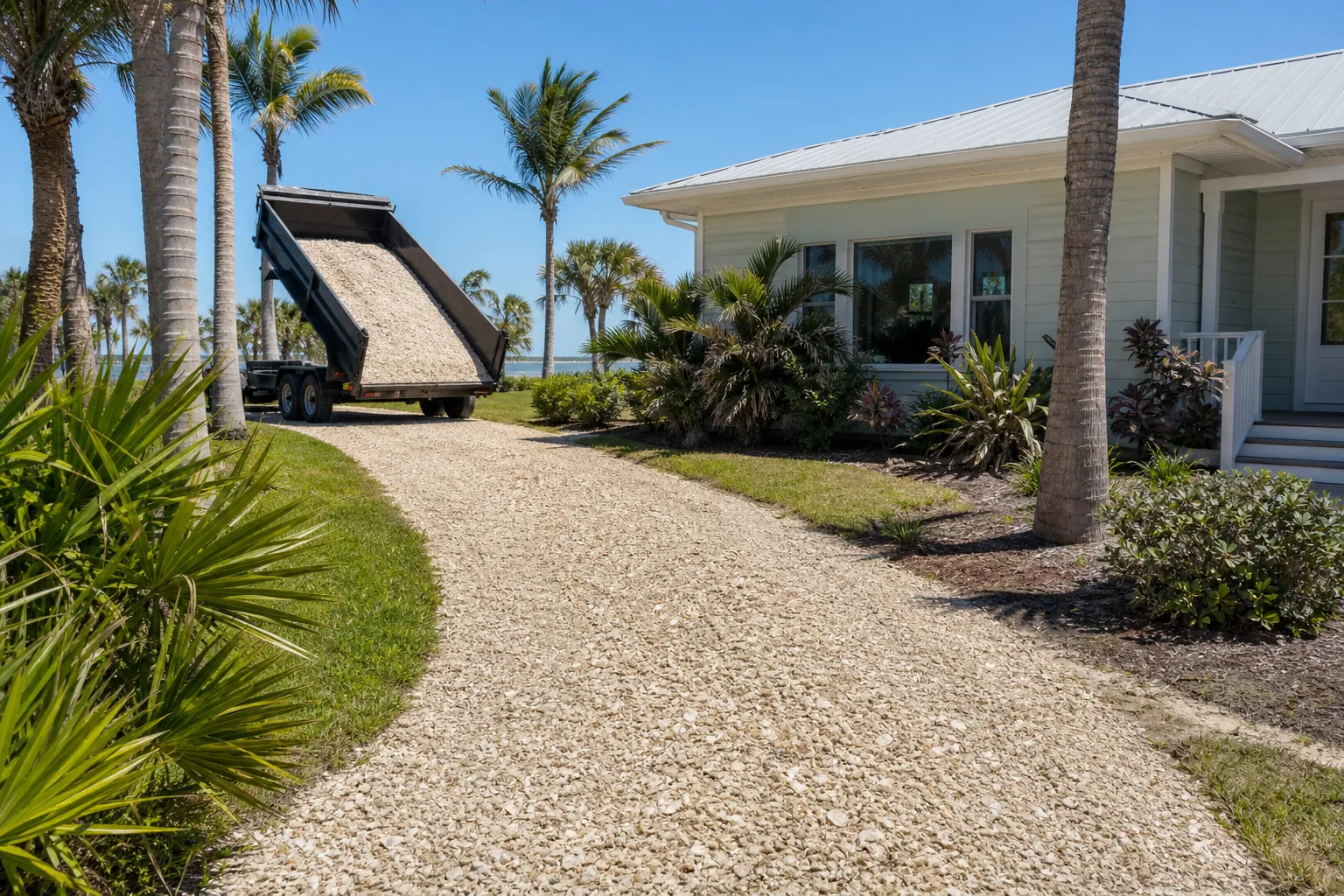
Mark the unloading area without creating confusion
“Put it near the driveway” leaves too much room for interpretation. A driver who has never visited your property needs directions tied to visible landmarks. Use clear descriptions such as “inside the driveway, beside the marked empty parking area,” then support the description with photographs.
Mark the intended unloading area in a way that is visible and does not interfere with vehicle movement. Ask what type of marking is useful before placing cones, flags, or a temporary sign. Markers should identify the area, not force the driver into a position that has not been reviewed.
Send one wide photograph showing the approach and another showing the proposed drop area. If you annotate a photograph, distinguish the unloading location from the route. A close-up of a bare patch of ground is not enough to show how the trailer gets there.
Also identify where shell must not be placed. Protecting access to a garage, mailbox, gate, utility equipment, or drainage inlet may be more important than placing the pile as close as possible to the project.
- Use the same location description in your message, photographs, and any on-site sign.
- State which areas must remain open after unloading.
- Remove old markers that could be mistaken for the current delivery instructions.
- Confirm whether a protective tarp is appropriate before placing one in the unloading area.
A tarp may make later collection easier in some situations, but it is not a substitute for a suitable surface or adequate space. It also should not be treated as a promise that the underlying surface will remain unaffected. Discuss the placement method rather than assuming the driver can unload precisely onto any small target.
Make gates, pets, and property access straightforward
An unattended delivery depends on access being ready when the vehicle arrives. If the entrance is locked, controlled by a keypad, or inside a managed community, resolve those details beforehand. Ask whether any entrance restrictions conflict with the delivery arrangement.
Share access information privately with Tropical Yards, not on a publicly visible sign. If a temporary code is available, check that it works and remains valid for the expected delivery period. Do not rely on a remote gate opener you cannot operate while away.
Contact a homeowners association or property manager when relevant. Some Florida communities have vendor entry procedures, delivery-hour restrictions, or rules about material piles. You are responsible for checking the requirements that apply to your property.
Pets should be secured away from the access route and unloading area. An open gate can create an escape risk even if an animal is usually calm. Children should also be kept away from delivery operations and the material pile.
- Verify gate instructions and community entry requirements before the delivery day.
- Arrange for parked vehicles to be moved out of the approach and unloading area.
- Secure pets indoors or in a separate enclosed area that does not require delivery access.
- Tell other household members not to change the marked drop location without updating the delivery instructions.
If someone else will unlock a gate, make sure that person knows the agreed arrangement. A neighbor who opens the entrance should not be expected to choose a new unloading spot or accept other responsibilities unless you have explicitly arranged that role.
Order for the project, not just the available parking space
A well-planned drop is useful only if the amount of coquina shell matches your intended work. Measure the project area before ordering. Break irregular spaces into simpler rectangles or other measurable shapes, then add their areas together.
Decide how you intend to use the shell and what finished depth is appropriate for that use. A decorative bed, walking area, and other applications may need different preparation and material choices. Discuss suitability before assuming that one approach works everywhere.
For a rectangular area, multiply length by width to estimate square footage. To estimate cubic feet, multiply that area by the planned depth expressed in feet. Dividing cubic feet by 27 converts the volume to cubic yards. Treat this as a planning calculation, then confirm the ordering unit and amount with Tropical Yards.
Uneven ground and variations in depth can affect how much material you need. Existing shell may also be difficult to measure accurately. Explain whether you are filling a new area or refreshing an existing surface so the order discussion reflects the actual project.
- Record the dimensions of each separate area rather than estimating the entire yard at once.
- Choose a planned depth before calculating volume.
- Confirm the shell characteristics available and whether they suit your intended application.
- Ask how the material is sold and how your calculated volume relates to the order.
For transportation questions beyond unattended access, use the coquina shell delivery information page. Keep quantity planning separate from unloading placement: a convenient driveway location does not determine the amount your project requires.
Prepare for Florida rain and drainage conditions
Weather deserves a place in the delivery plan, especially when you will not be home to reassess the property. Heavy rain can soften an unpaved approach, create standing water, or make a previously suitable drop area less practical.
Tell Tropical Yards if your driveway or yard commonly holds water after rain. Share recent photographs if conditions have changed since the original discussion. Do not assume that a delivery can proceed under conditions that differ substantially from those described.
Keep the proposed shell pile away from drainage inlets and routes where runoff needs to flow. Material should not obstruct a swale, culvert, or other drainage feature. Check local requirements if your intended project could alter drainage.
Coquina shell is a loose material, so consider where water might carry smaller pieces from the temporary pile. Choosing an appropriate location helps reduce avoidable movement, but it does not eliminate the need to inspect the area after weather events.
Agree on how weather-related concerns will be communicated. Ask whether the plan requires a new access assessment or another delivery arrangement if the ground becomes unsuitable. Avoid leaving instructions that require unloading regardless of site conditions.
Leave a concise written handoff
A short, complete delivery note is more useful than a long chain of changing messages. Once the arrangement is confirmed, summarize the essential details in one place. Make clear that the note reflects the agreed plan rather than a new request added at the last minute.
Your handoff should identify the property, access route, designated unloading area, and contact person. Include any important restrictions, such as keeping a garage entrance clear. Reference the photographs or markings that show the location.
- State that you will not be home and that unattended delivery has been discussed.
- Describe the approved entrance and any privately shared gate instructions.
- Identify the unloading area using visible landmarks and the agreed markings.
- List areas that must remain clear and conditions that require a call before proceeding.
- Confirm who can be reached if the original plan cannot be followed.
A useful example is: “I will be away during the agreed delivery period. Please use the entrance shown in the approach photo and the marked unloading area discussed with your team. Keep the garage entrance and drainage inlet clear. Contact me before using a different location.” Add your actual property details and share them directly.
Ask what delivery confirmation, if any, is available. Do not assume that photographs, exact arrival updates, or a particular notification method are included. Establish expectations before you leave.
Plan the DIY work after the shell arrives
When you return, inspect the delivery area before starting work. Check where the pile sits, whether your necessary access remains open, and whether weather has affected the surrounding ground. If you have a question about the delivered material, contact Tropical Yards before spreading it throughout the project.
Moving shell is separate from receiving it. Plan the route between the pile and your project, gather appropriate tools, and work in manageable batches. A wheelbarrow, shovel, and rake may be useful depending on the site and your own capabilities.
Wear sturdy footwear, gloves, and suitable eye protection when handling loose material. Avoid overloading a wheelbarrow, particularly on slopes or soft ground. Keep children and pets away while you move and distribute the shell.
Prepare your project area yourself before spreading material. Address unwanted vegetation, edging, and drainage as appropriate for the intended use. Do not assume that adding shell alone will resolve standing water, unstable ground, or every weed problem.
Keep shell away from plant crowns and trunks, and avoid burying them beneath the material. Consider how the chosen surface fits the needs of nearby plants. Tropical Yards also sells palm trees, hibiscus, bougainvillea, ferns, and other tropical plants, but plant purchases and shell purchases still require your own planting and project preparation.
Finish by redistributing remaining material and tidying your work area yourself. Tropical Yards supplies and delivers; it does not spread shell, install edging, install plants, or provide yard cleanup.
Confirm the details before you leave home
The most useful final check is simple: can the delivery team identify the property, enter it under the agreed conditions, and locate a suitable unloading area without guessing? If any answer is uncertain, resolve it before you leave.
Make sure the access route is unchanged, the markers are visible, and your contact arrangement still works. Review recent weather and any community restrictions. If a vehicle appears in the drop area or a gate stops working, notify Tropical Yards rather than relying on the original instructions.
To discuss coquina shell sales and dump trailer delivery from St. Augustine to Daytona Beach, call Tropical Yards at 772-267-1611. Explain that you expect to be away, describe your property access, and ask what must be confirmed for your order. A clear conversation beforehand is the best starting point for a practical unattended-delivery plan.
Call 772-267-1611 to talk through next steps.