How to plan and reschedule coquina shell delivery when rain is forecast
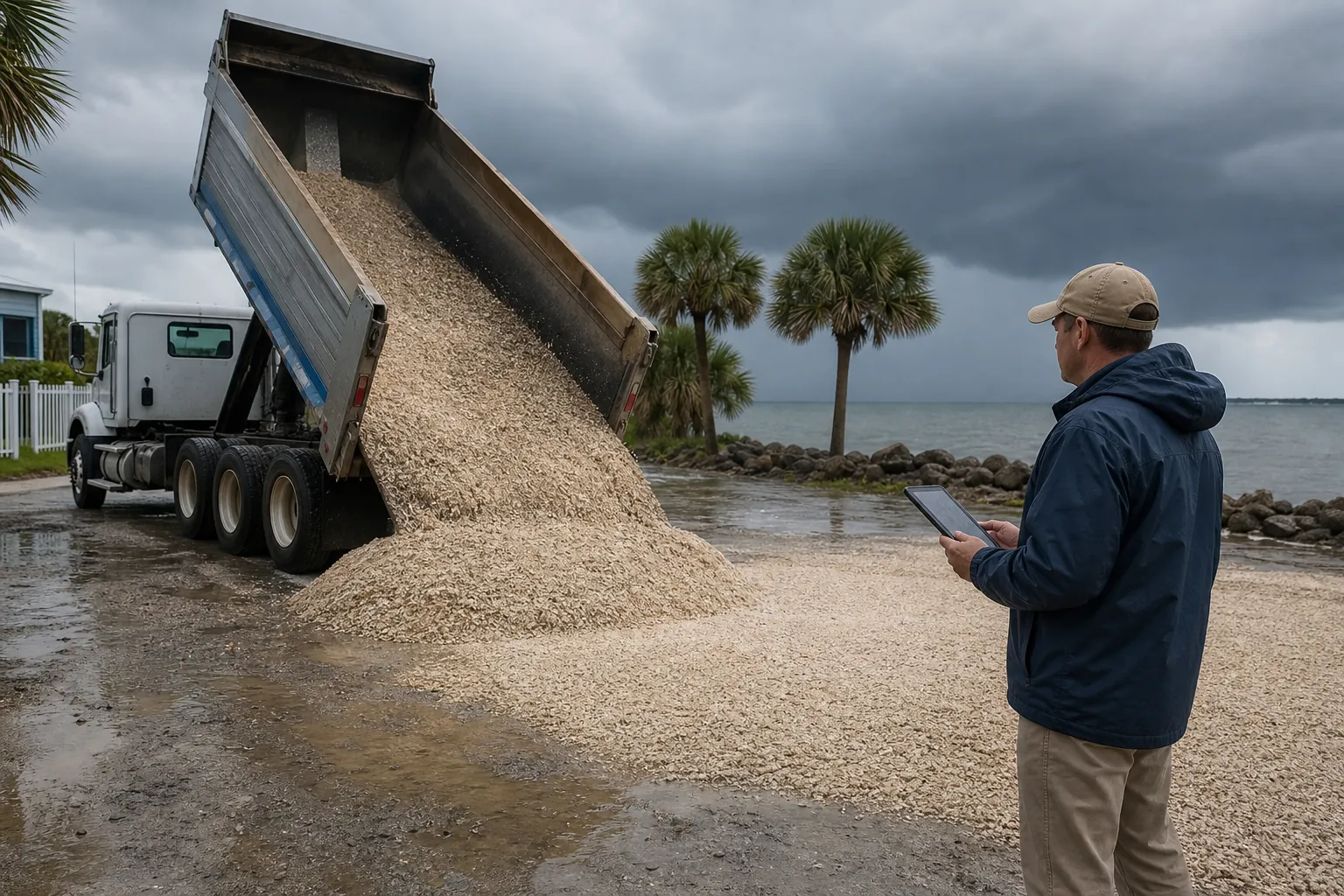
Rain can change a coquina shell delivery plan even when the material itself can tolerate getting wet. The important questions usually concern the route into your property, the unloading location, and whether you can manage the shell afterward without working on saturated ground.
For Florida buyers, coquina shell delivery rain rescheduling is best treated as an access and communication issue, not simply a reaction to a weather icon. A brief shower over a firm driveway presents a different situation from prolonged rain over a soft side yard.
Tropical Yards supplies coquina shell and tropical plants, with dump trailer delivery from St. Augustine to Daytona Beach. The guidance below helps you prepare for delivery and your own project work. Tropical Yards does not provide installation, landscaping labor, or yard cleanup.
Start With A Rain-Aware Delivery Plan
Before choosing a delivery date, identify where the shell should be unloaded and how the delivery vehicle will reach that spot. A convenient location in dry weather may become unsuitable after rain, especially if reaching it requires crossing grass, loose soil, or a low area.
Discuss the proposed approach and unloading area when ordering. Describe the surface, any slopes, narrow entrances, and nearby obstacles. Photos can help explain the layout, but they do not replace a current description of ground conditions.
For broader material information, begin with the coquina shell page. This rain-planning guide focuses on scheduling and access rather than repeating a full material selection guide.
Build flexibility into your own schedule. If you intend to spread the shell yourself, avoid treating delivery day as a fixed deadline for finishing the project. You may need separate time for unloading, drying ground, and moving material.
- Choose a primary unloading location that is accessible without crossing vulnerable ground whenever possible.
- Identify a possible backup location and ask whether it could work before relying on it.
- Tell the supplier about gates, tight turns, low branches, overhead lines, and restricted parking.
- Leave room in your DIY schedule for changing weather and slower material handling.
Understand What Rain Actually Changes
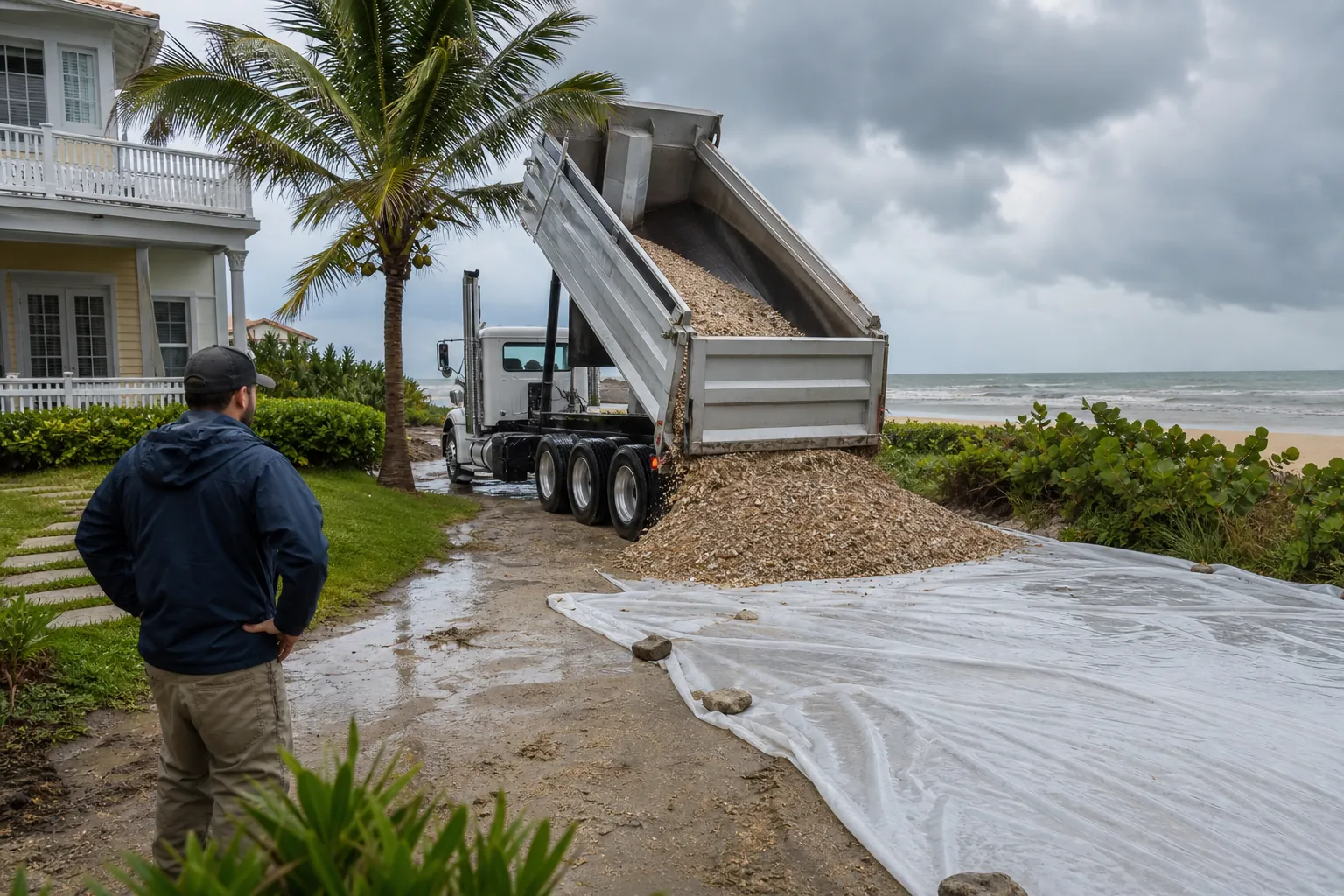
Rain does not automatically make coquina shell unusable. However, wet material may be heavier to handle, and moisture can change how fine particles behave during unloading and spreading. A wet load can also be less convenient if your project requires moving many small wheelbarrow loads.
The more important concern is often the surface supporting the delivery vehicle. Saturated soil can lose firmness, while standing water can hide depressions, edges, and soft spots. A driveway may look usable while the shoulder beside it remains weak.
Florida properties vary considerably. Sandy ground may drain quickly in one area while water collects nearby because of grading, compacted soil, or an obstructed drainage route. Do not assume that every part of your property recovers at the same rate.
A forecast alone cannot settle the delivery decision. Recent rainfall, current conditions, expected rainfall during the arrival window, and the proposed vehicle route all matter. The delivery provider must assess whether the planned access and unloading arrangement are suitable.
Also consider your own handling route. Even if unloading is practical, moving shell across wet lawn with a wheelbarrow may leave tracks or become difficult. Separating delivery readiness from project readiness helps you make a more realistic plan.
Check The Forecast Without Relying On One Number
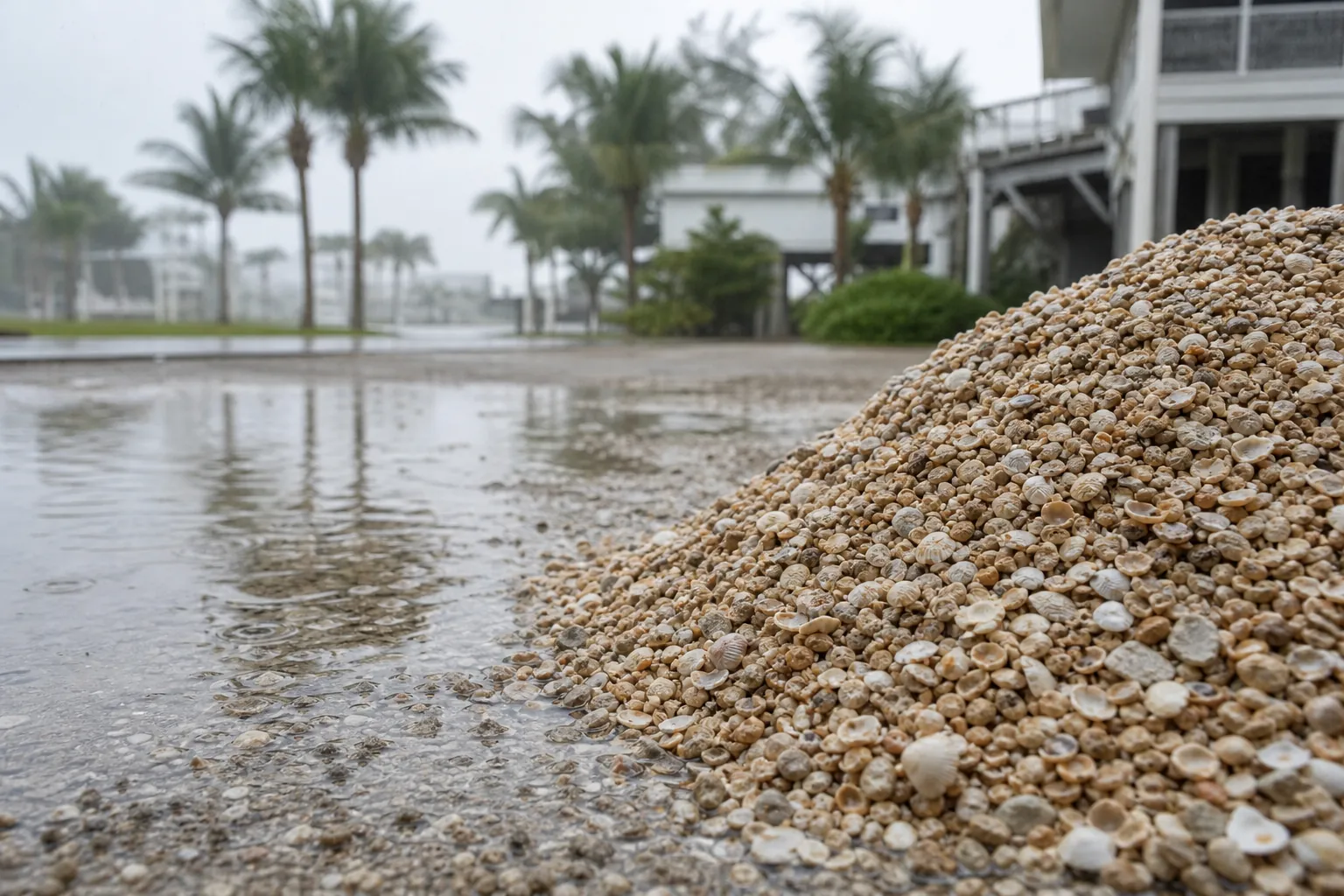
Check a local forecast as your delivery date approaches, then review current conditions again before the expected arrival. Look beyond the chance of rain. Timing, storm activity, and whether rain has already accumulated on your property provide more useful context.
A forecast for afternoon showers may allow a different conversation than a forecast for persistent rain throughout the delivery window. Neither forecast establishes a safe unloading time by itself. Conditions can change quickly, and arrival timing should be confirmed rather than assumed.
Use weather alerts to inform your planning, particularly when thunderstorms or flooding are possible. Do not ask a driver to hurry an unloading operation between lightning strikes or proceed simply because you have already arranged your DIY workday.
- Review recent rainfall as well as the forecast for the scheduled delivery period.
- Check whether water is collecting along the actual approach route and unloading location.
- Contact the supplier when conditions change instead of waiting for the vehicle to arrive.
- Keep your phone available so delivery questions can be resolved before access becomes an issue.
A weather screenshot can be useful background, but a clear description of your property is usually more actionable. Explain where water is standing, which surfaces are soft, and whether the entrance remains unobstructed.
Inspect Access Before Confirming The Drop
Walk the planned access route if it is safe to do so. Start at the street connection, then check the driveway, turns, and unloading area. Look for washed-out edges, standing water, deep footprints, or soil that yields easily underfoot.
A foot inspection does not prove that ground can support a loaded delivery vehicle. It can, however, reveal obvious problems that should be reported. Do not attempt to test questionable ground by driving your own vehicle across it.
Pay particular attention to transitions between hard surfaces and soil. A firm driveway ending at a wet lawn is not the same as a fully hard-surfaced unloading area. Turning or maneuvering near an unsupported edge can introduce additional concerns.
Tell the supplier about septic components, buried utilities, irrigation lines, drainage structures, and other areas that should not be crossed or loaded. If you do not know their locations, avoid presenting that area as suitable access.
Dump trailer unloading also requires an appropriate working area and overhead clearance. Report trees, wires, roof overhangs, and other overhead obstacles. Do not estimate a clearance requirement yourself and assume it is sufficient; ask the provider about the proposed location.
For delivery-specific information, review the coquina shell delivery page and confirm the details for your property directly. General delivery information does not override site-specific conditions.
Know When To Request A Rescheduling Conversation
Contact Tropical Yards promptly if rain changes the property conditions you described when ordering. Early communication gives everyone a chance to review options before the delivery vehicle is on its way.
You do not need to decide independently whether delivery must be canceled. Explain what has changed and ask whether the current plan should be adjusted. The answer may involve reassessing access, discussing a different unloading location, or arranging another delivery date.
- Request a review if standing water covers the entrance, approach route, or planned unloading area.
- Report softened ground if the delivery plan depends on crossing lawn or unpaved surfaces.
- Call if flooding, storm debris, or a blocked entrance prevents the route from remaining clear.
- Discuss rescheduling if thunderstorms or other hazardous conditions affect the expected delivery window.
- Ask about your options if you cannot receive the material or prepare the agreed unloading space.
A useful call is specific: describe the surface, the location of water, and whether the backup area remains available. Avoid vague descriptions such as “the yard is a little wet” when the vehicle route is affected.
Ask how a revised date will be confirmed and whether any order or scheduling details need updating. Do not assume a rain delay automatically moves your delivery to the next morning. Availability and conditions need to be discussed.
Prepare A Backup Unloading Location Carefully
A backup location can help, but only if it is suitable for the delivery operation and acceptable for your property. It should not create a new access problem or place shell where it obstructs drainage, vehicles, or neighboring property.
A hard surface may be worth discussing when the original location is on soil. However, the surface must be accessible, appropriately supported, and compatible with the unloading arrangement. Confirm the plan rather than directing the driver to an unfamiliar spot at arrival.
Think about what happens after unloading. A pile in the driveway may preserve access to the yard but block a garage or require additional DIY handling. A pile near a gate may prevent equipment or household access until you move it.
If you plan to use a ground covering beneath the material, ask whether that setup is suitable before delivery. A tarp is not a load-bearing surface and does not make saturated ground safe for a vehicle. Loose coverings can also create slipping or handling problems.
- Keep the proposed pile away from storm drains, ditches, and established water flow paths.
- Leave access for household vehicles, pedestrians, and any required emergency route.
- Confirm that the entire pile will remain within your permitted property area.
- Consider how far you will need to move the shell yourself from the backup location.
Do not plan on unloading in a street, public right-of-way, or shared access area without checking applicable requirements and obtaining any necessary permission.
Order For The Project, Not For The Weather Window
A rainy forecast can make buyers rush into ordering before a clear day disappears. Resist that pressure. Confirm your project measurements, the intended use of the shell, and the unloading arrangement before finalizing the order.
Measure the area you intend to cover and decide on an appropriate finished depth for that use. Discuss the available material and ordering units with the supplier. Avoid assuming that a volume estimate and a weight-based order are interchangeable without clarification.
Explain whether you plan to use the shell for a path, decorative ground cover, or another DIY application. Material suitability and preparation needs depend on the project. Rain planning should support that decision, not substitute for it.
Ask how the delivery will be handled and what you need to have ready. Dump trailer delivery does not mean shell will be distributed throughout your project area. Plan for your own tools, material movement, and site preparation after the drop.
If the forecast changes after ordering, keep the material request separate from the scheduling question. Confirm whether you are discussing only a new delivery date or also changing the quantity, destination, or unloading location.
Handle Delivered Shell After Rain
Once the shell has been unloaded, assess your project area before beginning DIY work. A delivered pile does not mean the ground where you intend to spread it is ready. Working on saturated soil can create ruts and disturb the surface you have prepared.
Use suitable footwear, gloves, and eye protection when handling shell. Edges can be sharp, and fine material may become airborne as the pile dries. Select tools and protective equipment appropriate to the conditions and the task.
Move manageable amounts rather than overloading a wheelbarrow. Wet shell can feel substantially harder to move, and a soft travel route increases the effort. Keep the route clear and avoid steep or slippery approaches.
Do not spread shell into standing water as a shortcut for correcting a drainage problem. Surface coverage does not resolve the underlying cause of pooling. If drainage conditions are unclear, pause and seek appropriate advice before continuing your project.
Keep stored material out of drainage channels. If runoff appears to be carrying fines toward a drain or neighboring property, stop work and address containment using a suitable approach for the site. Avoid placing barriers that redirect water into another problem area.
After the ground becomes workable, check the prepared area again. Rain may have shifted edging, washed soil into a path, or revealed low spots. Correct your own preparation as needed before spreading the shell.
Coordinate Plant Purchases Separately From Shell Work
Tropical Yards also sells palm trees, hibiscus, bougainvillea, ferns, and other tropical plants. If you are buying plants alongside shell, ask how the products and delivery arrangements will be coordinated rather than assuming they share the same unloading requirements.
Choose a temporary plant holding area that is protected from vehicle movement and does not interfere with the shell drop. Keep containers upright and follow care guidance for the specific plants while you wait to plant them yourself.
Rain does not remove the need to check container moisture. A sheltered container may receive little rainfall, while another may stay too wet. Inspect the potting medium and drainage before deciding whether additional watering is needed.
Schedule your own planting according to soil conditions and plant needs. Avoid digging into waterlogged ground simply to match the shell delivery date. Plant sales and delivery do not include planting or landscape installation.
A Simple Checklist For Your Rescheduling Call
Before calling, gather the order details and a current description of the site. This keeps the conversation focused on a practical delivery decision rather than a general discussion of Florida weather.
- Provide the delivery address and the scheduled date or window you were given.
- Describe the agreed approach route and unloading location, including their surfaces.
- Explain what rain has changed and whether standing water or soft ground is present.
- Identify any backup unloading location you would like the supplier to evaluate.
- Ask whether delivery should proceed, be reviewed again, or move to another available date.
- Confirm the updated arrangements before changing your own project schedule.
For coquina shell sales and dump trailer delivery from St. Augustine to Daytona Beach, call Tropical Yards at 772-267-1611. Share your access conditions and rain concerns so you can discuss a workable delivery plan. A clear unloading arrangement and a flexible DIY schedule are more useful than trying to force the project into a narrow weather window.
Call 772-267-1611 to talk through next steps.