Coquina shell delivery for septic tank access in Florida
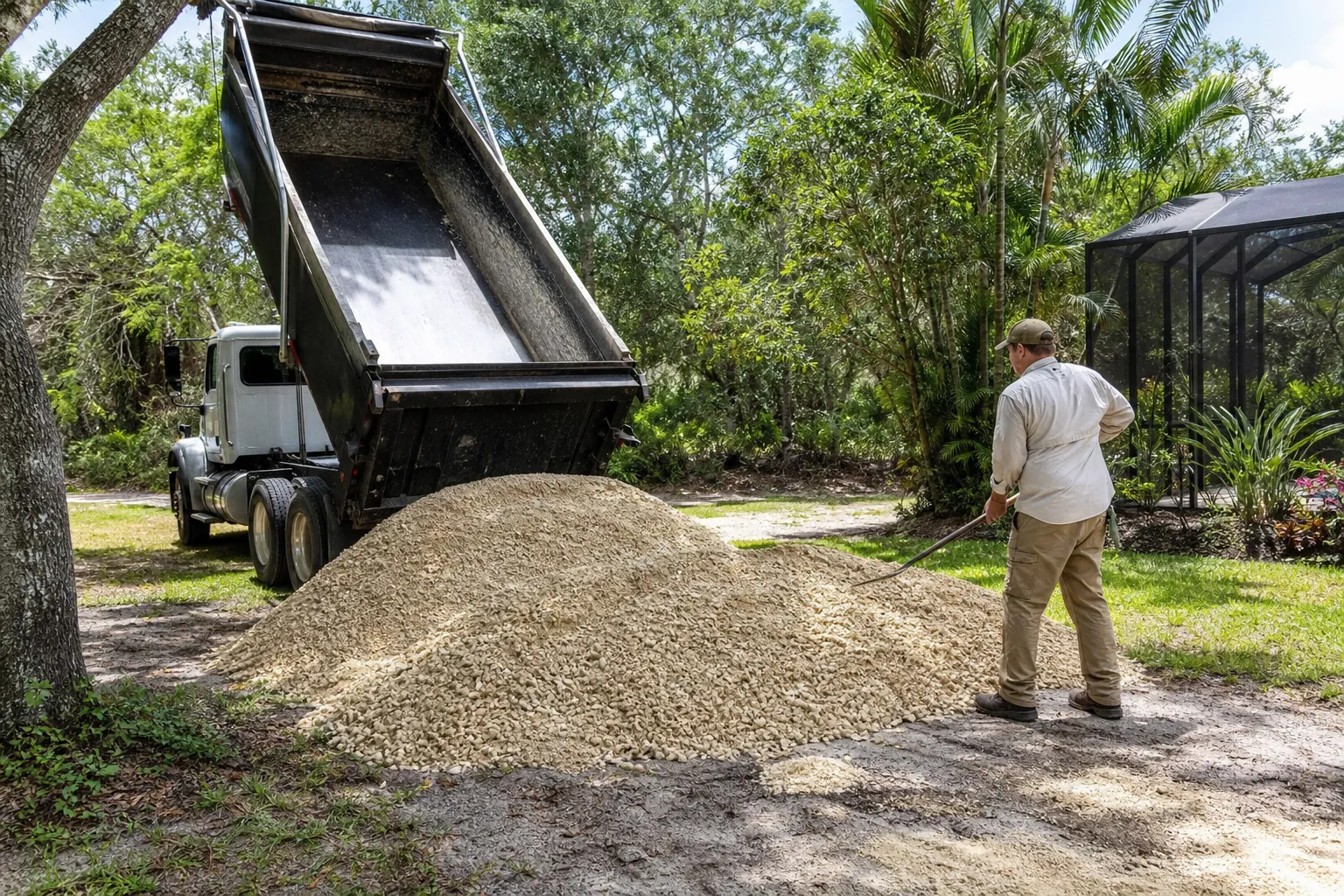
A coquina shell path can help define a route through a Florida yard, but a route near a septic system needs more planning than an ordinary garden walkway. Tank lids must remain accessible, the drainfield must stay protected, and the delivery vehicle needs a safe place to unload without crossing buried equipment.
If you are researching coquina shell delivery septic tank access, start with the septic system rather than the shell. Identify what is underground, ask which areas must remain clear, and distinguish a pedestrian route from an access lane intended for service vehicles. Those uses have very different requirements.
Tropical Yards supplies coquina shell and tropical plants, with dump trailer delivery from St. Augustine to Daytona Beach. This guide is for buyers and homeowners planning their own projects. Tropical Yards provides materials and delivery, not septic work, landscape design, installation, or yard maintenance.
Identify The Septic System Before Planning A Shell Route
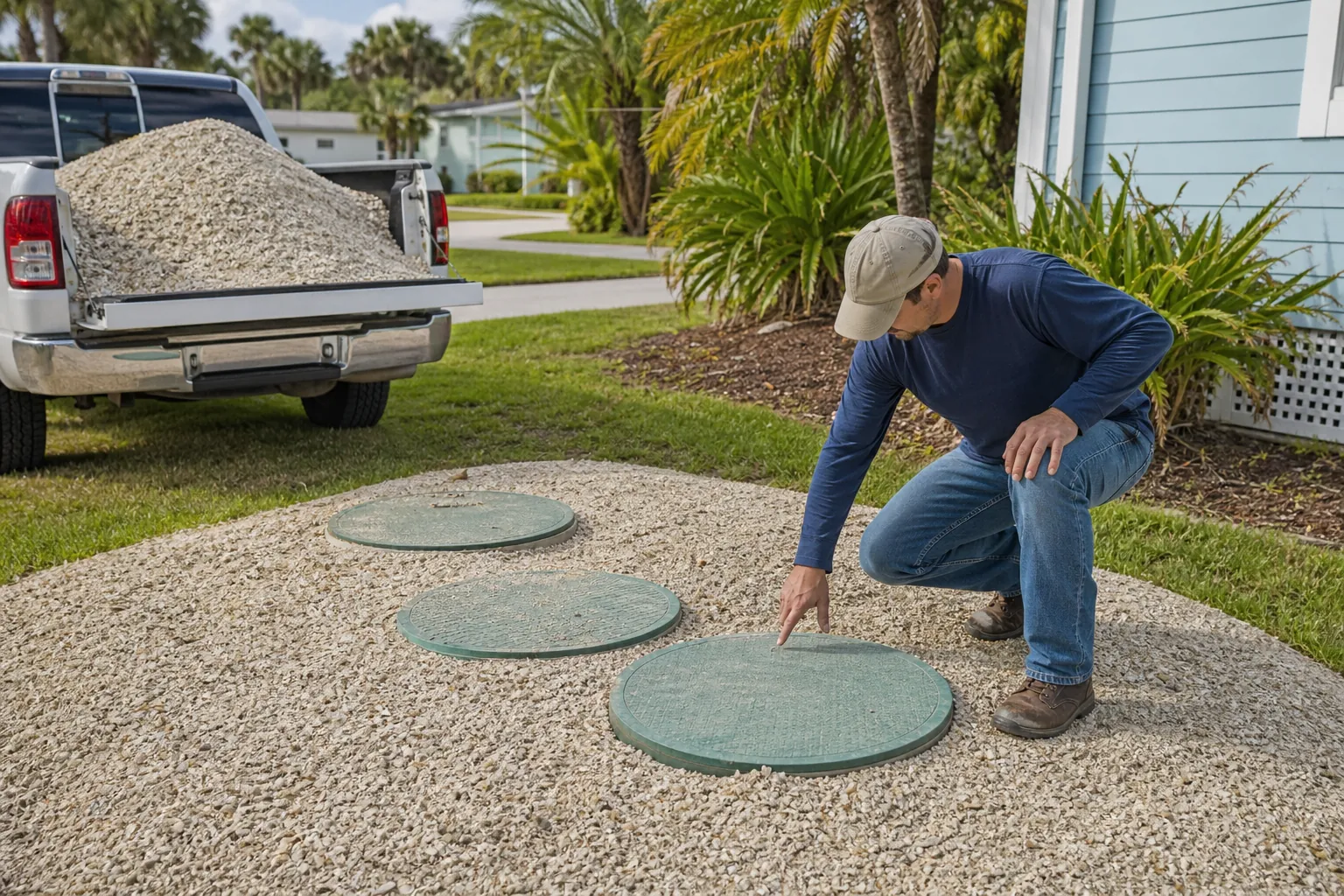
The visible lid is only one part of a septic system. A property may also have a second tank opening, a pump chamber, inspection ports, a distribution box, connecting pipes, and a drainfield. Some components can be difficult to recognize from the surface.
Look for available property records and septic permits, and ask a qualified septic professional to confirm component locations when they are uncertain. Florida county health department records may help, but an older drawing should not be treated as an exact field survey.
Do not probe the ground, excavate around an unknown cover, or remove a tank lid to investigate. Septic tanks present fall and hazardous-gas risks. Locating and opening components should be left to qualified personnel.
- Identify every service opening that must remain reachable, not just the most obvious lid.
- Confirm the drainfield boundaries before choosing a walkway, unloading spot, or material staging area.
- Locate any irrigation lines, electrical connections, and other utilities that could affect the proposed route.
- Ask the septic service provider where people and equipment should approach during routine service.
- Keep an accessible copy of the confirmed system layout for future deliveries and property work.
Once the system is identified, mark protected areas with visible flags or another temporary method that does not disturb buried components. A driver should not have to infer the location of a drainfield from a patch of grass.
Separate Foot Access From Vehicle Access
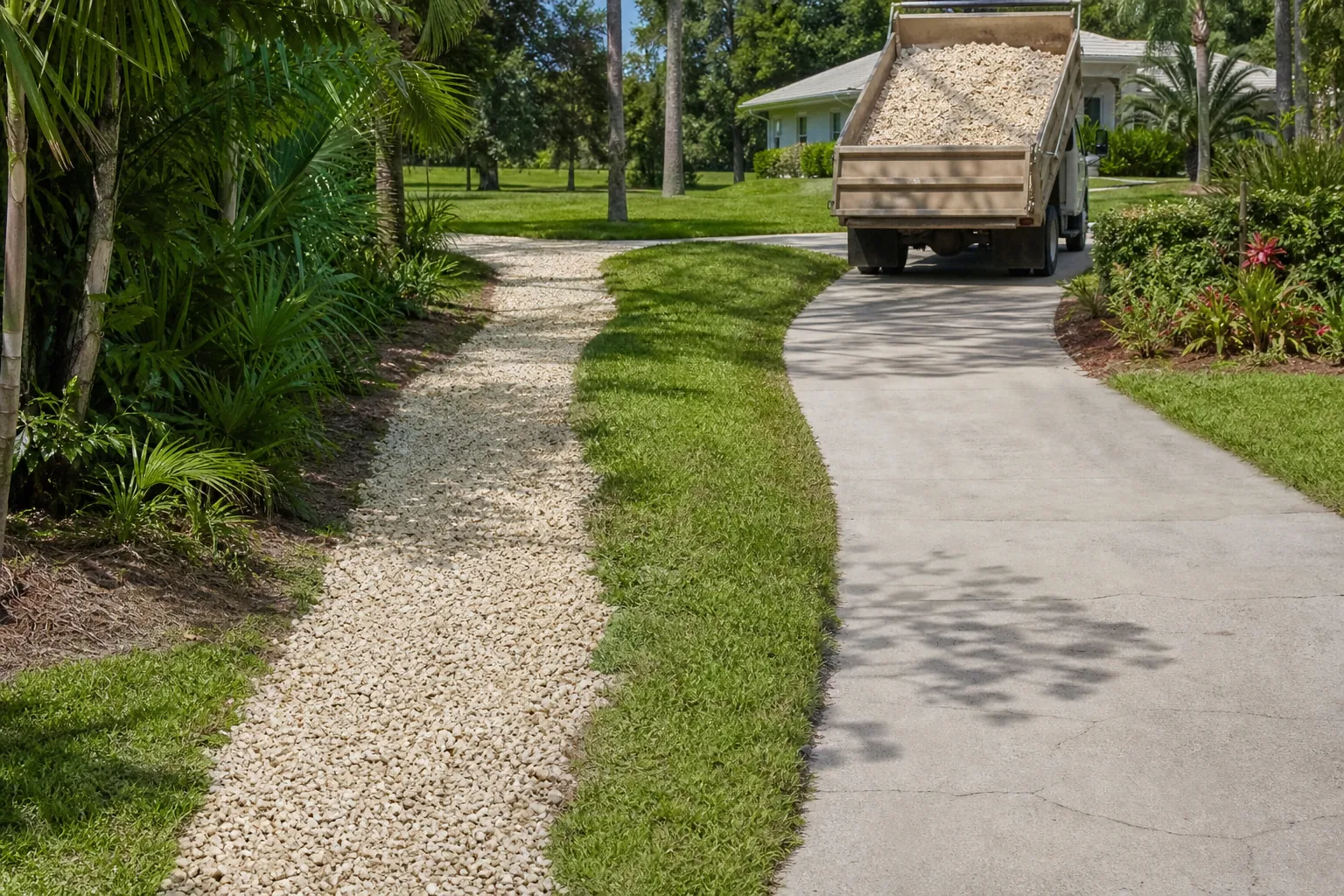
A walkway to a service opening is not automatically a driveway. Coquina shell can be considered as a surface material for an approved pedestrian route, but spreading shell does not establish that the ground can support a pickup, dump trailer, or septic service truck.
Vehicle loads can damage tanks, piping, and drainfield components. Compaction can also interfere with the soil conditions a drainfield needs. Unless a qualified professional has specifically approved a vehicle crossing, keep vehicles and delivery equipment away from the entire system.
Ask your septic service company whether its truck can remain on an existing driveway or other approved parking surface while the crew reaches the tank. Confirm the actual route and working space it needs. Do not assume a shell lane is necessary simply because the tank is far from the street.
For pedestrian access, discuss the proposed route with the septic professional before buying material. The safest route may go around the protected area rather than directly across it. A slightly longer walkway can be preferable to a shortcut over sensitive components.
If vehicle access is genuinely required, treat that as a separate engineering and septic-access question. A loose shell layer is not a substitute for a properly evaluated crossing or load-bearing structure.
Keep Lids Visible And Drainfields Uncovered
Convenient septic access means that service openings can be found and reached without digging through a decorative surface. Do not spread shell over tank lids, inspection ports, riser covers, or other access points. Do not conceal them under edging or containers.
Adding shell can change the grade around a cover. Even if the lid remains visible initially, material may migrate toward it during foot traffic or heavy rain. Plan the shell boundary so the opening and the working area around it remain clear.
Any change to a riser, cover elevation, or access assembly belongs with a qualified septic professional. A homeowner should not improvise a raised cover, replace a lid with an unsuitable product, or rely on a buried marker to make a concealed opening acceptable.
Keep shell stockpiles and other fill off the drainfield. Adding material or changing drainage over a drainfield can affect its operation. Do not treat shell as an exception simply because it appears porous or natural.
- Maintain the clearance around lids and ports recommended by your septic service provider.
- Keep all covers visible and free of loose shell that could interfere with opening them.
- Leave the drainfield out of the material placement and staging plan unless the responsible authority or qualified professional has approved the specific proposal.
- Avoid edging stakes, anchors, and excavation near buried pipes or equipment.
- Preserve access to components that may be needed for inspection even when they are not used at every service visit.
If your intended route conflicts with these requirements, revise it before ordering. Buying less shell for a safer route is better than creating an access problem that has to be corrected later.
Choose Coquina Shell For The Actual Walking Conditions
Coquina shell is a shell-based landscape material, not a uniform manufactured pavement. Particle size, fragments, fines, and appearance can vary. Ask what material is currently available and whether photos or a sample can help you evaluate it.
For a pedestrian route, think about how people will use the surface. A path walked occasionally in sturdy shoes has different demands from one used daily by children, pets, or someone pushing a wheeled cart. Loose shell may move underfoot and can be uncomfortable for bare feet.
Do not assume shell will provide a firm, stable, accessible surface for wheelchairs, walkers, or other mobility equipment. Where accessibility matters, obtain advice appropriate to the user's needs and any applicable requirements before choosing the surface.
Ask about the material's texture and consistency rather than requesting a grade name you have seen elsewhere. Supplier descriptions are not always interchangeable. Confirm that the product being ordered matches your intended use.
Shell also does not correct soft ground, standing water, or an unsuitable route. If the proposed path is wet or unstable, investigate the cause first. Near a septic system, wet ground or unusual odors should be evaluated by a septic professional rather than covered with material.
For general product information beyond this septic-access topic, visit the coquina shell information page. Keep the material-selection decision separate from the professional decision about where a surface can safely go.
Measure Only The Approved Placement Area
Once the route and exclusions are confirmed, measure the area that will actually receive shell. Do not include the tank opening, the drainfield, protected utility areas, or spaces reserved for service access.
For a rectangular section, multiply length by width to calculate square feet. Divide an irregular route into smaller rectangles and calculate each section separately. Add those areas together, then subtract any clear areas within the outline.
The quantity depends on the planned finished depth. Determine that depth for the permitted use and existing site conditions rather than automatically choosing a deep layer. Near septic components, adding material and changing grade require particular caution.
A basic volume calculation is: square feet multiplied by depth in inches, divided by 324, equals cubic yards. For example, an approved 90-square-foot area with a planned 2-inch layer has a calculated volume of about 0.56 cubic yard. That is a calculation example, not a recommended depth for your property.
- Write down the measured square footage and the intended finished depth before requesting a quantity.
- Tell the supplier whether the measurements cover one continuous route or several separate sections.
- Ask how the shell is sold and whether the calculated volume needs to be converted to another ordering unit.
- Discuss practical delivery quantities without assuming that all delivered material must be placed near the septic system.
- Plan an approved location for any leftover shell before the order arrives.
Do not convert volume to weight using a generic internet figure. Shell composition and moisture can affect weight. Let the supplier explain the ordering unit and the information needed to estimate your purchase.
Plan A Dump Trailer Delivery That Avoids The Septic System
The unloading location is a separate decision from the final shell location. A safe delivery may involve dumping on an approved staging area and moving the material yourself in small loads. It should not require driving across a tank or drainfield.
Tropical Yards offers dump trailer delivery of coquina shell and plants from St. Augustine to Daytona Beach. Before scheduling, discuss the approach, turning space, surface conditions, and unloading location. Delivery suitability depends on the actual property and equipment clearance.
A dump trailer needs room to maneuver and raise its bed. Overhead branches, utility lines, roof overhangs, and other obstructions can make a seemingly convenient location unsuitable. Narrow gates and tight turns can also prevent access.
Florida rain can change a delivery route quickly. A grassy area that feels firm during dry weather may become soft after a storm. Tell the supplier about wet conditions and discuss whether the delivery plan needs to change.
- Choose a staging area outside the tank, drainfield, and associated protected zones.
- Identify a route that keeps the delivery vehicle on a surface suitable for its load.
- Describe gates, curves, slopes, and overhead obstacles when arranging delivery.
- Keep parked vehicles and movable items out of the confirmed approach and unloading area.
- Make sure someone can identify the agreed unloading location when the delivery arrives.
Do not direct the driver onto an uncertain buried-system area to save wheelbarrow trips. If the planned spot cannot be reached safely, discuss another location rather than treating the original plan as fixed. Additional logistics are covered on the coquina shell delivery page.
Use A Careful DIY Placement Plan
After delivery, move shell only into the area already confirmed as suitable. Keep the system markings visible while you work. Avoid placing a loaded wheelbarrow, stockpile, or other concentrated load on lids and protected components.
Wear gloves, eye protection, and sturdy footwear when handling shell. Follow sensible precautions for dust and stop if conditions make the work unsafe. Use manageable loads instead of overfilling a wheelbarrow on an uneven route.
Do not excavate or run compaction equipment near the septic system without professional approval. A typical walkway instruction found online may call for digging, base preparation, or mechanical compaction that is inappropriate beside buried septic equipment.
The same caution applies to landscape fabric and edging. Neither product makes an unsuitable placement acceptable. Fabric can complicate later access, while deep stakes or trenched edging may damage components. Get the route and any ground-disturbing work reviewed before proceeding.
Spread material gradually within the approved boundaries, checking that it does not spill into access areas. Preserve the existing approved drainage pattern. Avoid creating a ridge that redirects runoff toward a tank opening or an adjacent property.
If you uncover an unknown pipe, cable, cover, or unusual ground condition, stop. Do not work around it based on a guess. Have the relevant professional identify the issue before continuing.
Check Access After Rain And Before Septic Service
A shell route should remain compatible with septic access after the initial project. Check it after significant rain and occasional use to see whether material has shifted toward a cover, collected against a riser, or washed beyond the intended boundary.
If shell has migrated into a required clear area, carefully move the loose material back without opening or disturbing the septic components. Repeated movement is a reason to review the route or boundary detail, not simply add more shell.
Before a scheduled septic visit, make sure all identified openings are visible and the agreed pedestrian approach is unobstructed. Let the service provider know about the shell surface and point out any changes since its previous visit.
Standing wastewater, persistent wet spots, sewage odors, or alarms require professional attention. Shell should never be used to disguise those conditions or make a failing area appear dry. Keep people and animals away from suspected wastewater exposure.
If you later buy tropical plants, consider their mature roots and canopy in relation to the septic system. Tropical Yards sells palm trees, hibiscus, bougainvillea, ferns, and other tropical plants, but plant selection does not replace septic-specific placement guidance. Keep proposed planting holes outside protected areas and confirm appropriate setbacks before planting yourself.
Have These Details Ready When Ordering
A useful order begins with a clear description: coquina shell for an approved pedestrian route near septic access, with delivery to a separate safe staging area. That tells the supplier what you are buying without suggesting the shell is a structural vehicle crossing.
Have your delivery address, measured area, planned depth, and unloading details ready. Explain any restrictions that keep the trailer away from the septic system. Photos of the approach and staging area may help communicate the site, but they cannot establish the safety of buried components.
Ask about current shell availability, the ordering unit, and dump trailer delivery arrangements. Confirm where the load is intended to go before delivery day. Keep the septic professional's placement guidance separate from the supplier's material and delivery information.
For coquina shell sales and dump trailer delivery from St. Augustine to Daytona Beach, call Tropical Yards at 772-267-1611. With the septic boundaries confirmed and a safe unloading plan in place, you can discuss the material needed for your DIY project without compromising future service access.
Call 772-267-1611 to talk through next steps.