Coquina shell delivery site readiness for Florida homeowners
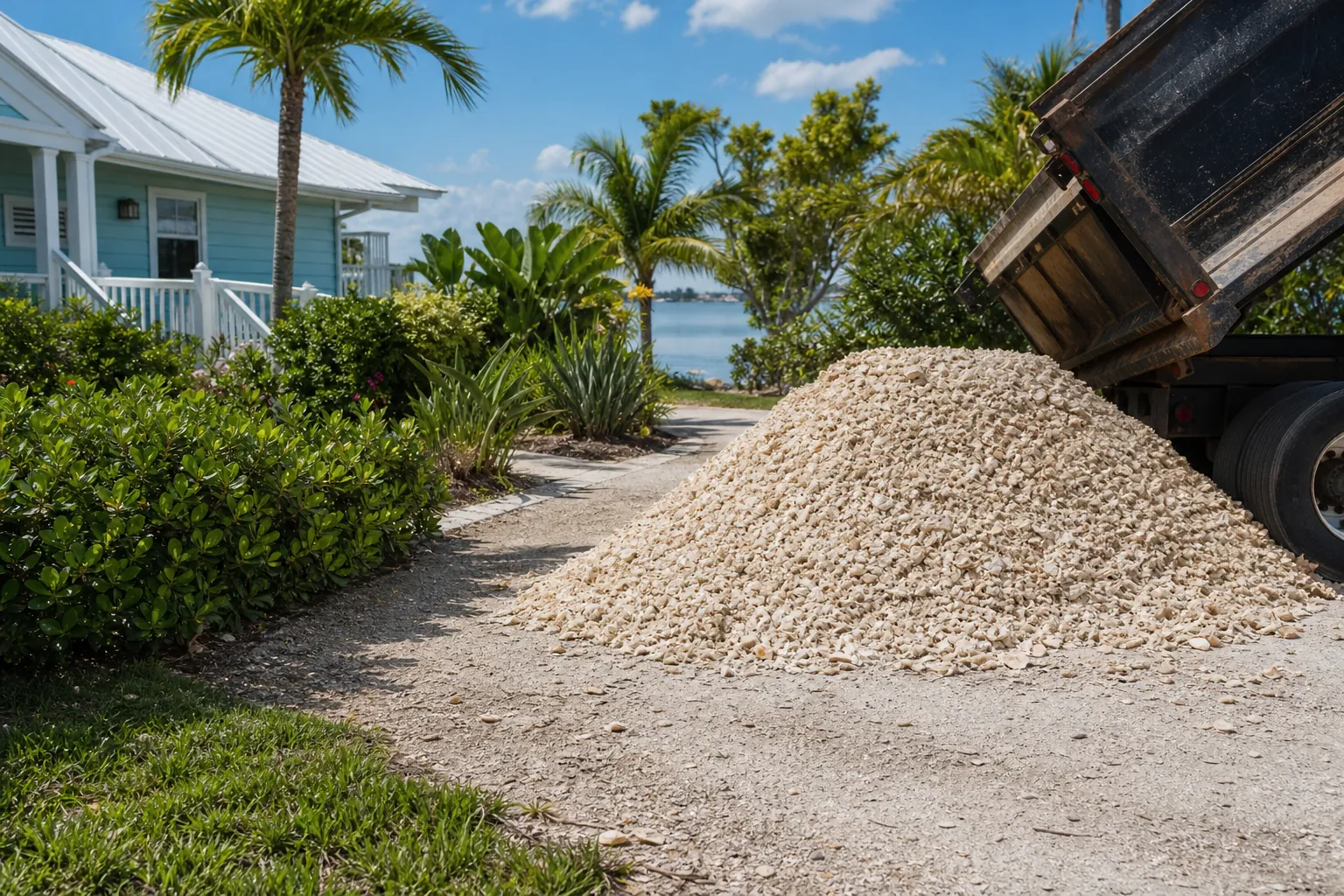
A coquina shell order goes more smoothly when you decide where the material will land before delivery day. The important questions are practical: Can a dump trailer reach the unloading area? Is the ground firm enough? Will the pile block a driveway, drainage route, or gate? How will you move the shell to its final location?
This guide to coquina shell delivery site readiness focuses on those decisions. It is for Florida homeowners buying shell for their own projects, whether the finished area is beside a patio, along a garden path, or around an existing planting bed. Preparing the delivery site is separate from preparing the final surface, and both deserve attention.
Tropical Yards supplies coquina shell and tropical plants, with dump trailer delivery from St. Augustine to Daytona Beach. The company supplies and delivers materials; homeowners or their separately hired contractors handle site preparation, spreading, planting, and other project work.
Start With The Unloading Plan, Not Just The Finished Area
Your preferred finished location may not be a suitable unloading location. A narrow side yard can be easy to reach with a wheelbarrow but unsuitable for a delivery vehicle and trailer. Likewise, a backyard bed may sit behind a gate that limits access.
Think of the property as three connected areas: the vehicle approach, the unloading footprint, and the route you will use to move material afterward. A workable plan needs all three. Choosing a convenient pile location without checking trailer access can create problems at the last moment.
Before ordering, sketch the driveway, gates, buildings, trees, and intended shell area. Mark one proposed unloading location and a possible alternative. A simple phone photo with notes can communicate the layout more clearly than describing it from memory.
- Choose an unloading area that does not prevent residents from entering or leaving the property.
- Keep the proposed pile away from doors, utility equipment, septic components, and drainage openings.
- Identify a clear route for a wheelbarrow or cart between the pile and your project area.
- Check whether the material can remain in that location if your project takes longer than expected.
Use the coquina shell information page as your starting point for material research, then use this guide to plan access and unloading. Product selection and site readiness are related, but they answer different questions.
Check The Entire Delivery Approach
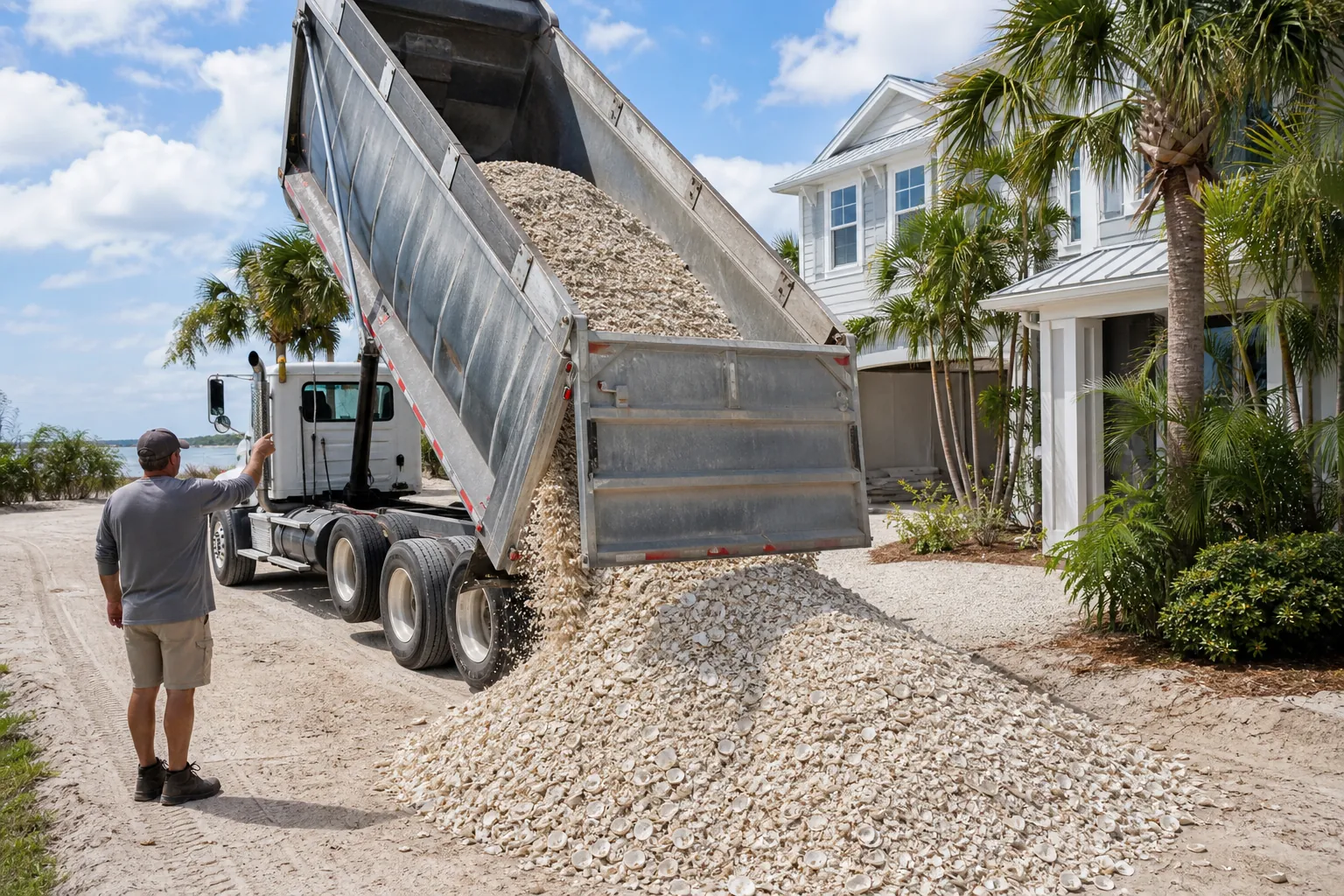
Dump trailer access involves more than the width of your driveway entrance. The vehicle and trailer need a usable approach, room to maneuver, and a suitable position for unloading. Tight turns, parked cars, deep roadside swales, and steep transitions can affect the route.
Walk from the street to your proposed unloading spot. Look at the route as one continuous path rather than a collection of open spaces. A wide driveway beyond a narrow entrance does not eliminate the entrance restriction.
Measure the narrowest points and note nearby obstacles. Do not assume a trailer can fit simply because a passenger vehicle can. Share measurements and site details with Tropical Yards, and ask what clearance is needed for the delivery equipment assigned to your order.
- Measure between gateposts, walls, fences, or other fixed objects along the route.
- Note sharp corners, sloped driveway sections, and abrupt changes between road and driveway elevations.
- Move your vehicles and portable items before the scheduled arrival, rather than waiting until the driver reaches the property.
- Tell the supplier about shared driveways, restricted entry hours, access codes, or community delivery requirements.
Overhead clearance also matters because unloading may require the trailer bed to rise. Low branches, roof edges, carports, and overhead lines should be identified in advance. Never assume an area is suitable for raised equipment based only on clearance during ordinary driving.
If access is uncertain, describe the issue before scheduling. An accessible front-area drop may be more practical than attempting to reach a confined rear area. Confirm the proposed arrangement rather than treating it as an instruction the driver must follow.
Evaluate Ground Conditions And Hidden Infrastructure
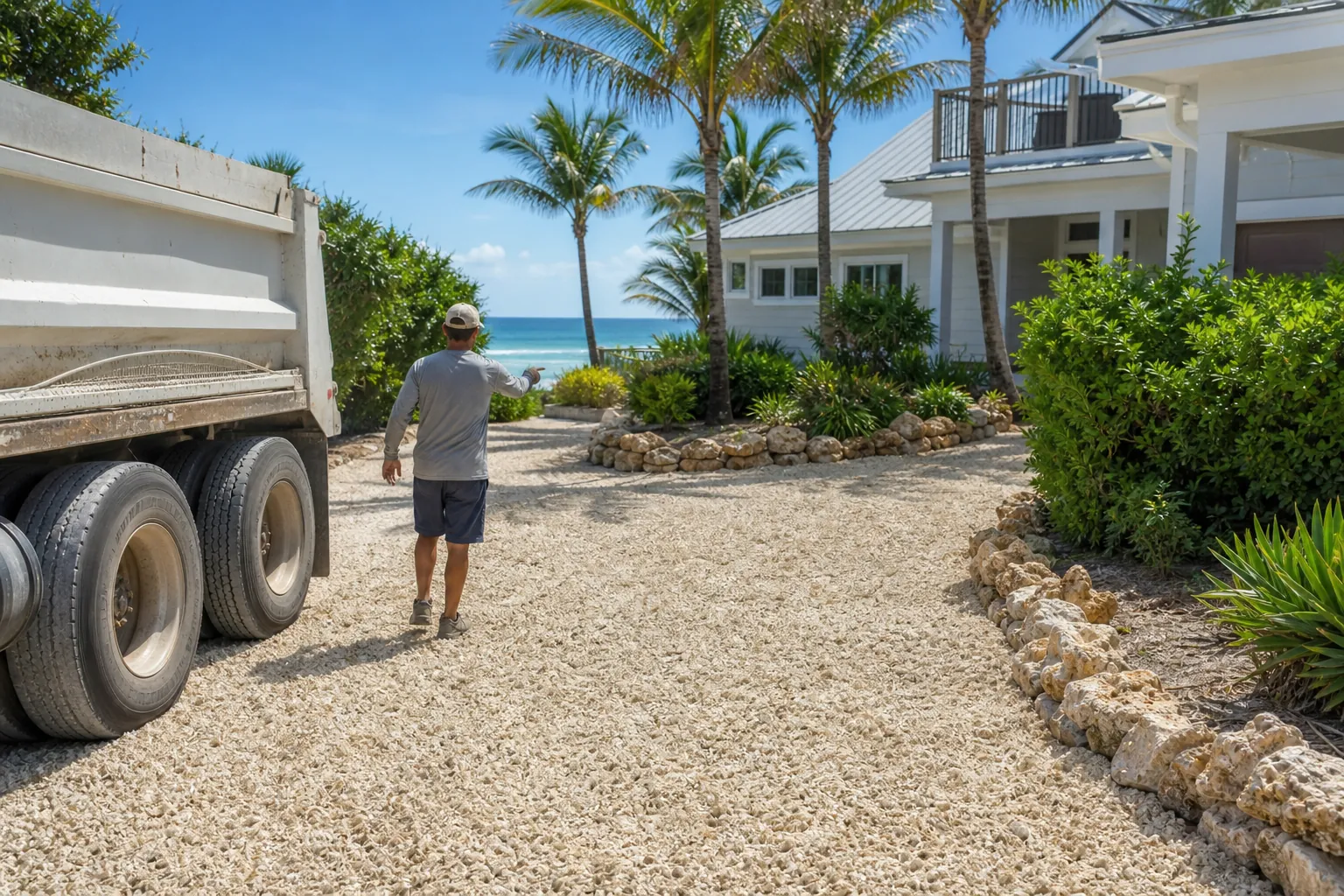
Florida properties can change quickly after rain. A location that felt firm during a dry week may become soft after a storm. Sandy ground can also appear dry at the surface while offering less support than expected under a loaded vehicle.
Check the approach and unloading area for standing water, ruts, loose fill, or recently disturbed soil. Freshly graded ground and backfilled trenches deserve particular caution. Tell the supplier about these conditions instead of relying on appearance alone.
Avoid proposing vehicle travel or unloading over septic tanks, drain fields, buried irrigation equipment, or other underground infrastructure. You may know where these features are, but the delivery driver will not unless you explain them. Mark relevant locations without creating new obstacles in the route.
- Identify septic and drainage components before choosing the vehicle path or pile location.
- Keep access away from visibly saturated areas and ground that compresses easily underfoot.
- Disclose irrigation lines, shallow utilities, culverts, and recently repaired driveway sections.
- Ask about an alternate unloading location if recent weather has changed the original plan.
Existing pavement also needs consideration. Cracked edges, thin residential surfaces, decorative pavers, and unsupported shoulders may not be appropriate for loaded equipment. Site-specific conditions matter, so discuss any concerns before delivery.
Do not cover a questionable area and assume that makes it suitable. A tarp protects a storage surface from loose material; it does not strengthen the ground. Temporary boards or mats are not a substitute for confirming whether the route is acceptable for the delivery equipment.
Choose A Practical Shell Drop Zone
The best drop zone balances safe access with manageable handling afterward. It should provide enough space for the expected pile while leaving necessary property access open. Ask about the unloading footprint when discussing the order, since pile shape depends on quantity and unloading conditions.
Consider how close the drop zone is to the project. A longer wheelbarrow route increases the work you will do, especially when it includes slopes, steps, or soft ground. However, convenience should not override safe delivery access.
If you plan to use a tarp beneath the shell, choose one that suits the expected footprint and spread it flat before arrival. Discuss its placement with the supplier. A tarp may help separate shell from soil or simplify collecting loose pieces, but it can tear under heavy material and is not a promise of surface protection.
- Leave space around the pile for loading a wheelbarrow without standing in a driveway travel lane.
- Keep shell away from storm drains, roadside ditches, and low points where runoff collects.
- Avoid placing the pile against fences, siding, or plant stems.
- Choose a location where loose material will not create a trip hazard across a regular walking route.
Street-side placement may involve local rules, right-of-way restrictions, or community requirements. Check those requirements before proposing a drop in a roadside area. Do not assume that an open verge or unused parking space is available for material storage.
If your first-choice drop zone is unavailable on delivery day, a previously discussed backup can reduce confusion. The alternative still needs appropriate access, ground conditions, and room for unloading.
Separate Quantity Planning From Delivery Preparation
Site readiness includes knowing how much material you expect to receive, but it should not replace a careful quantity estimate. Measure the actual project area and decide on a suitable finished depth before discussing the order.
For a simple rectangle, multiply length by width to find square footage. Divide an irregular space into smaller shapes, calculate each section, and add them together. Exclude areas that will remain uncovered, such as existing planting openings or fixed structures.
To estimate volume in cubic feet, multiply square footage by depth expressed in feet. For example, a depth measured in inches must be divided by twelve before using it in that calculation. Ask Tropical Yards how the material is sold and how your calculated volume relates to the available ordering unit.
Avoid selecting depth solely to make a purchase quantity fit. The intended use, underlying surface, edging, and drainage conditions should guide that decision. A decorative bed and a frequently walked route may need different preparation.
- Bring the measured area and intended depth to the ordering conversation.
- Ask how quantities are described so you do not confuse weight with volume.
- Discuss available material characteristics if particle size or appearance matters to your project.
- Plan where any remaining shell will stay without blocking access or washing into drainage areas.
This article concentrates on the delivery site rather than providing a complete material-selection or coverage guide. Keeping those decisions separate helps you order deliberately and prepare a drop zone that matches the order.
Prepare The DIY Work Area Before The Shell Arrives
The unloading area can be ready even when the finished project area is not. Still, preparing the project area first often reduces the time shell sits in a temporary pile. Decide how much work you can reasonably complete before scheduling delivery.
For your own project, address unwanted vegetation, surface irregularities, and drainage concerns before spreading shell. If you use edging, establish its position and intended height first. Shell should not be treated as a cure for a drainage problem or unstable base.
Landscape fabric is a project-specific choice, not an automatic requirement. Consider soil conditions, intended use, nearby plants, and whether you may need to modify the area later. Fabric does not eliminate every weed or remove the need to understand how water moves through the site.
Preserve existing drainage paths and avoid building material up against siding, door thresholds, or tree trunks. Around plants, leave stems and root flares clear. If the project changes surface elevations near a building, seek appropriate advice before proceeding.
- Set aside a shovel, rake, wheelbarrow or suitable cart, and any tools needed for your chosen edging.
- Wear gloves, sturdy footwear, and eye protection when handling or spreading shell.
- Check that your cart route avoids delicate plants and does not require crossing unsafe slopes.
- Divide the work into manageable sections so you can check depth and surface levels as you go.
Tropical Yards also sells palm trees, hibiscus, bougainvillea, ferns, and other tropical plants. If your purchase includes plants, plan a separate receiving space with conditions suited to those plants. Keep shell piles and handling routes clear of containers, foliage, and root balls.
Plant placement, planting, shell spreading, and care are homeowner or separately arranged contractor responsibilities. Tropical Yards provides the materials and delivery, not installation or yard preparation.
Confirm Details Before Delivery Day
A useful pre-delivery conversation gives the supplier specific information rather than simply saying the property is accessible. Explain the proposed route, the surface beneath it, the unloading spot, and any restrictions that could affect arrival.
Photos can help show a gate, driveway turn, or overhead obstacle, but they do not reveal every condition. Include measurements where relevant and mention anything hidden from view. Ask whether additional information is needed to assess the proposed delivery arrangement.
- Confirm the delivery address and describe the correct entrance if the property has more than one.
- Provide access instructions and any community requirements before the delivery is scheduled.
- Identify who will be available to answer questions and confirm the agreed drop location.
- Ask how to communicate changes if weather or property conditions affect access.
Keep the agreed unloading area clear until delivery is complete. A parked vehicle, new supply pile, or garden project can make a previously usable location unavailable. Tell other household members which spaces need to remain open.
Weather planning should include the ground, not just the forecast at the delivery time. Rain from the previous day may still affect access. If you discover standing water or soft conditions, contact Tropical Yards before the vehicle arrives to discuss the situation.
Stay Clear During Unloading And Manage The Pile Afterward
On delivery day, make sure children and pets remain away from the delivery area. Keep other vehicles and pedestrians out of the approach and unloading space. Follow the driver's directions and do not walk behind the trailer or alongside equipment during movement.
Confirm the proposed drop location before unloading begins. Once material is discharged, moving it becomes part of your project work. Do not assume the driver can reposition a deposited pile or spread shell across the finished area.
After the delivery equipment has left, inspect the surrounding area from a safe position. Check that entrances and drainage openings remain clear. Keep loose shell contained as you move it, especially near sidewalks or driveway edges.
If the pile will remain temporarily, protect access around it and monitor nearby runoff during rain. Avoid storing bags of tools, plant containers, or other items where they could become buried or interfere with handling.
As you spread the shell yourself, check the surface in small sections rather than emptying the entire pile at once. This makes it easier to maintain your intended depth, preserve plant clearances, and identify areas that need more preparation.
A Final Readiness Check Before You Order
You are ready to discuss delivery when you have a measured project, a proposed unloading area, a clear approach, and a realistic plan for moving the shell afterward. Any uncertainty about ground support, overhead clearance, or restricted access should be raised before scheduling.
For coquina shell sales and dump trailer delivery from St. Augustine to Daytona Beach, call Tropical Yards at 772-267-1611. Share your measurements, access details, and preferred drop location so you can discuss the order and delivery plan. Preparing those details helps keep the conversation focused on what your property and DIY project actually need.
Call 772-267-1611 to talk through next steps.