How to plan coquina shell delivery when your ground is soft
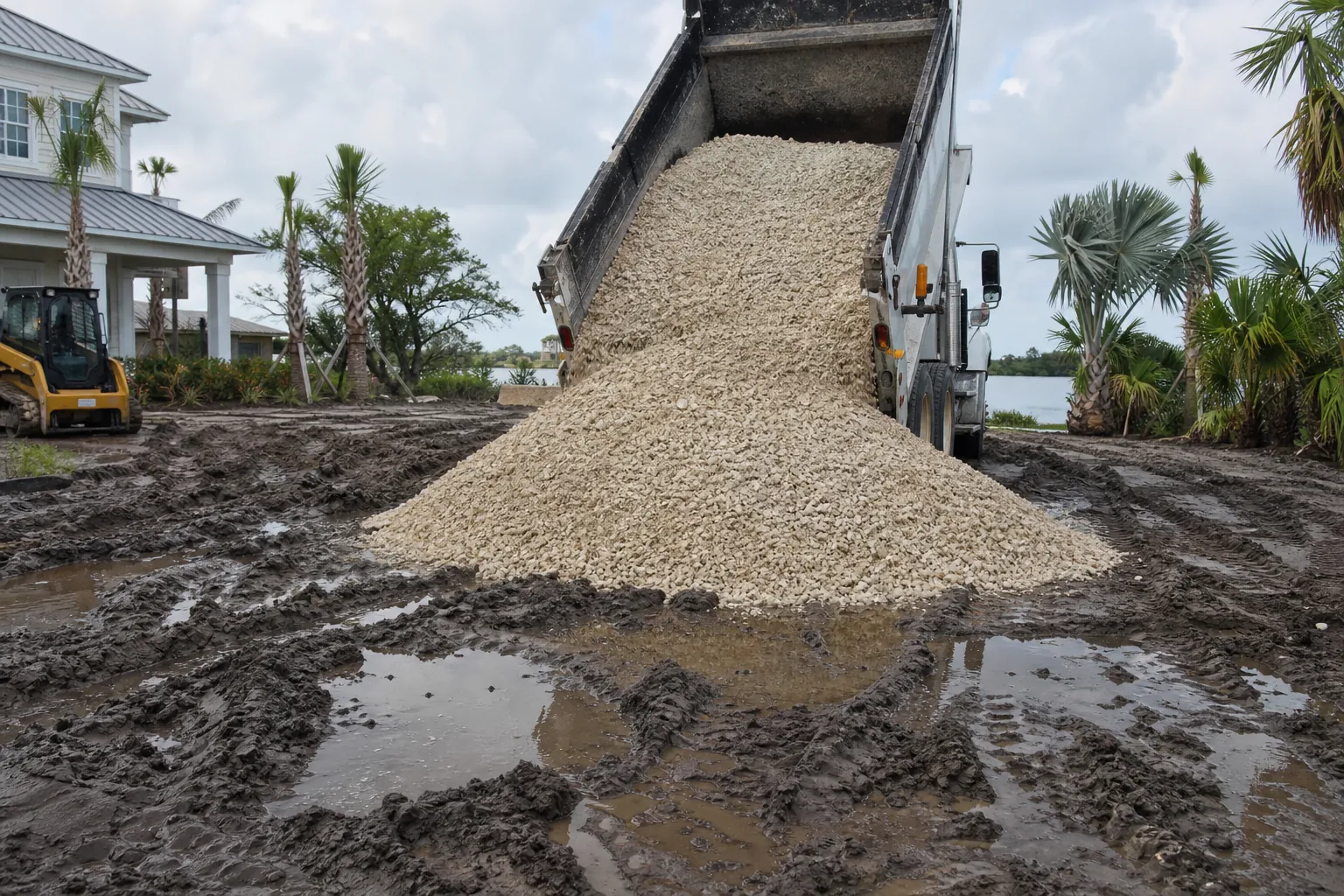
Coquina shell can be a useful material for Florida garden paths, landscape accents, and other outdoor projects. Getting it home, however, requires more than choosing where the finished shell surface will go. Wet lawns, loose sand, narrow gates, and hidden drainage features can make a delivery route unsuitable for a loaded vehicle.
When planning coquina shell delivery soft ground access, start with the unloading location and work backward toward the street. The most convenient spot for spreading shell yourself is not always the best spot for a dump trailer. A reachable staging area may be the better choice, even if you need to move the material farther afterward.
Tropical Yards supplies coquina shell and tropical plants, with dump trailer delivery from St. Augustine to Daytona Beach. Delivery does not include installation, spreading, grading, or yard cleanup. This guide explains what buyers can check, what information to share before ordering, and how to prepare for a manageable DIY project.
Start With An Access Plan, Not Just A Project Location
Think of your property as three separate areas: the approach from the road, the route across the property, and the unloading spot. Each must be suitable for the delivery equipment. A firm unloading area does not solve a soft section along the approach.
A loaded dump trailer places substantial weight on the ground. A lawn that supports a person, wheelbarrow, or riding mower may not support delivery equipment without rutting. Surface appearance alone cannot establish whether the ground is suitable.
Before ordering, sketch the route and mark any gates, bends, slopes, drainage channels, and overhead obstacles. Take photographs from the street toward the proposed unloading area. Include anything that could affect turning or backing, not just the final destination.
- Identify a primary unloading location that can be reached without crossing questionable ground.
- Choose a backup location in case rain or access restrictions change the plan.
- Measure the narrowest openings and share those measurements before scheduling.
- Explain whether the approach requires backing, turning sharply, or crossing a slope.
For general material information, visit the coquina shell page. Use this access guide to handle the separate question of getting the material onto your property without assuming the trailer can reach every project area.
Recognize Soft Ground Before Delivery Day
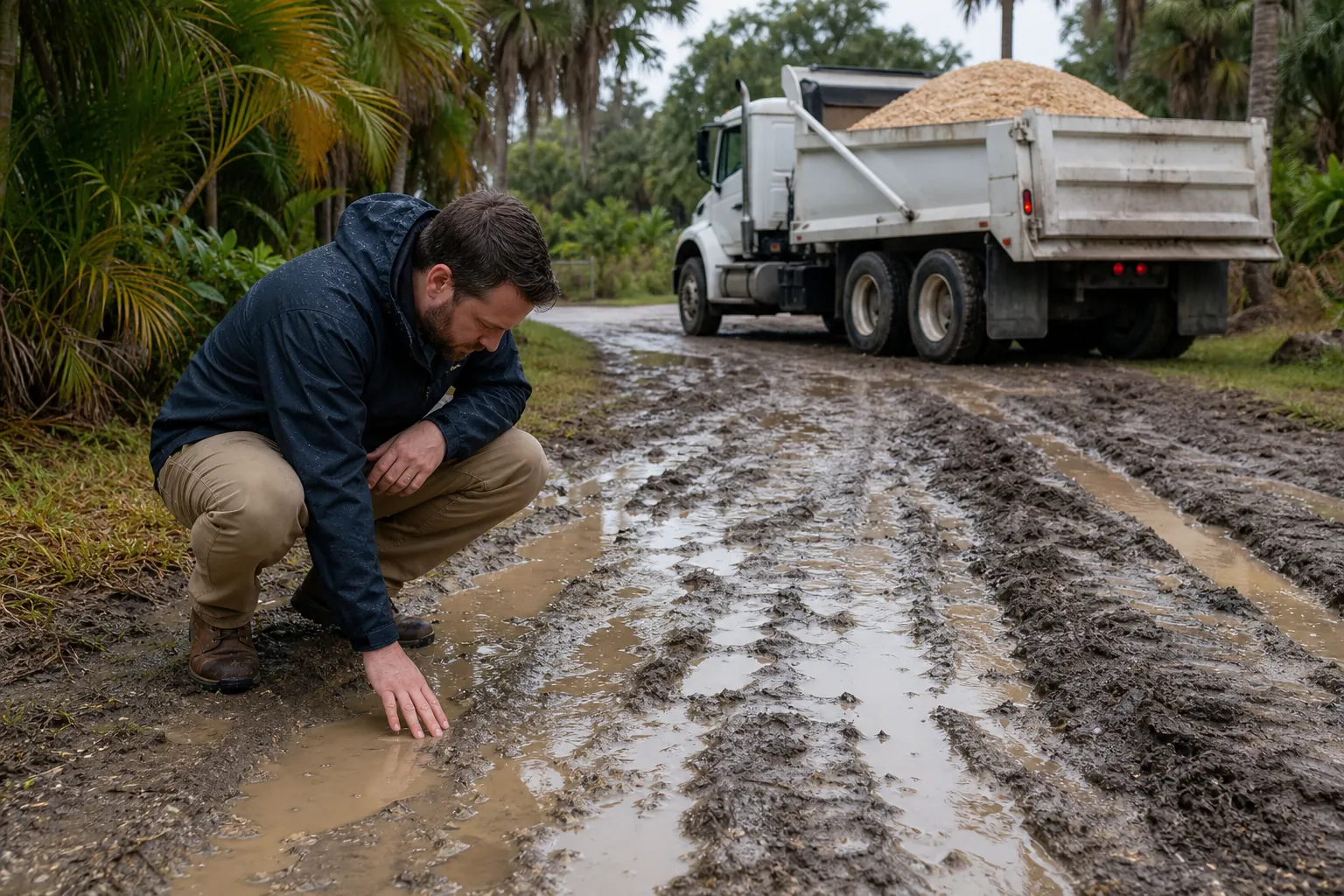
Florida properties can include sandy soils, low areas with poor drainage, recently disturbed fill, and saturated turf. These conditions behave differently, but each deserves attention when planning access. Ground that looks dry on top may still be wet or loose beneath the surface.
Walk the proposed route after rainfall. Look for standing water, footprints that remain depressed, muddy edges, and places where ordinary foot traffic causes the surface to shift. These observations can flag concerns, but they are not a load-bearing test.
Newly backfilled trenches are another concern. Irrigation repairs, utility work, or recent construction may leave sections less compacted than surrounding ground. Tell the supplier about known disturbed areas even if grass now covers them.
Loose sand can also create traction problems without appearing muddy. A dry, sandy strip beside a driveway should not automatically be treated as usable space for a trailer wheel. Keep the planned route on an established, suitable surface wherever possible.
- Flag areas where water collects after storms or irrigation.
- Identify recently excavated or filled ground along the proposed route.
- Note shoulders, ditches, and soft lawn edges beside paved surfaces.
- Share any history of vehicles sinking, slipping, or leaving deep ruts.
Do not drive a personal vehicle across questionable ground simply to test it for delivery. Different vehicles place different loads on the surface, and a successful test would not prove that a loaded trailer can follow safely.
Check Width, Turning Space, And Overhead Clearance
Soft ground is only one access issue. A route also needs enough room for the delivery vehicle and trailer to enter, maneuver, unload, and leave. Gate width alone does not describe the usable space if a sharp turn begins immediately beyond it.
Measure openings between fixed objects, including gateposts, walls, and fence corners. Note whether gates open fully and whether hinges, latches, or posts reduce the clear opening. Share the actual measurements rather than describing an entrance as wide.
Photograph turns and the space opposite the driveway entrance. Parked vehicles, roadside drainage, and neighboring boundaries may limit the approach. Do not assume delivery equipment can use a neighbor's driveway or lawn to complete a turn.
Dumping also requires attention above the unloading area. Trees, roof overhangs, and utility lines can interfere with a raised trailer body. Tell Tropical Yards about these features so the proposed location can be discussed before arrival.
- Provide the narrowest clear width along the entire route.
- Identify low branches, overhead wires, roof edges, and covered entrances.
- Explain whether vehicles normally need several maneuvers to enter or leave.
- Keep parked cars and movable obstacles out of the agreed access area.
Ask what clearance the actual delivery equipment needs. Do not rely on dimensions for a different trailer found online. A seemingly similar trailer may have different requirements, and unloading adds considerations beyond simply driving through.
Choose A Firm, Reachable Unloading Spot
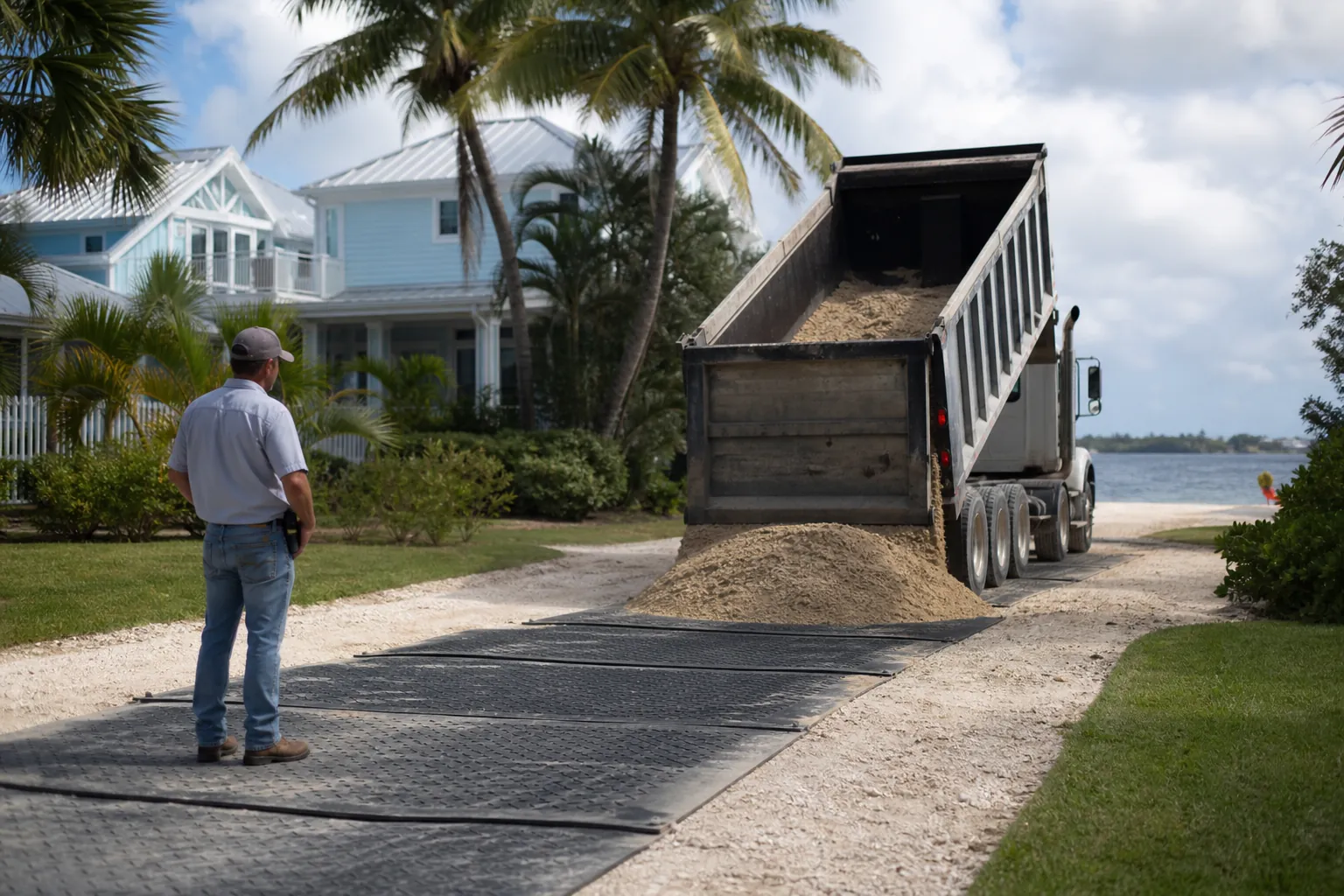
A practical unloading spot balances delivery access with your ability to move the shell afterward. An established hard-surface area may be preferable to a rear lawn, but its condition, slope, capacity, and surrounding clearance still need consideration.
Describe the surface accurately. Tell the supplier whether it is concrete, asphalt, pavers, compacted aggregate, bare soil, or turf. Mention visible cracking, uneven edges, steep slopes, and any uncertainty about what lies beneath it.
Keep shell away from storm drains, roadside ditches, and areas where runoff could carry loose material away. Avoid blocking entrances, emergency access, sidewalks, or shared driveways. If the location is near a property boundary, confirm that the pile will remain on your property.
Plan enough room for the pile itself. Dumped shell does not stay in a perfectly vertical stack or land as a finished, evenly spread surface. Discuss the unloading footprint before choosing a tight space beside a wall, parked vehicle, or planting bed.
A ground covering may help separate shell from a staging surface, but it does not strengthen soft ground. If you want to use a tarp or another covering, ask beforehand whether it is appropriate for the unloading arrangement. Keep loose edges away from the vehicle's path.
The final unloading location must remain suitable when the driver arrives. An earlier conversation cannot account for every change in weather, parked vehicles, or site conditions.
Protect Irrigation, Septic Areas, And Buried Features
A route can look clear while crossing infrastructure that should not receive vehicle loads. Septic tanks, drainfields, utility covers, irrigation components, and private drainage structures deserve particular attention. Grass often hides their boundaries.
Use property records and your knowledge of the site to identify these features. If you are unsure about a septic area or underground structure, resolve that uncertainty before proposing a delivery route across it. Do not assume the driver can identify buried features on arrival.
Mark known concerns visibly and explain them during delivery planning. A small sprinkler head may be easy to spot, while a shallow irrigation line or drainage pipe may not be. Marking helps communicate the hazard, but it does not make crossing it acceptable.
- Keep the proposed route away from septic tanks and drainfields.
- Identify irrigation heads, valve boxes, cleanouts, and utility access covers.
- Point out culverts or drainage structures beneath entrances.
- Confirm where private underground features are located if the route could affect them.
If your DIY project includes excavation, edging anchors, or other ground disturbance, arrange the appropriate utility locating before that work. Public utility locating may not identify every privately installed line, so review private irrigation and electrical features separately.
Make A Rain Plan Before You Order
Recent rainfall matters as much as the weather forecast for delivery day. A sunny morning does not necessarily mean a low lawn or sandy fill area has recovered from several wet days. Irrigation can also leave a proposed route wetter than expected.
Tell Tropical Yards if the property stays soft after rain. Describe where water collects and whether the proposed unloading area remains reachable without crossing those spots. Photographs taken after a storm can be more useful than photographs taken during a dry week.
Agree on how to communicate changes before delivery. If conditions deteriorate, contact the supplier rather than waiting for the vehicle to arrive. Depending on the situation, discussing a different unloading location or schedule may be necessary.
Do not improvise a vehicle route using loose boards, leftover pavers, or thin sheets of plywood. These materials should not be assumed capable of supporting loaded delivery equipment. Any access concern needs to be discussed rather than hidden under a temporary surface.
Your backup plan should be specific. Identify a firm alternative location, explain how you would move shell from there, and confirm whether it is acceptable for delivery. A vague promise to find somewhere on arrival leaves too many decisions unresolved.
Order Around A Realistic DIY Material-Moving Plan
Once you have a workable unloading location, calculate your material needs from the project dimensions. Measure the area and decide the intended finished depth before asking about quantity. For a rectangular area, length multiplied by width gives square footage.
For irregular spaces, divide the layout into smaller rectangles or other manageable shapes. Add their areas, and account for sections you do not intend to cover. Share your measurements and intended use when discussing the order.
Ask how coquina shell is sold and what quantity information is needed. Do not assume that a volume measurement converts to a particular weight without product-specific guidance. Also ask about the material's characteristics so your expectations match the shell being supplied.
Consider the work between the unloading pile and the finished project. A longer wheelbarrow route, a narrow gate, or an uphill section can make moving material much more demanding. Ordering should reflect both project needs and a realistic plan for handling the shell yourself.
- Measure the finished area rather than estimating from photographs.
- State the planned depth and the purpose of the shell surface.
- Map the route you will use to move material from the pile.
- Keep the staging area clear of items that would become difficult to reach.
Delivery places the material at an agreed unloading location. Tropical Yards does not spread, compact, grade, or install coquina shell. Arrange your own tools, time, and any separate help needed for the work after delivery.
Keep Shell Use Separate From Solving Drainage Problems
Coquina shell should not be treated as a shortcut for correcting every soft or wet area. Placing shell over saturated soil does not automatically create a stable surface or correct the reason water collects there.
If the intended project area stays wet, investigate the cause before ordering material for that location. Roof runoff, irrigation patterns, low grades, and compacted soil can each contribute. Persistent drainage or structural concerns may require advice from an appropriately qualified professional.
For a DIY path or decorative area, plan the surface according to its use. Foot traffic, wheelbarrow access, and vehicle traffic have different demands. Avoid assuming a decorative shell layer will perform like an engineered vehicle-bearing surface.
Edging can help define a shell area, but it should not trap runoff against a building or block existing drainage. Keep the finished level appropriate for adjacent doors, walks, and beds. Think through where rainwater will go before changing surface elevations.
If shell will sit near plants, consider their soil and moisture needs separately. Coquina is calcium-rich material and may influence soil conditions where it mixes with soil over time. Avoid burying trunks or crowns, and keep shell placement compatible with the plants you are growing.
Use A Simple Delivery-Day Checklist
Preparation on delivery day should confirm the plan, not introduce a completely different route. Walk the approach again, check for new wet areas, and make sure the unloading location is free of obstacles.
Keep children, pets, and bystanders away from the vehicle and unloading area. Stay clear while the trailer is moving or dumping, and follow the driver's directions about where to stand. Do not approach the equipment to adjust a tarp or move an object during unloading.
- Open the agreed gates fully before the delivery arrives.
- Move vehicles, bins, hoses, and portable items out of the route.
- Confirm that marked underground concerns remain visible.
- Check overhead clearance and the unloading area for new obstructions.
- Have a reachable contact available to discuss any site changes.
- Keep the exit route open until the delivery vehicle has left.
If the planned spot is no longer suitable, explain the change before unloading begins. Do not pressure the driver to cross questionable ground simply because the material would be more convenient near the project.
Discuss Your Access With Tropical Yards
A useful delivery conversation includes your location, approximate quantity needs, proposed unloading surface, route measurements, and any soft-ground concerns. Photographs and a clear backup location make that conversation more productive.
Tropical Yards offers coquina shell sales, tropical plant sales, and dump trailer delivery of plants and coquina shell from St. Augustine to Daytona Beach. Available plant categories include palm trees, hibiscus, bougainvillea, ferns, and other tropical plants. These are supply and delivery services, not landscaping labor.
Call 772-267-1611 to discuss coquina shell and delivery access. Start with the ground conditions rather than assuming the trailer can reach your preferred spot. A realistic unloading plan gives you a clearer starting point for moving and using the material yourself.
Call 772-267-1611 to talk through next steps.