Coquina shell delivery tarp placement for Florida DIY projects
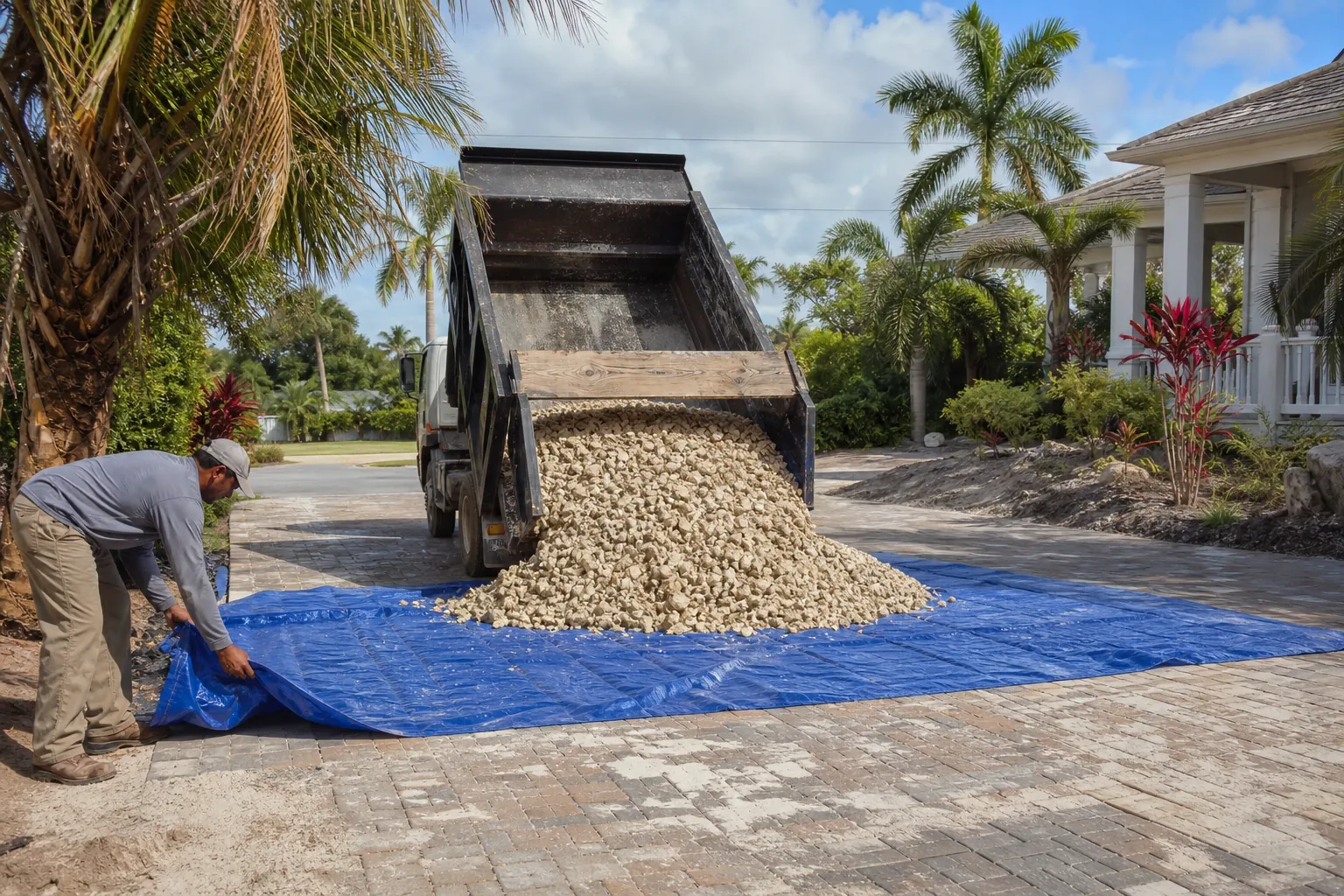
A coquina shell delivery goes more smoothly when you decide where the material will land before the dump trailer arrives. For a Florida homeowner working on a DIY project, a tarp can help separate the shell from the surface beneath it and make scattered pieces easier to collect. It cannot make an unsuitable unloading area safe or eliminate the work of moving the material.
The most useful approach to coquina shell delivery tarp placement is to plan the unloading location first, then decide whether a tarp belongs there. Surface strength, trailer access, overhead clearance, drainage and your route to the project matter more than simply covering the ground.
Tropical Yards supplies coquina shell and tropical plants, with dump trailer delivery from St. Augustine to Daytona Beach. Delivery is material supply, not installation or yard cleanup. This guide explains how buyers can prepare a drop area and handle their shell afterward.
Start With The Delivery Location, Not The Tarp
A tarp is a temporary separator. It does not support a loaded trailer, stabilize wet ground or protect a driveway from every possible mark. Choose a location that can accommodate the delivery equipment and the unloaded pile before buying or laying out a tarp.
A firm, reasonably level area near the project often reduces wheelbarrow travel. However, the closest spot is not always accessible. Narrow gates, tight turns, parked vehicles and soft lawn edges can rule out an otherwise convenient location.
Ask Tropical Yards about access requirements when ordering. Explain the available approach, surface type and any restrictions. Photos can help communicate conditions, but the unloading location still needs to be suitable when the delivery arrives.
- Identify an approach that does not require crossing a septic system, drain field or other vulnerable underground feature.
- Check for low branches, utility lines, roof overhangs and other obstructions along the approach and above the unloading area.
- Choose a spot that leaves room for the trailer to maneuver and depart without driving through the shell pile.
- Keep the drop area away from storm drains, swales and routes used to enter or exit the property.
- Tell the supplier about slopes, recent rain, soft ground or limited turning space before delivery day.
Do not assume that a tarp allows delivery onto grass or a delicate surface. Discuss those conditions directly. A different drop location may be necessary, even if it means moving the shell farther by hand.
Understand What A Tarp Can And Cannot Do
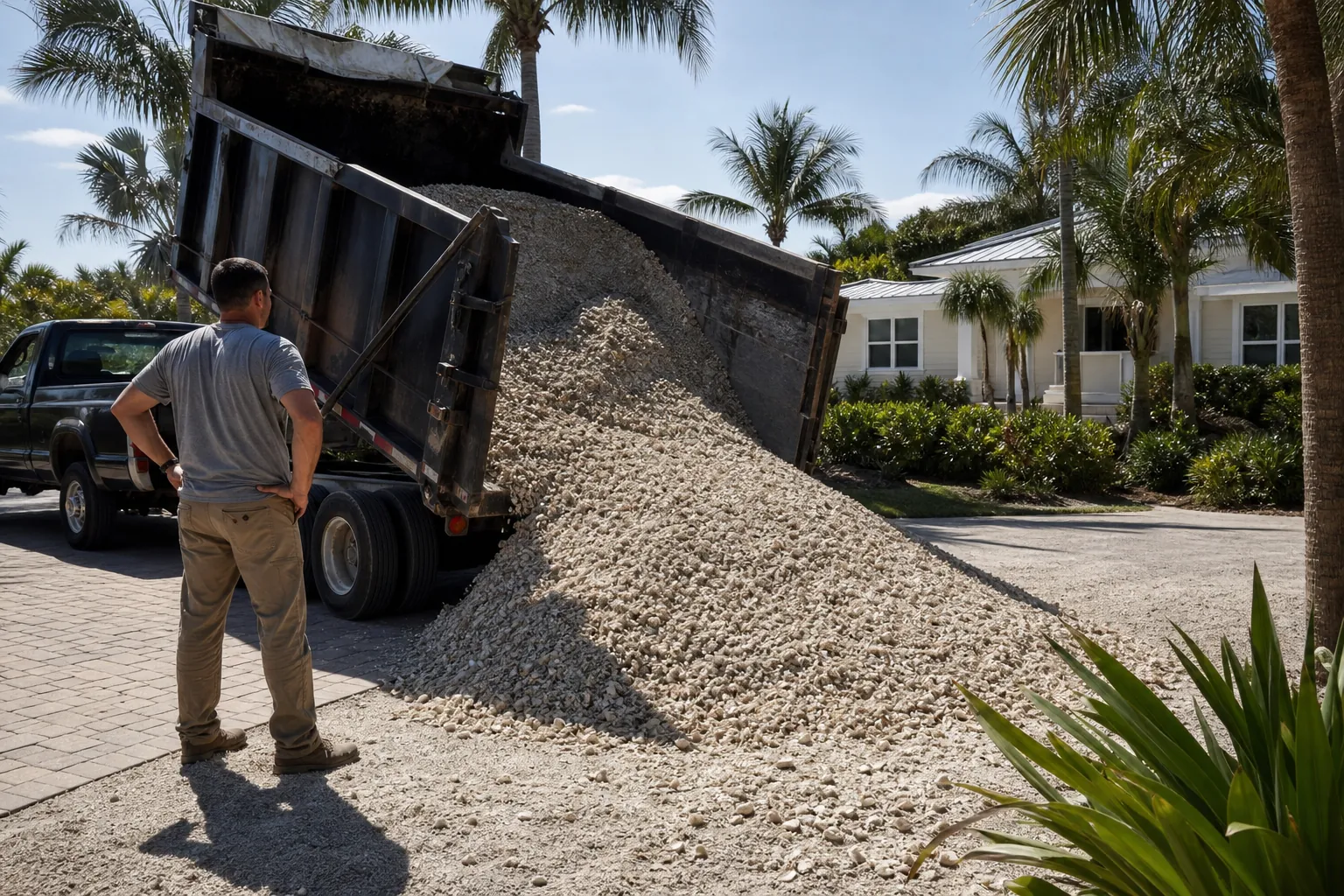
On a suitable surface, a tarp can create a visible boundary between the shell and the ground. It may help keep smaller pieces from mixing into grass, soil or loose material already on the site. When the pile is nearly gone, the remaining pieces can be easier to gather.
A tarp offers limited protection, however. Coquina shell can have rough or sharp edges. The weight of a pile, shovel contact and repeated foot traffic can puncture or tear the fabric. Thin plastic sheeting is especially easy to damage and can leave fragments mixed with the shell.
Water can also collect in folds or low spots. A tarp placed over grass may hold moisture and block light, affecting the turf beneath it. Plan to move the shell promptly rather than treating the tarp as long-term storage.
Do not use the tarp as a lifting sling for a bulk pile. Ordinary consumer tarps are not rated for that task. Trying to drag the full load can tear the material, scatter shell and create an injury risk. Transfer the shell in manageable amounts instead.
If protecting a finished driveway is your main concern, ask about delivery placement and evaluate the surface carefully. A tarp does not guarantee protection from abrasion, staining, equipment contact or damage associated with a heavy load.
Choose A Tarp For The Expected Pile
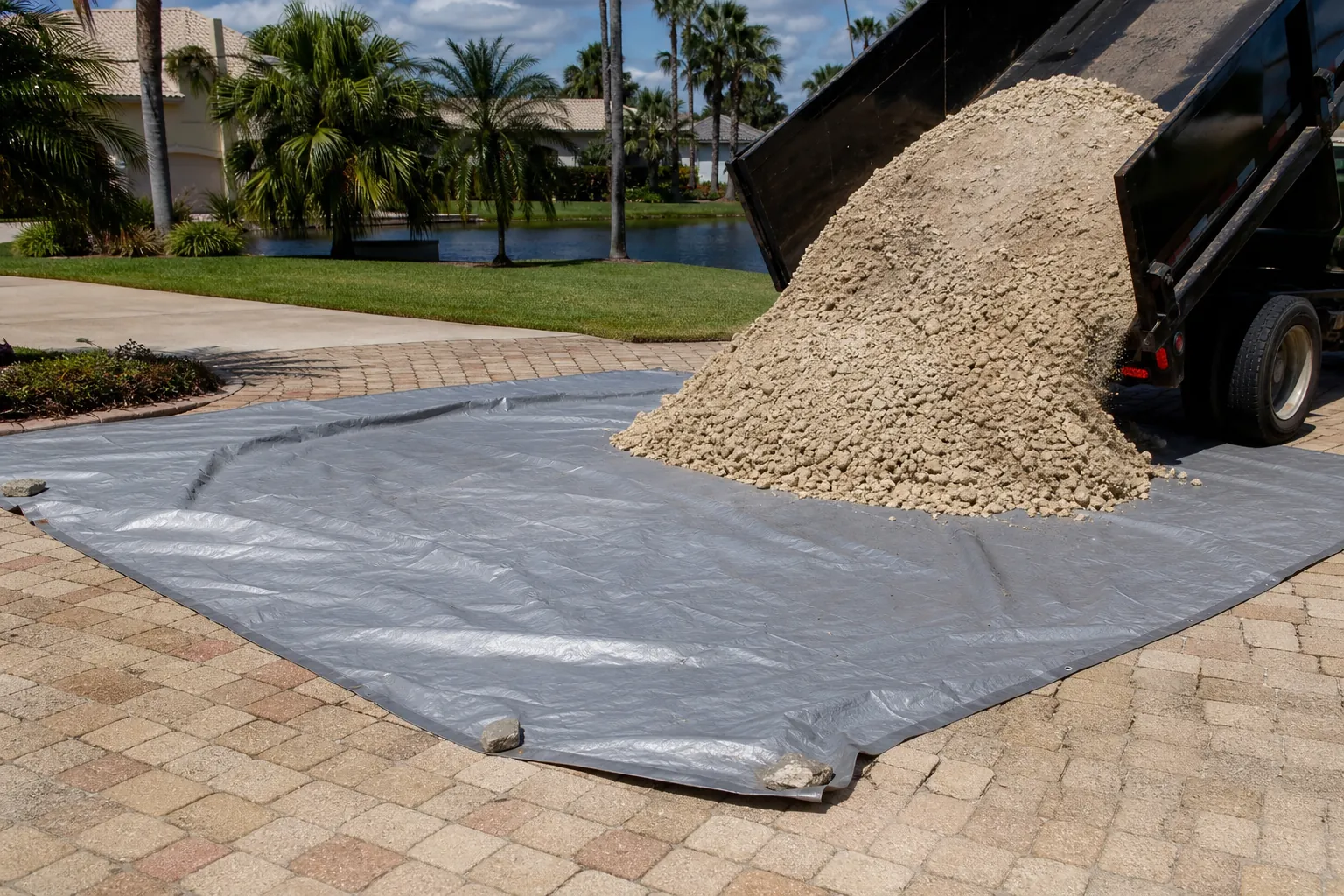
Select a sturdy tarp in good condition rather than one that is already brittle, torn or weakened around its grommets. The useful size depends on the order, unloading pattern and available drop area. Confirm the planned quantity and discuss the likely pile footprint before choosing the tarp.
The tarp should extend beyond the expected pile so that loose pieces have somewhere to land. At the same time, oversized loose edges can interfere with trailer access or become a tripping hazard. More fabric is not automatically better.
A single continuous tarp is generally easier to manage than several small overlapping sheets. Shell can work between overlaps, and shifting sheets can create pockets that catch a shovel. If multiple tarps are your only option, understand that the seams may make later collection less convenient.
- Choose material sturdy enough for rough aggregate contact, while expecting some wear during use.
- Allow a practical border around the anticipated pile rather than sizing the tarp only for its center.
- Avoid damaged fabric that could break apart and become mixed into the shell.
- Check that the tarp can lie flat without blocking the delivery approach.
- Keep a separate lightweight cover available if you intend to cover the pile after unloading.
Do not plan around an exact pile shape. Bulk material does not unload as a neatly measured rectangle. Leave flexibility in the surrounding space and confirm placement with the driver before unloading begins.
Position The Tarp Without Creating Delivery Hazards
Prepare the receiving area yourself before delivery. Remove movable obstacles, check for sharp debris beneath the tarp and establish a clear walking route around the planned pile. Lay the tarp flat so folds do not create concealed trip points.
The tarp needs to receive the shell without interfering with the trailer. Ask where it should sit relative to the intended unloading position. Do not assume that the delivery vehicle should drive over it or that the driver can make a last-minute adjustment in a confined space.
Wind is a practical concern in Florida. Loose corners can lift, fold or slide before the delivery arrives. Secure edges outside the vehicle path, using a method that will not introduce sharp objects or obstacles into the work area. Avoid cords stretched across walking routes.
Keep stakes, bricks and other edge weights out of the trailer approach and away from where the pile will land. Once the load is in place, do not reach beneath it to retrieve a weight or flatten a trapped fold.
- Lay out the tarp close to delivery time so weather has less opportunity to move it.
- Keep the intended unloading boundary visible and unobstructed.
- Place edge restraints where they will not contact tires or interfere with unloading.
- Leave room around the pile for shoveling and loading a wheelbarrow.
- Keep children, pets and bystanders away from the unloading area.
When the driver arrives, review the location before any material is released. If access or ground conditions make that spot unsuitable, pause and discuss an alternative. Do not stand behind the trailer, climb onto it or attempt to move the tarp during unloading.
Plan For Florida Rain, Drainage And Turf
Florida rain can change a delivery site quickly. A location that looked firm during ordering may be soft after a storm. Check the approach and receiving area again before delivery, especially if either depends on unpaved ground.
Choose a drop area outside normal runoff paths. Shell placed across a swale, curb opening or drain can interfere with water movement. A tarp can also redirect water or hold it in low spots, so examine the ground beyond the edges, not just the center.
If the pile must remain temporarily, inspect it after rain. Water trapped beneath or within folds can make footing uncertain. Avoid pulling a loaded tarp to release collected water. Move material in manageable amounts and deal with exposed folds as the pile gets smaller.
Grass beneath a covered pile may suffer from compression, reduced light and trapped moisture. The outcome depends on conditions and duration, so there is no universal safe storage period. If preserving turf is important, consider a suitable hard-surface location instead.
Never use a storm drain as a place to wash or sweep away leftover shell. Keep loose pieces on your property and collect them for the project. Delivery planning should include where small remnants will go once the main pile has been moved.
Make The DIY Transfer Route Workable
The distance from the drop area to the project determines much of your handling effort. Walk that route before ordering. Look for narrow passages, steps, slopes, soft spots and turns that become difficult with a loaded wheelbarrow.
A direct route is helpful, but preserving access is also important. Keep doors, garage openings and gates usable. Do not place the pile where it blocks the only practical path to the backyard or forces you to climb over shell each time you pass.
Gather your tools before delivery. A shovel, wheelbarrow, sturdy gloves and closed-toe shoes are basic starting points for manual handling. Choose tools that suit your abilities and the project, and keep loads small enough to control.
- Test the route with an empty wheelbarrow to identify tight turns and uneven surfaces.
- Set aside an area for tools so they do not become hidden beneath the pile.
- Keep wheelbarrow loads manageable, especially on slopes or damp ground.
- Work during a comfortable part of the day and take breaks appropriate to Florida heat.
- Keep the tarp flat as sections become exposed, without tugging fabric trapped under the remaining pile.
Start from an accessible edge and work inward. Avoid scooping aggressively against the tarp, which can cut the fabric or mix torn pieces into the shell. Near the end, gather remnants carefully rather than trying to lift the remaining weight all at once.
Tropical Yards delivers the material; moving, spreading and finishing your DIY project remain your responsibility. Plan your available time and help around that distinction before deciding how much to order.
Confirm The Order And Drop Instructions Together
Tarp planning is most effective when it is connected to the order. Measure the project area and consider the intended layer depth before discussing quantity. Do not estimate your shell needs from the tarp size, because the unloading footprint and finished coverage are different measurements.
Use the coquina shell information page as the main starting point for material selection. For transportation details, consult the coquina shell delivery page. This guide focuses on temporary receiving-area preparation rather than replacing broader product or delivery information.
Describe the proposed drop location clearly. Simple instructions such as a specific driveway section, supported by photos when useful, are better than vague directions to leave the shell near the house. Mention the tarp during ordering rather than introducing it only when the trailer arrives.
- Confirm the delivery address and whether it falls within the St. Augustine to Daytona Beach delivery area.
- Discuss the shell quantity and the receiving space available for that order.
- Explain gates, parking restrictions, overhead obstacles and surface concerns.
- Ask how the tarp should be positioned relative to the trailer's unloading location.
- Arrange for an available contact to review placement when the delivery arrives.
Instructions should also identify areas that must remain clear. If the property has shared access or community rules, check those before delivery. Do not assume shell can be unloaded on a sidewalk, roadway or neighboring property.
A Final Check Before The Trailer Arrives
On delivery day, check the area again rather than relying on yesterday's preparation. A parked car, a lifted tarp corner or overnight rain can change the plan. Keep the approach clear and make sure the receiving area is ready before the trailer reaches the property.
Take a moment to verify your own next step. Know where the first wheelbarrow load will go, where tools will sit and how you will keep loose shell out of drains and walking routes. A prepared transfer plan is often more useful than a perfectly tidy tarp layout.
After unloading, inspect the accessible edges without stepping into an unstable part of the pile. Flatten loose fabric only where it is free of the load. As you move the shell, collect torn tarp pieces immediately so they do not end up in the finished project.
Once the tarp is empty, gather remaining shell, inspect the underlying surface and remove the tarp. Do not leave loose fabric stretched across a driveway or lawn. Any collection of remnants and site tidying is part of your own DIY work.
Tropical Yards offers coquina shell sales and tropical plant sales, including palm trees, hibiscus, bougainvillea, ferns and other tropical plants. Dump trailer delivery of plants and coquina shell is available from St. Augustine to Daytona Beach. Tropical Yards does not provide installation, landscape design, maintenance or yard cleanup.
For help ordering coquina shell and discussing your proposed delivery location, call 772-267-1611. Share your access conditions and tarp plan so the delivery discussion starts with the details that matter.
Call 772-267-1611 to talk through next steps.