How to plan turnaround space for coquina shell delivery
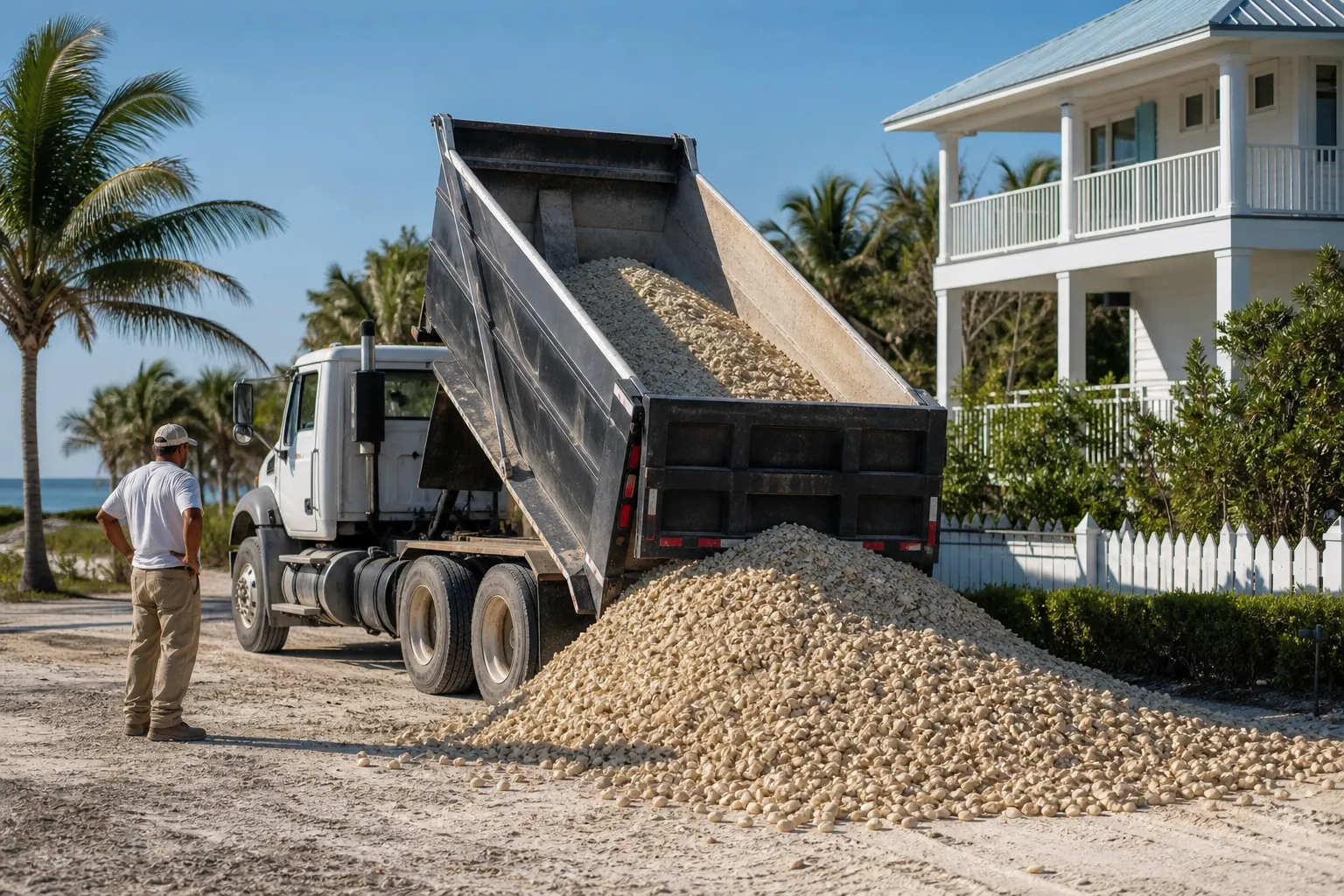
A driveway can look spacious until a tow vehicle and loaded dump trailer need to enter, turn, unload, and leave. Planning that movement before ordering coquina shell helps you identify access problems while there is still time to choose a better unloading location.
For Florida homeowners researching coquina shell delivery turnaround space, the key is not a single driveway measurement. It is the complete route: the street approach, entrance, curves, unloading area, and exit. Surface conditions, overhead clearance, and parked vehicles matter along that route.
Tropical Yards supplies coquina shell and tropical plants, with dump trailer delivery from St. Augustine to Daytona Beach. This guide focuses on preparing for material delivery and handling the shell yourself afterward. Tropical Yards does not provide installation or yard preparation services.
Start With The Entire Delivery Route
Walk the route a delivery vehicle would take from the public road to your proposed unloading spot. Look at the entrance from both directions. A driveway that is easy to enter in a passenger car may require a different approach when a trailer follows behind a tow vehicle.
Check whether the entrance sits close to an intersection, drainage ditch, utility pole, mailbox, or sharp bend. These features can limit how widely the vehicle can approach. A narrow gate just beyond the driveway entrance can create a second restriction before the trailer has straightened.
Continue along the driveway and note every change in width, grade, or direction. Measure the narrowest usable sections rather than relying on the widest area near the house. Include any space occupied by permanent planters, fences, walls, or parked equipment.
Then consider the departure. Getting a loaded trailer into a location does not necessarily mean there is a practical way out. The driver needs an appropriate exit route after unloading, whether that involves moving forward, turning, or a planned backing maneuver.
- Identify the street approach and note any obstacles that could restrict the initial turn.
- Measure gates and narrow driveway sections with gates fully open.
- Record curves, slopes, surface changes, and drainage crossings along the route.
- Choose an unloading spot and describe how the vehicle could leave afterward.
Share these observations before delivery arrangements are finalized. They are more helpful than simply saying that the property has a large driveway.
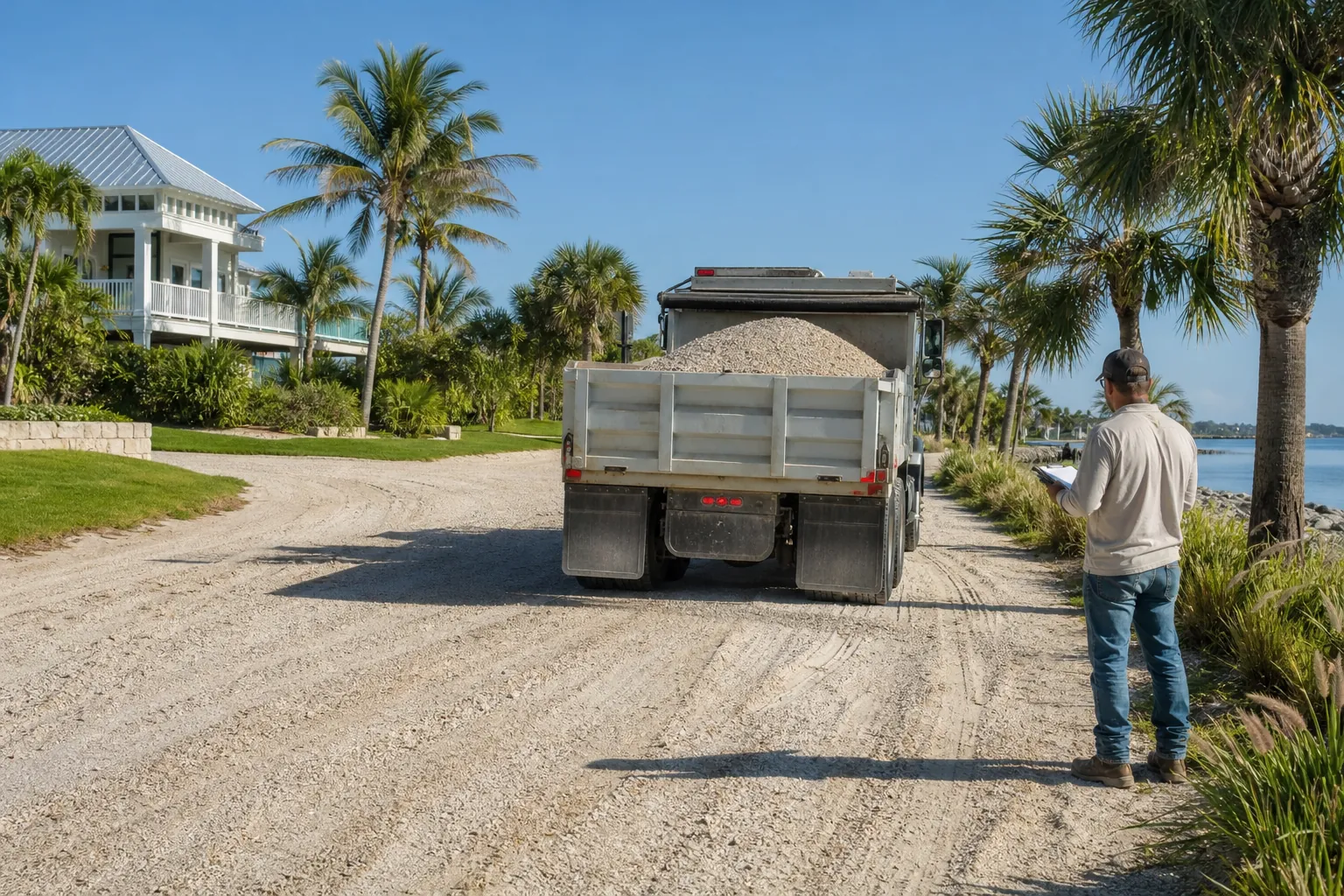
Why There Is No Universal Turnaround Measurement
The space needed depends on the actual tow vehicle, trailer, approach angle, and unloading method. A number borrowed from a moving truck guide or a neighbor's delivery may not apply to a dump trailer carrying coquina shell.
A trailer follows a different path from the tow vehicle during a turn. Its wheels can track inside the vehicle's path, bringing the trailer closer to gateposts, landscaping edges, or drainage features. The front of the tow vehicle also needs room to swing without striking nearby obstacles.
Turning room is therefore about shape as well as size. A long, narrow area may provide useful backing distance but little room to turn. A wider driveway apron may help with alignment, yet still leave too little room near the unloading location.
Do not assume that a three-point turn, circular driveway, or backing approach will be suitable. Each option depends on the equipment and conditions. Describe what is available and let Tropical Yards assess the proposed access plan.
Ask what clear width, overhead clearance, and maneuvering area are needed for the delivery equipment assigned to your order. Confirm whether the proposed route and unloading position are appropriate rather than treating a general measurement as approval.
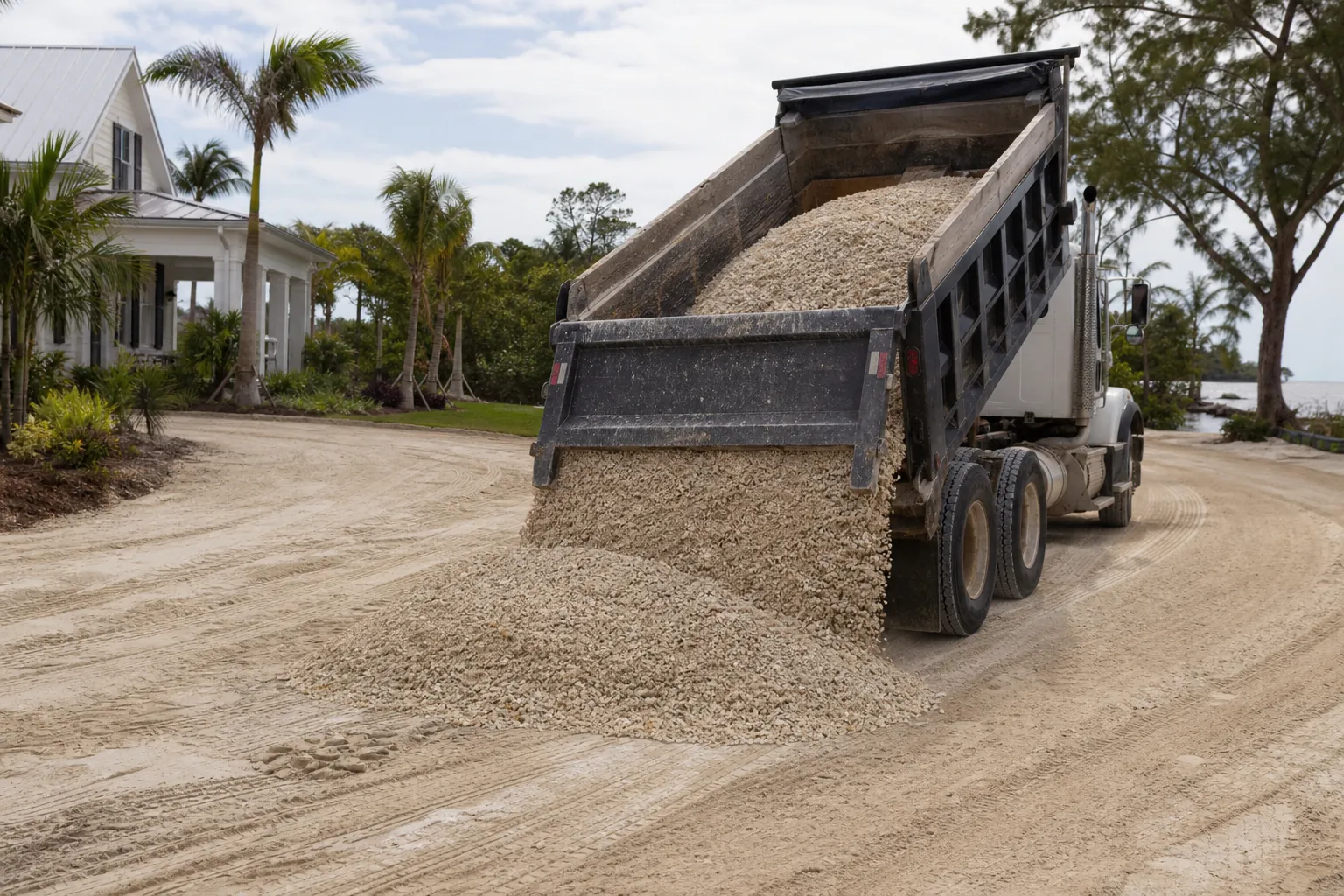
Measure Useful Space, Not Just Property Space
Measure the clear opening between obstacles. For a gate, that means the usable distance between posts and any gate hardware or open gate panels that project into the route. For a driveway, it means the firm surface available to support the vehicle, not the distance between lawn edges.
Record the dimensions of the proposed turning area and note where those dimensions narrow. An open rectangle beside the garage can be more useful to describe than the total width of the front yard, especially if part of that yard is soft or uneven.
Photographs should show context. Take one from the street toward the entrance, another along the driveway, and another facing the unloading spot. Include visible obstacles and surface transitions. A close-up of a gate alone does not explain the approach angle.
A simple sketch can also help. Mark the street, gate, driveway bends, unloading location, and likely exit. Add measurements and label surfaces such as concrete, asphalt, gravel, or grass. The drawing does not need to be professionally prepared.
- Measure clear gate width and explain whether the gate can be secured fully open.
- Measure the narrowest driveway section and the available unloading area.
- Show the distance between the unloading spot and nearby walls, structures, or trees.
- Photograph the approach from enough distance to show the vehicle's likely path.
Keep in mind that photos and measurements support planning. They do not establish that every surface or maneuver is safe.
Choose A Firm, Level Unloading Location
Dump trailer unloading requires more than room for the shell pile. The vehicle and trailer need a suitable position while the trailer bed is raised. Uneven ground, side slopes, and soft edges can create concerns even when access appears wide enough.
Choose a firm, level location whenever possible and discuss it with Tropical Yards before delivery. Avoid proposing a spot simply because it is closest to the project. A more accessible location may be preferable even if you will need to move the material farther yourself.
Florida rain can change ground conditions quickly. Grass that supported a vehicle during dry weather may be soft after repeated rainfall. Loose fill, saturated sandy areas, and driveway shoulders deserve particular attention.
Do not treat a paved surface as automatically suitable. Pavers, older asphalt, drainage grates, driveway edges, and other surfaces may have loading limitations. If you are unsure about a structure or surface, seek appropriate guidance before routing delivery equipment across it.
Keep vehicles away from septic tanks, drainfields, buried utilities with uncertain cover, and other vulnerable underground features. Tell Tropical Yards about known locations and access restrictions. A visually open area may still be unsuitable for heavy equipment.
Check weather conditions before the scheduled delivery and report meaningful changes. If the planned route becomes muddy or standing water develops, revisit the access plan rather than assuming the original arrangement still works.
Check Overhead Clearance Before The Trailer Arrives
Overhead space matters along the driving route and at the unloading location. The clearance needed while traveling is not necessarily the clearance needed when the dump trailer bed rises.
Look for utility lines, service drops, roof overhangs, carports, tree limbs, and other overhead obstacles. A driveway beneath a canopy can look suitable from ground level while offering insufficient space for unloading.
Never plan to unload beneath overhead electrical lines or assume that visible separation is adequate. Identify the lines in your photos and ask about a different unloading position. Electrical hazards require appropriate clearance and professional judgment.
Also check the area behind and beside the proposed trailer position. Nearby fences, walls, and structures may interfere with placement or material discharge. The unloading footprint includes the equipment and the area where the shell will land.
If a branch or structure limits access, select another route or unloading location. Do not expect the delivery driver to modify the property. Any necessary property preparation is the buyer's responsibility and should be completed safely before delivery.
Plan The Shell Pile And Your DIY Work Route
Coquina shell needs somewhere to land without blocking essential access. Before ordering, decide how the pile will affect parking, garage use, pedestrian routes, and the work you plan to do afterward.
Leave room to approach the pile with your shovel, wheelbarrow, or other suitable equipment. A pile placed tightly between a wall and fence may be accessible for delivery but inconvenient for a homeowner moving material by hand.
Consider the distance to your project area and the grade along that path. Shorter trips are helpful, but keeping the unloading spot accessible and suitable comes first. Do not prioritize convenience over a safe delivery position.
A ground covering may help keep shell separate from the underlying surface, but its suitability depends on the location and unloading process. Ask before using a tarp or other covering. Do not place anything where it could interfere with vehicle traction or equipment movement.
- Keep the proposed shell pile clear of doors, garage entrances, and required access paths.
- Leave working room for loading a wheelbarrow and moving around the pile.
- Choose a location where loose material is less likely to wash toward a storm drain.
- Discuss the unloading footprint before placing protective coverings or marking the drop area.
Delivery places the purchased material at an agreed, accessible unloading location. Spreading, edging, grading, and moving shell through the yard are separate DIY tasks or work you arrange independently.
Handle Tight Driveways And Limited Turning Areas
A property without a large turnaround may still have options, but those options need review before delivery. Do not assume the driver can back a trailer through every narrow entrance or along every curved driveway.
If the unloading location is near the entrance, describe that option first. It may reduce travel through the property, although the street approach and unloading position still need to be suitable. A closer location can also keep delivery equipment away from sensitive backyard surfaces.
A shared driveway introduces additional questions. Confirm that you have permission to use the proposed area and that neighbors can maintain necessary access. Do not plan to occupy someone else's driveway or turning area without authorization.
For gated communities, check delivery access procedures, vehicle restrictions, and permitted delivery times. Provide any relevant instructions ahead of time. A gate code does not resolve a physical clearance problem, so measure and photograph the entrance as well.
Do not assume material can be dumped on a sidewalk, road shoulder, or public street. Local rules, pedestrian access, traffic conditions, and drainage concerns may prevent that option. Identify a lawful unloading location and discuss it before ordering.
If no appropriate position is available, reconsider the unloading plan with Tropical Yards. The objective is to establish a workable arrangement beforehand, not to improvise around obstacles after a loaded trailer arrives.
Keep Material Selection Separate From Access Planning
Delivery access is one part of buying coquina shell. You also need to decide whether the material suits your intended use and how much your project requires. Keeping those decisions separate makes the ordering conversation more efficient.
Use the coquina shell information page as your starting point for product information. For broader transportation questions, visit the coquina shell delivery page. This turnaround guide focuses on the physical space needed to approach, unload, and leave.
Measure your project area separately from the delivery area. Length, width, and intended depth inform material quantity, while driveway dimensions inform access. A photograph of a driveway does not show how much shell a pathway or decorative area needs.
Explain your intended use when discussing the order. Decorative ground coverage, walking areas, and other applications can raise different questions about preparation, containment, and surface expectations. Ask about the supplied material's characteristics rather than assuming it behaves like uniform manufactured gravel.
Plan your own site preparation and spreading work before scheduling delivery. Keep shell away from plant crowns and avoid burying exposed roots or trunks. If you also purchase tropical plants, consider their handling and planting needs separately from the shell unloading plan.
Send A Clear Delivery Brief Before Ordering
A short, organized description helps Tropical Yards understand the property without a long back-and-forth. Include your location, intended material, access measurements, proposed unloading spot, and anything unusual about the route.
Be direct about limitations. Mention a tight gate, steep section, soft shoulder, low branches, or restricted community entrance rather than leaving those details for arrival. Accurate information allows the delivery discussion to focus on practical options.
- Provide the delivery address and explain any entrance instructions or community restrictions.
- Send measured widths, turning-area dimensions, and photographs of the complete approach.
- Describe the driveway surface and identify known underground or overhead hazards.
- Mark the proposed unloading location and explain how the vehicle could depart.
- Ask what needs to be confirmed for the equipment used on your delivery.
Before delivery day, move parked cars, portable planters, toys, and other removable obstructions from the agreed route. Secure pets and keep children away from the vehicle, trailer, and unloading area. Make sure gates can remain fully open without swinging into the route.
Have someone available who knows the agreed unloading location. If conditions have changed, explain that before the vehicle enters. Avoid directing unfamiliar backing maneuvers or standing between equipment and fixed obstacles.
Tropical Yards offers coquina shell sales, tropical plant sales, and dump trailer delivery of plants and coquina shell from St. Augustine to Daytona Beach. Available plant categories include palm trees, hibiscus, bougainvillea, ferns, and other tropical plants.
To discuss coquina shell delivery turnaround space for your property, call Tropical Yards at 772-267-1611. Have your measurements and access photos ready so you can work through the proposed delivery location before placing your order.
Call 772-267-1611 to talk through next steps.