Coquina shell driveway contractor responsibilities: a buyer’s guide
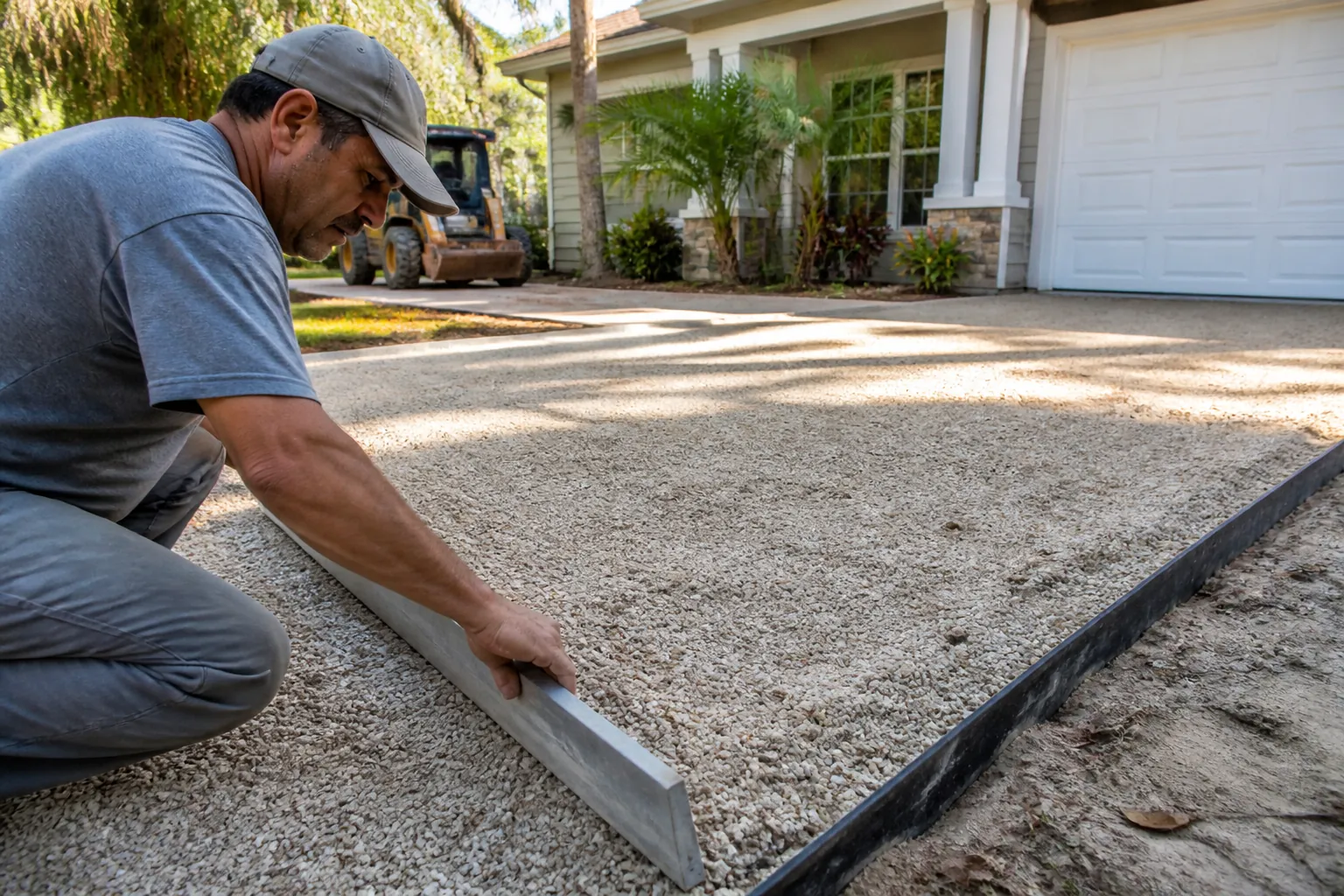
A coquina shell driveway involves more than choosing a surface material. Someone needs to check the site, determine whether the proposed surface suits its use, plan drainage, prepare the ground, and arrange delivery. If those responsibilities are not clear before material arrives, a straightforward purchase can turn into a difficult project.
Understanding coquina shell driveway contractor responsibilities helps Florida homeowners separate construction decisions from supply decisions. It also helps DIY buyers recognize which tasks they can reasonably handle and which questions deserve qualified local advice.
Tropical Yards is a supplier, not a driveway installer or landscape contractor. We sell coquina shell and tropical plants and provide dump trailer delivery of plants and coquina shell from St. Augustine to Daytona Beach. This guide explains how to organize the work without confusing material supply with installation services.
Separate The Supplier, Contractor, And Homeowner Roles
The supplier provides the material you order and coordinates the agreed delivery arrangements. The contractor, if you hire one, handles the construction tasks listed in your agreement. The homeowner makes purchasing decisions, authorizes work, and provides accurate information about the property.
Those roles can overlap in communication, but they should not overlap by assumption. Ordering coquina shell does not automatically include excavation, grading, spreading, compaction, or removal of an existing driveway.
Before buying, write down who is responsible for each task. A brief responsibility list is often more useful than a verbal statement that someone will “take care of everything.”
- The homeowner should identify the intended driveway footprint, typical vehicles, and any known property restrictions.
- The contractor should define the construction work included in the agreement and explain any exclusions.
- The material supplier should confirm the available product, ordering units, and delivery arrangements.
- The person managing the project should coordinate timing so material does not arrive before the site is ready.
If you are building the driveway yourself, you take on the construction responsibilities rather than transferring them to the supplier. Start with our coquina shell information for material context, then use this guide to organize the project team and purchase.
Ask Your Contractor To Evaluate The Site First
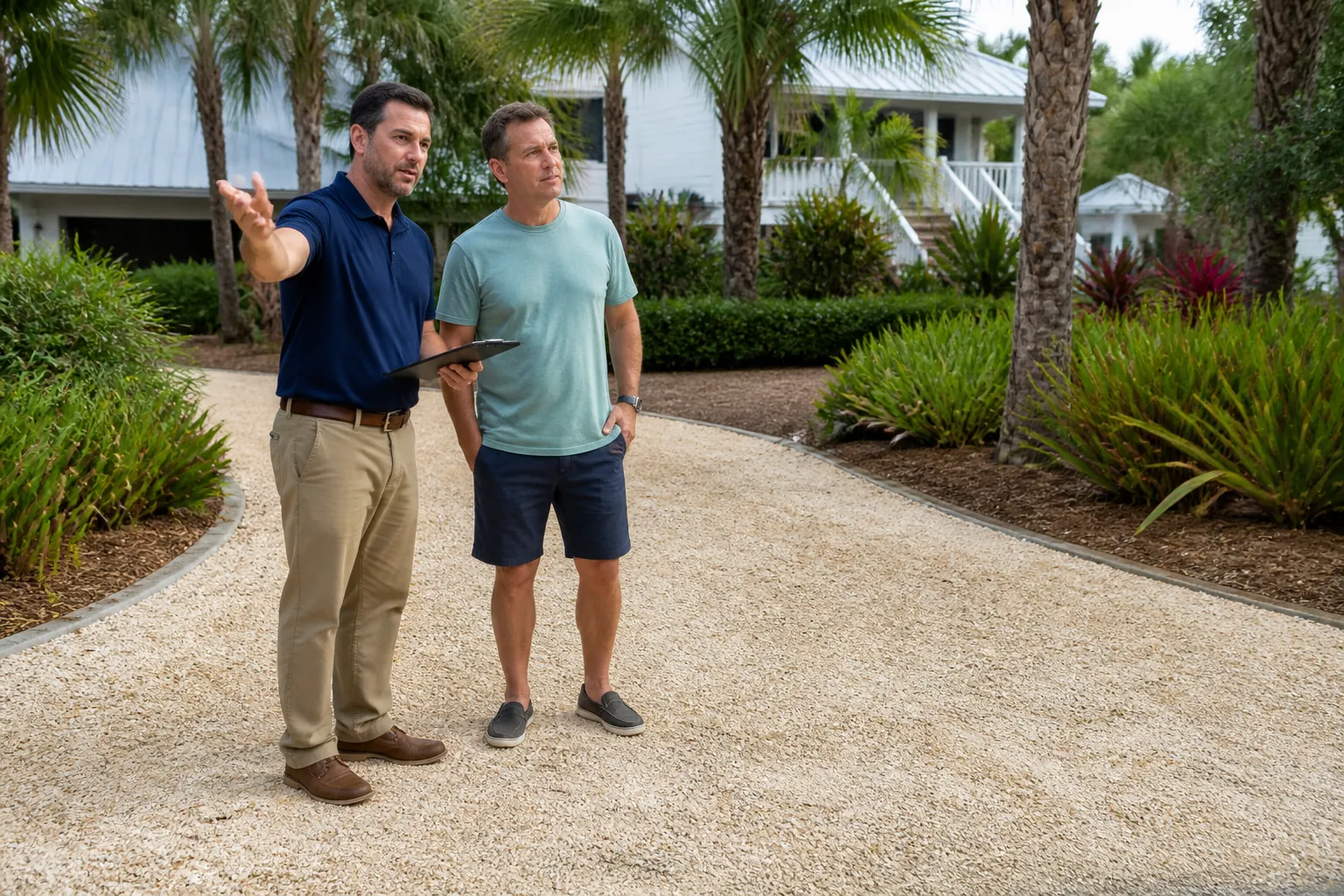
A contractor should evaluate the conditions that affect the proposed driveway before recommending a construction approach. In Florida, that includes how water moves across the property, the condition of the underlying ground, and the relationship between the driveway and surrounding grades.
Low ground, existing ruts, soft areas, and standing water deserve attention. A fresh surface layer can conceal those conditions briefly without resolving them. Ask how the proposed work addresses the cause rather than simply covering the symptoms.
The evaluation should also consider vehicle use. A driveway serving passenger cars may face different demands from one regularly used by loaded trailers or heavier vehicles. Turning areas and frequent braking zones may need particular attention.
A responsible discussion includes limits. No contractor should select a universal shell depth or preparation method without understanding the site. Likewise, a material supplier cannot determine the structural suitability of your driveway from an order quantity alone.
- Ask which existing conditions could affect stability or drainage.
- Ask whether unsuitable material must be removed before the new surface is placed.
- Ask how the proposed construction accounts for your usual vehicles and turning movements.
- Ask whether the driveway entrance requires a different treatment from the rest of the surface.
For additional surface-selection context, see our coquina shell driveway guide. Keep the contractor conversation focused on your site rather than assuming another property's solution will transfer unchanged.
Confirm Local Requirements Before Ordering Material
The homeowner and contractor should agree on who checks local requirements. Depending on the property and scope, driveway work may involve municipal or county rules, right-of-way conditions, stormwater considerations, or homeowners association approval.
Do not assume that using shell eliminates approval requirements. A driveway connection, change in footprint, or modification near a roadside ditch may raise questions that are separate from the surface material itself.
Ask the appropriate local office about requirements for your specific address and proposed work. If your contractor handles that contact, request a clear explanation of what is required and who will submit any necessary documents.
Underground utilities also need attention before excavation or other ground disturbance. Arrange the appropriate utility-location process and identify private lines that may not be covered by standard locating services. Irrigation piping, private electrical runs, and septic components are examples worth discussing.
Tropical Yards supplies materials and delivery. We do not obtain driveway approvals, determine property boundaries, locate utilities, or perform site preparation. Resolve those matters with the appropriate parties before setting a delivery date.
Put Preparation, Drainage, And Edges In The Written Scope
The installation agreement should explain what happens beneath and beside the shell, not just state that a coquina driveway will be installed. Preparation may involve removing existing material, shaping the ground, addressing unsuitable areas, or establishing a supporting layer appropriate to the site.
Ask the contractor to distinguish the surface layer from any underlying construction. Coquina shell should not be described as a substitute for every foundation or drainage measure a particular property may need.
Drainage deserves its own conversation. The finished driveway should be planned with surrounding elevations and lawful water movement in mind. Sending runoff toward a garage, neighboring property, or an unapproved discharge location is not a problem solved by purchasing more shell.
Edges also affect how the driveway functions. Ask whether the plan includes an edge treatment, how the shell will be contained, and how transitions to lawn, sidewalks, or paved areas will be handled.
- The scope should describe what existing material will be removed and who will handle its disposal.
- The scope should identify the intended grades and any drainage work included.
- The scope should explain any base preparation or separation layer the contractor recommends.
- The scope should identify edge treatments and transitions included in the project.
- The scope should state who supplies equipment and who performs spreading and compaction.
These are contractor or DIY construction tasks. They are not included simply because Tropical Yards delivers coquina shell.
Choose Coquina Shell With Clear Product Expectations
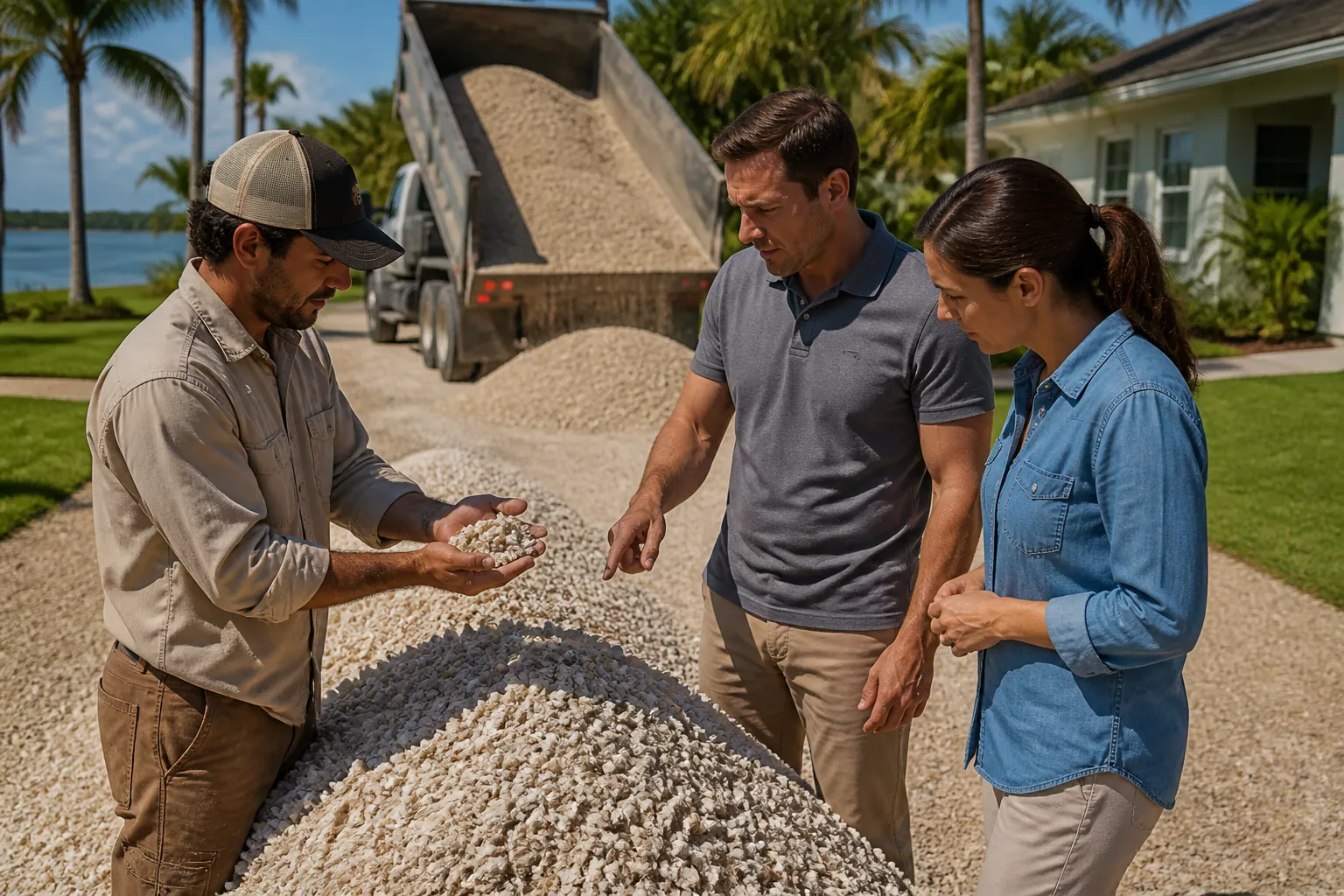
Before placing an order, ask what coquina shell is currently available and how the material is described. Natural materials can vary in appearance and composition. Product names alone may not tell you everything about the shell fragments, finer particles, or overall texture you will receive.
Explain that you are buying for a driveway rather than a decorative bed or another landscape use. The person responsible for construction should confirm that the selected product fits the proposed method and expected traffic.
If appearance matters, ask about an available sample or current product photos. Treat those as a way to understand the material, not as a promise that every portion of a natural-material load will look identical.
Also discuss practical expectations. A loose shell surface behaves differently from a bound paved surface. Turning tires, rainfall, and repeated traffic can move material. The choice should reflect how you intend to use the driveway and how comfortable you are with future owner-managed attention.
A useful purchase conversation separates two questions: “What material is available?” and “Is this material appropriate for my construction plan?” Tropical Yards can discuss the product being supplied. Your contractor or qualified adviser should address the project's construction requirements.
Assign Responsibility For Measurements And Order Quantity
Quantity errors often begin when several people assume someone else measured the driveway. Assign one person to produce the measurements and another, if appropriate, to review them before ordering.
For a simple rectangle, multiply length by width to find area. For an irregular driveway, divide the footprint into manageable shapes and add their areas. Include turnouts and parking spaces only when they are part of the actual project.
The next step is choosing the planned material depth. That should come from the construction plan, not from a generic internet recommendation. Ask whether the stated depth refers to loose placement or the intended finished condition.
If calculating in feet, area in square feet multiplied by depth in feet gives cubic feet. Dividing cubic feet by 27 gives cubic yards. That calculation estimates volume; it does not establish how the supplier sells the material or automatically convert volume to weight.
- Confirm whether the order is measured by weight, volume, or another clearly defined unit.
- Do not convert between tons and cubic yards using an unsupported density assumption.
- Account for irregular areas using actual measurements rather than visual guesses.
- Have the contractor explain any adjustment recommended for placement or compaction.
- Check the final quantity and product description before authorizing the order.
Keep a copy of the measurements and calculation. If the project changes, update the quantity before delivery rather than relying on the original estimate.
Plan Dump Trailer Access And The Unloading Location
Delivery planning is a separate task from driveway construction. Tropical Yards provides dump trailer delivery of plants and coquina shell from St. Augustine to Daytona Beach. Confirm the delivery address, requested material, and access details when arranging your order.
A dump trailer needs a suitable approach and unloading location. Narrow entrances, tight turns, low branches, overhead wires, slopes, and soft ground can affect access. Describe potential obstacles accurately instead of assuming the vehicle can reach any part of the property.
The unloading area also needs to be appropriate for raising and tipping the trailer. Overhead clearance and ground conditions matter. The delivery operator must assess the actual situation, and a proposed spot may not be usable if conditions are unsafe.
Choose a practical alternate location before delivery day. Consider where the pile will sit, how the installer or DIY crew will move the material, and whether it will block a garage, gate, walkway, or necessary access route.
- Provide clear directions and identify the intended entrance.
- Discuss soft areas, recent rain, septic locations, and other known access concerns.
- Keep vehicles and movable obstacles out of the agreed route.
- Identify an unloading spot that avoids utility covers and drainage paths.
- Arrange for an authorized person to be available to resolve placement questions.
Review our coquina shell delivery information while preparing your order. Delivery places the material at an agreed, accessible unloading point; it does not include spreading, grading, compaction, or yard cleanup.
Use A Clear Handoff Between Delivery And Construction
The contractor should know when material is expected and what must be ready before it arrives. If preparation is incomplete, the delivered pile may obstruct work or require additional handling.
Agree on who receives the load and checks that it matches the order description. Keep delivery records with the project documents. If something appears inconsistent, raise the question promptly rather than waiting until the material has been distributed across the driveway.
After unloading, the installer or homeowner is responsible for moving and using the shell according to the construction plan. Tools, machinery, protective equipment, and work methods belong in that plan.
DIY buyers should consider the physical demands before ordering. Moving bulk material is substantial work, and access for a delivery trailer does not mean every part of the driveway is accessible to your chosen equipment.
If you also purchase palms, hibiscus, bougainvillea, ferns, or other tropical plants from Tropical Yards, keep their placement and care separate from the driveway work. Plan your own planting and protect plants from stockpiles and equipment traffic. Plant sales and delivery do not include planting or landscape design.
Define Completion And Your Ongoing Owner Responsibilities
Before work starts, ask how the contractor will determine that the driveway is complete. The answer should relate to the agreed footprint, preparation, surface placement, transitions, and any drainage work included in the contract.
Walk through the finished work with the contractor. Look for areas that differ from the written scope and ask about any visible low spots, abrupt transitions, or shell spilling beyond the intended edges.
Request practical instructions about initial use and future attention. Ask whether there are temporary restrictions based on the construction method and what signs should prompt further evaluation.
As an owner, observe the driveway after rainfall and during ordinary use. Persistent puddles, recurring deep ruts, or movement concentrated in one area may indicate more than a simple shortage of surface material.
Do not automatically add shell to every developing problem. First consider whether drainage, ground support, vehicle use, or the original construction needs review. Tropical Yards can supply additional coquina shell when needed, but we do not maintain driveways or diagnose construction problems on site.
Order With A Responsibility Checklist In Hand
A successful purchase starts with a clear plan: the site has been evaluated, local questions have been addressed, quantities have been checked, and delivery access has been discussed. Each person should know what happens before, during, and after unloading.
Before calling, gather your location, driveway measurements, proposed material quantity, and notes about the unloading area. If you are using a contractor, have that person confirm the product and quantity required for the construction scope.
For coquina shell sales and dump trailer delivery from St. Augustine to Daytona Beach, call Tropical Yards at 772-267-1611. We can discuss your material order and delivery arrangements while you or your chosen contractor handles preparation, installation, and ongoing driveway care.
Call 772-267-1611 to talk through next steps.