Coquina shell driveway crown grading: a practical DIY guide
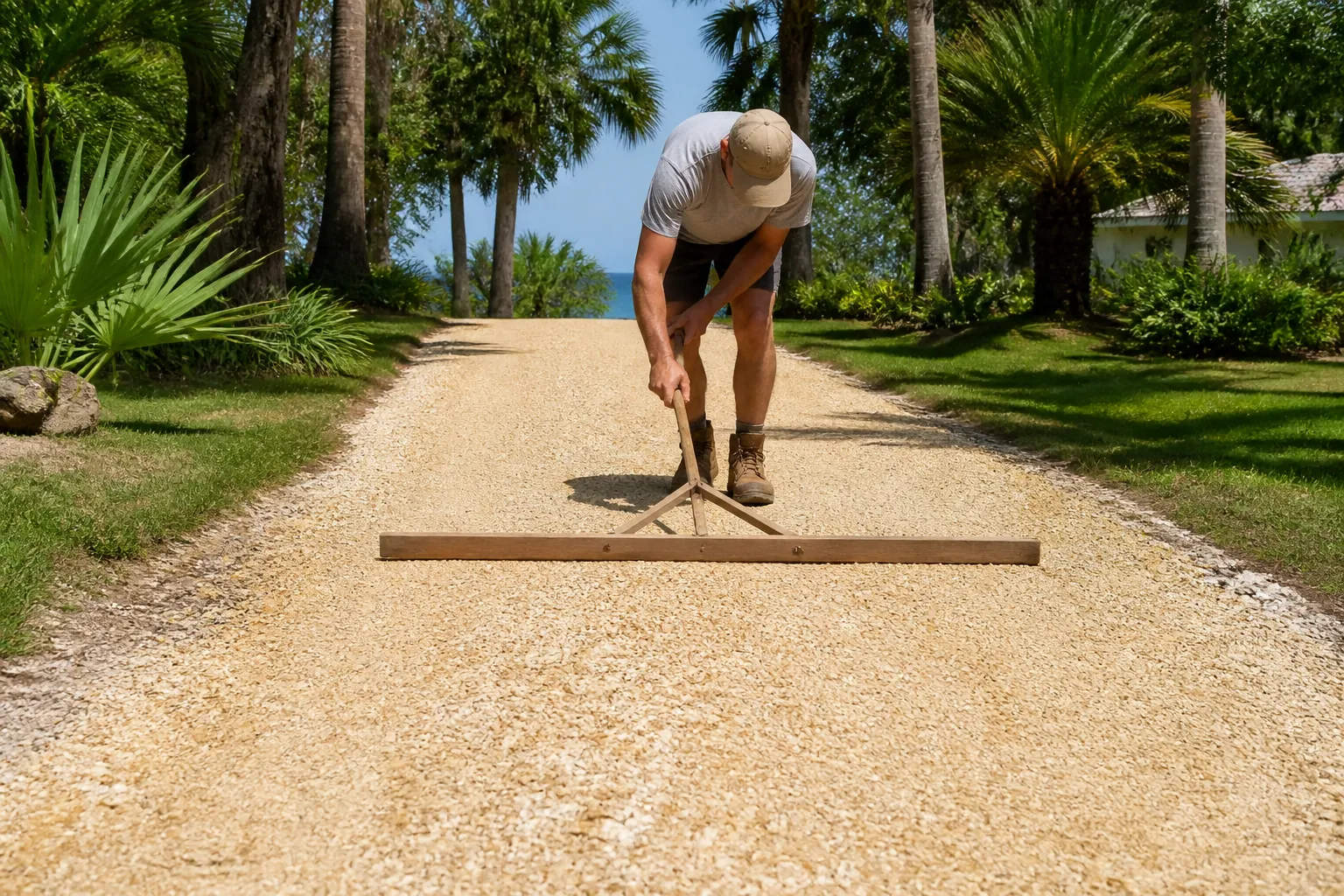
A coquina shell driveway needs more than an attractive surface. Its shape must give rainwater somewhere appropriate to go. A shallow crown, with the middle slightly higher than the edges, can help keep water from lingering in wheel tracks. But adding shell without checking the underlying grade can simply cover a drainage problem.
This guide to coquina shell driveway crown grading focuses on decisions buyers and DIY property owners can make before ordering material. It covers measurements, drainage checks, quantity estimates, placement considerations, and delivery planning for Florida conditions.
Tropical Yards supplies coquina shell and tropical plants, with dump trailer delivery from St. Augustine to Daytona Beach. The company does not provide grading or installation labor. Start with the coquina shell supply page for material information, then use the planning guidance below to prepare your project.
What A Driveway Crown Does And When It Makes Sense
A crown is a cross-sectional shape: the driveway's center sits above both sides. Water travels away from the middle toward the edges rather than collecting along the driving surface. The crown should be gradual enough for comfortable vehicle use and consistent enough to avoid isolated low spots.
This is different from the driveway's lengthwise slope. A driveway can rise toward a house while still having a crown across its width. Both directions matter because water follows the overall surface, not just the profile visible from the road.
A crowned driveway is not the right answer for every property. Where only one side has a safe drainage outlet, a one-way cross slope may be more appropriate. Where adjacent ground is higher than the driveway, a crown alone may not solve incoming runoff.
- A crown can help when both sides lead to suitable drainage areas on your property.
- A one-way slope may suit a driveway where water must move toward a single approved outlet.
- A driveway with repeated flooding may need drainage evaluation before additional shell is ordered.
- A steep or sharply curved driveway may require site-specific advice about grading and surface stability.
Do not redirect runoff onto a neighbor's land, toward a building, or into a roadway without checking applicable requirements. Road connections, swales, culverts, and rights-of-way can involve county or municipal rules.
Read The Existing Driveway Before Buying Shell
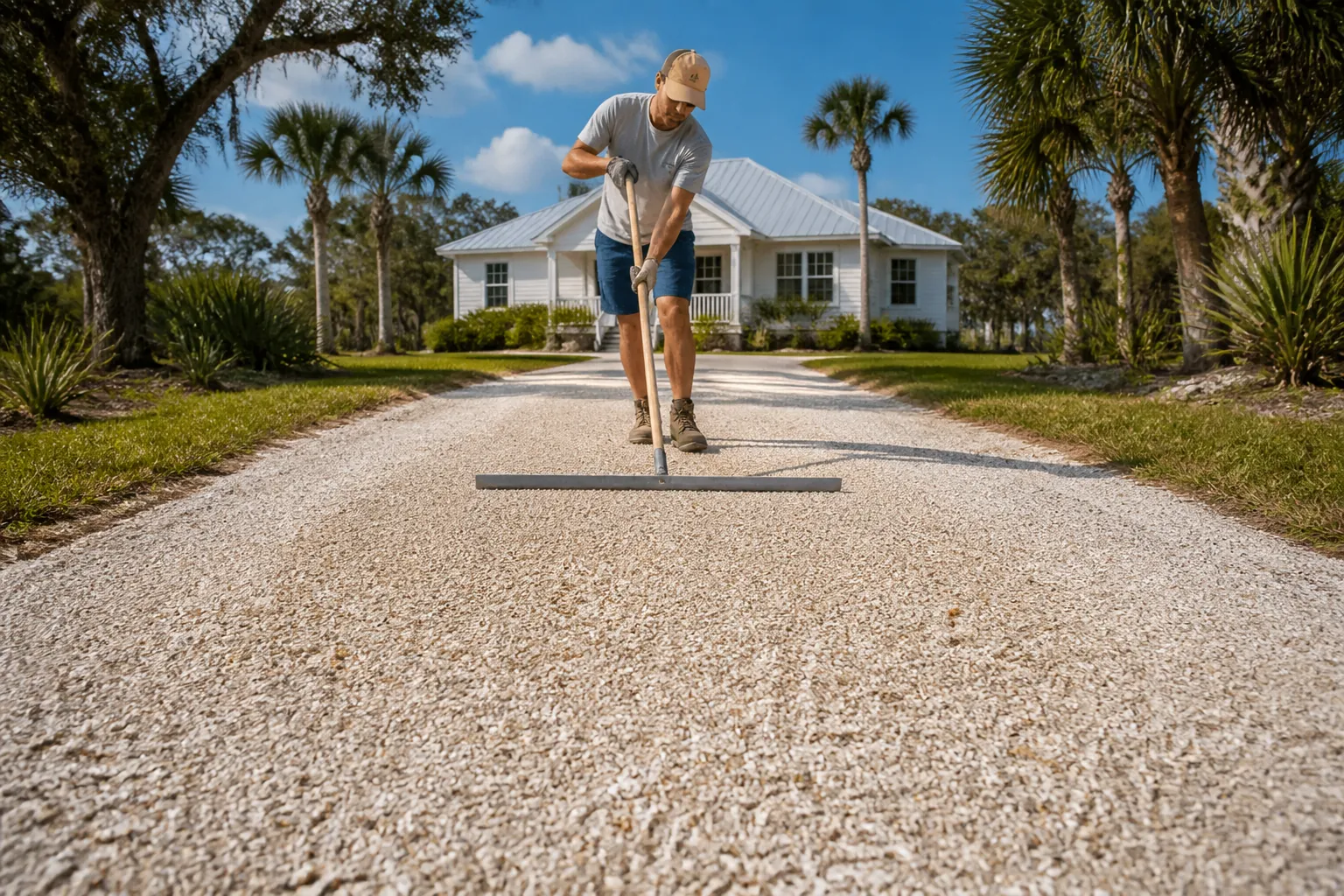
Begin with observation rather than a material order. Walk the driveway during dry weather and again after rain, when it is safe. Look for puddles, ruts, shell deposits at the edges, exposed base, and places where water enters from nearby ground.
Mark problem areas on a simple sketch. Include the garage, road entrance, curves, utility covers, culverts, and existing drainage routes. Photograph the same locations after different storms. A single puddle may reflect a local depression, while a continuous wet wheel track can point to an uneven cross slope.
Separate surface problems from foundation problems. Loose or displaced shell may be manageable with surface reshaping. Deep rutting, soft ground, or material that repeatedly sinks suggests that the underlying support needs attention. Extra shell is not a substitute for a stable base.
Also inspect the edges. A raised border of grass, soil, or old shell can trap water even when the center is high enough. Before changing those edges, confirm where the released water would travel and whether the work would affect utilities or protected drainage features.
- Record where water first appears instead of noting only where it eventually pools.
- Check whether roof runoff or adjacent ground adds water to the driveway.
- Identify low areas at transitions to concrete, asphalt, or garage floors.
- Note whether existing shell remains firm under ordinary vehicle traffic.
If the driveway stays soft long after surrounding ground dries, pause the surface project and get qualified site advice.
Measure The Cross Slope Instead Of Guessing
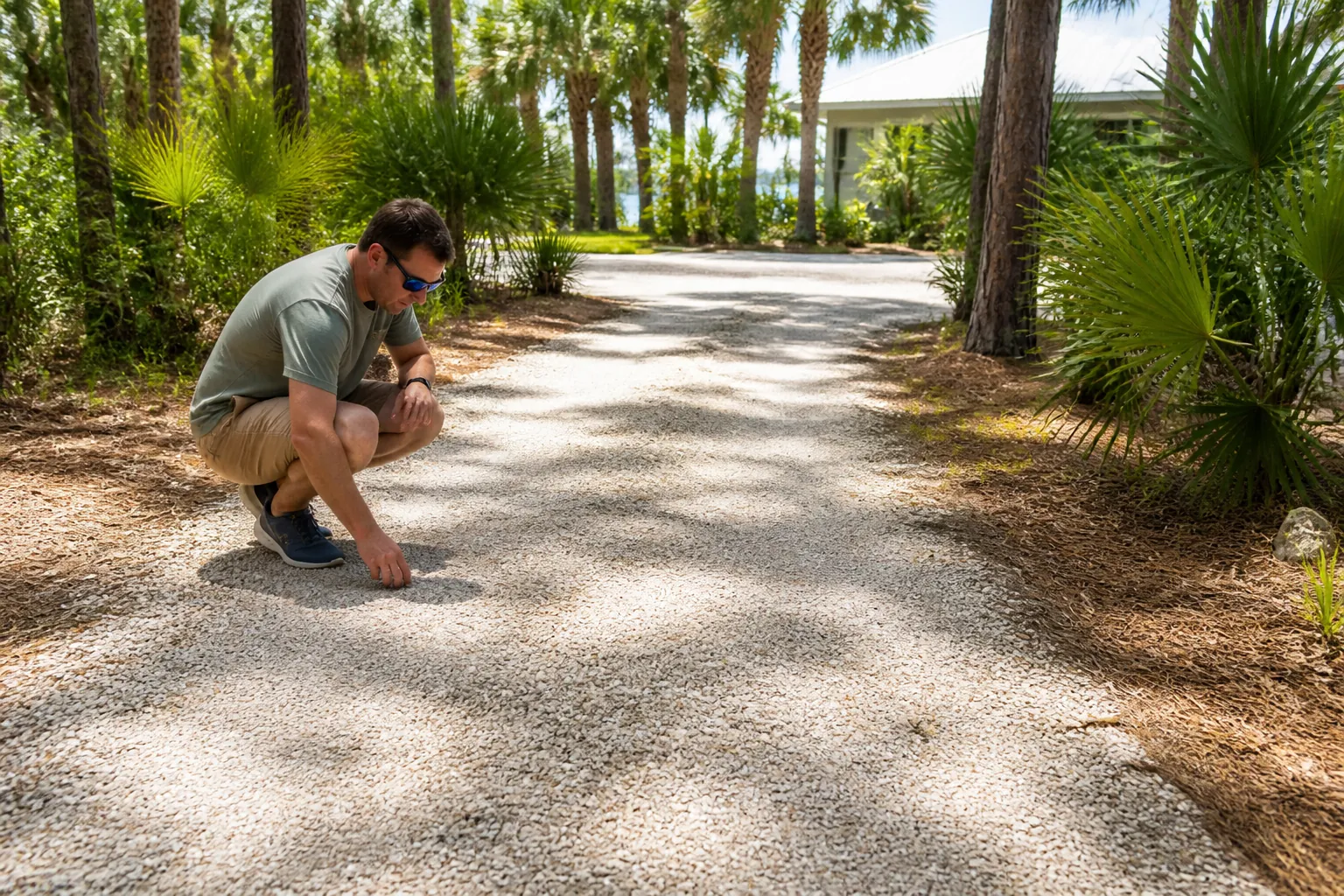
A crown that looks obvious is not necessarily effective, and one that looks nearly flat may still drain. Use measurements to understand the existing profile. A straight board and level, a string line, or a suitable laser level can help compare the center with the edges.
Measure several cross sections along the driveway, especially at puddles and transitions. At each location, record the full width, the center elevation, and both edge elevations. Do not assume the two halves are identical. Curves, traffic patterns, and past repairs can leave one side lower than the other.
Cross slope is the vertical change divided by the horizontal distance, multiplied by 100. For a crowned driveway, measure from the center to one edge, not across the entire width.
For example, a 12-foot-wide driveway has a six-foot run from its center to each edge. A two percent cross slope over that distance represents about 1.44 inches of fall. This is a calculation example, not a recommended specification for every shell driveway.
The appropriate slope depends on the driveway layout, local drainage requirements, underlying material, and how vehicles use the surface. A modest slope is often preferable to a pronounced ridge, but a site-specific target should come from applicable guidance or a qualified professional.
- Measure both sides independently so an uneven edge does not go unnoticed.
- Repeat measurements along the length to detect dips between apparently good sections.
- Keep the crown smooth through transitions rather than creating an abrupt hump.
- Record your proposed elevations before calculating how much material to buy.
Choose Coquina Shell With The Finished Surface In Mind
The name coquina shell does not tell you everything about a particular load. Shell material can vary in fragment size, fines, moisture, and appearance. Those differences affect handling, packing, and the finished texture. Confirm what is available rather than assuming every supplier's material behaves the same way.
Ask Tropical Yards about the current coquina shell supply and how it is sold. Explain that you are planning a driveway surface, not a decorative planting bed. That context helps frame material questions without treating a supply order as a grading recommendation.
Discuss the presence of finer particles as well as larger fragments. Fines can influence how material packs, while larger pieces affect texture. Neither characteristic alone determines whether a driveway will perform well. The base, slope, placement depth, and compaction method remain important.
Do not assume a shell surface will absorb all rainfall. A compacted driveway can still shed runoff, particularly during heavy Florida rain or when the ground below is saturated. Plan drainage even if the material appears porous when loose.
If appearance matters, ask whether viewing the available material or current photos is possible. Natural material can vary, and a screen image may not show its full texture. Use the coquina shell page as the supply hub while keeping crown measurements and site decisions in your project notes.
Estimate Material From The Shape You Actually Need
Calculate quantities only after deciding which areas need additional material. A driveway that already has usable shell may need selective correction rather than a uniform new layer. Conversely, a thin cosmetic covering will not repair a badly distorted profile.
For a rectangular area with an even proposed depth, multiply length in feet by width in feet by depth in feet. Divide the result by 27 to convert cubic feet to cubic yards. Convert inches to feet before multiplying.
A 60-foot-long, 12-foot-wide section with an average added depth of two inches has a geometric volume of about 4.44 cubic yards. That number describes the measured space only. It does not automatically account for packing, uneven ground, handling losses, or the supplier's ordering unit.
A crown usually does not require the same added depth everywhere. If you are adding a center ridge that tapers evenly to zero at each edge, its average depth is half its maximum center depth. This simplified triangular calculation works only when the existing surface and proposed shape match those assumptions.
For an irregular driveway, divide the project into smaller sections. Estimate the average added depth of each section from your measurements, then add the volumes. Keep leveling repairs separate from any uniform surface layer so you do not count the same material twice.
- Measure wider parking areas independently from the main driveway.
- Subtract areas that will not receive shell, such as concrete aprons.
- Ask the supplier how ordering quantities relate to loose delivered material.
- Confirm any allowance for packing rather than applying an unsupported percentage.
If material is sold by weight, ask about the supplier's conversion guidance. Moisture and composition can affect the relationship between weight and volume.
Plan DIY Placement Without Covering Up A Problem
Before moving shell, decide whether your tools and experience match the project. A small surface correction is different from rebuilding a long driveway over soft ground. Heavy equipment, utility conflicts, steep grades, and drainage modifications can make professional advice necessary.
Where digging or disturbing ground is involved, arrange utility locating through the appropriate process before starting. Identify private lines as well, since they may not be included in standard locating services. Avoid altering culverts, public swales, or roadside features without authorization.
For a manageable DIY surface project, the general sequence is to resolve drainage and support issues first, establish the intended profile, place material in controllable amounts, and consolidate it using a method suitable for the material. Adding a large pile to the center and driving over it does not reliably create a consistent crown.
Work in short sections and check elevations as you go. Preserve the gradual fall from the center toward each usable outlet. Pay particular attention to driveway edges, where displaced material can form a lip that blocks drainage.
Placement thickness and compaction needs depend on the material and equipment. Follow applicable equipment instructions and obtain suitable technical guidance rather than assuming one heavy pass will pack any depth evenly. Do not work a saturated base simply to finish the project faster.
- Keep utility covers and drainage openings accessible throughout the project.
- Check the surface with a straightedge or level before moving to the next section.
- Blend repaired areas into adjacent grades without creating abrupt vehicle transitions.
- Keep loose shell out of the public road and away from drainage inlets.
Tropical Yards supplies the material; spreading, shaping, and compaction are not included as installation services.
Prepare For Dump Trailer Delivery
Delivery planning matters because a well-placed load reduces unnecessary handling. Tropical Yards offers dump trailer delivery of plants and coquina shell from St. Augustine to Daytona Beach. Confirm your address, material quantity, access conditions, and unloading plan when discussing the order.
Describe the driveway entrance and any tight turns, gates, low branches, overhead wires, or soft shoulders. Do not assume that access for a passenger vehicle means safe access for a loaded delivery vehicle. The supplier must determine whether the proposed route and unloading location are suitable.
Choose a firm, reasonably level drop area with adequate clearance. Dumping involves a raised trailer, so overhead obstructions matter. Avoid locations over septic components, near unsupported edges, or on ground that may not support the delivery vehicle.
A central drop location may reduce wheelbarrow trips, but it should not block access you need during the project. Keep a route open for household vehicles and emergency access. If you propose multiple drop locations, ask whether that arrangement is feasible rather than assuming it is included.
- Provide access photos when they can help explain a narrow entrance or unloading area.
- Keep children, pets, and bystanders away from the delivery vehicle.
- Confirm whether someone needs to be present to identify the agreed drop location.
- Discuss rain-related access concerns before the scheduled delivery.
Dump trailer delivery brings the material to an agreed accessible location. It does not mean the driveway will be spread, graded, or compacted.
Check The Crown After Rain And Normal Use
After your DIY work, observe the driveway through ordinary use and subsequent rainfall. Check whether water moves toward the intended outlets and whether new puddles appear at transitions. Compare your measurements with the original notes instead of relying only on appearance.
Some loose material may shift under turning tires. Repeated rutting, persistent softness, or concentrated washouts deserve closer investigation. These signs can indicate a support or drainage issue rather than a simple shortage of shell.
If you make small corrections yourself, preserve the overall cross slope and avoid gradually building up the edges. Recheck the driveway's center and both sides before ordering more material. A targeted correction may be more appropriate than another full covering.
Keep this guide as your crown-planning reference and the coquina supply page as your material hub. Your measurements, drainage sketch, and delivery access notes will make the buying conversation more useful.
To discuss coquina shell sales and dump trailer delivery from St. Augustine to Daytona Beach, call Tropical Yards at 772-267-1611. Have your driveway dimensions, estimated quantity, and unloading details ready so you can plan the supply portion of your project clearly.
Call 772-267-1611 to talk through next steps.