Planning gate clearance for a coquina shell driveway
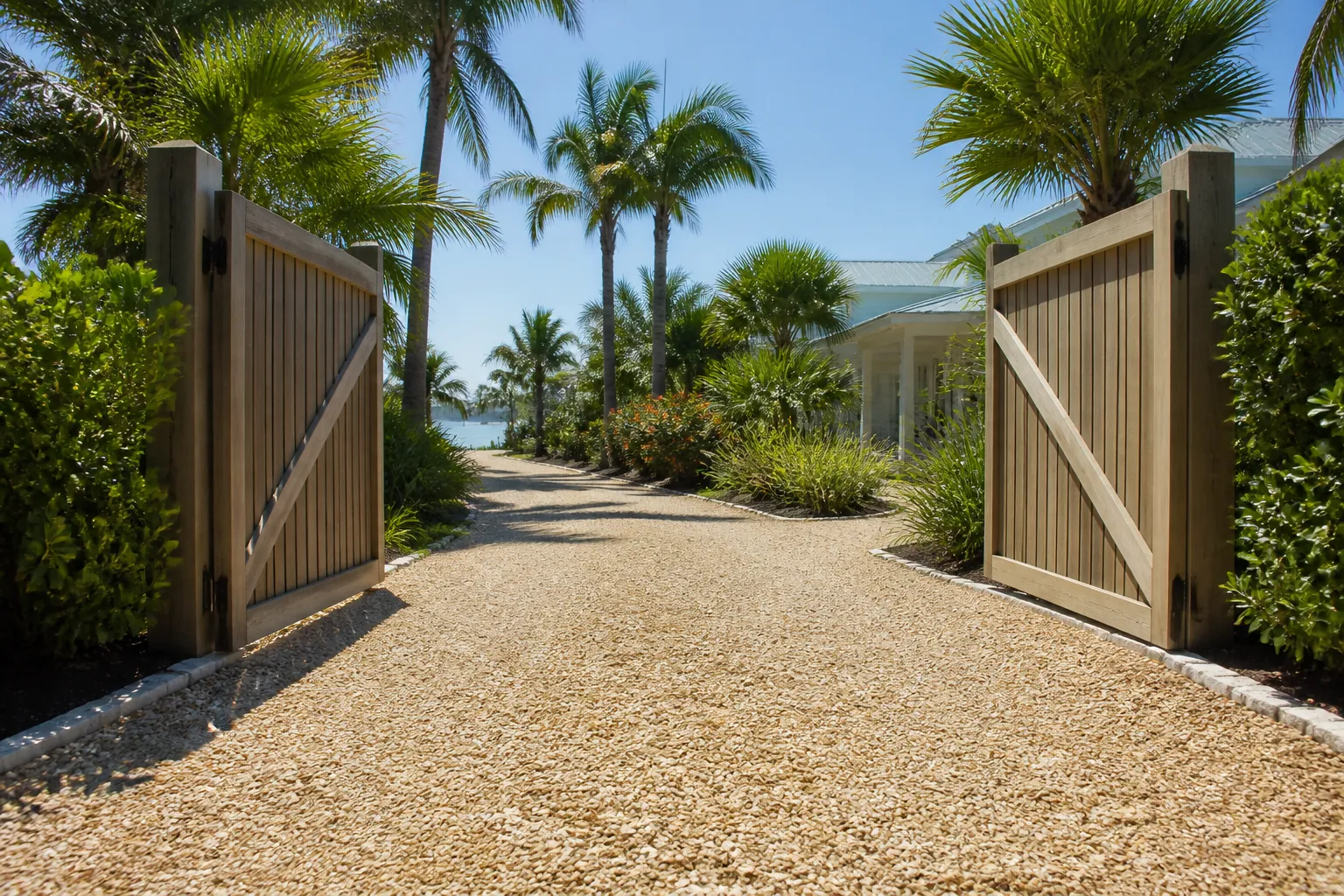
A driveway gate that opens easily today can scrape after you add coquina shell. The problem usually starts with the finished surface height, not the gate itself. Loose material, uneven ground and shell pushed toward the entrance can reduce the space beneath a moving gate.
Planning coquina shell driveway gate clearance means checking two separate needs: clearance for everyday gate movement and access for the delivery vehicle. A gate may clear your car comfortably but still present a problem for a dump trailer or the space needed to unload.
Tropical Yards supplies coquina shell and tropical plants, with dump trailer delivery from St. Augustine to Daytona Beach. This guide helps Florida buyers measure their entrances, plan a DIY shell project and discuss delivery before ordering. Tropical Yards supplies materials rather than installing driveways or adjusting gates.
Start With The Finished Driveway Height
The important measurement is the distance between the bottom of the gate and the driveway after your project is complete. Measuring only the existing gap can make an order seem straightforward while overlooking how much the new material will raise the surface.
Start by deciding whether you are adding shell over the existing surface, removing material first or refreshing an established shell driveway. These approaches do not produce the same finished elevation. A top-up raises the surface unless you remove or redistribute existing material.
For a simple planning check, subtract the proposed rise in driveway height from the smallest current gate gap. That gives an estimated remaining clearance. It is not a universal installation allowance because grade changes, gate movement and material displacement also matter.
For example, if the lowest gap is three inches and the proposed surface rise is two inches, only one inch remains at that location. That arithmetic does not establish that one inch is adequate. It shows why you should review the gate path before buying material.
- Measure from the lowest part of the gate, including any projecting hardware, to the current driveway surface.
- Identify the smallest gap along the entire movement path rather than relying on the gap at the closed position.
- Account for the planned finished surface instead of assuming all delivered shell can be spread beneath the gate.
- Leave room in your planning for uneven distribution and material moved by tires.
There is no single clearance number that suits every entrance. Gate construction, driveway slope and manufacturer requirements can change what is appropriate. If the planned surface leaves little room, resolve that conflict before scheduling delivery.
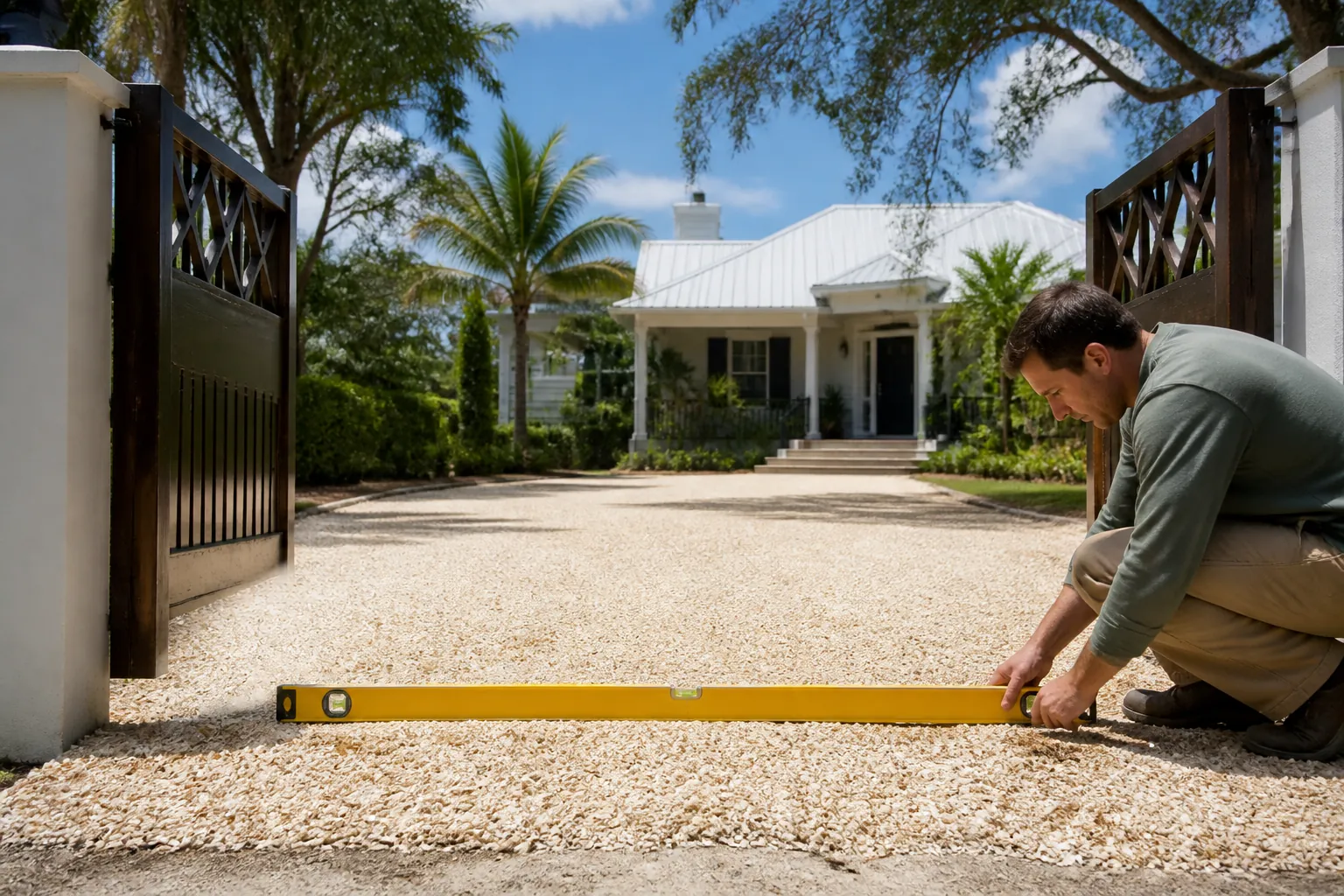
Measure The Whole Swing Or Slide Path
A swinging gate follows an arc, and the ground beneath that arc may rise or fall. A measurement taken next to a hinge does not tell you whether the far end will strike a higher patch halfway through its travel.
With the gate operating normally, inspect its full path without placing hands or measuring tools near moving parts. For an automated gate, follow the manufacturer's safe shutdown procedure before taking close measurements. Keep children and pets away from the work area.
Mark several locations along the path and measure the gap with the gate safely stationary at each position. Include the fully closed position, intermediate positions and the fully open position. On a double gate, check both leaves independently because their lowest points may differ.
A sliding gate needs a different inspection. Check the space beneath the moving gate, the area beside its travel path and any track or guide components. Shell should not obstruct a track, cover hardware or collect where rollers and guides need to move freely.
Also look for existing sag, dragging or irregular movement. Adding shell will not correct a gate that already rubs the ground. An adjustment or repair is a separate task for the owner or an appropriate gate professional, not a material delivery service.
- Photograph the entrance from the road and from inside the property.
- Record the lowest measured gap and its location on a simple sketch.
- Note whether each gate opens inward, outward or slides beside the driveway.
- Mark raised ground, exposed roots, concrete edges and other fixed obstacles.
- Record any manufacturer clearance instructions that apply to your gate.
Keep these notes with your material measurements. They help distinguish a shell-depth issue from a mechanical gate issue.
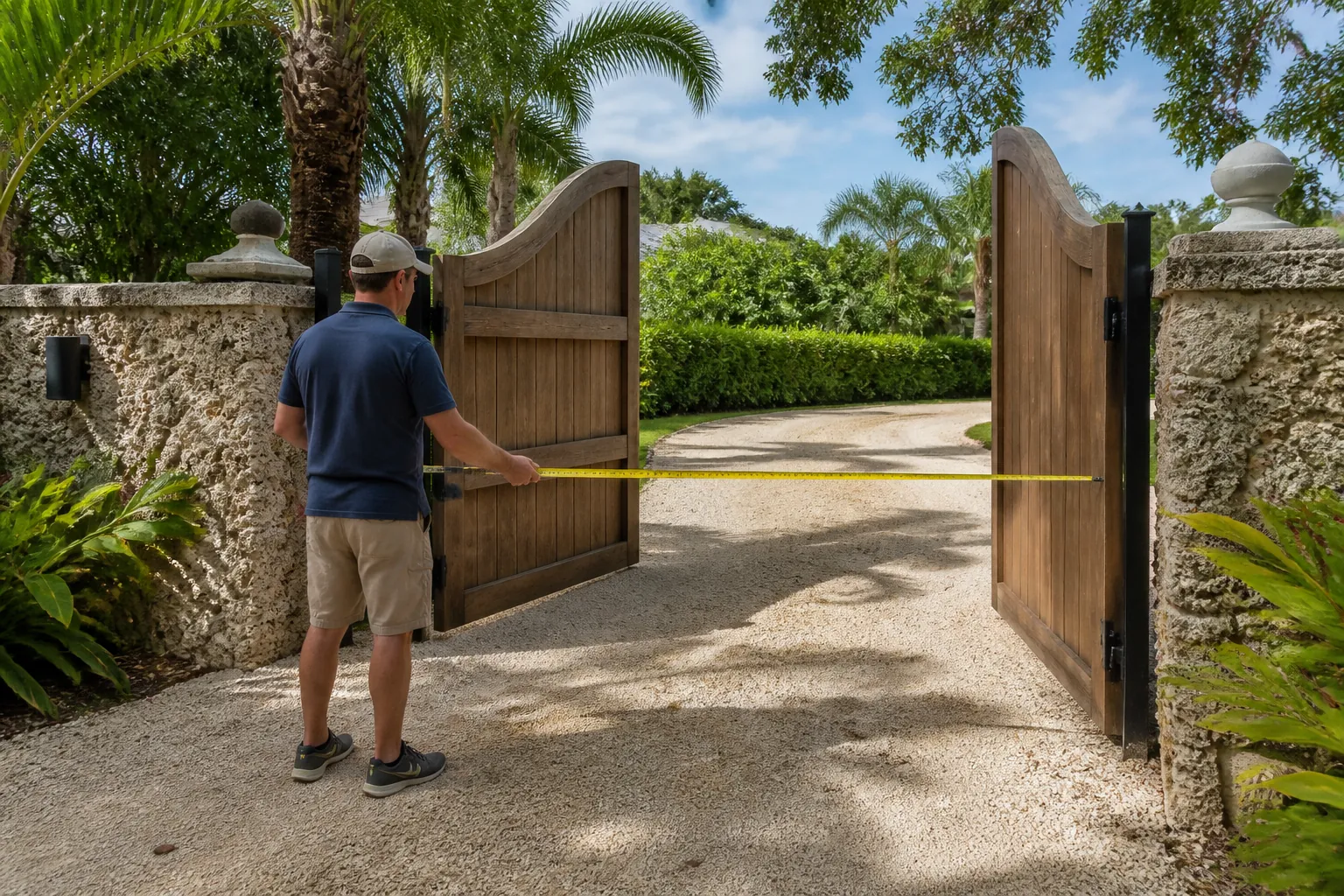
Plan The Gate Zone Separately From The Main Driveway
The main parking area and the gate threshold do not have to receive identical amounts of additional material. Treating them as separate planning zones can help you avoid raising a sensitive entrance simply because the rest of the driveway needs replenishing.
Divide your sketch into the approach, the gate movement area and the driveway beyond it. Record the existing surface condition in each zone. A worn wheel track farther inside the property may need attention without requiring the same increase beneath the gate.
Before changing the threshold elevation, consider the transition between zones. An abrupt ridge can catch a low gate, interfere with vehicles or encourage shell to move toward the opening. A smooth transition should still preserve the drainage direction and required gate clearance.
Do not solve the problem by creating a low pocket directly beneath the gate without thinking through water flow. That pocket may collect runoff and loose shell. Likewise, building a raised strip at the entrance may divert water toward a garage, adjoining property or gate equipment.
Where the driveway meets an existing concrete apron or paved road, inspect the fixed edge carefully. Shell piled against that edge can create a hump even if the average driveway depth seems reasonable. Your planned elevation should account for the connection, not just the middle of the driveway.
If you are considering substantial excavation, a new drainage arrangement or changes to gate posts, seek appropriate professional advice. Those decisions extend beyond choosing and ordering shell. Check applicable property, association and local requirements before changing an entrance connected to a public road.
Consider Florida Rain And Everyday Material Movement
Florida rain makes surface shape especially important. Before ordering, observe your driveway after rainfall when it is safe to do so. Look for ponding, runoff crossing the entrance and sediment collecting beside gate posts. Existing water patterns provide useful clues about where shell may accumulate.
Coquina shell is not a substitute for a functioning drainage plan. Water movement depends on the underlying soil, preparation, slope and surrounding surfaces. Do not assume that adding shell will eliminate standing water or make an unsuitable base stable.
Traffic also changes the surface. Turning tires can push loose material sideways, and braking near a closed gate can leave uneven areas. A driveway that initially clears the gate may develop a ridge where vehicles repeatedly stop or turn.
When planning your DIY work, keep loose shell away from moving gate hardware and avoid concentrating excess material at the entrance. After spreading, inspect the movement path again using safe procedures. Recheck it after rain and normal vehicle use because the first arrangement may not remain unchanged.
- Identify where water currently leaves the driveway before changing its height.
- Keep existing drainage openings and necessary equipment access unobstructed.
- Watch for shell gathering near a gate stop, track or low point.
- Check whether vehicle turning patterns push material into the gate's path.
- Address an underlying drainage problem rather than repeatedly covering it with additional shell.
If runoff carries material beyond your driveway, reassess the surface shape and containment approach. Avoid redirecting runoff onto neighboring property or into areas where it creates a hazard.
Check Delivery Access Separately From Gate Clearance
The phrase gate clearance can describe vertical space under the gate, but delivery planning usually involves the usable opening between obstacles. These are different measurements. Knowing one does not establish the other.
Measure the narrowest clear width with the gate fully open. Include projecting hinges, latches, posts and any nearby fixed objects. A nominal gate size may not match the actual opening available to a vehicle.
Then inspect the route from the road to the proposed unloading location. Curves, soft shoulders, parked vehicles and overhead obstructions can limit access even when the entrance is wide enough. A straight opening may lead immediately into a turn that is unsuitable for the delivery setup.
Dump trailer unloading also requires space beyond ordinary vehicle passage. The delivery provider needs to evaluate the maneuvering area, surface conditions and overhead clearance associated with unloading. Do not estimate vehicle requirements from a passenger car or assume the trailer can unload wherever it can travel.
Tell Tropical Yards about overhead utility lines, branches, narrow turns, slopes and soft ground before delivery is arranged. Do not approach, measure or attempt to move utility lines. If a potential electrical hazard exists, choose another proposed unloading area and obtain appropriate guidance.
- Provide the actual clear opening width rather than only the advertised gate size.
- Describe the distance from the road to the intended unloading location.
- Share photos showing the entrance, approach and proposed material placement area.
- Disclose slopes, drainage structures, septic components and other areas vehicles should avoid.
- Confirm access requirements directly instead of assuming delivery through the gate is feasible.
Tropical Yards offers dump trailer delivery of plants and coquina shell from St. Augustine to Daytona Beach. Access and placement should be discussed for your specific property before the delivery plan is finalized.
Choose An Unloading Spot That Supports Your DIY Plan
A convenient unloading point should help you move shell to the driveway without blocking the gate or creating a new clearance problem. Consider the pile's footprint as well as the route you will use to redistribute the material.
A pile placed in the gate's swing arc can prevent the entrance from opening even before spreading begins. A pile beside a sliding gate can obstruct its travel path. Keep the proposed placement outside those operating areas and communicate that requirement when discussing delivery.
If access inside the property is unsuitable, ask whether another unloading location can be considered. Do not assume roadside placement is allowed. Public access, traffic visibility, drainage and local rules may restrict where material can be deposited.
Think about your own handling equipment. Wheelbarrows and small carts need a usable route, and repeatedly crossing a narrow threshold can be awkward. Plan how you will move the material before choosing the placement location.
Delivery and spreading are separate activities. Tropical Yards supplies and delivers material; you should arrange your own spreading, site preparation and any gate work. Having that distinction clear helps you prepare the property and avoid expecting delivery to include driveway construction.
Calculate Your Order Without Overfilling The Entrance
Measure the actual areas you intend to cover rather than treating the entire driveway as one rectangle. Separate wide parking areas, narrow approaches and irregular edges. Exclude areas that will not receive shell.
Use the intended depth for each section to estimate its volume. When dimensions are in feet, multiply length by width by depth in feet to obtain cubic feet. Divide cubic feet by 27 to convert the estimate to cubic yards. Convert inches to feet before multiplying.
For irregular areas, break the outline into manageable shapes and combine their estimated volumes. Keep your gate zone calculation separate if its planned additional depth differs from the rest of the driveway.
These calculations describe geometric volume, not a guaranteed order quantity. Existing depressions, surface preparation, material characteristics and handling can affect how much shell your project uses. Discuss your measurements and intended use when asking about the ordering unit and available material.
Do not spread leftover material beneath the gate simply to empty the pile. Excess shell needs a suitable planned use or storage location. The gate's operating space should remain a constraint throughout the project.
For general material information, visit the coquina shell page. Use this gate-clearance guide alongside that broader resource, with the entrance measurements and delivery access notes specific to your property.
Inspect The Entrance Before And After Spreading
Before beginning DIY work, document the gate's current operation and mark the intended finished level at useful reference points. Choose references that will remain visible while you spread shell. This makes it easier to notice an entrance rising above your plan.
Work in manageable sections and check the threshold repeatedly rather than waiting until all material is distributed. Follow applicable equipment instructions and wear suitable protective equipment when handling shell. Keep the gate safely secured while working nearby.
After spreading, remove tools from the movement path and test the gate according to its manufacturer's instructions. Stay clear of moving parts. Inspect the entire travel path, not just the final closed position.
If the gate scrapes, stop and identify the cause. Do not force an automated gate through resistance or disable safety features. A local high spot, displaced shell and a sagging gate require different responses.
Check again after the first significant rain and after routine driveway traffic. Look for a narrowing gap, accumulated shell or a changed transition at the apron. Early observation can help you address a small surface issue before it interferes with access.
Bring Clear Measurements To Your Coquina Shell Order
A useful ordering conversation starts with your location, driveway dimensions, planned shell depth and gate measurements. Add entrance photos, the proposed unloading spot and any access concerns. Clear information helps separate the material question from the delivery question.
Tropical Yards offers coquina shell sales and tropical plant sales, including palm trees, hibiscus, bougainvillea, ferns and other tropical plants. Dump trailer delivery is available from St. Augustine to Daytona Beach. Driveway preparation, spreading and gate adjustments remain your responsibility or that of a professional you hire separately.
When you are ready to discuss coquina shell and delivery planning, call Tropical Yards at 772-267-1611. Have your lowest gate clearance, usable entrance width and proposed unloading location ready so the conversation can focus on your property's actual conditions.
Call 772-267-1611 to talk through next steps.