Planning a coquina shell driveway in St. Augustine, FL
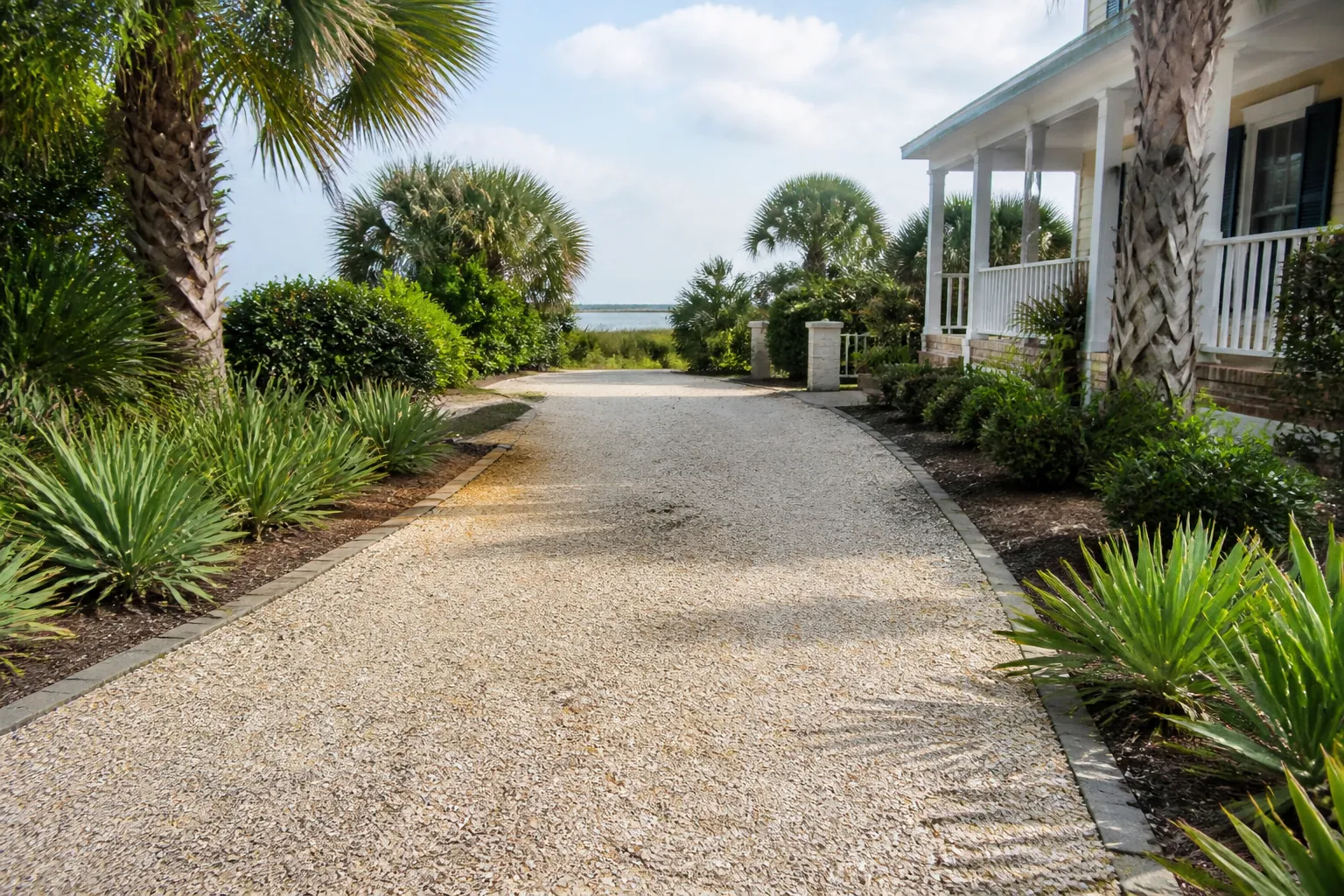
A coquina shell driveway can suit a Florida property where a lighter, textured surface fits the setting better than a paved appearance. Before ordering, though, look beyond the color. Vehicle traffic, drainage, the existing ground and the practical details of delivery all influence whether loose shell is a sensible choice.
Tropical Yards supplies coquina shell and tropical plants, with dump trailer delivery from St. Augustine to Daytona Beach. The company supplies materials rather than driveway installation or landscaping labor. This guide helps you evaluate a driveway project, prepare your questions and plan the work you will handle yourself or arrange separately.
Use the coquina shell material page as your starting point for product information. The sections below focus specifically on driveway decisions, including material selection, quantity planning and delivery access.
Decide Whether Shell Fits Your Driveway
Start with how the driveway functions. A lightly used residential approach presents different demands than a narrow turning area, a steep entrance or a driveway that regularly carries heavy vehicles. Loose material can shift under tires, particularly where drivers brake, accelerate or turn sharply.
Coquina shell also has a different feel from concrete or asphalt. Its texture and appearance can change as material settles, breaks down and becomes mixed with the underlying surface. Buyers should expect a loose-material driveway, not the uniform performance of a bound pavement.
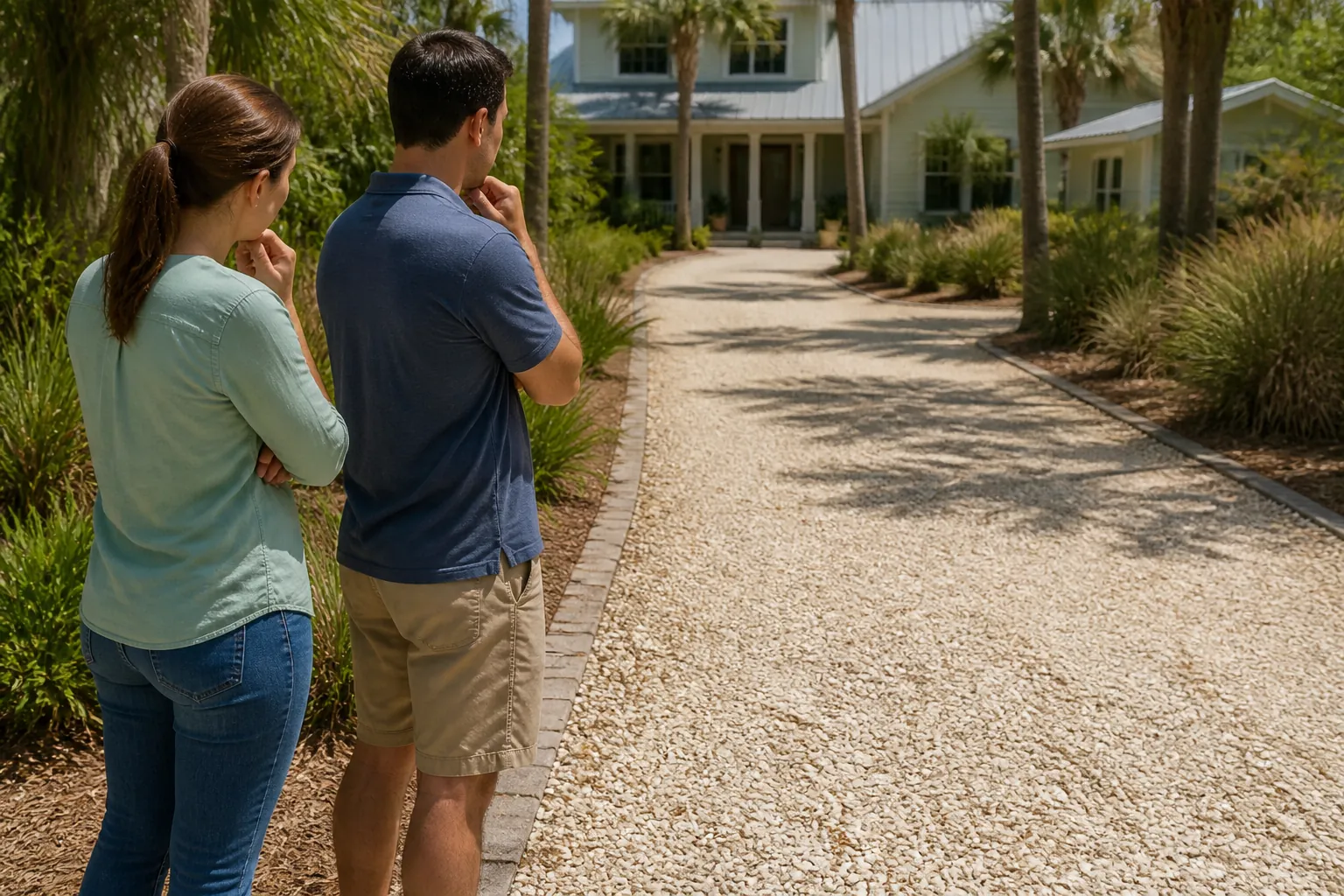
Walk the driveway after rain, if possible. Look for standing water, ruts, soft shoulders and runoff crossing the travel path. Those conditions tell you more about the project's preparation needs than a photograph of an attractive finished surface.
- Identify the places where vehicles turn or stop, because those areas may experience more movement of loose shell.
- Check whether the driveway slopes toward a garage, walkway or neighboring property before adding material.
- Consider whether bicycles, wheelchairs, strollers or frequent foot traffic need a firmer, smoother route.
- Note whether shell could migrate onto a sidewalk, road or adjoining lawn without appropriate containment.
If a stable accessible route is essential, discuss the surface requirements with a qualified professional before buying. A shell driveway may work alongside a separate firm walkway rather than serving every access need on its own.
Understand What You Are Buying
The term coquina shell can describe material with differing particle sizes, fragment shapes and proportions of finer material. Do not assume that every supplier's product looks or behaves alike. Ask about the actual material available for your order.
For driveway use, the relationship between larger fragments and fines matters. Finer particles can occupy spaces between larger pieces, but appearance alone does not establish how a particular material will compact or drain. Moisture, the base and the grading of the material also affect results.
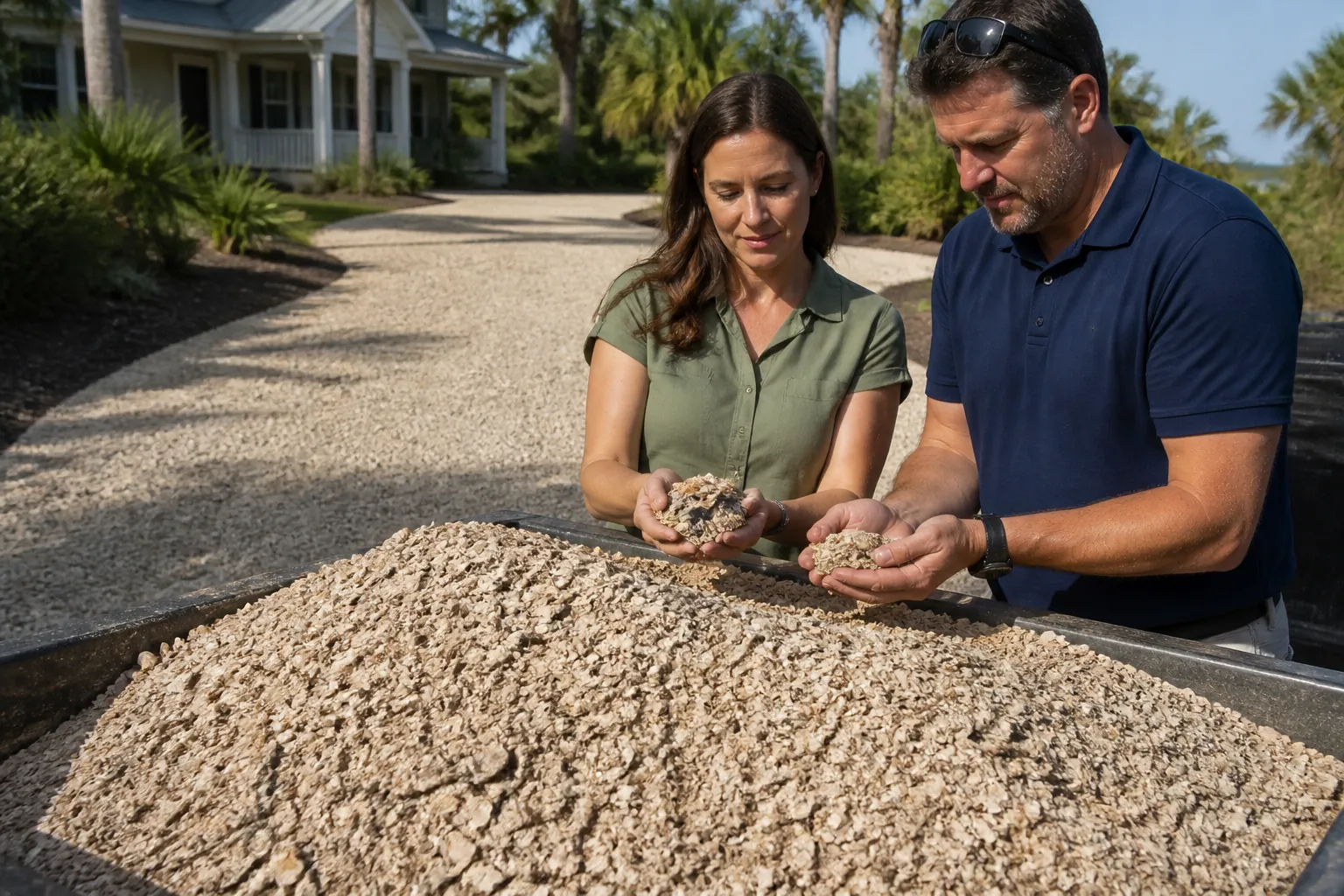
Ask whether a current photograph or sample is available. Look at texture as well as color, and remember that a small sample cannot show every variation in a bulk load. Natural shell material may vary in tone and fragment distribution.
Keep decorative shell and traffic-bearing use separate in your questions. A product that gives a planting bed an appealing finish is not automatically the best choice for a driveway. Explain that vehicles will use the surface so the conversation addresses the intended application.
- Ask how the available coquina shell is described and whether its particle size is suitable for your planned use.
- Ask whether the material contains fines and what appearance variations you should expect.
- Confirm the unit used for ordering so your measurements can be converted correctly.
- Ask about current availability before scheduling separate equipment rental or driveway work.
Tropical Yards can discuss the coquina shell it supplies. Decisions about structural suitability, base construction and site drainage may require advice from a separate qualified contractor or other appropriate professional.
Check The Base And Drainage Before Ordering
Adding shell does not correct an unstable foundation. If the existing driveway has deep ruts or soft spots, covering them may conceal the problem briefly without resolving it. Determine what is underneath and why the surface is failing before treating a new load as the solution.
Florida rainfall makes drainage an important part of that assessment. Water needs a suitable route away from the driving surface without creating erosion or sending runoff where it should not go. Shell should not be used to block an existing drainage path.
A driveway's shape matters as much as its top material. Low sections can collect water even when the shell itself has spaces between particles. Compacted layers beneath the shell can also restrict infiltration. Avoid assuming that a loose shell surface makes the whole driveway freely draining.
Check the edges carefully. A weak shoulder may spread under vehicle loads, and an uncontained edge can allow material to move into nearby grass. The appropriate edge treatment depends on the site, the intended finished elevation and how water leaves the driveway.
Do not excavate or change grades without checking for utilities, irrigation lines and drainage features. If work will disturb soil, arrange utility locating as appropriate and follow applicable requirements. Some private lines may need separate identification.
For larger changes, obtain a site-specific plan from a qualified professional. Tropical Yards does not prepare the driveway, grade the site or install drainage. Keeping those responsibilities separate helps you order material only after the preparation needs are understood.
Measure The Driveway And Plan The Quantity
Begin with a simple drawing that divides the driveway into measurable sections. A straight rectangular section is easy to calculate, while a curved entrance or parking pad may need several smaller shapes. Label each section so you do not accidentally count an area twice.
Measure length and width in feet. Multiply them to find the area of each rectangular section, then add those areas together. For irregular sections, use a reasonable geometric approximation and check your sketch against the actual property.
The next variable is the planned material depth. That depth should come from the intended driveway construction, not a generic assumption. A surface refresh over a sound base differs from a new driveway build, and loose depth may differ from the eventual settled or compacted depth.
For a volume estimate in cubic yards, multiply the area in square feet by the depth in feet, then divide by 27. Convert inches to feet before multiplying. For example, a planned depth of three inches equals one-quarter of a foot; that is a conversion example, not a recommended driveway thickness.
- Measure parking spaces and widened turning areas separately from the main driveway.
- Subtract sections that will remain paved or use another surface material.
- Record whether your depth represents loose placement or a planned finished condition.
- Tell the supplier whether your estimate is in cubic yards, cubic feet or another unit.
If shell is sold by weight, do not convert your volume estimate using an unrelated density found online. Ask how the available product is measured and what information is needed to estimate an order. Material composition and moisture can affect weight.
Discuss irregular areas and expected settling before finalizing the quantity. Ordering extra without a clear reason can leave you with a pile that needs storage and handling, while underestimating can interrupt separately arranged work.
Plan Dump Trailer Delivery Before Delivery Day
Delivery planning should happen before the order is finalized. A dump trailer needs a suitable approach and a safe unloading location. The driveway receiving the shell is not always the best place for the delivery vehicle to travel, particularly if the existing surface is soft.
Tropical Yards offers dump trailer delivery of plants and coquina shell from St. Augustine to Daytona Beach. Review the coquina shell delivery information, then confirm the details for your address and proposed unloading area directly.
Describe access accurately. Mention gates, narrow openings, tight turns, low branches, overhead wires, slopes and any areas that stay wet. A street-view image or an old property photo may not reflect current conditions, so recent photos can be helpful if requested.
Choose a staging location that allows the material to be moved where it is needed without blocking essential access. A centrally placed pile might reduce handling distance, but it can also prevent vehicles from entering or leaving until the shell is spread.
- Confirm whether the delivery vehicle can reach and leave the proposed unloading location safely.
- Keep the access route clear of parked vehicles, movable objects and other obstructions.
- Identify septic components, irrigation equipment and other features that should not receive vehicle loads.
- Explain whether the unloading area is pavement, compacted ground or an unfinished surface.
- Agree on who will be present to identify the unloading location when the delivery arrives.
Ask about delivery and unloading limitations rather than assuming the load can be distributed along the driveway. Delivery does not include grading, spreading, compaction or installation. Arrange those tasks yourself or through a separate provider.
Watch the weather as delivery approaches. Saturated ground can change access conditions, even if the site looked suitable when you placed the order. Contact the supplier if conditions change instead of leaving the driver to discover an access problem on arrival.
Organize The DIY Work Around The Material
A manageable DIY project begins with realistic expectations about moving bulk material. Shell can be awkward to shovel, and transferring it repeatedly adds effort. Plan the route from the unloading location to each driveway section before the load arrives.
Gather tools suited to the work and use the protective equipment their manufacturers recommend. Gloves, sturdy footwear and eye protection can be useful when handling shell fragments. Keep children and pets away from the unloading area and active work zones.
If equipment will be rented, confirm its suitability for the material and the site. Do not assume that a particular compactor or small loader is appropriate merely because it is available. Follow equipment instructions and seek professional guidance when the required preparation exceeds your experience.
Mark intended edges and reference elevations before spreading. Work in manageable sections, checking the surface against the plan rather than relying on the appearance of a large loose pile. Avoid burying drains, inspection points or existing access covers.
Keep the entrance transition in view throughout the work. The driveway should meet adjoining surfaces without creating an unexpected step, obstructing drainage or leaving loose shell where it could become a road hazard.
Once the material is placed, inspect the surface and edges before regular use. If the work reveals soft ground or drainage problems that were not apparent earlier, pause and address those conditions rather than repeatedly adding shell over them.
Keep Planting Areas Separate From Driveway Decisions
A shell driveway can sit comfortably beside tropical planting, but the driveway and the planting beds serve different purposes. Plan enough separation to keep tires out of root zones and loose driveway material away from areas where soil needs to remain workable.
Tropical Yards also sells palm trees, hibiscus, bougainvillea, ferns and other tropical plants. Choose plants according to the actual sunlight, available space, moisture conditions and exposure at your property, rather than selecting solely for the way they look beside pale shell.
Allow room for mature growth. Plants placed too close to a driveway may eventually narrow the usable width or interfere with visibility. Bougainvillea also deserves thoughtful placement where its thorny growth will not crowd pedestrian or vehicle access.
Do not assume shell is appropriate around every plant. Shell-based material can influence nearby soil conditions, and plant preferences differ. If shell will extend into a planting area, consider a soil test and evaluate whether that setting suits the plants you intend to grow.
Keep irrigation directed toward planting areas rather than routinely wetting the driveway. Persistent overspray can contribute to localized wet spots and makes it harder to distinguish irrigation problems from rainfall-related drainage issues.
Plant selection and planting are separate responsibilities. Tropical Yards supplies plants and offers dump trailer delivery; you will plant and care for them yourself or arrange independent help. No planting, trimming or yard maintenance service is included.
Know What To Watch After The Driveway Is Used
A loose shell driveway may need owner-managed attention as it settles and experiences traffic. Inspect turning areas, edges and transitions periodically. These are useful places to notice displacement before it becomes a larger issue.
After substantial rain, look for runoff channels, exposed underlying material and newly soft areas. Repeated erosion in the same place usually calls for investigating water flow, not simply replacing the shell that moved.
Distinguish cosmetic changes from functional problems. Variation in color or visible fragment size may be part of the material's character. Deep rutting, persistent ponding or a collapsing edge deserves a closer review of the base and drainage.
If you eventually need additional material, compare it with the existing surface before ordering. Ask about the current product rather than assuming a later load will have exactly the same appearance. Keep your original measurements and order details for reference.
Order With A Clear Driveway Plan
Before contacting Tropical Yards, collect your driveway measurements, intended use, planned depth and delivery access details. Include whether you are refreshing an existing surface or supplying a separately planned new driveway project.
Confirm material availability, ordering units and the proposed unloading location before scheduling other work. Clear information helps separate the shell purchase from the preparation, spreading and compaction responsibilities.
For coquina shell sales and dump trailer delivery in St. Augustine, call Tropical Yards at 772-267-1611. Ask about the available material and discuss your delivery plan. Tropical Yards supplies the shell and plants; driveway installation and landscaping labor remain yours to arrange.
Call 772-267-1611 to talk through next steps.