Planning gate clearance for a coquina shell delivery
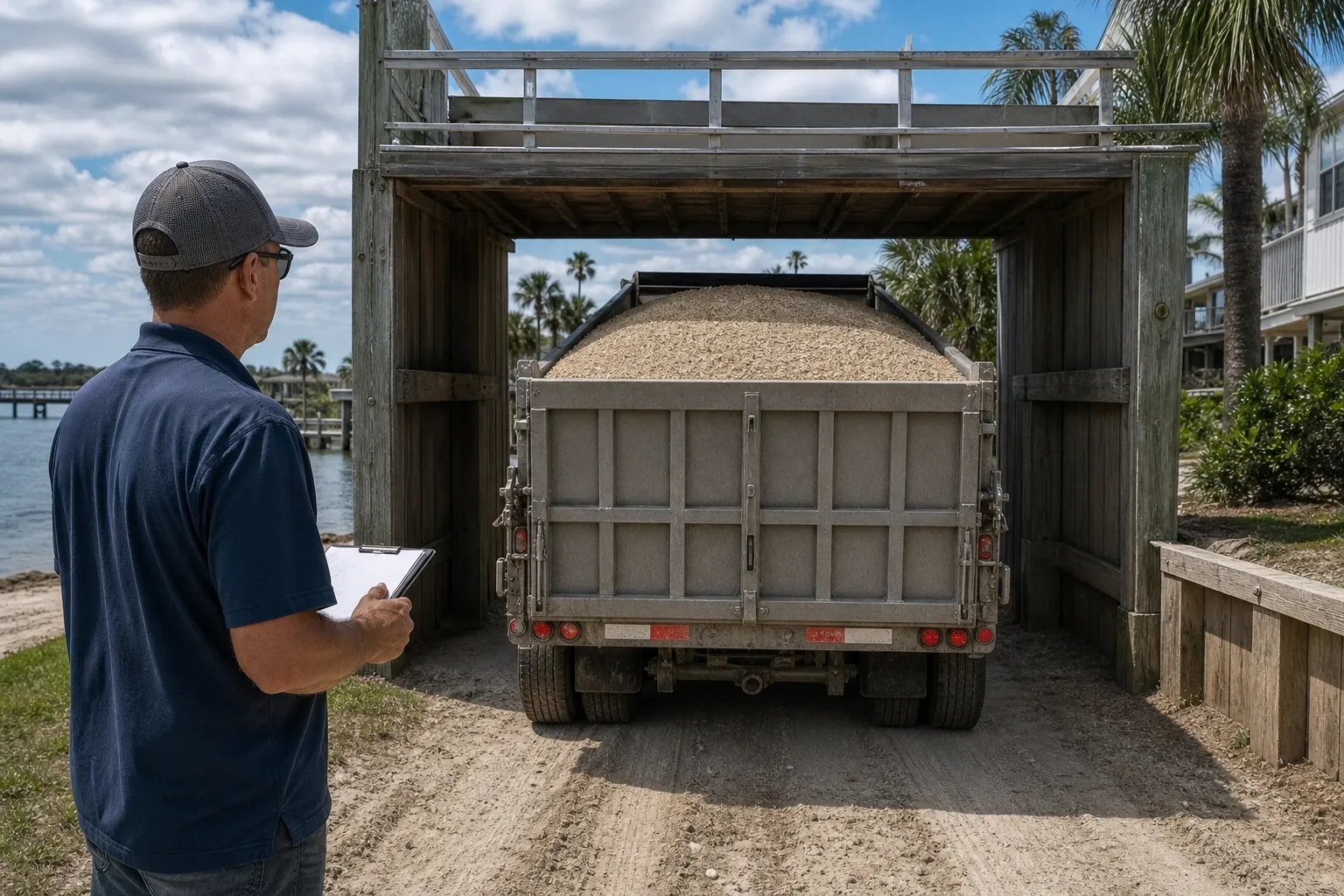
A gate can look wide enough for a delivery and still create problems once a truck and dump trailer approach it. Posts, hinges, a tight turn, soft ground, and overhead branches all affect access. For Florida homeowners buying coquina shell, checking these details before ordering can make the difference between a practical unloading location and one that cannot be reached safely.
Coquina shell dump trailer gate clearance is not just the distance between two fence posts. It is the usable space along the entire route, including room for the towing vehicle, trailer, turns, and unloading movement. A tape measure and clear photos are more useful than estimating access from the size of a passenger car.
Tropical Yards supplies coquina shell and tropical plants, with dump trailer delivery from St. Augustine to Daytona Beach. This guide focuses on access planning for shell buyers and DIY projects. Start with the coquina shell information page for the broader material overview, then use the checks below to prepare delivery questions.
Measure The Usable Gate Opening, Not The Fence Opening
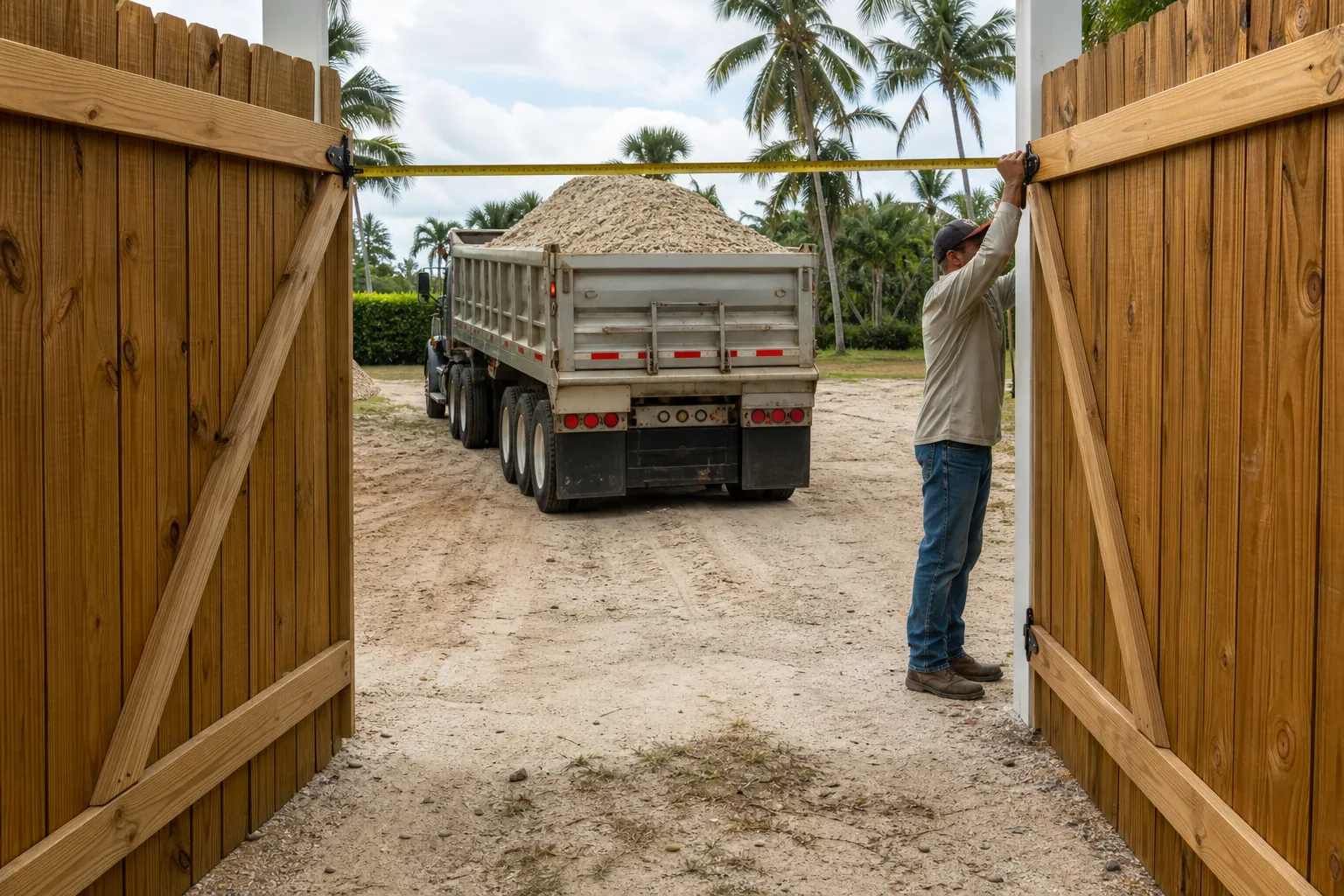
Start by opening the gate exactly as it would be positioned during delivery. Measure the narrowest clear distance between anything that projects into the opening. A latch, hinge bracket, stop block, or gate leaf can reduce the usable width even when the posts are farther apart.
Measure near ground level and higher up wherever hardware or angled posts intrude. If the gate sags or will not stay fully open, note that condition. The driver needs a stable passage, not an opening that depends on someone holding a moving gate beside the trailer.
Do not assume a standard gate size means the delivery equipment will fit. Truck and trailer dimensions vary, and a straight passage needs different working space from a turn through the same opening. Ask Tropical Yards what clearance is needed for the equipment planned for your order.
- Record the narrowest usable width with the gate fully open and secured.
- Photograph both posts, hinges, latches, and anything attached to the fence.
- Measure any second gate or narrower passage farther along the route.
- Tell the supplier whether a removable gate section exists, without assuming its removal will make access suitable.
If you are considering temporarily removing a gate leaf, arrange that yourself before delivery and check whether it changes the usable opening. Removing the leaf does not eliminate the posts, turning limits, or restrictions beyond the fence.
Check The Approach And Turning Space
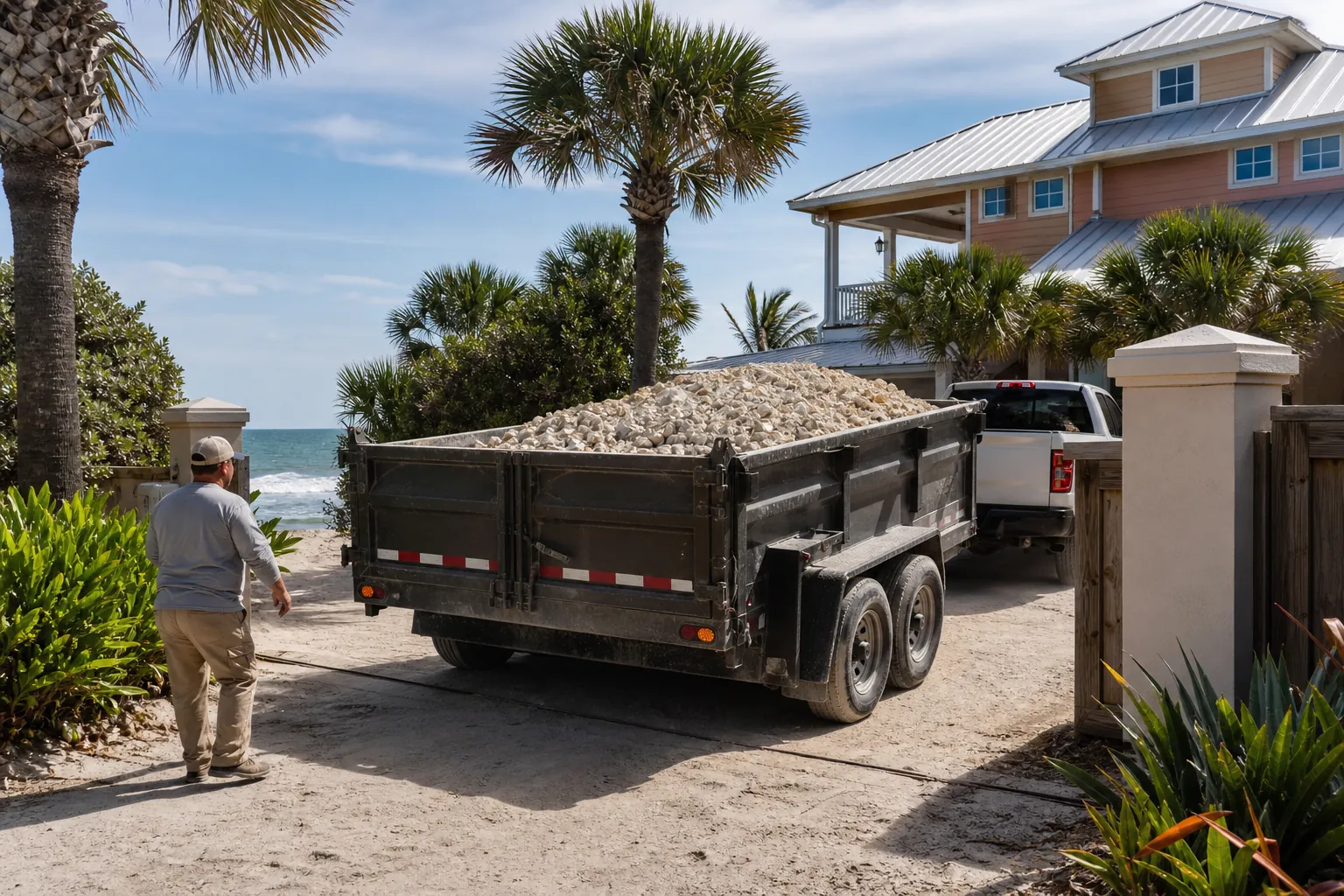
A wide gate at the end of a narrow driveway can be harder to enter than a smaller opening approached in a straight line. A truck towing a trailer needs room to line up before passing through. The trailer also follows a different path from the towing vehicle during a turn.
Look at the space on both sides of the gate. A roadside ditch, parked vehicle, mailbox, fence corner, or neighboring driveway can limit the approach. Inside the gate, a wall or planting bed may prevent the truck and trailer from straightening after entry.
Measure the driveway width and describe whether the gate is straight ahead, on a curve, or perpendicular to the approach. Include photos taken from farther back, not just close-ups of the opening. Wider views help show the relationship between the road, gate, and proposed unloading spot.
Reversing introduces additional considerations. A route that seems manageable when driving forward may not provide a practical backing path for a loaded trailer. Avoid assuming the driver can make repeated corrections within a confined yard.
- Describe every turn between the street and the proposed unloading area.
- Identify fixed obstacles such as walls, posts, drainage structures, and mature trees.
- Move your own vehicles and portable items out of the planned route before arrival.
- Ask whether the proposed approach is suitable rather than relying on a passenger-car test.
Access from a public road also requires attention to traffic and local restrictions. Do not plan an unloading location that blocks a sidewalk, bicycle lane, or road without checking the applicable rules. A convenient spot is not automatically a permitted one.
Look Above The Route And Unloading Area
Ground-level clearance is only part of the check. Tree limbs, roof edges, entrance arches, overhead wires, and hanging fixtures can obstruct the truck or trailer. The unloading location needs particular attention because a dump trailer raises its bed.
Travel clearance and unloading clearance are different questions. Equipment may pass beneath an obstruction while lowered but have insufficient space to unload there. Do not use the height of the fence or a familiar vehicle as a substitute for equipment-specific guidance.
Tell Tropical Yards about any overhead obstruction and send photos showing its position relative to the route. If electrical lines are nearby, identify them clearly and ask about an alternative unloading location. Never assume a raised trailer can operate safely near a wire because the lowered equipment fits beneath it.
Do not attempt to measure a wire by touching it or approaching it with a ladder, pole, or tape measure. The appropriate utility or a qualified professional should address questions about electrical clearance. A delivery should not depend on improvising around an overhead electrical hazard.
Low branches can also conceal smaller obstructions behind them. Inspect from the approach, from inside the gate, and from the intended unloading area. If access depends on changing vegetation or a structure, handle that separately before scheduling. Tropical Yards supplies materials and plants; it does not provide trimming or site-preparation labor.
Evaluate The Surface Under A Loaded Trailer
A route that supports a person, mower, or passenger vehicle is not necessarily suitable for loaded delivery equipment. In Florida, sandy soil, recent rain, concealed low areas, and poorly drained ground can change access conditions quickly.
Describe the surface honestly: paved driveway, gravel, compacted material, bare sand, grass, or another surface. Note slopes, soft shoulders, ruts, and places where water collects. If the route crosses a culvert or small bridge, do not assume it is rated for the delivery load.
Underground features matter too. Septic tanks, drain fields, irrigation components, buried utilities, and drainage structures may make an otherwise open route unsuitable. Identify known locations and keep the proposed route away from them unless an appropriate professional has confirmed suitability.
A driveway's appearance alone does not establish its load capacity. Older pavement, unsupported edges, decorative surfaces, and covers over underground structures deserve particular caution. Let the supplier know about concerns before delivery instead of waiting until the equipment arrives.
- Check the route after rain for standing water and softened ground.
- Point out septic areas, utility covers, culverts, and known underground structures.
- Describe any slope at the proposed unloading spot.
- Choose a firmer alternative location when backyard access is uncertain.
Conditions on delivery day may differ from the photos you sent earlier. If heavy rain changes the route, contact Tropical Yards to discuss the situation. An access plan should reflect the ground as it is, not as it was when you first measured.
Choose A Practical Unloading Location
The best unloading spot balances equipment access with the work you will do afterward. Getting shell closest to the project is helpful, but not if reaching that spot requires a narrow turn, questionable surface, or inadequate overhead clearance.
Choose a location with enough open space for the delivery equipment and the discharged material. A shell pile has a footprint, and that footprint can extend beyond the point where the trailer sits. Ask about the space needed for your proposed order rather than planning around a small sample pile.
Keep the unloading area away from storm drains, drainage channels, and places where loose material could obstruct access. Consider whether household vehicles will still be able to move and whether doors, gates, and walkways will remain usable after unloading.
Remember that dump trailer delivery is not installation or spreading. Plan to move and distribute the shell yourself, or arrange any separate labor independently. Tropical Yards supplies coquina shell and delivers it; it does not prepare beds, install shell, or clean up your yard.
A front driveway or another accessible area may be the better choice when a backyard gate is restrictive. The extra wheelbarrow distance can be easier to manage than uncertain equipment access. Walk that transfer route before ordering and check its width, steps, slopes, and surface.
If you want to protect an unloading surface, ask what preparation is compatible with the delivery process. Do not assume a tarp, board arrangement, or temporary covering will remain in place beneath discharged shell or suit the equipment.
Prepare A Clear Access Summary Before Ordering
A short access summary helps turn measurements into useful delivery planning. You do not need to judge the truck's turning radius yourself. You need to provide clear facts so Tropical Yards can discuss whether the route and unloading location are appropriate.
Start with the delivery address and proposed unloading spot. Explain whether the equipment would stay in the driveway or pass through a gate. Include the narrowest measured opening, the type of surface, any turns, and visible overhead restrictions.
Photos are especially helpful when they show scale and context. Take one view from the street toward the property, one toward the open gate, and one beyond the gate toward the unloading location. Photograph concerns separately without placing yourself in traffic or near electrical hazards.
- State the narrowest clear gate width and describe projecting hardware.
- Explain whether the approach is straight or requires a turn.
- Describe the ground surface and any recent drainage problems.
- Identify overhead obstructions and known underground features.
- Offer an alternative unloading spot if the preferred location is unsuitable.
Ask for the relevant equipment dimensions and working clearances for the planned delivery. There is no responsible universal minimum gate width that can account for every truck, trailer, approach, and unloading setup. A measurement is a starting point, not an approval.
Also mention gated-community entry procedures, delivery-hour restrictions, and any association rules that apply. Arrange necessary permissions yourself before scheduling. Avoid promising access that depends on an unavailable key, an unapproved unloading spot, or a neighbor moving a vehicle.
Match Your Shell Order To Your DIY Plan
Access planning and quantity planning belong together. Measure the area you intend to cover and decide on the intended finished depth before asking about an order. For irregular shapes, divide the project into smaller rectangles or other measurable sections and add their areas.
Discuss those measurements with Tropical Yards and confirm how the shell is sold. Do not substitute a generic coverage claim for guidance about the actual material and your project. Shape, settling, and the existing surface can affect how the finished layer looks.
If you need help thinking through quantity, ask which information the supplier needs. Keep that conversation separate from gate clearance: knowing how much shell you want does not establish whether the delivery route can handle the equipment.
For DIY use, prepare the destination before the shell arrives. Decide how you will define edges, preserve drainage, and keep material out of neighboring areas. Check local requirements where relevant, especially near public walkways, drainage infrastructure, or protected areas.
Think about the labor involved in transferring material from the unloading pile. A narrow side yard might accommodate a wheelbarrow even when it cannot accommodate delivery equipment. Have suitable tools, gloves, eye protection, and manageable loads planned rather than rushing once the pile is on site.
Coquina shell choices and general buying questions belong with the main coquina shell guide. This page addresses the narrower delivery-access question so you can evaluate the gate and route without confusing access advice with material selection.
What If The Gate Is Too Narrow?
If the measured opening appears restrictive, do not force the plan around it. Start by asking whether unloading outside the gate is practical. A driveway location with a clear DIY transfer route may let you proceed without changing the fence.
A temporary gate change is another possibility only when you have the authority and appropriate help to make it safely. It must address the actual constraint. Removing a panel does little if the approach remains too tight or the ground inside is unsuitable.
Do not expect delivery personnel to dismantle gates, move landscaping features, or prepare access. Arrange any needed changes independently and finish them before delivery. Recheck the usable opening afterward, including hardware and remaining posts.
If no suitable unloading location is available, discuss the situation before committing to the order. An early conversation is more useful than discovering the limitation with a loaded trailer at the property. Avoid assuming a different approach or special equipment is available unless Tropical Yards confirms it.
Confirm The Route Before Delivery Day
Before arrival, open and secure the gate, clear movable obstacles, and verify that the chosen unloading area is available. Keep pets and people away from the equipment route. Do not stand between the trailer and a fence post or attempt to guide equipment from a blind spot.
Tell the driver about any changes to the plan, including wet ground, a blocked driveway, or a new obstruction. The actual site conditions still need evaluation on arrival. Prior measurements help with planning, but they do not override a safety concern.
Tropical Yards offers coquina shell sales and tropical plant sales, including palm trees, hibiscus, bougainvillea, ferns, and other tropical plants. Dump trailer delivery of plants and coquina shell is available from St. Augustine to Daytona Beach. Access requirements should be discussed for your specific order.
For a calm, practical next step, call 772-267-1611 with your gate measurements, route description, and proposed unloading location. Tropical Yards can discuss your coquina shell order and delivery planning while you prepare the DIY work on your side of the gate.
Call 772-267-1611 to talk through next steps.