How to manage coquina shell dust during spreading
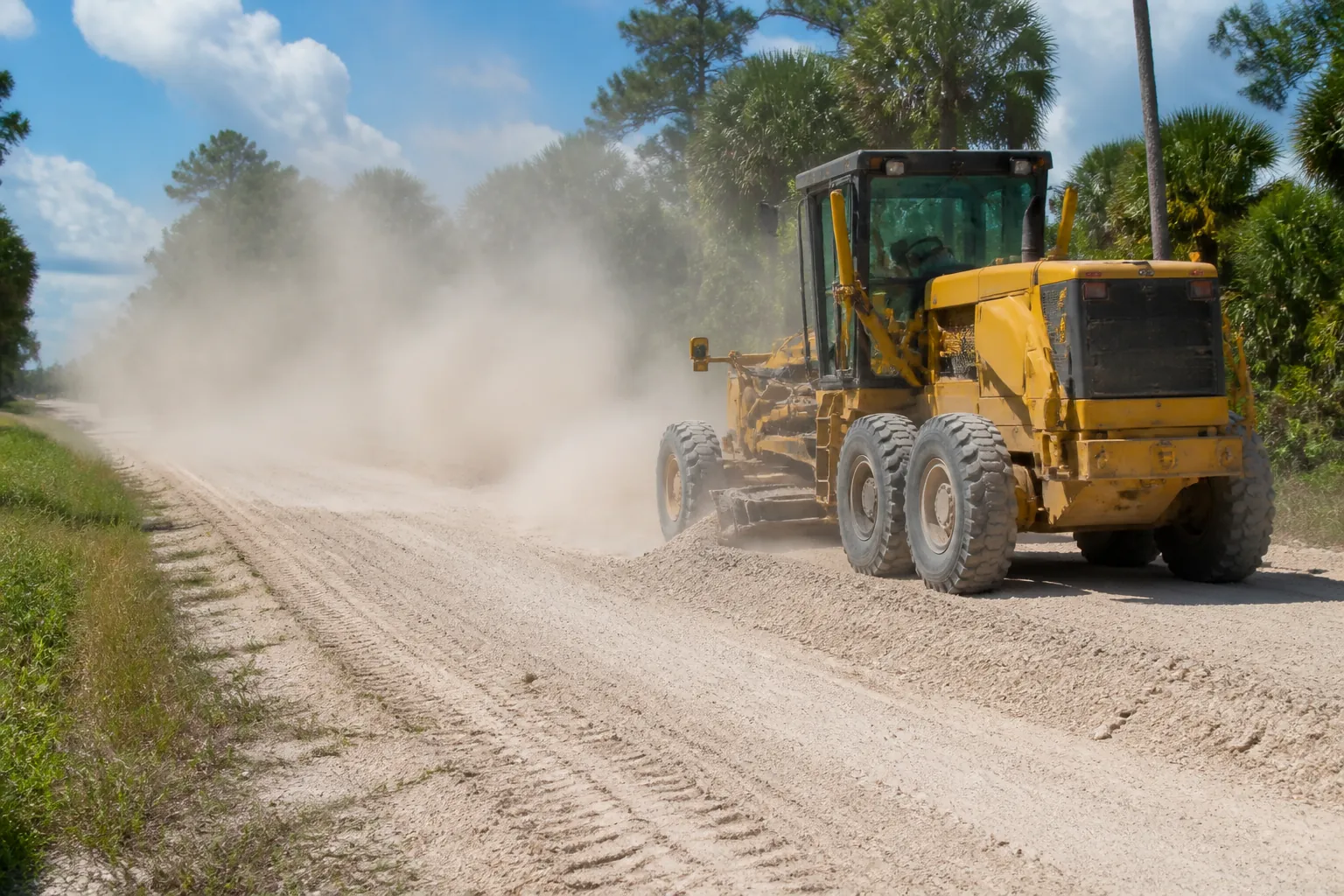
Coquina shell can bring a natural coastal look to Florida paths and landscape beds, but handling a dry load may release fine particles. Planning for coquina shell dust during spreading helps you organize a DIY project around weather, delivery access, nearby plants and your own exposure.
The goal is not to promise a dust-free job. It is to reduce unnecessary disturbance, avoid working in unsuitable conditions and handle the material thoughtfully. A little preparation before delivery is more useful than trying to control a blowing pile after work begins.
Tropical Yards supplies coquina shell and tropical plants, with dump trailer delivery from St. Augustine to Daytona Beach. Spreading, planting and site preparation remain the buyer's responsibility. Use this guide as a practical companion to the coquina shell supply page, focusing specifically on dust rather than general material selection or project design.
Why coquina shell can release dust
A load of coquina shell may include larger shell pieces, smaller fragments and fine material. Those fines can become airborne when the load is dry and disturbed. Unloading, shoveling, dumping wheelbarrows and raking can all create brief bursts of dust.
The amount you notice depends on the actual material, its moisture condition, how it is handled and the weather. A dry, breezy afternoon may make dust more visible than a calm morning with slightly damp material. Do not assume every delivery will behave exactly like a previous load.
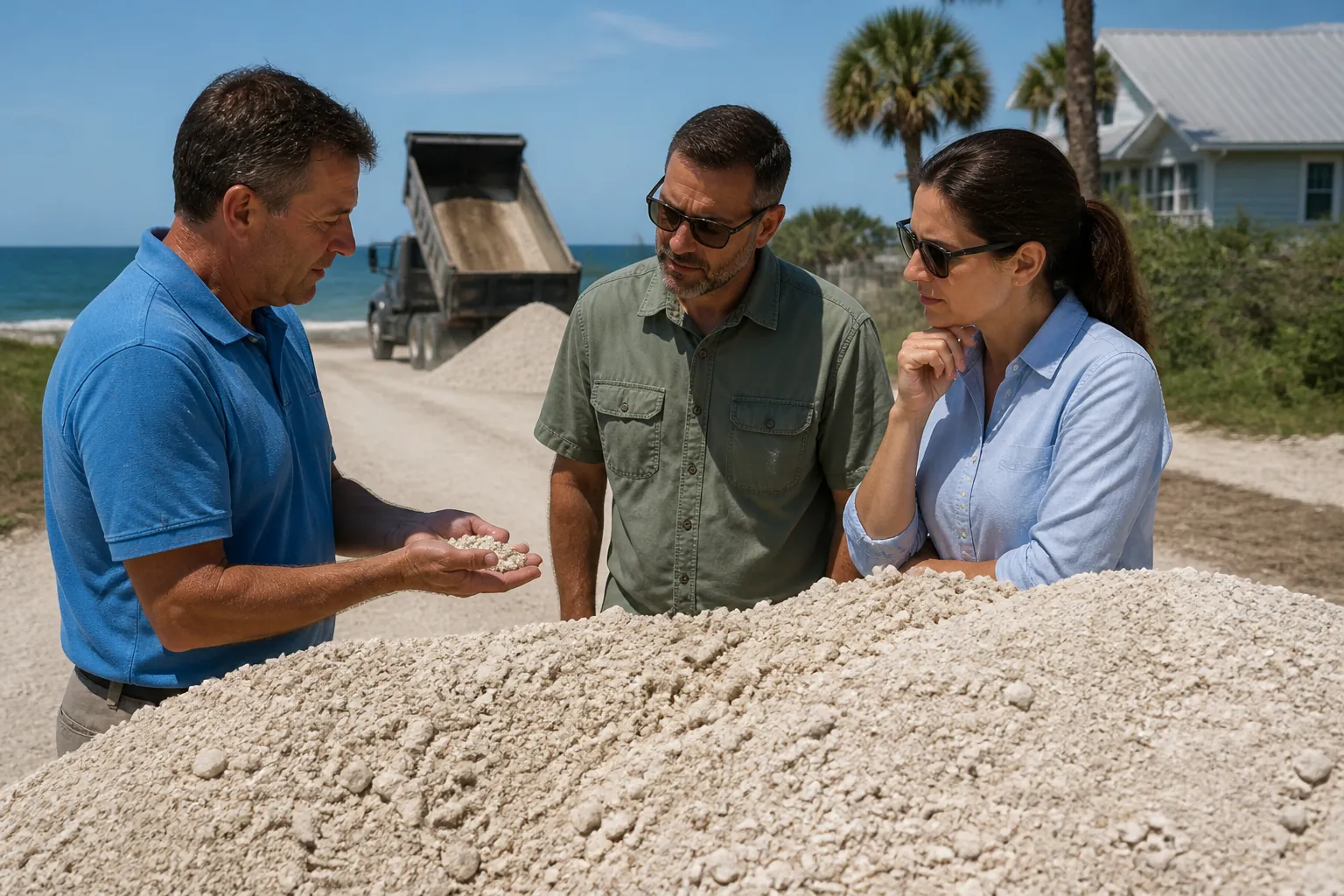
Fine material is not automatically evidence of a problem with the shell. However, the balance of fragments and fines matters to your intended use. Before ordering, ask what the available material looks like and whether a representative photo or description is available.
Appearance alone cannot establish the composition or health risks of airborne dust. Ask for available product information and safety guidance, particularly if you expect prolonged handling. Treat visible dust as something to minimize rather than something to ignore simply because the material comes from shells.
If a supplier cannot provide detailed composition information, avoid making assumptions about what the dust contains. Conservative handling practices are still worthwhile.
What to ask before buying coquina shell
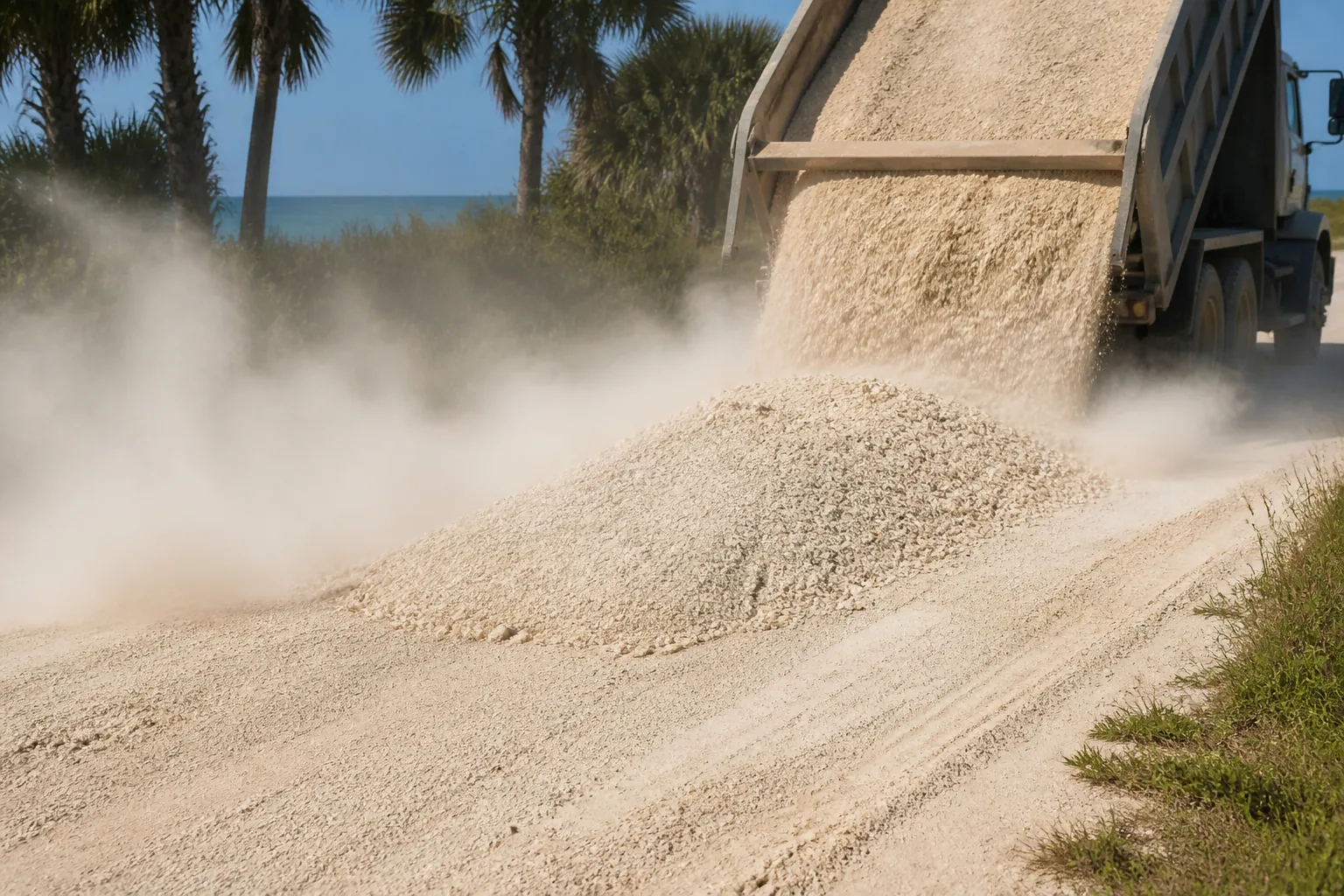
Your first dust-control decisions happen before delivery. Explain that you will spread the material yourself and ask about the condition of the coquina shell currently available. Useful questions concern the actual load, not broad promises about all shell products.
- Ask whether the available shell is typically delivered dry, damp or variable depending on storage and weather.
- Ask how much fine material is normally visible in the current product and whether a recent photo is available.
- Confirm the ordering unit so you do not confuse a volume measurement with a weight measurement.
- Discuss the intended unloading location and any access limitations before scheduling dump trailer delivery.
- Ask whether product handling information is available to help you choose appropriate protective equipment.
Describe your project clearly, including whether you are filling a path or covering a landscape bed. Dust planning does not replace checking whether the material suits that application, but it helps you anticipate how you will move and distribute it.
Avoid ordering extra material simply to compensate for uncertainty. Measure your area and decide on an appropriate depth before discussing quantity. An oversized leftover pile adds storage and handling work, creating more opportunities for dry fines to become airborne.
Choose a workable Florida weather window
Florida conditions can shift quickly. Review the forecast before delivery and again before spreading. Pay attention to wind, thunderstorms, heat and the likelihood of heavy rain, rather than checking only whether the day is generally sunny.
A calm period is usually easier to manage than a windy one. Even damp shell can release some particles as it dries or is disturbed. If dust is visibly traveling toward a neighbor's property, open windows, parked vehicles or people, pause instead of continuing through the gusts.
Light moisture can help reduce airborne fines, but a downpour is not a dust-control strategy. Heavy rain can move loose material, create muddy access conditions and send sediment toward drains. Keep delivery piles away from obvious runoff routes.
Start only when you can work at a comfortable pace and take breaks. Heat and humidity can make physical handling more demanding, especially when protective equipment is needed. Avoid rushing to finish a large area before an approaching storm.
Have a stopping plan before you begin. Know where tools will go, how you will secure remaining material and where you can shelter if lightning develops. Delaying part of the project is better than spreading through conditions that make control difficult.
Plan the dump trailer unloading area
Delivery planning affects how many times you handle the shell. A practical unloading point can shorten wheelbarrow trips and reduce repeated transfers. Choose a location near the project while keeping safe vehicle access and space for the dump trailer's unloading operation.
Discuss the proposed location with Tropical Yards before delivery. A spot that looks convenient for a homeowner may not be suitable for a loaded vehicle or a raised trailer. Do not assume narrow gates, soft ground, slopes or overhead branches will be acceptable.
- Identify overhead wires, tree limbs and other obstructions that could interfere with unloading.
- Keep children, pets and bystanders away from the vehicle and unloading area.
- Choose a location that does not block sidewalks, public access or drainage features.
- Move personal items and vehicles out of the planned work area before the delivery arrives.
- Discuss whether a ground covering is practical, and ensure it cannot become a slippery or tangled surface.
Dump trailer delivery is material delivery, not spreading or site preparation. Arrange your own tools and DIY help separately. Do not rely on the delivery visit to resolve unfinished access preparation or move the load around the yard afterward.
If the planned unloading area becomes wet or unstable before arrival, contact the supplier rather than assuming the original plan still works.
Use light moisture without creating runoff
For many small DIY projects, gentle wetting can reduce the release of fine particles during handling. The aim is to lightly dampen the material, not flood the pile. Check any supplier guidance before starting, and use water cautiously around surrounding surfaces.
A hose nozzle with a gentle spray offers more control than a forceful stream. Apply a small amount, let it settle into the exposed material, then reassess. A wet-looking surface does not necessarily mean the inside of the pile is damp.
As you work into the pile, you may expose drier shell underneath. Pause to lightly dampen that area if dust appears. Avoid spraying while someone is shoveling in a way that sends water and particles toward their face.
- Keep water out of storm drains and prevent sediment-laden runoff from leaving the work area.
- Stop adding water if puddles form or material begins washing away.
- Keep hose lines out of walking routes so they do not create trip hazards.
- Recheck moisture as sun and wind dry the exposed shell.
Do not add detergents, oils or improvised binding chemicals to suppress dust. These can introduce separate environmental and compatibility problems. Plain water used carefully is a simpler starting point, but it does not replace good handling practices or suitable protective equipment.
Spread shell with fewer drops and transfers
Every extra transfer can disturb fines. Set up a direct route from the unloading pile to the placement area, then handle manageable quantities. A controlled pace makes it easier to notice when material is drying or dust is increasing.
Keep shovel loads close to the receiving wheelbarrow instead of tossing shell from a height. At the destination, lower the load carefully and place it near where it will stay. Avoid throwing material across a bed to save a few steps.
Use a rake to make small adjustments rather than repeatedly pulling dry shell across the entire area. Aggressive raking can bring fine particles to the surface and release them into the air. If visible dust develops, stop and reconsider moisture, wind and technique.
- Load wheelbarrows conservatively so you can move and tip them without sudden spills.
- Keep people out of the immediate path of dust and moving equipment.
- Place small amounts near their final position to reduce repeated raking.
- Pause when gusts lift particles, even if the rest of the load seems damp.
- Use tools appropriate for shell handling rather than improvised equipment that is difficult to control.
Avoid using a leaf blower to move shell fines. It can turn settled particles back into airborne dust and send them beyond the project area. Forceful dry sweeping can have a similar effect.
Protect yourself and people nearby
Dust control should begin with reducing dust at its source. Personal protective equipment is an additional measure, not a reason to keep working in a visible cloud. Keep bystanders away and stop if exposure cannot be controlled.
Wear eye protection appropriate for airborne particles and splashes. Gloves, sturdy closed-toe footwear and clothing suited to manual handling can also help protect against rough fragments and accidental contact with tools.
Respiratory protection requires more thought than choosing a loose face covering. Review available product safety information and authoritative guidance to identify suitable protection. Fit and correct use matter, and facial hair can interfere with the seal of a tight-fitting respirator.
If you have asthma, another respiratory condition or concerns about your ability to use a respirator, seek medical advice before dusty work. Do not treat this article as an exposure assessment or a substitute for individualized health guidance.
Close nearby windows when practical and keep outdoor gatherings away from the work area. Position yourself to avoid the drifting dust plume, but remember that wind direction can change.
If you experience breathing difficulty, significant eye irritation or other concerning symptoms, stop handling the material and move away from the exposure. Seek medical attention when appropriate rather than assuming the symptoms will resolve while you continue.
Keep dust away from tropical plants
When shell is being spread near established plants, plan the work route to avoid brushing branches or burying stems. Dust management and careful placement are related, but they are not the same task. Dampening shell does not make careless dumping safe for plants.
Keep shell away from trunks, stem bases and plant crowns. Choose placement and depth according to the plants and the purpose of the area, rather than piling material against vegetation to use up a delivery.
If a light layer of dust settles on foliage, a gentle rinse may be appropriate for plants that tolerate it. Avoid forceful spraying that damages leaves or drives sediment into drainage areas. Let foliage dry under suitable conditions and follow care practices for the particular plant.
Temporary protection may help shield nearby plants during brief handling, but do not leave coverings over foliage in Florida heat. Any cover should be supported and positioned so it does not crush branches or trap heat around the plant.
Tropical Yards also sells palm trees, hibiscus, bougainvillea, ferns and other tropical plants. If plants and shell are part of the same purchase, organize your own planting sequence so containers are not left in the unloading zone or along wheelbarrow routes.
Handle remaining shell and settled fines carefully
If you cannot finish spreading in one session, keep the remaining pile contained in its planned location. Avoid moving it repeatedly just to make room for other activities. Each transfer adds effort and can release more particles.
A suitable secured cover may reduce wind disturbance, provided it does not create a hazard or direct rainwater toward neighboring property. Follow any applicable local storage rules and keep material away from drains, sidewalks and travel routes.
After the work, inspect nearby hard surfaces for loose shell and settled fines. Avoid blowing the material into the street or washing it into a storm drain. Small deposits may be collected carefully using methods that minimize airborne dust.
Do not use an ordinary household vacuum for fine construction or landscape dust. Equipment must be appropriate for the material and used according to its instructions. When uncertain, seek guidance before vacuuming unknown fine particles.
Cleaning your tools and managing leftover material are DIY responsibilities. Tropical Yards supplies the products and provides dump trailer delivery; it does not provide yard cleanup, installation or maintenance.
Before a future project, note what worked: the unloading location, weather window, moisture approach and number of transfers. Those observations can help you make the next order and spreading session more manageable.
Confirm your supply and delivery plan
The most useful approach to coquina shell dust during spreading is a coordinated one. Ask about the available material, choose a suitable weather window, prepare an accessible unloading area and reduce unnecessary handling. Keep moisture controlled and stop when dust starts traveling beyond the work zone.
For coquina shell sales, tropical plant sales and dump trailer delivery from St. Augustine to Daytona Beach, call Tropical Yards at 772-267-1611. Have your project measurements, delivery address and access questions ready so you can discuss the supply order and plan your own spreading work.
Call 772-267-1611 to talk through next steps.