How to keep coquina shell from escaping landscape borders
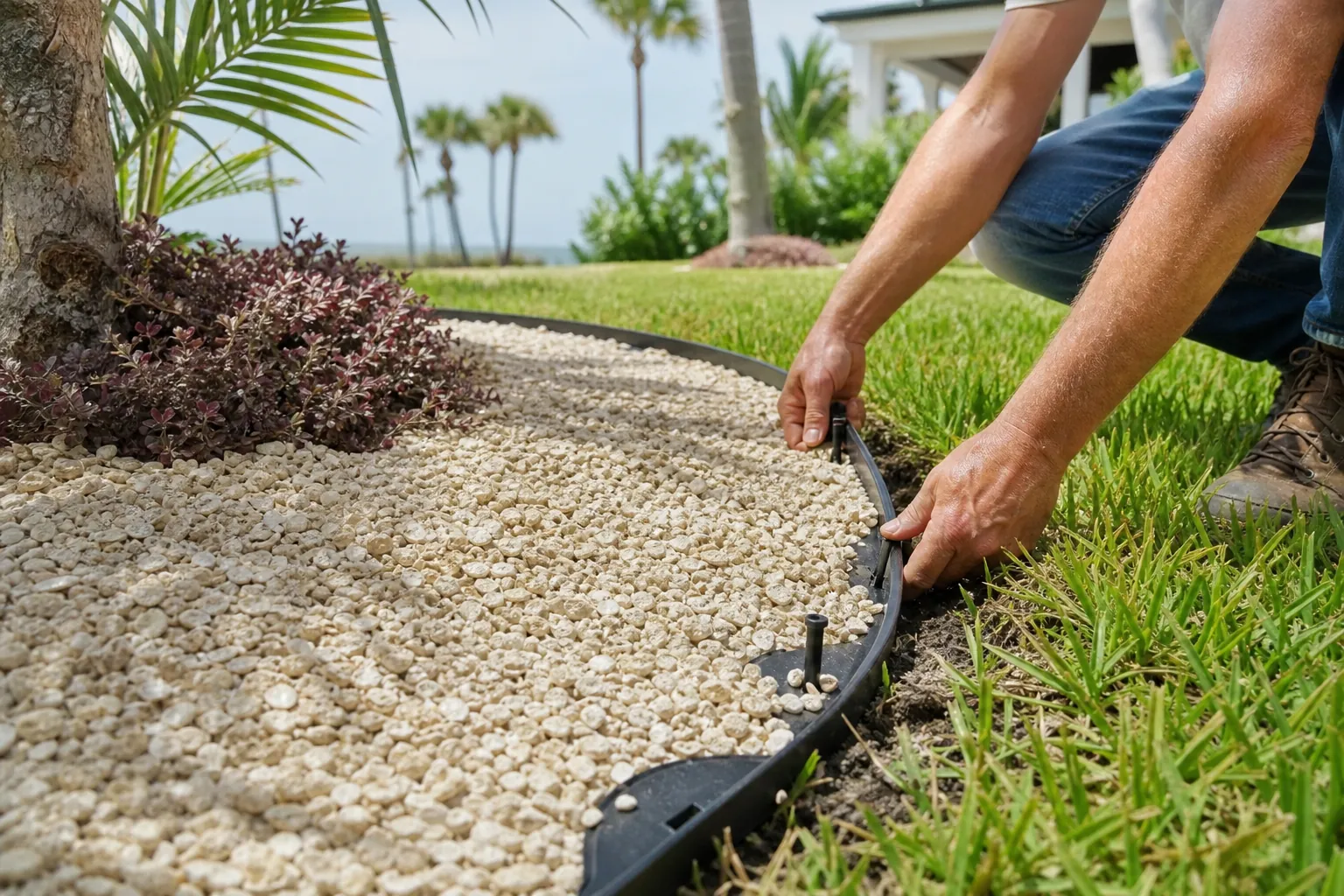
Coquina shell adds a natural coastal texture to Florida yards, but loose material needs a clear boundary. When shell starts appearing on sidewalks, in grass, or beyond a planting bed, adding more shell rarely solves the underlying problem. The useful first step is figuring out how it is leaving the intended area.
Most cases of coquina shell escaping landscape borders involve one or more practical issues: a finished surface that sits too high, an edge with gaps, concentrated runoff, or repeated foot traffic. Each calls for a different DIY response. A taller border may help with scattered shell but will not automatically fix water washing through a bed.
Tropical Yards supplies coquina shell and tropical plants, with dump trailer delivery from St. Augustine to Daytona Beach. This guide focuses on decisions you can make before buying material, adjusting an existing border yourself, and planning a delivery. Border construction, planting, and ongoing care remain your responsibility or the work of a contractor you independently hire.
Find Out Why The Shell Is Moving
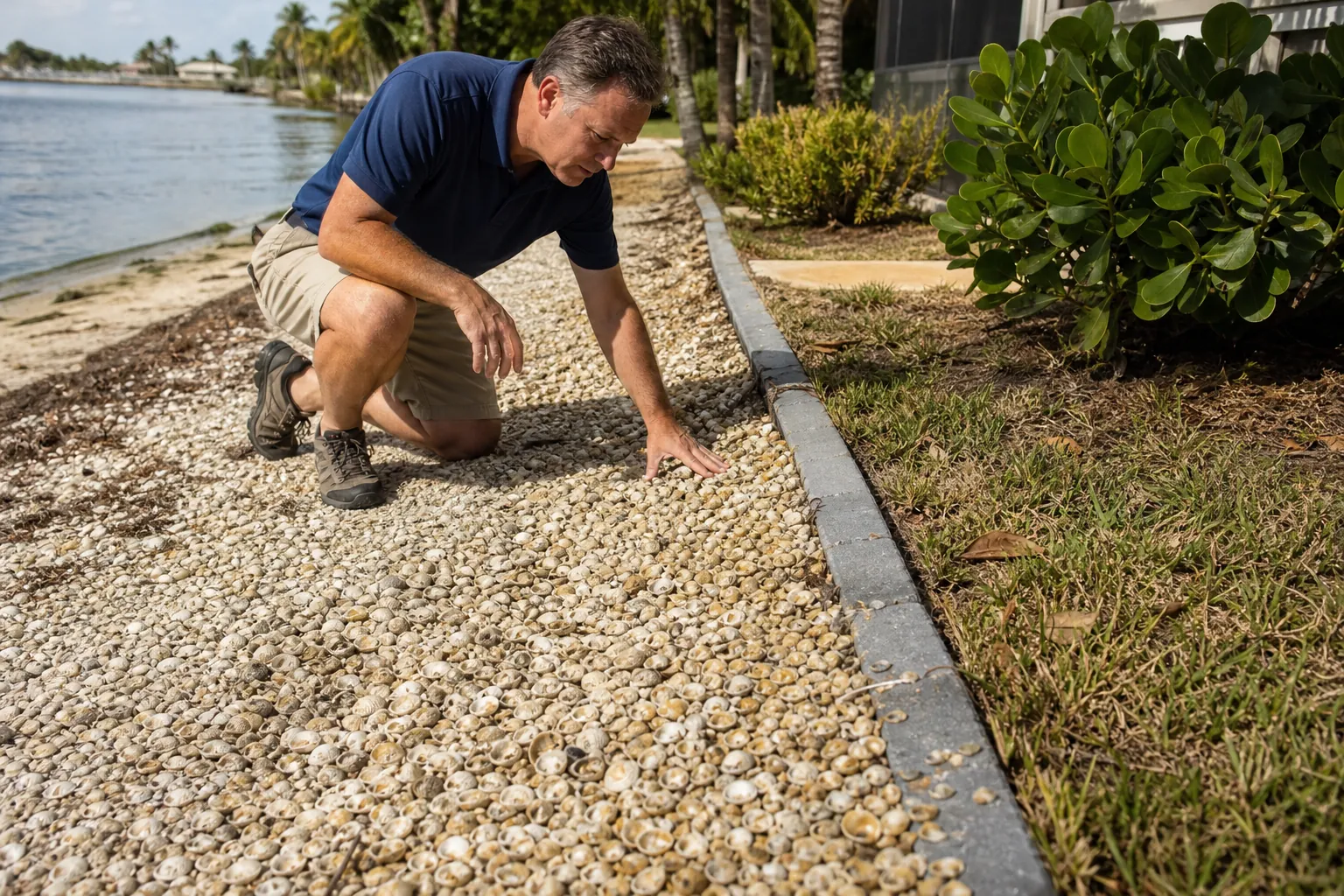
Before changing the border, inspect the area when it is dry and again after rain. Look for patterns rather than isolated pieces. A narrow trail of shell usually points to a particular opening or runoff route. Scattered pieces along a walking route suggest shoes, wheels, or pets are moving the material.
Compare the top of the shell with the top of the edging. If the two are nearly level, the border has little room to contain sideways movement. Shell piled against a low edge can spill even when the border itself is intact.
Check the corners, joints, and transitions to pavement. These are common weak points because straight edging sections may not fit curves tightly, and small changes in grade can leave an opening underneath.
- If shell forms a fan beyond one low point, inspect that location for flowing water and an uneven border height.
- If shell collects mostly on a sidewalk beside an otherwise stable bed, check whether the shell surface is higher than the pavement.
- If material is missing beneath a downspout, address the concentrated roof runoff before replacing the lost shell.
- If pieces appear along a mower route, look for wheels clipping the bed and consider a clearer separation between grass and shell.
- If shell escapes only at an entrance, examine how people step into the area and whether a firm walking surface would help.
Take a few photographs before making changes. They can help you compare conditions after the next rain and explain the problem if you decide to consult a drainage or landscape professional.
Choose A Border That Matches The Location
A useful shell border must hold its position, follow the intended bed shape, and provide enough exposed height above the finished shell surface. Appearance matters, but the edge also has to withstand the movement expected at that particular spot.
For a curved planting bed, flexible edging may follow the shape more easily than rigid units. For a straight edge beside a walkway, a rigid border may make the separation easier to maintain. In either case, follow the manufacturer's directions for anchoring and placement.
Compare Common Edging Options
- Metal edging can create a narrow, defined boundary, but it needs suitable anchoring and safely finished exposed edges.
- Plastic or composite edging can accommodate curves, although product strength and stake spacing affect how well it stays upright.
- Brick or concrete pavers provide a visible separation, but loose units can shift unless their base and restraint are appropriate.
- Stone borders can complement shell visually, but irregular gaps may allow smaller pieces to pass through.
Do not assume a decorative line of loose stones will function like a continuous retaining edge. Inspect the spaces between individual pieces and the contact between the border and the ground. If smaller shell fragments can move beneath or between the units, the border may need a different arrangement.
Existing tree roots, irrigation lines, and buried utilities can limit where edging goes. Avoid driving stakes or digging blindly. Check utility-location requirements before excavation, and do not cut significant roots simply to make a border fit.
Near a path, avoid solving containment by creating an unexpected trip hazard. A border should be visible and appropriate for the surrounding use. If a taller edge would interfere with access, lowering the shell surface may be a better approach.
Keep The Finished Shell Surface Below The Edge
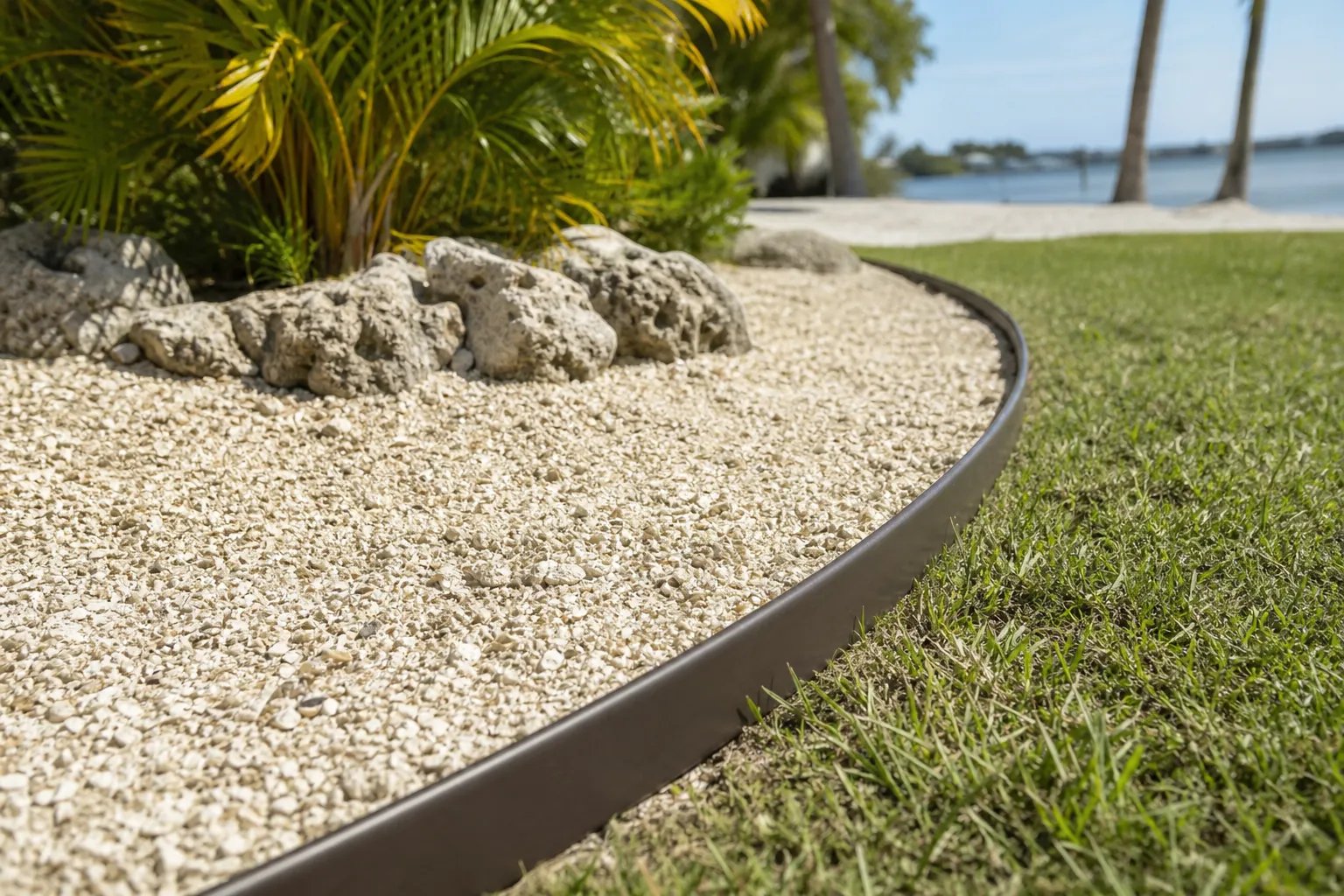
The relationship between shell level and border height is often more important than choosing a different border material. An edge cannot contain shell effectively when the bed is filled to its top or material slopes upward against it.
Start by identifying the intended finished level. Leave a visible margin between that level and the top of the border so everyday movement does not immediately push shell over the edge. The appropriate margin depends on the edging, shell characteristics, slope, and use of the area.
Avoid treating one depth as suitable for every application. A lightly used decorative bed, a walking area, and a sloped planting strip have different needs. Ask about the available shell material, then plan the layer around your site rather than assuming a deeper layer is always better.
If an existing bed is overfilled, redistribute or remove excess material yourself before adding another order. Moving the excess into a compatible low area may help, provided that area is not a drainage route and the change will not bury plant stems.
- Use a straight board or similar reference to compare the shell level with the surrounding edging.
- Keep the surface reasonably even instead of creating piles beside corners or entrances.
- Leave room around irrigation components so shell does not obstruct access or cover spray outlets.
- Keep shell away from plant crowns and trunks rather than banking it directly against them.
Inspect the level again after the material has settled and experienced normal use. If you later refresh the surface, account for the shell already present. Repeatedly adding a full new layer can gradually erase the clearance that once kept the bed contained.
Address Runoff Before Adding More Shell
Florida rainfall can expose drainage weaknesses quickly. Water moving across a shell bed may carry smaller pieces toward a low opening, even when most of the material stays in place. The solution begins with understanding where the water enters and where it should go.
Look uphill from the escaped shell. A roof outlet, paved surface, sloping lawn, or overflowing container may be directing water into one narrow route. Replacing shell in that route without changing the water movement can lead to the same problem after another storm.
Do not block a drainage path simply to contain shell. A solid barrier across flowing water can cause ponding or redirect runoff toward a building, neighboring property, or another planting bed. Maintain necessary drainage and seek professional advice when the route is uncertain.
Separate Containment From Drainage Decisions
Edging is intended to define and contain the surface material. It should not be assumed to function as a drainage system or retaining wall. If water pressure, erosion, or a steep grade is involved, the project may require more than ordinary garden edging.
- Check downspout discharge points and determine whether water is being concentrated directly onto the shell.
- Keep established drainage openings clear instead of packing them with loose shell.
- Observe whether irrigation sprays across the border and repeatedly pushes material toward a low spot.
- Consider using a different surface in a concentrated runoff route rather than repeatedly replacing displaced shell.
- Ask a qualified professional about persistent ponding, erosion near structures, or runoff that affects adjacent property.
Landscape fabric is not a substitute for these steps. Depending on the product and site, it may separate materials, but it does not stop shell from sliding sideways or solve concentrated surface flow. Follow product guidance and avoid treating fabric as a universal fix.
Reduce Movement At Walkways And Lawn Edges
Some shell escapes without any water involved. Shoes can carry pieces onto pavement, mower wheels can press against a bed edge, and carts can push material toward an opening. These patterns are especially common where a shell bed doubles as an informal shortcut.
If people regularly cross the bed, consider a defined stepping route or a separate firm surface suited to that use. Place stepping surfaces securely and follow appropriate construction guidance. A path should provide stable footing, not just hide shell underneath loose decorative pieces.
At a lawn edge, leave enough distinction that you can mow without running wheels through the shell. Avoid placing loose material where mowing equipment may strike and throw it. Follow the equipment manufacturer's safety instructions and inspect the mowing route before use.
Where a bed meets a patio or sidewalk, compare elevations carefully. Shell above the adjacent hard surface has a direct route outward. A contained, slightly lower shell surface generally offers a more workable transition than a mound tapering onto the pavement.
Changes in use may also explain a new problem. A gate that now receives frequent traffic or a hose dragged through the same corner can gradually move material. Adjusting the route may be more effective than rebuilding the entire border.
Plan Your Coquina Shell Order Around The Corrected Bed
Once you understand the cause and have decided how to address it, calculate what the bed actually needs. Ordering before correcting an overfilled edge or runoff route can leave you with excess material and nowhere suitable to place it.
Use the coquina shell page as the starting point for material information, then discuss your intended use with Tropical Yards. Keep this project's focus on containment: the size of the corrected area, the existing shell level, and the access available for delivery.
Measure the usable area inside the border, not the outside dimensions of the edging. For irregular beds, divide the footprint into simpler shapes and combine the areas. Record the planned additional depth separately from the total finished depth.
For reference, a rectangular area's volume in cubic feet is its length in feet multiplied by its width in feet multiplied by its added depth in feet. Divide cubic feet by 27 to express the result in cubic yards. Convert inches to feet before calculating.
- Tell the supplier whether you are filling an empty area or refreshing shell that is already in place.
- Ask about the material currently available instead of assuming every load has identical particle size or appearance.
- Explain if the application is beside a walkway, around plants, or near a slope so your questions stay relevant to the intended use.
- Confirm the ordering unit and delivery details before relying on a volume calculation.
- Plan where any unused material can be stored without blocking drainage or everyday access.
Calculations are planning tools, not promises about exact coverage. Uneven ground, existing material, and the final surface level can affect how much you use. Tropical Yards provides shell sales, not on-site measurement, border construction, or spreading services.
Prepare For Dump Trailer Delivery
Tropical Yards offers dump trailer delivery of coquina shell and plants from St. Augustine to Daytona Beach. Before scheduling, discuss your address, access conditions, and proposed unloading location. Delivery access and safe unloading need to be confirmed for the particular property.
Choose a staging spot that allows you to move shell into the bed yourself without creating unnecessary handling. At the same time, do not assume the trailer can enter a narrow side yard, cross a lawn, or unload directly inside the finished border.
- Describe gates, tight turns, low branches, overhead lines, and other potential access restrictions when arranging delivery.
- Identify a suitable unloading surface and discuss any concerns about soft ground or surface damage.
- Keep the proposed unloading area clear of parked vehicles, tools, and other obstacles before arrival.
- Avoid locating a temporary pile where it would block a drain, sidewalk, driveway exit, or required access.
- Have the wheelbarrow, shovel, rake, gloves, and other equipment you need ready for your own material handling.
If you plan to use a tarp under the pile, ask whether that arrangement is suitable for the delivery. A tarp can help separate material from the staging surface, but it should not interfere with safe unloading.
Delivery does not include installing edging, spreading shell, removing existing plants, or cleaning up the yard. Plan those tasks yourself or arrange them separately with an independent service provider.
Check The Border After Rain And Routine Use
After completing your DIY adjustments, inspect the bed following rain and normal foot traffic. A successful change should address the original movement pattern, not merely make the area look tidier for a day.
Check whether edging remains upright, joints stay closed, and the shell surface remains below the border. If a new trail appears, trace it back to its starting point before adding material. Small local adjustments may be sufficient when the rest of the bed is stable.
For nearby plants, keep shell clear of stems and maintain access for watering. Tropical Yards also sells palm trees, hibiscus, bougainvillea, ferns, and other tropical plants. Choose plants for the site's light, moisture, and mature-space requirements, and follow appropriate planting and care guidance yourself.
For coquina shell sales and delivery planning, call Tropical Yards at 772-267-1611. Have your measurements, intended additional depth, and unloading questions ready. A better-defined border and a realistic material order can help you use shell more thoughtfully without repeatedly filling the same problem spot.
Call 772-267-1611 to talk through next steps.