Understanding coquina shell fines and dust before you order
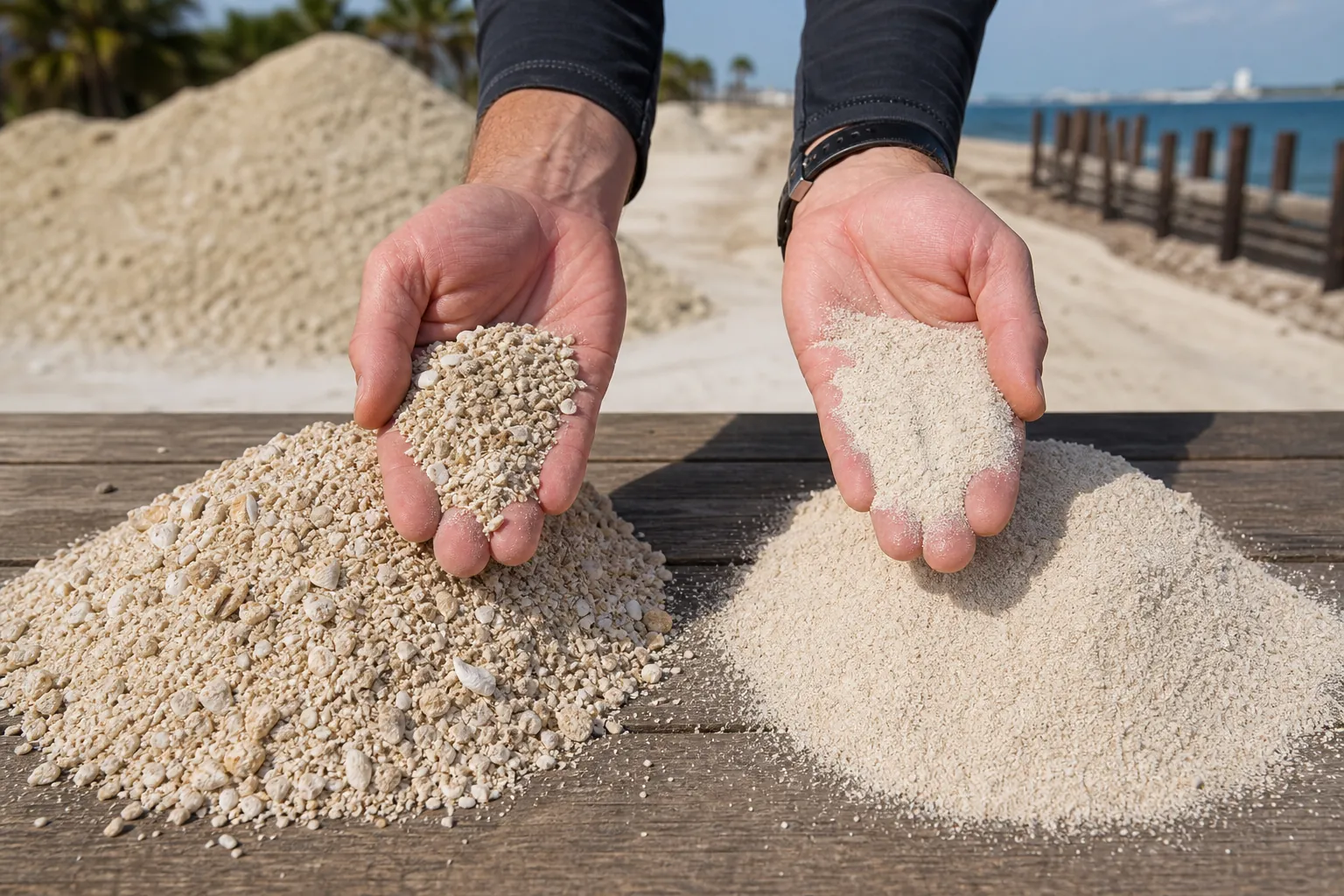
Coquina shell fines and dust are the smallest particles mixed into a load of crushed shell. They may not be the first thing you notice in a material photo, but they can influence how the shell spreads, settles, feels underfoot, and behaves after rain. For a Florida homeowner buying shell for a DIY project, understanding those particles helps set realistic expectations before delivery.
A shell blend with noticeable fines behaves differently from one dominated by larger, loosely separated fragments. Neither is automatically the better choice. The right material depends on your intended use, the ground beneath it, the finished appearance you want, and how much preparation you plan to do yourself.
Tropical Yards supplies coquina shell and tropical plants, with dump trailer delivery from St. Augustine to Daytona Beach. This guide focuses on evaluating shell fines, asking useful buying questions, and planning a manageable DIY project. For broader material information, start with the coquina shell page, then use the details below to assess the smaller particles in your order.
What Are Coquina Shell Fines And Dust?
Coquina shell material contains shell fragments in a range of sizes. During processing, handling, loading, and transport, smaller pieces and fine particles can collect among the larger fragments. Buyers often call this smaller fraction fines or dust, although those terms are not always used consistently by suppliers.
Fines generally refer to particles small enough to fit into the spaces between larger pieces. Dust usually describes the very fine portion that can become airborne when dry material is disturbed. Without a specified grading standard or test result, neither term tells you an exact particle size or percentage.
That distinction matters when comparing products. A description such as crushed shell, screened shell, or shell fines does not, by itself, establish how much fine material a particular load contains. Ask what the supplier means by the description and whether a current sample or close-up photo is available.
Coquina shell should also not be confused with a uniform manufactured powder. A shell blend can include visibly different fragments, textures, and colors. Natural variation is part of the material, and a small sample may not represent every part of a delivered load.
- Ask whether the material is predominantly shell fragments or a finer blend intended to settle more tightly.
- Ask whether screening or washing is part of the product’s processing, rather than assuming either treatment.
- Ask whether the current material differs noticeably from the photos shown online.
- Describe your intended use so the discussion addresses performance as well as appearance.
How Fines Affect The Finished Surface
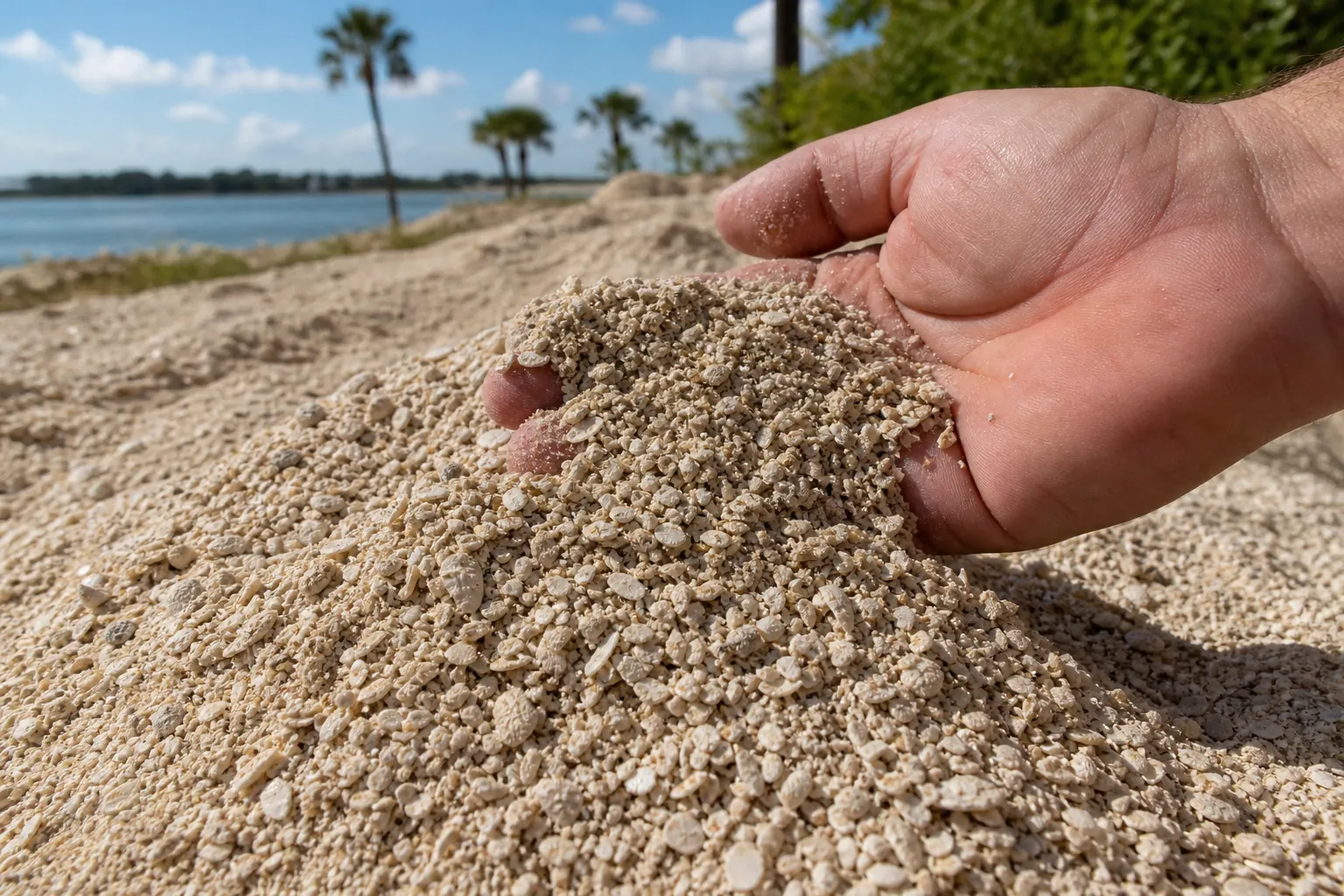
Fine particles can fill gaps between larger shell pieces. With suitable moisture, preparation, and compaction, some blends may settle into a firmer surface than a loose, coarse material. However, the presence of fines alone does not guarantee a stable path or a load-bearing surface.
Ground conditions remain important. Shell placed over soft, uneven, or poorly drained soil can move, rut, or settle unevenly regardless of its particle mix. A thin decorative layer also behaves differently from a deliberately prepared walking surface.
Dry fines may rise as dust during unloading, spreading, raking, or foot traffic. Once wet, those same particles may temporarily cling to shoes or tools. The amount of dust or tracking depends on the blend, weather, moisture level, and how the area is used.
Rain can move loose fines toward low spots or beyond an uncontained edge. Larger fragments may remain while smaller particles migrate. This is one reason to consider slope, runoff routes, and containment before choosing material based only on its color.
Do not assume that all shell surfaces drain equally well. A more open blend can have larger spaces between particles, while a tightly packed blend may transmit water differently. The underlying soil, surface slope, layer thickness, and preparation also influence where rainwater goes.
For a decorative border, visual texture may be your main concern. For a frequently used walkway, firmness, tracking, and comfort matter more. Match your buying questions to the specific job instead of searching for a single blend that is supposedly best for every application.
Choosing A Blend For Your DIY Project
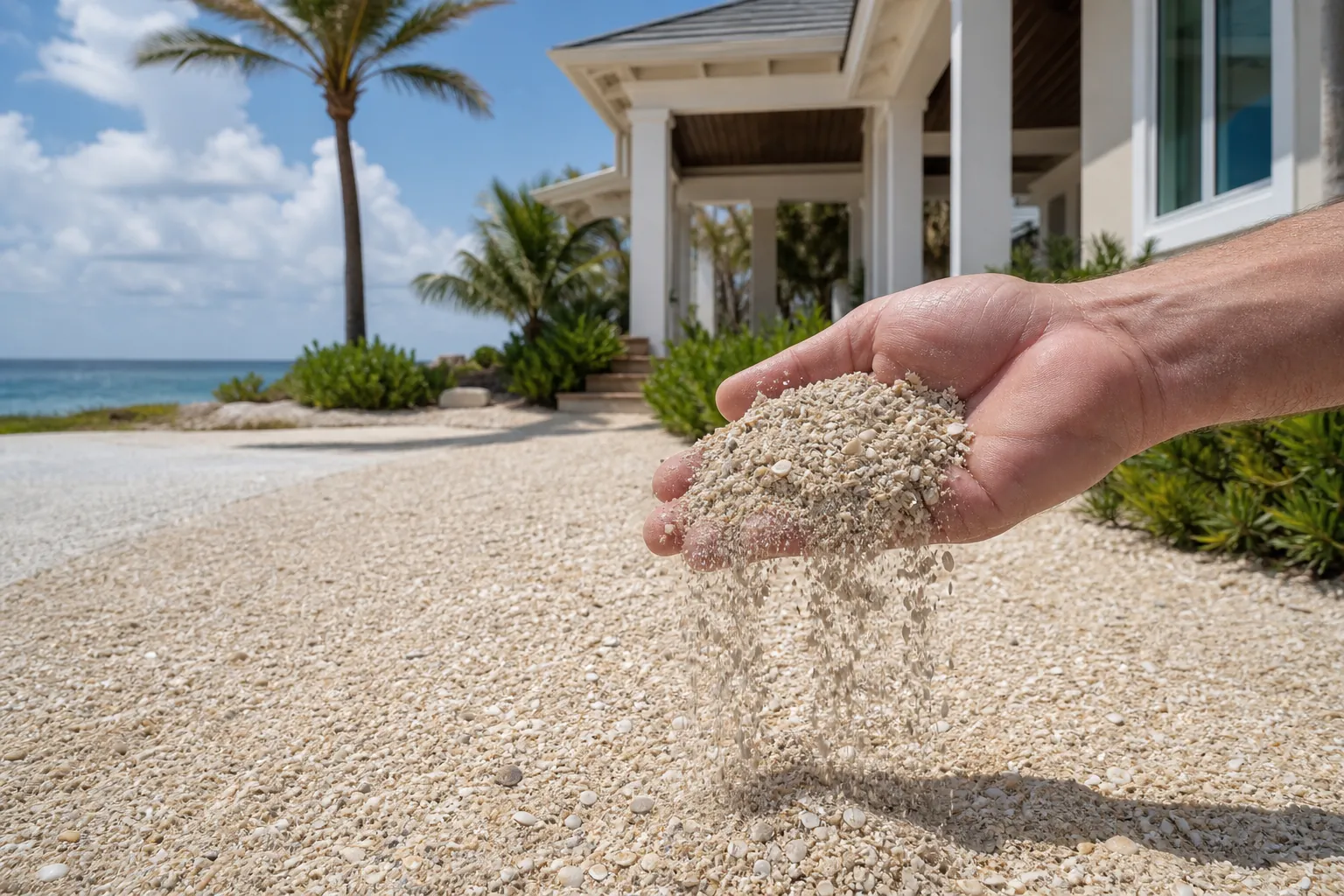
Start by defining what the shell needs to do. Is it covering exposed ground, creating a garden accent, or forming a walking route? Different goals call for different expectations, and some applications need more technical preparation than a simple decorative covering.
Decorative beds and borders
For decorative areas, examine the balance between visible shell pieces and fine material. A blend with fewer visible fines may emphasize individual fragments. A finer blend may look more continuous after settling, although appearance will still vary with moisture and handling.
Consider nearby surfaces, too. Fine particles that wash onto a patio or collect at a bed edge can change the appearance of the project. Plan a boundary that fits the location without blocking necessary drainage.
Garden paths
For a DIY path, ask how the available material behaves when compacted and whether it is appropriate for pedestrian use. Evaluate the slope, soil firmness, and likely amount of traffic before ordering.
Shell fragments can have sharp or irregular edges. Do not judge barefoot comfort from a photograph. Test a sample if comfort is important, and consider a smoother alternative where people will regularly walk without shoes or where wheeled mobility access is needed.
Areas near tropical plants
Shell is not interchangeable with every organic mulch. Shell material contains calcium carbonate and may influence soil chemistry over time, particularly in acidic conditions. The effect depends on the material, soil, and exposure, so it should not be treated as a predictable soil amendment.
Keep plant requirements in view when planning a shell-covered bed. Tropical Yards also sells palm trees, hibiscus, bougainvillea, ferns, and other tropical plants. Check the needs of your specific plant before choosing its surrounding ground cover, and use a soil test when pH compatibility is uncertain.
Questions To Ask Before Buying Coquina Shell
A productive ordering conversation starts with a clear project description. Tell the supplier where the material will go, whether people will walk on it, and whether you prefer a coarse appearance or a tighter-looking surface. Mention slopes, nearby drains, or sensitive planting areas.
Then clarify the product itself. Descriptions used by different sellers may not refer to identical materials. Comparing names alone can leave you ordering a texture you did not expect.
- Ask what sizes are visibly present in the current shell material and how much fine material is typically noticeable.
- Ask whether you can view a current sample or photo that shows texture at close range.
- Ask whether the shell is sold by weight, volume, or another clearly defined unit.
- Ask whether the product has a stated gradation or other specifications relevant to your intended use.
- Ask what information is needed to assess delivery access and unloading space.
- Ask how the quantity estimate should account for settling without assuming a universal allowance.
Also distinguish between a material recommendation and an engineered specification. A supplier can explain the product being sold, but vehicle-bearing areas, drainage problems, and accessibility requirements may need advice from a qualified professional.
If you are comparing shell with other ground covers, keep that comparison separate from evaluating fines. First decide whether shell fits your project. Then narrow down the texture and handling characteristics you want within the available shell choices.
Estimating Quantity Without Guessing At Depth
Measure the actual area rather than estimating from the overall yard size. Divide irregular spaces into rectangles, triangles, or other simple shapes, calculate each area, and add the results. Subtract spaces that will remain uncovered, such as stepping stones or planting openings.
Your intended layer depth must come from the application, not from a generic rule. A decorative covering and a prepared pedestrian surface may have different requirements. The underlying soil and any planned base layer also affect how you should approach the project.
For a volume estimate, multiply square footage by depth in feet. Divide cubic feet by 27 to convert to cubic yards. For example, covering 300 square feet at a planned depth of 2 inches gives about 50 cubic feet, or approximately 1.85 cubic yards, before any project-specific adjustment.
That example illustrates the calculation only. It does not establish that 2 inches is suitable for your project. Confirm the planned depth and discuss settling, surface irregularities, and measurement uncertainty before placing an order.
If the material is sold by weight, do not convert volume to weight using a density borrowed from an unrelated aggregate. Shell blends, moisture content, and particle sizes can change bulk density. Ask the supplier how its ordering unit relates to your measured project.
Write down your dimensions, target depth, and calculation. A clear worksheet makes it easier to check the order and reduces the chance of confusing inches with feet or square footage with volume.
Planning Dump Trailer Delivery In Florida
Tropical Yards offers dump trailer delivery of coquina shell and plants from St. Augustine to Daytona Beach. Delivery planning is separate from spreading the material: choose an unloading location and arrange your own tools and labor before the load arrives.
A dump trailer needs appropriate access and space to unload. A route that works for a passenger vehicle may not accommodate delivery equipment. Narrow gates, tight turns, soft ground, overhead branches, and utility lines all deserve attention.
Review the coquina shell delivery information and confirm the site details directly before scheduling. Do not assume the trailer can cross a lawn, back through a narrow opening, or place material precisely inside a garden bed.
- Provide clear information about the entrance, driveway, turns, and intended unloading area.
- Identify overhead obstacles and keep the proposed unloading location away from power lines.
- Choose a firm location that will not obstruct a sidewalk, street, drain, or necessary vehicle access.
- Ask whether a protective ground covering is practical for the unloading location and delivery method.
- Plan how you will move the shell from the pile to the project without repeatedly crossing delicate surfaces.
- Consider recent rain and tell the supplier if the access route has become soft or saturated.
Keep children, pets, and bystanders away from unloading operations. Once the trailer leaves, avoid climbing an unstable pile and move material in manageable amounts. A delivery location close to the project can reduce handling, but safe access takes priority.
Handling Fines And Dust During DIY Work
Check the weather before spreading shell. Wind can carry fine particles beyond the work area, while heavy rain can move them before the surface has settled. A calmer, workable period generally makes the task easier to manage.
A light mist may help reduce airborne dust during handling, but do not saturate the pile or create runoff. Follow any product-specific handling guidance and use water carefully near drains, sidewalks, and neighboring properties.
Wear gloves and sturdy footwear when working with shell fragments. Use eye protection when shoveling or raking material that could scatter. Avoid breathing airborne dust, and select respiratory protection appropriate to the material and task if dusty conditions cannot be avoided.
Prepare the ground before spreading. Identify buried irrigation components, utility routes, and drainage features before digging or compacting. Resolve soft spots and obvious grading issues rather than covering them and expecting shell fines to provide a structural repair.
Spread manageable sections so you can check depth as you go. If compaction is appropriate for your chosen application, follow relevant material and equipment guidance. More compaction is not automatically better, especially near plant roots or underground components.
Keep shell clear of plant crowns and avoid piling it against trunks or stems. Maintain access to irrigation emitters and watch how water reaches the soil after the ground cover is in place. Plant care should be based on the plant and actual soil moisture, not just the surface appearance.
Checking The Surface After Rain And Use
Observe the project after ordinary use and the first few rain events. Look for puddles, exposed ground, displaced fragments, or fine sediment collecting beyond the edges. These clues help distinguish normal settling from a drainage or preparation issue.
If shell consistently moves downhill, adding more material may not solve the cause. Reconsider slope, runoff concentration, and containment. If the area remains soft, the underlying ground may need attention rather than another thin layer of shell.
Where fine material reaches paving, collect it without blowing dust into the air or washing sediment into storm drains. Dispose of collected material appropriately or return suitable material to a contained project area where it will not immediately wash out again.
For planted beds, periodically check soil moisture beneath the shell and monitor plant health. Pale foliage or poor growth can have several causes. Use soil testing and plant-specific guidance instead of assuming the shell alone explains a change.
Order With Clear Expectations
The most useful way to evaluate coquina shell fines and dust is to connect particle texture with your actual project. Look at the available material, confirm how it is sold, measure your space, and plan for safe unloading and DIY handling.
Tropical Yards supplies materials rather than landscaping labor. You can contact the team about coquina shell sales, tropical plant sales, and dump trailer delivery from St. Augustine to Daytona Beach, while arranging preparation and spreading yourself or separately.
To discuss current coquina shell availability, texture, quantity, and delivery access, call 772-267-1611. Bring your measurements and a short description of the project so the conversation can focus on the material you need.
Call 772-267-1611 to talk through next steps.