How to choose coquina shell for dog yards in Florida
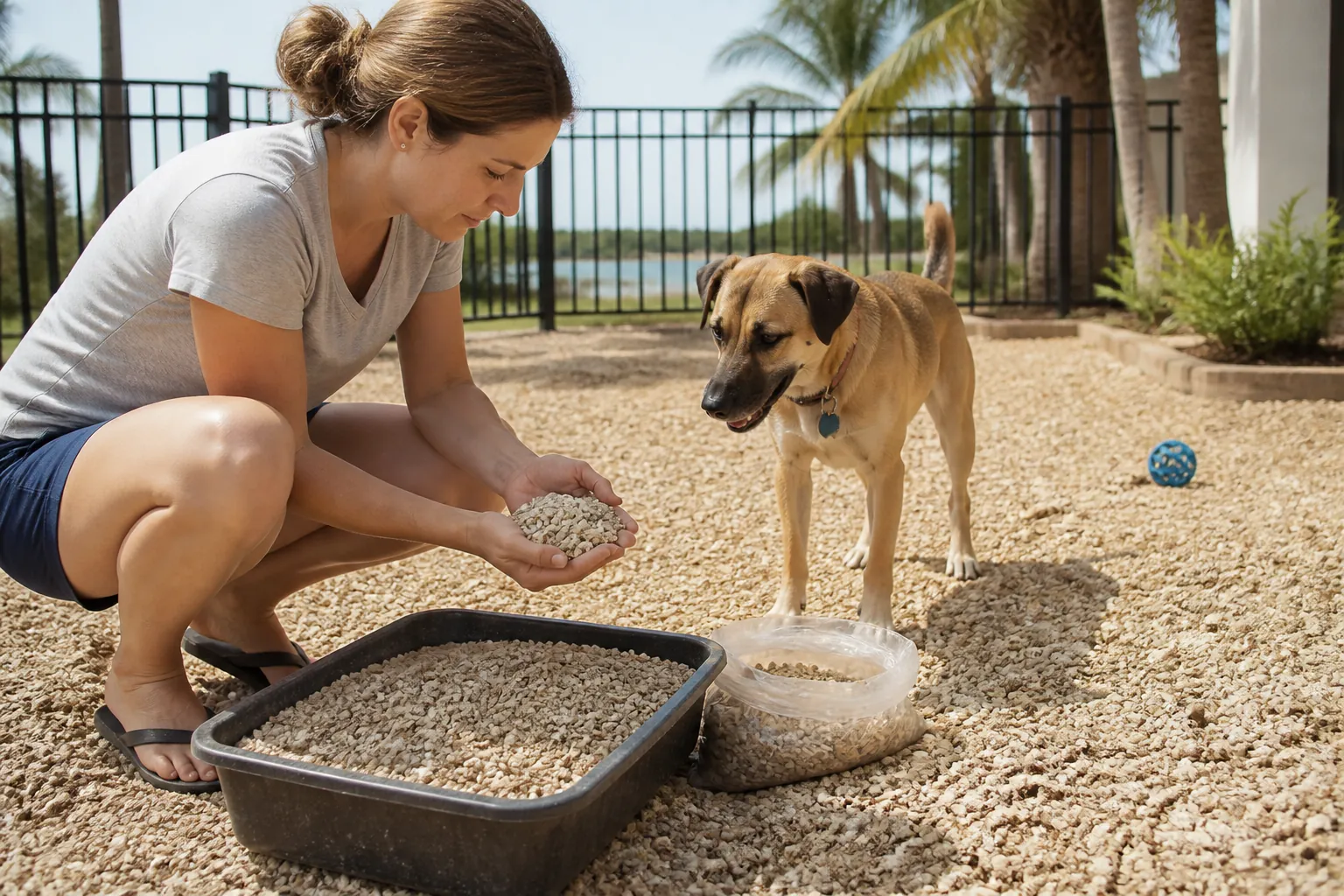
Coquina shell can be worth considering when a Florida dog yard has worn grass, muddy traffic lanes, or a narrow route between the back door and gate. However, a material that looks attractive in a landscape bed is not automatically comfortable for paws. Shell size, fragment shape, drainage, and your dog's habits all matter.
The best approach to choosing coquina shell for dog yards is to evaluate the actual material before covering a large area. Think about where your dog walks, runs, rests, and digs. A shell-covered access path may serve a different purpose than a full-time play surface, and neither should be selected on appearance alone.
Tropical Yards supplies coquina shell and tropical plants, with dump trailer delivery from St. Augustine to Daytona Beach. This guide focuses on choosing, ordering, and using the material yourself. Tropical Yards does not provide yard design, installation, maintenance, or cleanup services.
Is Coquina Shell A Good Match For Your Dog Yard?
Coquina shell is a shell-based landscape material with natural variation in color, texture, and particle shape. Depending on the supplied material, a load may contain a mixture of shell fragments and smaller particles. Do not assume that every product described as coquina shell has the same texture or behaves the same way underfoot.
Its suitability for a dog yard depends on the dog as much as the yard. A dog that calmly walks along a side path places different demands on a surface than one that accelerates, turns sharply, or repeatedly digs along a fence. A puppy that mouths loose material presents another concern entirely.
Consider coquina as one possible surface within a mixed-use yard rather than an automatic replacement for every patch of grass. Keeping a comfortable resting area and a separate exercise surface can make the yard more practical. Evaluate your existing areas before deciding how much shell to buy.
- A lightly used access route may be a more manageable trial area than the dog's main running space.
- A dog with sensitive paws, mobility limitations, or a history of eating nonfood objects needs extra consideration before loose shell is introduced.
- A heavily shaded, persistently wet area needs a drainage assessment rather than simply a new surface covering.
- A fence line used for digging may require a containment solution that loose shell cannot provide.
For general material information, visit the coquina shell page. Use this dog-yard guide to evaluate the more specific questions of paw comfort, pet habits, and daily use.
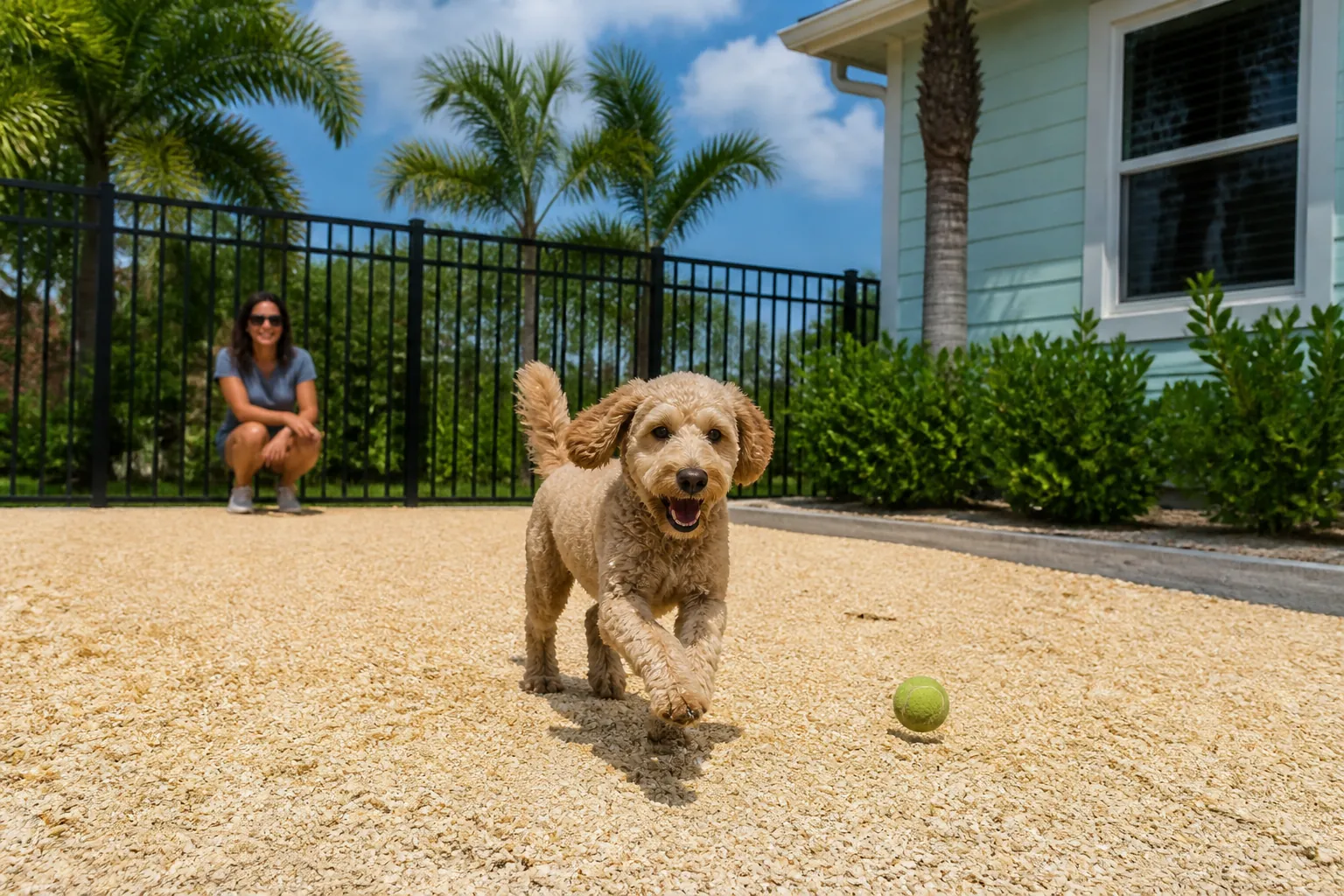
Check Paw Comfort Before Ordering A Full Load
Sharp edges and coarse fragments can be uncomfortable for some dogs. Smaller particles are not automatically better, either, because loose fines can cling to damp paws or move into unwanted areas. Ask what the current material looks like and whether you can inspect a representative sample before placing a larger order.
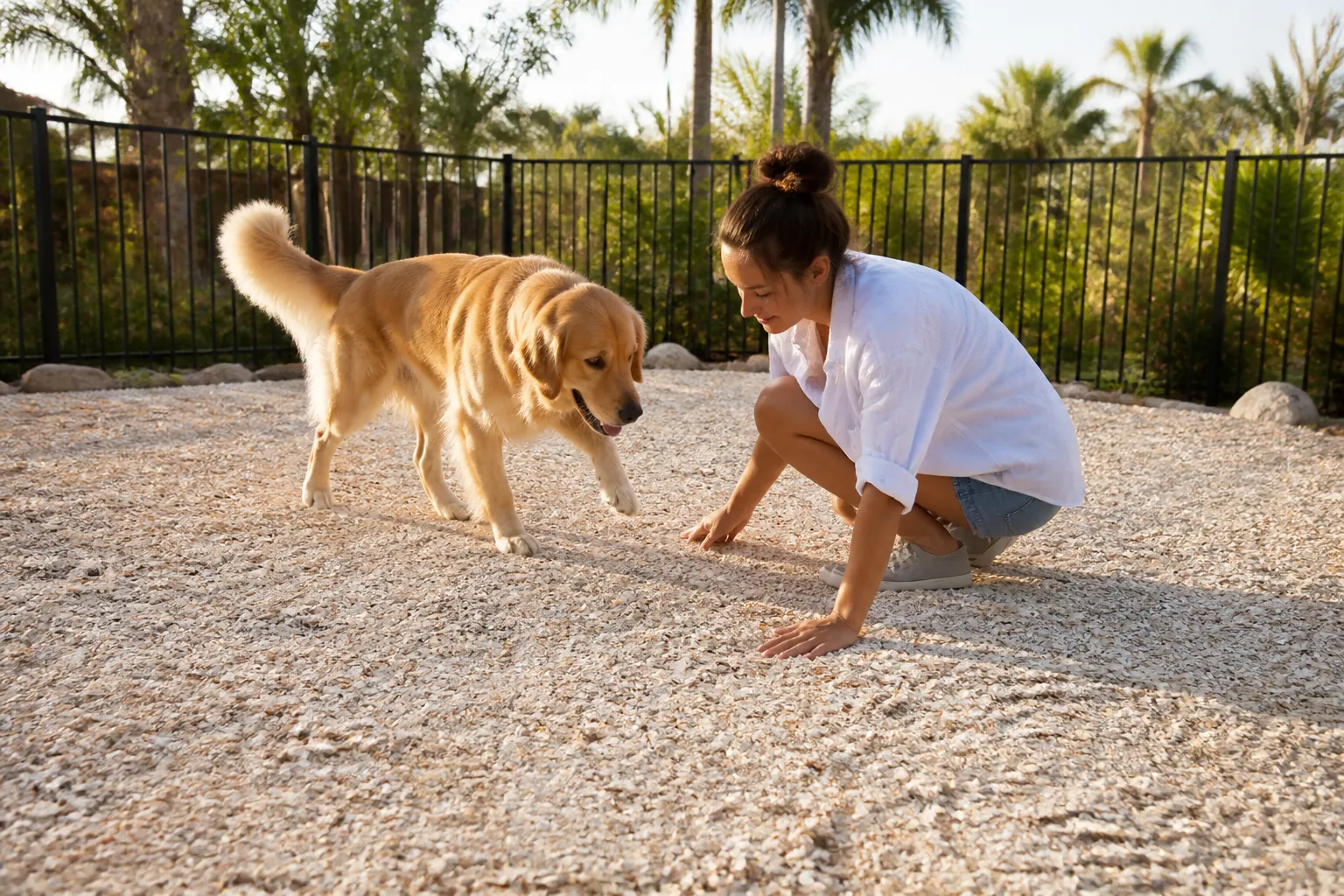
Look beyond the overall color. Check the largest pieces, the range of sizes, and the proportion of fine material. Handle a sample carefully and inspect it for pointed fragments. A photograph can help you understand appearance, but it cannot establish how the surface will feel to your particular dog.
If practical, create a small, supervised test area before committing to a whole yard. Let your dog approach it voluntarily. Watch for hesitation, altered gait, paw licking, or attempts to avoid the surface. Do not force a dog to walk over material that appears uncomfortable.
Inspect paws after the trial, including the spaces between toes. Stop using the test area if you notice irritation or an injury. A veterinarian can advise you about a dog with existing paw problems, orthopedic concerns, or a tendency to swallow loose landscaping materials.
No shell surface should be described as universally pet-safe or paw-friendly. A successful trial is useful information, but it does not remove the need for supervision, especially during the transition to a new yard surface.
Plan Around Florida Rain, Heat, And Existing Soil
Florida yards can combine intense rainfall, sandy soil, compacted traffic areas, and low spots within a surprisingly small space. Before ordering shell, observe the intended area after rain. Note where water collects, where it flows, and how long the ground stays wet.
A shell layer does not fix an underlying drainage problem. Water movement depends on the soil beneath it, existing grades, compaction, and nearby hard surfaces. Fine particles within a shell mix may also affect how the finished surface behaves. Avoid assuming that all shell-covered areas will drain freely.
Do not use shell to conceal a soggy depression without understanding why it stays wet. Adding material can shift runoff toward a door, neighboring property, or another low spot. Significant grading or drainage concerns deserve advice from a qualified local professional before you buy material.
Heat deserves a separate check. Any exposed yard surface can become uncomfortable in direct Florida sun. Test the surface during the hottest conditions when your dog would normally use it, and provide access to shade, drinking water, and a cooler resting area.
- Observe the yard during rainfall so you can distinguish a temporary puddle from a recurring drainage problem.
- Keep the planned finished surface below thresholds and clear of drainage outlets.
- Preserve existing runoff routes unless a qualified professional recommends a different approach.
- Evaluate sunny and shaded portions separately because they may function differently throughout the day.
These checks help determine whether shell belongs in the proposed location at all. They also reduce the chance of buying more material when the real issue lies beneath the surface.
Decide Where Shell Belongs And Where It Does Not
Map the yard by activity rather than treating it as one uniform space. Identify the route from the door, the preferred bathroom spot, the running area, the resting area, and any planting beds. Watch your dog for several days if those patterns are not obvious.
Coquina shell may be easier to evaluate in a defined walking corridor or limited utility area. A high-speed play zone requires closer attention to traction, displacement, and paw comfort. Areas used for lying down may benefit from a different surface that your dog already tolerates well.
Keep loose shell away from steps and smooth walkways where scattered pieces could create a slipping hazard. Plan edges that contain the material without creating a sharp obstacle. Any edging should be secure, visible, and free of exposed points that could injure paws.
Shell also does not prevent a determined dog from digging or escaping. Check fences and gate gaps separately. Do not rely on a decorative surface as a substitute for secure containment.
If your dog eats stones, shells, mulch, or other loose material, discuss that behavior with a veterinarian before proceeding. Supervised access alone may not make a loose-material yard appropriate for that dog.
Measure The Area And Estimate Your Order
Once you have chosen a suitable location, measure the actual area to be covered. For a rectangular section, multiply length by width to find square footage. Break an irregular space into smaller rectangles or triangles, calculate each area, and add them together.
Subtract planting beds, stepping stones, and other spaces that will remain uncovered. An estimate based on the entire fenced yard can substantially overstate the amount needed when shell will only cover a path or selected zone.
Choose a planned depth based on the supplied material, the existing surface, and the intended use. There is no universal dog-yard depth that works for every shell product. Ask the supplier about the material and how it is sold before translating your measurements into an order.
To estimate loose volume in cubic yards, multiply square footage by depth in feet, then divide by 27. Convert inches to feet by dividing by 12. For example, a 240-square-foot area at a hypothetical depth of 2 inches calculates to about 1.48 cubic yards. That example illustrates the math, not a recommended installation depth.
If the supplier sells by weight, do not convert volume to weight using a generic online figure. Moisture and material composition can change that relationship. Provide your area and proposed depth, then ask how those measurements relate to the available ordering unit.
- Write down the square footage of each separate area instead of relying on a visual estimate.
- Confirm whether the order is quoted by volume, weight, or another unit.
- Ask how variable particle sizes may affect spreading and the finished surface.
- Discuss whether a modest allowance is appropriate for uneven ground without automatically overordering.
Prepare For Dump Trailer Delivery
Tropical Yards offers dump trailer delivery of coquina shell and plants from St. Augustine to Daytona Beach. Before scheduling, confirm your address is within the delivery area and discuss the approach, unloading location, and any restrictions at your property.
A trailer needs a suitable place to access and unload. A narrow backyard gate does not necessarily allow delivery into the yard itself. Plan a reachable drop location and assume you may need to move the material from that location to the intended area yourself.
Tell the supplier about tight turns, overhead branches, wires, soft shoulders, steep slopes, parked vehicles, and shared driveways. Do not guess about clearance requirements. Ask what access the delivery vehicle needs and whether your proposed unloading location is suitable.
Keep dogs indoors or securely separated during delivery. Leave the approach clear, protect access to gates and walkways, and make sure the pile will not block a garage, drainage inlet, or necessary exit. If unloading on a driveway, discuss surface protection and cleanup expectations beforehand.
Dump trailer delivery is material transportation, not spreading or installation. Have your own wheelbarrow, shovel, rake, gloves, and any helpers ready for the work you plan to do. Account for how far each load must travel from the pile.
Use A Careful DIY Trial Before Expanding
Start with the smallest useful area that reflects the intended use. A trial on a quiet corner will not tell you much about performance on a busy route unless the underlying conditions and activity are similar.
Prepare the chosen area yourself by addressing unwanted vegetation, debris, and obvious surface irregularities. Avoid creating a finished level that traps water against structures. If preparation reveals persistent wet soil or an unstable base, pause and reconsider rather than covering the problem.
Landscape fabric is not an automatic requirement. It can help separate materials in some situations, but exposed edges or torn sections can catch claws and become a chewing target. If you use it, follow the product instructions, secure it properly, and check that it stays completely covered.
Spread the shell evenly and remove conspicuously sharp or unsuitable fragments. Do not assume compaction will solve roughness or movement. Ask about the material's characteristics before choosing equipment or a compaction method.
Introduce your dog gradually under supervision. Recheck the surface after use and rainfall. Look for displaced shell, exposed fabric, scattered pieces on walking surfaces, and any change in your dog's willingness to use the area.
Expand only if the trial works for both your dog and the site. If it does not, a limited trial is easier to revise than a full-yard application.
Keep The Dog Area Clean And Monitor Wear
Coquina shell does not eliminate the need to pick up pet waste. Remove solid waste promptly, and watch for areas where repeated use creates odor or leaves material that is difficult to clean. Loose shell can complicate waste pickup compared with a smooth, washable surface.
Urine management depends on drainage and how concentrated use becomes. Do not assume rain will keep a frequently used bathroom area clean. If odor persists, reassess the location, drainage, and surface rather than repeatedly covering it with fresh shell.
Choose any cleaning product with care. Follow its label, confirm it is appropriate for the intended outdoor use, and keep pets away for the stated period. Avoid combining cleaners or applying chemicals simply because they are marketed for general yard use.
- Check paws regularly for irritation, lodged fragments, or excessive licking.
- Return displaced shell to its intended area before it spreads onto steps or walkways.
- Inspect edging and fabric for exposed sections that could catch claws.
- Reevaluate comfort as your dog ages or develops new mobility needs.
If replacement or removal becomes necessary, plan that work yourself or arrange separate help. Tropical Yards supplies materials and delivery, not ongoing yard care.
Choose Nearby Plants With Your Dog In Mind
Tropical Yards also sells palm trees, hibiscus, bougainvillea, ferns, and other tropical plants. Plant selection near a dog yard should consider the exact species, mature size, growing conditions, and the dog's access to foliage or fallen material.
Common names are not enough to establish pet safety. Verify the botanical identity of a proposed plant and check it against a reliable veterinary plant-toxicity resource. Do not assume every palm or fern is suitable where a dog can chew it.
Physical features matter too. Bougainvillea has thorns, so it deserves careful placement away from narrow dog routes and active play areas. Keep vulnerable new plants protected while they establish, and plant them yourself according to their specific sunlight, soil, and watering needs.
Keep shell away from plant stems and trunks, and avoid covering root flares. Separate planting beds from dog traffic where practical so watering, plant care, and the shell surface do not interfere with one another.
Order With A Clear Plan
Before buying coquina shell for dog yards, confirm that the actual material suits your dog's paws and habits, that the chosen area drains appropriately, and that delivery access is workable. Have measurements ready and identify who will move and spread the shell after unloading.
Call Tropical Yards at 772-267-1611 to ask about coquina shell sales, tropical plant availability, and dump trailer delivery from St. Augustine to Daytona Beach. Explain that your project involves a dog yard so you can discuss the material before ordering.
A measured, small-scale start gives you useful information without committing the entire yard. Choose the surface around your dog's comfort and your site's conditions, then expand only where it proves practical.
Call 772-267-1611 to talk through next steps.