Choosing coquina shell for garden beds in Flagler Beach, FL
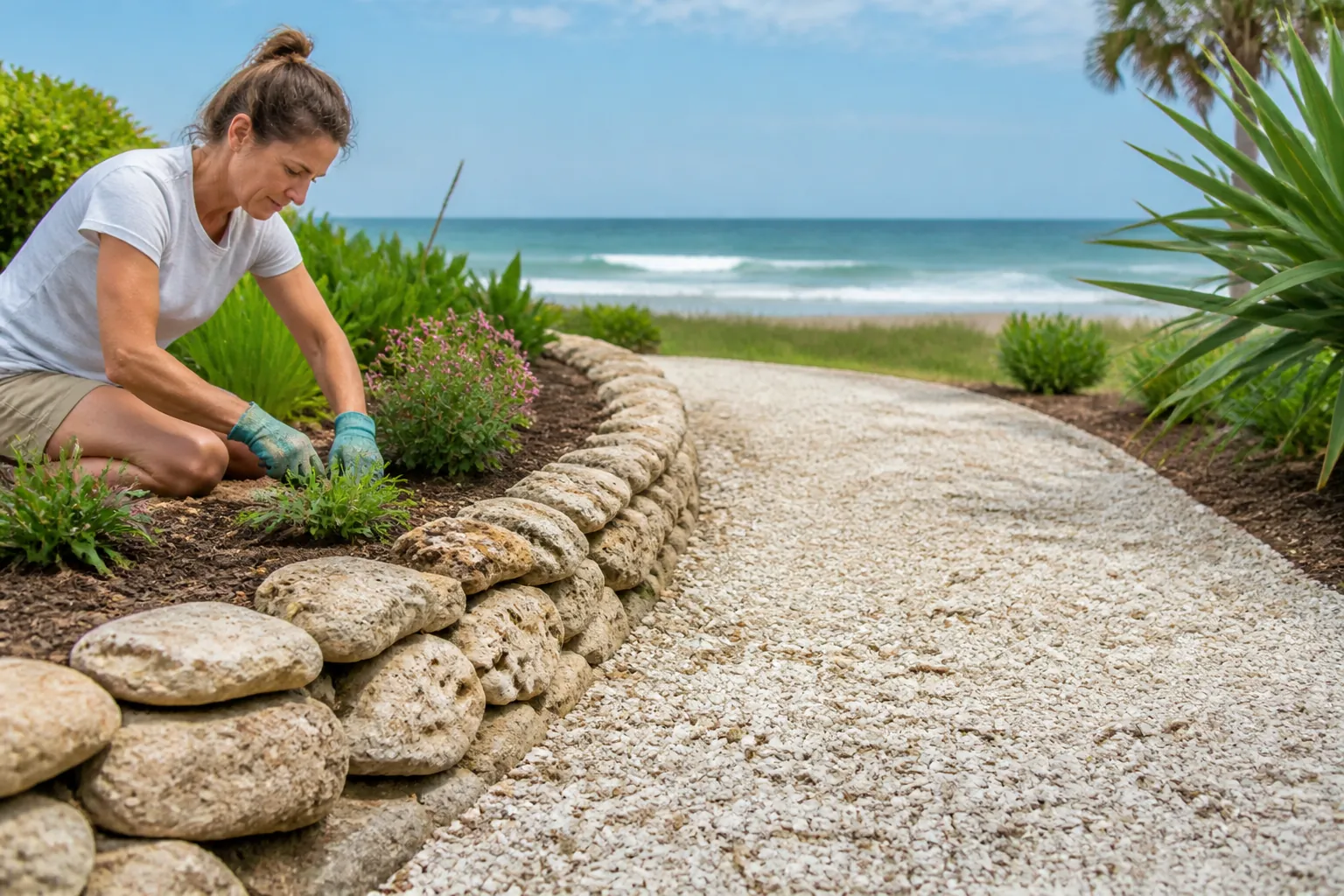
Coquina shell can give a garden bed a coastal appearance, but a successful project starts with more than choosing a color. You need to consider the plants, soil, drainage, shell size, bed edges, and where the delivery can be unloaded. Those decisions affect how much material to buy and how easily you can spread it yourself.
For homeowners considering coquina shell for garden beds in Flagler Beach, FL, this guide focuses on the buying and DIY decisions that matter most. Tropical Yards supplies coquina shell and tropical plants, with dump trailer delivery from St. Augustine to Daytona Beach. Bed preparation, planting, spreading, and ongoing care remain the responsibility of the buyer or a separately hired contractor.
Decide Whether Shell Fits Your Garden Bed
Coquina shell is a shell-based ground-cover material rather than a soil amendment or fertilizer. Its appearance can complement a Florida garden, especially where a lighter surface suits the house, edging, and nearby hardscape. However, visual appeal should be considered alongside the needs of your plants.
Unlike organic mulch, shell does not break down into the organic matter that supports many garden soils. It can cover exposed soil, but it does not replace compost, appropriate fertilizer, or a workable root zone. If your main goal is improving poor soil, address that separately before adding a decorative surface.
Shell also contains calcium carbonate, which can influence soil chemistry under some conditions. The effect depends on the material, soil, moisture, and time. If you grow plants that prefer acidic conditions, obtain a soil test and consider whether a shell-covered bed is appropriate. Do not assume that every tropical plant prefers the same soil pH.
- Choose shell when you want a durable mineral surface and your plants are compatible with the bed conditions.
- Consider organic mulch where adding organic matter or accommodating frequent replanting is a higher priority.
- Keep a separate planting area for plants with substantially different soil or moisture requirements.
- Resolve standing water, compacted soil, and unhealthy plants before covering the bed.
A simple way to evaluate the choice is to identify the purpose of each bed. A permanent planting around established specimens has different needs from a bed you frequently dig into for seasonal flowers.
Inspect The Material Before Choosing A Quantity
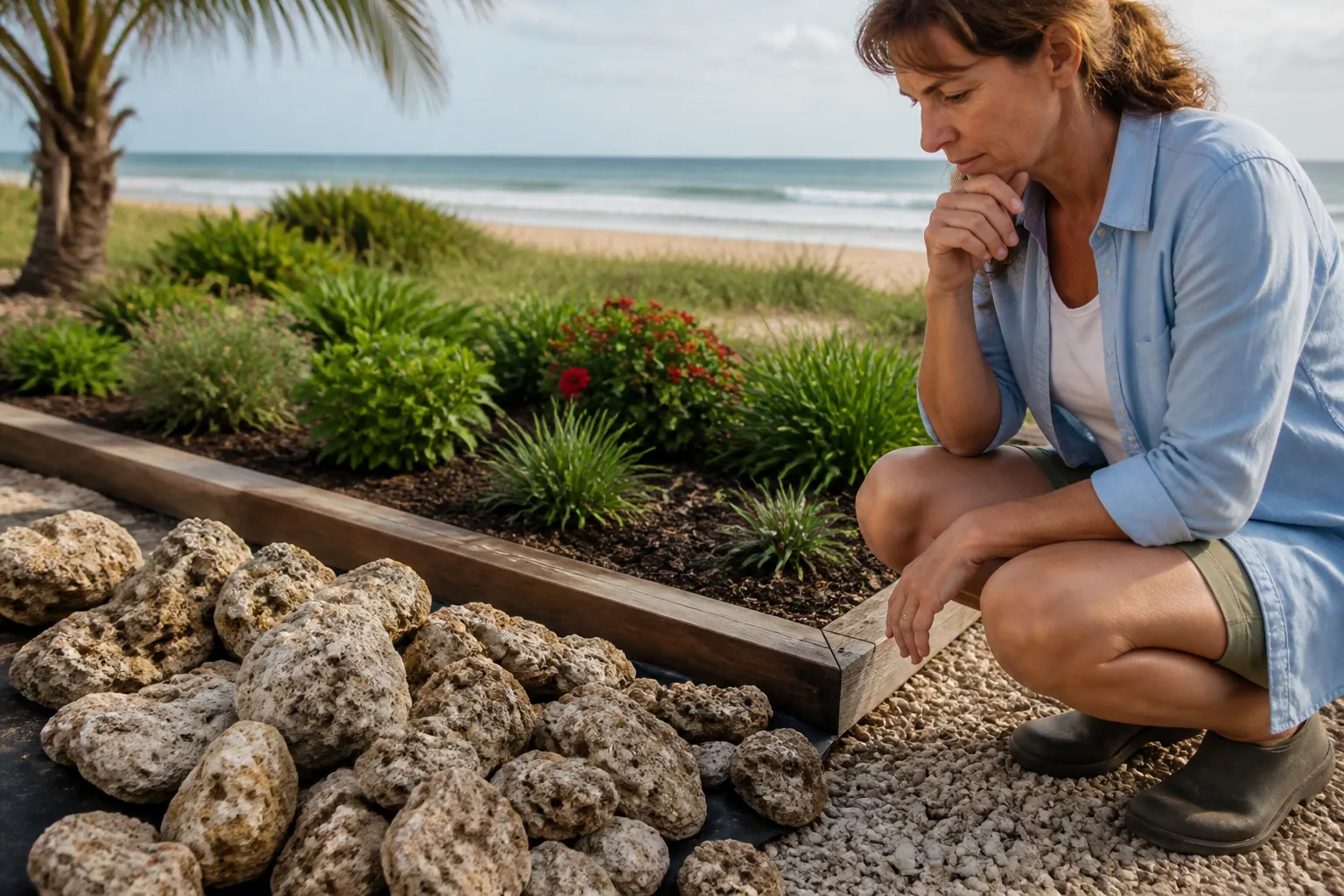
The name coquina shell does not describe one perfectly uniform product. Depending on the available material, a load may contain different shell sizes, broken pieces, and finer particles. Ask Tropical Yards about the current material rather than relying entirely on a photograph from another project.
Particle size influences appearance, spreading, and how the surface behaves. Larger pieces may create a more textured finish, while a mixture containing fines may settle differently after rain. Ask whether the available material is screened and what range of sizes you should expect. These are product questions, not assumptions to make from the name alone.
Color can also vary. Wet shell may look different from dry shell, and natural material may include subtle variations throughout the load. If matching an existing bed matters, explain that before ordering and ask whether you can view the available product or a current representative image.
- Ask what shell sizes and fine particles are present in the current supply.
- Ask whether the material is suitable for the garden-bed finish you have in mind.
- Explain whether you are starting a new bed or matching shell already on your property.
- Confirm the unit used for ordering so your measurements can be converted correctly.
For general product information beyond this garden-bed guide, explore the coquina shell supply page. Keep your buying decision focused on the actual material available and the conditions where you intend to use it.
Check Drainage And Plant Compatibility First
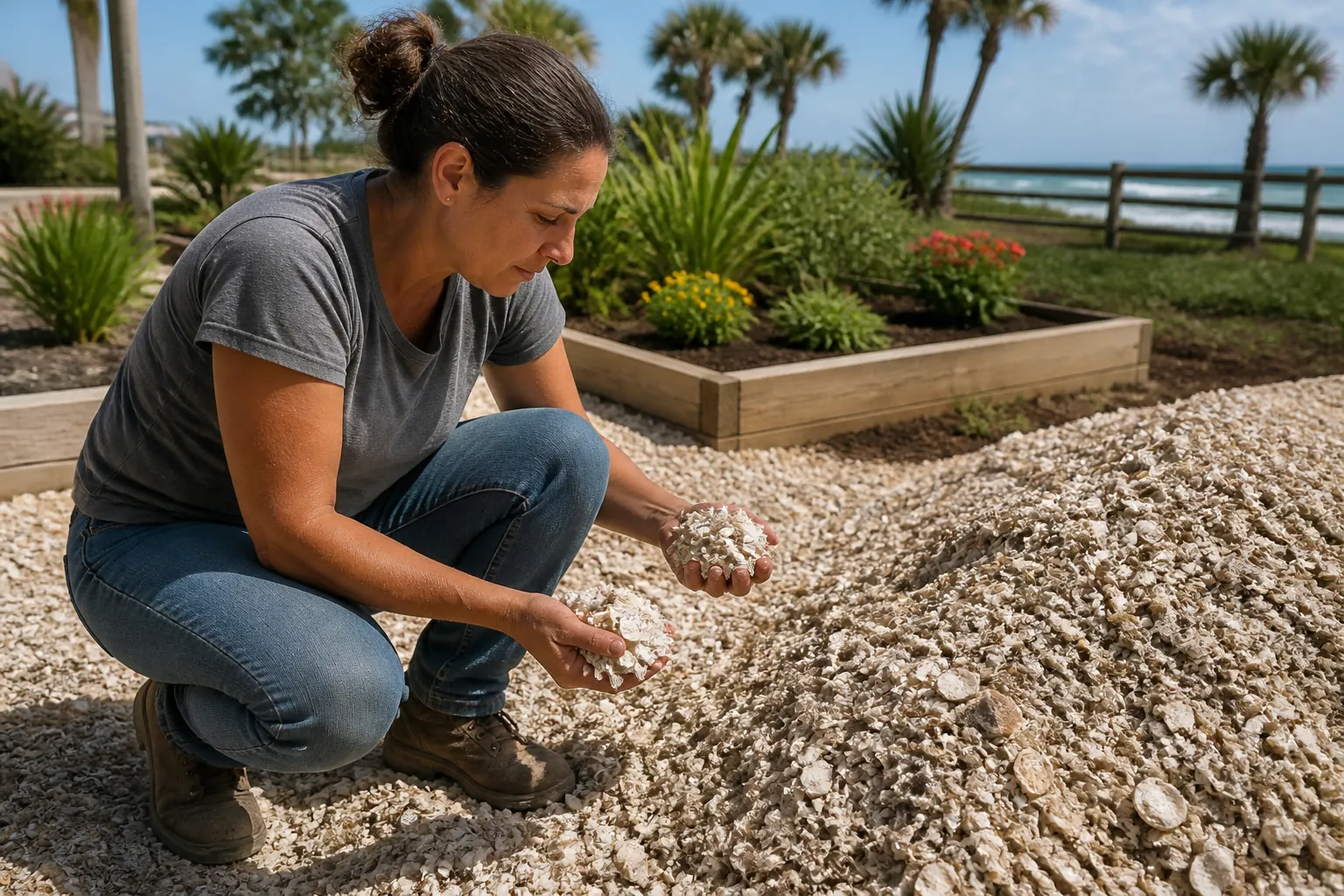
Shell does not correct a drainage problem simply because water can move between some of its pieces. Drainage also depends on the soil beneath it, the slope of the property, compaction, and where runoff can go. A decorative layer over a poorly draining bed can leave the original problem unresolved.
Before ordering, observe the bed after rainfall or irrigation. Look for puddles, runoff channels, erosion, and areas that stay wet longer than nearby soil. Also check whether roof runoff discharges directly into the planting area. Concentrated water can move loose material and expose roots.
In Flagler Beach, coastal exposure is another consideration. A bed protected by a building may experience different wind and salt conditions from one facing an open exposure. Choose plants for the actual site rather than assuming a tropical appearance means tolerance of salt spray, wet roots, or intense afternoon sun.
Tropical Yards sells palm trees, hibiscus, bougainvillea, ferns, and other tropical plants. When comparing plants, ask about the particular species or variety, expected mature size, and light requirements. These plant groups contain different options, so broad labels alone are not enough to determine suitability.
- Match each plant to the sunlight the bed receives throughout the day.
- Check that irrigation can reach the root zone without keeping trunks and crowns constantly wet.
- Allow enough room for mature growth instead of choosing spacing only from the current pot size.
- Use a soil test when pH or nutrient conditions could affect your plant selection.
If drainage involves the house foundation, major grading, or persistent flooding, seek appropriate professional advice before covering the area. Tropical Yards supplies material and plants; it does not perform drainage work or landscape design.
Measure The Bed And Estimate Your Shell Needs
Accurate measurements help prevent both excess material and an unfinished bed. Measure the actual area you intend to cover, excluding paving, large objects, and any sections that will remain uncovered. Divide an irregular bed into simpler rectangles, triangles, or circles and add their areas.
For a rectangular section, multiply length by width to find square feet. For a triangular section, multiply the base by the perpendicular height and divide by two. For a circle, multiply the radius by itself and then by approximately 3.14. Keep all measurements in the same unit.
Choose a proposed finished depth only after considering the available shell size, soil surface, and plant clearances. There is no single depth that is right for every material and bed. Too little coverage may leave exposed patches, while unnecessary thickness increases weight, material needs, and the difficulty of future planting.
To estimate cubic yards, multiply the bed area in square feet by the proposed depth in inches, then divide by 324. For example, a 180-square-foot bed covered at an illustrative depth of two inches requires about 1.11 cubic yards before any adjustment for site conditions. That example explains the calculation; it is not a universal depth recommendation.
- Measure each section separately and keep a sketch with the dimensions.
- Subtract areas that will not receive shell before calculating volume.
- Tell the supplier your intended depth and ask whether it suits the available material.
- Discuss uneven ground and settling before deciding whether to adjust your estimate.
If shell is sold by weight rather than volume, ask Tropical Yards to help relate your estimate to the ordering unit. Do not use a generic online density figure as an exact conversion for a variable natural material.
Prepare Edges, Soil, And Planting Areas Yourself
Complete the messy work before delivery whenever possible. Remove existing weeds yourself, address unwanted roots appropriately, and establish the bed boundary. Shell may reduce exposed soil, but it will not eliminate established weeds or stop seeds from germinating in debris that later collects on the surface.
Edging helps define the bed and limit movement into grass or walkways. Choose an edge that suits the site and provides enough containment for the intended finished layer. Make sure it does not create a barrier that traps runoff where water previously drained safely.
Decide whether landscape fabric belongs in your project rather than installing it automatically. Fabric can separate mineral material from soil, but it also complicates future digging, may become exposed, and does not prevent all weeds. Organic debris can accumulate above it and support new growth.
If you use fabric, follow its instructions, secure it properly, and allow generous openings around plants. Do not wrap it tightly around trunks or crowns. If you skip fabric, understand that shell and soil may mix over time, especially where you frequently move plants.
Plant new purchases before spreading the final shell layer so you can work with the soil directly. Follow guidance appropriate to each plant, maintain the proper planting depth, and water the root zone. Avoid burying the top of the root ball beneath shell or piling material against the stem.
Check irrigation before covering the bed. Repair leaks yourself or arrange separate help, and note the location of emitters, valves, and other components. Keep them accessible so routine inspection does not require searching through the entire finished surface.
Plan Dump Trailer Delivery Before Ordering
A delivery plan should explain where the truck and trailer can approach, where the trailer can unload, and how you will move shell from the drop location to the bed. Tropical Yards offers dump trailer delivery of plants and coquina shell from St. Augustine to Daytona Beach, including Flagler Beach.
Do not assume that an open-looking space is suitable for unloading. Gates, tight turns, low branches, overhead wires, soft ground, and slopes can affect access. A dump trailer also needs appropriate overhead clearance when raised. Describe these conditions when discussing delivery.
Identify a stable drop area that does not block traffic, garage access, drainage paths, or shared property. Ask what access and unloading conditions are required before reserving a location. A proposed tarp or protective sheet should also be discussed, since it must not interfere with safe unloading.
- Provide the delivery address and describe the route to your proposed unloading area.
- Tell Tropical Yards about narrow entrances, overhead obstacles, slopes, and surfaces that may be soft.
- Confirm whether the proposed location is suitable before preparing it for the load.
- Arrange your own wheelbarrow, tools, and help for moving material after unloading.
- Ask how plant delivery will be handled if your order includes tropical plants.
Keep children, pets, and bystanders away during unloading. Delivery supplies the material to an agreed suitable location; it does not include bed preparation, plant installation, shell spreading, or yard cleanup.
Spread Shell Without Crowding Your Plants
Once the material arrives, move manageable amounts into the prepared bed rather than creating one large pile against existing plants. Use appropriate gloves, sturdy footwear, and tools suited to the material. Shell fragments can have sharp edges, so avoid handling them casually with bare hands.
Work from the farthest part of the bed toward your access point. This reduces unnecessary walking across the finished surface. Spread a thin initial layer, check coverage, and then build toward your planned depth instead of guessing from the appearance of a pile.
Keep shell away from trunks, stems, crowns, and exposed root flares. Plants should retain visible, accessible space around their bases. Check these clearances again after watering or rain, when loose material may shift.
Near sidewalks, doorways, and lawns, inspect whether shell can spill over the edge or interfere with mowing. Adjust the boundary or surface level yourself before considering the project complete. Do not raise the finished bed against siding or cover drainage openings.
If the material is dusty, avoid dry handling in windy conditions and follow any supplier guidance for safe handling. After spreading, inspect irrigation performance and confirm that water reaches the soil rather than judging moisture solely by the appearance of the shell surface.
Care For A Shell-Covered Bed Over Time
A shell-covered garden still needs attention. Windblown seeds, fallen leaves, and other debris can collect between pieces. Remove unwanted seedlings before they establish deep roots, and handle accumulated organic debris before it forms a layer that supports more weeds.
Monitor the plants rather than treating the surface material as a guide to watering. The shell may appear dry while the soil remains moist, or the upper surface may look wet while a new root ball needs attention. Check moisture in the root zone using a method appropriate for the plant and soil.
Inspect the bed after heavy rain for displaced material and exposed fabric, if used. Before ordering a top-up, determine whether the shell actually needs replenishment or simply needs redistribution. Measure genuinely thin areas instead of automatically adding another layer across the whole bed.
For a straightforward supply conversation, have your bed measurements, plant list, intended depth, and delivery access details ready. Call Tropical Yards at 772-267-1611 to discuss coquina shell sales, available tropical plants, and dump trailer delivery to Flagler Beach. Thoughtful ordering gives your DIY project a practical starting point without confusing material delivery with landscaping labor.
Call 772-267-1611 to talk through next steps.