A practical guide to coquina shell for Florida garden beds
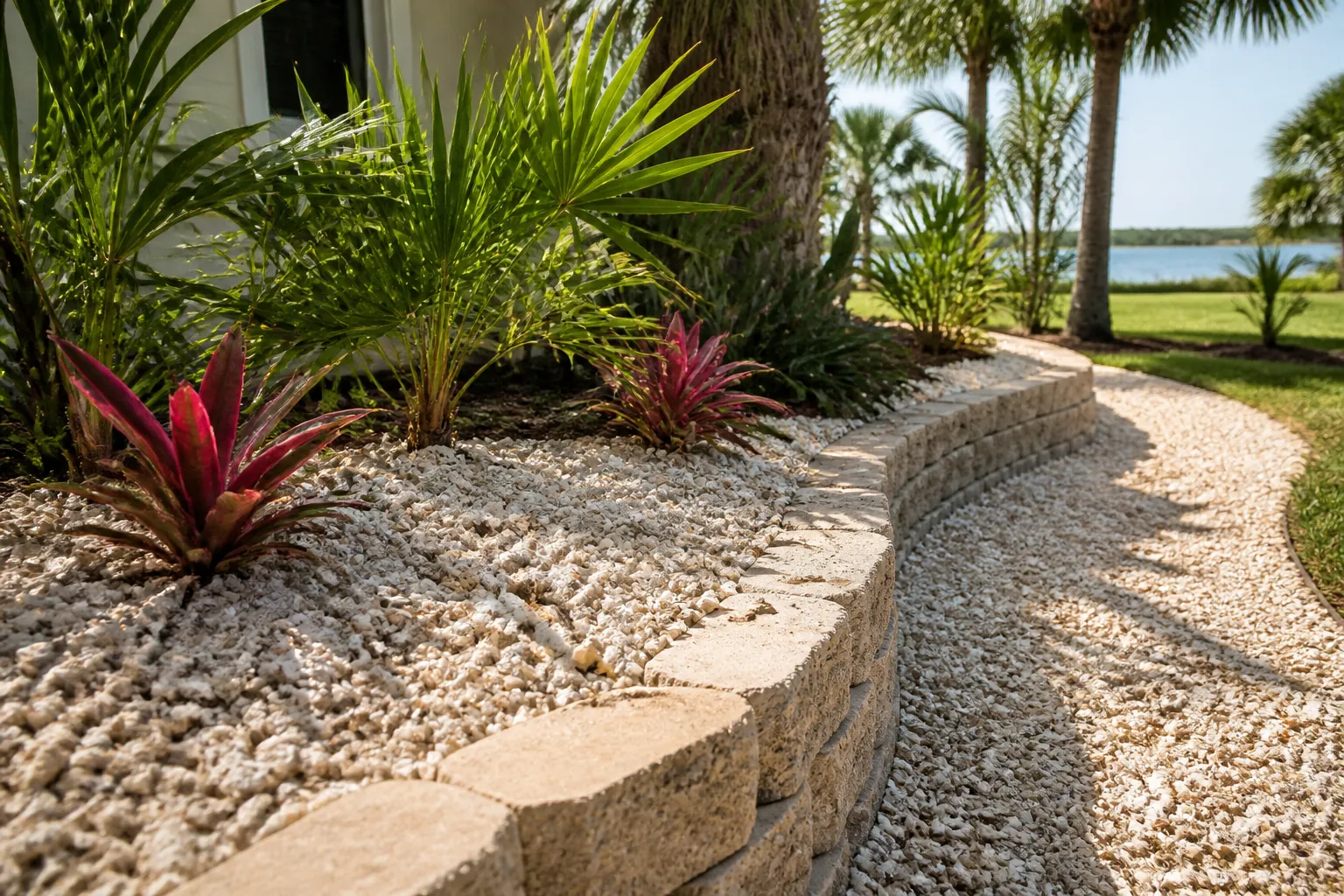
Coquina shell can give a Florida garden bed a light, coastal appearance while providing a durable surface around compatible plants. But a successful DIY project starts with more than choosing a color. The shell's texture, the soil beneath it, the plants nearby and the way water moves through the bed all matter.
If you are researching coquina shell for garden beds in Florida, use this guide to decide where it belongs, what to ask before buying and how to prepare for delivery. The focus is on planted beds rather than driveways, structural fill or other applications with different material requirements.
Tropical Yards supplies coquina shell and tropical plants, with dump trailer delivery of plants and coquina shell from St. Augustine to Daytona Beach. You handle the bed preparation, planting and spreading yourself or arrange that work separately.
What To Check Before Choosing Coquina Shell
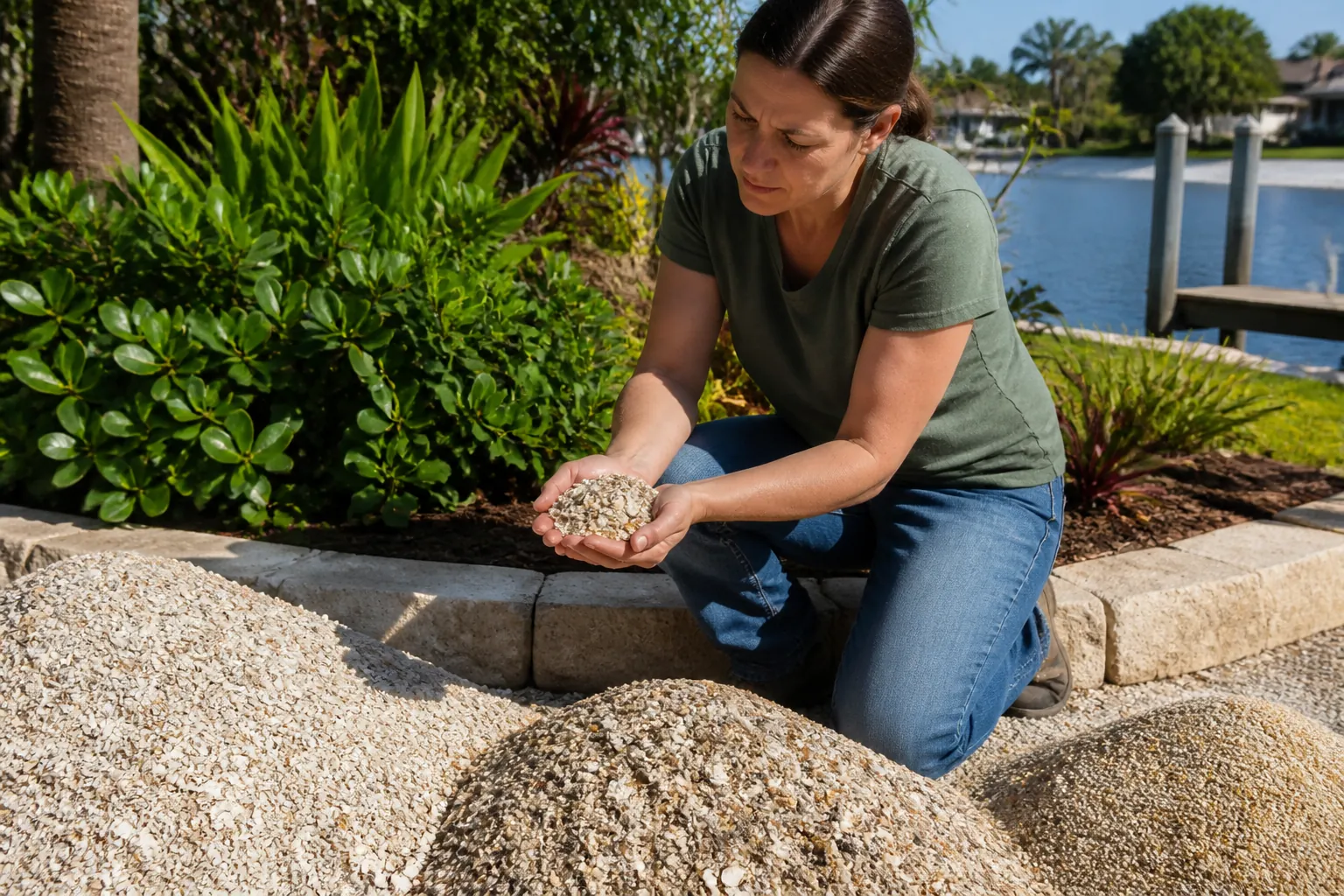
The term coquina shell can describe shell material with a mix of fragments, textures and particle sizes. Do not assume that every supplier's material looks or behaves the same. Ask what the current product contains and, when possible, look at a representative sample before ordering.
For a garden bed, appearance is only one consideration. Larger fragments create a different surface than material containing more small particles. Fine material can settle between pieces, and the finished texture may change after rainfall and normal settling.
A photograph can help you assess color, but it cannot reliably show the entire size range or how the material feels underfoot. If the bed borders a walking route, think about stray fragments and whether a defined edge will keep shell away from bare feet and mower paths.
- Ask whether the material is primarily loose shell fragments or includes a noticeable proportion of fines.
- Ask whether the product has been washed or processed, and whether any product information is available.
- Check the current material rather than relying only on an older photograph.
- Explain that you intend to use it as a surface covering in planted garden beds.
Start with the coquina shell product page for material information, then confirm current availability and product characteristics with Tropical Yards. Buying questions are worth resolving before a dump trailer arrives.
Match The Shell To Your Plants And Soil
Shell is largely calcium carbonate. As it weathers, it can influence the chemistry of nearby soil, particularly in acidic conditions. The degree of change depends on factors such as particle size, soil conditions and exposure. It is not a precise substitute for a soil amendment recommended by a laboratory test.
This matters because Florida gardens do not all start with the same soil. One property may have sandy, acidic soil, while another may contain alkaline fill or construction debris. A plant that performs well in one bed may struggle in another even when both have the same shell covering.
Before covering a substantial planted area, obtain a soil test that includes pH. Your county Extension office can help you understand sampling and interpret results. Use the findings to select plants and decide whether shell is suitable, rather than assuming every tropical plant accepts alkaline conditions.
Palm trees, hibiscus, bougainvillea and ferns also have different requirements. Even within a plant group, species and cultivars vary. Tropical Yards sells these plants and other tropical plants, but a shared tropical appearance does not mean they need identical soil, moisture or sunlight.
- Keep acid-loving plants in beds where their preferred soil conditions can be maintained.
- Check the requirements of the specific palm or fern rather than treating the whole group alike.
- Review existing plants for yellowing leaves or poor growth before changing the bed surface.
- Use soil-test guidance to address nutrient or pH problems instead of trying to correct them with shell alone.
If a bed already contains plants sensitive to higher pH, an organic mulch may be the simpler choice. You can still use shell in a separate, compatible bed without making it the default surface throughout the property.
Understand Drainage, Heat And Everyday Use
A shell covering does not fix a drainage problem beneath it. Water must still move through the underlying soil or leave the bed through an appropriate drainage route. If water stands after ordinary rain, investigate that condition before adding material.
Compacted ground, low spots and poorly positioned edging can all contribute to pooling. Spreading shell over wet soil may hide the surface temporarily while leaving the root-zone problem unchanged. Avoid raising the bed against a building or redirecting runoff onto neighboring property.
Coquina shell also behaves differently from wood-based mulch. It does not provide the same organic-matter contribution as decomposing bark or leaves. Although its light appearance may suit a coastal garden, the surface can still become hot in strong sun. Consider tender plants, exposed roots and nearby paved areas when choosing placement.
Think through how you use the bed. A permanent planting with spaced shrubs is different from a bed where you frequently divide plants or sow seeds. Shell can make repeated digging more cumbersome because it must be moved aside and kept out of the planting soil.
- Observe the bed during and after rainfall to identify standing water and runoff paths.
- Keep shell out of swales and other drainage features unless its use there has been appropriately evaluated.
- Leave access to irrigation valves, drains and utility covers.
- Choose another covering where frequent replanting would require repeatedly moving the shell.
For a mixed garden, using shell selectively is often more practical than covering every planting area with the same material.
Measure The Bed And Estimate Your Order
Measure the actual area you intend to cover, not the overall yard. Subtract patios, stepping stones, open planting spaces and other sections that will not receive shell. For irregular beds, divide the shape into rectangles and triangles, calculate each section and add the results.
Square footage alone is not enough. You also need a planned finished depth. Ask about a suitable depth for the current material and your intended use, since fragment size and the existing surface affect coverage. Avoid choosing a deep layer simply because it looks substantial.
The basic volume calculation is straightforward: multiply the area in square feet by the depth in feet, then divide by 27 to obtain cubic yards. To convert inches to feet, divide the depth in inches by 12.
For example, a 180-square-foot bed covered to a planned depth of 2 inches requires about 1.11 cubic yards by geometry. That example illustrates the calculation, not a universal depth recommendation or a promise of delivered coverage. Uneven ground, material variation and settling can affect the final result.
- Write down the dimensions of each bed so your estimate can be checked.
- Confirm whether the supplier sells the material by volume, weight or another unit.
- Do not convert cubic yards to weight without a product-specific density figure.
- Ask how the material is measured and whether your intended depth is realistic.
- Discuss any allowance for uneven ground rather than adding an arbitrary amount.
A small surplus can be useful for later touch-ups, but an excessive pile creates another handling task. Have a storage location ready if you expect material to remain after the beds are covered.
Prepare Your Garden Beds Before Delivery
Finish the work beneath the shell before ordering a delivery date. Remove unwanted vegetation yourself, address drainage concerns and locate irrigation components. If you are adding plants, it is usually easier to plant them before spreading the final shell covering.
Follow the planting requirements for each species. Keep the root flare or crown at the appropriate height, and avoid burying stems to achieve a level-looking bed. Shell should not be used to disguise a planting hole that is too deep.
Decide whether landscape fabric belongs in your project. Fabric can help separate shell from soil, but it is not a permanent weed solution. Debris can collect above it, allowing new weeds to germinate, and the fabric can complicate later planting or soil work.
In beds that will change frequently, skipping fabric may make future work easier. If you use it, select a water-permeable product intended for landscape applications and follow its instructions. Do not substitute solid plastic, which can interfere with water movement and root-zone conditions.
- Set the intended bed boundary before shell arrives.
- Check irrigation operation and note where tubing or sprinkler heads could be damaged.
- Finish planting and water plants appropriately before covering the surrounding surface.
- Keep the finished material below adjacent surfaces where containment is needed.
- Plan clear spaces around trunks, stems and plant crowns.
Edging should contain fragments without creating a dam. Where rainfall needs to leave the bed, preserve an appropriate outlet rather than enclosing the entire area without considering drainage.
Plan A Safe Dump Trailer Delivery
Tropical Yards offers dump trailer delivery of coquina shell and plants from St. Augustine to Daytona Beach. Delivery planning should cover both access to the property and the exact unloading location. A convenient drop spot can reduce the distance you must move material by hand.
Discuss the approach, turning space, driveway condition and any gates before scheduling. Dumping also requires suitable overhead clearance. Branches, wires, roof overhangs and other obstructions need to be identified in advance, with the delivery team determining whether the proposed location is workable.
Choose a stable unloading area that will not obstruct traffic, drainage or emergency access. Do not assume delivery can cross a lawn, septic area or soft ground. Wet weather may change whether a location is accessible, so confirm conditions close to the delivery date.
- Describe narrow entrances, tight turns and sloped approaches when placing the order.
- Identify septic systems, underground utilities and surfaces that should not carry vehicle loads.
- Keep parked cars, children and pets away from the unloading area.
- Ask whether a protective ground covering is practical for your selected drop location.
- Confirm that you have permission to use the unloading area and that applicable property rules are satisfied.
Dump trailer delivery is material delivery, not bed installation. Tropical Yards does not prepare beds or spread the shell. Have your tools and DIY work plan ready, or arrange any separate labor independently.
Spread Shell Carefully Around Established Plants
Move the material in manageable loads with equipment suited to its weight and texture. Gloves, sturdy footwear and eye protection are sensible when handling rough fragments. Avoid lifting loads that exceed your ability, and keep wheelbarrow routes clear.
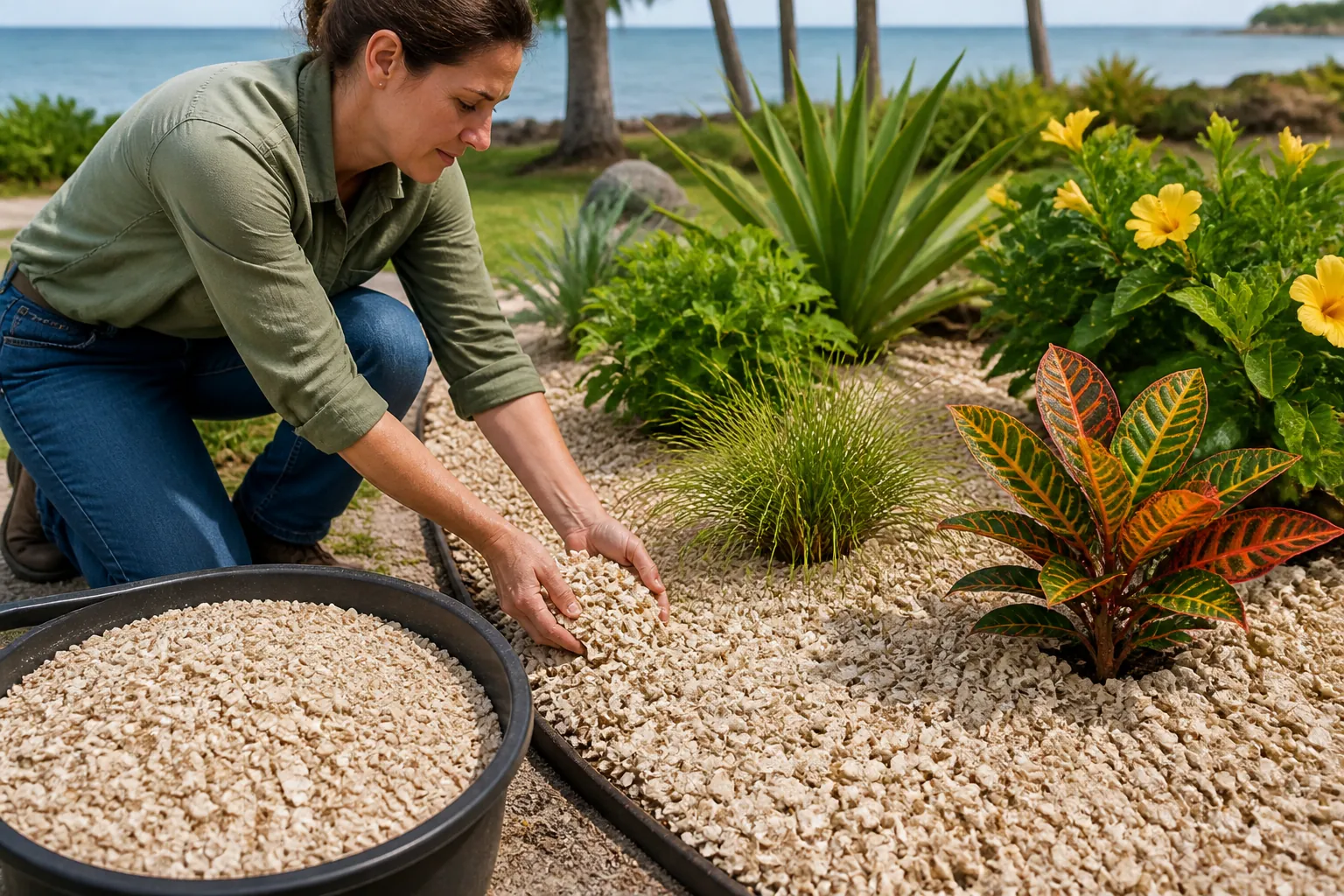
Place small piles between plants rather than dumping directly over roots, stems or irrigation fittings. Spread the material gently, checking depth in several places as you go. A uniform-looking surface can still contain deep pockets on uneven ground.
Keep shell away from tree trunks, palm bases and plant crowns. The appropriate clearance depends on the plant and its size, but the essential goal is to leave vulnerable tissue exposed rather than buried. Do not mound material against a trunk or use it to cover visible structural roots.
Work carefully around shallow irrigation lines. After spreading, run the irrigation system and check that water reaches the root zones rather than being blocked or redirected by misplaced material. Make adjustments yourself as needed without treating shell depth as a solution to watering problems.
Stop periodically to view the bed from nearby paths and windows. It is easier to correct uneven areas while working than after every load has been moved. Save any remaining clean material separately from soil and plant debris.
Care For A Shell-Covered Bed Over Time
Coquina shell is durable, but a garden bed remains a living space that needs your attention. Leaves and other organic debris can accumulate between fragments. Windblown seeds may germinate in that buildup, even where fabric was installed underneath.
Remove small weeds before their roots become established. When collecting leaves, use a method that does not scatter shell into grass or drains. Check the edges periodically, especially after heavy rain, and return displaced fragments where appropriate.
Water plants according to their needs and actual soil moisture. The appearance of the shell surface is not a dependable indicator of moisture below it. Check the root zone rather than assuming a dry-looking surface means the plant needs more water.
If a plant develops persistent yellowing or weak growth, review irrigation, planting depth and soil conditions. A follow-up soil test may help identify a pH or nutrient issue. Avoid applying corrective products without understanding the cause.
Order With The Right Questions Ready
Before you call, gather your bed measurements, intended depth, plant list and delivery address. Note any access concerns and describe the proposed unloading area. These details make it easier to discuss the material and delivery requirements without guessing.
Use the coquina shell information page as your starting point, then confirm the current product, available quantity and delivery arrangements. Keep questions about other uses, such as driveways or structural applications, separate from your garden-bed order because their requirements differ.
To discuss coquina shell sales, tropical plant sales or dump trailer delivery from St. Augustine to Daytona Beach, call Tropical Yards at 772-267-1611. With the right material, compatible plants and a prepared delivery location, you can move into your DIY project with a clear plan.
Call 772-267-1611 to talk through next steps.