Coquina shell landscape edging options for Florida yards
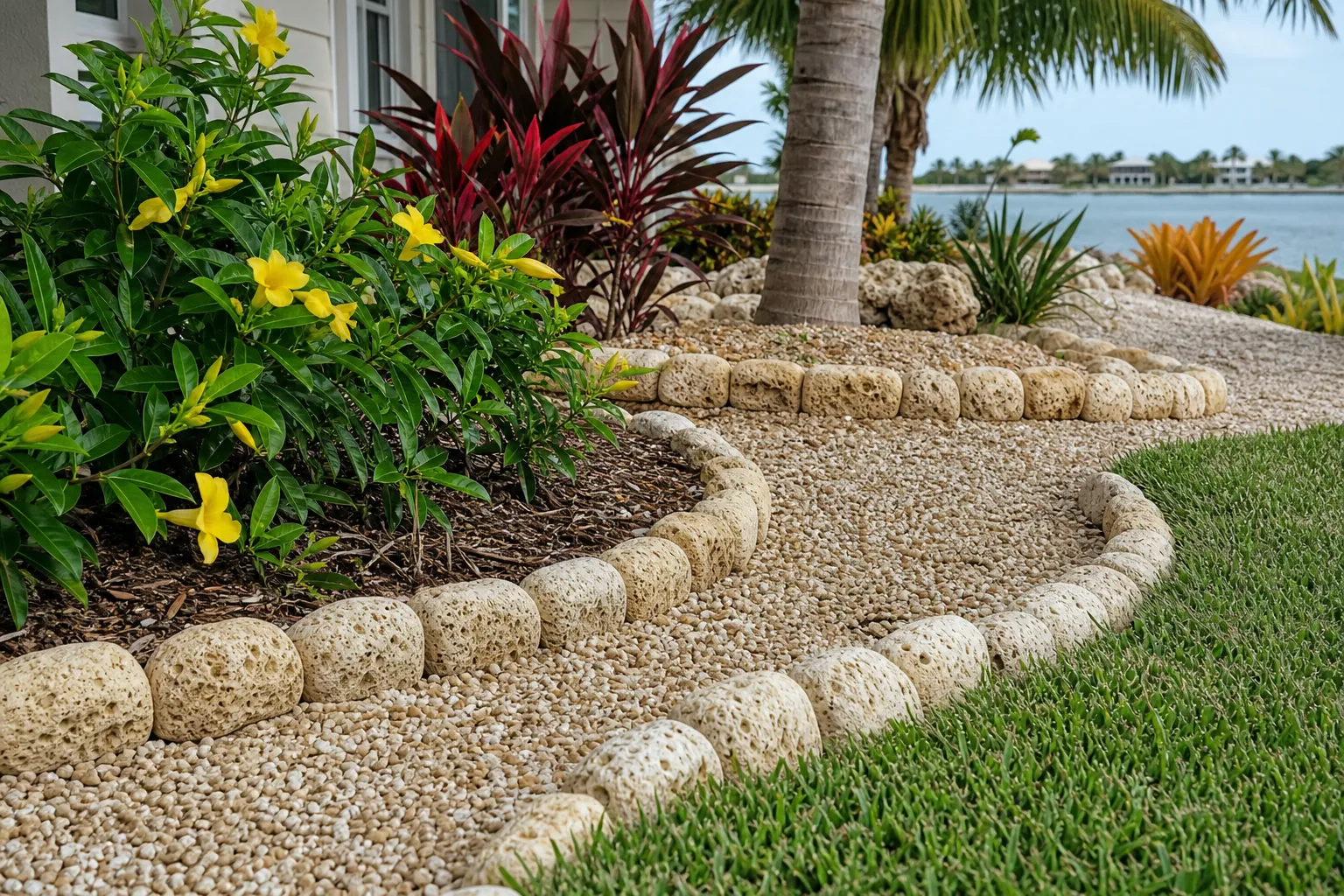
Coquina shell can give a Florida yard a relaxed coastal look, but the border around it determines how well the area stays defined. A good edge separates shell from grass, planting soil, patios, or driveways without making everyday use awkward. The best choice depends on your layout, the adjoining surface, and how you plan to use the space.
Comparing coquina shell landscape edging options starts with a simple question: what does the border need to do? A decorative plant bed needs a different edge than a frequently used walkway. A border beside a mower route has different demands than one surrounding a palm.
Tropical Yards supplies coquina shell and tropical plants, with dump trailer delivery from St. Augustine to Daytona Beach. This guide is for buyers and homeowners doing their own projects. It focuses on selecting a border, planning material quantities, and preparing for delivery, rather than landscaping services.
Start With The Job Your Edging Needs To Do
Edging is not just a finishing detail. It helps define where the shell belongs and where another surface begins. It can reduce sideways movement, although no border prevents every fragment from shifting under foot traffic, heavy rain, or routine yard activity.
Before choosing a material, walk the proposed boundary. Note slopes, low spots, irrigation heads, exposed roots, and places where people cross the edge. Check what happens during rain, especially if water already runs across the area.
- A lawn border should help separate shell from turf while allowing practical mower access.
- A walkway border should hold the intended line without creating an unexpected trip point.
- A planting-bed border should keep shell distinct from soil while leaving room for plant growth.
- A patio border should meet the adjoining surface cleanly and avoid directing water toward the building.
- A sloped border may need stronger restraint and a separate drainage solution.
Choose the finished shell level before choosing the edging height. An edge that looks generous against bare ground can become almost invisible once material is added. Conversely, a tall border beside a walking route can become a hazard.
For an overview of the material itself, use the coquina shell resource page as your starting point. Keep this edging decision focused on the boundary rather than treating it as a substitute for planning the whole surface.
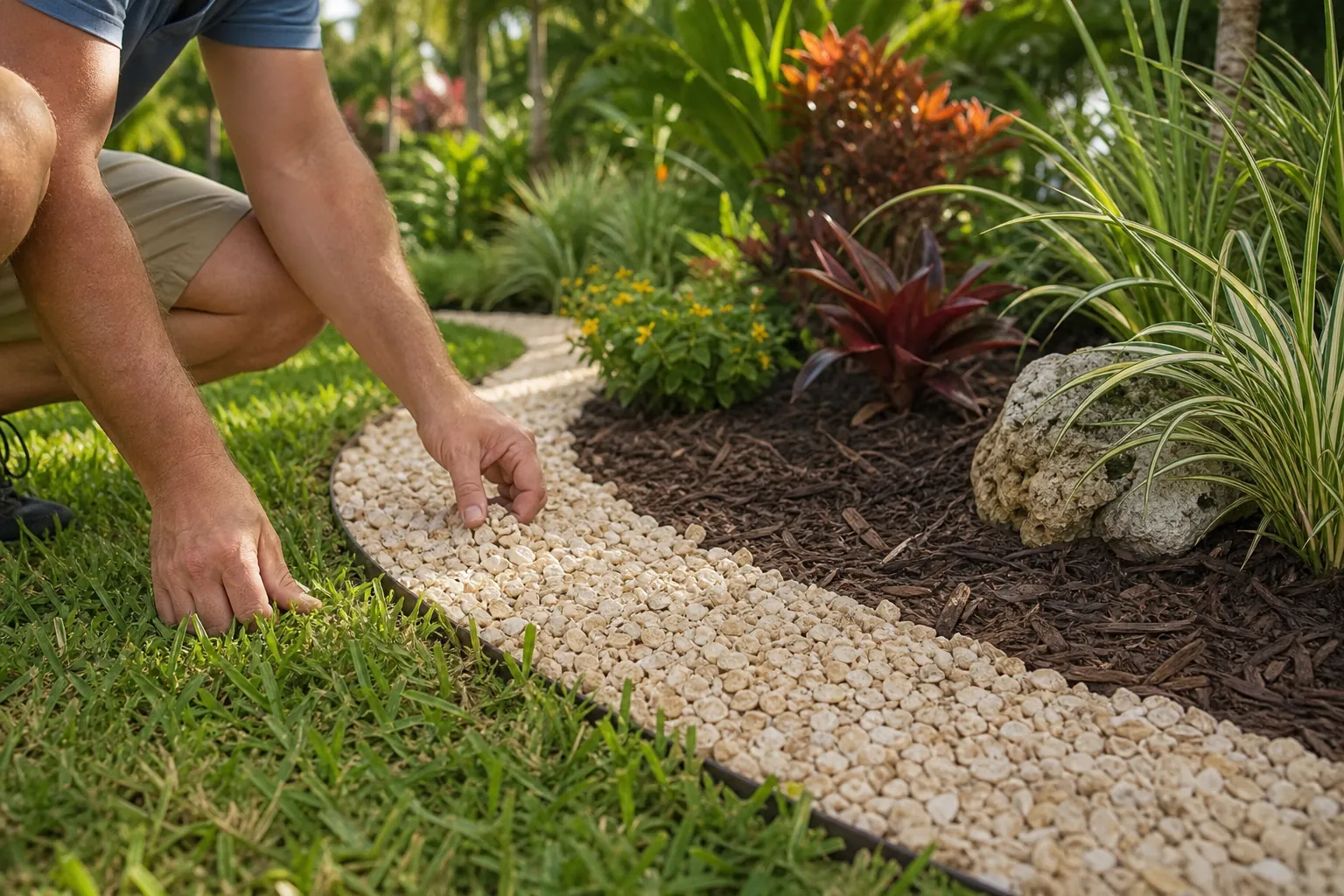
Compare The Main Coquina Shell Edging Options
Concrete pavers and brick
Pavers and brick create a clearly defined border that works with many Florida homes. Their repeating shape suits straight runs, gentle curves, and transitions beside existing hardscape. A broad, relatively flush border can also provide a useful separation between shell and lawn.
The main DIY challenge is preparing a stable, level base. Units placed directly on uneven soil can settle independently, leaving gaps or raised corners. Tight curves require careful layout, and cut pieces may be needed to maintain a consistent pattern.
Choose units intended for outdoor ground contact and follow the manufacturer's base and restraint instructions. If you want the border to function as a mower strip, compare its width and elevation with your mower's wheels before committing.
Metal edging
Metal edging offers a narrow profile that keeps attention on the shell and plants. It is useful where you want a crisp separation without a wide band of masonry. Some products accommodate curves, while others are better suited to straight lines.
In Florida, exposure matters. Coastal salt, moisture, and the particular metal or coating can affect appearance and longevity. Compare product specifications instead of assuming all metal edging performs alike.
Use the manufacturer's stakes, connectors, and protective top-edge details. Avoid leaving sharp sections exposed. Plan transitions carefully where a walkway crosses the border, and do not depend on thin edging to restrain vehicle traffic.
Plastic or composite edging
Flexible plastic and composite products can be practical for rounded beds and informal shell borders. They are usually easier to shape than masonry, but their performance depends on the product, anchoring, and ground preparation.
Look for edging rated for outdoor use and review its installation instructions. Thin, lightly anchored material may rise, lean, or develop waves. Heat expansion can also influence the finished line, so follow the specified placement and fastening method.
This option is worth considering for a modest DIY project where flexibility matters more than a substantial visual border. Check how much material will remain above the shell surface and whether the product can withstand nearby mower activity.
Natural stone
Natural stone creates an informal edge that complements shell and tropical foliage. Larger pieces can make the boundary visually substantial, while flatter stones may produce a quieter transition. Differences in shape are part of the appearance, but they also complicate placement.
Small gaps can allow shell to escape. Rounded or loosely seated stones may move when stepped on. Arrange pieces on a prepared base, check stability, and avoid using irregular stone as a casual stepping edge beside a busy path.
Stone is often a better fit for a planting-bed boundary than for a narrow, heavily traveled walkway. Consider the weight and handling requirements before choosing it for a large DIY project.
Ground-contact timber
Timber can form a straightforward border around rectangular shell areas. It brings a softer appearance than concrete and can work where the surrounding yard already uses wood elements.
Florida moisture, insects, and repeated wetting make product selection important. Use material specifically rated for the intended ground contact and follow its fastening instructions. Ordinary untreated boards are not an interchangeable substitute.
Expect wood appearance and condition to change over time. Avoid creating enclosed pockets that hold water, and keep timber away from situations where it could conceal moisture problems against a building.
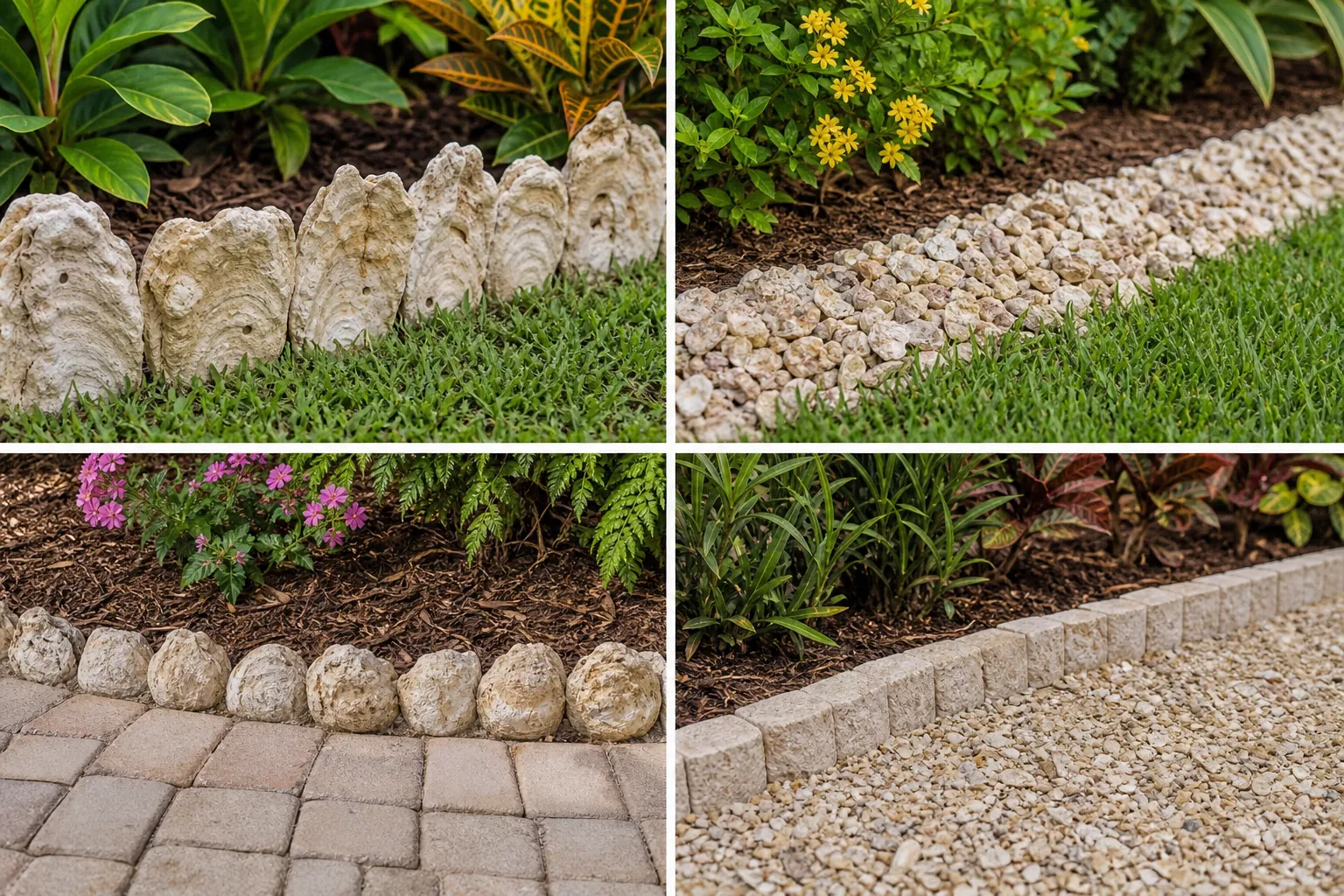
Match The Border To The Adjoining Surface
The same edging material can work well in one location and poorly in another. Think about the transition, not just the border's appearance in isolation.
Where shell meets lawn
A lawn edge needs to account for both spreading grass and moving shell. A continuous border helps establish the line, but grass can still grow over or under some products. Plan for occasional homeowner attention rather than expecting permanent separation without upkeep.
A flush masonry strip may make mowing easier, provided it is stable and wide enough for your equipment. A raised edge can contain shell more visibly, but it may require a different mowing approach. Keep loose shell away from mower blades because fragments can become projectiles.
Where shell meets a walkway or patio
At pedestrian transitions, prioritize predictable footing. Avoid abrupt height changes, protruding stakes, and loose fragments scattered onto hard paving. Consider whether children, guests, or people using mobility aids regularly cross the boundary.
If the shell area itself is part of a walking route, assess its firmness and usability separately. An attractive border does not make a loose surface accessible. For required accessible routes, check applicable standards and obtain appropriate guidance.
Where shell meets a tropical planting bed
Decide whether shell will sit inside the planting bed or in a separate band outside it. That decision affects where edging belongs and how roots, watering, and future plant growth interact with the border.
Give plants room based on mature size rather than their size at purchase. Tropical Yards sells palm trees, hibiscus, bougainvillea, ferns, and other tropical plants. Choose plants for the site's light, drainage, and exposure, then position your DIY border so it does not crowd their future growth.
Plan Height, Drainage, And Curves Before Buying
Use a hose, string, or temporary markers to test the boundary. Walk beside it, view it from the house, and check whether the shape leaves enough space for normal movement. A curve that looks gentle from a window may be too tight for the edging product you selected.
Measure the full boundary, including returns at the ends. For modular products, compare the measured length with unit dimensions and allow for cuts or damaged pieces. For flexible edging, account for connectors and anchoring requirements.
- Mark the planned shell surface elevation so you can compare it with the border's finished height.
- Check the edging product's minimum bend radius before laying out tight curves.
- Identify where runoff will enter and leave the area instead of enclosing an existing drainage path.
- Keep edging clear of irrigation components that need access or adjustment.
- Plan safe, deliberate transitions wherever people will cross the boundary.
Edging is not a retaining wall. A thin border should not be expected to hold a deep fill layer or solve erosion on a substantial slope. If your layout requires retaining soil, managing concentrated runoff, or working near a structure, seek qualified guidance before purchasing materials.
Do not assume shell alone fixes poor drainage. The underlying soil, grading, and surrounding surfaces still control how water moves. A border that acts like a dam may make an existing wet spot worse.
Measure Coquina Shell Separately From The Border
Edging is usually planned by linear length, while shell is planned by covered area and intended depth. Keep these measurements separate so you do not confuse the border quantity with the fill quantity.
For a rectangle, multiply length by width to find square footage. Divide an irregular area into smaller rectangles or other manageable shapes, then add their areas. Subtract large spaces that will not receive shell.
To estimate volume in cubic yards, multiply square footage by depth in feet, then divide by 27. Convert inches to feet before calculating. This gives a geometric estimate, not an exact prediction of how a delivered material will settle.
Discuss your intended use and depth with the supplier before ordering. Particle size, existing ground conditions, handling losses, and placement can affect the amount needed. Avoid choosing depth solely from a photograph of another yard.
Ask what the available coquina shell looks like and how it is supplied. Natural material can vary in color and fragment size. A current description or available sample is more useful than assuming every load will match an older image exactly.
A Practical DIY Sequence For Edging And Shell
A clear sequence reduces double handling and helps you catch layout problems before the shell arrives. The exact method depends on your edging product and site, so use its instructions as the primary guide.
- Mark the boundary and check it against property lines, access routes, irrigation, and visible roots.
- Arrange utility locating as appropriate before driving stakes or digging, and identify private lines that may need separate attention.
- Prepare the border base to the edging manufacturer's specifications without cutting significant tree roots.
- Set the edging, check its alignment and finished height, and secure connections and anchors.
- Prepare the interior surface for the intended use while preserving the planned drainage direction.
- Move and spread the shell in manageable sections, checking depth rather than filling to the top of the border automatically.
- Inspect crossings and adjacent paving, then reposition stray fragments before using the area.
Whether to use landscape fabric depends on the site and purpose. Fabric can provide separation in some applications, but it does not eliminate weeds and can complicate future planting. Consider drainage, root growth, and how you will access the soil later.
Wear gloves, eye protection, and sturdy footwear when handling edging and shell. Follow tool instructions, particularly when cutting masonry or metal. Break the work into manageable sessions and account for Florida heat.
Prepare For Dump Trailer Delivery
Tropical Yards offers dump trailer delivery of plants and coquina shell from St. Augustine to Daytona Beach. Before scheduling, discuss your address, the requested materials, and the proposed unloading location. Delivery access needs to be confirmed for the actual property.
Plan a staging spot that is accessible, firm, and clear of overhead obstacles. Consider gates, parked vehicles, tight turns, soft ground, and the space required for the trailer to unload. Do not assume the load can be placed inside a finished bed or beyond a narrow side yard.
- Describe the driveway and access route accurately when arranging delivery.
- Ask what clearance and unloading space the delivery vehicle requires.
- Choose a drop location away from septic components, buried utilities, and vulnerable surfaces.
- Keep the planned unloading area clear of people, pets, and movable belongings.
- Have your own tools and a realistic plan for moving shell from the drop point to the project area.
For delivery-specific preparation, review the coquina shell delivery information. Treat delivery and DIY placement as separate steps. Tropical Yards supplies and delivers material; it does not install edging, spread shell, design beds, or perform yard cleanup.
Care For The Finished Border And Nearby Plants
Once your project is complete, inspect the edge after the first substantial rain and periodically afterward. Look for leaning sections, settled pavers, exposed anchors, and shell collecting outside the boundary. Small homeowner adjustments are easier before a minor issue becomes a disrupted border.
Keep shell from accumulating against plant stems or palm trunks. Leave appropriate clearance and check the root area rather than assuming a decorative surface reflects the soil's moisture. Water needs vary with plant species, weather, soil, and establishment stage.
Coquina is shell-based, and its influence on surrounding soil chemistry may matter for sensitive plants. If you are concerned about soil pH or plant performance, use a soil test and species-specific guidance. Do not select a plant solely because it looks tropical.
Ferns may need conditions quite different from sun-loving bougainvillea. Hibiscus and palms also vary in their requirements. Select each plant for the actual site, plant it yourself using appropriate horticultural guidance, and keep the border far enough away to allow healthy growth.
Choose A Border You Can Build And Live With
The most useful edging choice balances containment, safe transitions, appearance, and your ability to complete the work. Pavers offer a substantial line, metal provides a slim profile, flexible edging handles curves, stone creates an informal boundary, and suitable timber fits simple geometric layouts.
Before buying, settle the layout, measure the border and shell area separately, and confirm your delivery access. Those decisions usually matter more than choosing the most decorative edge.
For coquina shell sales, tropical plant availability, or dump trailer delivery from St. Augustine to Daytona Beach, call Tropical Yards at 772-267-1611. Have your measurements and intended use ready so you can discuss the materials for your DIY project.
Call 772-267-1611 to talk through next steps.