Removing landscape fabric under coquina in Flagler Beach, FL
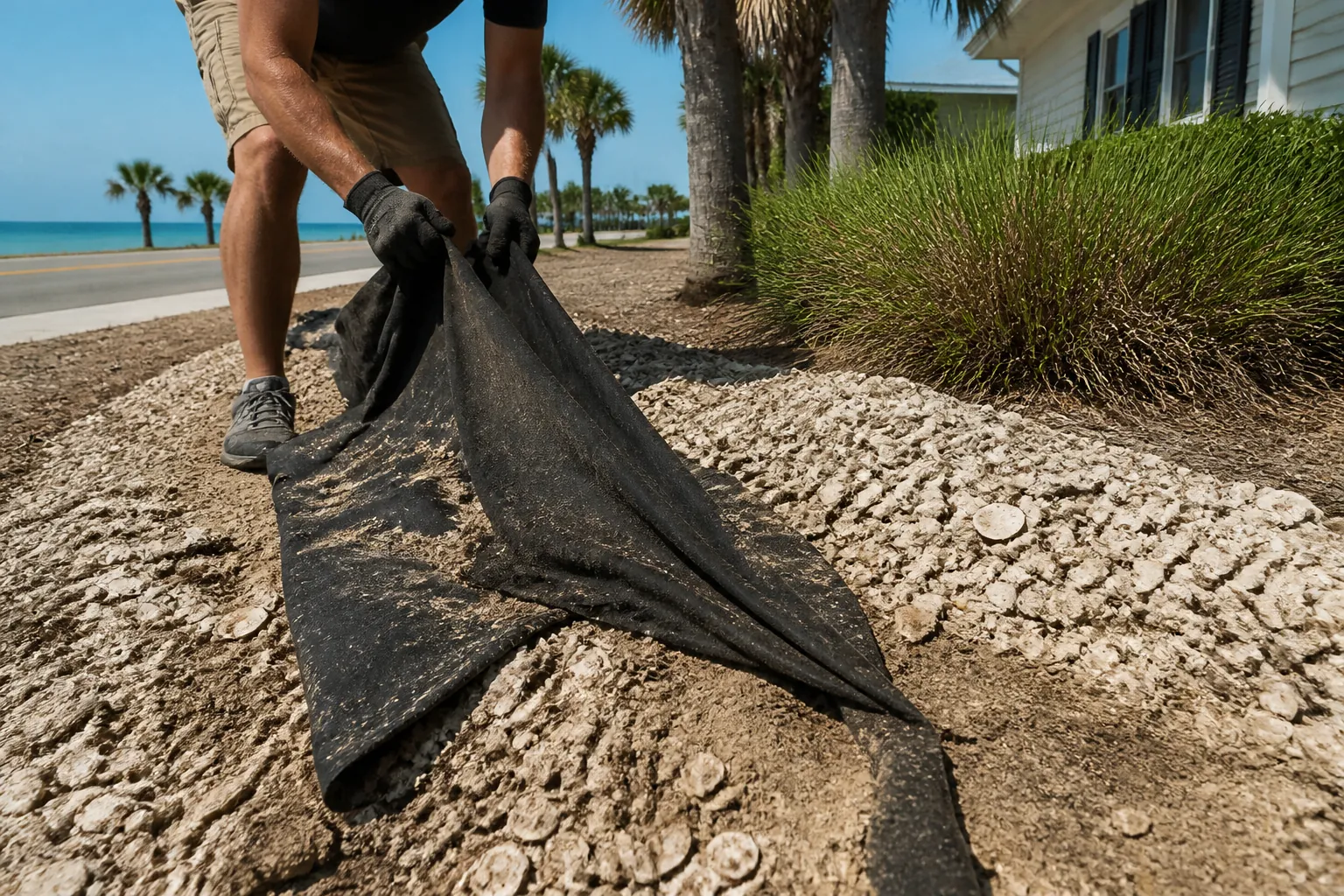
Landscape fabric can seem like a simple way to separate coquina shell from soil. Years later, that same layer may be visible at the edges, tangled with roots, or buried beneath weeds growing in accumulated debris. If you are considering coquina shell landscape fabric removal in Flagler Beach, FL, start by deciding what you want to preserve and what actually needs to change.
This guide focuses on a homeowner-managed project: inspecting the old fabric, moving shell temporarily, removing accessible sections, and preparing for reuse or replenishment. It also explains when leaving an undamaged area alone may be more practical than disturbing an entire bed.
Tropical Yards supplies coquina shell and tropical plants, with dump trailer delivery from St. Augustine to Daytona Beach. The company does not remove fabric, install shell, or perform yard cleanup. The steps below are educational guidance for your own work, while supply and delivery questions can be directed to Tropical Yards.
First Decide Whether The Fabric Needs To Come Out
Exposed fabric does not always mean an entire shell bed must be rebuilt. A loose corner near a border may be a localized issue. Fabric that repeatedly surfaces across a walkway, blocks access for planting, or has become extensively tangled with roots presents a different situation.
Inspect several places before planning the job. Carefully move aside a small amount of shell at an edge, near a plant, and in an open section. Look for overlapping layers, brittle material, buried fasteners, and soil that has collected above the fabric.
Weeds above fabric can grow in the fine organic material that accumulates between shell pieces. Removing the fabric alone will not prevent that process from recurring. The condition of the shell, nearby vegetation, and future care habits matter too.
- Consider localized removal when the problem is confined to an exposed edge or a small planting opening.
- Consider broader removal when fabric is deteriorating throughout the bed and repeatedly mixes with the shell.
- Pause before pulling fabric that is tightly entangled with established plant roots.
- Leave stable sections undisturbed if removing them offers little benefit and would damage nearby plants.
Choose a manageable test area first. Completing one small section gives you a realistic sense of the effort, shell recovery, and disposal needs before you commit to the whole bed.
Understand What You Are Moving Before Ordering More Shell
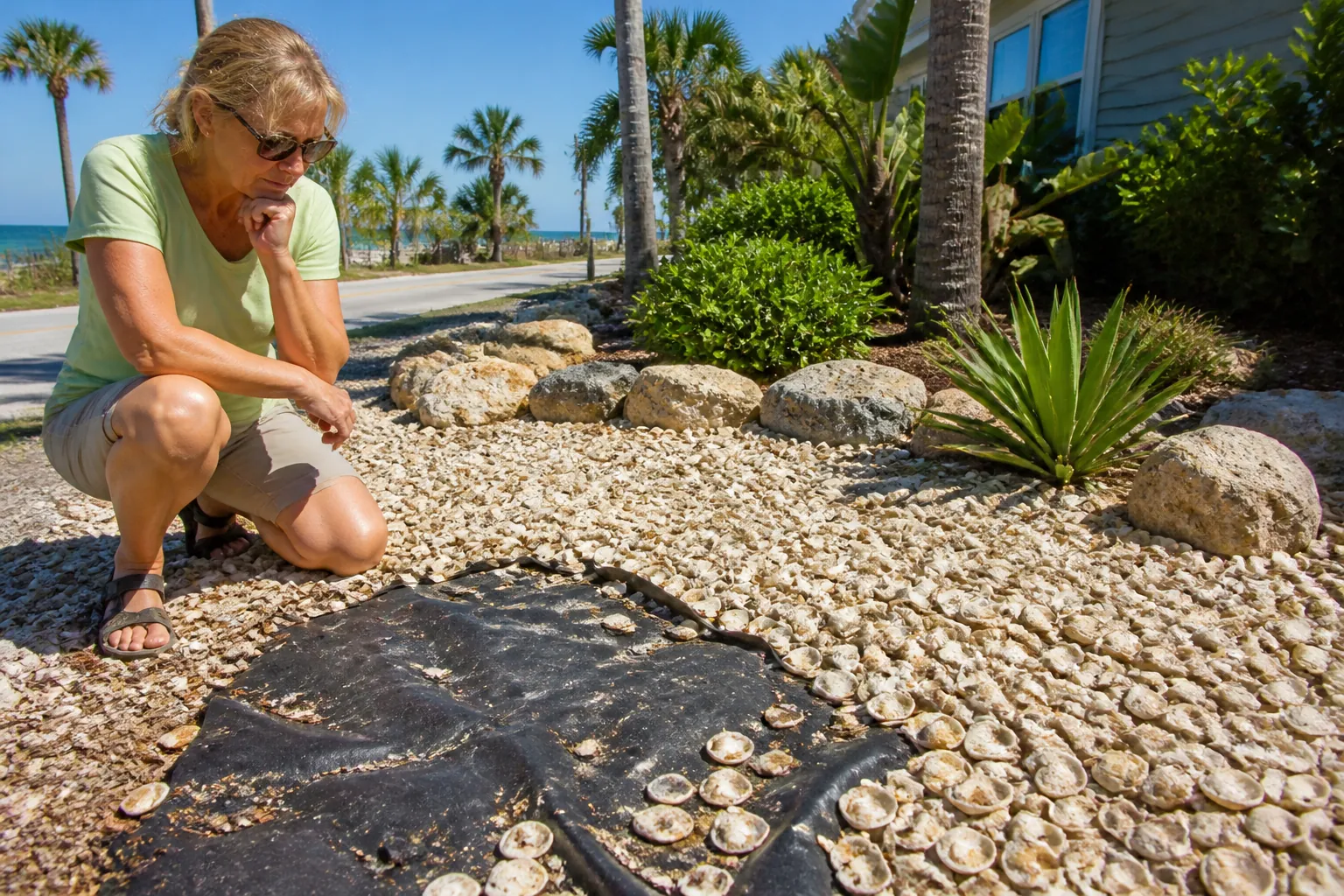
Coquina shell is not identical to uniform gravel. Individual pieces can vary in size, shape, color, and degree of weathering. An older surface may contain broken shell, soil, leaves, and fragments of fabric mixed together. These differences affect how easily you can save and reuse it.
Lift a sample from the top and another from close to the fabric. The upper material may be relatively clean, while the lower layer contains more fines and soil. Keep those observations in mind when deciding whether to reuse everything, separate cleaner material, or order additional shell.
For general material selection, use the coquina shell information page as the starting point. This removal guide addresses the existing fabric layer rather than replacing broader guidance about choosing shell for a new area.
Ask about the currently available shell before placing an order. If matching an older bed matters, provide clear photographs and explain whether the new material will be blended throughout or placed only in a repaired section. A perfect visual match should not be assumed.
Do not estimate replacement needs from the amount of fabric alone. Your order depends on the area being restored, the finished depth you want, and how much usable shell survives the removal process.
Prepare Tools, Temporary Storage, And A Safe Work Area
Set up a temporary storage area before lifting the first shovel of shell. A sturdy tarp can keep recovered material separate from grass and soil. Position it close enough to reduce carrying, but away from drains, walkways, and the intended delivery unloading spot.
Use smaller containers if the shell must pass through a gate or narrow side yard. Shell becomes heavy quickly, especially when wet or mixed with soil. Multiple light loads are easier to control than one overloaded wheelbarrow.
- Wear work gloves, closed-toe shoes, and eye protection when handling sharp shell pieces or buried fasteners.
- Use a rake and shovel for moving shell, adjusting your approach around irrigation lines and plant roots.
- Keep suitable cutting tools available for dividing exposed fabric into manageable sections.
- Collect staples and pins in a rigid container so they do not disappear into the lawn or reused shell.
- Set aside separate containers for reusable shell, contaminated material, and discarded fabric.
Check where irrigation tubing, valve boxes, electrical lines, and other utilities run. Do not probe or dig blindly. If the project involves excavation or uncertain underground utility locations, follow the appropriate utility-location process before digging.
In Flagler Beach, plan outdoor work around heat, rain, and wind. Avoid leaving loose fabric or lightweight tarps unsecured. Keep piles and tools out of public access areas, and stop when conditions make footing or material handling unsafe.
Remove Shell In Small Sections Before Lifting Fabric
The most controlled approach is to expose the fabric gradually. Pulling from beneath a loaded shell bed can scatter material, tear the fabric into smaller pieces, and put unnecessary force on roots or irrigation components.
Start at an accessible edge. Rake loose surface shell toward your collection point, then shovel it onto the tarp or into containers. Use shallow passes near the fabric so you do not bring up large amounts of underlying soil.
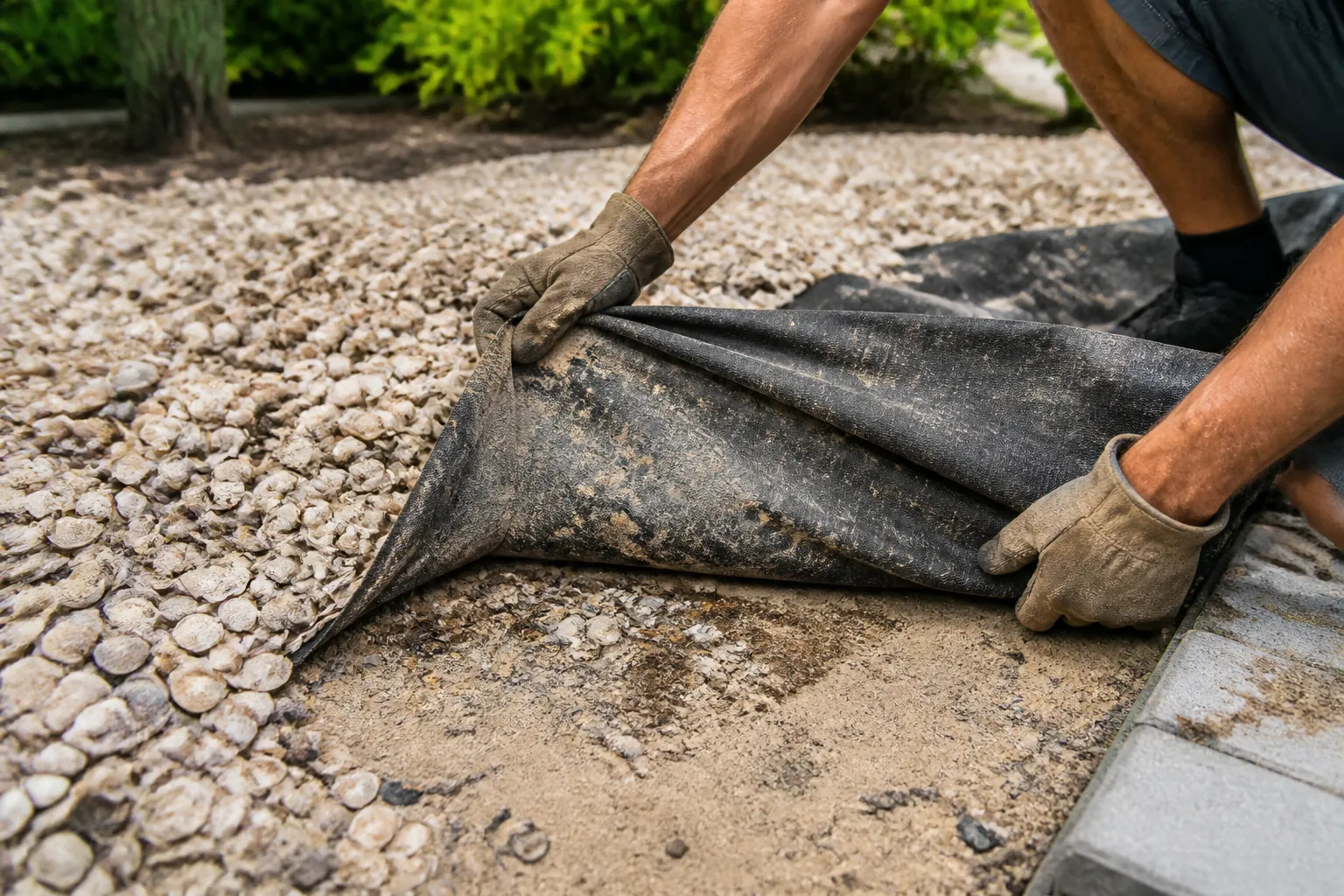
As the fabric appears, look for landscape staples, overlapping seams, and holes around plants. Remove accessible fasteners before pulling. If a fastener resists, expose it carefully rather than yanking on the fabric and hoping it comes free.
- Expose enough fabric to see what you are handling before making any cuts.
- Lift an accessible edge gently to check whether roots or buried components are attached.
- Cut loose fabric into sections that you can control without dragging it across plants.
- Shake recoverable shell off the fabric over your collection area rather than over the lawn.
- Inspect the exposed ground for remaining scraps and fasteners before moving to the next section.
If the fabric tears easily, slow down and work in smaller pieces. Brittle fragments are easier to collect when the surrounding shell has already been removed. Aggressive raking can bury those fragments deeper in the soil.
Keep the active work area compact. A partially finished section is easier to secure before rain than an entire bed stripped at once. This also preserves a usable route through the yard while the project is underway.
Protect Established Plants And Irrigation
Fabric around established plants often requires a different approach from fabric in an open bed. Roots may pass through it or grow along its surface. Pulling the whole sheet can disturb those roots even when the plant looks untouched above ground.
Expose the area by hand where practical. Identify the plant base, visible roots, and irrigation tubing before cutting. Do not cut blindly into fabric that lies directly against a root or line.
When a section is firmly entangled, avoid forceful pulling. You may be able to remove loose surrounding material while leaving a small attached piece undisturbed. Whether that is suitable depends on the plant, root location, and reason for removing the fabric.
Be especially careful around shallow feeder roots. The goal is not to create bare, perfectly clean soil at the expense of a healthy plant. If removal would require substantial root cutting, seek qualified advice before continuing.
Keep recovered shell and temporary piles away from trunks, stems, and plant crowns. When returning shell to the bed, preserve appropriate clearance at the base of each plant. Do not raise the surrounding grade simply to hide remaining fabric.
If you are adding plants yourself, Tropical Yards sells palms, hibiscus, bougainvillea, ferns, and other tropical plants. Choose plants for the actual light, moisture, space, and exposure of the site, not solely for how they look beside the shell.
Sort Reusable Shell Without Turning It Into A Bigger Project
After lifting the fabric, evaluate your saved material. Shell that is mostly free of debris can often return to the bed. Material heavily mixed with soil, roots, and brittle fabric may take more effort to separate than you anticipated.
Spread a small sample on the tarp and remove visible litter and fabric pieces by hand. If you try screening, test a small batch first. The opening size will determine which shell pieces you retain and which smaller pieces fall through with the soil.
Screening is not automatically the best choice. It can change the appearance and texture of the recovered material by removing smaller shell fragments. Decide whether your goal is a cleaner decorative surface or simply the removal of troublesome fabric.
- Keep the cleanest recovered shell separate so it can be used in the most visible areas.
- Remove plastic fragments, staples, and other foreign objects before reusing the material.
- Avoid washing soil and shell fines into streets, storm drains, or neighboring properties.
- Check local disposal requirements for old fabric and mixed debris rather than assuming everything belongs in yard waste.
If rinsing a small amount is necessary, contain the runoff and sediment appropriately. Washing an entire pile can create a muddy disposal problem and add unnecessary handling. Dry sorting may be sufficient for shell that will be blended back into an existing bed.
Prepare The Base And Decide Whether To Use Fabric Again
Once the old fabric is removed, inspect the exposed ground. Look for depressions, accumulated soil, persistent roots, and drainage paths. The shell surface should not conceal an unresolved grading or drainage problem.
Do not automatically excavate deeper. Removing too much soil can affect roots, expose irrigation, or create a low spot that collects water. Make only the adjustments you understand and can carry out safely.
Whether to install new fabric is a separate decision. A separation layer may help limit mixing between shell and soil in some settings, but it is not a permanent weed-control solution. Windblown seeds and organic debris can still collect above it.
In frequently replanted beds, fabric can make future planting and access more awkward. In an open decorative area, separation may be more useful. Consider how often you expect to change the area and whether maintaining access to the soil matters.
If you choose fabric, review the product's intended use, permeability, and installation directions. Avoid assuming that any plastic sheet is an acceptable substitute. If you choose no fabric, expect some gradual mixing at the shell-soil interface.
Neither approach eliminates the need to remove leaves and address weeds while they are small. This is a material and DIY planning choice, not a promise of a maintenance-free surface.
Measure Replacement Needs And Plan Dump Trailer Delivery
Measure the sections that will actually receive additional shell. For a rectangle, multiply length by width to find square footage. Divide an irregular bed into simpler shapes, calculate each area, and add them together.
Volume depends on depth as well as area. To estimate cubic yards, multiply square footage by depth in feet, then divide by 27. Convert inches to feet before calculating. For example, a two-inch layer is two-twelfths of a foot.
That calculation describes a layer over the measured area, not necessarily your purchase amount. Subtract the usable shell you already have, allowing for differences between the existing uneven surface and your intended finished layer. Explain these conditions when asking about an order.
Tropical Yards offers dump trailer delivery of coquina shell and plants from St. Augustine to Daytona Beach, including Flagler Beach. Plan the unloading location before scheduling so the supplied material can be placed in an accessible, appropriate spot.
- Describe the driveway or access route, including gates, tight turns, overhead branches, and other obstacles.
- Ask what clearance and surface conditions are needed for the delivery equipment.
- Identify a stable unloading area that does not block drains, traffic, or your route for moving material.
- Keep the new shell pile separate from discarded fabric and unsorted recovered material.
- Confirm delivery details directly rather than assuming the trailer can reach a particular bed.
Delivery supplies the material; it does not include spreading shell, removing fabric, or preparing the yard. Arrange your own tools, time, and any independently hired help before the load arrives.
Restore The Surface And Keep Future Changes Manageable
Return usable shell gradually, then add new material where needed. Work in thin passes so you can see low spots and avoid burying plant bases or irrigation access points. Blend old and new shell if a consistent appearance is more important than preserving separate sections.
Check the finished area from several angles. Look for exposed fabric remnants, uneven transitions, blocked edging, and shell spilling onto walking surfaces. Keep the shell within the intended bed rather than increasing the footprint accidentally.
After rain, observe how water moves through and around the restored area. New pooling deserves attention; adding more shell does not necessarily correct the underlying cause. Address small issues before making further material changes.
For future care, remove fallen leaves before they break down into a thicker organic layer. Check edges periodically and deal with young weeds before roots become extensively established. These simple DIY habits make later adjustments easier.
When you know how much shell you can reuse and where a new load can be unloaded, call Tropical Yards at 772-267-1611. Ask about coquina shell availability and dump trailer delivery to Flagler Beach. Tropical Yards supplies the shell and tropical plants; you control the removal, preparation, and placement for your project.
Call 772-267-1611 to talk through next steps.