Choosing coquina shell maintenance tools for Florida yards
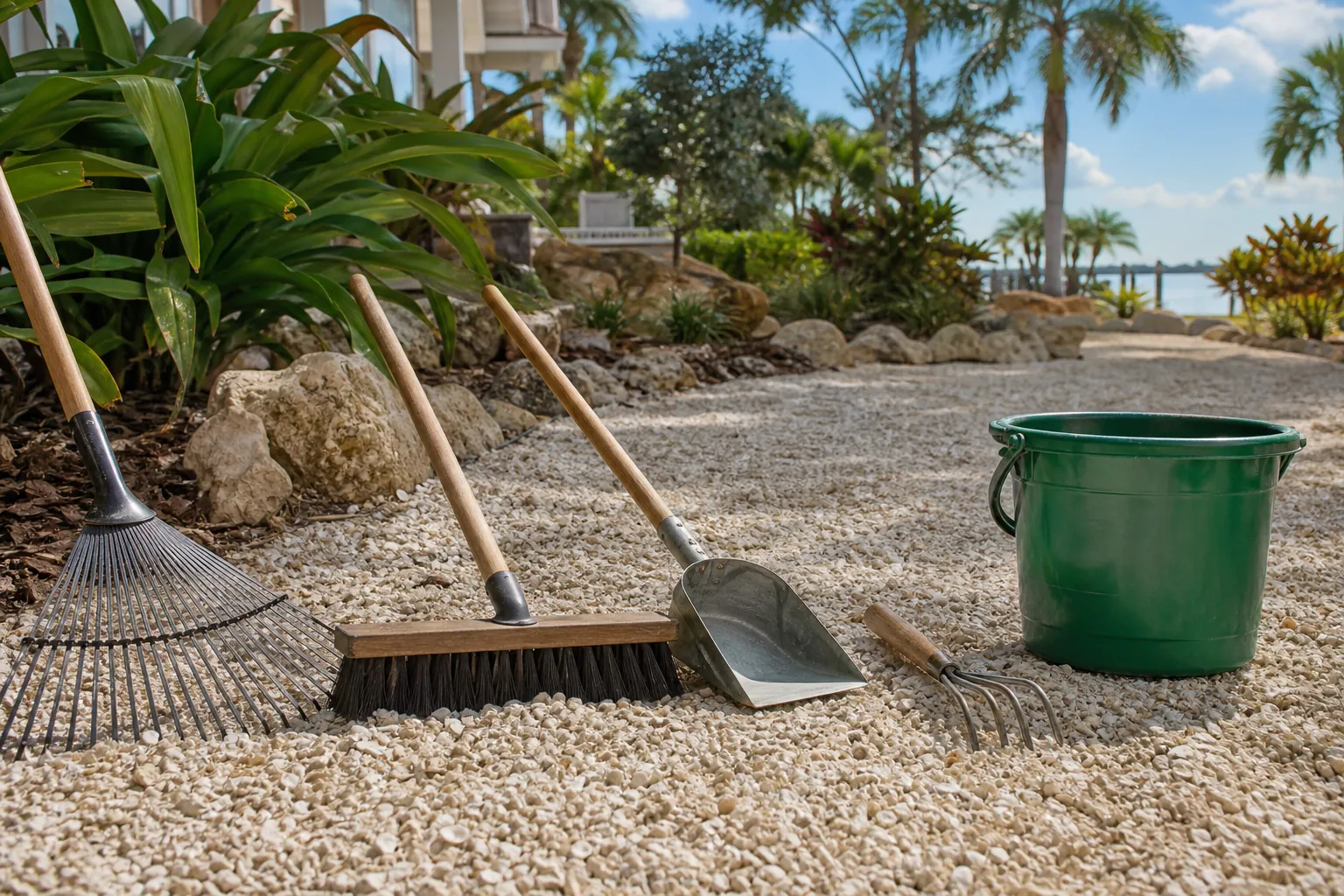
Coquina shell can give a Florida yard a distinctive coastal finish, but keeping that surface tidy takes a different approach than caring for turf or ordinary mulch. The right tools help you move scattered shell, lift leaves, manage weeds and restore an even surface without unnecessarily breaking or burying the material.
If you are researching coquina shell maintenance tools in Florida, start with the surface you actually have. A decorative planting bed, a lightly used garden path and a shell border beside a lawn have different needs. Buy tools for those specific tasks rather than assembling a large collection before you know what works.
Tropical Yards supplies coquina shell and tropical plants, with dump trailer delivery from St. Augustine to Daytona Beach. The guidance below is for buyers and homeowners doing their own work. Tropical Yards does not provide installation, yard maintenance or cleanup labor.
Start With The Shell Surface, Not The Tool Aisle
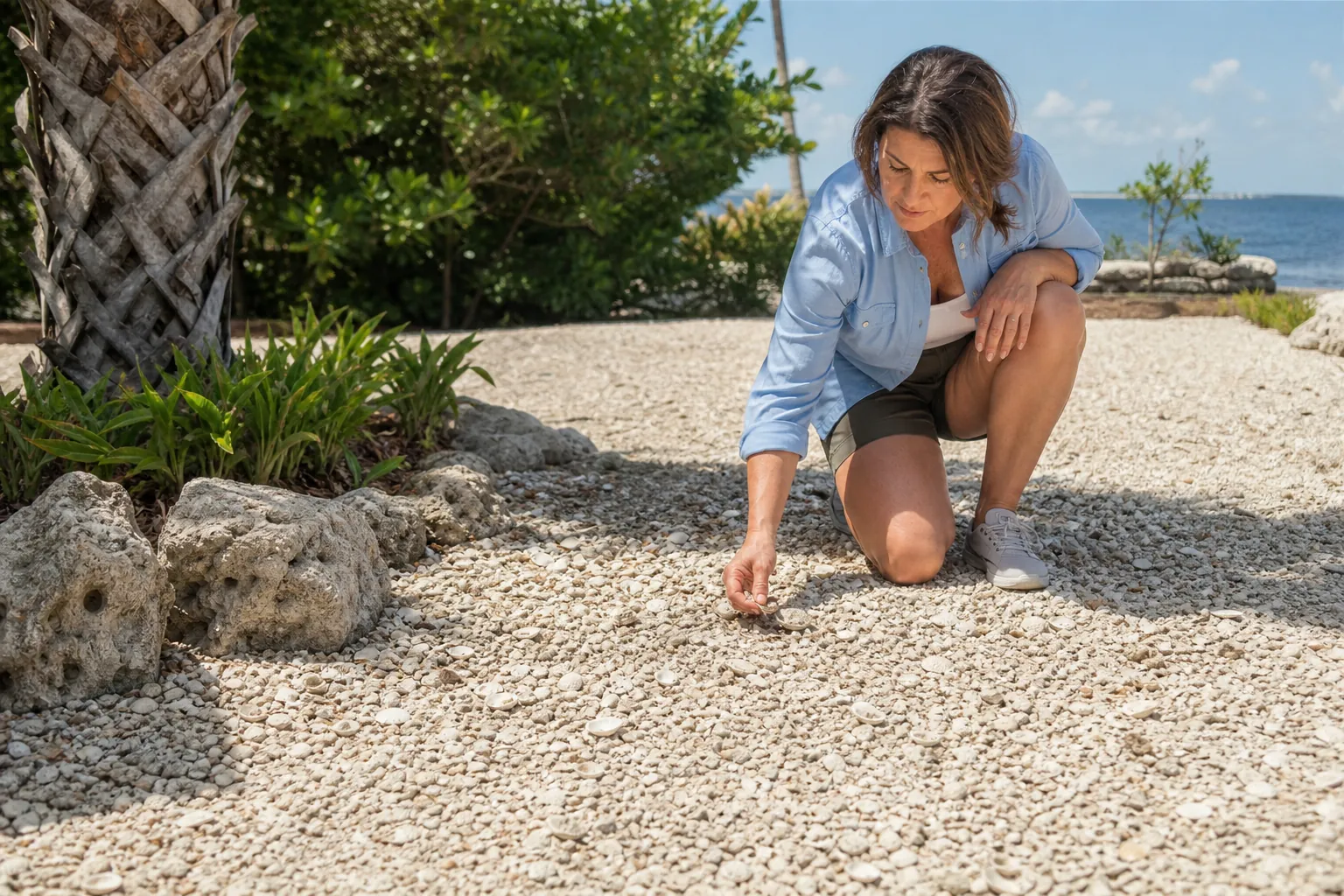
Before choosing equipment, inspect the area when it is dry and again after rain. Look for places where shell has moved, soil is showing, leaves collect or water remains longer than elsewhere. These observations help distinguish a simple tidying task from a drainage or base problem that adding more shell will not necessarily solve.
Notice the shell's texture and condition. Coquina material can include irregular fragments and finer particles. A tool that catches larger pieces may drag smaller material along with it. Test any new technique in a small, inconspicuous section before using it across the entire bed or path.
- For a decorative bed, prioritize tools that remove debris without disturbing plant roots or shifting shell against stems.
- For a walking path, prioritize surface leveling, edge control and safe footing.
- For a lawn border, prioritize keeping shell out of mower routes and grass clippings out of the shell.
- For a frequently washed-out area, investigate where water is coming from before ordering replacement material.
For broader material-selection questions, begin with the coquina shell information page. This guide focuses on tool choices and DIY care rather than repeating a full buying or installation guide.
A Practical Starter Kit For DIY Shell Care
Most homeowners can begin with a rake, a small hand tool, a bucket and appropriate protective gear. Add specialized equipment only when a recurring task justifies it. Comfort matters: a tool that is too heavy or too long makes careful work around plants harder.
A light leaf rake for loose debris
A lightweight rake with flexible tines is useful for gathering dry leaves near the surface. Keep the rake nearly flat and use short, gentle strokes. Pressing downward can pull shell into the leaf pile and leave thin patches behind.
Try different tine spacing on your material before committing to a large area. Closely spaced tines may catch small fragments, while wider spacing may leave smaller leaves behind. Neither is universally best; the useful choice depends on the shell and the debris.
A bow rake for limited redistribution
A rigid bow rake can help spread a small top-up or pull displaced shell back toward a thin section. Use light pressure and work gradually. Aggressive raking can mix underlying soil into the surface or catch fabric if it is present.
The flat back of the rake can smooth minor ridges without digging as deeply as the teeth. Stop if you begin exposing the base. The goal is to redistribute surface material, not excavate the bed.
A hand rake and bucket for tight spaces
A small hand rake gives better control around palms, hibiscus and other plants. Pair it with a bucket for leaves, weeds and stray pieces of litter. Hand collection is often slower than blowing debris, but it can be more selective near delicate plants and narrow borders.
A scoop or shovel for moving small quantities
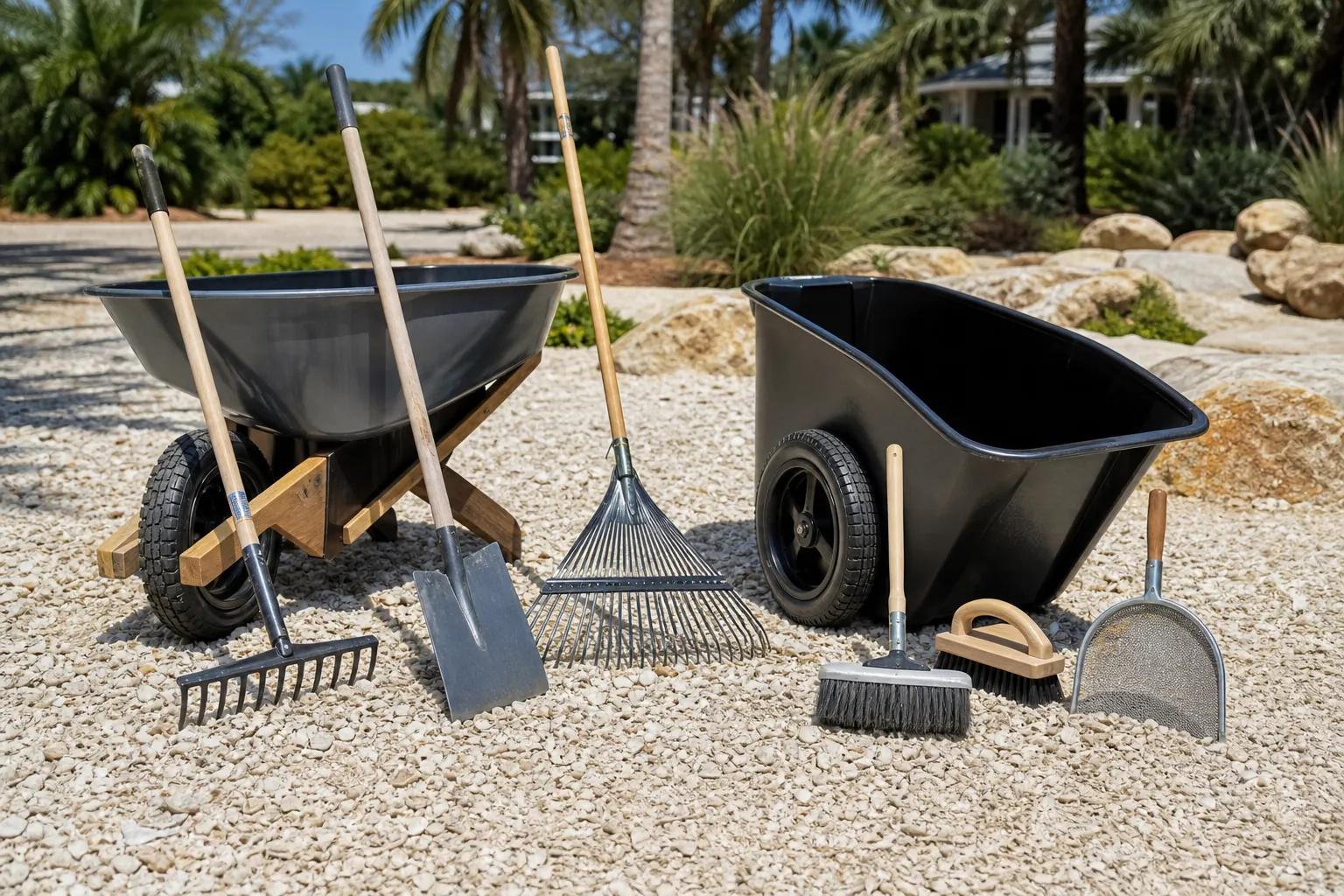
A scoop shovel is useful for transferring loose shell from a pile into a wheelbarrow. A smaller garden shovel can handle modest corrections along edges. Avoid overloading either tool, and lift manageable amounts rather than trying to move the pile in oversized loads.
Remove Leaves Without Blowing Away The Shell
Leaf removal is often the most frequent shell-care task in a planted Florida yard. Choose a method based on whether the leaves are dry, wet, scattered or packed between plants. Dry leaves are usually easier to lift without moving the surface beneath them.
A variable-speed blower can be useful, but it needs restraint. Start at the lowest effective setting, stand back and direct air across the surface rather than straight down. If shell fragments begin moving, reduce the speed or switch to a rake.
Blow leaves toward a collection point that does not require pushing them through a plant bed. Avoid directing debris toward streets, storm drains, neighboring property or open doors. Gather the leaves afterward instead of simply relocating them to another troublesome spot.
- Use a flexible rake when leaves are spread across an open section and the shell remains stable under light strokes.
- Pick up wet leaf clumps by hand when they cling to the surface and resist gentle raking.
- Use a blower cautiously where plants, loose fragments or fine material could be disturbed.
- Separate reusable shell from collected debris before disposing of the debris appropriately.
A leaf vacuum is not automatically a better option. It may ingest shell, damage its internal components or turn fragments into projectiles. Check the equipment instructions and avoid using a vacuum on shell unless the manufacturer expressly permits that application.
Choose Weed Tools That Protect The Surface
Shell does not eliminate the possibility of weeds. Seeds can arrive in windblown soil, dropped leaves or other organic debris. Removing weeds while they are small usually causes less disturbance than waiting until roots are established.
For isolated weeds, use gloved hands or a narrow hand weeder. Grip close to the soil line and pull steadily. If necessary, move a little shell aside first so you can see the root area, then return the material after removing the weed.
A broad hoe is often a poor fit for a finished shell surface. Its blade can scrape shell into soil and disturb nearby plant roots. Narrow tools give more control, particularly where shell surrounds tropical plants or follows a tight boundary.
If landscape fabric is already present, avoid stabbing tools through it. Exposed or torn fabric is a reason to inspect the area carefully, not simply rake harder. Repeated snagging can make a small problem larger.
Anyone considering herbicides should read the product label and confirm that the intended use is permitted near the surrounding plants. Do not assume a product is safe around ornamentals just because it is sold for outdoor weed control. Manual removal is a straightforward first option for a few scattered weeds.
Keep Shell Edges Out Of Grass And Walkways
A defined boundary reduces the time spent recovering scattered shell. Examine existing edging for gaps, loose sections or places where material has accumulated above the edge. Tools can help you tidy a border, but they cannot compensate for an unstable boundary.
A stiff hand brush and dustpan work well for collecting shell from a patio or hard walkway. Sweep fragments back into a container rather than pushing them into cracks or drains. A larger push broom can handle open paved areas if its bristles move the fragments effectively.
Near lawn edges, retrieve displaced shell before mowing. Shell caught by mower blades or string trimmers can become a projectile. Keep people and pets away from powered equipment, and follow the manufacturer's instructions for operating near loose surface materials.
A manual edging tool may help define the soil boundary during your own border work, but do not drive it blindly through shell, irrigation lines or shallow roots. Move the shell aside and identify what is below before cutting. For established beds, a hand tool often offers safer control.
If you are choosing new edging for a DIY project, consider whether it will retain the intended shell depth and tolerate the surrounding traffic. Select the boundary before purchasing a top-up so the extra material has somewhere stable to stay.
Level Small Patches And Recognize Bigger Problems
Minor dips can develop where people walk, where runoff crosses a surface or where shell has gradually migrated. A rake, scoop and straight board can help assess and correct small surface irregularities. First identify whether the material moved or the underlying ground settled.
Pull nearby excess shell toward a thin patch only if doing so will not expose the adjoining area. For a modest top-up, place small amounts and spread them in controlled passes. Compare the finished level with nearby edging and paved surfaces rather than relying on appearance alone.
- Check the area for standing water before treating a low spot as a simple shortage of shell.
- Remove accumulated leaves and debris before deciding how much additional material is needed.
- Keep shell below thresholds and away from locations where it could obstruct drainage.
- Stop adding material if the surface repeatedly shifts or the base feels unstable.
A hand tamper is not an essential purchase for every decorative bed. Compaction needs depend on the intended use, material and underlying base. Avoid assuming that compacting loose shell will correct an unsuitable path foundation. Follow suitable project guidance if you are building a new walking surface yourself.
Do not pressure-wash a loose shell bed as though it were concrete. Concentrated water can move fragments, expose soil and send material toward drains. If dirt buildup is the issue, first determine whether organic debris, runoff or nearby soil is the source.
Work Carefully Around Tropical Plants
Shell care should not turn into root disturbance. Use small tools near plants and avoid piling material against trunks, stems or crowns. Keep the existing soil level at the plant visible enough to inspect, and do not bury it under a fresh layer simply to make the bed look uniform.
Consider each plant's needs when choosing where shell belongs. Coquina shell contains calcium carbonate and can influence soil chemistry over time. Plants differ in their tolerance of alkaline conditions, so check the needs of your chosen plants and use soil testing when compatibility is uncertain.
Tropical Yards sells palm trees, hibiscus, bougainvillea, ferns and other tropical plants. If you are buying plants for your own planting project, match their light, moisture and soil preferences to the location rather than selecting them solely for appearance beside shell.
Wear gloves around rough fragments and thorny growth, especially near bougainvillea. Use a hand rake rather than dragging a full-size rake through foliage. If branches block access, work around them rather than treating shell maintenance as a reason for unnecessary pruning.
During irrigation, watch where water lands. Repeated spray or concentrated runoff can move finer material and splash soil into the shell. Inspect the watering pattern before repeatedly replacing material in the same location.
Plan A Top-Up Purchase And Dump Trailer Delivery
When redistribution is no longer enough, measure the specific thin sections before ordering more shell. Record their length and width, note irregular shapes, and estimate the additional depth needed. Separate true top-up areas from locations that need a drainage or boundary correction first.
Ask about the material currently available rather than assuming every load will look identical. Natural shell can vary in fragment size, color and finer content. If appearance matters, discuss those characteristics before ordering and consider how fresh material may look beside weathered shell.
For related ordering details, use the coquina shell delivery information page. Keeping delivery planning separate from routine tool selection makes it easier to prepare for a purchase without confusing it with a maintenance service.
- Identify an unloading location that can accommodate a loose material pile without blocking everyday access.
- Discuss access, overhead obstructions, gates and surface conditions before scheduling dump trailer delivery.
- Keep children, pets and bystanders clear of the vehicle and unloading area.
- Plan how you will move the shell from the drop location to the project area yourself.
- Have a suitable wheelbarrow, shovel and clear travel route ready before the material arrives.
Tropical Yards offers dump trailer delivery of plants and coquina shell from St. Augustine to Daytona Beach. Delivery supplies the material; spreading, planting and ongoing care remain your responsibility. Confirm the unloading arrangement directly rather than assuming the trailer can reach every part of your property.
Build A Simple Routine Around Conditions
A useful routine is based on what the yard needs, not a rigid calendar. Inspect after windy weather, heavy leaf drop or rain that sends runoff across the surface. Address small issues before they become large piles of debris or broad areas of exposed soil.
Keep tools clean and dry after use. Remove trapped shell from rake tines, check handles for damage and store sharp hand tools safely. Inspect wheelbarrow tires and handles before moving a new load, since unstable equipment makes careful placement harder.
Start with gentle methods, preserve useful shell and buy replacement material only after identifying why it is missing. That approach keeps DIY care focused and avoids unnecessary disturbance. For questions about buying coquina shell, tropical plants or dump trailer delivery within the St. Augustine to Daytona Beach service area, call Tropical Yards at 772-267-1611.
Call 772-267-1611 to talk through next steps.