Coquina shell material specifications for Florida buyers
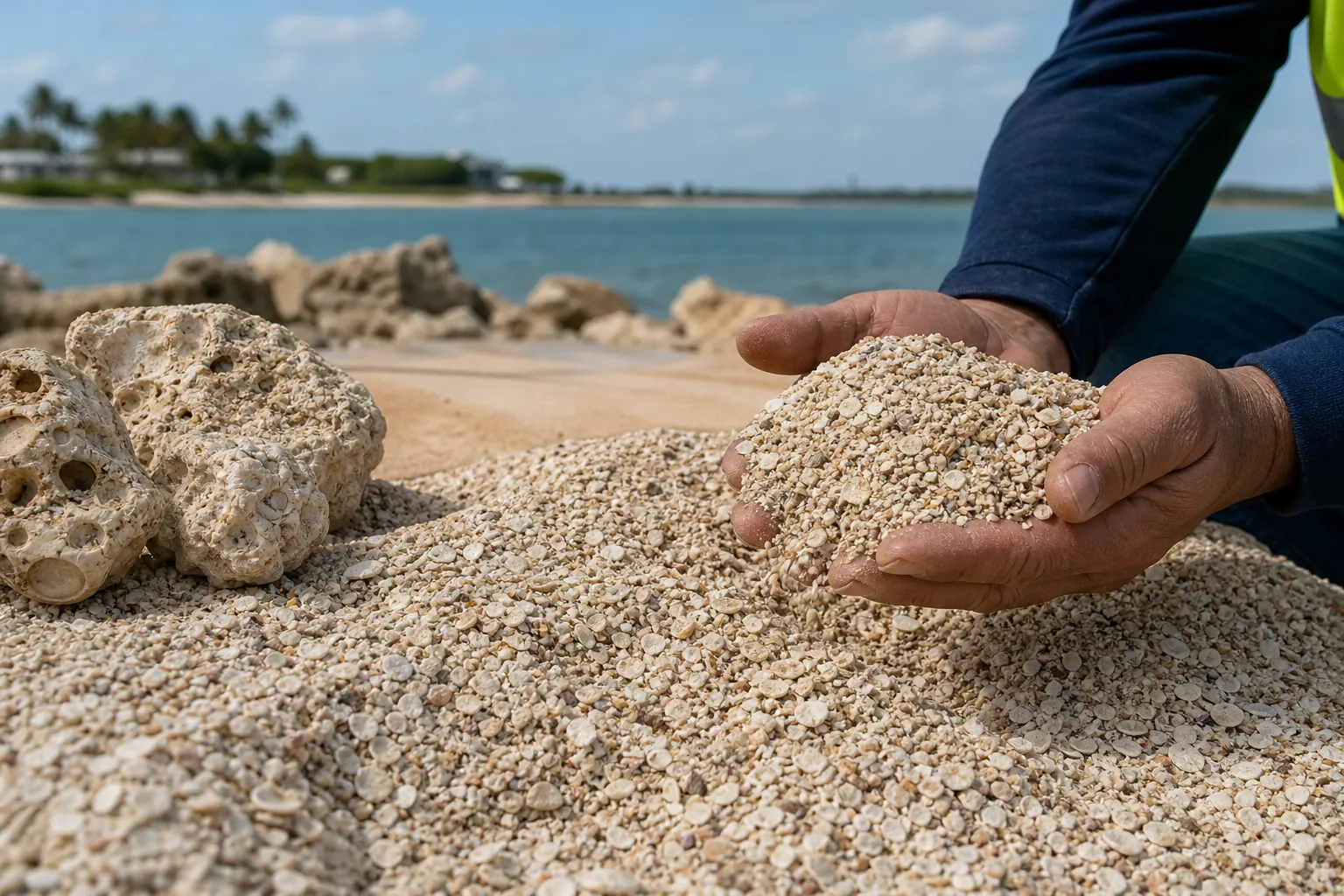
Buying coquina shell is easier when you know which material details affect your project. Color matters, but particle size, fines, moisture, intended use, and delivery access deserve just as much attention. Two loads described as coquina shell can look and behave differently, particularly when they come from different sources or undergo different processing.
This guide explains coquina shell material specifications Florida buyers can use to compare options and prepare a practical order. It focuses on landscape material selection rather than engineered construction requirements. Tropical Yards supplies coquina shell and tropical plants, with dump trailer delivery from St. Augustine to Daytona Beach. Placement, spreading, planting, and other project work remain the buyer's responsibility.
Start With The Project, Not Just The Product Name
Coquina is a naturally occurring shell-rich sedimentary material. In landscape supply, the name may describe loose shell-rich material, crushed coquina, or a processed blend containing shell fragments and smaller particles. The product name alone does not establish a consistent gradation, mineral composition, or performance standard.
Before comparing suppliers, write down what you want the material to do. A decorative bed surface has different priorities from a frequently used walking area. A surface intended to remain loose should not be evaluated the same way as a material intended to compact.
Use the coquina shell overview as your starting point for general product information. This specifications guide serves a narrower purpose: identifying the questions that help you determine whether the available material fits your particular use.
- For decorative coverage, prioritize appearance, particle texture, and compatibility with nearby plants.
- For a walking area, evaluate footing, sharp fragments, loose particles, and whether the material suits the expected users.
- For a compacted surface, ask about the fines content and whether the supplied material is intended for that application.
- For any structural or permitted use, obtain the required written specification before selecting material.
Do not assume landscape shell qualifies as roadway base, structural fill, or drainage aggregate. Those applications may require engineering review, testing, or an approved aggregate specification.

Understand The Material Details Worth Checking
Particle size and gradation
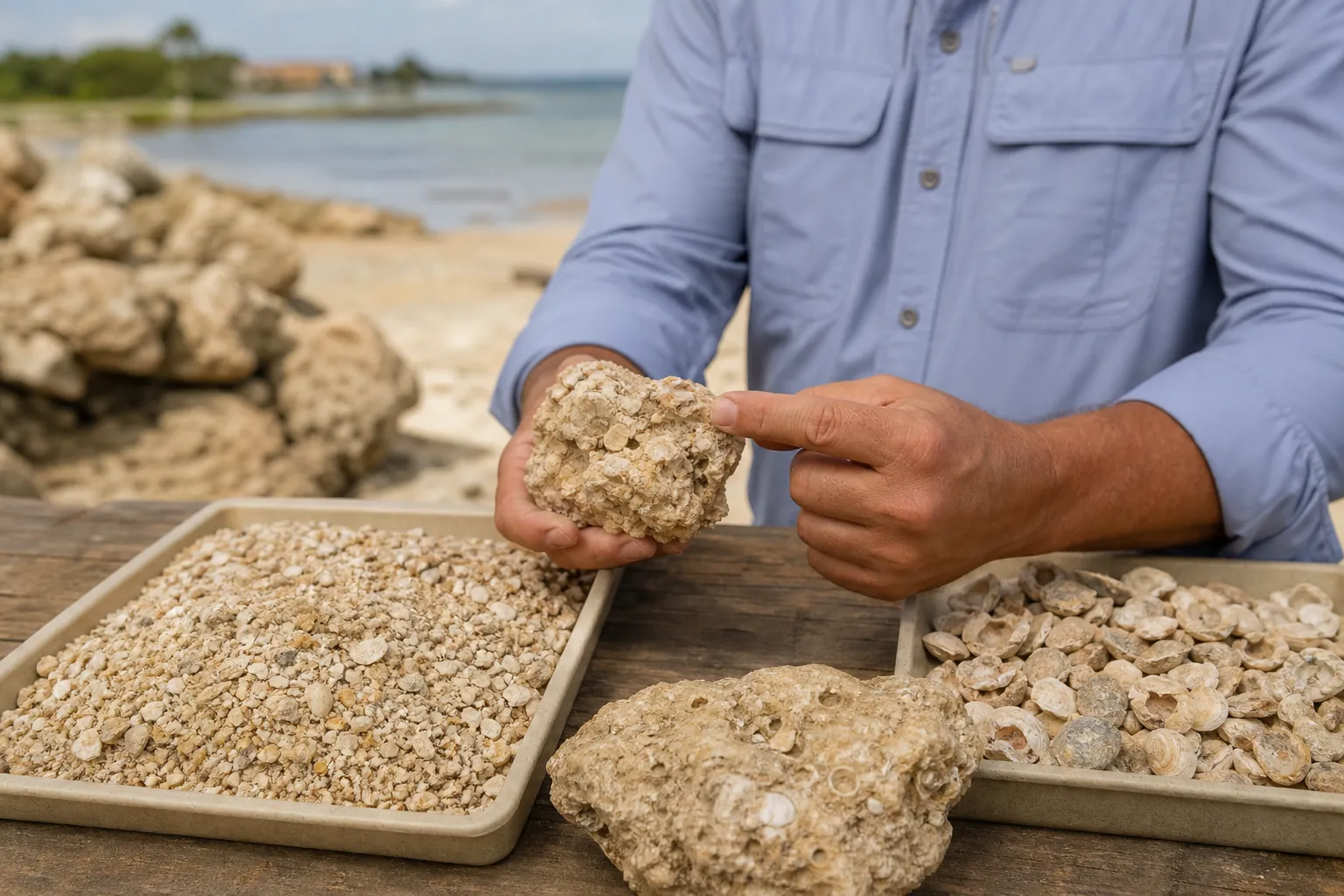
Particle size describes the dimensions of individual pieces. Gradation describes how those sizes are distributed throughout the material. A load with both coarse shell fragments and smaller particles can behave differently from a load made mostly of similar-sized pieces.
Ask whether the product is screened, crushed, or supplied without a controlled screening step. If a size range is advertised, clarify whether it is a nominal description or a documented grading range. A nominal size does not necessarily mean every piece falls within that dimension.
For projects with exact requirements, request available sieve analysis or other source documentation. A photograph is helpful for appearance, but it cannot replace a grading report when a formal specification applies.
Fines content
Fines are the smaller particles mixed among the larger shell pieces. They can help fill voids and influence how a material packs, but they can also affect dust, tracking, and water movement. The right amount depends on the intended surface and the rest of its construction.
Do not treat low fines as universally better. A buyer seeking a loose decorative appearance may prefer a different blend than someone evaluating material for compaction. Ask how the current product is processed rather than relying on a general description from a previous purchase.
Shell content and other components
Shell-rich material may include sand, mineral fragments, and naturally occurring variation. Ask what the supplier knows about the source and composition. Avoid assuming that every product called coquina is pure shell or contains the same proportion of shell.
If visible foreign material is a concern, discuss it before ordering. For specialized projects, written acceptance criteria are more useful than vague descriptions such as clean, premium, or construction grade.
Color and texture
Coquina shell commonly presents natural variation rather than a uniform manufactured finish. Moisture, dust, particle size, and lighting can change its appearance. A wet sample may look darker than the same material after it dries.
Review a representative sample or current photographs when appearance is important. If you plan to extend an existing shell area, expect that a new load may not immediately match older material that has weathered outdoors.
Separate Landscape Descriptions From Formal Specifications
A useful landscape product description tells you what you are buying and what characteristics to expect. A formal specification sets measurable acceptance requirements. These are related, but they are not interchangeable.
For a residential decorative project, a practical buying checklist may be enough. For work governed by plans, permits, association requirements, or a construction contract, you may need documentation addressing gradation, testing methods, source approval, or other project-specific conditions.
There is no reason to assume one universal coquina shell specification applies to every Florida landscape project. Requirements depend on the use, location, and governing documents. If someone has specified a particular aggregate standard, provide that information before placing an order.
- Ask whether the available material has documentation that addresses your stated requirements.
- Confirm that any test report describes the relevant source or product rather than an unrelated material.
- Check whether your project requires approval before delivery, especially when a contractor or engineer controls material acceptance.
- Keep written product descriptions and order details so you can compare the delivered material with what was discussed.
Tropical Yards is a supplier, not an engineering or installation service. Buyers should obtain qualified project advice when material suitability depends on structural capacity, accessibility standards, drainage design, or code compliance.
Evaluate Drainage, Compaction, And Everyday Use
Shell material does not determine drainage by itself. Water movement also depends on fines, placement depth, compaction, the soil below, slope, and whether water has somewhere appropriate to go. A shell surface over poorly draining soil can still hold water.
Before buying, inspect the area after rainfall. Note standing water, runoff routes, low spots, and downspout discharge. Adding shell should not be treated as a substitute for resolving an underlying drainage problem.
Likewise, compaction is not a single property guaranteed by the word coquina. Results depend on the grading, moisture condition, preparation, equipment, and layer thickness. If a firm surface is essential, verify the material's intended use and obtain project-specific preparation guidance.
Think about the people using the space. Shell fragments can feel different under shoes, bare feet, stroller wheels, or mobility aids. Loose material can shift, and larger or sharper pieces may be uncomfortable in some settings.
- Evaluate a sample under the type of footwear normally used in the area.
- Consider whether scattered shell could reach adjacent pavement or indoor entryways.
- Check applicable accessibility requirements before choosing loose shell for a required accessible route.
- Keep decorative material separate from uses that require a tested, stable, or load-bearing surface.
For a DIY project, a small test area can reveal texture and everyday usability before you commit to broad coverage. It will not establish engineering compliance, but it can help you make a more informed landscape choice.
Check Compatibility With Florida Plants And Soil
Shell contains calcium carbonate, which can influence soil chemistry over time. The effect depends on the material, soil conditions, exposure, and other factors. Do not assume shell is chemically neutral around every planting.
If your plants prefer acidic conditions, consider testing the soil and asking your local Extension office how shell-rich material may affect that setting. Existing plant symptoms can have several causes, so avoid diagnosing a nutrient issue from appearance alone.
Coquina shell also behaves differently from organic mulch. It does not provide the same decomposing organic matter, and a sun-exposed mineral surface can become warm. Consider the site's light, moisture, and plant needs before covering a bed.
Keep material away from plant stems and trunks rather than piling it against living tissue. Leave enough room to inspect irrigation, check soil moisture, and care for the plants yourself. Avoid burying root flares or changing the soil grade around established trees.
Tropical Yards also sells palm trees, hibiscus, bougainvillea, ferns, and other tropical plants. When buying plants alongside shell, choose each for the actual growing conditions. A sunny shell-bordered area and a shaded fern planting may have very different moisture and exposure needs.
Plant selection and shell selection should support the same site conditions without assuming that every tropical plant responds identically. Buyers handle planting and ongoing plant care themselves.
Calculate Quantity Using Area And Intended Depth
A useful quantity estimate starts with measurements, not a guess based on how a pile looks. Measure the coverage area and choose a depth appropriate to the intended use. Do not use a generic decorative depth for a project that has specified construction requirements.
For rectangular areas, multiply length by width to find square feet. Divide irregular spaces into smaller rectangles or other manageable shapes, calculate each area, and add the results. Subtract substantial areas that will remain uncovered.
To estimate loose volume in cubic yards, multiply square feet by depth in inches and divide by 324. For example, a 300-square-foot area covered at a planned loose depth of 2 inches requires approximately 1.85 cubic yards before adjustments.
That calculation is a geometric estimate, not a guarantee of finished coverage. Uneven ground, settling, compaction, and material left in handling equipment can affect the amount needed. Discuss those conditions when confirming the order.
- Clarify whether your target depth describes loose placement or a finished compacted layer.
- Ask whether the material is sold by volume, weight, or another stated order unit.
- Do not convert cubic yards to tons using an assumed density when the supplier can provide product-specific guidance.
- Allow for the actual shape and grade of the area rather than rounding every measurement down.
Moisture can affect load weight without increasing the dry material volume in the same proportion. If you are comparing order quantities, make sure the units and assumptions match before deciding that two quotes describe equivalent amounts.
Plan Dump Trailer Delivery Before Ordering
Tropical Yards offers dump trailer delivery of coquina shell and plants from St. Augustine to Daytona Beach. Delivery planning should happen before the load is dispatched, especially when access is narrow or the proposed unloading area is sensitive.
For broader delivery considerations, review the coquina shell delivery information. Keep the specifications discussion focused on material characteristics, and use delivery planning to resolve access, unloading, and order logistics.
Describe the route onto the property, including gates, tight turns, slopes, overhead branches, and overhead wires. A dump trailer needs suitable operating clearance, particularly when the bed is raised. The driver must be able to assess whether the unloading location is appropriate.
Ground conditions matter as well. Saturated soil, soft shoulders, and unsupported edges can create access problems. Do not assume a delivery vehicle can cross a lawn, septic area, buried utility, or surface that was not built to support it.
- Identify a proposed drop location that does not block essential access or direct runoff toward a building.
- Explain surface conditions and any known underground systems near the access route.
- Ask about vehicle and unloading clearance rather than estimating it from a passenger vehicle.
- Have a plan for moving the shell from the delivery pile to the project area yourself.
- Discuss plant deliveries separately if the order includes living material with different unloading considerations.
Dump trailer delivery does not include spreading shell, preparing the site, installing plants, or cleaning up the yard. Confirm the delivery arrangement and keep your DIY work plan separate from the material order.
Inspect The Load And Prepare For DIY Handling
Before spreading material, compare its general appearance with the product description discussed when ordering. Look at several portions of the pile because larger particles can collect differently from smaller ones during transport and unloading.
Check visible particle size, moisture, color, and any unexpected material. If something appears inconsistent with the order, contact the supplier before distributing the entire pile. Keep photographs and the order details available for that conversation.
For DIY handling, use gloves and sturdy footwear because shell fragments may have sharp edges. Choose eye protection when shoveling or working where particles could fly. Avoid creating unnecessary dust, and follow appropriate respiratory protection guidance when dusty conditions cannot be avoided.
Use tools and equipment suited to the material and your physical capacity. Small, manageable wheelbarrow loads are easier to control than overloaded ones. Keep children and pets away from active handling areas and parked delivery equipment.
If excavation or stakes are part of your project, arrange utility locating before disturbing the ground. Delivery of material does not establish that the site is ready for digging, edging, or other preparation.
Build A Clear Coquina Shell Order Request
A clear request helps a supplier answer practical questions without guessing at your project. Describe the application, measured area, intended depth, preferred appearance, and any written requirements. Add your delivery location and a straightforward description of access.
Ask what is known about the current material's processing, particle range, fines, and source. Where exact documentation is unavailable, distinguish observed characteristics from tested specifications. That distinction is especially important when your project has requirements beyond decorative landscaping.
Keep your final checklist simple: suitable material, understandable order units, realistic quantity, plant compatibility, and workable delivery access. Resolve unanswered questions before scheduling the load rather than after it reaches the property.
For coquina shell sales, tropical plant sales, and dump trailer delivery from St. Augustine to Daytona Beach, call Tropical Yards at 772-267-1611. Share your measurements and intended use to discuss the available material and delivery details, then plan the placement and planting work yourself.
Call 772-267-1611 to talk through next steps.