Understanding natural color variation in coquina shell
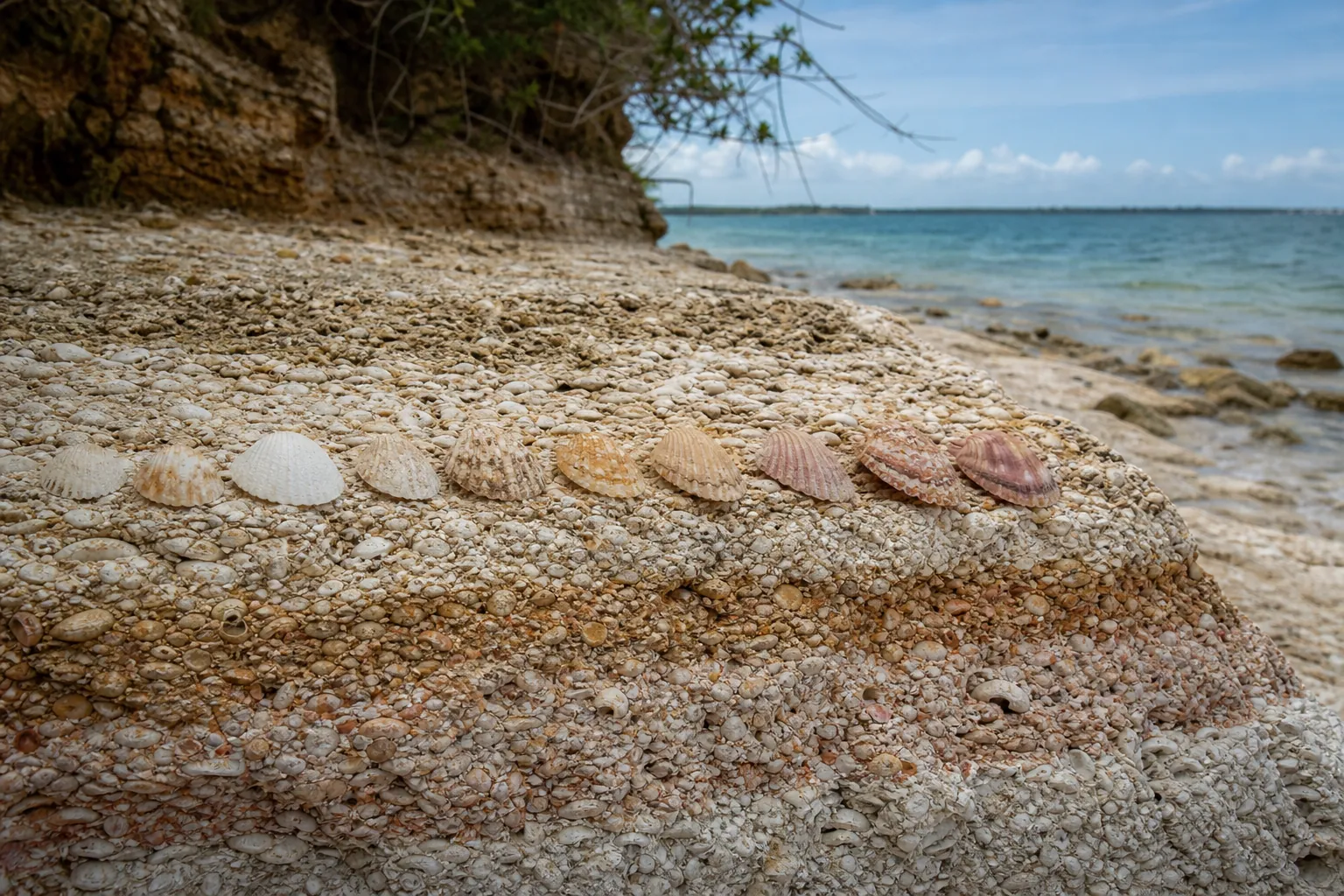
Coquina shell is not a manufactured surface with a single, repeatable color. Its appeal comes partly from the mix of shell fragments, textures, and naturally occurring tones that make each load slightly different. For Florida buyers, understanding that variation helps set realistic expectations before choosing material for a walkway, garden border, or decorative ground-cover area.
If you are researching coquina shell natural color variation, the most useful question is not whether every piece will match. It is whether the overall blend works with your home, plants, and intended use. A small sample, a photograph, and a freshly delivered pile can each show a different side of the same material.
Tropical Yards supplies coquina shell and tropical plants, with dump trailer delivery from St. Augustine to Daytona Beach. This guide focuses on choosing and evaluating shell yourself. For broader product information, start with the coquina shell page, then use the sections below to understand color before ordering.
What Gives Coquina Shell Its Natural Color?
Coquina shell material contains shell fragments that do not all begin with the same appearance. Different shells, fragment sizes, and degrees of weathering can contribute to a blend of pale and warmer tones. Depending on the material available, you may notice cream, off-white, tan, muted gray, or occasional pinkish and brownish pieces.
Those colors do not necessarily appear in equal amounts. One load may read as mostly light cream from a distance, while another looks warmer because darker fragments are more visible. The larger pieces often attract attention up close, but the smaller particles help determine the overall appearance across a broad area.
Source material and processing also matter. Screening changes which particle sizes remain in a product, and the relationship between fine particles and larger fragments can affect how its color is perceived. Ask what material is currently available rather than assuming that every product called coquina shell has the same blend.
Color alone does not identify particle size, suitability for a project, or how a material will behave underfoot. Treat appearance as one part of your buying decision, alongside the actual product description and the requirements of the area where you plan to use it.
Why Samples, Photos, And Full Loads Can Look Different
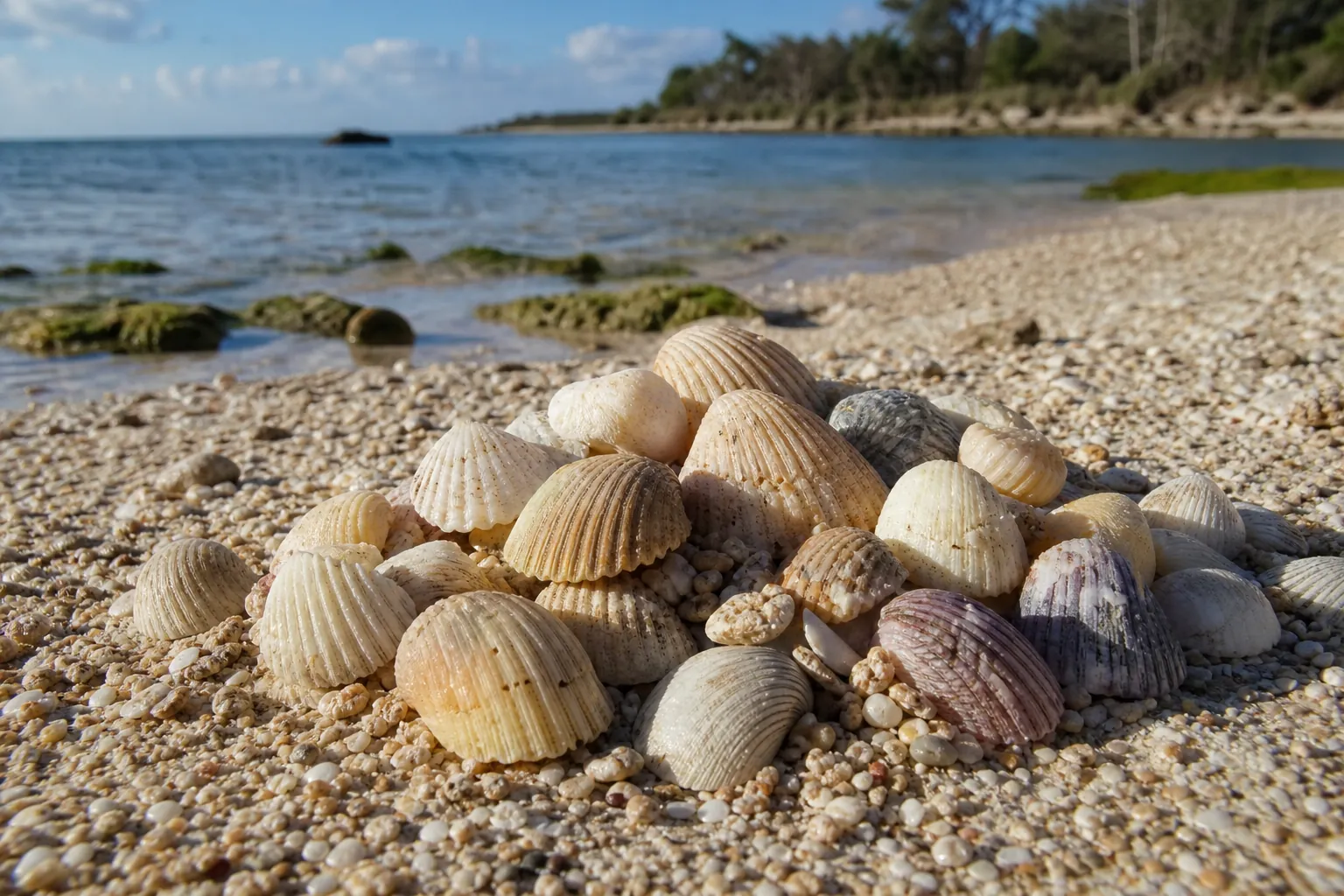
A handful of shell offers a close-up view, not a complete picture of a finished area. If that handful contains several darker fragments, it can seem warmer than the larger batch. If it mostly contains pale pieces, it may make the material appear more uniform than it really is.
Photographs introduce another layer of uncertainty. Phone cameras adjust brightness and white balance automatically. A shell pile photographed beside green foliage may look different from the same pile photographed near a beige wall. Editing, filters, and screen settings can shift the apparent color further.
Coverage changes the impression too. In a thin test layer, the soil beneath can show through and influence the color you see. A fuller layer may appear lighter or more consistent because less underlying ground is visible. Always consider how closely a sample resembles your intended use.
- Ask whether a photograph shows the material currently available or an earlier batch.
- Compare an evenly mixed sample rather than selecting only the prettiest fragments.
- Look at the sample both close up and from the distance where you will usually see the area.
- Use photographs as a general reference, not as a promise of an exact color match.
For larger projects, a realistic overall impression is more useful than trying to match one individual shell fragment. Natural variation remains visible even when the material is spread evenly.
How Moisture And Florida Light Change The Appearance
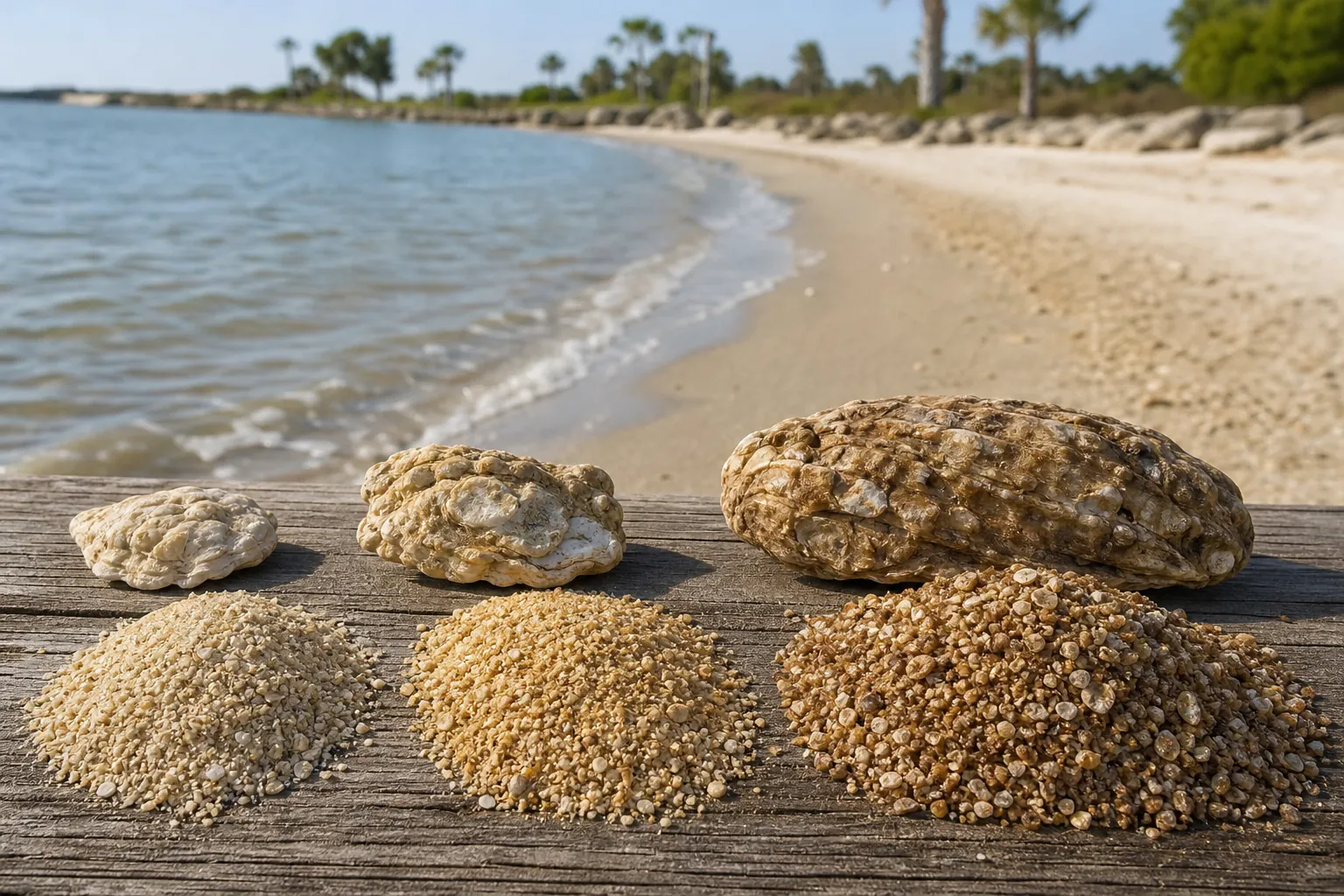
Dry shell and wet shell often look different. Moisture can make certain fragments appear darker and can bring out tones that are less noticeable when the material is dry. After rainfall, a pale surface may temporarily look richer or more varied.
That shift does not automatically mean the material has changed permanently. Compare it again after it has dried. A freshly delivered load may also contain moisture, so its first appearance may not represent how it will look during a dry afternoon.
Florida sunlight can make pale shell look especially bright in an open area. Under palms or beside a shaded wall, the same blend may appear softer or grayer. Morning and late-afternoon light can emphasize warmer tones, while strong midday light may reduce subtle differences.
Before making a final choice, place a representative sample where you intend to use it. Check it in sun and shade, then dampen part of the sample with plain water. This simple comparison helps you judge the range of appearances you can reasonably expect.
Keep the surrounding surfaces in view during the test. A bright white wall, dark edging, red-toned pavers, and bare soil all change the contrast. You are choosing a material for a setting, not evaluating an isolated color swatch.
Choosing A Blend That Works With Your Florida Property
Start with the fixed features you already have. House paint, walkways, patio surfaces, fencing, and edging usually matter more than a close-up image of the shell. Decide whether you want a gentle transition between those features or a noticeable contrast.
A mostly pale blend can stand out against dark borders and deep green foliage. A warmer blend may relate more comfortably to tan stucco or earth-toned pavers. Neither choice is automatically better. The useful comparison is how the actual available material looks beside your existing surfaces.
Consider the amount of shell that will be visible. A narrow strip along a planting bed may show individual fragments clearly. A larger open area tends to read as a combined color from a distance. Evaluate your sample from the viewpoints that matter, such as a front window or the approach to a gate.
- Place the sample beside existing paving so you can compare undertones directly.
- Check the material near your edging because the border will frame its appearance.
- View the sample beside mature foliage rather than judging it only against bare ground.
- Choose an acceptable range of tones instead of depending on one exact shade.
If you are also buying plants, Tropical Yards supplies palm trees, hibiscus, bougainvillea, ferns, and other tropical plants. Choose plants for their growing conditions first, then consider how their foliage and flowers complement the shell.
Questions To Ask Before Buying Coquina Shell
A useful product conversation should distinguish natural variation from the specifications that matter to your project. Describe the area you are covering, how you intend to use it, and whether you are trying to coordinate with existing shell.
Ask about the current material, its general particle-size range, and the way it is sold. If an example photo or sample is available, confirm what it represents. A supplier can describe the available product without implying that every fragment or future load will look identical.
- Ask what general tones are visible in the coquina shell currently available.
- Ask whether the material includes a mix of larger fragments and smaller particles.
- Ask whether you can review a current sample or photograph before deciding.
- Explain whether this is a new area or an addition beside existing shell.
- Confirm the ordering unit and the information needed to estimate your quantity.
- Discuss dump trailer access and the intended unloading location before arranging delivery.
Bring measurements rather than relying only on a description such as a small side yard. The area and intended depth determine the volume you need. Product characteristics can affect quantity planning, so confirm the estimate for the specific material you are considering.
Do not make color do the work of a product specification. A lighter-looking shell is not automatically better for walking, and a warmer-looking blend is not automatically more durable. Appearance and intended use should be discussed separately.
Matching New Shell To An Existing Area
Adding coquina shell beside an older area presents a different challenge from starting fresh. Existing material has been exposed to weather, foot traffic, soil, and organic debris. Its current appearance may not match how it looked when first delivered.
Compare new material with a representative section of the existing shell. Avoid judging only against a particularly dirty corner or one unusually pale patch. Look at several locations and note whether the older area is consistently different or simply varied.
A wet-to-dry comparison is especially important here. If one sample is damp and the other is dry, the apparent mismatch may be exaggerated. View both under similar moisture and lighting conditions before deciding how closely they coordinate.
If you plan to distribute new shell yourself, consider whether blending it through the existing area is practical for your project. Leaving a sharp boundary between batches can make differences more obvious. A mixed transition may look more natural, but it will not create a guaranteed color match.
Keep a small labeled sample from your new order for future reference. Record the order date and product description. That information can help with later conversations, although future source material may still differ.
DIY Handling That Keeps The Overall Appearance Consistent
Once you have chosen a blend, handling can influence how evenly its colors appear across the area. Taking material from only one portion of a pile may concentrate a particular size or tone in one spot. Looking at the mix as you work can help you avoid obvious bands.
Where practical, draw material from different parts of the delivered pile rather than working through one narrow slice at a time. Spread it in manageable sections and step back periodically to check the overall appearance. Use appropriate gloves and footwear when handling shell fragments.
Focus on a reasonably consistent layer for your intended project. A thin section may look darker because underlying soil is visible, while a deeper neighboring section may appear lighter. That contrast can look like a color difference even when both sections came from the same load.
- Check the whole area from several viewpoints before deciding that one section needs adjustment.
- Redistribute visibly concentrated fragments if you want a more evenly mixed appearance.
- Avoid sorting every piece by color because it can make a natural material look artificially patchy.
- Keep loose shell off adjacent walking surfaces while you work.
Before using shell around plants, check the needs of each plant and the suitability of the material for that location. Shell-based materials can influence soil conditions over time. Keep material away from direct contact with trunks and stems, and avoid burying plant crowns.
Planning Dump Trailer Delivery Without Color Surprises
Delivery planning is partly about access and partly about giving yourself space to evaluate and handle the material. Tropical Yards offers dump trailer delivery of plants and coquina shell from St. Augustine to Daytona Beach. Delivery supplies the material; it does not include spreading, planting, or other landscaping labor.
Before ordering, identify a proposed unloading location and discuss it with the supplier. Mention gates, narrow approaches, overhead branches, sloped ground, and nearby structures. Do not assume that a spot accessible to a passenger vehicle is suitable for a loaded dump trailer.
Choose a location that lets you move the shell to the project area without unnecessarily mixing it with loose soil or debris. Any ground protection should be appropriate for the delivery conditions and discussed beforehand. Keep the unloading area clear of people, pets, and vehicles.
If appearance is a priority, review the delivered material after unloading and again when its moisture level changes. Do not judge the entire load from a few fragments at the edge. Look at several portions before deciding how the blend will read across your project.
For work divided into stages, ask about current availability and explain that color coordination matters. Separate orders may vary. Ordering your planned quantity together may reduce reliance on a later batch, but it cannot eliminate natural variation within the material.
Common Color Questions And A Practical Buying Checklist
Does darker shell mean something is wrong?
Not necessarily. Darker pieces may be part of the natural blend, and moisture can deepen their appearance. If you see an unusual localized mark, coating, or foreign material, describe it to the supplier rather than assuming it is normal color variation.
Will every load look the same?
No exact match should be assumed. Natural material can vary between batches and within a single load. Current samples and clear descriptions are better buying tools than expecting a repeatable manufactured color.
Should you wash shell to make it uniformly white?
Do not expect washing to remove the natural color of individual fragments. Avoid applying household cleaners or treatments without understanding their effects on nearby plants, soil, and runoff. Choose a blend you like rather than planning to alter its color afterward.
What should you confirm before ordering?
- You have evaluated the available shell in lighting similar to your project location.
- You understand that wet and dry appearances may differ.
- You have measured the area and discussed quantity for the intended depth.
- You have explained any need to coordinate with existing material.
- You have discussed a suitable unloading location and planned your own spreading work.
The best approach to coquina shell natural color variation is to expect a range, compare it thoughtfully, and plan around the actual material available. A representative sample and a clear ordering conversation are more useful than chasing an exact shade from a photograph.
For questions about coquina shell sales, tropical plant availability, or dump trailer delivery from St. Augustine to Daytona Beach, call Tropical Yards at 772-267-1611. Share your measurements, intended use, and delivery location so you can discuss the materials for your DIY project.
Call 772-267-1611 to talk through next steps.