Using coquina shell near storm drains in Florida
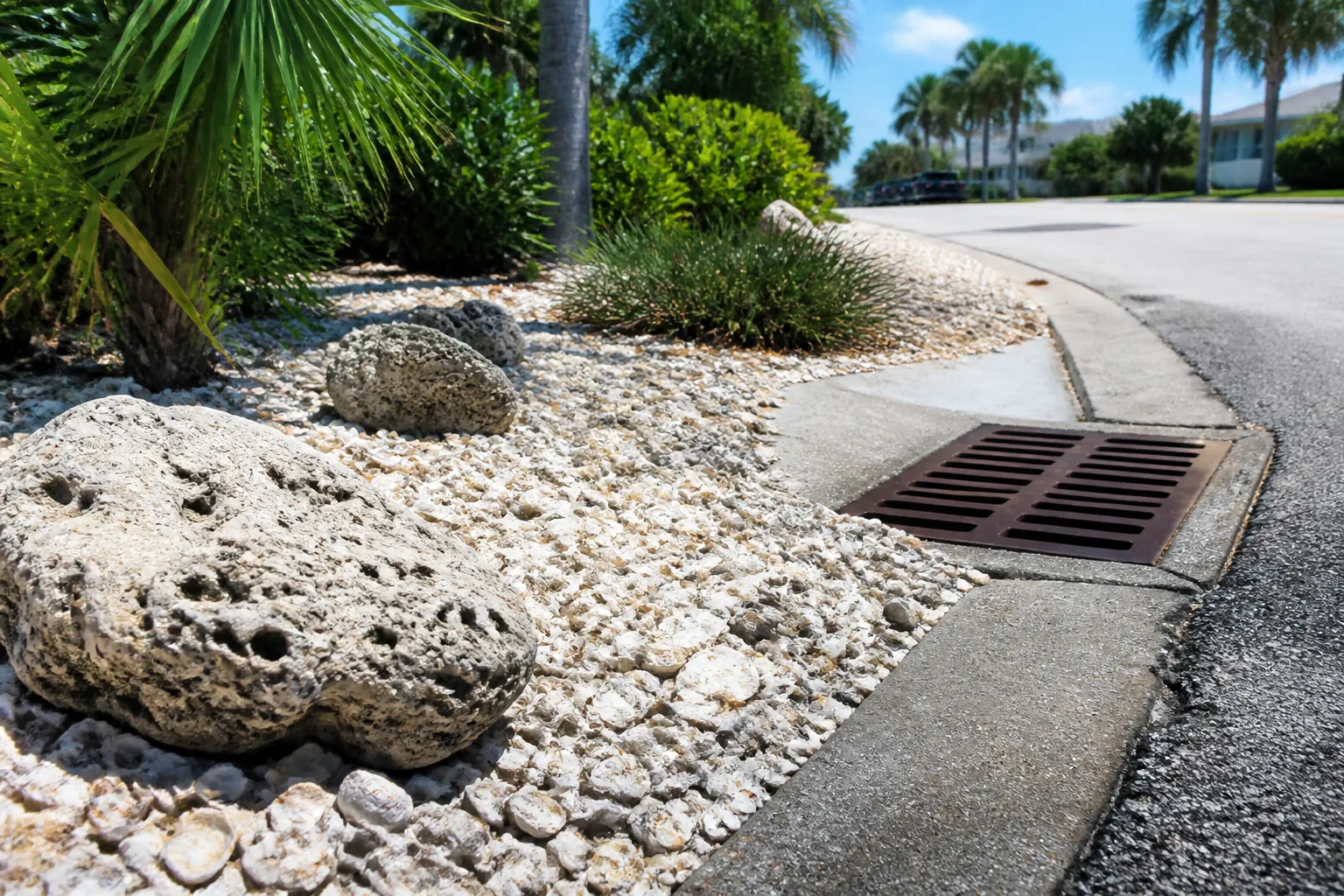
Coquina shell can give a Florida yard a coastal look without turning every outdoor surface into pavement. Near a storm drain, however, appearance is only part of the buying decision. Loose shell needs a defined place to stay, and rainwater needs a clear route to the drainage system.
The practical goal is simple: keep shell out of the inlet, preserve the intended drainage path, and avoid placing material where routine runoff will carry it away. That takes a little observation before ordering, especially around sloped driveways, roadside swales, curb openings, and neighborhood drainage easements.
Tropical Yards supplies coquina shell and tropical plants, with dump trailer delivery from St. Augustine to Daytona Beach. This guide focuses on buyer decisions and do-it-yourself planning. For general material information, start with the coquina shell buying hub, then use the drainage-specific checks below to decide whether your proposed location makes sense.
Understand The Drain Before Choosing The Shell Area
A storm drain is not just the visible grate or curb opening. It is part of a larger route that may include a gutter, swale, pipe, catch basin, or retention area. Changing the ground around one part can affect how the whole route works.
In many Florida communities, stormwater enters ponds, canals, wetlands, or other receiving waters through drainage infrastructure. Do not assume a storm drain sends runoff to a wastewater treatment plant. Keeping loose landscaping material out of that system is a sensible starting point.
First, identify the feature near your project. A grated inlet in a driveway presents a different situation from a curb inlet beside the street. A grassed swale may have no visible grate at all, yet still serve an important drainage function.
- A curb inlet needs an unobstructed opening and a clear gutter approach so water can reach it.
- A grated inlet needs its openings and access area kept clear of loose shell and other material.
- A swale needs its low channel and intended shape preserved so runoff can move through it.
- A drainage easement may limit what you can place there, even when it appears to be part of your yard.
Check your property documents, homeowners association rules where applicable, and local stormwater or public works guidance before changing these areas. There is no single setback distance that applies to every Florida property or drain type.
Watch Runoff Before You Order Coquina Shell
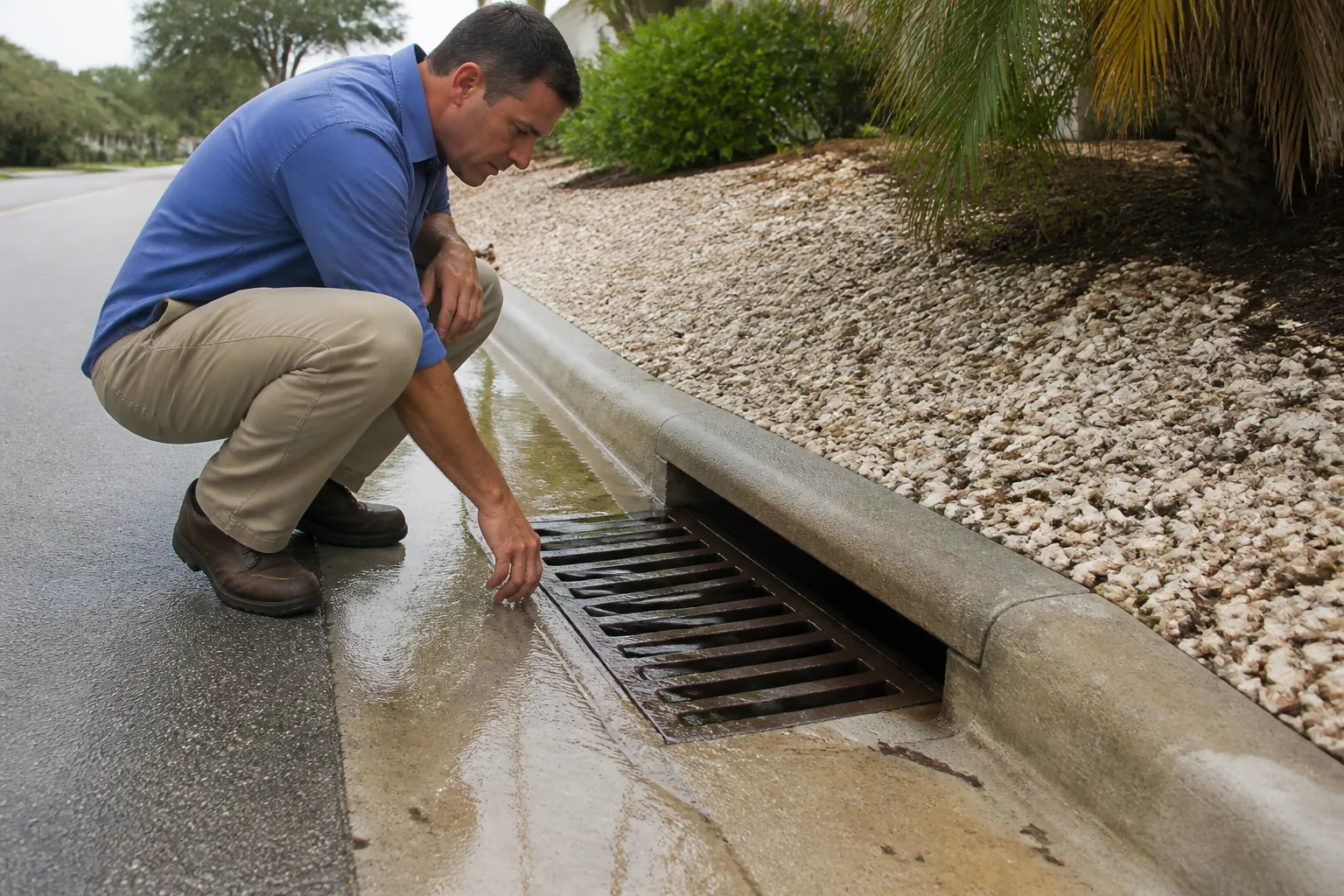
The best time to evaluate a proposed shell bed is before material arrives. Look at the site during or just after ordinary rainfall from a safe location. Do not enter moving water or stand in the street to inspect an inlet.
Notice where water starts, where it concentrates, and where it slows down. Roof downspouts, driveway slopes, neighboring pavement, and compacted ground can all direct water toward a shell area. A bed that looks level on a dry day may sit directly across a runoff route.
Look for small clues after the water recedes. Lines of leaves, sand deposits, shallow channels, or exposed roots can reveal repeated movement. If existing mulch or soil already washes toward the drain, replacing it with shell does not automatically solve the underlying problem.
- Mark the proposed shell boundary and compare it with the path water actually takes.
- Check whether downspouts discharge directly into the proposed bed or across its edge.
- Look for a low point where water could collect behind edging and then overflow toward the inlet.
- Observe whether vehicle tires or foot traffic could push shell into a gutter even without rainfall.
A broad, relatively stable area outside the drainage route is usually a more sensible candidate than a narrow strip beside a grate. If runoff is concentrated or drainage behavior is unclear, ask your local stormwater office or a qualified drainage professional before buying material for that spot.
Set A Boundary Without Blocking Water
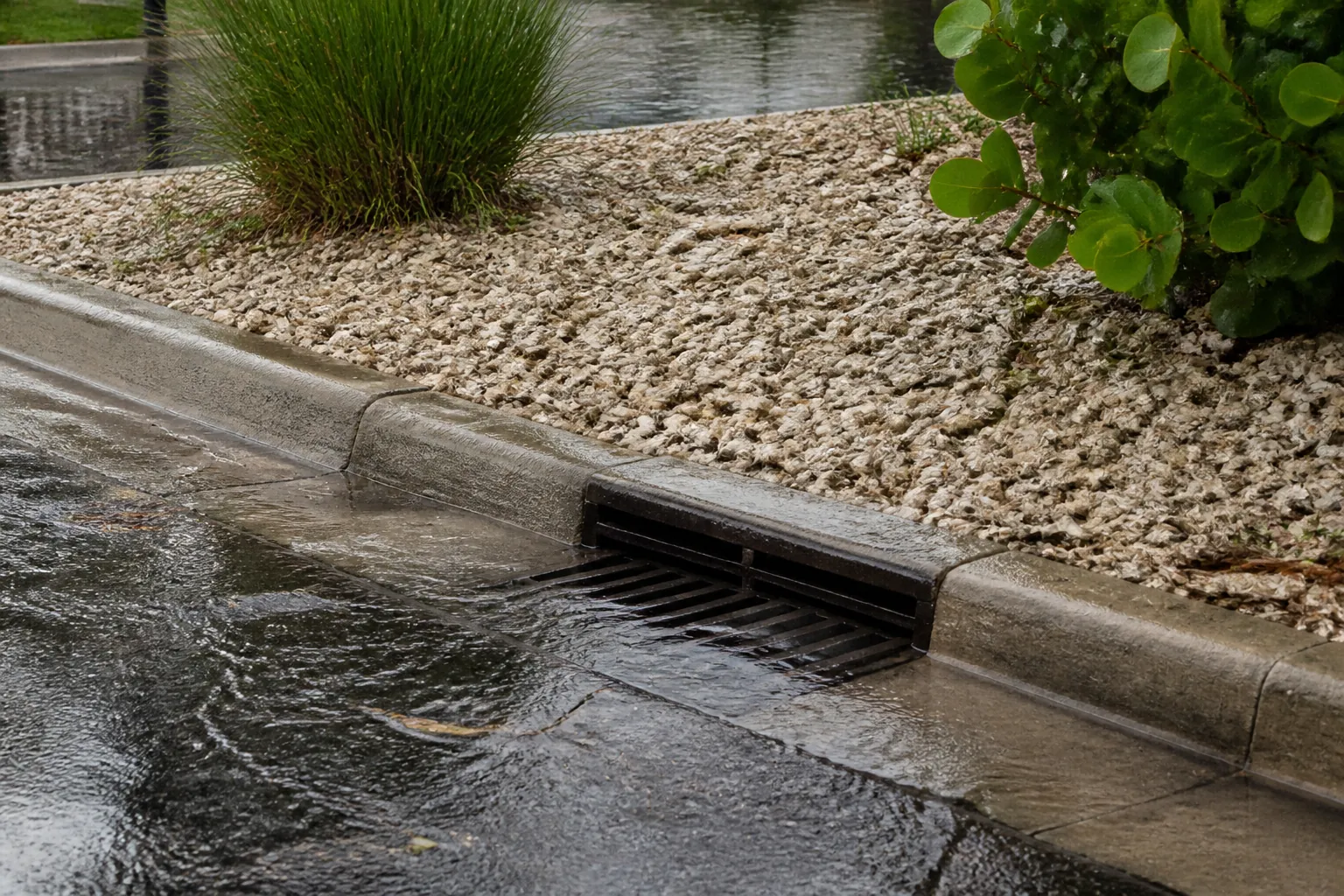
Using coquina shell near storm drains is mainly a containment problem, but containment must not become a drainage obstruction. The boundary should keep loose material in its intended area without redirecting water onto a sidewalk, neighboring property, or building.
Leave the inlet itself outside the shell footprint. Also keep the gutter approach, access covers, and any required service area clear. The appropriate separation depends on the drain configuration, slope, runoff volume, and local requirements, not a universal number found online.
Edging can help define a shell bed where conditions allow. Choose a product suitable for the location, and follow its instructions for a DIY project. Think about the finished height on both sides. An edge that holds shell may also act like a small dam if it crosses a flow path.
Do not use a ring of shell around a drain as a substitute for a drainage detail. Likewise, do not cover a grate with landscape fabric or place mesh over an inlet to catch escaping shell. An improvised cover can restrict flow and complicate access.
- Keep shell below the top of containment edging rather than piling it flush with or above the edge.
- Keep the intended drainage channel open instead of bridging it with decorative material.
- Preserve access to removable grates, inspection points, and other drainage components.
- Choose another location if containing the shell would require obstructing runoff.
Where a shell bed meets pavement, consider how shoes, tires, and routine use will affect the edge. A location that repeatedly scatters shell onto a sloping driveway may send material toward a drain even when the bed itself is outside the direct flow path.
Choose Shell With Migration In Mind
Coquina shell is a natural material, so appearance, fragment sizes, and the amount of finer material can vary. Before ordering, ask what the current material looks like and whether photos or a sample are available. Buy based on the supplied material, not an assumption that every load is identical.
Finer particles can move with runoff, while larger fragments can also shift when water concentrates or traffic disturbs the surface. Neither size alone makes shell appropriate for an active drainage channel. Site conditions and containment remain the main considerations.
Ask how the shell is sold and how quantities are described. If the supplier uses weight, do not assume a volume estimate converts to weight without product-specific information. Moisture and the material's composition can affect that relationship.
Avoid treating decorative coquina shell as an engineered drainage aggregate. A shell bed does not establish a drainage capacity, replace a specified base material, or prove that an area will absorb heavy rainfall. If plans or local requirements call for a particular aggregate, use that specification rather than substituting by appearance.
It is also worth asking about shell characteristics that matter to nearby plants. Shell-based materials can affect soil chemistry over time. Plants that prefer acidic soil may be better separated from shell-heavy areas, particularly where water moves from the shell into their root zones.
Estimate Quantity From The Safe Footprint
Measure only the area where shell can responsibly remain. Exclude the inlet, drainage channel, required access space, planting openings, and any buffer established by local guidance. This produces a more useful order than measuring the entire bed and deciding later where excess material should go.
For a rectangular area, multiply length by width to find square feet. Divide irregular beds into simple sections, calculate each section, and add them together. Subtract areas that will not receive shell.
To estimate cubic yards, multiply the square footage by the intended depth in feet, then divide by 27. For example, 120 square feet at a planned depth of 2 inches is approximately 0.74 cubic yard. That is a calculation example, not a recommended depth for every site.
Choose depth according to the intended use, existing grade, edging capacity, and product guidance. A thicker layer is not automatically more stable near runoff. Adding material until it stands above adjoining pavement can make migration more likely.
- Measure the finished shell area after deciding what must remain clear.
- Record the planned depth rather than estimating quantity from surface area alone.
- Confirm the supplier's selling unit before converting your calculation into an order.
- Plan a contained location for any leftover material instead of leaving a pile beside the drain.
Share your measurements with Tropical Yards when discussing coquina shell sales. Clear dimensions and a defined delivery location make the ordering conversation more useful, but the buyer remains responsible for checking site suitability and local restrictions.
Plan Dump Trailer Delivery Away From The Inlet
The temporary delivery pile matters just as much as the finished shell bed. A loose mound beside a curb opening can shed material before your DIY project begins. Select a drop location that is outside the gutter, outside the drainage path, and clear of stormwater structures.
Tropical Yards offers dump trailer delivery of coquina shell and plants from St. Augustine to Daytona Beach. Before ordering, discuss the access conditions and proposed unloading location. Do not assume a trailer can reach every backyard or unload in every narrow driveway.
Describe driveway width, turns, overhead obstructions, surface conditions, and any slope. Mention the nearby drain and explain where you want the material placed. Delivery arrangements should be confirmed directly, including whether the proposed location is suitable for unloading.
- Choose a staging area that does not block sidewalks, roadway drainage, or access covers.
- Keep the pile away from the edge of a sloped driveway that drains toward the street.
- Check applicable rules before placing any material in a public right-of-way.
- Have a practical plan for moving shell yourself from the drop location to the final area.
If you plan to use a tarp beneath the pile, consider whether it could become slippery or interfere with unloading. Confirm the arrangement with the supplier rather than placing equipment or barriers where the trailer needs to operate.
Watch the forecast when scheduling your project. If heavy rain is expected before you can distribute the material, consider a different delivery date or a safer staging arrangement. Never place a protective cover over a storm drain to compensate for a poorly located pile.
Use A Careful DIY Placement Sequence
Once the shell arrives, work from your marked boundaries instead of spreading material outward until it looks full. Keep tools, bags, and temporary piles out of the drainage route. The sequence should help you preserve the original water path throughout the project.
Start by confirming that the receiving area is suitable and that any boundary treatment complies with local rules. Do not raise a swale, fill a depression that serves drainage, or alter the grade around an inlet simply to make the shell surface look even.
If you are considering landscape fabric, evaluate it as part of the whole surface rather than as a drainage solution. Fabric does not prevent loose shell from washing over its edges. It can also become exposed if material shifts. Follow product instructions and keep it away from drain openings.
- Move shell in manageable amounts so wheelbarrows and containers do not spill toward the gutter.
- Spread material within the defined footprint without building up the drain-side edge.
- Leave the planned access and separation areas visibly clear when the work is finished.
- Collect stray fragments from nearby pavement before rainfall or traffic moves them farther.
Wear suitable gloves, eye protection when handling dusty material, and sturdy footwear. Keep children and pets away from unloading and active material handling. If the project reveals an unexpected pipe, buried structure, or drainage connection, stop and identify it before continuing.
Keep Nearby Tropical Plants In A Suitable Setting
A shell area can sit beside tropical plants without surrounding every plant with shell. Leave room for watering, root growth, and access, and keep material away from trunks and stems. Select plants for the actual light, soil, moisture, and exposure conditions.
Tropical Yards sells palm trees, hibiscus, bougainvillea, ferns, and other tropical plants. Those categories include plants with different needs, so ask about the particular plant you are buying rather than assuming all tropical plants tolerate the same conditions.
Do not rely on a plant to stop shell movement in a concentrated runoff path. Roots and foliage are not a replacement for appropriate drainage planning. A newly planted specimen may also be vulnerable if water collects because edging has changed the flow.
For a DIY planting project, consider a separate planting pocket with suitable soil conditions rather than mixing shell throughout the root zone. Keep irrigation aimed where plants need it, not across a loose shell surface toward the drain. Check the selected plant's watering and soil requirements before placing your order.
Check The Area After Rain And Know When To Reconsider
After completing your DIY project, observe the area following rainfall. The useful question is not just whether the shell still looks tidy. Check whether water still reaches the inlet normally and whether fragments or fine deposits are appearing along the drainage route.
Remove stray shell from accessible pavement safely, but do not lift public drain grates or enter drainage structures. If material has entered an inlet, or if water is backing up, contact the appropriate local stormwater or public works department for guidance.
Repeated movement means the site needs reconsideration. Adding more shell may simply create more material to move during the next storm. The better response may be to reduce the shell footprint, change its boundary without obstructing flow, or use shell elsewhere on the property.
- Reconsider the location if shell repeatedly collects in the gutter after rain.
- Seek guidance if water begins ponding where it did not previously collect.
- Check the boundary if normal foot or vehicle traffic pushes material toward the inlet.
- Keep drainage access clear rather than disguising it with additional shell.
Coquina shell works best near a storm drain when it remains outside the drain's working space and outside concentrated runoff. Careful measurement, suitable containment, and a safe delivery location matter more than trying to make loose material behave like a fixed surface.
For coquina shell sales, tropical plant sales, or dump trailer delivery from St. Augustine to Daytona Beach, call Tropical Yards at 772-267-1611. Have your measurements, intended use, and proposed unloading location ready so you can discuss the material and delivery details before ordering.
Call 772-267-1611 to talk through next steps.