Planning coquina shell beside your lawn in Ormond Beach, FL
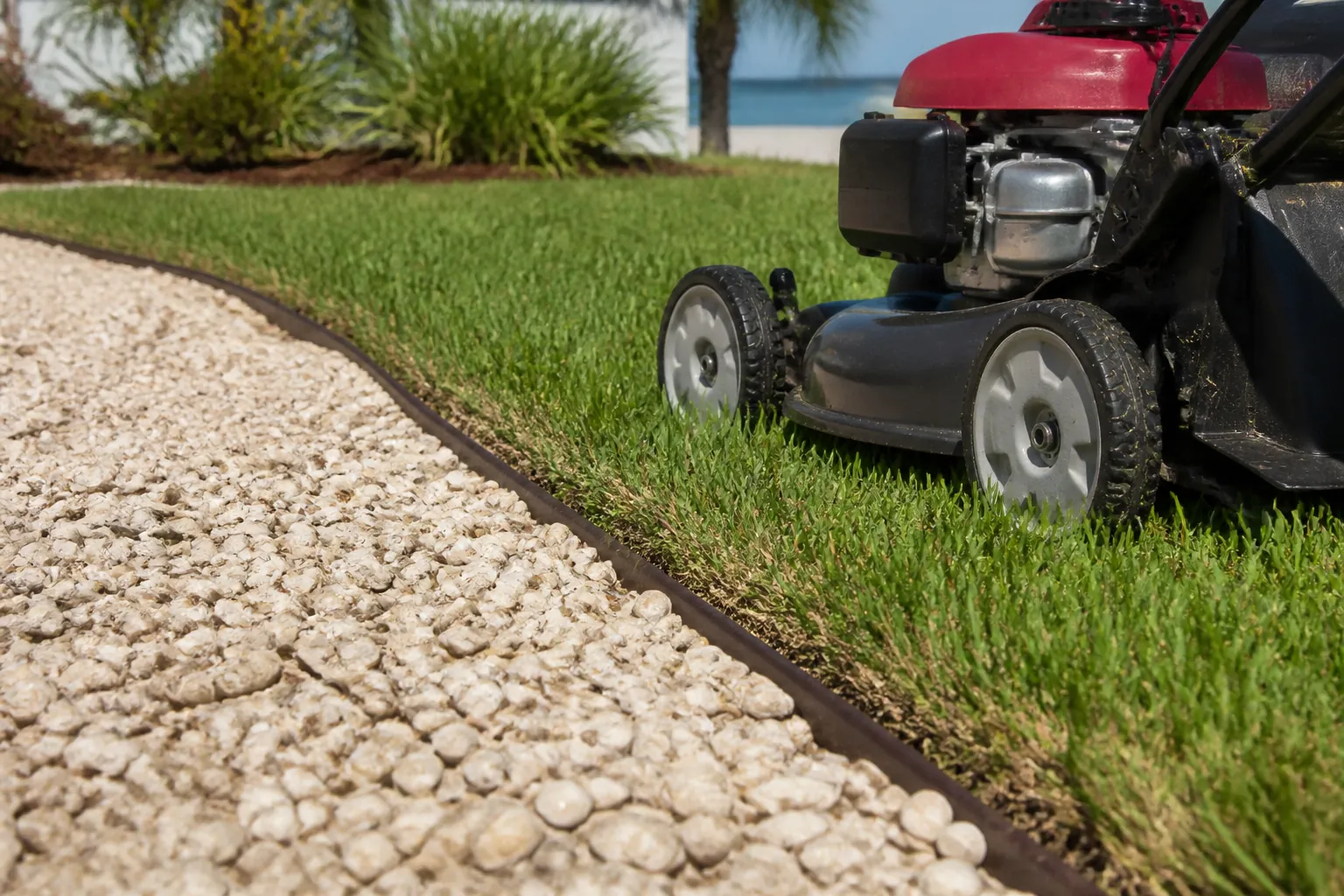
Planning coquina shell next to lawn mower routes requires careful preparation. Keep loose material outside the mowing path, behind a secure border. Allow sufficient clearance for wheels, turns, and safe equipment operation. Before purchasing, review the manufacturer’s manual and measure the available space beside your lawn.
For Ormond Beach homeowners, the main choice is the edge layout. A good plan makes the shell bed easier to manage yourself. Tropical Yards supplies coquina shell and tropical plants, with dump trailer delivery. Use this guide to plan your purchase, delivery spot, and DIY work.
How should you position coquina shell next to lawn mower routes?
A coquina shell border should remain outside the mower’s operating path. Plan its position around wheel clearance, deck width, and turning requirements. Secure edging helps separate loose material from the lawn. Inspect for scattered pieces before every mowing session, and follow the manufacturer’s safety instructions. Compare coquina shell delivery planning when planning this step.
Start by watching how you mow the area now. Note where you turn, back up, or cross a narrow strip. These spots need more thought than a long, straight edge. A shell bed that looks neat on paper may crowd your mower.
Measure your equipment instead of relying on the stated deck size. Wheels, guards, and other components may extend beyond that measurement. Consult the manual for clearance requirements and operation around loose debris. No single setback distance suits every mower and landscape layout.
Use a hose or string to mark your planned bed. Walk the route with the mower off before moving shell. Check that wheels can stay on firm ground throughout the pass. Avoid a layout that forces you to tilt the mower.
Consider anyone else responsible for mowing your property. A visible border is easier to recognize than a subtle surface change. Explain the layout and identify areas where material tends to migrate. Keep children and pets away during operation, following the manufacturer’s instructions.
If shell gets into the lawn, stop before crossing it. Shut down the mower and follow its safe shutdown steps. Clear loose pieces only when the machine is safe to approach. Edging helps limit movement, but it does not replace these checks.
Also leave room to reach gates, taps, and hose reels. A useful shell bed should fit daily yard tasks. It should not turn a simple mowing route into a tight obstacle course.
Which border works best between shell and grass?
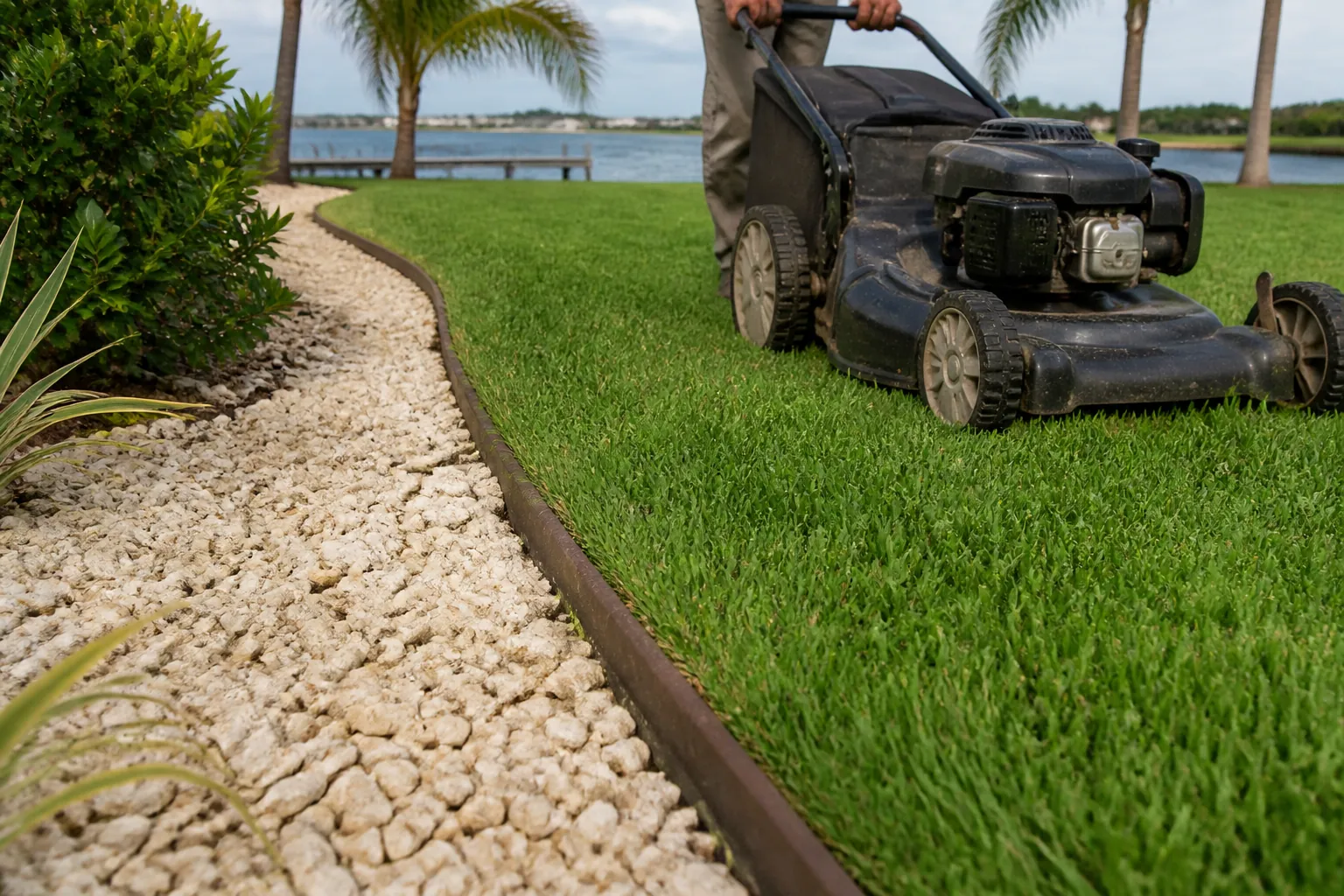
The best border contains loose material while preserving a clear mowing route. Choose edging for your terrain, slope, and equipment, rather than appearance alone. Compare its height, durability, and maintenance requirements before purchasing. Check transitions between the proposed border, gates, pathways, and existing lawn edging. Compare coquina shell material options and coquina shell delivery planning when planning this step.
Raised edging can improve containment, though it creates an obstacle. Lower edging may allow easier crossing when designed for that purpose. Neither option is appropriate for every location. Follow the manufacturer’s instructions for preparation, placement, and anchoring.
A firm mowing strip is another option for DIY planning. It can create space between lawn wheels and loose material. Its width and strength must suit the mower and intended use. Do not assume decorative pavers can carry the load without proper support.
- Choose a border that stays secure when touched by wheels or routine foot traffic.
- Check for sharp edges where people, pets, or hoses may pass.
- Keep the finished shell level below the border’s useful holding edge.
- Plan curves that leave enough room for your mower to turn safely.
- Follow product directions for ground preparation, joints, anchors, and safe use.
Examine low areas along the proposed border before selecting materials. Water may accumulate there or transport loose pieces toward the lawn. Avoid creating barriers that obstruct an existing drainage route. Seek qualified local advice before proceeding where drainage problems persist.
Build a short test section before committing to the full length. Check the edge from the lawn and shell sides. Make sure it does not rock or leave hidden gaps. Adjust the plan before placing the rest of your order.
Do not treat edging as a reason to mow over shell. Its job is to help define and hold the bed. You still need space for safe mowing and a check for stray pieces.
What should you check before buying coquina shell?
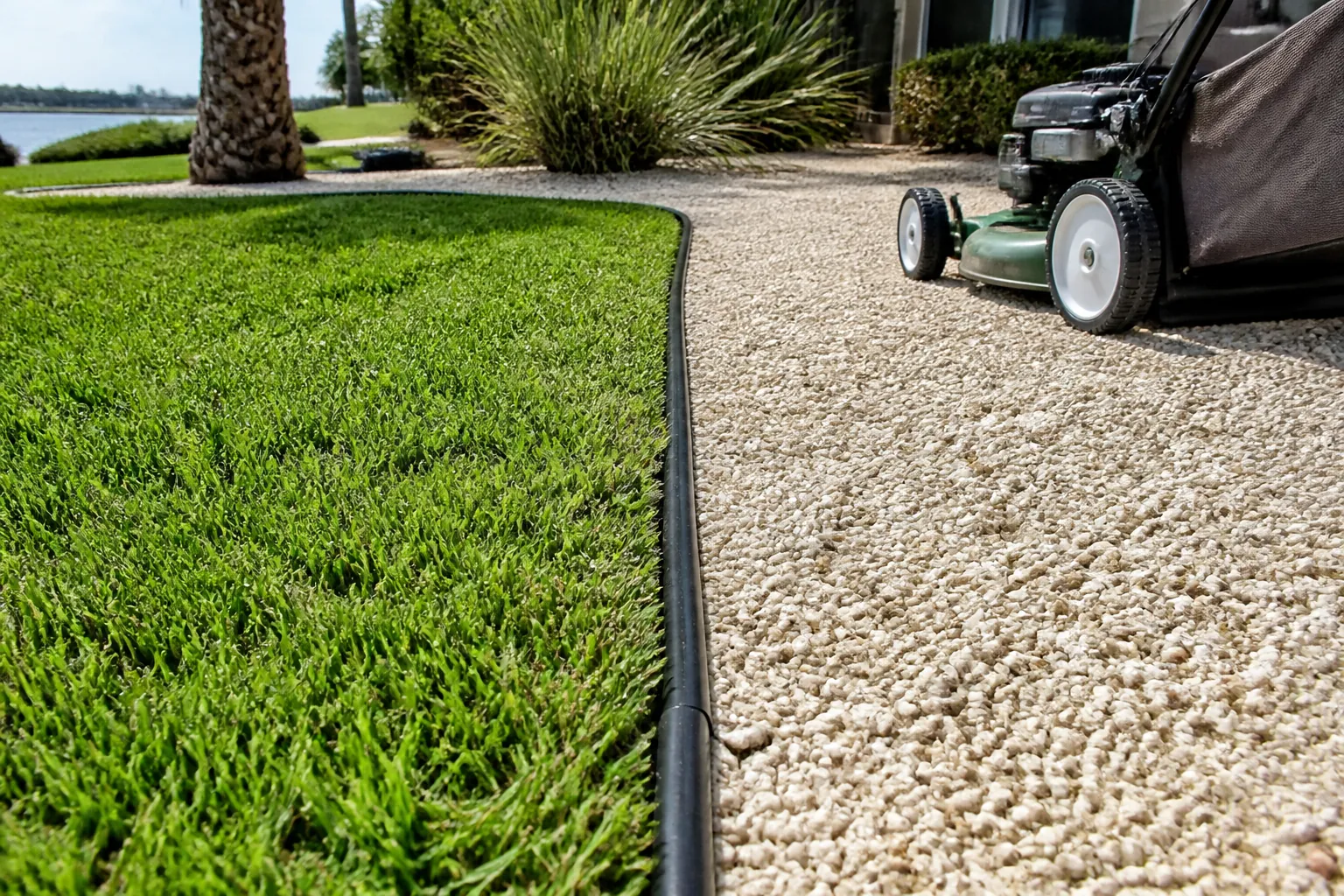
Before purchasing coquina shell, confirm the material, selling unit, and intended application. Ask about the current supply’s appearance and particle sizes. Measure the bed and determine your proposed depth before discussing quantities. These details support an informed order instead of an estimate based on photographs alone. Compare coquina shell delivery planning when planning this step.
Coquina shell is a loose landscape material, not a fixed paving surface. Consider how people will use the area before choosing it. A border bed has different needs from a main walkway. Do not assume it will suit every mobility aid or barefoot route.
Request a current sample or available photograph of the material. Natural shell varies in color, particle size, and texture. Photographs from another property may reflect different material or lighting conditions. Compare the available supply with your preferred appearance before purchasing.
For a bed beside grass, ask about the mix of small and larger pieces. Think about how you will rake and contain that mix. Do not pick material based on color alone. The border and daily use matter as much as appearance.
Confirm the supplier’s selling unit before calculating your material requirements. Ask which measurements and project details are necessary for an order. Provide bed dimensions, proposed depth, and delivery access restrictions. Keep this information together when comparing quantities across different selling units.
If plants will share the bed, plan their space before ordering shell. Keep access for watering, checking soil, and future plant growth. Shell does not replace soil care or plant-specific guidance. Leave enough room to work without pushing material onto the lawn.
Tropical Yards sells coquina shell and tropical plants. Plant choices include palm trees, flowering plants, privacy plants, and other tropical plants. Ask about current stock rather than assuming a pictured item is available. The business supplies materials; it does not provide yard labor.
How do you measure a shell bed and plan depth?
Measure the bed’s length and width, then calculate its area. Divide irregular shapes into smaller sections before combining their measurements. Select depth according to the intended application, material, and ground conditions. Review your estimate with the supplier before ordering, using consistent units throughout the calculation. Compare coquina shell material options and coquina shell delivery planning when planning this step.
For a rectangle, multiply length by width to find square footage. Add the areas of separate rectangles for a more complex bed. Do not include spaces that will remain grass, paving, or open soil. Mark those gaps on a simple sketch.
Depth affects material requirements even when the surface area remains unchanged. Avoid selecting depth from a distant photograph of another property. Discuss your intended application and the available shell with the supplier. Keep the finished material level within the border’s containment height.
If calculating cubic feet, convert the depth from inches to feet. Then multiply area in square feet by depth in feet. For cubic yards, divide cubic feet by 27. That gives a volume estimate, not a weight or a confirmed order quantity.
- Measure each section twice before adding its area to your sketch.
- Write the unit beside every number to avoid mixing feet and inches.
- Mark plant spaces, border widths, and access gaps that need separate treatment.
- Check planned depth at both the lawn edge and the bed’s center.
- Ask the supplier to confirm how your volume estimate matches its selling unit.
Sloping terrain makes depth estimates more complicated. A level surface can conceal substantial variation in the material beneath it. Measure ground conditions at several locations instead of a single corner. Address site problems before relying on one calculated volume.
Avoid adding a large extra amount without a storage plan. Spare shell needs a place that will not block access. It should stay clear of drains, roads, and mowing routes. Discuss any allowance with the supplier instead of guessing at delivery time.
How should you prepare for dump trailer delivery?
Plan coquina shell delivery planning around safe access, a suitable unloading location, and your DIY schedule. Explain property restrictions before placing your order. Ask the supplier about the dump trailer’s clearance and maneuvering requirements. Keep the unloading area clear without obstructing essential access or creating a hazard. Compare coquina shell material options when planning this step.
Tropical Yards offers dump trailer delivery of plants and coquina shell. Its delivery range runs from St. Augustine to Daytona Beach. For your Ormond Beach address, confirm the route and drop details directly. Do not assume every driveway or side yard can accept a trailer.
Describe narrow entrances, restricted turns, soft ground, and steep sections beforehand. Identify overhead wires, branches, roof edges, and other clearance restrictions. Provide clear photographs of the proposed approach if requested. The delivery team must evaluate access instead of relying on a homeowner’s estimate.
Choose a drop spot near the project when safe access allows. A shorter route can reduce your wheelbarrow work. Still, convenience does not override the driver’s access needs. Keep cars and stored items out of the agreed approach.
- Confirm the drop location with the supplier before the delivery day.
- Keep people and pets away from the unloading area and moving equipment.
- Protect needed access to doors, gates, driveways, and emergency routes.
- Ask about surface protection before placing any cover in the drop area.
- Have a separate plan for moving and spreading the shell yourself.
Dump trailer delivery excludes distribution of material throughout your landscape bed. Arrange your own equipment, assistance, and schedule for this work. Move quantities that remain manageable with your tools and physical ability. Take regular breaks, and stop if the task exceeds your capacity.
Keep shell away from street drains and public travel routes. Check any local or neighborhood rules that affect material drops. If the agreed location changes, call before the truck arrives. A last-minute move may need a fresh access check.
How do you use shell beside lawn without crowding plants?
Place shell within a defined bed, with clear space around plant stems. Follow each plant’s care needs when planning soil, water, and spacing. Keep the shell separate from grass as you work. After spreading it yourself, check the mower route and remove any pieces that escaped the border. Compare coquina shell material options and coquina shell delivery planning when planning this step.
Complete ground preparation before delivery when possible. Identify irrigation components, underground utilities, and drainage routes before digging. Follow the proper utility-location process before any work that disturbs the ground. Even a shallow edging trench may encounter buried lines.
Move shell in small batches so you can control its placement. Start away from the lawn edge, then work toward the border. Use hand tools with care near plants and irrigation parts. Avoid piling material against trunks, crowns, or low leaves.
Select additional plants according to the conditions in your proposed bed. Consider sunlight, wind exposure, soil moisture, and mature dimensions. A small nursery specimen may eventually require substantially more space. Allow for that growth without reducing clearance along the mowing route.
Tropical Yards sells palm trees, flowering plants, privacy plants, and other tropical plants. Ask about the needs of the specific plants available. Do not assume all tropical plants need the same light or water. Plant selection and DIY placement should match your yard’s conditions.
Inspect the border after rainfall for displaced material or uneven areas. Check for shell migration into the lawn or across adjacent pathways. Identify the underlying cause before adding replacement material. Unstable edging and drainage problems require different corrections from a shallow patch.
Before each mow, check the grass beside the shell bed. Stop and clear stray pieces using safe shutdown steps when needed. Keep this check separate from plant care and watering. It helps you spot a poor edge layout before it becomes a routine problem.
Frequently asked questions
Can I run mower wheels directly over coquina shell?
Do not plan a route that requires wheels to cross loose shell. Follow your mower’s manual for use around loose material and debris. A firm border or suitable mowing strip can help separate surfaces. Neither removes the need to check for stray shell before mowing.
Is there one safe distance between shell and a mower?
No single distance suits every mower, border, and yard layout. Check the machine’s full width, turning needs, and manual. Then test the planned route with the mower off before placing shell. Leave room for normal use without wheels riding on loose material or striking the edge.
Will an edge keep every shell piece out of grass?
An edge can help contain shell, but pieces may still move. Foot traffic, tools, water, or a loose border can shift material. Keep the finished shell level within the border’s holding height. Check nearby grass before mowing, and correct spots where shell keeps escaping into the route.
Does Tropical Yards spread shell or prepare the lawn?
Tropical Yards supplies coquina shell and tropical plants, with dump trailer delivery. It does not install materials, prepare beds, or maintain yards. Plan your own labor for moving shell, setting borders, and planting. Confirm the delivery drop spot separately from the work you intend to do afterward.
What details should I have ready when ordering?
Have your Ormond Beach address, bed measurements, and planned depth ready. Note the border type, intended use, and proposed drop spot. Describe access limits before scheduling delivery. Ask about current shell stock and selling units so your order matches the material and delivery options actually available.
Ready to discuss your material order? Call Tropical Yards at 772-267-1611 for coquina shell, tropical plants, and dump trailer delivery details. Have your measurements and access notes ready for the call.
Sources And Further Reading
Call 772-267-1611 to talk through next steps.