A buyer’s guide to coquina shell on sloped ground
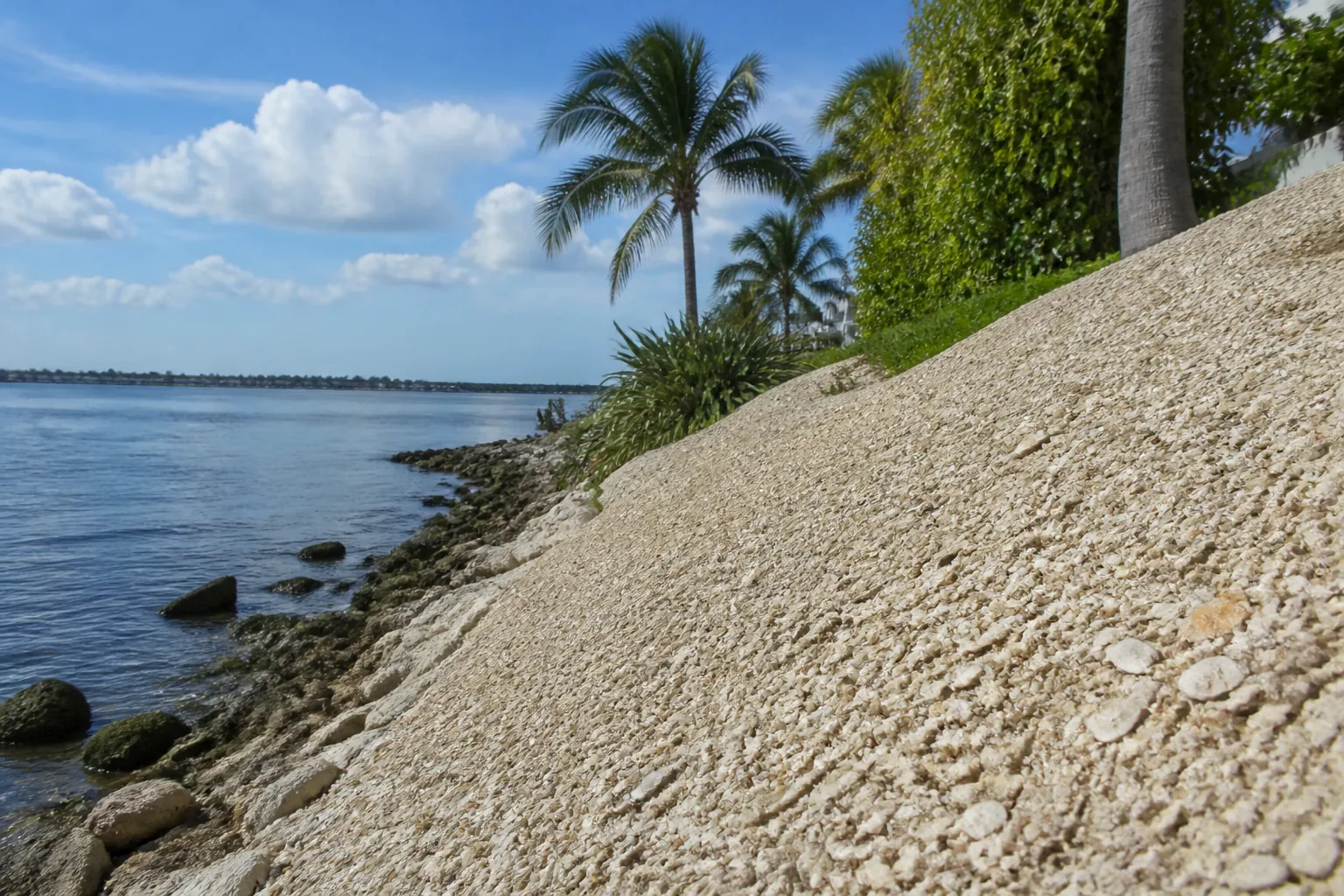
Coquina shell brings a light, coastal texture to Florida yards, but a slope changes how you should choose and use it. Material that stays reasonably settled in a level bed may migrate downhill when rainwater concentrates, people walk across it, or an edge gives way. Before ordering, look at the slope, the drainage pattern, and what the area needs to do.
This guide focuses on buying and using coquina shell on sloped ground, not on treating loose shell as an erosion-control system. Tropical Yards supplies coquina shell and tropical plants, with dump trailer delivery from St. Augustine to Daytona Beach. Site preparation, placement, planting, and any structural work remain the responsibility of the homeowner or a separately hired professional.
Start With The Slope, Not The Shell
The first question is whether your location can hold loose surface material at all. A gently sloping planting bed is different from a steep embankment beside a ditch. Even two areas with the same incline can behave differently if one receives only direct rainfall and the other collects runoff from a roof or driveway.
Walk the area after a typical rain, when it is safe to do so. Look for narrow channels, exposed roots, soil deposits at the bottom, and water crossing from neighboring surfaces. These clues matter more than whether the ground looks smooth on a dry day.
You can describe an incline by measuring its vertical rise over a horizontal distance. For example, a one-foot rise over ten horizontal feet is a ten-percent slope. That measurement helps you communicate site conditions, but it does not establish that shell will be stable. Soil, water flow, traffic, and containment still matter.
- A broad, gentle incline with no visible wash channels may be a reasonable candidate for a contained decorative shell bed.
- A slope with existing erosion needs its drainage and soil-stability problems evaluated before you cover it.
- A bank beside a waterway, drainage ditch, or retaining wall may involve restrictions or structural concerns beyond a DIY surface treatment.
- A route used for regular walking needs a separate assessment of footing, accessibility, and surface movement.
If you cannot safely stand and work on the area, do not assume loose shell is an appropriate finish. Seek qualified advice before purchasing material for that location.
Understand What Coquina Shell Can And Cannot Do
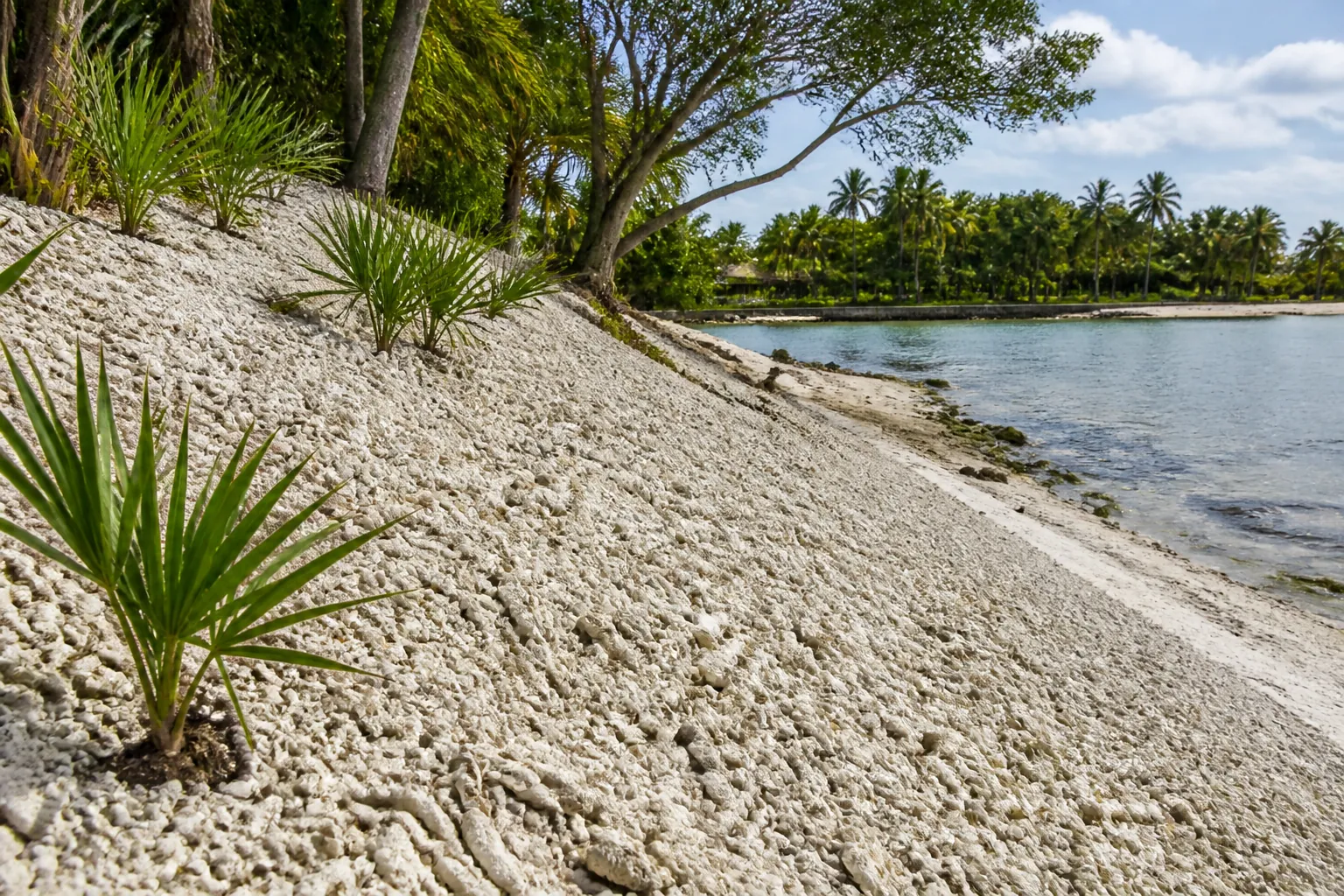
Coquina shell can serve as a decorative surface in suitable landscape areas. Its coastal appearance may fit planting beds, borders, and other contained spaces. On a slope, however, appearance is only one part of the decision. Individual pieces can shift, especially where flowing water or repeated foot traffic disturbs them.
Do not confuse loose landscape shell with solid coquina stone or an engineered aggregate base. A delivered shell product may contain a mix of fragments and finer particles. Ask what is currently available rather than assuming that every load has the same particle size, cleanliness, or compaction behavior.
Some shell mixtures settle together more closely than others, but settling does not make a loose layer waterproof or structurally stable. Heavy rain can move material, and a firm-looking surface can loosen under concentrated runoff. Shell should not be used to hide erosion, support a retaining wall, or stabilize a failing bank.
It is also useful to separate decorative coverage from drainage work. Water may pass through spaces between shell pieces, but the soil underneath controls much of what happens next. A shell layer over compacted or poorly draining soil will not automatically solve ponding.
For general product and purchasing information, visit the coquina shell page. Use this slope-specific guide to decide what site details you need to resolve before ordering.
Read Florida Runoff Before Planning Coverage
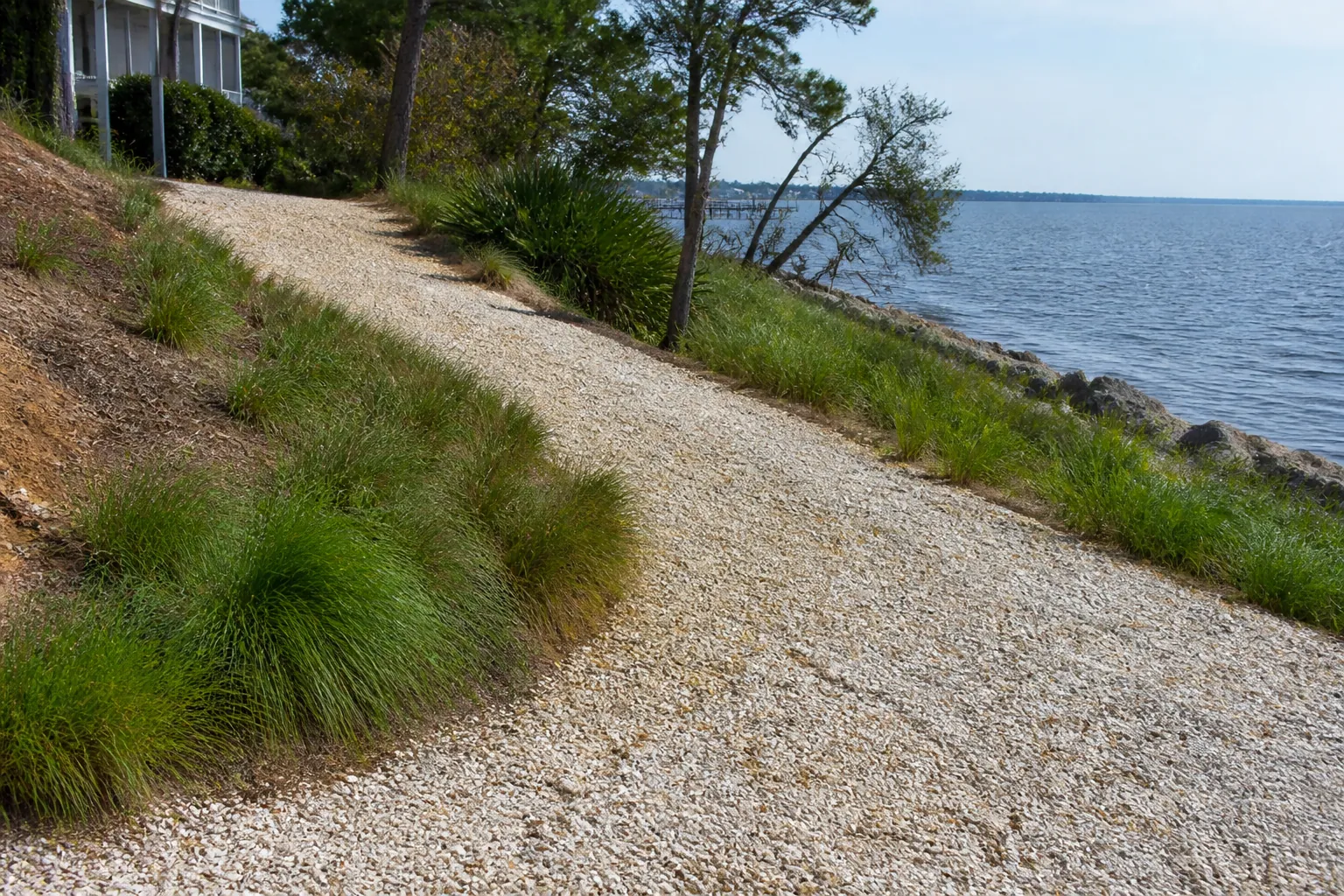
Florida rain can expose weaknesses in a surface plan quickly. A gentle bed may remain stable under direct rainfall yet lose material where a downspout empties onto it. The important distinction is between water falling across an area and water arriving as a concentrated stream.
Trace where water enters and where it leaves. Include roof runoff, paved surfaces, irrigation overspray, and low spots that direct water toward the slope. Do not block an established drainage route simply to keep shell inside a decorative border.
Photographs taken after rain can help you compare conditions over time. Mark any channels on a simple sketch, then separate those flow paths from areas where decorative shell might be appropriate. A flatter section beside a drainage path may work even when the drainage path itself does not.
- Keep loose shell out of swales that need to carry stormwater unless a qualified professional has specified it for that use.
- Check that material cannot readily wash into street drains, neighboring property, or nearby water.
- Investigate runoff that exposes soil or undermines existing edging before adding a new surface layer.
- Consult local requirements before altering drainage, working near wetlands, or changing a roadside ditch.
If runoff needs correction, resolve that as a separate project. Tropical Yards sells material and provides delivery; it does not design drainage systems or perform landscape construction.
Plan Containment Without Creating A Water Trap
Edging helps define a shell bed and can reduce ordinary movement into adjacent lawn or pavement. On sloped ground, the downhill boundary deserves particular attention because gravity and runoff both encourage material to collect there.
Choose edging for the actual site conditions, not just its appearance. Consider how it is anchored, how much material it needs to contain, and whether water can leave safely. A thin decorative border is not a retaining structure. If soil or shell needs structural support, have that support evaluated independently.
Smaller contained sections may be easier to manage than one uninterrupted sloping bed. Existing level planting pockets can sometimes accept shell without covering the entire incline. Creating new terraces, however, can involve soil movement, drainage changes, and retaining structures. That is not simply a matter of adding extra edging.
At paved edges, leave a clear transition so pieces do not spill onto walking surfaces. Around fences and buildings, avoid piling material against vulnerable components or covering drainage openings. Maintain clearances required for the structure, pest inspection, and any equipment nearby.
Before buying, decide whether the proposed boundary is truly containment or only a visual outline. That distinction affects whether your shell stays where you intend it to remain.
Choose The Product With Slope Conditions In Mind
Product names alone do not tell you enough about a shell load. Ask about the available material’s size range, fine content, and typical appearance. If possible, review a current sample or photograph, while recognizing that natural material can vary.
Larger fragments may create a more textured surface, but they can also move underfoot. Finer material may settle differently and produce dust during dry handling. Neither characteristic, by itself, proves that a product is suitable for your slope.
Think about where the shell will meet other materials. If it borders lawn, stray pieces may interfere with mowing. If it borders a walkway, migrating fragments may affect footing. If children or pets use the area, consider sharp edges and avoid treating shell as a soft play surface.
- Ask whether the current shell is intended primarily for decorative coverage or another stated use.
- Explain that your project is on an incline and describe any runoff or foot traffic.
- Confirm the ordering unit so your measurements can be translated into a practical quantity.
- Ask about load and unloading arrangements before deciding where to stage the material.
Keep expectations realistic. A supplier can explain its material and delivery process, but a description of your slope is not a substitute for an on-site assessment of erosion or structural stability.
Measure The Area And Set A Realistic Depth
Measure only the portions you actually intend to cover. Exclude plant crowns, open drainage routes, paving, and spaces that will use a different surface. Breaking an irregular bed into rectangles and triangles makes the estimate easier to check.
For a noticeably inclined surface, the ground distance along the slope is longer than its horizontal projection. Measure the intended coverage surface when it is safe, or obtain reliable dimensions another way. Do not climb an unstable bank simply to improve an estimate.
The basic volume calculation is area multiplied by depth. For square feet and inches, multiply the area by the depth in inches, then divide by twelve to get cubic feet. Divide cubic feet by twenty-seven to get cubic yards.
For example, a 180-square-foot area at an illustrative two-inch depth requires about 30 cubic feet, or 1.11 cubic yards, before any project allowance. This is a calculation example, not a recommended depth for every slope. Confirm an appropriate depth for your intended use and the available product.
More material is not automatically better. A deeper loose layer can provide more material to migrate and can make walking less stable. Conversely, an overly thin layer may leave soil exposed. Base the order on a resolved surface plan rather than using shell to fill unknown depressions.
Do not convert volume to weight using a generic internet figure. Shell composition and moisture can affect that conversion. Confirm how Tropical Yards sells the material and discuss the quantity using the same unit.
Prepare The Surface Before Delivery
A shell delivery should follow preparation, not force you to improvise it. Identify utility locations before digging or driving stakes. Remove unwanted vegetation yourself or through a separately hired provider, and address unstable soil before spreading shell.
Keep existing drainage grades intact unless a qualified plan calls for changes. Filling a low channel may redirect water rather than eliminate it. Likewise, placing shell over loose soil does not make the underlying ground resistant to erosion.
Landscape fabric deserves a site-specific decision. It can separate materials in some settings, but it does not prevent all weeds or stabilize every slope. Exposed fabric may become slippery, and water can move along or beneath it depending on the soil and product. On erosion-prone ground, seek advice about appropriate stabilization rather than substituting ordinary weed fabric.
Near plants, avoid burying root flares, trunks, or crowns. Shell is calcium-carbonate-rich material and may affect local soil chemistry over time. Consider your plants’ soil needs, especially where acid-preferring plants grow, and use a soil test when compatibility is uncertain.
Tropical Yards also sells palm trees, hibiscus, bougainvillea, ferns, and other tropical plants. Choose plants for the site’s light, moisture, drainage, and soil conditions, then handle planting and ongoing care yourself or with an independent provider.
Plan A Safe Dump Trailer Delivery
The shell placement area and the unloading area are often different places. A slope that can accept decorative coverage may still be unsuitable for a delivery vehicle or dump trailer. Plan for a stable, accessible unloading location rather than expecting material to be dumped directly onto the incline.
Tropical Yards offers dump trailer delivery of plants and coquina shell from St. Augustine to Daytona Beach. Discuss your address, access conditions, and proposed unloading spot before finalizing the order. Delivery does not include spreading shell or preparing the bed.
- Describe driveway width, tight turns, gates, overhead branches, and overhead wires when discussing access.
- Identify a firm, reasonably level unloading area and disclose soft ground or recent saturation.
- Keep the proposed unloading location away from septic components, irrigation equipment, and other vulnerable underground features.
- Confirm available clearance for the trailer and its unloading operation with the supplier.
- Arrange your own tools, helpers, or separately hired labor for moving material from the drop location.
A staging area close to the project can reduce handling, but proximity should not override safe access. If shell must be moved uphill, account for the extra effort before ordering. Keep piles out of drainage paths and public access areas while the project is underway.
Place Shell Gradually And Watch How It Behaves
For a suitable DIY site, work in manageable sections instead of spreading the entire order at once. Follow your prepared boundaries, keep drainage routes open, and check depth as you go. Use sturdy footwear, gloves, and appropriate eye protection when handling sharp fragments or dusty material.
Do not stand below an unstable pile or roll loaded equipment across an unsafe incline. Wheelbarrows can become difficult to control on slopes, especially when heavily loaded. Smaller loads and a safe route are more important than finishing quickly.
Once a section is covered, inspect its transitions and boundaries. Check that plant crowns remain exposed and that fragments are not scattered onto paving. Avoid adding extra shell at the downhill edge merely because material collects there; accumulation can signal movement that needs attention.
After rain, look for bare streaks, displaced fragments, and sediment collecting outside the bed. Minor settling differs from repeated washout. If the same channel reappears, stop adding shell and revisit the water source or surface choice.
DIY care may include redistributing displaced material and addressing weeds, but persistent movement is a reason to reassess suitability. Tropical Yards does not provide yard maintenance or cleanup services.
Make A Confident Purchase Decision
Coquina shell on sloped ground works best as a considered material choice, not a quick cover for a drainage problem. Before ordering, you should know where runoff travels, how the bed is contained, what depth you intend to use, and where the delivery can safely unload.
If those questions are unresolved, start with a smaller suitable area or get qualified site advice. A flatter decorative bed may deliver the coastal appearance you want without placing loose shell in the yard’s most difficult location.
For coquina shell sales, tropical plant sales, and dump trailer delivery from St. Augustine to Daytona Beach, call Tropical Yards at 772-267-1611. Have your measurements, access details, and material questions ready so you can discuss an order that fits your DIY plan.
Call 772-267-1611 to talk through next steps.