Coquina shell over existing gravel: a Florida DIY guide
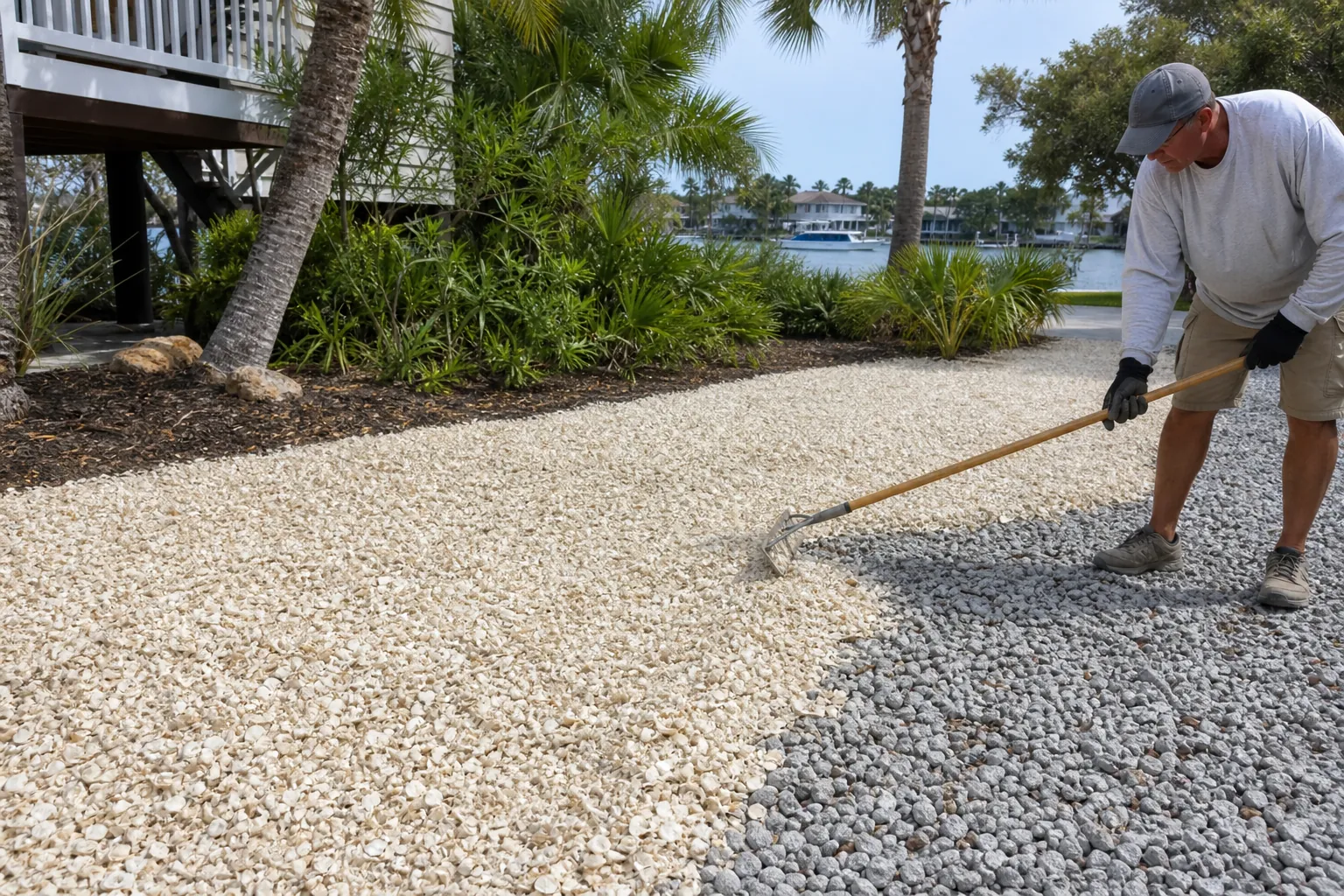
Putting coquina shell over existing gravel can be a practical way to refresh a Florida landscape without starting from bare soil. The important question is not simply whether shell can cover stone. It is whether the gravel underneath is stable, drains properly, and leaves enough room for the finished surface.
A sound gravel base may be worth keeping. A loose, muddy, weed-filled, or poorly graded base needs attention before another material goes on top. Otherwise, the new shell can inherit the same problems and make them harder to reach.
Tropical Yards supplies coquina shell and tropical plants, with dump trailer delivery from St. Augustine to Daytona Beach. This guide is for buyers planning to spread shell themselves or arrange their own labor. Tropical Yards supplies and delivers materials; it does not prepare sites or install landscapes.
When Existing Gravel Makes A Suitable Base
Existing gravel is most useful as a base when it stays in place under normal foot traffic, has consistent support beneath it, and does not hold standing water. A settled layer of smaller, angular gravel can behave differently from loose, rounded stones that roll underfoot.
Walk the area slowly and look for movement. If your shoes push stones aside and expose soil, the surface may need leveling or consolidation before shell is added. If the gravel feels firm but has shallow irregularities, those may be easier to correct without removing the entire layer.
Also consider how the area will be used. A decorative strip beside a fence has different demands from a frequently used walkway. Vehicle use introduces additional questions about load, turning, compaction, and the underlying base. Do not assume that a decorative shell covering turns an unsuitable gravel area into a driveway.
- Keep an existing base only when it is stable enough for the intended use.
- Investigate soft spots rather than covering them with extra shell.
- Check that runoff has a clear route away from buildings and neighboring property.
- Allow room for the added material without burying edges, drains, or plant crowns.
Try a small test area if you are uncertain. Spread a sample over representative gravel and observe how it looks and behaves after walking on it and after rain. A test will not establish structural suitability, but it can reveal obvious mixing or movement.
When Covering The Gravel Is The Wrong Shortcut
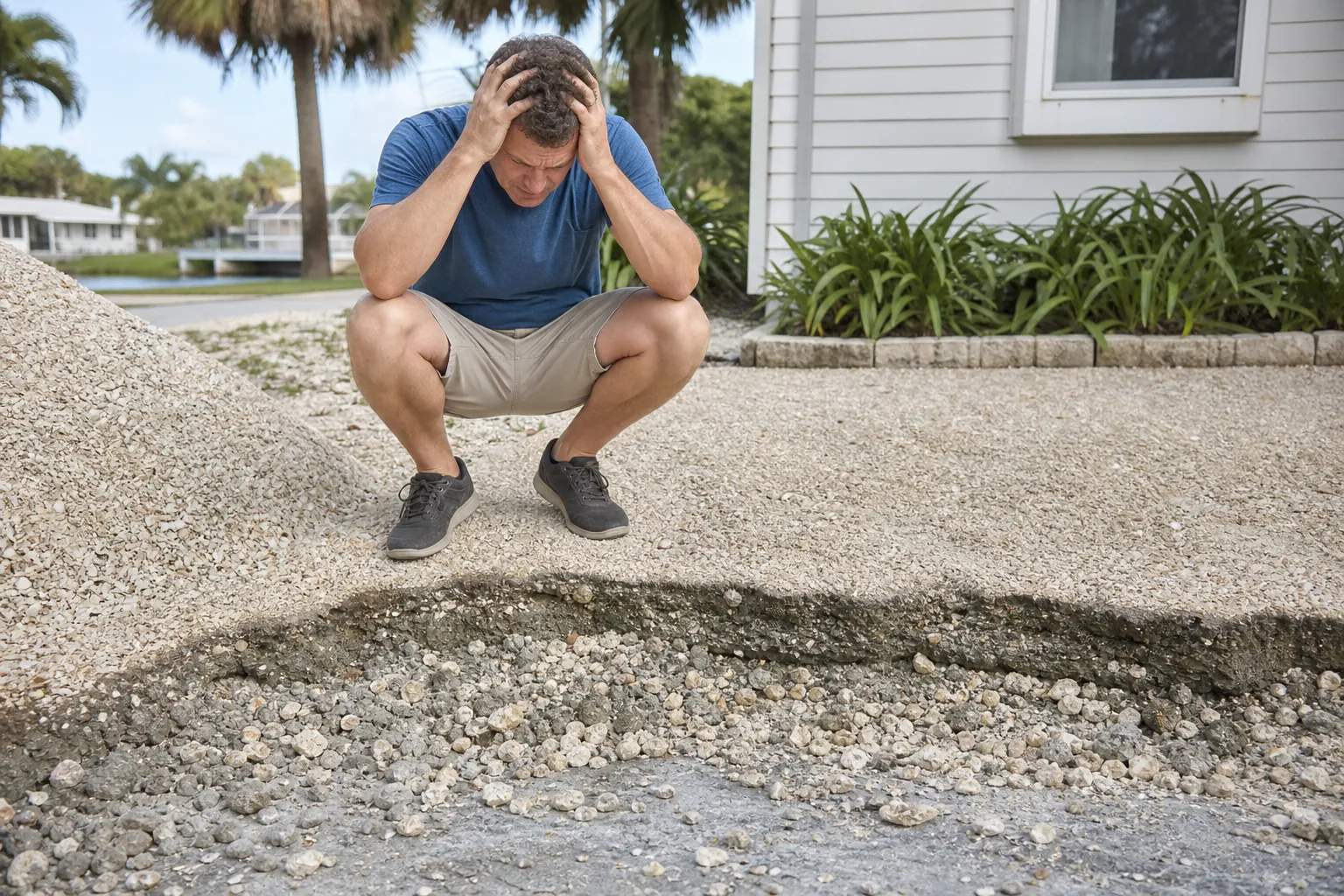
Adding coquina shell over existing gravel does not repair a failed base. If stones are sinking into wet soil, fresh shell may also settle. If the surface slopes toward a doorway, another layer will not redirect water unless the underlying levels are corrected.
Large, loose stones can be especially awkward beneath a relatively thin shell covering. They may protrude through the surface or create an uneven walking experience. Rounded gravel may shift when stepped on, allowing the shell to migrate into spaces between the stones.
Buried debris is another reason to pause. Old plastic, broken edging, construction scraps, and deteriorating fabric can interfere with preparation. Remove accessible debris yourself or arrange independent help before ordering material.
Persistent puddles deserve investigation. The cause might be a low spot, clogged drainage, compacted soil, or an unsuitable base. Adding shell without understanding the cause can conceal the evidence without fixing the issue.
If the area serves vehicles, supports heavy equipment, or sits beside a sensitive drainage feature, seek appropriate site-specific advice. Material choice alone cannot establish that a surface is safe or adequate for those uses.
Check Finished Height Before Buying Shell
The final height is often the deciding factor in whether you can keep the gravel. Measure from the existing surface to nearby edging, pavement, thresholds, drain openings, and other fixed features. Then consider where the shell surface would sit after spreading and settling.
A covering that looks modest in the middle of a yard can create a problem along a patio edge. Shell above the surrounding pavement may scatter onto the walking surface. A raised strip beside a building may also affect runoff or cover features that should remain visible.
Keep required clearances around siding, inspection areas, and building components. Where termite inspection access or local building requirements apply, confirm the appropriate clearance rather than guessing.
- Measure available height at several points, not only at the easiest corner.
- Keep drain grates and cleanouts visible and accessible.
- Avoid raising material against tree trunks or over exposed root flares.
- Check gates for clearance above the proposed finished surface.
- Plan transitions so people do not encounter an unexpected raised edge.
If there is insufficient room, removing some existing gravel may be more sensible than making the new layer too thin. That preparation is a separate DIY task or work you arrange independently, not a service provided by Tropical Yards.
How To Prepare A Gravel Area Yourself
Start by defining the exact area you intend to cover. Mark boundaries and identify nearby irrigation lines, utility access points, drains, and planting spaces. Photograph these features before working so they remain easy to locate.
Remove surface litter and address existing weeds. Pulling visible growth without dealing with established roots may leave the underlying problem in place. If you use any weed-control product, follow its label and check its suitability around nearby plants.
Next, rake the gravel to expose uneven sections. Move loose accumulations away from high spots and inspect depressions. A low area caused by missing gravel differs from one caused by soft soil beneath it. Resolve the cause before smoothing the surface.
Use a straight board or another suitable leveling reference to compare adjacent sections. Preserve appropriate drainage rather than making every part perfectly level. Avoid redirecting water toward a structure or across a property boundary.
Depending on the existing aggregate and intended use, consolidation may be appropriate. Select tools suited to the material, and follow equipment instructions. Loose rounded stones may not lock together simply because they have been pressed down.
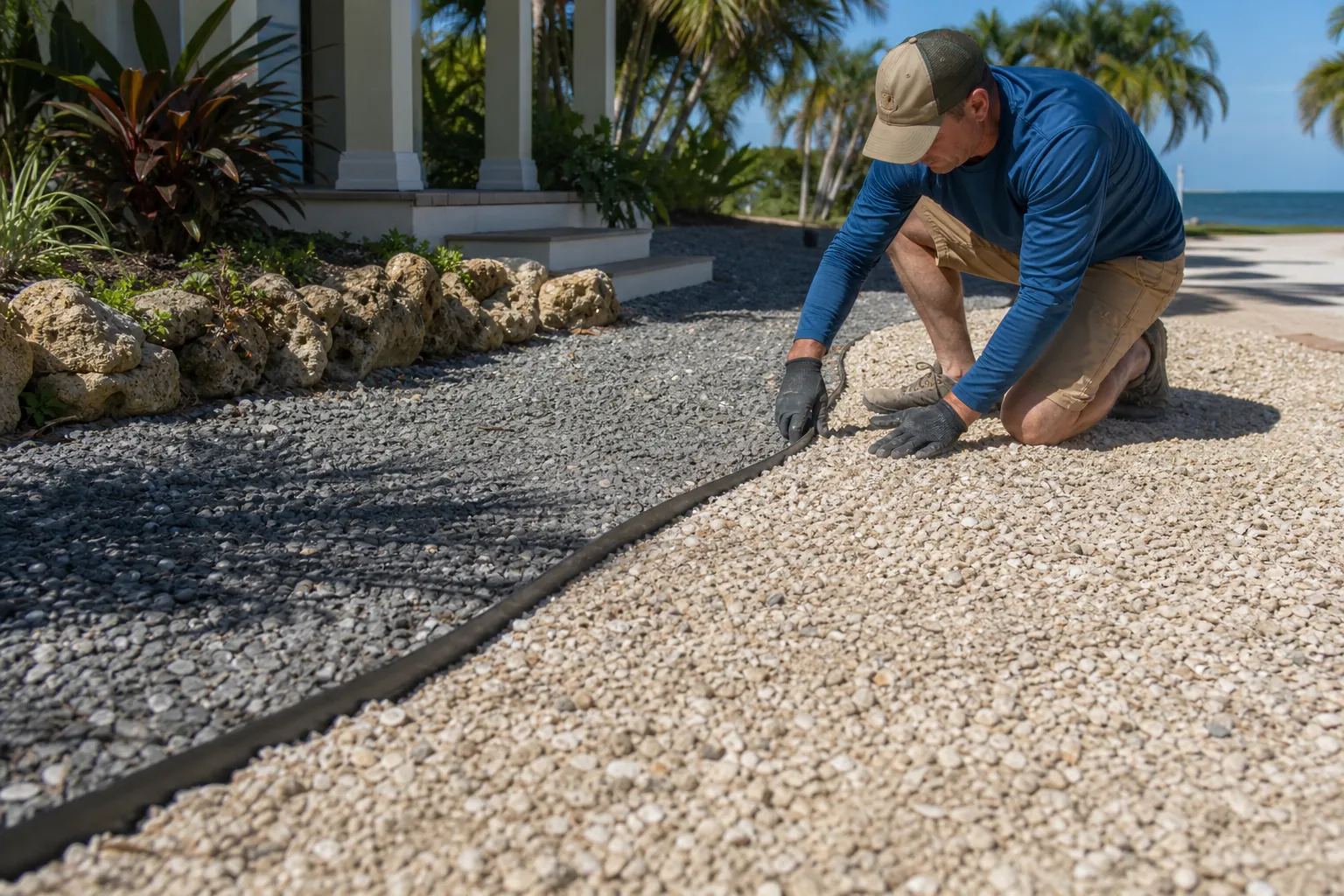
Finish by confirming that the boundaries can contain the new material. Existing edging should be secure and high enough for the planned surface. Where an edge is missing, decide how you will manage shell migration before delivery arrives.
Should Landscape Fabric Go Between Gravel And Shell?
Fabric is not an automatic requirement when placing shell over gravel. Its usefulness depends on the purpose of the layer, the condition of the base, and the fabric itself. Adding it without a clear reason can complicate the project.
A suitable permeable landscape fabric may help separate materials in some situations, but it does not stabilize a failing base. It also does not prevent every future weed. Seeds can germinate in dust and organic debris that collect above the fabric.
Fabric installed over coarse or uneven stones may be difficult to lay smoothly. If the shell covering later shifts, exposed edges can become visible or create a snagging hazard. Existing fabric beneath the gravel should also be inspected where accessible, especially if it is torn or emerging through the surface.
Do not substitute impermeable plastic for a drainage-compatible material. Before buying fabric, decide whether separation is genuinely needed and review the manufacturer's instructions for the proposed application. For some stable decorative areas, careful base preparation and containment may matter more than another buried layer.
Choose Coquina Shell With The Existing Gravel In Mind
Coquina shell is a natural material, so buyers should expect variation rather than a perfectly uniform manufactured appearance. Ask about the material currently available, including its general size range, texture, and the presence of smaller particles.
The underlying gravel affects the result. Dark stones may remain visible through a light shell covering, especially where people walk or where raking disturbs the surface. Larger stones can also work upward over time. If complete visual separation is essential, simply covering the gravel may not meet that expectation.
Smaller particles can enter gaps in coarse gravel, changing how much material remains visible at the surface. This is one reason to discuss the base rather than ordering solely from the area's square footage.
Consider comfort as well as appearance. Shell surfaces can include irregular pieces, and suitability for barefoot use, pets, mobility devices, or frequent walking depends on the actual material and finished condition. Inspect a sample when possible instead of relying only on photographs.
For general product questions, start with the coquina shell information. This guide focuses on the decision to retain an existing gravel base, rather than replacing a broader material-selection guide.
Measure The Area And Estimate The Order
Measure the area after deciding what gravel will remain. For a rectangular section, multiply length by width to obtain square footage. Divide an irregular space into simpler shapes, calculate each section, and add the results.
Subtract areas that will not receive shell, such as planting openings, stepping stones, and equipment pads. Sketching the layout helps avoid counting the same section twice or forgetting a narrow strip.
To estimate volume in cubic yards, multiply square footage by planned depth in inches and divide by 324. For example, 300 square feet at a planned depth of 2 inches equals about 1.85 cubic yards before allowing for site conditions. This is a calculation example, not a recommended depth for every project.
The appropriate depth depends on the shell, the underlying gravel, available height, and intended use. Gaps in coarse stone and surface irregularities can affect the amount required. Do not treat a mathematical estimate as a guarantee of coverage.
- Write down the measured square footage and the proposed depth.
- Describe the existing gravel size and whether the surface is firm or loose.
- Explain whether the area is decorative, used for walking, or subject to heavier traffic.
- Ask how the available shell is sold and how your estimate relates to that ordering unit.
Confirm ordering details with Tropical Yards before committing to a quantity. If the available height limits your depth, explain that constraint during the conversation.
Plan Dump Trailer Delivery Before The Load Arrives
A delivery plan should account for both the trailer and your later material handling. Tropical Yards offers dump trailer delivery of coquina shell and plants from St. Augustine to Daytona Beach. Confirm the address, access conditions, and proposed unloading location when arranging delivery.
The unloading spot should be accessible and suitable for the delivery equipment. Discuss narrow entrances, tight turns, overhead branches, wires, slopes, and soft ground in advance. Do not assume that an open-looking space is safe for a loaded trailer.
Consider what lies beneath the proposed route and dump location. Septic components, irrigation, underground utilities, and vulnerable paved surfaces may require a different plan. Tell the supplier about known constraints rather than leaving them to be discovered on arrival.
Choose a location that keeps the pile away from drains, public sidewalks, and necessary access routes. A pile closer to the work area reduces wheelbarrow trips, but convenience should not override safe access.
Review the coquina shell delivery information for delivery-focused planning, then confirm the arrangements directly. Delivery brings the material to an agreed unloading location; it does not include spreading shell, removing gravel, or preparing the yard.
Spread The Shell Without Losing Control Of The Surface
Once the base is ready, move shell in manageable loads and distribute it across several points instead of building one large mound in the project area. This makes it easier to maintain a consistent layer without repeatedly disturbing the gravel below.
Wear gloves, closed-toe shoes, and appropriate protection for dusty conditions. Use tools suited to handling aggregate, and keep children and pets away from the pile and active work area.
Spread gently at first. Aggressive raking can pull underlying gravel into the shell and undermine the appearance you are trying to achieve. Work in small sections and check depth against fixed reference points.
Leave drain openings clear and avoid packing shell against plant stems or trunks. At paved transitions, remove stray pieces promptly so they do not create a slipping or rolling hazard.
Follow material-specific guidance if consolidation or light moistening is appropriate. Do not assume that soaking the area improves the result. Excess water can move fines or expose drainage problems.
After the first rain and normal use, inspect the surface for settling, mixing, and migration. Correct minor unevenness yourself as needed, but investigate repeated sinking rather than continually adding material.
Keep Nearby Tropical Plants In Mind
Shell placement should not crowd existing plants or replace a planting plan based on their needs. Leave room around trunks, stems, and irrigation components. Avoid burying a plant's crown simply to create an uninterrupted surface.
Shell-based materials can influence soil chemistry over time, particularly where fines mix into soil. If nearby plants have specific soil requirements, consider a soil test and appropriate separation before surrounding their root zones with shell.
Tropical Yards also sells palm trees, hibiscus, bougainvillea, ferns, and other tropical plants. If you are buying plants alongside shell, consider mature size, sunlight, drainage, and watering access before deciding where to plant them yourself.
Keep planting openings large enough for practical watering and future growth. A tidy surface should not make routine plant care difficult.
Decide Whether To Cover, Partly Remove, Or Start Over
Covering existing gravel makes the most sense when the base is stable, drainage works, and sufficient finished-height clearance remains. Partial removal may be appropriate where only certain sections are too high or contain unsuitable stones. Starting over may be the better option when the base has widespread problems.
Before ordering, gather your measurements, photographs, gravel description, and delivery-access details. These help make the material conversation specific without treating a supply order as a site assessment.
Call Tropical Yards at 772-267-1611 to discuss coquina shell availability, your estimated quantity, and dump trailer delivery from St. Augustine to Daytona Beach. With the base evaluated and preparation planned, you can buy material for a DIY project with clearer expectations.
Call 772-267-1611 to talk through next steps.