Coquina shell particle size differences: a Florida buyer’s guide
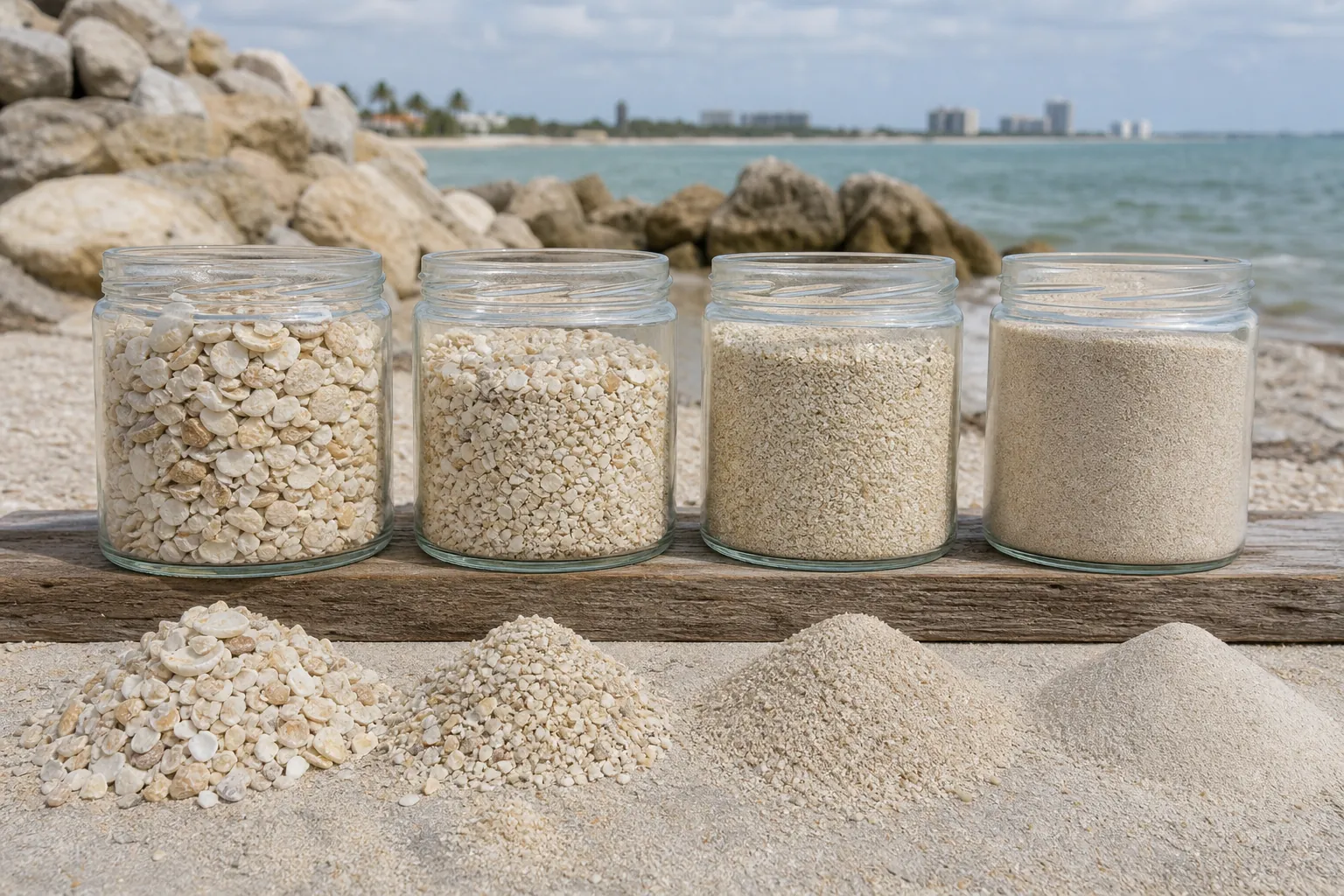
Two loads of coquina shell can look similar at a glance yet behave differently once spread. One may contain plenty of small fragments that settle into a relatively even surface. Another may feature larger, more noticeable shell pieces with open spaces between them. Those differences matter when you are choosing material for a Florida garden bed, a lightly used path or a decorative border.
Understanding coquina shell particle size differences starts with looking beyond the product name. Ask about the actual mix of fragments, the amount of fine material and how the shell looks when dry and wet. A label such as fine or coarse is useful, but it does not tell the whole story.
Tropical Yards supplies coquina shell and tropical plants, with dump trailer delivery from St. Augustine to Daytona Beach. This guide focuses on comparing shell sizes and choosing a suitable material yourself. For a broader starting point, visit the coquina shell page, then use the questions below to narrow your order.
What Particle Size Means For Coquina Shell
Particle size describes the dimensions of individual pieces in a shell material. However, a delivered load usually contains a range of sizes rather than identical fragments. The balance between smaller particles, medium pieces and larger fragments often matters more than the largest piece you can find.
The smallest fraction is commonly called fines. Depending on how the material was processed, fines may include tiny shell fragments and other fine mineral material. They occupy spaces between larger pieces and affect how closely the material settles together.
Coarser material contains more visibly distinct fragments. These pieces create stronger surface texture, but they may also shift underfoot or leave larger gaps. Shell shape matters too. Flat, curved and angular fragments do not arrange themselves like uniformly rounded gravel.
Terms such as crushed shell, screened shell and coquina shell may be used differently by suppliers. Do not assume that a familiar product name guarantees a particular size range. Ask what the current material contains and whether there is an available photograph or sample that represents the load you would receive.
- Ask for a stated size range if the supplier has one, rather than relying only on words such as fine or coarse.
- Find out whether the material contains a noticeable proportion of fines.
- Ask whether the photograph shows the current supply or an earlier batch.
- Confirm whether screening or crushing has changed the original shell fragments.
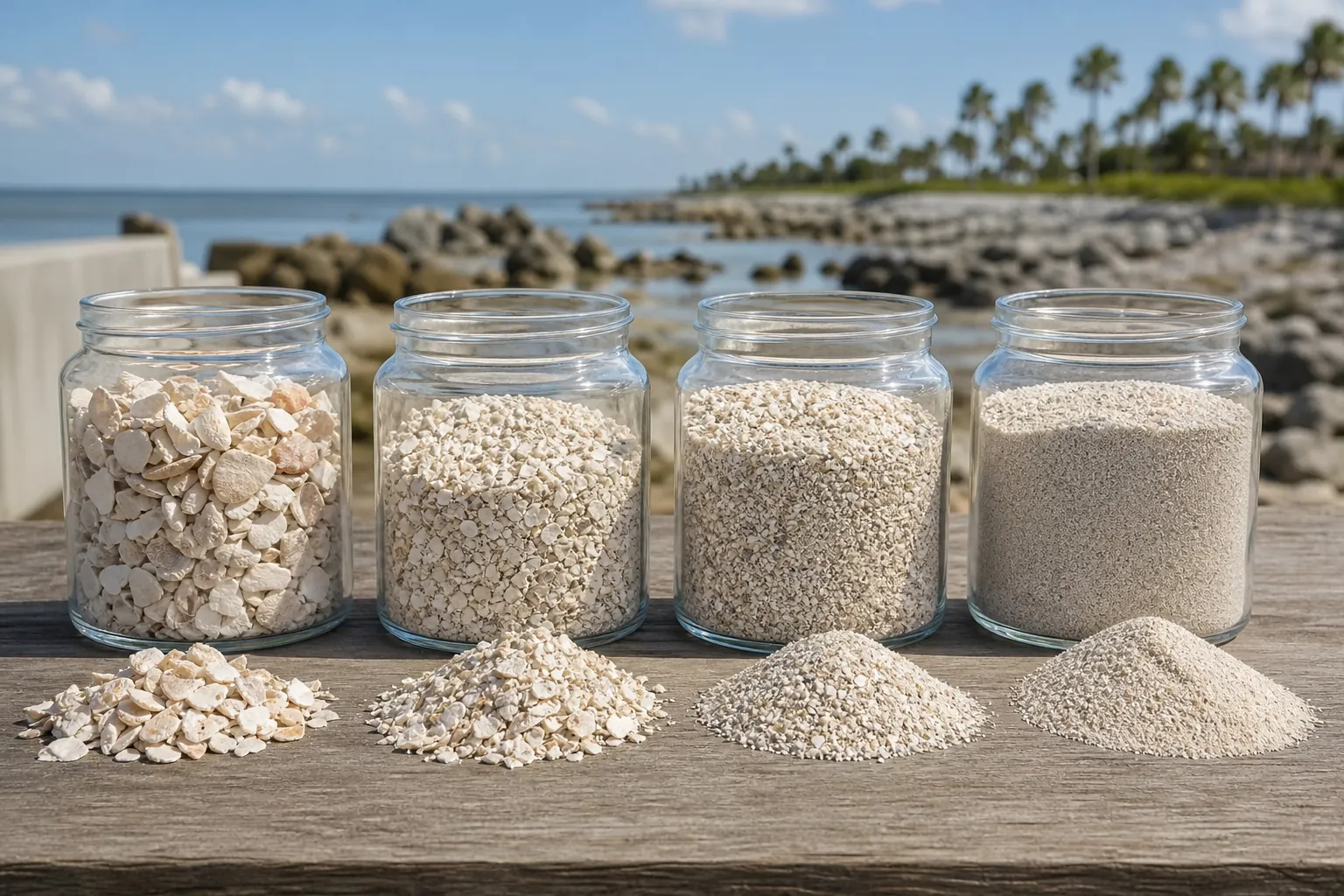
How Fine, Mixed And Coarse Shell Compare
Fine shell has a less pronounced surface texture
Fine shell material contains smaller fragments and may include enough fines to fill many spaces between them. When appropriately prepared and compacted by the homeowner, it can produce a more closely settled surface than a load dominated by large pieces.
That does not mean every fine shell product becomes firm or smooth. Moisture, the underlying ground, the proportion of fines and the way the material is placed all affect the result. A loose layer over soft soil can still move, rut or become uneven.
Fine material may suit buyers who want a quieter visual texture or fewer prominent fragments around a decorative area. Look closely for dustiness and consider where rainfall runoff could carry the smallest particles.
Mixed shell combines visible fragments with smaller particles
A mixed-size product contains a broader range of pieces. Smaller particles may settle between larger fragments, while the larger pieces preserve the recognizable shell appearance. This balance can appeal to buyers who want texture without a surface made entirely of chunky pieces.
A mixed load can also separate during handling. Larger pieces may collect in one area while finer material settles elsewhere. If you are spreading the shell yourself, working from different parts of the pile can help you avoid placing all the fines in one section.
Coarse shell emphasizes individual pieces
Coarse shell generally creates a more pronounced decorative texture. Individual fragments stand out, particularly when viewed close up. That can be attractive in a bed or border that is primarily viewed rather than walked across.
Larger fragments may be less comfortable beneath bare feet and less convenient for small wheels. Their size alone does not prove that the finished area will drain well. Drainage still depends on the entire material mix, the depth of the layer and the ground beneath it.
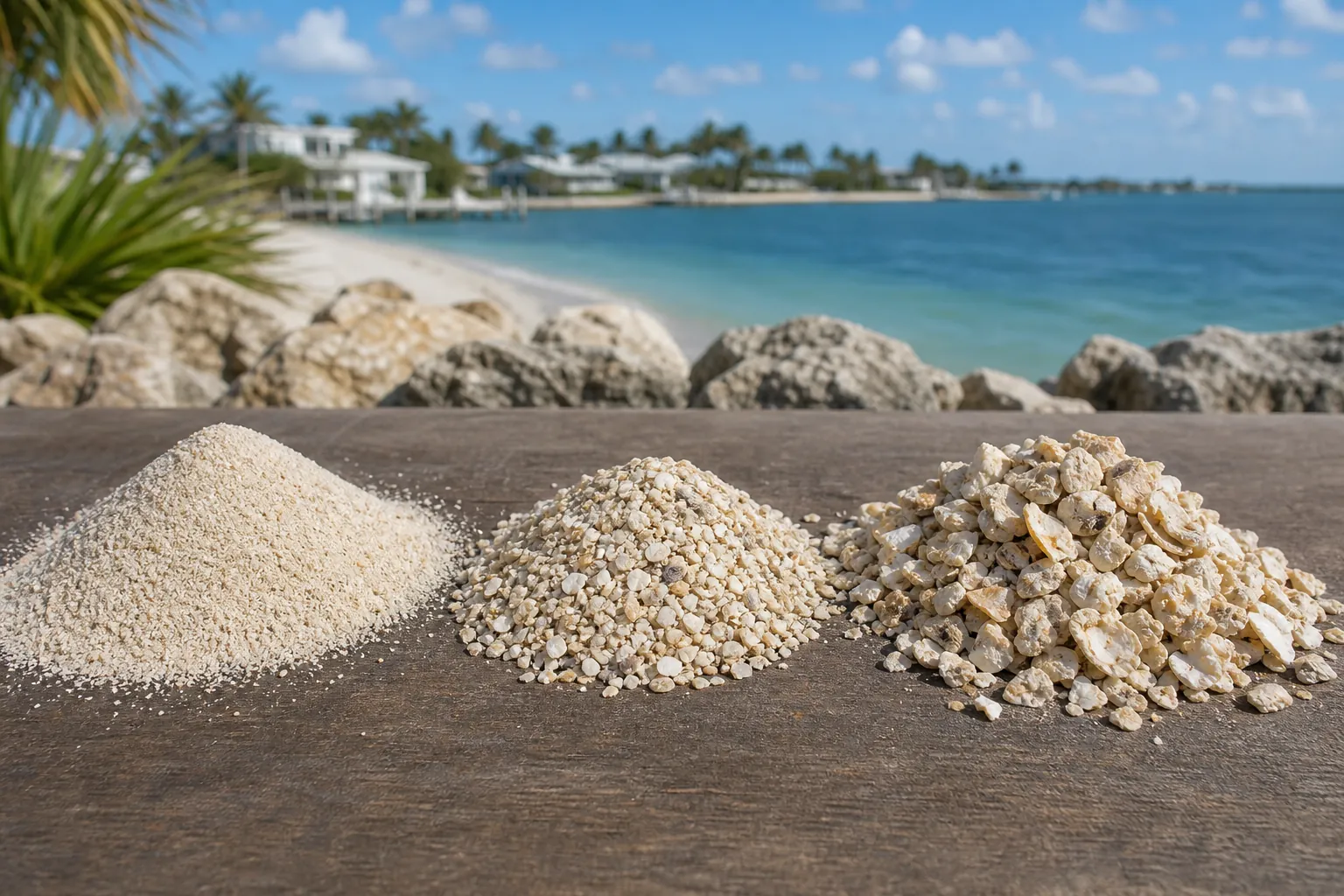
Match The Shell Size To How You Will Use It
Start with the activity, not the appearance. A planting bed beside a patio has different requirements from a route used to move a wheelbarrow. The best-looking shell in a sample may not be the easiest material to use in that location.
Decorative garden beds and borders
For an area that receives little foot traffic, visible texture may guide your choice. Coarser pieces can make the shell character more noticeable, while a finer or mixed material can create a more subdued background for foliage.
Think about how you will reach the plants. If you regularly step into the bed to water, inspect leaves or work on your own plants, test how the proposed material feels under your usual footwear. Leave practical access rather than covering every working space with coarse fragments.
Lightly used walking areas
For a garden path, compare stability, comfort and the movement of fragments. Smaller or mixed-size shell may be easier to settle into an even walking surface, but suitability depends on the actual product and your preparation.
Do not treat loose shell as automatically suitable for an accessible route. Wheelchairs, walkers and strollers need reliable surfaces. If accessibility is a requirement, check the applicable standards and consider whether another surface is more appropriate.
Areas near lawns, patios and doors
Shell fragments can migrate onto adjoining surfaces. Finer particles may track on shoes, while larger pieces can scatter across paving or into lawn edges. Think through those consequences before selecting a size.
- Choose a texture you can comfortably walk across if the area is part of a regular route.
- Plan a defined edge where shell meets grass or paving to help limit migration.
- Keep loose fragments away from places where mowing equipment could strike them.
- Consider a small trial area when the finished surface needs to work with wheels or frequent foot traffic.
Understand Settling, Compaction And Drainage
Particle size influences how shell pieces fit together. A material with a range of sizes can settle more closely because smaller particles occupy gaps between larger ones. A material made mostly of coarse pieces tends to retain more visible spaces, although fragment shape can change that pattern.
Compaction is not the same as simply spreading a thin layer. For a DIY walking area, the supporting ground must be stable enough for the intended use. Adding shell over loose organic matter, deep mud or uneven ground does not correct the underlying problem.
Ask about the supplier’s material characteristics before selecting tools or deciding on a layer depth. A decorative covering and a walking surface may need different preparation. Avoid assuming that instructions for one kind of aggregate apply unchanged to every shell product.
Florida rainfall makes drainage planning especially important. Fine particles may move with runoff, and water may collect over poorly draining ground regardless of how coarse the top layer looks. Check the slope and where water goes during a storm before covering the area.
Shell should not be used to conceal an unresolved drainage issue or redirect runoff onto neighboring property. If water routinely stands in the proposed area, investigate the cause first. Particle size is one part of the decision, not a substitute for understanding the site.
Compare Samples Without Being Misled By Appearance
A useful sample includes more than a few attractive shell pieces. You need to see the overall mixture, including fines and less eye-catching fragments. If possible, spread a representative sample in a shallow tray so the size distribution is easier to examine.
Look at the material dry, then dampen a portion. Moisture can change the apparent color and make fine particles cling to larger pieces. That comparison helps you understand why a fresh delivery may look different from shell that has dried outdoors.
Photographs are helpful, but scale matters. A close-up without a ruler or familiar object can make small fragments look large. Ask for both a close view and a wider view of the material, and remember that natural products can vary between batches.
- Check whether large pieces dominate the sample or simply stand out because they are easier to see.
- Notice how much fine material collects at the bottom when the sample is gently moved.
- Look for sharp or pointed fragments if people or pets may walk across the area.
- Compare the sample against nearby paving and foliage in outdoor light.
- Ask what variation is reasonable between the sample and the delivered material.
If matching an existing shell area is important, bring a clear photograph and, when practical, a small sample of your current material. Weathering and accumulated soil can alter its appearance, so an exact visual match may not be realistic.
Measure Your Area Before Discussing An Order
Once you have narrowed the particle size, measure the space you intend to cover. Record the length and width of each section, separating irregular beds into simpler shapes. Include the areas you actually want covered, not the entire footprint of a bed containing plants or paving.
Quantity depends on area and intended depth. For a rectangular section, multiply length by width to find square feet. Multiply that area by depth in feet to calculate cubic feet, then divide by 27 to convert cubic feet to cubic yards. Convert inches to feet before multiplying.
For example, an area measuring 12 feet by 8 feet is 96 square feet. At an illustrative depth of 2 inches, the volume is about 16 cubic feet, or about 0.59 cubic yard. This is a calculation example, not a recommended depth for every use.
Settling, irregular ground and the chosen material can affect the amount required. Ask how the shell is sold and measured, then discuss your measurements and intended use. Do not assume that a volume-to-weight conversion is identical for fine and coarse shell.
- Provide the dimensions of each section rather than relying on a rough description such as a small front bed.
- Explain whether you are covering bare ground or adding material to an existing shell layer.
- State the depth you are considering and ask whether it suits the available material.
- Confirm the ordering unit and how the delivered quantity will be described.
Plan Your Dump Trailer Delivery And DIY Handling
Tropical Yards offers dump trailer delivery of plants and coquina shell from St. Augustine to Daytona Beach. Before placing an order, discuss your address, access conditions and preferred unloading location. A convenient place for you to spread material from may not be a suitable place for a trailer to unload.
Describe narrow entrances, low branches, overhead wires, steep approaches and soft ground. A dump trailer needs appropriate access and clearance to operate. The delivery location should be agreed upon based on the actual vehicle and conditions, not estimated from the pile size alone.
Choose a staging spot that does not block a sidewalk, drain or essential access route. If you intend to use a protective sheet beneath the pile, ask whether that arrangement is practical for unloading. Also consider how you will move the shell from the pile to the project area.
Smaller particles and larger fragments handle differently with shovels, rakes and wheelbarrows. Wear gloves, closed-toe footwear and eye protection when handling shell. If the material is dusty, avoid breathing the dust and follow appropriate precautions for the conditions.
Delivery supplies the material; it does not include spreading or installing it. Tropical Yards is a supplier, so plan your own preparation, handling and placement before the load arrives. Having a clear work sequence can help prevent repeated moving of the same material.
Use Shell Thoughtfully Around Tropical Plants
Particle size affects appearance around plants, but plant health requires a separate check. Shell contains calcium carbonate and may affect soil chemistry over time. Consider the plant’s soil preferences rather than assuming shell is suitable around every tropical species.
Keep shell away from trunks, stems and plant crowns. Do not raise the finished surface against those parts of a plant or bury exposed root flares. Preserve access to irrigation emitters and check that water reaches the soil rather than running away across the covering.
Tropical Yards also supplies palm trees, hibiscus, bougainvillea, ferns and other tropical plants. When buying plants and shell for the same DIY project, discuss the plants’ light, moisture and soil needs separately from the shell’s decorative qualities. Different plants can need very different growing conditions.
A coarse shell border may complement foliage visually, but it does not replace watering or appropriate soil preparation. Likewise, a fine shell covering should not be treated as a growing medium. Use soil testing when you need clearer information about the planting area’s pH.
A Practical Checklist For Choosing Your Shell Size
The most useful comparison brings together the actual material, your intended use and the conditions at your property. Avoid choosing solely from a product label or assuming that larger pieces are always better for drainage.
- Identify whether the area is decorative, walked on or used for moving equipment.
- Compare the fragment range, shape and amount of fines in the available shell.
- Check the ground, slope and drainage before deciding how to use the material.
- Measure the coverage area and discuss the intended depth before ordering.
- Confirm trailer access and a practical unloading location before scheduling delivery.
For coquina shell sales and dump trailer delivery from St. Augustine to Daytona Beach, call Tropical Yards at 772-267-1611. Share your measurements, intended use and delivery access details, and ask about the shell currently available. Those specifics make it easier to compare particle sizes and prepare for your own project.
Call 772-267-1611 to talk through next steps.