A practical checklist for your coquina shell quote
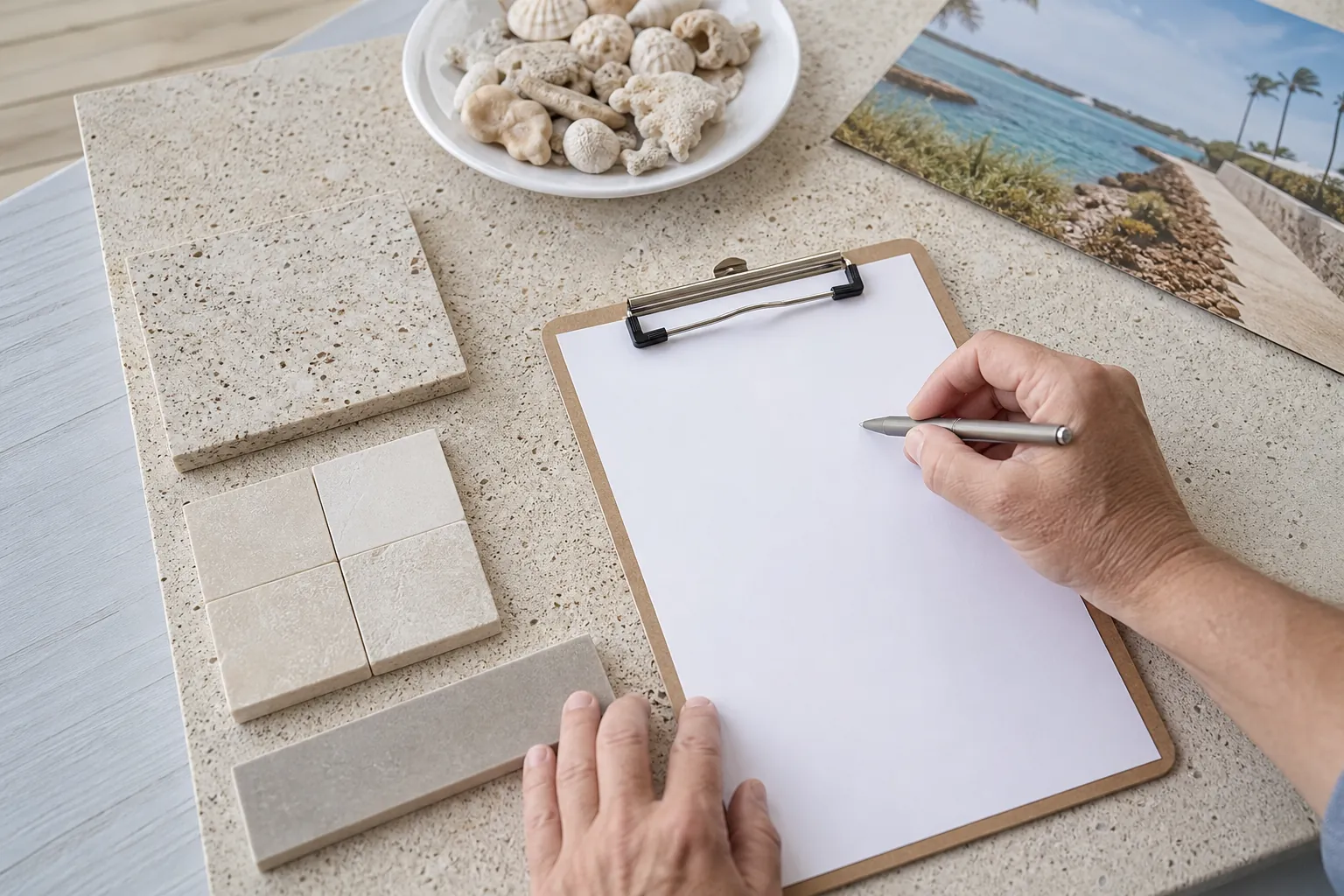
A useful coquina shell quote starts with clear information about your project, not just a request for a truckload. The area you want to cover, the depth you have in mind, and the place where a trailer can unload all affect the ordering conversation.
This coquina shell quote information checklist helps Florida homeowners and DIY buyers gather those details before contacting Tropical Yards. It focuses on purchasing material and preparing for delivery, rather than designing or installing a landscape.
Tropical Yards supplies coquina shell and tropical plants, with dump trailer delivery from St. Augustine to Daytona Beach. You handle site preparation and spreading yourself or arrange those tasks separately. For general product information before working through this checklist, visit the coquina shell page.
Start With The Purpose And Location Of Your Project
Tell the supplier what you intend to do with the material. A decorative border, a garden path, and a larger ground-cover area can involve different expectations for depth, surface feel, and preparation. Describing the use makes it easier to ask relevant product questions.
Do not assume every shell material is suitable for every application. For areas exposed to vehicles, frequent foot traffic, or standing water, investigate the required preparation and whether the available material fits your needs before ordering.
Your delivery location matters, too. Florida is a broad service area, while Tropical Yards provides dump trailer delivery along the corridor from St. Augustine to Daytona Beach. Share the actual delivery address so coverage and access can be reviewed.
- State whether the shell is intended for a path, border, planting-bed surface, or another specific use.
- Provide the delivery address and any neighborhood entry instructions.
- Explain whether this is a new surface or a refresh of an existing shell area.
- Mention slopes, wet spots, nearby drains, and surfaces that must remain accessible.
If your project includes several separate areas, name each one. Keeping a side-yard path separate from a front planting bed helps prevent measurement errors and makes later quantity adjustments easier.
Measure Each Area Before Asking For A Quantity
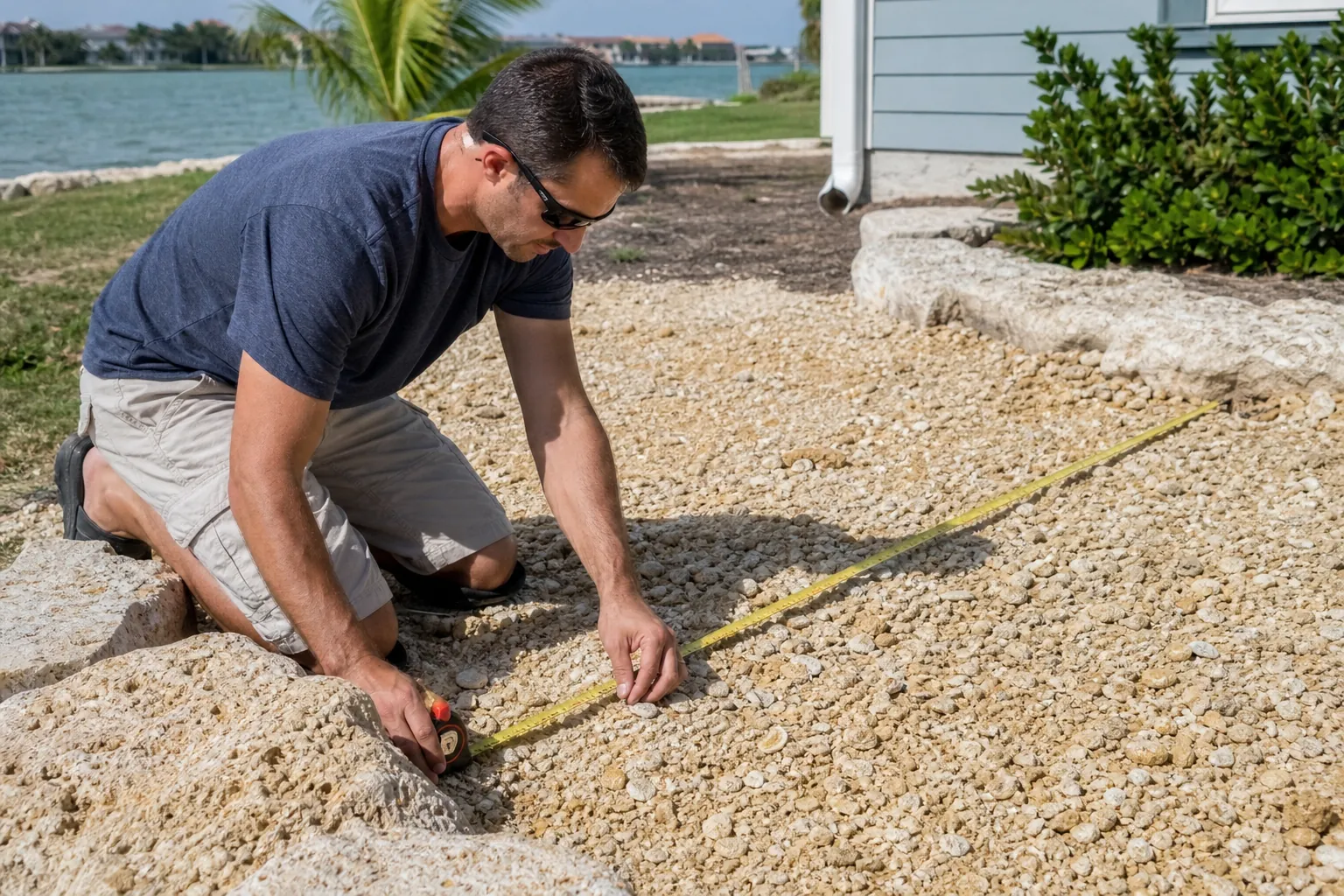
Measure the actual footprint you plan to cover. Use feet consistently, and write down dimensions rather than relying on memory. A quick sketch with labeled measurements is often more useful than a polished drawing without dimensions.
For a rectangle, multiply length by width to find square feet. A space measuring 12 feet by 8 feet has an area of 96 square feet. This is only the area calculation; the amount of shell also depends on depth.
For a circular area, multiply pi by the radius squared. The radius is half the diameter. For a triangular area, multiply the base by the perpendicular height and divide by two.
Divide an irregular shape into smaller rectangles, triangles, or circles. Calculate those pieces separately, then add them. Subtract substantial areas that will remain uncovered, such as a patio, a large planter, or a retained planting pocket.
- Record the length and width of each rectangular section in feet.
- Measure curved paths in short sections if their width changes along the route.
- Identify excluded areas instead of treating the entire yard as the shell footprint.
- Keep your sketch available when discussing the order by phone.
For a narrow border, measure its full length and intended width. If the width varies significantly, divide the border into sections. Using a single wide measurement for the whole border can produce an unnecessarily large estimate.
Photos can help explain the setting, but they do not replace measurements. A picture rarely reveals exact dimensions, buried obstacles, or the amount of existing material beneath the surface.
Choose A Working Depth And Calculate Volume
Depth is the second major input for a shell quantity estimate. Decide on a working depth for your intended use, then confirm that assumption during the ordering conversation. There is no single depth that suits every surface and site condition.
Consider existing grade, nearby paving, edging height, and any material already in place. A refresh over an established shell surface is different from covering bare ground. Adding material without checking elevations can leave a surface too high at doors, gates, or walkways.
For a basic loose-volume estimate, multiply square feet by depth in feet. To convert inches to feet, divide by 12. Then divide cubic feet by 27 to calculate cubic yards.
Example: An area of 180 square feet at a working depth of 2 inches requires 180 × (2 ÷ 12), or 30 cubic feet. Dividing 30 by 27 gives approximately 1.11 cubic yards. This example explains the calculation; it is not a recommended depth for every shell project.
Your calculated volume is a starting point, not a final order instruction. Uneven ground, existing depressions, handling losses, and any application-specific settling can affect the quantity you need.
- Share your measured square footage and proposed depth with the supplier.
- Ask what unit the available coquina shell is sold in.
- Confirm how your calculated volume should translate into the supplier's ordering unit.
- Discuss any allowance separately rather than automatically adding an arbitrary percentage.
If the quote uses weight rather than volume, do not convert it with an unrelated online density figure. Shell composition, moisture, and grading can affect that relationship. Ask the supplier how to interpret the quoted quantity.
Clarify Which Coquina Shell You Are Buying
Product names alone may not answer every practical question. Before accepting a quote, ask how the available coquina shell is described and what you should expect when it arrives. Natural material can vary in appearance.
Ask about the typical particle size, the presence of smaller pieces or fines, and whether a current photo or sample is available. These details help you judge the material against your intended application without assuming it will look exactly like an unrelated inspiration image.
For a walking area, think about footwear, loose pieces, and your expectations for the finished surface. For a decorative area, focus on appearance, containment, and how you will keep shell separate from surrounding soil or lawn.
- Ask which coquina shell product the quote covers.
- Request a description of the current material's size range and appearance.
- Confirm whether any photo or sample represents the material currently available.
- Explain whether you are trying to match an existing shell surface.
A match to older material may be imperfect because weathering, soil mixing, and different source material can change the appearance. Describe the existing surface, but avoid treating a visual match as certain.
If shell will sit near plants, consider the plants' soil preferences. Shell contains calcium carbonate and can influence soil chemistry over time. Keep material away from trunks and stems, and evaluate suitability for plants that prefer acidic conditions.
Check Dump Trailer Access Before Scheduling
A delivery address does not establish whether a trailer can safely reach the unloading area. Access should be discussed before scheduling, especially where driveways are narrow, turns are tight, or the proposed route crosses soft ground.
Measure the narrowest point along the route, including gates. Note overhead branches, utility lines, building overhangs, and anything else that may restrict movement or unloading. A dump trailer needs suitable clearance when raised, not just when traveling.
Do not guess at the equipment's required width, height, or turning room. Give Tropical Yards your site details and ask what clearance is needed for the delivery equipment expected for your order.
- Report driveway and gate widths at their narrowest points.
- Describe turns, slopes, uneven pavement, and any low overhead obstructions.
- Identify soft soil, recently disturbed ground, and areas that stay wet after rain.
- Point out septic components, irrigation equipment, buried utilities, and other sensitive areas.
- Explain whether parked vehicles or neighborhood access rules could affect arrival.
Florida rain can change access conditions quickly. A route that looks firm during your initial planning may be unsuitable after wet weather. Discuss how changed site conditions should be communicated before the scheduled delivery.
If you are unsure about a route, describe the concern rather than assuming the driver can resolve it on arrival. Delivery access decisions should be made with the supplier, using the actual equipment and current site conditions.
Select A Practical Unloading Spot
Choose a proposed drop location that balances safe delivery access with the work required afterward. A pile close to the project may reduce wheelbarrow trips, but proximity does not make a location suitable for a dump trailer.
The unloading area should be evaluated for stability, clearance, and the space the pile will occupy. Avoid planning a drop that blocks a garage, traps a vehicle, covers a drain, or prevents access to a door.
If the material will land on paving, ask about appropriate surface protection and potential marking or scratching. A tarp may make collection easier, but it does not make an unsuitable location safe or guarantee protection.
- Mark the proposed drop area clearly and describe it when ordering.
- Allow space for the pile to spread during unloading.
- Keep the pile away from drainage openings and areas where runoff could carry material away.
- Confirm whether the planned unloading arrangement is feasible before relying on it.
Clarify what the quoted delivery includes. Dump trailer delivery is not spreading, grading, installation, or cleanup. Tropical Yards supplies and delivers material; arranging movement from the pile to the project area is your responsibility.
Think through that movement before placing the order. Count the gates, corners, steps, and soft patches between the drop point and the work area. These details may not change the shell quantity, but they can substantially change your DIY workload.
Have Your DIY Preparation Plan Ready
You do not need a finished project plan to request a quote, but you should know who will prepare the area and move the shell. That helps you choose a realistic delivery date and avoid storing a pile longer than intended.
Check local requirements and any homeowners association rules that apply to your project. Before digging or driving edging stakes, arrange appropriate utility locating. Do not assume shallow work is free of underground hazards.
Evaluate drainage before adding shell. Material should not be used as a substitute for understanding why water collects or where runoff needs to go. Avoid changing grades in ways that direct water toward buildings or neighboring property.
- Decide who will prepare the site, set any edging, and spread the material.
- Have suitable shovels, rakes, wheelbarrows, and protective gear available.
- Plan manageable work sessions rather than assuming the whole pile can be moved immediately.
- Consider whether temporary storage will interfere with parking or everyday access.
Landscape fabric is another decision to evaluate for the specific application. It is not a universal solution and does not eliminate future weeds. Soil and organic debris can accumulate above it, allowing new growth.
For a project involving plants as well as shell, Tropical Yards also sells palm trees, hibiscus, bougainvillea, ferns, and other tropical plants. Ask about plant availability separately, and confirm the delivery arrangements for your order. Planting and ongoing care remain your responsibility.
Review The Quote Without Making Assumptions
Once you have the project information ready, review the quote as a set of clearly defined items. The product, quantity, delivery address, and unloading assumptions should all match what you discussed.
Ask whether the stated quantity is approximate or measured in a particular way. Confirm the ordering unit and any rounding used. If your calculations and the suggested order differ, ask for an explanation before proceeding.
- Verify the coquina shell product and quantity listed in the quote.
- Confirm whether delivery is included or listed separately.
- Ask about applicable taxes, payment requirements, and quote validity.
- Discuss current availability and scheduling rather than assuming a preferred date is open.
- Ask how to report changes to access, quantity, or the unloading location.
If your project measurements change, update the supplier before the order is finalized. Adding another path or increasing depth can alter the required quantity even when the original area remains the same.
Keep a copy of your measurements and the agreed order details. This creates a useful reference if you later need more shell, especially when the project is completed in stages.
Your Ready-To-Call Coquina Shell Checklist
Gather the following information in one note before calling. You can leave uncertain items marked as questions, but distinguish those from measurements you have already verified.
- I have the delivery address and can explain any entry restrictions.
- I can describe the intended use of the coquina shell.
- I have measured each area and calculated the total square footage.
- I have a proposed depth and know which existing surfaces will remain.
- I can describe driveway width, overhead clearance, turns, and ground conditions.
- I have identified a proposed unloading location and a backup to discuss.
- I understand that preparation, spreading, installation, and cleanup are not included.
- I have questions ready about material characteristics, ordering units, and scheduling.
You do not need every answer before making contact. Clear measurements and an honest description of the site are more helpful than confident guesses.
When you are ready, call Tropical Yards at 772-267-1611 to discuss coquina shell sales and dump trailer delivery from St. Augustine to Daytona Beach. Bring your checklist so the conversation can focus on the material, quantity, and delivery details for your project.
Call 772-267-1611 to talk through next steps.