Understanding coquina shell settling around utility trenches
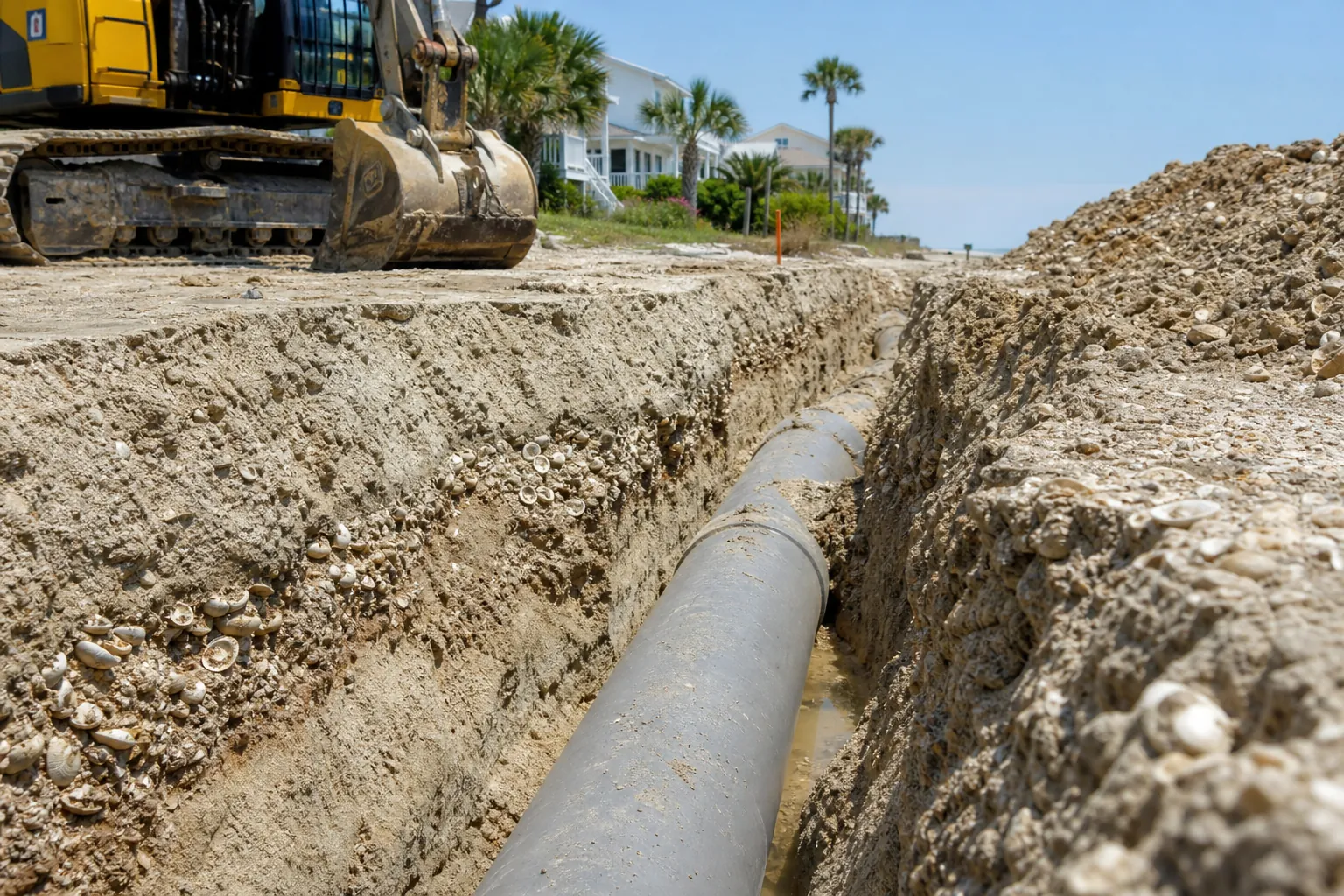
A strip of coquina shell can look level when you spread it, then develop a shallow dip along the route of a buried water line, irrigation pipe, or electrical conduit. In Florida yards, that change often reflects what is happening underneath the shell rather than a problem with the shell itself.
Coquina shell settling around utility trenches deserves a careful look before you order another load. A small, stable depression may need only a measured surface correction. A dip that keeps deepening, stays wet, or follows recent utility work may require attention from the utility owner or an appropriate qualified professional first.
Tropical Yards supplies coquina shell and tropical plants, with dump trailer delivery from St. Augustine to Daytona Beach. This guide is for buyers and homeowners doing their own projects. It explains how to recognize trench-related settling, avoid unsafe digging, calculate replacement material, and plan a delivery without confusing a surface refresh with a repair below ground.
Why A Utility Trench Can Settle Differently From The Rest Of Your Yard
A utility trench creates a narrow band of disturbed ground. During construction or repair, soil is removed, a line is placed or serviced, and the excavated space is filled again. That replacement soil does not automatically return to the same density or structure as the undisturbed ground beside it.
If the backfill contains loose pockets, buried organic material, or unevenly compacted layers, it can compress gradually. Water moving through the soil may also rearrange particles or carry material into nearby voids. The shell surface follows the changing support beneath it, leaving a visible low strip.
Florida conditions vary considerably. Sandy ground, seasonal downpours, high groundwater, and local drainage patterns can all influence how a disturbed area behaves. Do not assume that every trench in the same neighborhood will settle equally, or that one successful correction elsewhere will fit your yard.
Coquina shell is a surface material, not a substitute for properly prepared trench backfill. Adding shell can restore the appearance of a stable surface depression, but it cannot reliably correct a leak, an underground void, or an unresolved backfill problem.
Identify The Pattern Before Adding More Shell
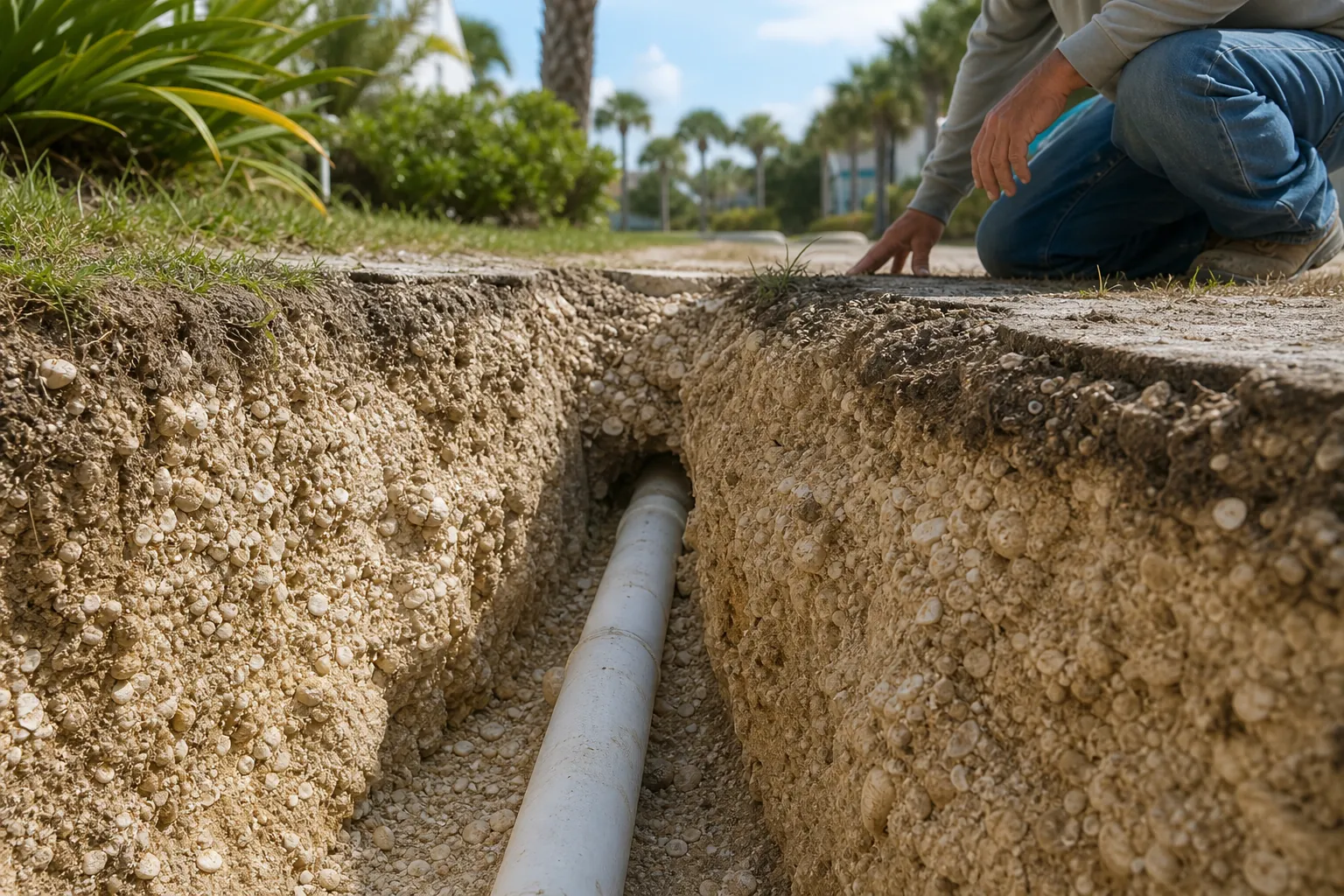
Start with observation rather than excavation. Look at the shape of the depression, its location, and whether it changes after rain. A narrow, roughly straight dip may correspond to a utility route, but appearance alone does not identify what is underground.
Check any records from previous utility work and ask the utility owner or contractor about the route if the work was recent. Photos taken before the shell was spread can also help distinguish an old trench from a naturally low section of the yard.
- A long, narrow depression may indicate that the trench backfill is compressing beneath the shell.
- A wider low area may involve drainage, general grading, or a broader zone of disturbed soil.
- Shell pushed toward the edges may indicate vehicle traffic, turning wheels, or material shifting across the surface.
- Shell collected downhill after a storm may indicate runoff movement rather than trench settlement alone.
- A depression beside a sprinkler head may involve irrigation conditions, but the cause still needs confirmation.
Take photographs from the same position and note the date, recent weather, and approximate dimensions. A straight board laid across the surface can help show the depth without disturbing the ground. Repeated observations are more useful than guessing from one view.
Know When A Low Spot Needs Professional Attention
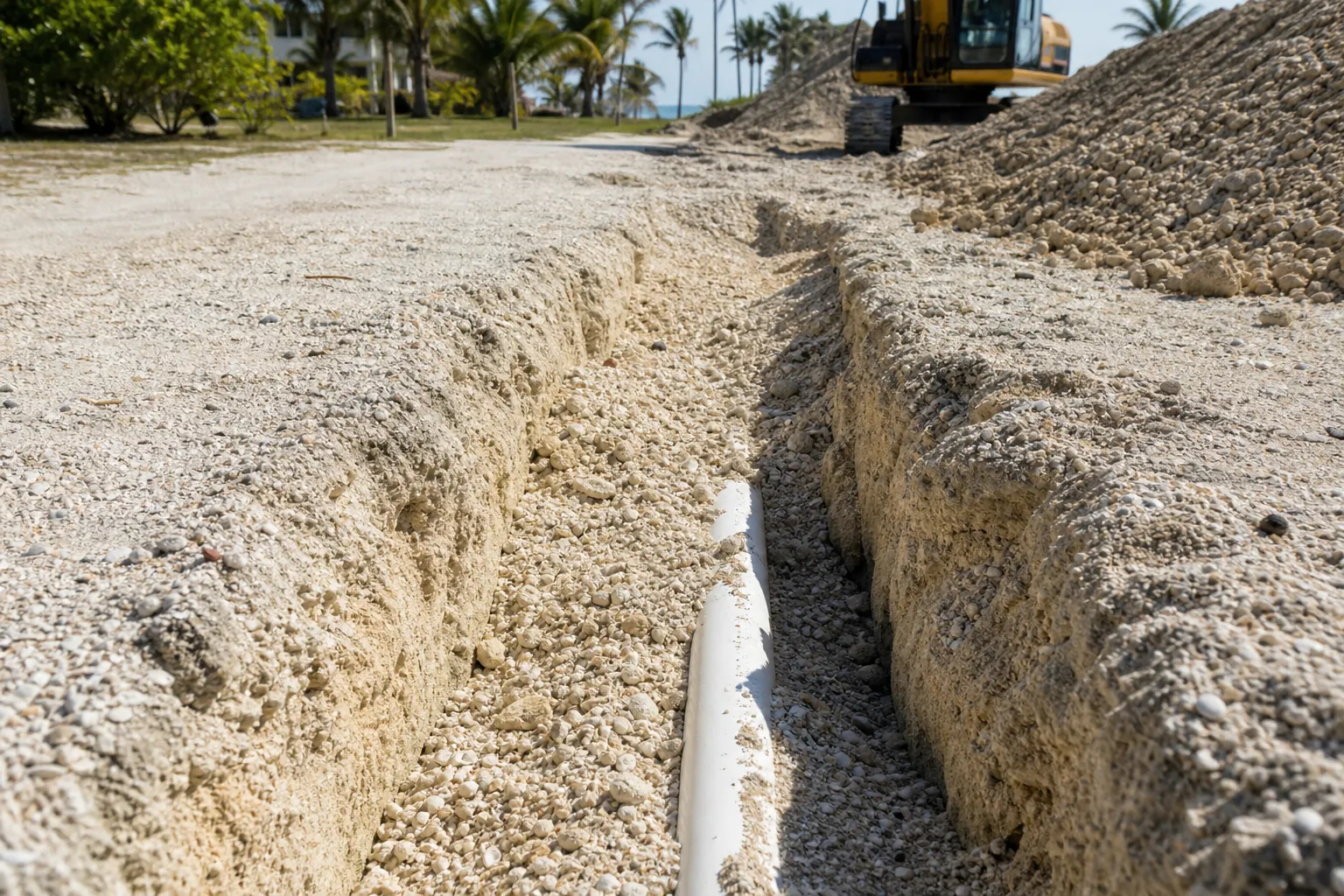
Some changes should not be treated as a routine shell top-up. If the surface drops quickly, develops an open hole, or feels unstable, keep people and vehicles away. Do not walk across a suspected void just to measure it more closely.
Persistent wetness during otherwise dry weather may indicate a leak, although drainage and groundwater can also cause wet areas. Unexpected changes in water pressure, irrigation performance, or utility operation warrant contact with the relevant utility provider or qualified trade professional.
- Stop surface work if the depression keeps growing or returns soon after each correction.
- Contact the appropriate utility owner if you suspect a damaged or leaking buried line.
- Keep delivery vehicles away from soft ground and any area with uncertain underground support.
- Report exposed conduit, pipe, cable, or other utility components rather than covering them with shell.
- Leave utility boxes, valve covers, cleanouts, and access points visible and accessible.
If you smell gas, hear a suspected gas leak, or encounter another immediate utility hazard, leave the area and contact emergency services or the utility's emergency response channel from a safe location. Ordering more surface material is not the next step.
For recently completed utility work, ask who is responsible for evaluating settlement and restoring the disturbed area. Documenting the condition before changing it can help preserve a clear record of what occurred.
Plan Safe DIY Work Around Buried Utilities
Do not assume shallow work is automatically safe. Buried lines may be closer to the surface than expected, especially where erosion or prior grading has changed the ground level. Before digging, removing soil, driving stakes, or performing work that disturbs the ground, contact Florida's utility notification service through 811 and follow its current requirements.
A utility locate does not necessarily identify every private line on a property. Irrigation tubing, privately owned electrical lines, and other owner-installed systems may require separate locating arrangements. Clarify what is covered before proceeding.
Do not drive edging spikes or landscape pins into a suspected utility corridor without appropriate locating and clearance. Likewise, avoid using powered compaction equipment over an uncertain line. Compaction methods should suit the soil, utility type, burial conditions, and instructions from the responsible professional.
If the work requires exposing a line or rebuilding trench backfill, treat that as a separate repair project. Tropical Yards supplies materials and delivery, not excavation, utility repair, grading, or shell installation.
Separate A Surface Correction From A Backfill Repair
The useful question is not simply, “How much shell fills this dip?” It is, “Has the ground beneath this dip become stable?” Those questions lead to different purchases and different next steps.
For a shallow, stable depression with no signs of a utility problem, a modest addition of coquina shell may be reasonable. The goal is to blend the surface with the surrounding area while retaining the drainage pattern and access to utility components.
For a deeper depression, investigate the underlying support first. Filling the entire space with decorative shell can consume unnecessary material and conceal an unresolved issue. Appropriate backfill and any required compaction should be determined by the person responsible for the trench or a qualified professional.
If repairs are underway, ask for the finished ground level and intended shell depth before ordering. Separating structural backfill from the visible shell layer makes the quantity calculation more accurate and reduces the temptation to use shell for a purpose it was not selected to serve.
Do not raise the surface against siding, cover foundation openings, or bury plant crowns while blending the correction. A level-looking finish is not helpful if it creates a new drainage or access problem.
Measure The Settled Strip Before Buying Coquina Shell
Measure the actual area needing shell rather than the entire original project. Record the length and width of the depression, then estimate the average additional depth needed to bring the surface to the intended finish.
Most depressions are not equally deep throughout. Taking readings at several points helps avoid calculating the entire strip at its deepest spot. Include any adjacent area that needs a light blend, but keep that allowance separate so you understand where the material will go.
For a roughly rectangular area, multiply length in feet by width in feet by added depth in feet. That gives cubic feet. Divide by 27 to express the estimate in cubic yards.
For example, a strip measuring 30 feet long and 2 feet wide with an average added depth of 1 inch requires approximately 5 cubic feet, or 0.19 cubic yard, by simple geometric calculation. That is an estimating example, not a recommended depth or a guaranteed purchase quantity.
- Convert inches to feet before multiplying so all measurements use the same units.
- Measure separate sections individually if the width or depth changes significantly.
- Exclude utility covers and other areas that must remain uncovered.
- Ask how the supplier sells and measures the material before converting your estimate into an order.
- Discuss a modest allowance for blending and handling rather than choosing an arbitrary large surplus.
If the depression is still changing, postpone the final quantity calculation. Measuring a moving target can lead to repeated purchases without resolving the cause.
Choose Shell For A Consistent Surface, Not Just A Full Trench
When topping up an existing shell area, consider how the new material will look and function beside the old surface. Natural coquina shell can vary in color, particle size, and the proportion of finer material. Weathered shell may also look different from a fresh delivery.
Ask about the material currently available rather than relying entirely on an old photograph. Explain that you are correcting a narrow settled strip within an existing shell area. That context helps the purchasing conversation stay focused on compatibility and quantity.
Review the coquina shell information for the broader material-buying questions. This trench-settling guide focuses on diagnosing the depression and planning a targeted purchase, rather than replacing a general shell selection guide.
Do not assume that a coarser-looking shell will bridge an underground void or prevent future settlement. Particle appearance does not establish whether the trench below is sound. Choose the surface material after the underlying condition has been addressed.
Also consider how the area is used. A decorative border, a walking route, and a vehicle-access area impose different demands. If the intended use requires engineered support, obtain suitable guidance before treating a shell refresh as the complete solution.
Arrange Dump Trailer Delivery Without Loading The Weak Area
The delivery location matters as much as the shell quantity. A convenient dumping spot is not suitable if the trailer must cross a soft trench, approach a concealed void, or unload beneath overhead obstructions.
Tropical Yards offers dump trailer delivery of coquina shell and tropical plants from St. Augustine to Daytona Beach. Before arranging delivery, describe the settled area and identify a separate, firm unloading location whenever possible.
- Provide clear information about driveway access, gates, turning space, and surface conditions.
- Point out buried utility routes, septic components, irrigation equipment, and any known weak ground.
- Discuss overhead wires, branches, and other clearance restrictions before delivery.
- Choose an unloading location that leaves utility covers and pedestrian access unobstructed.
- Plan how you will move the shell yourself from the dump location to the project area.
A dump trailer delivery places material at an agreed accessible location; it is not shell spreading or trench restoration. Have your own tools, handling plan, and help ready if needed.
Use the coquina shell delivery information to prepare your access questions. Confirm current delivery arrangements directly rather than assuming that a previous delivery location will work after ground conditions have changed.
Make A Small Surface Correction Only After Conditions Are Stable
Once the underlying issue has been resolved or the area has been assessed as a stable surface depression, work in small increments. For a homeowner-applied top-up, spreading a little shell at a time makes it easier to blend the transition without creating a raised ridge.
Follow any restrictions given by the utility owner or repair professional. Keep utility markings intact while they are needed, and do not disturb marked ground merely to improve the appearance of the shell.
Use the surrounding finished surface as a reference, but preserve the intended water movement. A correction should not redirect runoff toward a house, neighboring property, or utility enclosure. Avoid treating a straight board as proof that every part of the yard must be perfectly level.
Keep shell out of drains and away from openings that need ventilation or access. Around plants, avoid burying stems, crowns, or exposed root flares. Coquina shell is not potting soil, and it should not replace the appropriate growing medium for nearby tropical plants.
After spreading, take another photograph and record how much material you used. That simple record helps you distinguish a successful one-time correction from a depression that continues to move.
Watch What Happens After Rain And Normal Use
Check the corrected area after rain and after ordinary foot traffic. Look for renewed sinking, standing water, or shell migrating along the trench. These observations help determine whether the original cause was resolved.
If the dip returns, resist repeatedly covering it. More shell can make the surface appear corrected temporarily while the underlying condition remains unchanged. Compare your dated photographs and contact the appropriate professional if the pattern continues.
For runoff-related movement, the useful next step may be a drainage evaluation rather than a larger shell order. For traffic-related displacement, reconsider how the area is used. Those are separate issues from backfill settlement and should not be combined into one assumed diagnosis.
A stable finish does not need constant additions. Order based on observed need, keep access points clear, and avoid stockpiling excess material on uncertain ground.
Buy The Material After You Understand The Problem
The most practical approach to coquina shell settling around utility trenches is a sequence: observe the pattern, rule out hazards, resolve any below-ground problem, measure the surface correction, and then arrange material delivery.
Tropical Yards provides coquina shell sales and tropical plant sales, including palm trees, hibiscus, bougainvillea, ferns, and other tropical plants. Dump trailer delivery is available from St. Augustine to Daytona Beach. Planting, shell spreading, trench repairs, and yard maintenance are not services offered by Tropical Yards.
When you are ready to discuss a shell purchase, call 772-267-1611. Have your measurements, location, and proposed unloading spot available so the conversation can focus on the material you need and a practical delivery plan.
Call 772-267-1611 to talk through next steps.