Understanding coquina shell and soil pH in Ormond Beach, FL
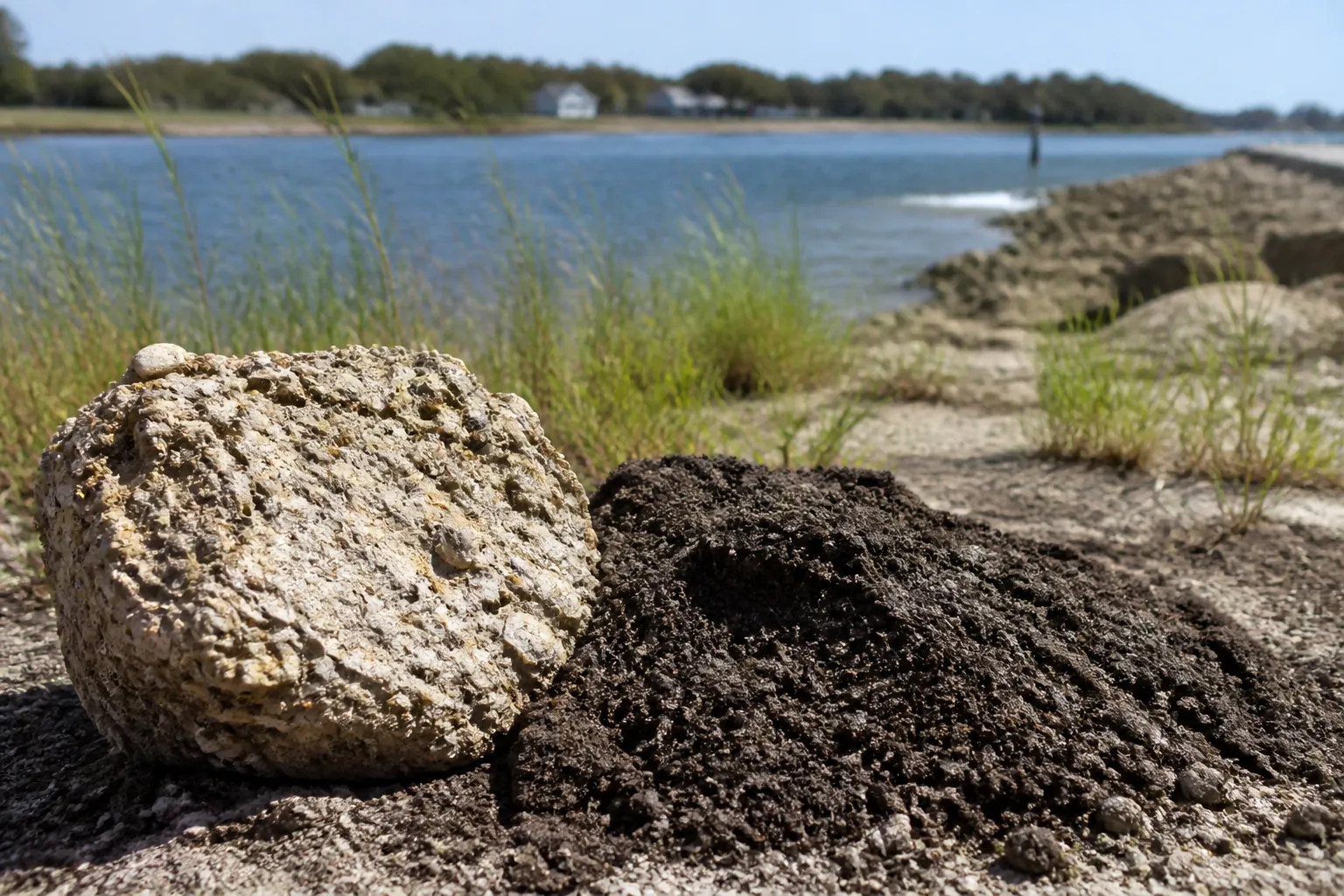
Coquina shell can bring a natural coastal character to a Florida yard, but its role is not purely visual. Shell contains calcium carbonate, which can influence soil chemistry as it gradually dissolves. Before placing shell around tropical plants, it helps to understand your starting soil conditions and what those plants need.
For buyers in Ormond Beach, the practical question is not whether shell always raises pH. It is whether the material, placement, drainage, and existing soil make a meaningful change likely in your particular planting area. Understanding coquina shell soil pH effects helps you choose where shell belongs and where a different surface material may be more appropriate.
Tropical Yards supplies coquina shell and tropical plants, with dump trailer delivery from St. Augustine to Daytona Beach. This guide focuses on buying decisions and work you can do yourself, from testing soil to keeping shell separate from sensitive plant roots.
What Coquina Shell Can Do To Soil pH
Soil pH describes how acidic or alkaline soil is. It affects the availability of several plant nutrients, so a change in pH can matter even when the soil still looks the same. Plants differ in the conditions they tolerate, and some develop nutrient problems when their root zone becomes too alkaline.
The calcium carbonate in shell can neutralize acidity as it dissolves. That gives coquina shell the potential to raise pH in acidic soil. However, loose shell used as a surface covering does not behave exactly like finely ground agricultural limestone mixed into a planting bed.
Particle size is important. Fine shell particles expose more surface area to soil moisture and acidity than large fragments. Material containing substantial fines may interact with the surrounding soil differently from a layer composed mostly of larger pieces.
Placement also matters. Shell incorporated into soil has more direct contact with the root zone than shell placed on a separate walkway. Moisture movement, the depth of the shell layer, and the buffering capacity of the original soil all influence the outcome.
Shell does not automatically make every soil strongly alkaline. Calcium carbonate dissolves more readily under acidic conditions, and its effect cannot be predicted from appearance alone. Avoid assuming that a particular quantity will produce a particular pH change.
- Shell can influence soil pH, but the size and speed of the change depend on site conditions.
- Fine particles generally react more readily than large shell fragments.
- Mixing shell into a planting bed creates closer contact with plant roots than using it on a nearby path.
- A soil test is more useful than guessing from the presence of shell or the color of the soil.
Why Ormond Beach Yards Need A Site-Specific Check
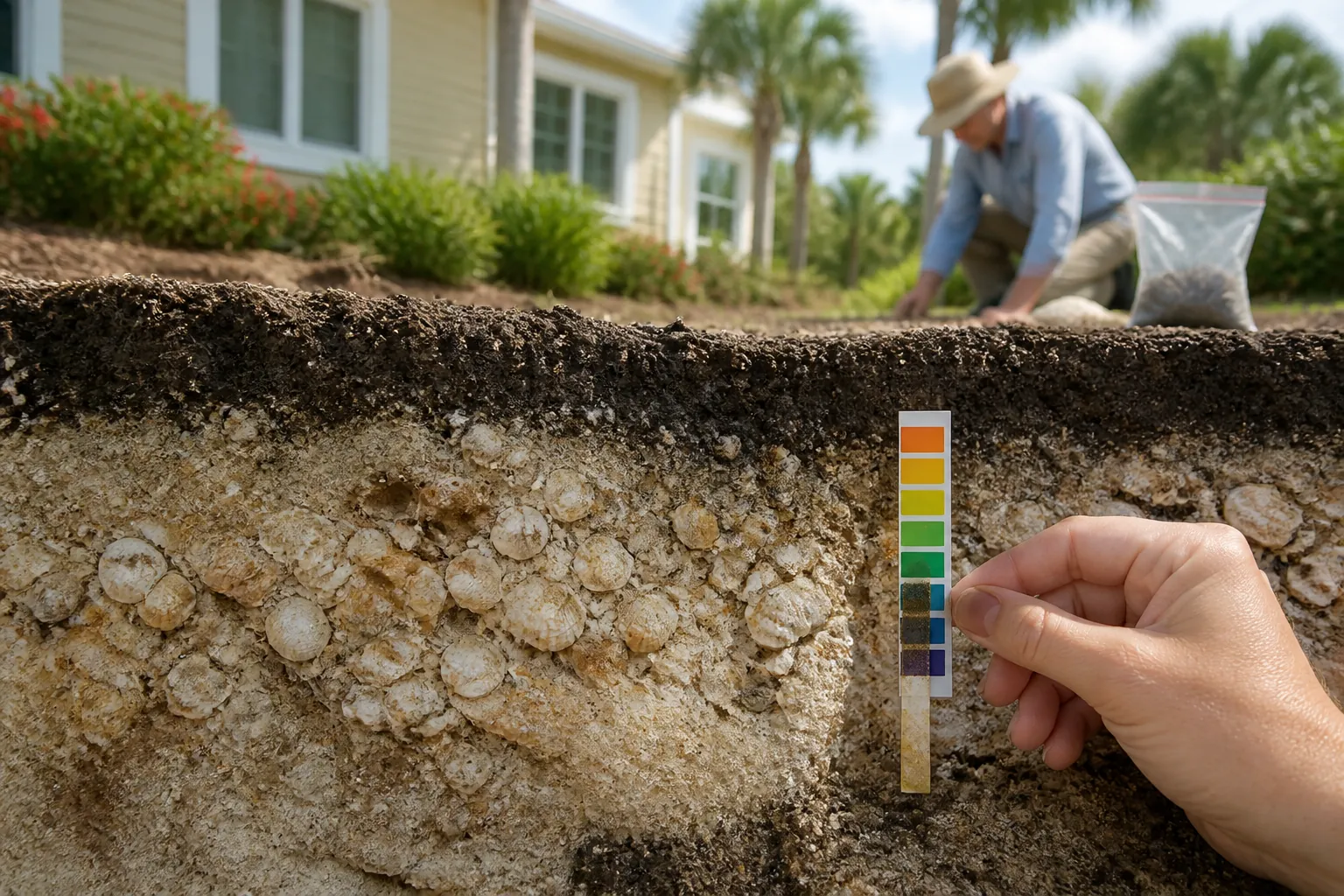
Ormond Beach yards can contain sandy soil, imported fill, older landscape amendments, or a combination of materials. Two planting beds on the same property may have different pH readings because they were built or managed differently.
A coastal location does not prove that your soil is alkaline. Likewise, a sandy texture does not tell you whether a bed needs lime or another amendment. Previous fertilizer use, construction materials, organic matter, and irrigation water can all affect the conditions plants experience.
Water deserves attention when diagnosing a recurring problem. Irrigation water with substantial alkalinity can contribute to an upward pH trend over time. Water pH alone does not measure that potential, so persistent issues may justify a water analysis as well as a soil test.
Drainage is a separate concern. A wet root zone can produce yellow leaves and weak growth even when pH is acceptable. Shell should not be treated as a cure for standing water, compacted soil, or an improperly graded planting area.
Start by separating the yard into meaningful zones. A proposed shell walkway, a hibiscus bed, and a shaded fern area should not automatically share one soil sample. Keeping those areas distinct makes the results easier to use when deciding where to place your order.
Test The Soil Before Ordering Shell For Planting Areas
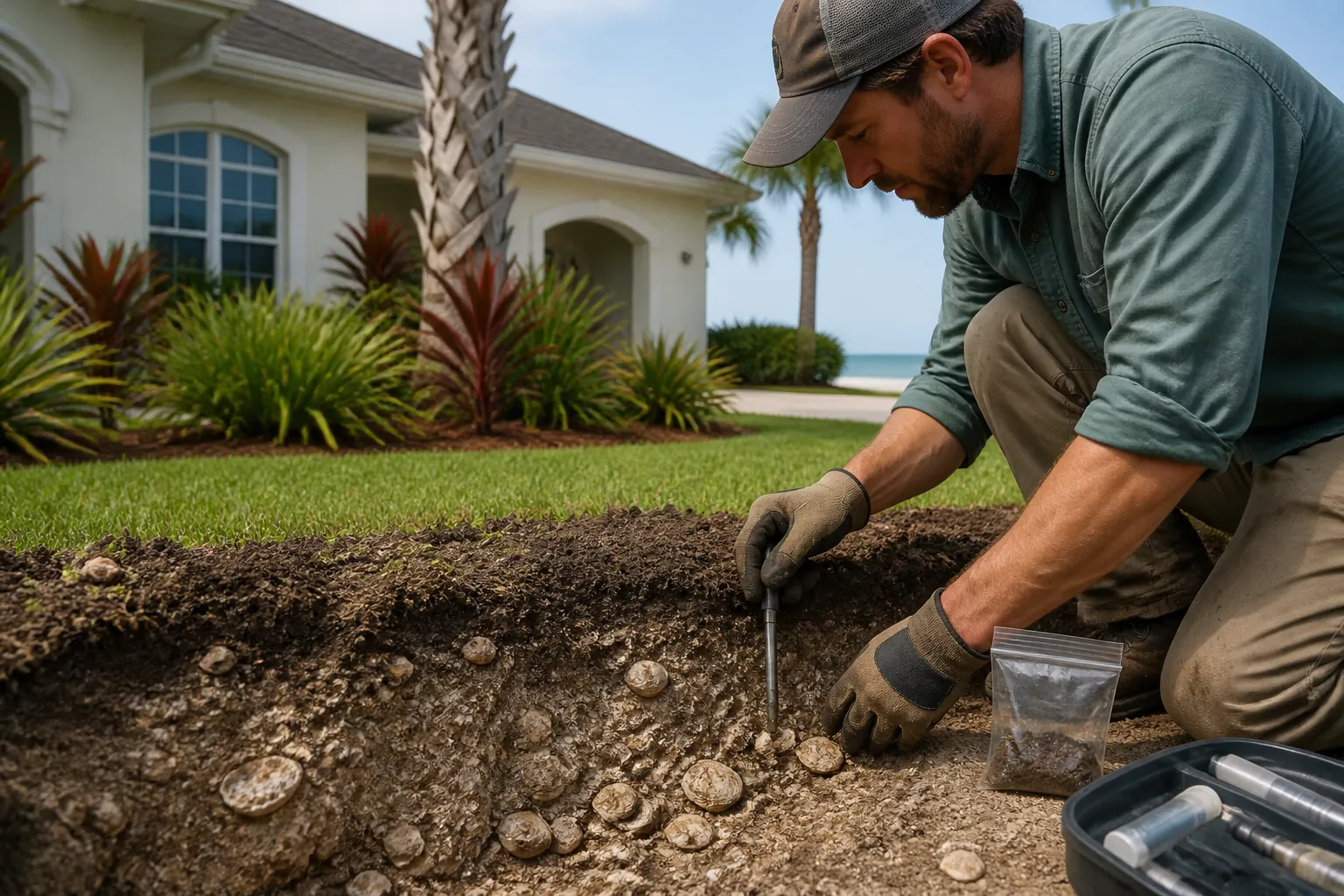
If shell will sit close to plant roots, test the soil before buying enough to cover the area. A laboratory test can provide a more dependable basis for decisions than an inexpensive probe used without calibration or clear sampling instructions.
Follow the instructions supplied by your testing laboratory. Typically, you collect several small samples from a reasonably uniform area, combine them, and submit a portion of the mixture. Keep visibly different beds or problem spots separate.
Sample the soil that roots actually occupy, rather than scooping only the surface covering. Remove loose mulch before sampling, and avoid including fertilizer granules or shell fragments unless the laboratory specifically requests them. Tell the laboratory which plants you grow or intend to plant.
A useful report should be interpreted in relation to those plants. There is no single ideal pH for every tropical landscape. A recommendation appropriate for one species may be unsuitable for another growing a few feet away.
- Label each sample with its location so you can connect the result to the correct bed.
- Record whether shell is already present and whether it has been mixed into the soil.
- Ask for guidance relevant to your intended plants rather than requesting a generic lawn recommendation.
- Keep the original report so later tests can reveal a trend instead of an isolated reading.
If you add shell near a bed, retest when the laboratory or local extension guidance recommends it. An immediate reading after spreading shell is unlikely to show its longer-term influence. Use comparable sampling methods so changes are easier to interpret.
Match Shell Placement To Your Tropical Plants
Tropical Yards sells palm trees, hibiscus, bougainvillea, ferns, and other tropical plants. Those categories include plants with different soil preferences, so choose by the specific species or cultivar rather than assuming all tropical plants respond alike.
Palms vary in their tolerance of alkaline conditions. Some can grow in higher-pH soils but still develop nutrient deficiencies when the root zone limits nutrient availability. Shell is not a substitute for choosing the right palm or following species-appropriate fertilizer guidance.
Hibiscus deserves a closer look before shell is placed throughout its bed. If the soil is already above the plant's preferred range, adding a carbonate-containing material may complicate nutrient management. Confirm the plant's needs and your test results before committing to a shell surface.
Bougainvillea often performs best with good drainage, but drainage tolerance and pH tolerance are different considerations. Shell does not correct overwatering or poor soil structure. Choose its location based on both the plant's root environment and how you will water it.
Ferns are an especially broad group. Many commonly grown landscape ferns favor moisture and organic matter, while some species tolerate different conditions. A shell-covered, exposed bed may be unsuitable because of heat and moisture conditions even before pH becomes an issue.
For acid-preferring plants, keeping shell out of the main root zone is often the simpler decision. You can still use shell elsewhere in the yard while reserving those beds for a surface material that better suits the plants.
When buying plants, ask for the exact plant name and review its mature size, light requirements, moisture needs, and soil preferences. A healthy plant selected for the site gives you a stronger starting point than trying to reshape unsuitable soil conditions after planting.
Keep Decorative Shell Separate From Soil Amendments
Coquina shell used as a decorative ground covering should not be treated as a precisely measured soil amendment. Its fragment sizes and composition may vary, and a decorative purchase generally does not provide the information needed to calculate a lime application.
If your soil test recommends raising pH, follow the laboratory's amendment guidance. Do not substitute an estimated amount of decorative shell for a specified liming material. Similarly, shell should not be purchased as a general remedy for pale foliage without first identifying the cause.
For DIY projects, a clear boundary between the shell surface and planting soil can help control movement. Edging can reduce shell migration into adjoining beds, although it does not completely prevent moisture or dissolved substances from moving between areas.
Landscape fabric is not a chemical barrier. Depending on the product and site, it may separate materials physically, but water can still pass through it. Do not rely on fabric to prevent all pH effects below a shell-covered surface.
- Keep shell out of planting holes unless you have specific, appropriate guidance for that plant and soil.
- Avoid piling shell against trunks, crowns, or plant stems.
- Use edging where loose fragments could move into an adjacent acid-preferring bed.
- Keep access to the soil available where future testing or plant care will be needed.
A shell path beside a planting bed presents a different exposure than shell blended throughout that bed. Think about the final arrangement before ordering, especially where rain or irrigation runoff flows from the shell surface toward plants.
Choose And Order Coquina Shell With The Whole Project In Mind
Begin your purchase with the intended use. A decorative border, a walking surface, and a broad ground-cover area can have different requirements for texture and fragment size. Ask what material is currently available rather than assuming every load will look identical.
Ask about the amount of fine material as well as the visible shell pieces. Fines matter to the finished surface and to how closely the material contacts soil. Appearance alone cannot establish the material's expected effect on pH.
Measure each project area and decide on an appropriate finished depth before requesting quantity guidance. Account for curves, separate sections, and existing material. Avoid ordering an extra-thick layer simply because you hope it will suppress every weed or solve drainage problems.
Use the coquina shell page as the main starting point for shell purchasing information. This soil-pH guide supports that broader buying decision by helping you evaluate compatibility with nearby plants, rather than replacing project-specific quantity and material discussions.
When you contact Tropical Yards, explain whether the shell is for a path, a border, or an area near planting beds. Mention your soil-test findings if they affect material placement. The goal is to order shell for a suitable use, not to use a delivery as an experiment in correcting unknown soil chemistry.
Plan Dump Trailer Delivery Before You Spread Anything
Tropical Yards offers dump trailer delivery of plants and coquina shell from St. Augustine to Daytona Beach, including Ormond Beach. Delivery brings the purchased materials to your property; spreading shell, preparing beds, and planting are tasks you arrange or complete yourself.
Choose the unloading area before scheduling. Discuss driveway access, available clearance, gates, overhead obstructions, and the surface where the load would be placed. The supplier needs accurate information to assess access and coordinate a practical delivery.
Keep the shell pile away from sensitive planting beds when possible. A temporary pile can introduce fragments and fines into soil during handling. Select a location that gives you room to move material without repeatedly crossing roots or blocking essential access.
- Confirm the unloading location and any access restrictions before delivery day.
- Check whether community rules affect delivery timing or temporary material storage.
- Leave a clear route for your wheelbarrow or other DIY transport equipment.
- Plan where delivered plants will wait with suitable light and moisture until you plant them.
Review coquina shell delivery information for the logistics side of your order. Keep delivery planning separate from soil decisions: an accessible unloading spot does not necessarily make that same spot appropriate for permanent shell coverage.
Watch Plant Response Without Blaming Every Problem On pH
After completing your DIY project, observe nearby plants as you normally would. Yellowing leaves, weak growth, or reduced flowering can have several causes. Excess water, insufficient water, root damage, fertilizer issues, and pests may resemble problems associated with unsuitable pH.
If symptoms develop, review what changed. Note when shell was added, whether it entered the bed, how watering changed, and whether the plant was recently transplanted. Compare current soil results with your baseline rather than assuming the shell caused the problem.
Avoid repeatedly applying acidifying products without a diagnosis. Their effectiveness depends on the soil and product, and excessive applications can create new problems. Seek laboratory or local extension guidance when a test shows that the root environment is unsuitable.
For future purchases, the simplest strategy is to put each material where it fits. Use coquina shell where its appearance and physical characteristics suit the project, and choose planting conditions around the needs of the plants.
To discuss coquina shell sales, tropical plant availability, or dump trailer delivery to Ormond Beach, call Tropical Yards at 772-267-1611. Bring your measurements, intended use, and access details so you can plan a material order that supports your DIY project.
Call 772-267-1611 to talk through next steps.