Using coquina shell under outdoor furniture in Florida
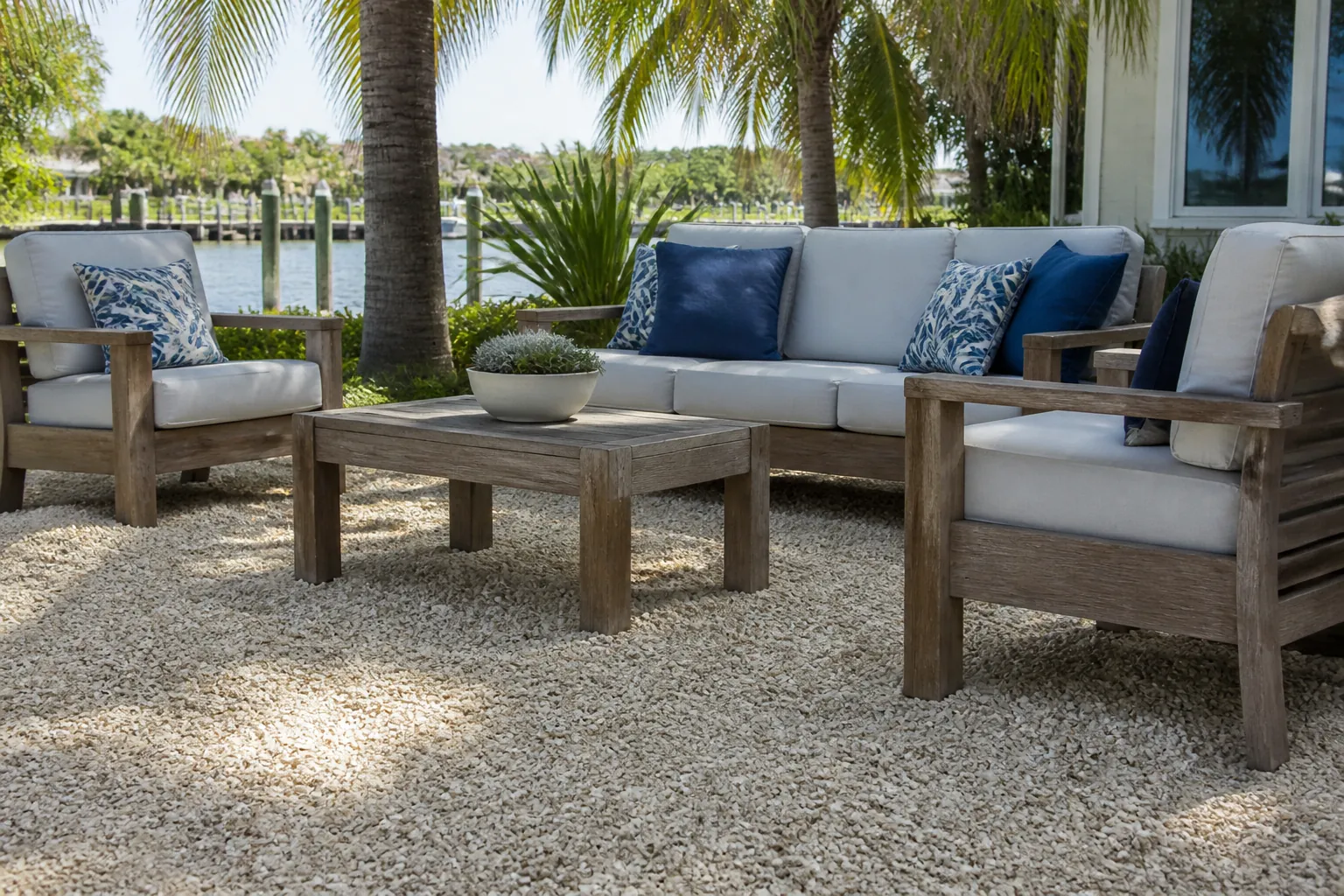
Coquina shell can give a Florida seating area a relaxed, coastal appearance without turning the entire space into a paved patio. But a surface that looks inviting is not automatically comfortable under a dining chair, stable beneath a table, or practical around a frequently used doorway.
The best way to evaluate coquina shell under outdoor furniture is to start with how you use the space. Furniture feet, chair movement, rainfall, foot traffic, and the condition of the ground all influence the result. Treat shell as a loose landscape material with practical limitations, not as a direct substitute for concrete or properly laid pavers.
Tropical Yards supplies coquina shell and tropical plants, with dump trailer delivery from St. Augustine to Daytona Beach. This guide focuses on choosing material and planning a DIY furniture area. For broader material information, start with the coquina shell resource page, then use the furniture-specific checks below.
Decide Whether Shell Fits The Way You Use The Space
A quiet conversation corner has different demands from a dining area used every evening. Lounge chairs that remain in one position are generally easier to accommodate on loose material than chairs that slide backward every time someone sits down.
Shell shifts under pressure, especially where furniture legs concentrate weight. That movement may be manageable in an informal seating area, but it can become frustrating when a table rocks or a chair catches while being moved.
Think about everyone who will use the area. People using wheelchairs, walkers, or other mobility aids usually benefit from a firm, stable route and seating surface. Loose shell should not be assumed to provide an accessible surface simply because it has been raked flat.
- A pair of stationary lounge chairs may suit a shell setting when their feet have stable support.
- A dining set requires closer attention because chairs move repeatedly and table legs need consistent bearing.
- A busy route between the house and pool may be better kept on a separate firm surface.
- A children's play space needs additional consideration because shell fragments can be uncomfortable against bare skin.
If easy chair movement is essential, consider a hybrid layout. Shell can provide the surrounding visual texture while a firm central surface supports furniture. This keeps the coastal character without asking loose material to perform every function.
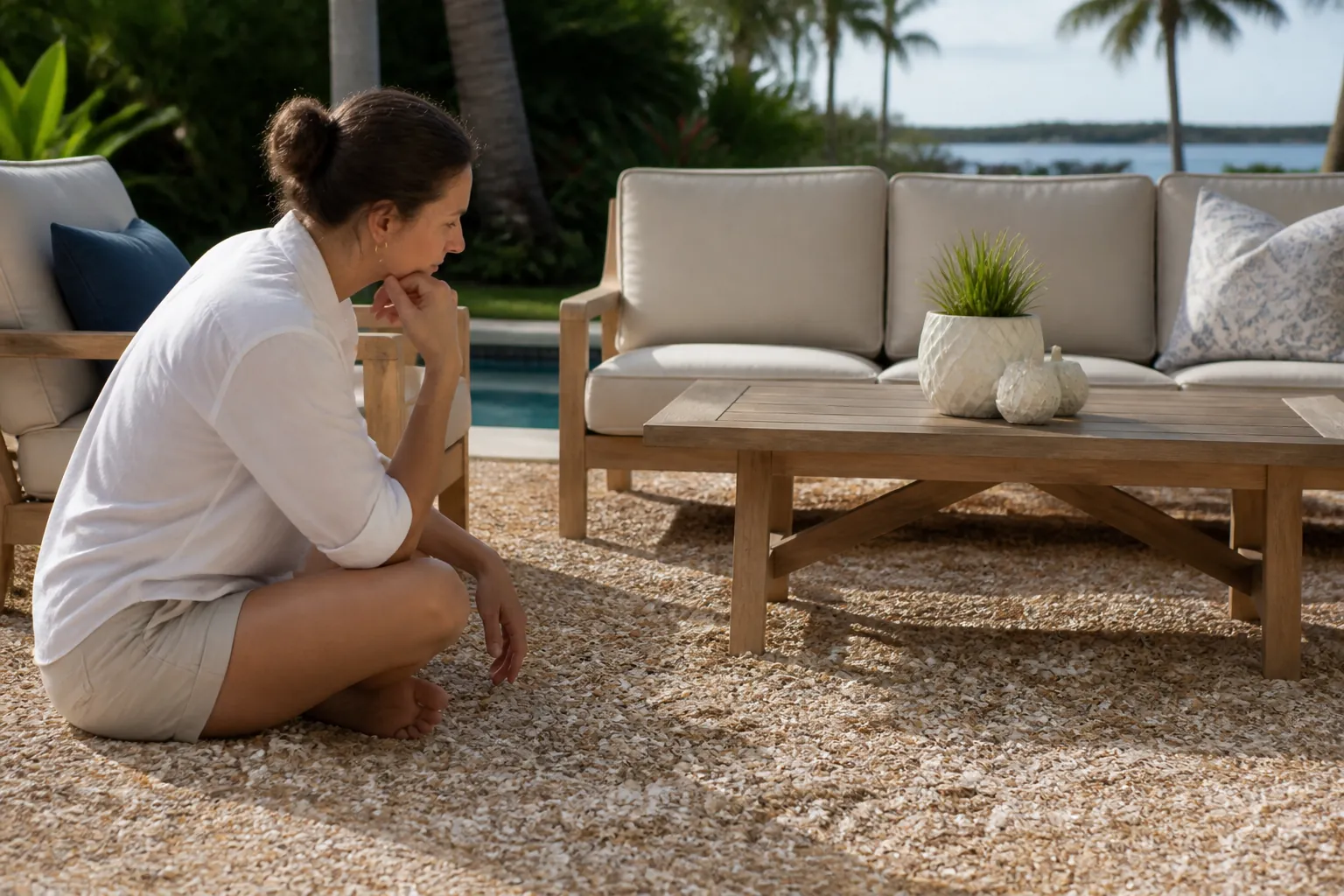
Look At Furniture Feet Before Choosing Material
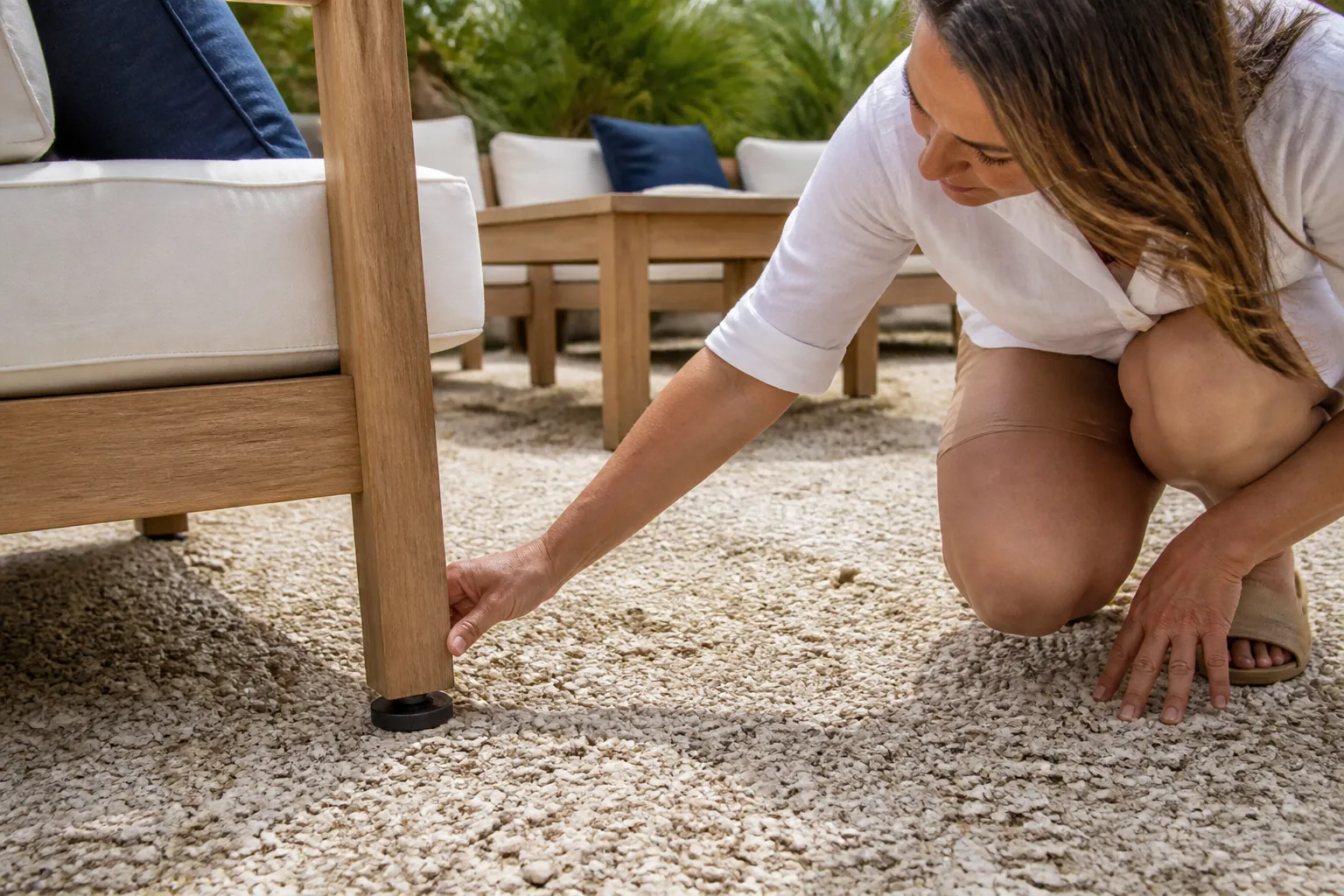
Furniture feet are often the deciding detail. Narrow metal legs can press into shell, while wider feet spread the load. Rocking chairs, wheeled loungers, and chairs with small glides can behave differently on the same material.
Inspect the underside of each piece rather than judging only by its overall size. A large chair may still rest on four small contact points. Check whether its feet are level, whether protective caps are intact, and whether the manufacturer allows it to be used on uneven outdoor surfaces.
Coquina shell also varies in particle size and texture. Larger pieces may create more pronounced unevenness beneath small feet. Finer material can behave differently when wet or consolidated, but appearance alone does not establish how it will support furniture.
Ask about the material currently available. If possible, examine a sample and test it with the furniture you intend to use. A small test area can reveal whether chair feet sink, whether the surface feels rough under sandals, and whether moving a chair scatters fragments.
- Test an occupied chair, because an empty chair does not reproduce the same pressure.
- Check a table with normal items on it, and stop if it rocks or feels unsafe.
- Move a dining chair through its usual sitting and standing motion rather than lifting it for every test.
- Inspect furniture caps after testing to see whether abrasive contact is causing visible wear.
Do not rely on an outdoor rug to correct unstable furniture. A rug can conceal uneven spots, retain debris, and move against the loose surface. Solve the support problem underneath first.
Choose Between A Shell Surface And A Hybrid Layout
An all-shell seating area works best when you accept a natural, movable surface and are willing to adjust it yourself as needed. It is less suitable when furniture must remain perfectly level or roll easily.
A hybrid arrangement uses shell around stable furniture supports. Depending on the layout, those supports might be individual pavers beneath stationary feet or a continuous paved area beneath the entire dining set.
Individual supports need careful placement. They should bear on suitable ground, remain level with one another, and avoid creating raised edges where someone could trip. Simply dropping pavers onto loose shell can leave the same instability you were trying to prevent.
For dining furniture, isolated supports may not match every chair position. Chairs move, and their feet may leave the supported spots. A continuous firm surface often makes more sense for the actual dining footprint, with shell around its perimeter.
Measure the space with chairs pulled out, not just tucked beneath the table. Include the room needed to walk behind an occupied chair. A layout that fits the furniture at rest may feel cramped during a meal.
Keep grill placement separate from appearance decisions. Follow the grill manufacturer's requirements for support, clearances, and safe operation. Shell does not make an otherwise unsuitable cooking location safe.
Evaluate Drainage And The Ground Beneath The Shell
Florida rainfall makes drainage planning important, but a shell layer does not repair every drainage problem. Water movement depends on the underlying soil, grade, compaction, and nearby surfaces as well as the material placed on top.
Observe the area after rain before ordering. Look for standing water, runoff from the roof, soft spots, and paths where water already carries soil away. Adding shell to a low spot without addressing the cause may leave furniture sitting over wet, unstable ground.
Check how water moves near the house. Do not build up material against siding, cover drainage openings, or redirect runoff toward the building. Preserve required clearances around foundations, utilities, and equipment.
Large tree roots deserve attention too. Avoid digging through substantial roots or burying them beneath a thick new layer without appropriate advice. A seating area should adapt to existing site constraints rather than damage the plants that make it appealing.
- Mark low areas and runoff routes before deciding where furniture will sit.
- Keep downspout outlets and existing drainage features unobstructed.
- Identify irrigation heads and access covers so they do not disappear beneath shell.
- Reconsider the location if routine rainfall leaves the proposed seating area saturated.
Landscape fabric is not a universal solution. Depending on the product and site, it may separate materials, but it does not guarantee drainage or prevent every weed. Roots and windblown debris can still create problems above it. Review product instructions and site conditions before deciding whether to use it.
Measure The Area And Plan Your Order
Measure the actual shell footprint, including any surrounding border, while subtracting spaces reserved for planting beds or a firm furniture pad. Divide irregular shapes into rectangles or other simple sections and calculate each section separately.
For a rectangular section, multiply length by width to find square footage. Multiply that area by the planned depth in feet to estimate cubic feet, then divide by 27 to convert to cubic yards. Keep all measurements in consistent units.
For example, a 10-foot by 12-foot rectangle covers 120 square feet. That figure describes the area only. The volume depends on the depth you choose, and the appropriate depth depends on the material, ground conditions, and intended use.
Do not select depth solely to increase the amount of shell under furniture. A deeper loose layer can allow narrow feet to move more, not less. Ask about the supplied material and decide how it fits your planned surface assembly before calculating the final quantity.
Discuss the estimate with Tropical Yards before ordering coquina shell. Explain that the material is intended for a furniture area, describe the dimensions, and ask how the available shell is sold. Clarify any conversion between your calculated volume and the supplier's ordering unit.
- Separate the shell area from any paved furniture footprint in your measurements.
- Record the intended depth instead of estimating quantity from square footage alone.
- Account for the shape and slope of the ground when reviewing your calculation.
- Confirm the available material and order quantity before arranging delivery.
A sample can help you evaluate color and texture alongside your furniture. Natural shell varies, so avoid planning around an exact appearance unless you have discussed the current supply.
Plan Dump Trailer Delivery Before The Load Arrives
Tropical Yards offers dump trailer delivery of coquina shell and tropical plants from St. Augustine to Daytona Beach. Delivery planning should happen before ordering, especially when the seating area is behind a house or reached through a narrow gate.
Dump trailer delivery brings material to an agreed unloading location. It does not mean the shell will be carried into the backyard, spread, compacted, or placed around furniture. Plan the tools, help, and time needed for your own material handling.
Describe the property's access honestly. Mention narrow entrances, tight turns, steep approaches, overhead branches, low wires, soft ground, and any concern about driveway conditions. Confirm whether the proposed unloading location is suitable rather than assuming the trailer can reach it.
Select a drop spot that leaves doors, sidewalks, drainage routes, and necessary vehicle access clear. If unloading onto a driveway, discuss surface protection and the practical limits of your chosen protective material. A thin tarp is not a guarantee against scratching or damage.
- Confirm access and unloading arrangements with Tropical Yards before delivery day.
- Move vehicles and portable obstacles from the agreed delivery route.
- Keep children and pets away from the unloading area.
- Have a wheelbarrow, suitable shovel, rake, gloves, and sturdy footwear ready for your DIY work.
Think through the route from the pile to the seating area. Repeated trips across soft lawn or through a narrow opening can take more effort than expected. Keeping the load accessible can make the project easier without requiring delivery equipment to enter unsuitable ground.
Prepare And Use The Surface Carefully
Begin your DIY work only after identifying utilities and understanding any local requirements that apply to excavation or changes near buildings. Existing irrigation lines, electrical connections, and drainage components may not be obvious at the surface.
Move furniture out of the work area. Establish the intended boundaries, inspect the ground, and address site problems before spreading shell. Work in manageable sections so you can monitor levels instead of covering the entire space before checking it.
Spread material evenly using appropriate hand tools. Avoid piling it against furniture feet, trunks, equipment, or building surfaces. Follow any preparation or handling guidance supplied for the material rather than assuming all shell products behave identically.
Compaction decisions depend on the supplied material and the planned base. Do not assume mechanical compaction will turn loose shell into a paved patio. If the project requires structural support, precise grading, or substantial excavation, obtain qualified advice about the surface assembly.
Set furniture back only after checking the surface. Test each piece individually, then test the whole arrangement during normal use. A chair that seems stable in one position may behave differently a few inches away.
Adjust support where necessary rather than pushing a rocking table farther into loose material. Keep furniture level according to its intended use, and avoid makeshift supports that can slip or create a trip hazard.
Keep Shell Comfortable Around Plants And Daily Traffic
Shell can frame a tropical planting area, but plant placement should serve the seating space as well as the visual effect. Leave room for mature foliage, airflow, and access to furniture. Do not place a prickly or sprawling plant where guests need to squeeze past it.
Tropical Yards sells palm trees, hibiscus, bougainvillea, ferns, and other tropical plants. Choose plants according to light, exposure, mature size, and their individual soil needs. Bougainvillea has thorns, and some palms eventually require more space than a small seating border provides.
Coquina contains calcium carbonate, which can influence nearby soil chemistry over time. Do not assume it is suitable around every plant, particularly those needing acidic conditions. A soil test and species-specific guidance are more useful than choosing plants by appearance alone.
Keep shell away from plant crowns and avoid burying trunks. If you plant the area yourself, follow appropriate planting-depth and watering guidance for each species. Shell around a bed does not replace the root-zone conditions a plant needs.
During everyday use, check for displaced fragments on adjacent walks and soft spots beneath frequently used chairs. Remove fallen leaves before they accumulate into a damp layer. These are owner-performed care tasks, not services offered by Tropical Yards.
Try footwear on the surface before making it a barefoot route. Shell edges and sun-warmed material may be uncomfortable, particularly around a pool. A separate firm walkway can reduce tracking and improve everyday circulation.
Order With A Clear Furniture Plan
Before purchasing, settle three questions: where furniture needs firm support, how water leaves the area, and where the delivery load can safely be unloaded. Those decisions help you order for a workable surface rather than just a coastal look.
Have your measurements, intended depth, furniture details, and access information ready. Ask about current coquina shell availability and discuss dump trailer delivery within the St. Augustine to Daytona Beach service area.
For coquina shell sales or tropical plant purchases, call Tropical Yards at 772-267-1611. Tropical Yards supplies materials and provides dump trailer delivery; you arrange your own site preparation, planting, spreading, and ongoing care.
Call 772-267-1611 to talk through next steps.