Choosing coquina shell versus lava rock in Ormond Beach, FL
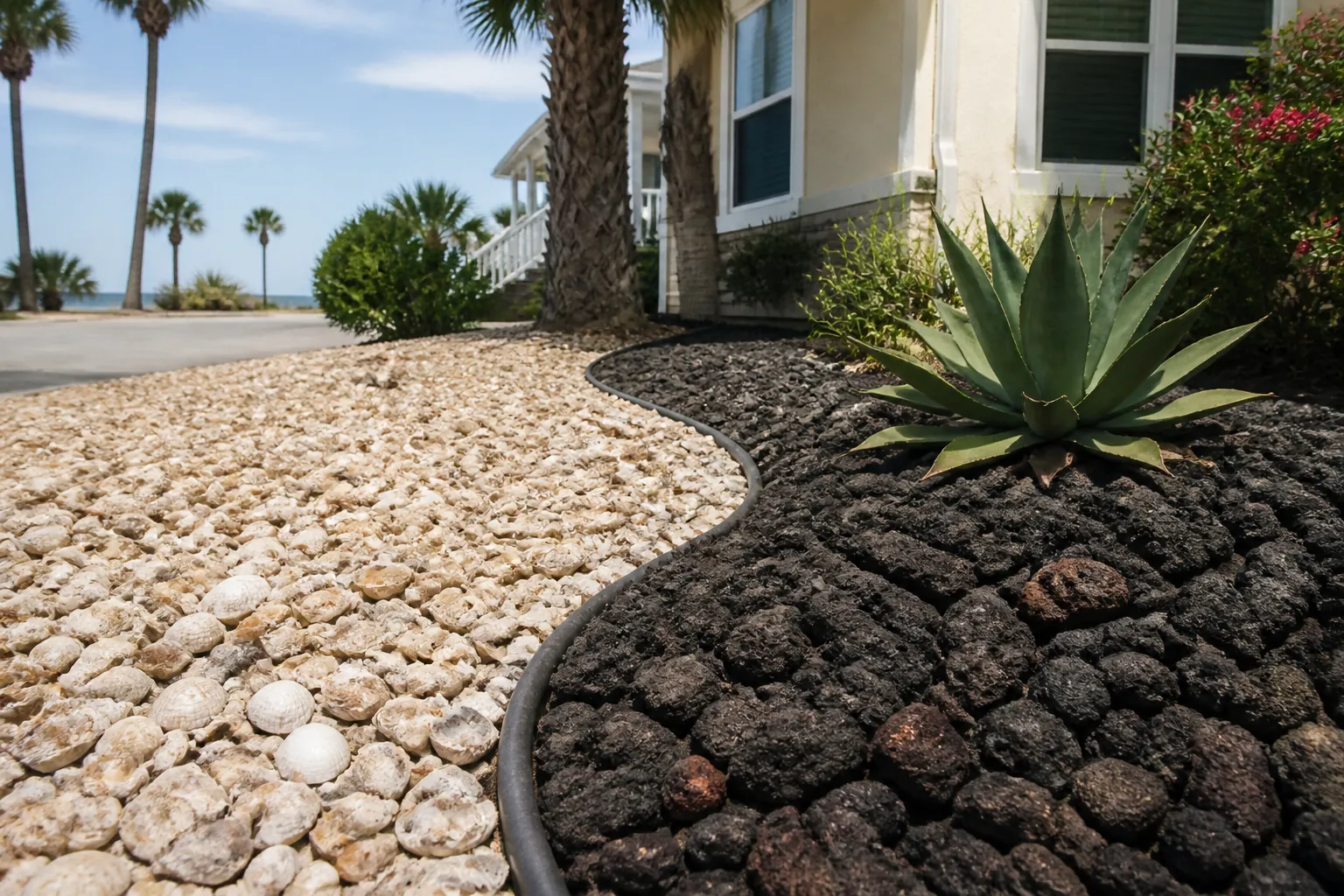
Choosing between coquina shell and lava rock starts with the space you want to cover, not just the color you prefer. Both materials can create a lasting surface in a garden bed, but they differ in texture, weight, chemistry, and how they behave around plants. For an Ormond Beach yard, those differences matter when planning drainage, handling summer rain, and keeping the material where you place it.
This guide compares coquina shell versus lava rock from a buyer and DIY perspective, with extra attention to ordering and using coquina shell. Tropical Yards supplies coquina shell and tropical plants, with dump trailer delivery of plants and coquina shell from St. Augustine to Daytona Beach. The company does not provide landscape design, installation, maintenance, or cleanup services.
Coquina Shell And Lava Rock: What You Are Comparing
Coquina shell landscaping material typically consists of shell pieces and fragments in a mix of sizes. Its appearance is generally light and coastal, although color, fragment size, and the amount of fine material can vary by supply. Ask to see a current sample or photograph rather than assuming every load looks like an online example.
Lava rock is volcanic stone with a porous texture. Landscape products commonly come in red, dark brown, or black shades. The pores make individual pieces relatively lightweight for stone, but a full bed still represents a substantial amount of material. Lava rock can vary in size, angularity, and color between products.
Neither material decomposes into organic matter like wood mulch. Both remain in the bed until displaced, buried by debris, or deliberately removed. That makes the initial choice especially important in areas you may replant or reshape later.
- Coquina shell generally suits a light, coastal appearance and can blend with sandy surroundings.
- Lava rock generally creates stronger color contrast and a rougher, more pronounced surface texture.
- Both materials require a suitable base and sensible placement to perform well.
- Neither material replaces good soil preparation, appropriate watering, or organic matter in the root zone.
For product-focused buying information, use the coquina shell supply page as your starting point. This comparison focuses on deciding between materials rather than repeating a complete product-ordering guide.
Which Appearance Fits Your Yard?
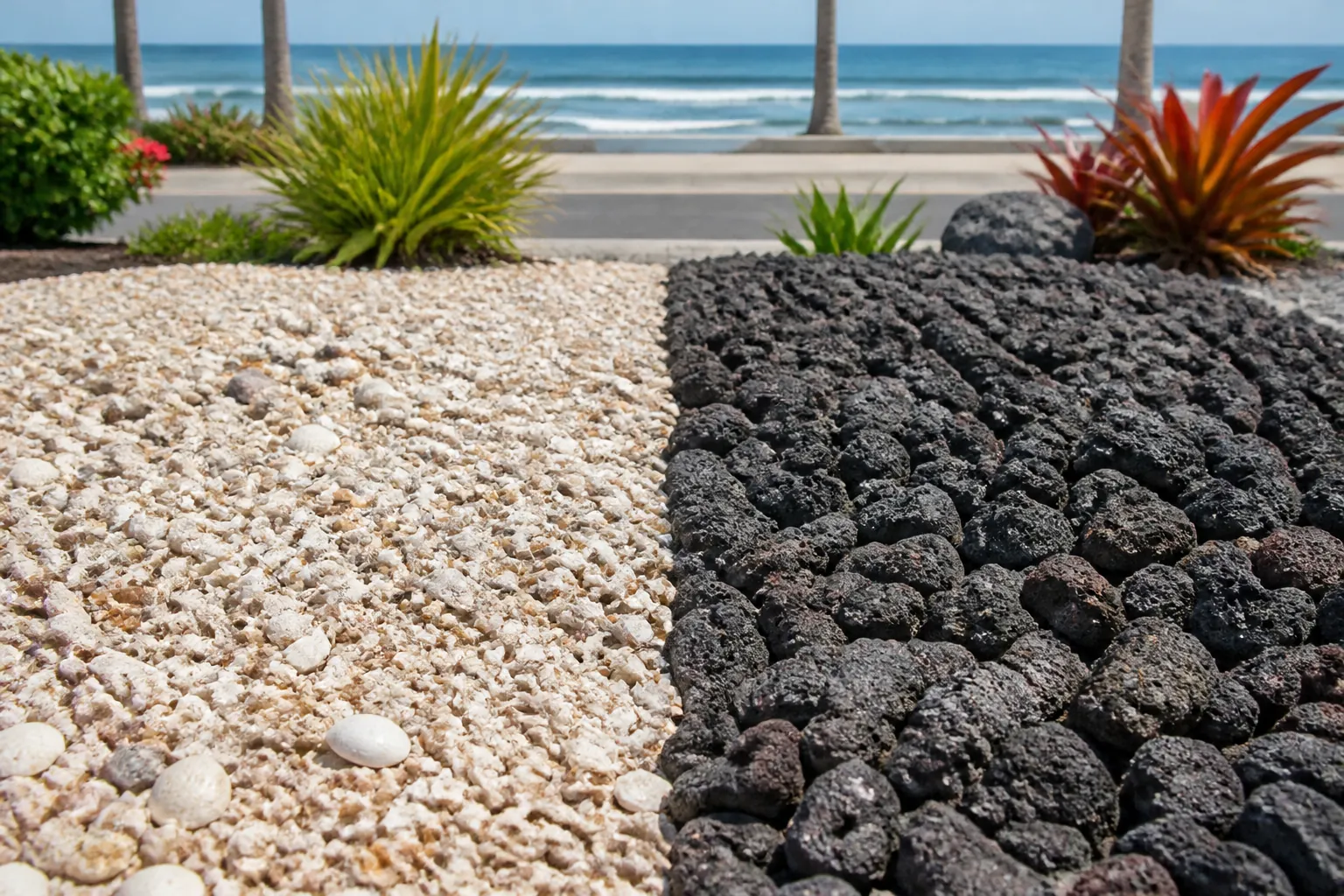
Coquina shell often looks at home alongside palms, tropical foliage, and simple coastal planting beds. Its lighter tones can make a narrow border feel less visually heavy. Against green leaves, shell provides contrast without necessarily becoming the dominant feature.
Lava rock makes a different statement. Red lava rock can introduce a warm color that competes with flowers, paving, or painted walls. Dark lava rock can create a strong backdrop for bright foliage, but it may look more formal or stark than shell.
Consider the whole view rather than choosing from a close-up photograph. Look at your house color, driveway, patio, existing edging, and mature plant canopy. A material that looks attractive in a bucket may feel too bright or too dark when spread across a large area.
Light shell can produce glare in direct sun. Dark stone can absorb solar heat and become hot to the touch. Actual surface temperature depends on exposure, moisture, shade, and other conditions, so neither appearance alone tells you whether a bed will be comfortable for nearby plants.
A small sample placed beside your existing surfaces is useful. View it in morning light, midday sun, and after wetting it. Wet shell or rock can look noticeably different from dry material, especially beside light-colored paving.
Drainage And Florida Rain: Look Below The Surface
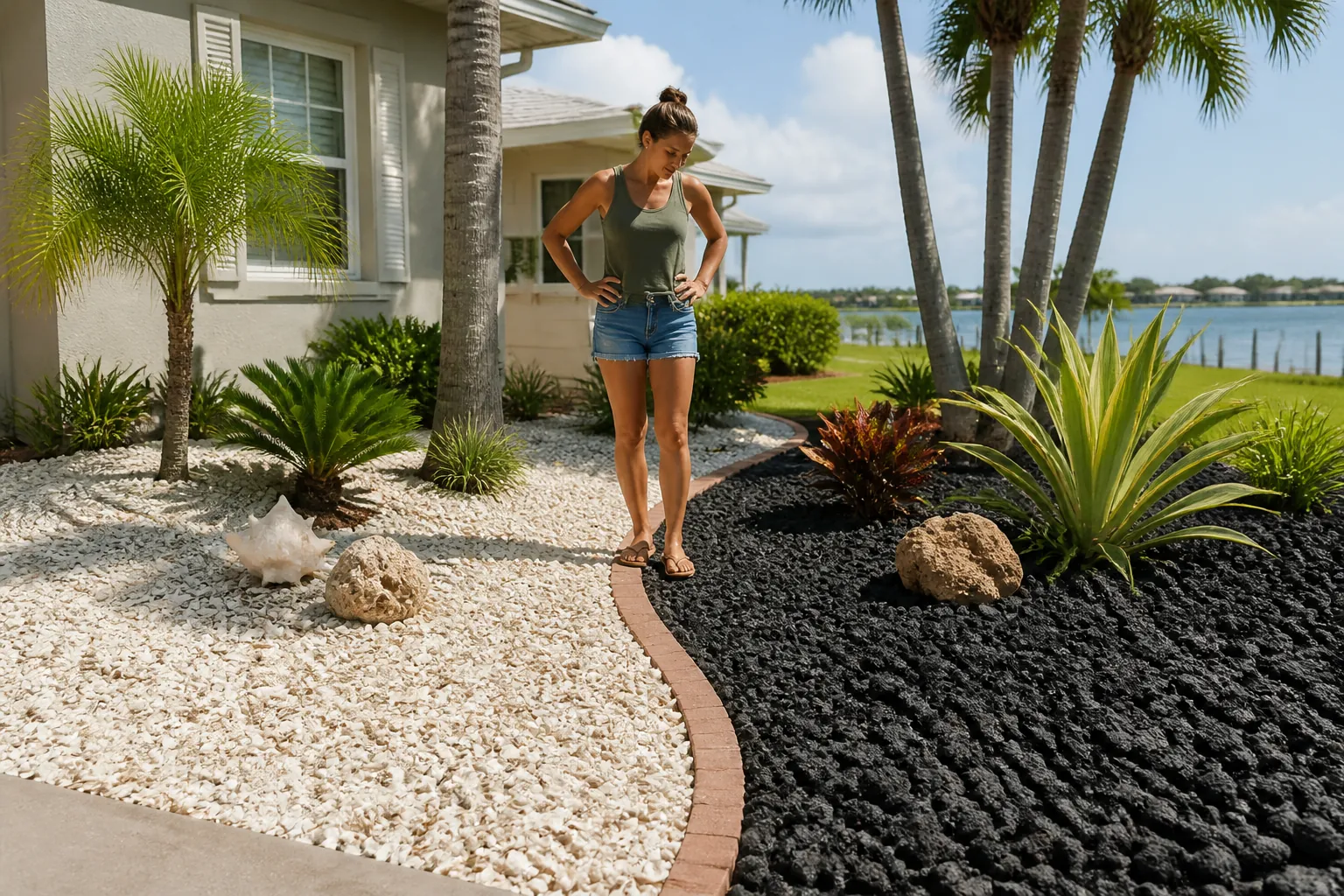
A shell or rock surface does not automatically solve a drainage problem. Water movement depends on the soil beneath it, the slope of the area, compaction, and whether runoff has a safe route. Covering a low spot can hide standing water without correcting its cause.
Coquina shell with more fine particles may settle into a denser surface than a coarse, clean product. That can be useful in some applications, but it also changes how water moves through the layer. Ask about the current material's grading and fines before selecting it for a planting bed.
Lava rock usually leaves spaces between its pieces, but those spaces can collect soil, leaf litter, and sediment. A porous surface over compacted ground still depends on the underlying ground for drainage. Weed fabric, if used, can also become clogged with accumulated fine material.
In Ormond Beach, observe your intended area after rain before ordering. Note where water enters, where it pools, and whether runoff crosses the bed. Avoid placing loose shell or rock in an active drainage channel where flowing water could carry pieces onto paving or neighboring areas.
- Keep existing drains, swales, and drainage openings clear of added material.
- Do not raise the finished bed surface against siding, vents, or other building components.
- Leave enough clearance below adjacent paving to reduce loose material spilling onto the walking surface.
- Address persistent standing water before covering the area with a decorative layer.
If the site has a drainage issue you cannot evaluate confidently, seek qualified advice before committing to a large delivery. Tropical Yards supplies material rather than correcting site drainage.
Plant Compatibility: Shell Chemistry Matters
Coquina shell contains calcium carbonate, which can influence soil chemistry as it weathers. It may contribute to more alkaline conditions over time, although the effect depends on the soil, particle size, moisture, and amount of shell used. It should not be treated as chemically neutral.
That matters for plants that prefer acidic soil. Before placing shell around an established planting, identify the plants and check their preferred soil conditions. A soil test gives a better starting point than guessing from leaf color or nearby vegetation.
Lava rock is not a substitute for a soil amendment either. Its mineral characteristics vary, and its main role in this comparison is as a surface covering. Do not assume it will improve fertility or correct a soil problem simply because it is volcanic.
Tropical Yards sells palm trees, hibiscus, bougainvillea, ferns, and other tropical plants. These groups do not all have identical requirements. Species, container conditions, drainage, sunlight, and exposure to salt can affect suitability. Ask about the specific plant you are considering rather than treating every tropical plant the same way.
When planting yourself, prepare the root zone according to the plant's needs before adding shell. Keep decorative material away from trunks, stems, and crowns. Leave the root flare visible where applicable, and do not bury the top of a root ball under an extra surface layer.
Some planting areas benefit more from organic mulch than either shell or lava rock. If your priority is adding organic matter, buffering root-zone conditions, or supporting frequent replanting, a mineral covering may not be the best fit. A mixed yard can use shell in one area and a different surface treatment elsewhere.
Where Coquina Shell Makes Sense For DIY Use
Coquina shell can be a practical choice for defined decorative beds, borders, and certain lightly used areas where a coastal finish is the main goal. Success depends on matching the supplied material to the use. Coarse shell fragments behave differently from a blend containing smaller fragments and fines.
For a bed around established plants, think about access. You should still be able to inspect irrigation, reach stems, and add or replace plants without excavating a thick shell layer. A moderate, planned covering is usually easier to manage than an unnecessarily deep one.
For a footpath, ask specifically whether the available shell is appropriate for that purpose. Loose fragments can shift underfoot, and sharp edges may be uncomfortable for bare feet or pets. Do not assume a decorative bed product provides a firm, accessible walking surface.
Lava rock also deserves caution near paths. Pieces can roll onto pavement and feel unstable under shoes. Its rough surface may be inconvenient where children play, where pets regularly walk, or where people kneel to tend plants.
- Use a sample to judge whether the shell texture suits the intended activity.
- Choose defined boundaries where loose material can be contained without obstructing drainage.
- Avoid scattering shell into lawn edges where mowing could strike loose pieces.
- Keep material away from frequently opened gates and narrow access points.
There is no universal winner for every part of a yard. Coquina shell may be the better visual and practical fit for a defined coastal bed, while another material may work better for a high-traffic route.
Measure The Area Before Asking For A Quantity
A useful order starts with three things: the area to cover, the intended depth, and the condition of the existing surface. Measuring only the length of a border is not enough. Width changes, curved edges, and existing plants all affect the quantity.
For a rectangular area, multiply length by width to find square footage. For an irregular bed, divide it into smaller rectangles or triangles and add their areas. Subtract substantial spaces that will remain uncovered, such as a patio or a large open planting area.
To estimate cubic yards, multiply square footage by depth in inches and divide by 324. For example, 324 square feet covered to a depth of two inches represents two cubic yards before considering site-specific adjustments. This is a volume calculation, not a recommendation for a particular application.
Confirm the appropriate depth and ordering unit with the supplier. Material grading, settlement, an uneven base, and existing coverage can change what you need. If shell is sold by weight, ask the supplier to help relate your volume estimate to the current product rather than using a generic conversion.
- Measure the actual coverage area instead of estimating from the size of the entire yard.
- State whether you are covering bare ground or topping up an existing shell layer.
- Describe slopes, low spots, and unusually uneven sections before finalizing the amount.
- Ask how the available shell's particle mix may affect spreading and settlement.
Ordering extra material without a storage plan can create a second project. Decide where any leftover shell could remain safely without covering drains, blocking access, or spilling into the street.
Plan Dump Trailer Delivery Before Ordering
Tropical Yards offers dump trailer delivery of plants and coquina shell within its service corridor from St. Augustine to Daytona Beach. For an Ormond Beach delivery, the drop location should be part of the ordering conversation, not an afterthought on delivery day.
Provide clear information about access width, overhead obstructions, driveway slope, gates, and the surface supporting the trailer. Photos can help communicate conditions, but the supplier must confirm whether the proposed location is suitable. Never assume a trailer can reach a backyard or pass through a narrow gate.
Choose a location that balances access with your own handling plan. A pile near the street may be easier to deliver but farther from the bed. A closer location may be impractical if access is soft, steep, restricted, or obstructed.
Check for irrigation components, septic features, buried utilities, delicate paving, and other vulnerable areas. Do not direct a loaded trailer over an area whose load capacity is uncertain. Keep people and pets away from the delivery area while unloading takes place.
A tarp may make collection easier on some surfaces, but discuss the drop setup with the supplier first. Allow adequate room for unloading and for the resulting pile. Review the coquina shell delivery information for delivery-focused planning, then confirm your specific access conditions directly.
Dump trailer delivery supplies the material at an agreed, accessible location. It does not include spreading shell, preparing beds, planting, removing old material, or cleaning up the yard. Plan your own labor, tools, and schedule before the load arrives.
Spreading Shell Yourself And Caring For The Bed
Before spreading shell, identify irrigation lines and decide how you will keep the material within the intended area. If unwanted vegetation or an unsuitable existing covering is present, arrange your own preparation before delivery. Avoid burying problems beneath the new layer.
Wear gloves, closed-toe shoes, and eye protection when handling material. Shell fragments can have sharp edges. Use manageable loads in a wheelbarrow and take care when shoveling or raking dry material that contains dust.
Spread gradually rather than emptying a large pile directly around a plant. Check depth in several locations and keep stems and root flares uncovered. Leave access to irrigation fittings so a future adjustment does not require digging through the whole bed.
Neither coquina shell nor lava rock creates a weed-proof surface. Windblown seeds can germinate in accumulated organic debris, and existing weeds can persist if the area was not prepared appropriately. Landscape fabric also has tradeoffs, including more difficult replanting and potential clogging.
For ongoing DIY care, remove leaves before they break down into a thick layer. Check boundaries after heavy rain and return displaced pieces to the bed when safe. Water plants according to their needs rather than assuming a mineral surface means the root zone is adequately moist.
Make The Choice With Your Next Project In Mind
Choose coquina shell when its coastal appearance, available grading, and compatibility with your plants fit the intended area. Choose lava rock when its contrasting color and texture better suit your goals, while still accounting for heat exposure, loose pieces, and future planting access.
If you expect frequent changes to the bed, consider how much work either material will create when moved aside. A surface that looks permanent today can become inconvenient when you need to divide plants, repair irrigation, or change the bed shape.
For coquina shell sales, tropical plant sales, or dump trailer delivery planning in Ormond Beach, call Tropical Yards at 772-267-1611. Have your measurements, intended use, plant questions, and delivery access details ready. Those details make it easier to discuss the available material and plan a manageable DIY project.
Call 772-267-1611 to talk through next steps.