Coquina Shell Vs Glass In Daytona Beach, FL
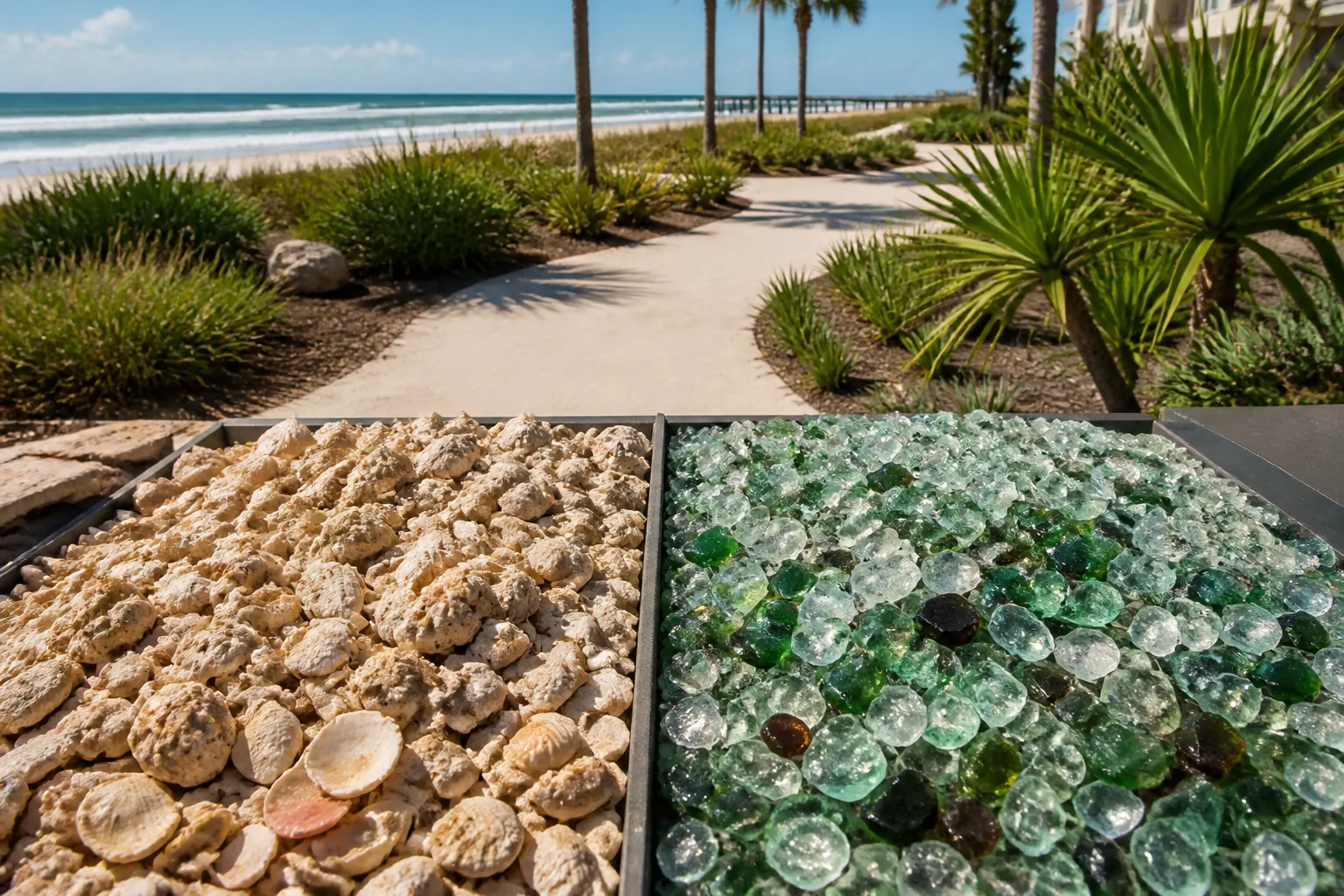
Choosing coquina shell vs glass starts with a practical question: what do you want the surface to do? A planting bed, a lightly used garden path, and a decorative strip beside a patio have different requirements. Appearance matters, but so do footing, drainage, plant needs, and the work you will do yourself.
For homeowners in Daytona Beach, Florida, coquina shell offers a natural coastal character. Recycled landscape glass offers a more manufactured appearance, often with a stronger color contrast. Neither material is automatically right for every yard, and neither should be treated as a substitute for correcting an existing drainage problem.
Tropical Yards supplies coquina shell and tropical plants, with dump trailer delivery of plants and coquina shell from St. Augustine to Daytona Beach. This guide compares the materials for buyers and DIY users. Recycled glass is discussed as an alternative, not as a product offered by Tropical Yards.
Coquina Shell Vs Glass: Start With The Job Your Ground Cover Needs To Do
Before choosing a material, divide your project into use areas. A decorative bed viewed from the street may prioritize appearance. A route you walk every day needs predictable footing. A bed containing moisture-sensitive plants needs a watering strategy that works with the soil beneath the surface.
Think about who will use the area as well. Bare feet, pets, children, and wheeled garden carts change the decision. Shell fragments and landscape glass can both be uncomfortable underfoot, depending on their size, shape, and condition. A sample is more useful than a photograph when evaluating contact surfaces.
- Choose a decorative surface based on its texture, visual balance, and ability to stay within the planned boundary.
- Choose a walking surface only after checking how the actual material feels and shifts under shoes.
- Keep loose material away from places where it could regularly scatter onto a sidewalk or patio.
- Evaluate the planting soil separately from the decorative top layer, because the top layer does not determine the entire bed's drainage.
Write down your main purpose before ordering. That simple step helps prevent buying an attractive material that does not fit the way you use the space.
How Coquina Shell And Recycled Glass Compare
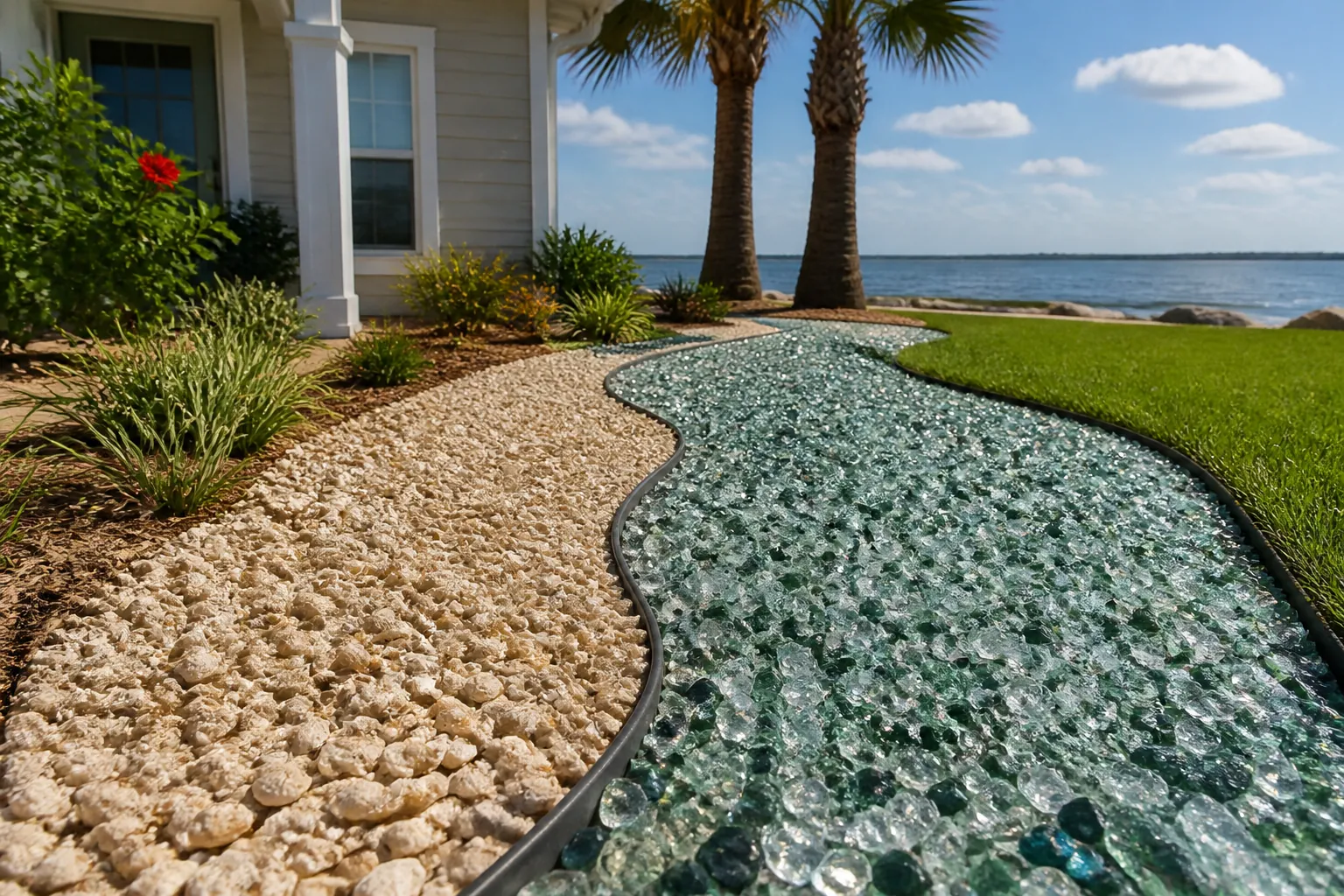
Coquina shell landscape material typically has a varied, natural appearance with shell fragments and finer particles. Its color and texture can vary between loads. Ask what the current material looks like rather than assuming every batch will match an online image.
Recycled landscape glass is processed for decorative use. Depending on the product, pieces may be crushed, tumbled, graded, or sold in selected colors. Processing matters: ordinary broken household glass is not an appropriate substitute for a landscape product intended for outdoor use.
Coquina shell often works visually with palms, leafy tropical plants, and understated edging. Recycled glass can create a bolder accent, especially in small, clearly defined beds. Large areas of bright glass may compete with flowers and foliage rather than support them.
Both materials need containment. Rain, foot traffic, pets, and garden work can move loose particles. Fine shell material can migrate differently from larger shell fragments, while glass movement depends on piece size and shape. Good boundaries matter more than a product photograph suggests.
- Ask to see representative coquina shell so you can judge the mix of fragments and fines.
- For recycled glass, request the supplier's information about processing, intended uses, and suitability around people and pets.
- Compare materials in daylight, because wet surfaces and reflected light can change their appearance.
- Plan how each material would be removed or separated from soil if you later change the bed.
Why Coquina Shell Fits Many Coastal Yard Projects
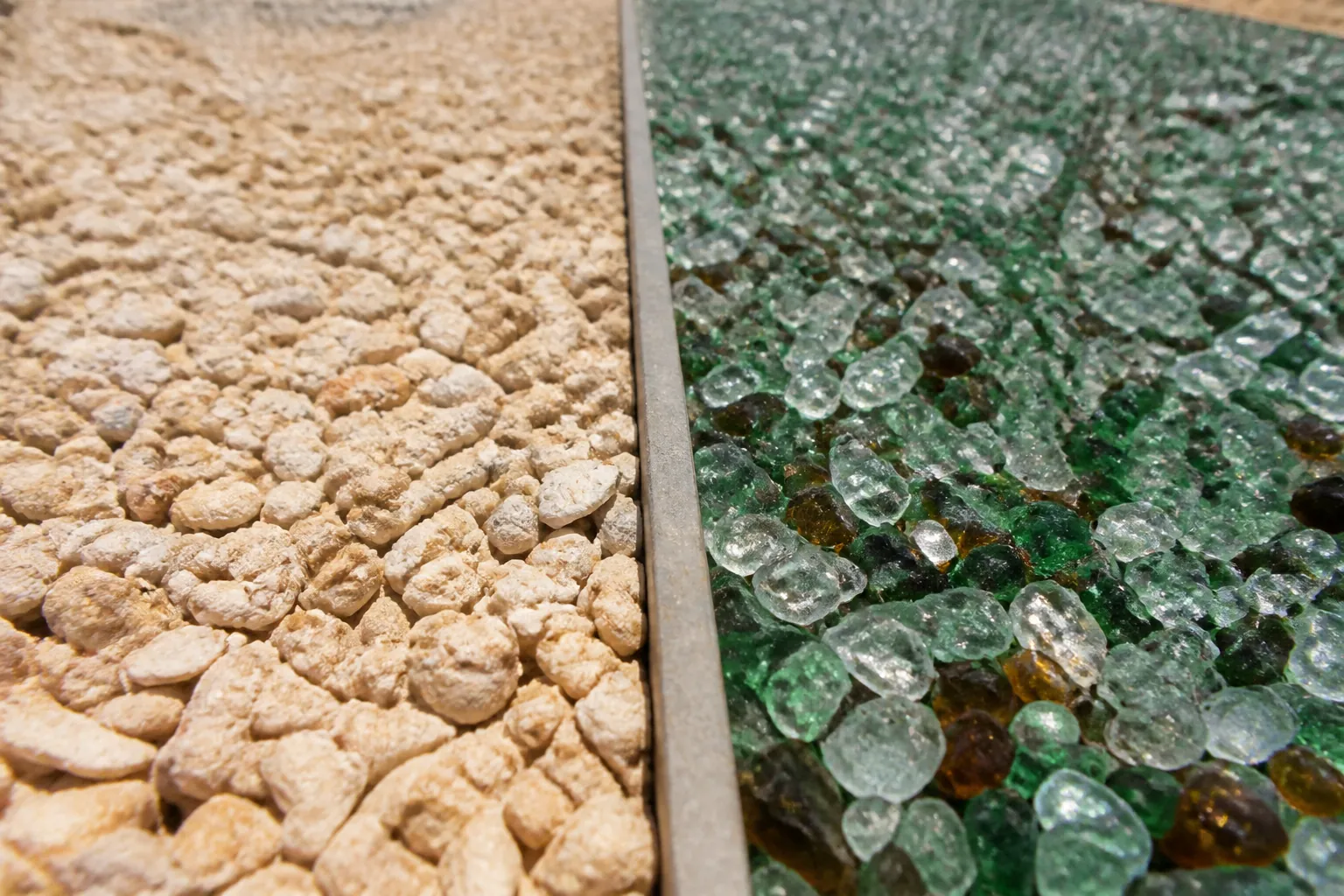
Coquina shell can provide a restrained backdrop without making the ground surface the main feature. In a Daytona Beach yard, that can be useful when the focal points are a palm, flowering hibiscus, or a group of tropical plants.
The material's irregular texture is part of its appeal. It does not create the uniform finish of manufactured paving. Buyers who prefer a natural surface should still inspect the material closely, especially if the project must coordinate with an existing shell area.
Shell-based materials contain calcium carbonate. Depending on the material, soil conditions, and exposure over time, they may influence soil chemistry. That makes plant selection important. Do not assume that every tropical plant will benefit from shell placed near its roots.
For a decorative area without demanding plant requirements, shell may be a straightforward choice. Around plants that prefer acidic soil, take more care. A soil test and species-specific guidance are better starting points than assuming all coastal-looking materials suit all Florida plants.
Visit the coquina shell information page for the main material overview. Use this comparison to decide whether shell fits your project rather than treating a general product description as a complete site assessment.
When Recycled Glass Deserves A Closer Look
Recycled glass may suit a small accent bed where a specific color is essential. It can also work as a visual contrast beside hardscape, provided the chosen product is appropriate for that setting and can be kept out of walking areas.
However, the label 'recycled glass' does not answer every safety or performance question. Edge treatment, piece size, coatings, and manufacturer instructions can vary. Ask the glass supplier for product-specific information instead of assuming all decorative glass is smooth or safe for barefoot use.
Consider glare and heat exposure. A reflective surface may look different at midday than it does in a shaded display. Evaluate a sample where it will be used, and do not infer plant-root temperatures or comfort from color alone.
Future changes also deserve attention. Small glass pieces mixed into soil can be difficult to separate during later planting. Shell fragments can be difficult to remove completely too, but glass warrants particular care wherever future digging is likely.
If you expect to frequently rearrange plants, create new holes, or work with your hands in the bed, think beyond the initial appearance. A decorative material should support your gardening habits, not complicate every future task.
Drainage, Rainfall, And The Surface Beneath The Material
Florida rainfall makes drainage an important part of the comparison. Water movement depends on the soil, grade, compaction, and surrounding surfaces, rather than only whether the top layer is shell or glass.
Loose material over compacted soil can still sit above standing water. Adding more shell does not correct a low spot that collects runoff. Before placing material, observe the area after rain and note where water arrives, pools, and exits.
Coquina shell containing finer particles may settle and behave differently from a cleaner, coarser decorative material. Ask about the supplied texture and avoid assuming that every shell layer will remain equally open to water movement.
Landscape fabric is another site-specific decision. It can help separate material from soil in some applications, but it does not permanently prevent weeds. Dirt and organic debris can accumulate above it, allowing new weeds to grow.
- Check that your proposed surface will not block an existing drain or drainage opening.
- Keep material below thresholds and avoid directing runoff toward a building.
- Choose any separator based on the intended use, soil conditions, and its manufacturer's instructions.
- Seek qualified site guidance if water already collects near the foundation or crosses the property boundary.
Tropical Yards supplies materials; drainage assessment and any corrective site work remain separate from its supply and delivery services.
Pairing Coquina Shell With Tropical Plants
Ground cover and plants should be selected together, but not simply by matching colors. Start with sunlight, mature plant size, soil conditions, and water needs. Then decide where shell belongs around the planting.
Tropical Yards sells palm trees, hibiscus, bougainvillea, ferns, and other tropical plants. Requirements vary among species and varieties. A sunny position suitable for one bougainvillea may not suit a fern that needs shelter from intense afternoon light.
Keep shell from piling against trunks, stems, and plant crowns. You should be able to inspect the base of each plant and water the root zone without burying important plant structures under decorative material.
For DIY planting, follow guidance for the specific plant and root ball. Do not compensate for a poorly chosen location by adding shell into the planting hole. Decorative surface material and a suitable growing medium serve different purposes.
- Confirm the mature width of each plant before setting the bed boundary.
- Check soil pH when choosing plants with particular acidity preferences.
- Leave practical access to irrigation emitters and the soil near the root zone.
- Water newly planted specimens according to their needs and actual soil moisture, rather than the appearance of the shell surface.
If you are buying plants and shell together, prepare a plant list and project measurements before calling. That keeps the supply discussion focused on what you need to purchase and receive.
Measure Your Coquina Shell Order Before Delivery
Accurate measuring is more useful than guessing from a yard photograph. For a rectangular space, multiply length by width to find square footage. Break irregular beds into simpler shapes, calculate each section, and add them together.
Subtract areas occupied by paving, existing features, and spaces you intend to leave uncovered. Decide on the intended finished depth based on the application and supplier guidance. Decorative coverage and a walking area may call for different planning.
To estimate cubic yards, multiply square footage by depth in feet, then divide by 27. Convert inches to feet by dividing by 12. For example, a 120-square-foot area at an illustrative depth of 2 inches calculates to about 0.74 cubic yard before accounting for site-specific adjustments.
That example explains the math, not a universal recommended depth or an ordering increment. Confirm the available sales unit, material characteristics, and appropriate quantity with the supplier. Discuss whether settling or an uneven base affects your estimate.
- Bring measurements for each separate area rather than one rough total for the whole yard.
- State whether you are covering bare soil or refreshing an existing shell surface.
- Ask how the material is measured and what quantity can be delivered.
- Plan a usable location for any material left after your DIY project.
Avoid ordering extra material without a place to keep it. An oversized pile can interfere with access and create more moving work than expected.
Plan Dump Trailer Access And Your DIY Work Area
Delivery planning is part of buying bulk shell. Tropical Yards offers dump trailer delivery of plants and coquina shell from St. Augustine to Daytona Beach. Confirm the address, access conditions, and unloading arrangement before scheduling.
A dump trailer needs a suitable approach and adequate room to unload. Do not assume it can enter a narrow side yard, cross soft ground, or unload beneath low branches. Describe slopes, gates, overhead obstructions, and tight turns accurately.
Discuss the proposed drop location with the supplier. Consider the surface beneath the load, clearance around it, and how you will move material to the project area. Delivery is not installation or spreading.
For access-specific questions, review the coquina shell delivery information and confirm the details directly. Delivery requirements should be settled before the trailer arrives, not after it reaches a restricted entrance.
- Choose an unloading area that does not block drainage, essential access, or public travel.
- Identify irrigation components, covers, and other features that could be damaged by a load.
- Prepare your own wheelbarrow, rake, shovel, gloves, and appropriate footwear before delivery.
- Arrange your DIY workload around weather, physical capacity, and the distance from the pile to the bed.
If unloading involves a shared driveway, community rules, or public space, check the applicable permissions first. Tropical Yards' role is supplying and delivering the ordered plants and coquina shell, not preparing the yard.
Place And Care For Your Shell Surface Yourself
Complete necessary site preparation before moving shell into the area. Establish your boundaries, address existing problems, and decide where plants and irrigation will go. Spreading material first can make later adjustments more difficult.
Place manageable amounts and rake them evenly. Check the surface against your planned depth instead of building thick piles near the delivery side of the bed. Keep material out of drains and leave plant bases clear.
Edging can help contain shell, but choose it for the actual site. It should resist ordinary movement without creating a trip hazard. A boundary beside turf also needs to keep loose particles away from mowing equipment.
Over time, inspect your own surface for migration, low spots, and debris. Remove weeds while they are small, and investigate recurring wet areas instead of covering them with more material. These are homeowner care tasks, not services offered by Tropical Yards.
If the appearance changes after rain or use, assess whether the issue is surface redistribution, underlying soil movement, or runoff. Understanding the cause helps you avoid unnecessary material purchases.
Make The Choice With A Clear Buying Checklist
Coquina shell is worth considering when you want a natural coastal surface and can plan for its texture, containment, and compatibility with your plants. Recycled glass deserves product-specific evaluation when a deliberate color accent is the main goal.
Before deciding, compare real samples, confirm how the area will be used, and measure the space. Think about future planting as well as today's appearance. The better material is the one that fits your project without creating avoidable access or gardening problems.
For coquina shell sales, tropical plant purchases, and dump trailer delivery to Daytona Beach, call Tropical Yards at 772-267-1611. Have your measurements, plant interests, and proposed unloading location ready so you can discuss the materials and delivery details for your DIY project.
Before choosing ground cover, review UF/IFAS guidance on landscape mulch. UF/IFAS recommends organic mulch for planted garden beds and cautions that crushed shells do not improve soil water storage. Consider shell for suitable decorative areas rather than assuming it replaces organic mulch around every plant.
The UF/IFAS walkway guide describes surface choices for different garden styles.
Call 772-267-1611 to talk through next steps.