Choosing coquina shell vs mulch pathways in Palm Coast, FL
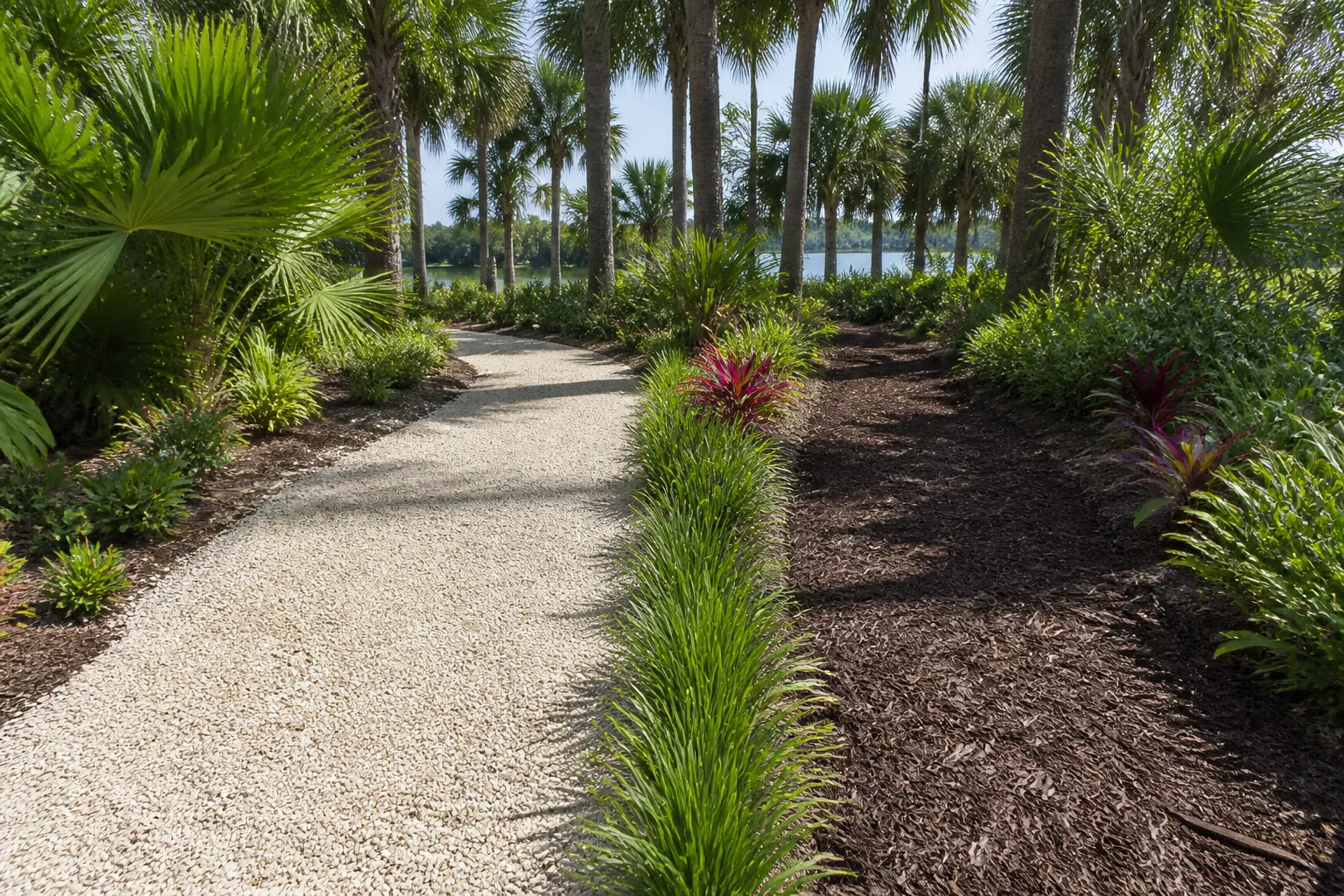
A garden pathway should make moving through your yard easier without creating a material choice you regret after the first rainy season. In Palm Coast, that means thinking beyond color. Foot traffic, drainage, nearby plants, edging, and your willingness to refresh the surface all affect whether coquina shell or mulch is the better fit.
The coquina shell vs mulch pathways decision usually comes down to two different priorities: a mineral surface that does not decompose like wood, or an organic surface that supports a softer garden setting but needs replenishment. Neither material fixes poor grading, and neither is automatically right for every tropical yard.
Tropical Yards supplies coquina shell and tropical plants, with dump trailer delivery from St. Augustine to Daytona Beach. This guide is for buyers and homeowners planning their own pathway work. Tropical Yards does not provide pathway installation or other landscaping labor.
Start With How You Will Use The Path
Before choosing a material, walk the proposed route. Is it a daily connection between a patio and a gate, or an occasional route through a planting bed? Frequent use puts different demands on a surface than a short garden access path.
Also consider what travels over it. Garden carts, narrow wheels, shoes, and bare feet do not respond to loose surfaces in the same way. A material that looks appealing in a photograph may feel different underfoot or shift when a loaded cart crosses it.
- For a frequently used walkway, prioritize predictable footing, containment, and an appropriate base.
- For occasional access through planting beds, consider whether a softer organic surface is acceptable.
- For a cart route, test the material with the wheels you actually use before committing to the entire path.
- For barefoot access near a pool or patio, evaluate a sample because shell fragments can have uncomfortable edges.
- For someone using a mobility aid, assess firmness and stability carefully rather than assuming either loose material will work.
Measure the intended width with actual use in mind. Allow space to carry tools without brushing against foliage. Keep existing irrigation heads, utility access points, and drainage routes visible during planning.
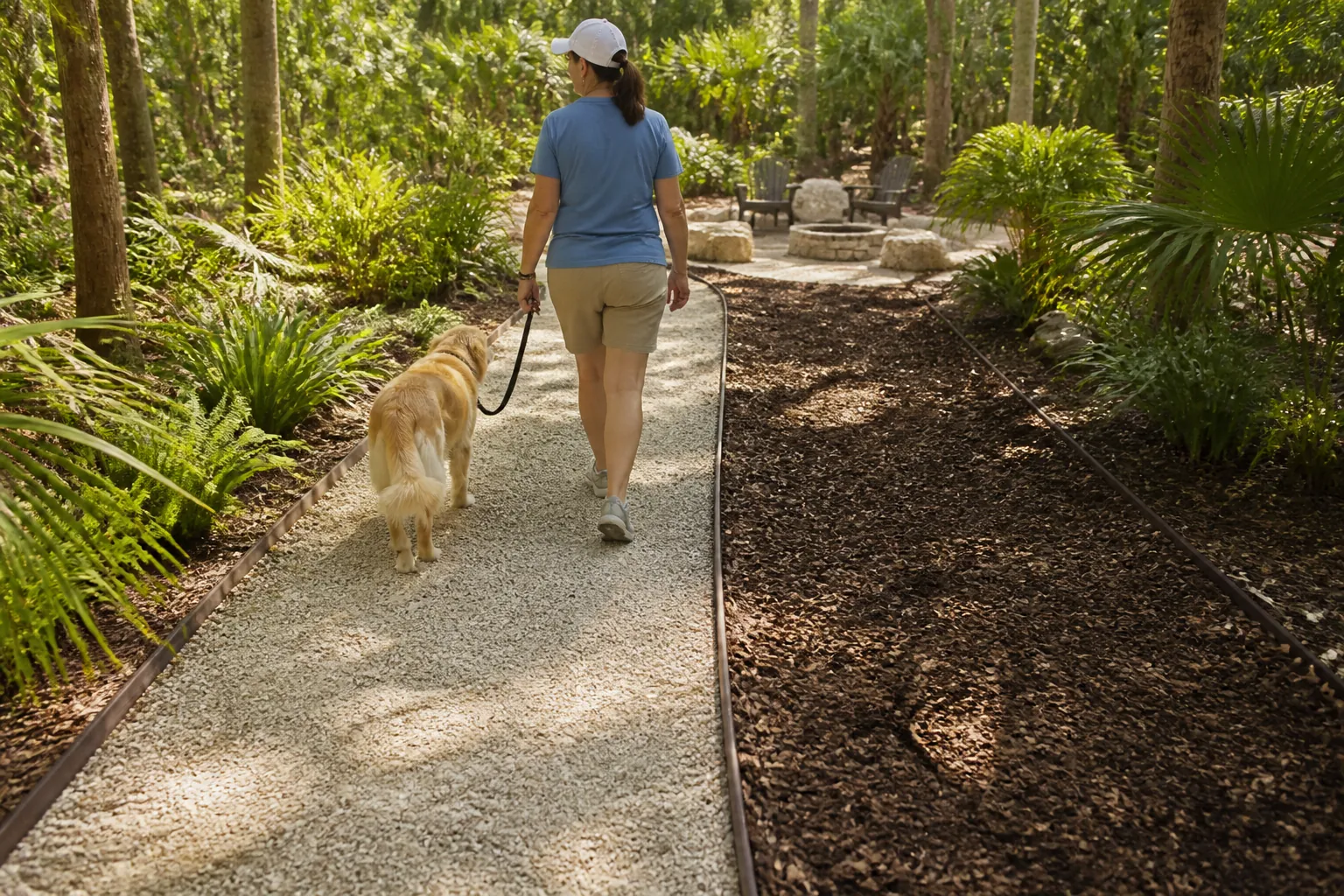
How Coquina Shell And Mulch Behave Differently
Coquina shell is a mineral material containing shell fragments and, depending on the product, finer particles. Its appearance, particle size, and tendency to settle vary with the supplied material. Ask what the current product looks like rather than relying only on the name.
Wood mulch is organic. It gradually breaks down, and its behavior depends on the type and size of the pieces. Fine shredded mulch, larger bark pieces, and wood chips can differ in texture, movement, and how readily they knit together.
Shell does not decompose like wood mulch, but that does not make a shell path maintenance-free. Foot traffic can redistribute it, runoff can move loose particles, and leaves can accumulate on the surface. Mulch also shifts and gradually loses depth as it decomposes.
Both materials need a defined purpose and a reasonable site preparation plan. A deep layer placed over soft, uneven ground is not a substitute for resolving the underlying problem.
Where shell may be the stronger choice
Shell can suit homeowners who want a light-colored, coastal-looking route distinct from surrounding planted beds. It is also worth considering when avoiding recurring replacement caused by organic decomposition is a priority.
However, the finished feel depends on grading, base preparation, material characteristics, and how the surface settles. Do not assume that every shell product creates a hard or uniformly smooth walking surface.
Where mulch may be the stronger choice
Mulch can be practical for informal paths through garden beds where a softer appearance is desirable. It can blend with existing mulched areas and is often easier to redistribute with basic hand tools.
The tradeoff is ongoing replenishment and the possibility of movement during rain or regular use. Decomposing mulch also changes the surface over time, which matters if you want a consistently defined walkway.
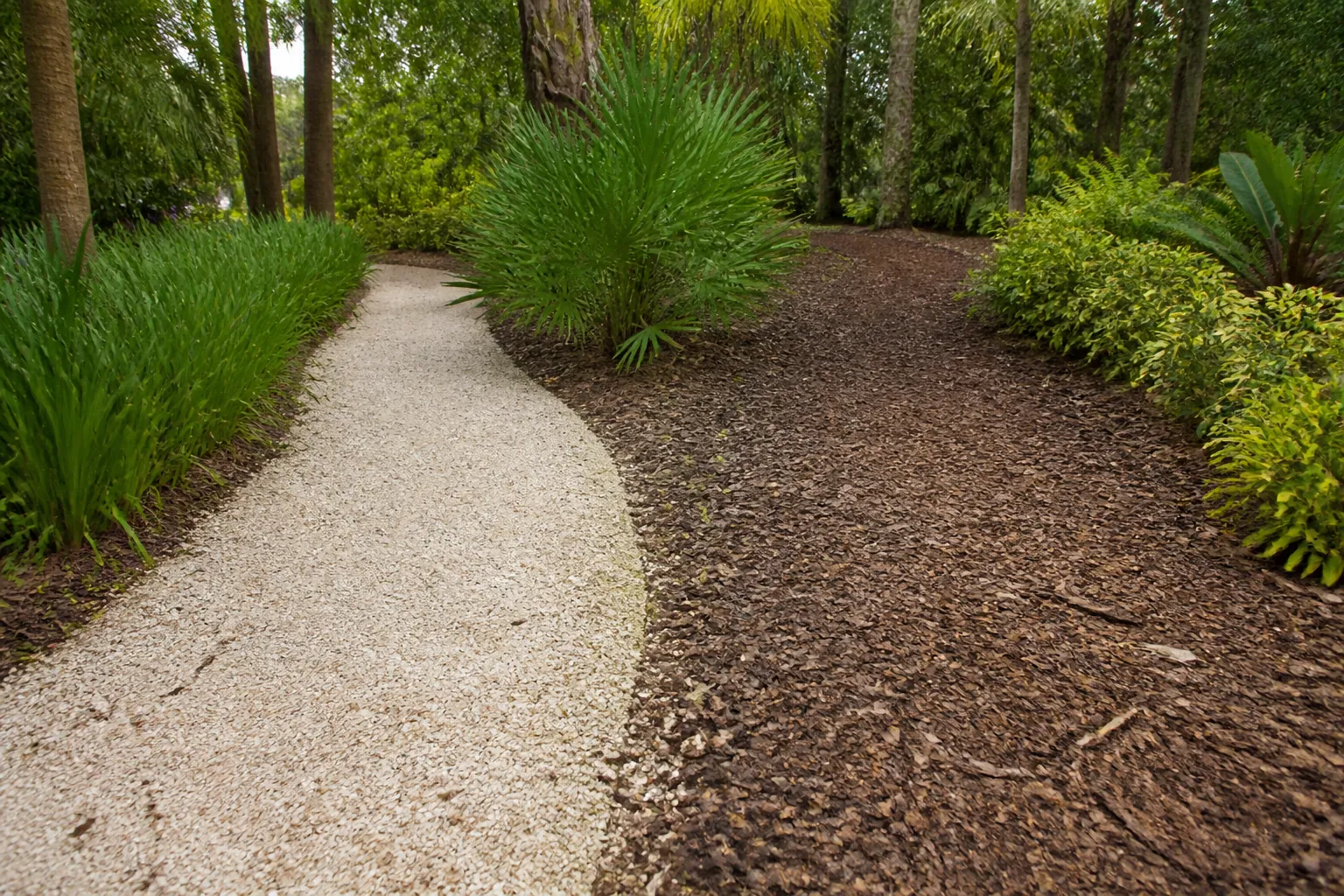
Compare Drainage Before Comparing Appearance
Palm Coast yards can have very different drainage conditions, even within the same neighborhood. Observe your proposed route after rain. Look for puddles, concentrated roof runoff, low spots, and places where water already carries sand or organic debris.
Neither shell nor mulch should be described as a guaranteed drainage solution. Water movement depends on the soil below, the slope, the material depth, and any underlying layers. Fine particles in a shell product may influence how it settles and drains.
Mulch can absorb some moisture, but it can also remain damp in shaded areas or move with flowing water. Shell fragments can likewise migrate where runoff is concentrated. Address the water source and route before ordering your surface material.
- Keep the proposed path from directing runoff toward the house, garage, or neighboring property.
- Avoid filling a drainage swale simply to make a level walking route.
- Check downspout discharge locations so concentrated water does not strike an unprotected loose surface.
- If standing water is persistent, seek qualified advice about grading or drainage before adding material.
A small trial area can reveal more than a visual comparison. Observe it through normal use and a rain event, then check for displacement, soft spots, and tracking onto adjacent pavement.
Think About Comfort, Heat, And Tracking
Shell brings a pale, textured appearance that can complement tropical foliage. In bright Florida sunlight, that appearance may also create glare. Surface temperature varies with exposure, moisture, and surrounding conditions, so color alone does not establish whether a path will be comfortable.
Mulch has a softer visual character, but its walking comfort depends on particle size and condition. Larger pieces may feel uneven. Wet organic material can stick to footwear and travel onto a patio or into the house.
Shell may track too, especially when small particles remain loose near a doorway. An entry transition, such as a suitable landing or existing paved area, can help separate a garden path from an indoor access point. Plan that transition rather than ending loose material directly at the threshold.
If children or pets will use the path, examine a sample for fragment size and sharpness. Neither material should be assumed suitable for chewing or ingestion. Consider normal household use, and supervise pets that tend to eat landscape materials.
Use Edging To Keep The Path Defined
Edging helps separate a pathway from lawn, soil, and planting beds. Without containment, shell can scatter into grass, while mulch can spread beyond the route. Escaped material creates extra work and can interfere with nearby mowing.
Choose edging based on the material depth, curves, surrounding grade, and foot traffic. The edge should contain the surface without creating an unexpected trip point. Corners and changes in direction deserve particular attention because people often cut across them.
Where shell meets mulch, a clear divider helps prevent the two materials from mixing. Mixing can make future replenishment less straightforward and may obscure the original boundary.
Do not assume landscape fabric is required under every path. It can help separate materials in some situations, but weeds can still germinate in debris above it. Exposed fabric, damaged fabric, and difficult future repairs are possible drawbacks.
Evaluate fabric or other separation layers as part of the whole assembly, not as a promise of permanent weed prevention. Follow the product instructions and keep the material below the finished surface.
Protect Nearby Tropical Plants
A path often passes close to palms, hibiscus, bougainvillea, ferns, or other tropical plants. Preserve room for mature growth and access for your own plant care. A route that works beside a small plant may become cramped as foliage expands.
Shell contains calcium carbonate, which can influence soil chemistry under some conditions. If nearby plants prefer acidic soil, avoid assuming that extensive shell coverage around their root zones is harmless. A soil test and plant-specific advice can help guide the decision.
Organic mulch may be more appropriate within some planted areas, even when shell is chosen for the walking route. You do not have to use one material across the entire yard.
- Keep mulch and shell away from direct contact with trunks and plant crowns.
- Do not raise the grade around established plants without understanding the effect on their roots.
- Leave enough room to water and inspect plants without repeatedly stepping into their beds.
- Consider mature plant size before buying plants for the edge of a narrow walkway.
Tropical Yards sells palm trees, hibiscus, bougainvillea, ferns, and other tropical plants. When purchasing plants for a DIY project, ask about their light, moisture, and spacing needs. Plant selection should follow site conditions rather than simply matching the pathway color.
Measure Your Shell Order Before Arranging Delivery
Begin by measuring the length and width of each pathway section. Divide irregular routes into rectangles or other manageable shapes, calculate their areas, and add those areas together. Record dimensions in consistent units.
Next, decide the intended finished depth using product information and your preparation plan. A surface layer over a suitable base is a different project from trying to build up a low area with shell. Confirm what material you are buying and what role it will serve.
For a rectangular area measured in feet, multiply length by width to find square feet. Multiply that area by depth in feet to estimate cubic feet. Divide cubic feet by 27 to convert the estimate to cubic yards.
For example, a path measuring 30 feet long and 3 feet wide has an area of 90 square feet. A hypothetical 2-inch layer represents about 15 cubic feet, or roughly 0.56 cubic yard. This is a calculation example, not a recommended depth for every shell pathway.
Curves, uneven grades, settling, and handling losses can change the amount needed. Discuss your measurements with the supplier and confirm how the material is sold. Do not convert volume to weight using a generic density that may not match the actual product.
Use the coquina shell page as the material-buying hub, then gather your dimensions and product questions before calling. Keep pathway planning separate from delivery logistics so neither part gets overlooked.
Prepare For Dump Trailer Delivery
Dump trailer delivery can simplify moving bulk material to your property, but the drop location still needs careful planning. The delivery vehicle requires suitable access and room to operate. Dumping also requires overhead clearance.
Choose an unloading location that does not block daily access or place the pile against plants, structures, or drainage features. Do not assume a delivery can be made onto soft ground, across a narrow gate, or beneath low branches.
- Confirm driveway access, turning space, and the proposed unloading location before scheduling.
- Tell the supplier about gates, slopes, overhead wires, low branches, and other access restrictions.
- Ask how to prepare the drop area and whether a ground covering is appropriate.
- Keep children, pets, and parked vehicles away from the unloading area.
- Plan how you will move shell from the pile to the pathway with your own tools and help.
Review coquina shell delivery information for delivery-focused planning, then confirm the details directly. A nearby drop location can reduce your handling work, but access and safe unloading take priority over convenience.
Tropical Yards provides dump trailer delivery of plants and coquina shell within its service area from St. Augustine to Daytona Beach. Delivery is not installation, spreading, grading, or yard cleanup. Arrange your own pathway work separately.
Plan For Upkeep Before Making The Final Choice
Both surfaces need attention after installation. On a shell path, you may need to redistribute displaced material, remove accumulated leaves, and manage weeds growing in surface debris. Check transitions and edges for scattered fragments.
On a mulch path, monitor thinning areas, decomposition, and movement after rain. Replenish based on actual condition rather than automatically adding another deep layer. Excess material can blur edges and change the grade beside plants.
For either option, watch how the path behaves during the first several uses. A low spot or repeated washout is a reason to investigate the cause, not simply keep adding material.
Shell is often worth choosing when you want a distinct mineral pathway and are prepared to manage containment and surface debris. Mulch may fit better when an informal garden route and periodic organic replenishment match your goals.
Choose The Material That Fits Your Yard
The best choice balances footing, drainage, nearby plants, appearance, and realistic upkeep. You can also combine the materials thoughtfully: shell for a defined route and mulch in adjacent planting beds, with a clear boundary between them.
Before buying, confirm the shell characteristics, measure the route, and identify a workable delivery location. If possible, inspect a sample rather than making the decision from a photograph alone.
For coquina shell sales, tropical plant availability, or dump trailer delivery questions in Palm Coast, call Tropical Yards at 772-267-1611. Have your measurements and access details ready so you can discuss the supply side of your DIY project without confusing delivery with landscaping labor.
Call 772-267-1611 to talk through next steps.