Choosing coquina shell vs oyster shell in Palm Coast, FL
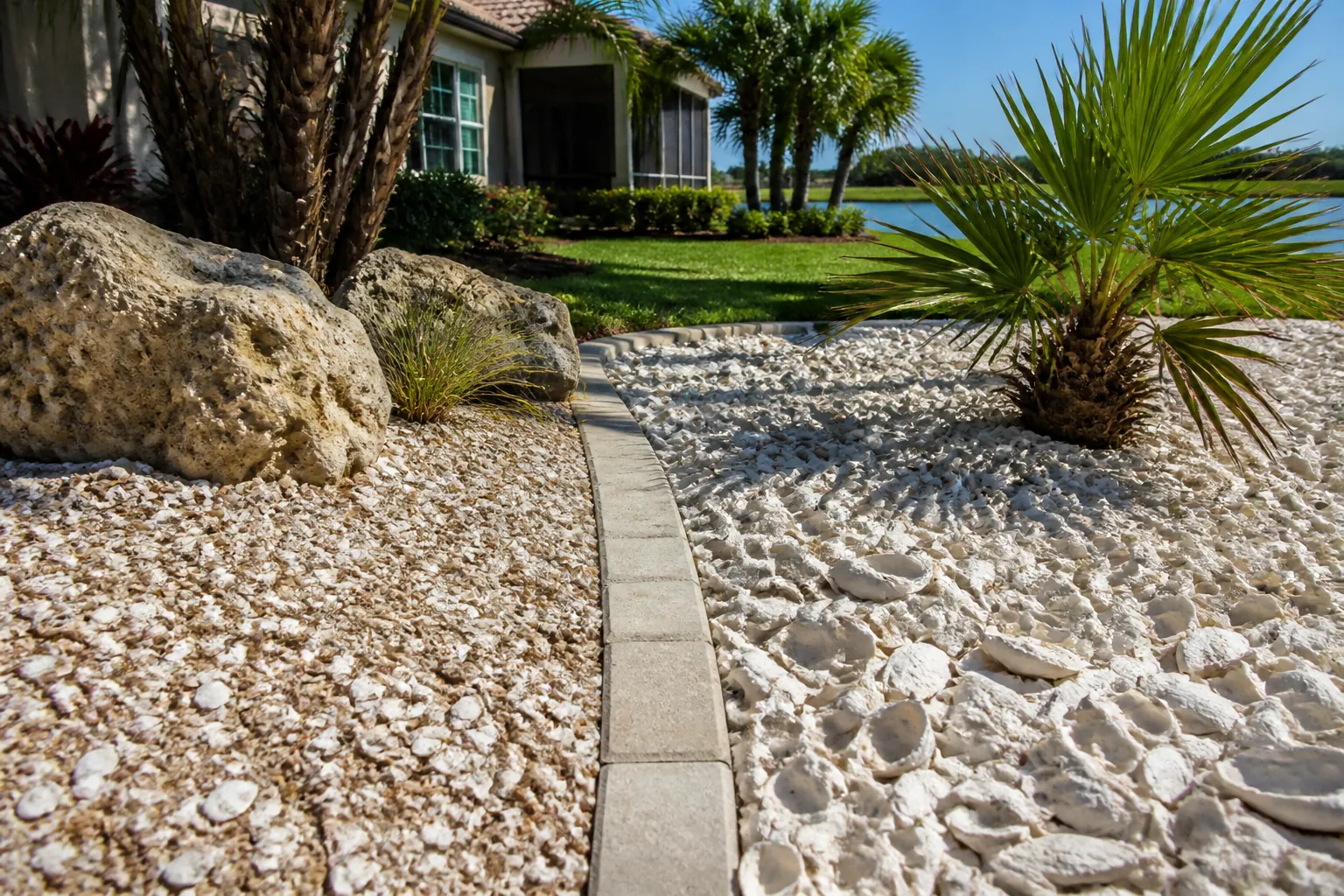
For coquina shell vs oyster shell landscaping, compare the actual materials before deciding. Coquina often has mixed, warm tones; oyster shell may appear lighter and more uniform. Both materials vary with their source and processing methods. Your choice depends on particle size, intended use, and appearance.
In Palm Coast, shell can suit open beds and simple garden borders. Yet a good-looking sample tells only part of the story. Check how the shell feels, how it packs, and where it will go. Then plan the amount and delivery access before you order.
Tropical Yards sells coquina shell and tropical plants, with dump trailer delivery. This guide helps you compare materials and plan your own project. It does not assume that oyster shell is part of the available stock.
How does coquina shell vs oyster shell landscaping compare?
The main differences involve appearance, particle shape, and the supplied material blend. Coquina may contain assorted shell fragments along with finer particles. Oyster shell products may contain crushed fragments or larger, curved shells. Product names alone cannot establish either material's suitability for your particular landscape project. Compare coquina shell material options and coquina shell delivery planning when planning this step.
Coquina can give a bed a soft, beach-like look. Its mix of shades may blend well with nearby soil and stone. Some blends look fairly fine from a distance. Others have larger shell pieces that stand out up close.
Oyster shell can make a brighter contrast with green leaves. Larger pieces may create a bold, rough surface. Crushed oyster shell can look quite different from whole or partly broken shells. Ask what the product name means before comparing two quotes.
Neither name sets a fixed color, size, or finish. Rain, dust, and sunlight can change how a sample looks. Look at the material outdoors when possible. A damp sample may look darker than the same shell once dry.
| What to compare | Coquina shell | Oyster shell |
|---|---|---|
| Overall look | Often mixed shades with a softer visual blend. | May look pale, bold, or more uniform. |
| Piece shape | May include varied fragments and fine particles. | May include crushed pieces or curved shell sections. |
| Feel underfoot | Depends on size, edges, and the amount of fines. | Depends on crushing, edges, and remaining shell cups. |
| Best buying check | View the current blend and ask about its intended use. | Confirm the grade rather than judging by the name. |
Treat this comparison as general guidance rather than a product specification. The material currently available matters more than its general category. When materials appear similar, examine their edges and particle sizes. These differences can influence which locations suit the material and your intended use.
Which shell fits beds, borders, and walking areas?
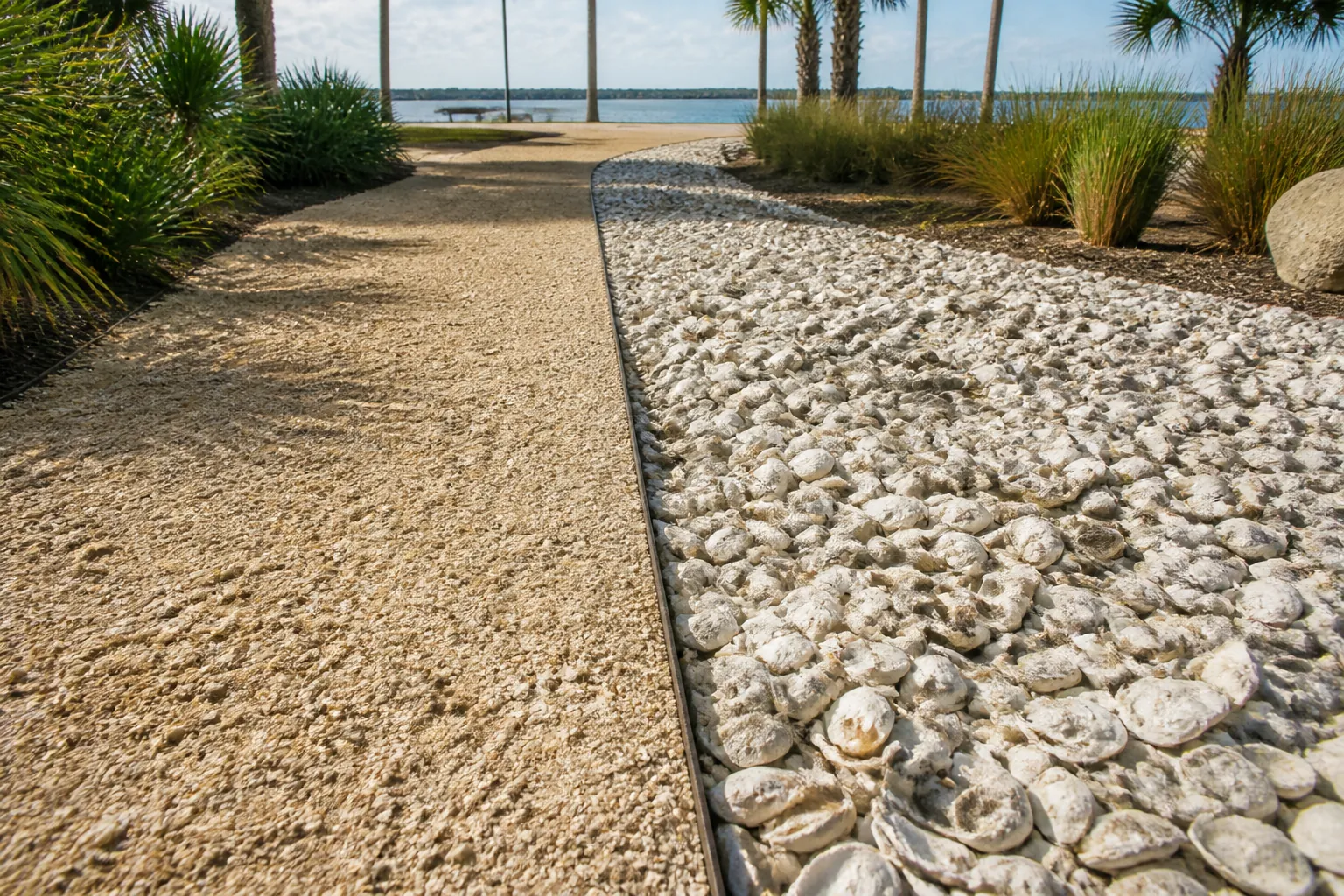
Choose shell according to the activities planned for the space. Decorative beds have different requirements from frequently used pedestrian paths. Rough fragments may suit visible borders while creating an uncomfortable walking surface. Before choosing a walking material, assess its texture, supporting base, edging, and expected footwear. Compare coquina shell material options and coquina shell delivery planning when planning this step.
For a front bed, start with the view from the street. Fine detail may disappear at that distance. A mixed coquina surface can provide a calm backdrop for bold leaves. A brighter shell may draw more attention to the ground itself.
Near a patio, think about where loose pieces might travel. Foot traffic can move shell onto nearby paving. Lawn tools can scatter loose pieces as well. Keep shell away from areas where thrown debris could cause harm.
Path construction requires more assessment than a decorative garden bed. Loose shell may shift beneath footwear, wheels, or mobility aids. Larger fragments can create an uneven surface that affects movement. Never assume shell provides a suitable accessible route without properly assessing the proposed surface.
- Choose a display bed when appearance matters more than frequent foot traffic.
- Check shell edges before using the material near places where children play.
- Keep loose shell clear of pools, door tracks, and nearby lawn mowing routes.
- Assess path firmness and evenness before relying on shell for daily access.
- Use suitable edging where shell needs a clear boundary beside grass or paving.
Pets add another reason to inspect a sample closely. Some shell pieces have sharp edges or points. A decorative surface is not automatically a good pet surface. Consider a different material where pets dig, run, or spend much of their time.
Think about future work in the bed, too. Shell can be awkward to separate from fallen leaves and soil. If you often divide or move plants, leave room to work. A smaller shell area may be easier to manage yourself.
What should you check before placing shell near plants?
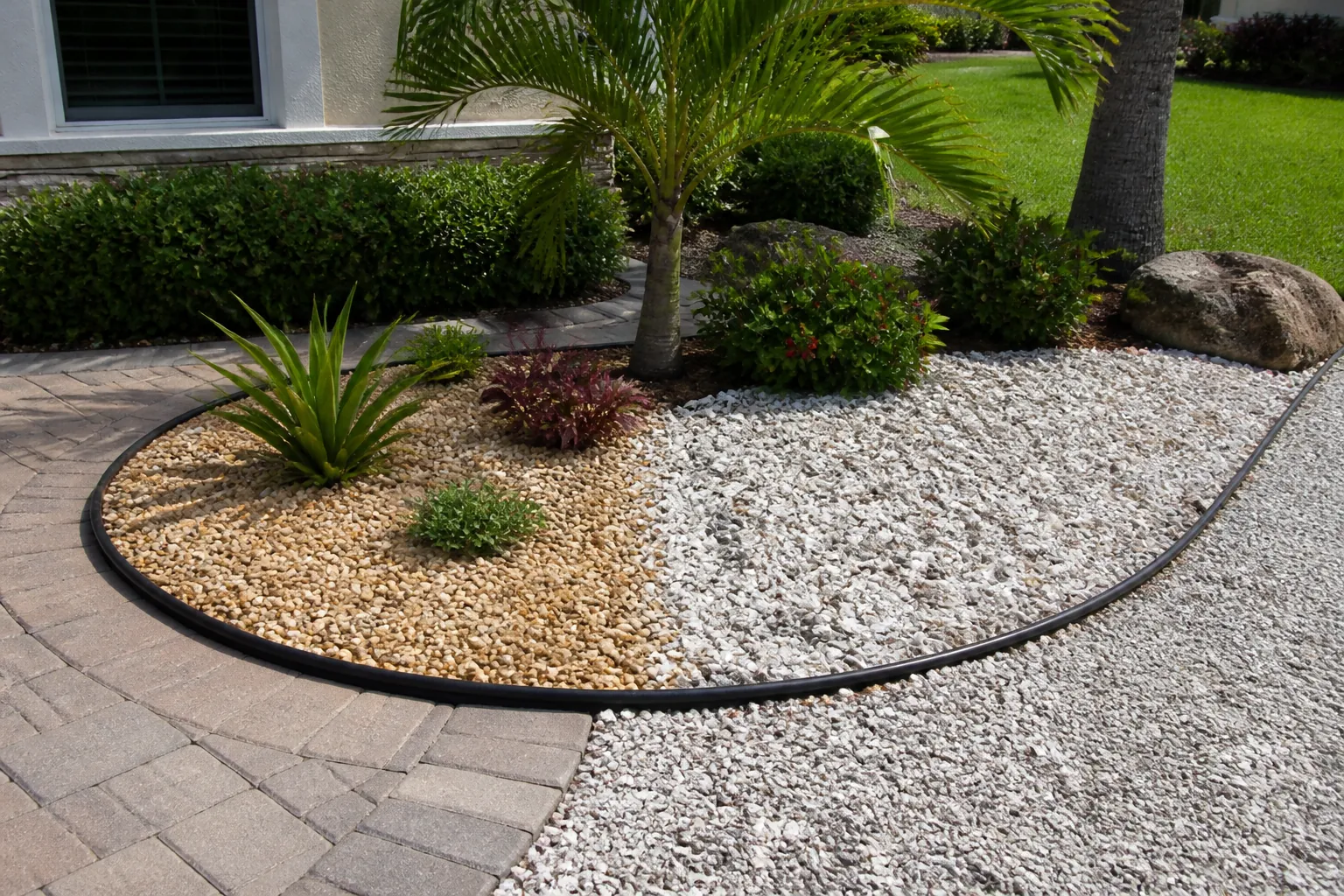
Match your shell selection to plant requirements and existing site conditions. Shell provides neither plant nutrition nor a solution for unsuitable soil. Maintain clearance around trunks and stems when spreading the material. For plants requiring acidic conditions, assess their needs and your soil before selecting shell cover. Compare coquina shell material options and coquina shell delivery planning when planning this step.
Shell contains calcium carbonate, which can influence soil chemistry over time. The extent of this influence depends on the material and growing conditions. Tropical plants differ in their requirements, so avoid assuming a uniform response. Consider soil testing before selecting shell coverage for a substantial planting area. See UF/IFAS soil pH guidance for the soil-testing context.
Observe water movement throughout the planting area after rainfall. Shell cannot resolve standing water caused by unsuitable grading or compacted soil. Fine particles may behave differently from larger shell fragments. Assess drainage throughout the bed rather than relying on the surface appearance alone.
Leave a clear space around each plant's base. Do not bank shell against palm trunks or woody stems. Keep the point where roots meet the stem visible. This also makes it easier to check the plant during routine care.
Plant size matters as much as the look of the shell. A small plant may spread far beyond its nursery pot. Allow room for its mature width and your own access. Avoid packing plants tightly just to fill a new bed.
Tropical Yards sells palm trees, flowering plants, privacy plants, and other tropical plants. Each plant has its own light, water, and space needs. Choose plants for the growing conditions first. Then decide how coquina shell will fit around them.
If you plan to dig, check for buried utility lines first. Follow the proper utility marking process before digging or setting edging. Also check for shallow irrigation lines and private wiring. Public utility marking may not identify every private line on your property.
How do you compare samples and calculate your order?
Compare current samples, then measure the area you actually want covered. Ask how the shell is sold and what the load contains. Set a depth suited to the product and use. Calculate volume from those measurements, rather than ordering from a photo or a rough guess. Compare coquina shell material options and coquina shell delivery planning when planning this step.
A sample helps establish color, though several handfuls provide a fuller comparison. Examine the range of particle sizes within the material blend. Confirm that the sample represents the supplier's currently available stock. Material from a different source or batch may vary in appearance.
Ask about fines, which are the smallest particles in the mix. Fines can change how a surface settles and feels. Do not assume that more or fewer fines is always better. The right blend depends on the use you have in mind.
Divide each planting bed into measurable shapes, such as rectangles or triangles. Combine their areas to calculate the total square footage. Subtract substantial sections that will remain outside the shell coverage. For curved boundaries, several smaller measurements usually provide a better estimate.
To find cubic yards, multiply square feet by depth in inches. Divide that result by 324. For example, 180 square feet at two inches requires about 1.11 cubic yards. That example explains the math; it does not set your project's proper depth.
- Measure the actual bed instead of using the width of your whole yard.
- Ask which unit the supplier uses before comparing quantities from different sellers.
- Confirm the shell grade and whether the sample matches the current stock.
- Discuss the intended use before settling on a depth for your project.
- Allow for existing shell when deciding how much new material you need.
When purchasing shell by weight, request guidance on converting your calculated volume. Material weight varies according to the blend and its moisture content. General online conversion figures may not represent the product being supplied. Use the supplier's material information to refine your order quantity.
For an old bed, inspect what is already underneath. Soil, leaves, and mixed gravel can affect the finished result. Adding more shell may raise the surface beyond nearby edging. Plan the final height before deciding how much to buy.
How should you prepare for dump trailer delivery?
Identify a safe unloading location before scheduling your material coquina shell delivery planning. Dump trailer access requires assessment beyond checking for a clear curb. The driver must evaluate the approach, ground conditions, overhead clearance, and unloading position. Tropical Yards delivers plants and coquina shell by dump trailer. Its delivery area extends from St. Augustine to Daytona Beach.
For a Palm Coast order, describe the site when you call. Mention gates, narrow turns, slopes, and low branches. Photos may help explain the approach if the supplier requests them. Do not assume a trailer can reach a backyard or side bed.
Choose a spot that leaves room for the delivered pile. Keep doors, parked cars, and needed walkways clear. A load can spread as it leaves the trailer. The final unloading location depends on safe access and the driver's assessment.
Ground conditions require particular attention following periods of heavy rainfall. Soft soil may provide insufficient support for safe delivery equipment access. Paving, driveways, and underground systems require consideration during access planning. Identify septic areas and other known restrictions when discussing delivery with the supplier.
- Measure gate openings and note tight turns along the proposed delivery route.
- Point out overhead wires, low limbs, and roof edges near the unloading spot.
- Keep children, pets, and bystanders away from the trailer during unloading.
- Discuss soft ground, steep slopes, and known underground systems before delivery day.
- Plan how you will move the shell from the pile to the bed.
Dump trailer delivery excludes spreading the shell throughout your property. Tropical Yards supplies materials without providing installation or bed preparation services. Arrange suitable tools and helpers for your own preparation and spreading work. Material delivery and your subsequent DIY work may require separate access plans.
If you also order plants, discuss where they can be placed safely. Keep them clear of the shell unloading area. Follow their care needs while they wait for planting. Avoid leaving small pots where trailer movement or falling material could damage them.
How do you use coquina shell in a DIY project?
Prepare the bed, set its boundaries, and spread shell evenly. Work in small sections so you can check the depth. Keep shell away from plant bases and drains. Wear gloves, eye protection, and sturdy shoes when handling rough material, and use safe lifting habits throughout the project. Compare coquina shell material options and coquina shell delivery planning when planning this step.
Start by marking the area you plan to cover. Check the edge against nearby paths and existing plants. Resolve weeds and unwanted growth before adding shell. Shell alone will not stop all weeds from growing in the bed.
Landscape fabric remains optional rather than essential for every shell project. Its presence can complicate future digging and changes to existing plants. Weeds may still develop in organic debris accumulating above the fabric. Consider future planting plans and maintenance needs before selecting a barrier.
Set edging where you need to contain the material. Keep the finished shell below places where it could spill onto paving. Avoid blocking drainage outlets or covering access lids. Leave room to reach irrigation parts for future checks.
Move manageable amounts with a wheelbarrow or suitable cart. Heavy loads can be hard to control on slopes. Use a rake to spread the shell without striking plant stems. Check several spots instead of judging depth from the edges alone.
After rain, look for areas where material has shifted or settled. Adjust thin spots without piling shell against plants. Pick out leaves before they break down into the surface. This helps keep the bed looking distinct from the soil below.
Over time, review the bed before adding another layer. More material is not always the right fix. Check height, plant clearance, and drainage first. A careful top-up can be easier than correcting a bed that has become too deep.
Frequently asked questions
Is coquina shell always better than oyster shell?
No. The better choice depends on the actual blend and its use. Compare size, edges, color, and fines before buying. Coquina may suit a softer, mixed look. Oyster shell may suit a brighter look, but inspect the specific product rather than relying on the name.
Can I walk barefoot on shell?
Do not assume shell is comfortable or safe for bare feet. Broken pieces may have sharp edges. Size and processing can change the feel, but a soft-looking surface can still be rough. Choose a surface intended for barefoot use around pools and similar spaces.
Will shell stop weeds in my garden bed?
Shell can cover bare soil, but weeds can still appear. Seeds may sprout in soil or debris within the shell. Prepare the bed first and remove weeds as needed. Avoid treating shell as a substitute for checking the bed and caring for your plants.
Does Tropical Yards spread or install the shell?
No. Tropical Yards sells coquina shell and tropical plants and offers dump trailer delivery. It does not install, design, or maintain yards. Plan to prepare and spread the material yourself. Ask about delivery access and unloading needs before you place your order.
Can I order tropical plants with coquina shell?
Tropical Yards sells both coquina shell and tropical plants. Call to ask about current stock and delivery options for your order. Plant choices include palm trees, flowering plants, privacy plants, and other tropical plants. Confirm availability rather than planning around a specific plant without checking first.
Ready to compare coquina shell for your Palm Coast project? Call Tropical Yards at 772-267-1611 to discuss current material, your measured area, and dump trailer access. Have your intended use and delivery details ready for the call.
Sources And Further Reading
Call 772-267-1611 to talk through next steps.