Coquina shell vs pavers in Florida: a practical buyer’s guide
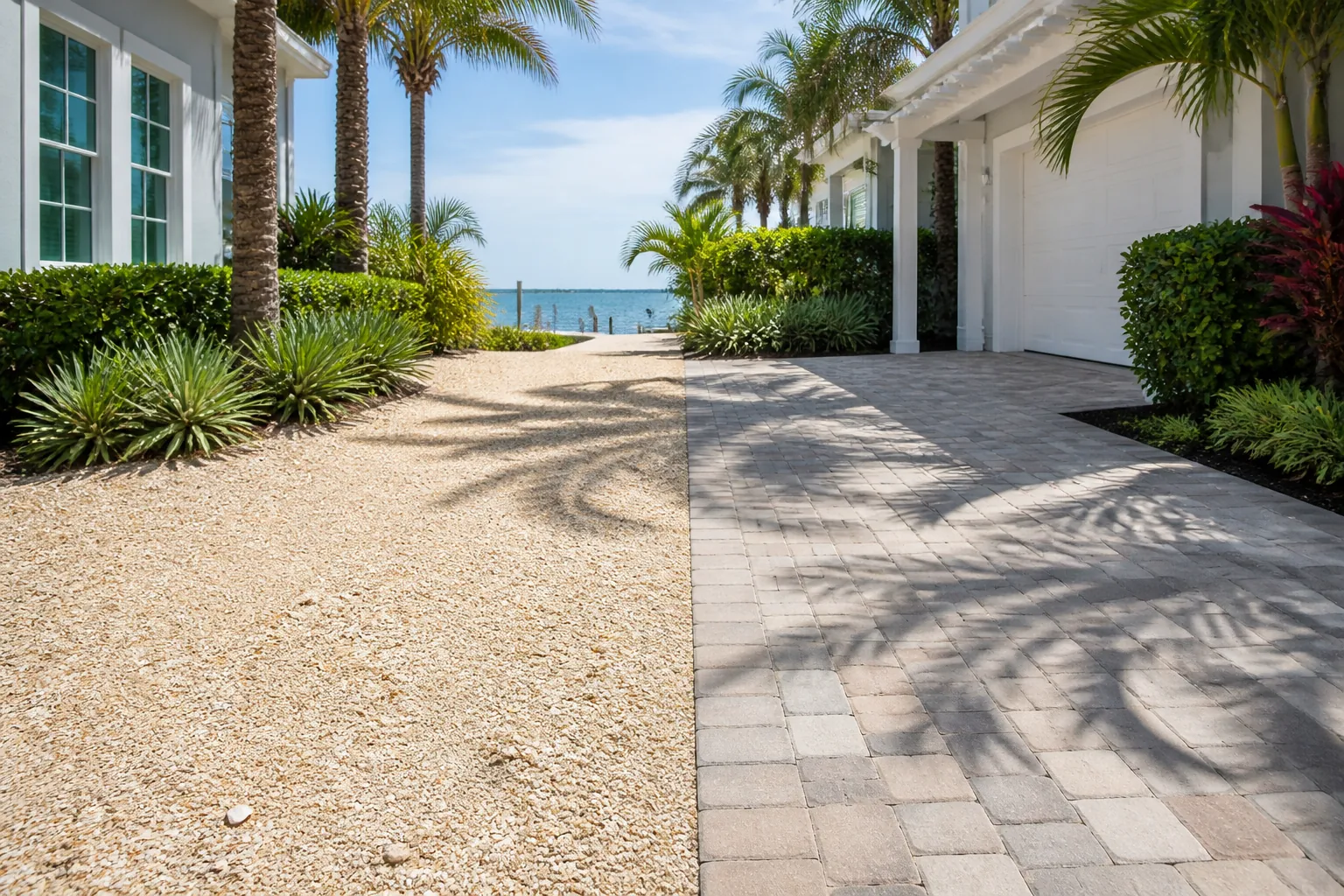
Choosing between coquina shell and pavers starts with how you want to use the space. A garden path, a planting-bed border, and a patio for dining furniture do not ask the same things of a surface. In Florida, rain, sandy soil, tree roots, and frequent outdoor use make those differences especially important.
Coquina shell creates a loose, textured surface with a coastal appearance. Pavers create a more defined walking or gathering surface when supported by an appropriate base. Neither choice solves every drainage or access problem simply by being placed on the ground.
This guide to coquina shell vs pavers in Florida focuses on choosing materials, planning a DIY project, and preparing an order. Tropical Yards supplies coquina shell and tropical plants, with dump trailer delivery from St. Augustine to Daytona Beach. Tropical Yards does not provide design, installation, or yard maintenance services.
Start With The Job You Need The Surface To Do
Before comparing appearance, decide whether the area will primarily support walking, sitting, planting-bed coverage, or occasional utility access. Then consider who will use it and what will move across it.
Loose shell can suit informal landscape areas and garden routes where a textured surface is welcome. Pavers are generally better suited to spaces that need a stable surface for chairs, wheeled equipment, or repeated foot traffic. That advantage depends on proper construction and the particular paver chosen.
- For a decorative area beside tropical plants, consider whether shell’s texture and light color complement the planting.
- For an outdoor dining area, prioritize a surface that keeps chair legs and table feet stable.
- For a frequently used route, think about footwear, walking comfort, and how easily material could migrate.
- For wheelchair or walker access, evaluate firmness, stability, slip resistance, transitions, and applicable accessibility requirements rather than appearance alone.
You can also use different materials in separate areas. A paved primary route and a shell-covered planting area can serve distinct purposes without forcing one material to handle everything.
How Coquina Shell And Pavers Differ Underfoot
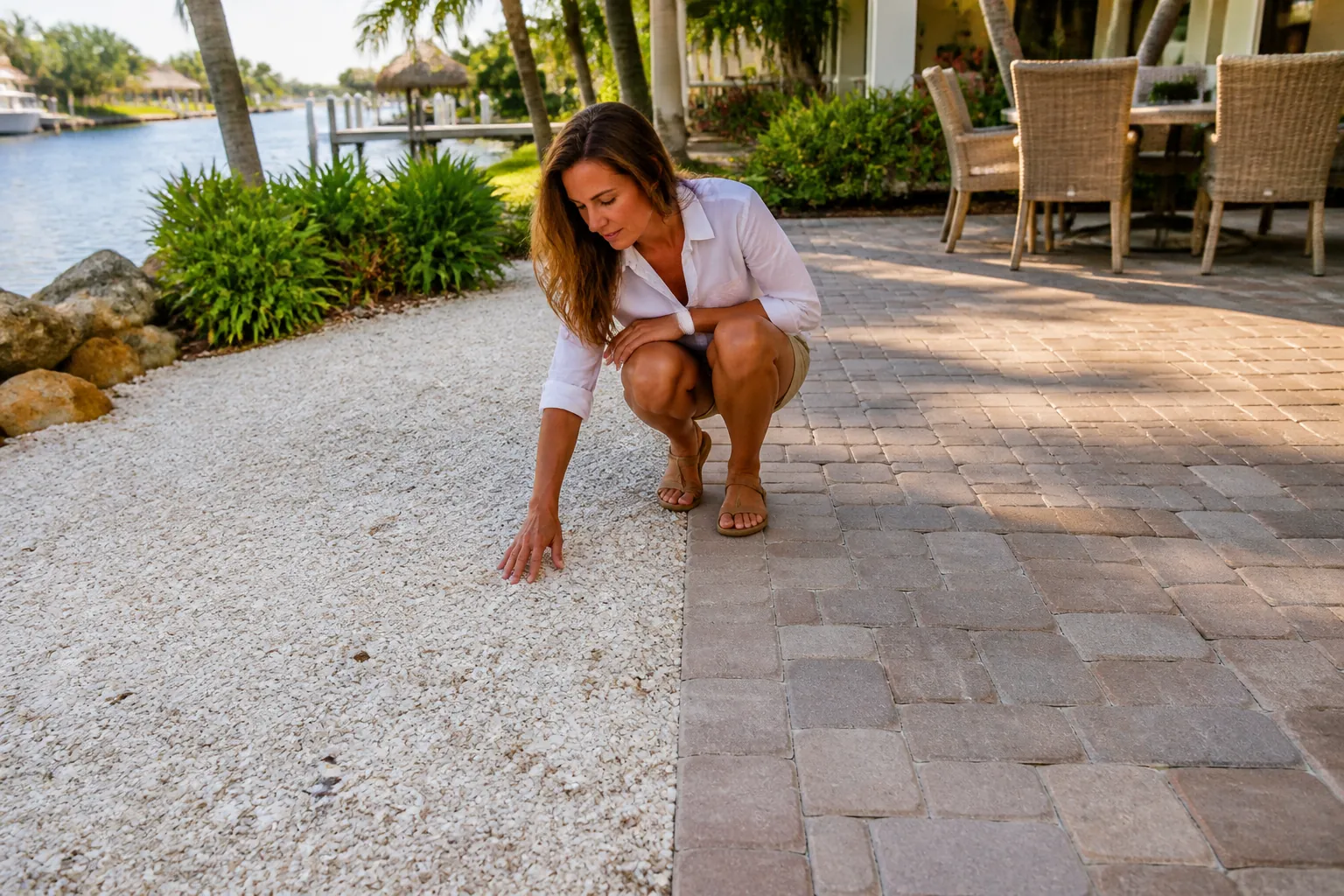
Coquina shell is a bulk landscape material rather than a set of uniform units. Ask what the supplier’s current material looks like, including its particle sizes, shell fragments, and finer components. Those characteristics affect texture, settling, and how the finished area feels underfoot.
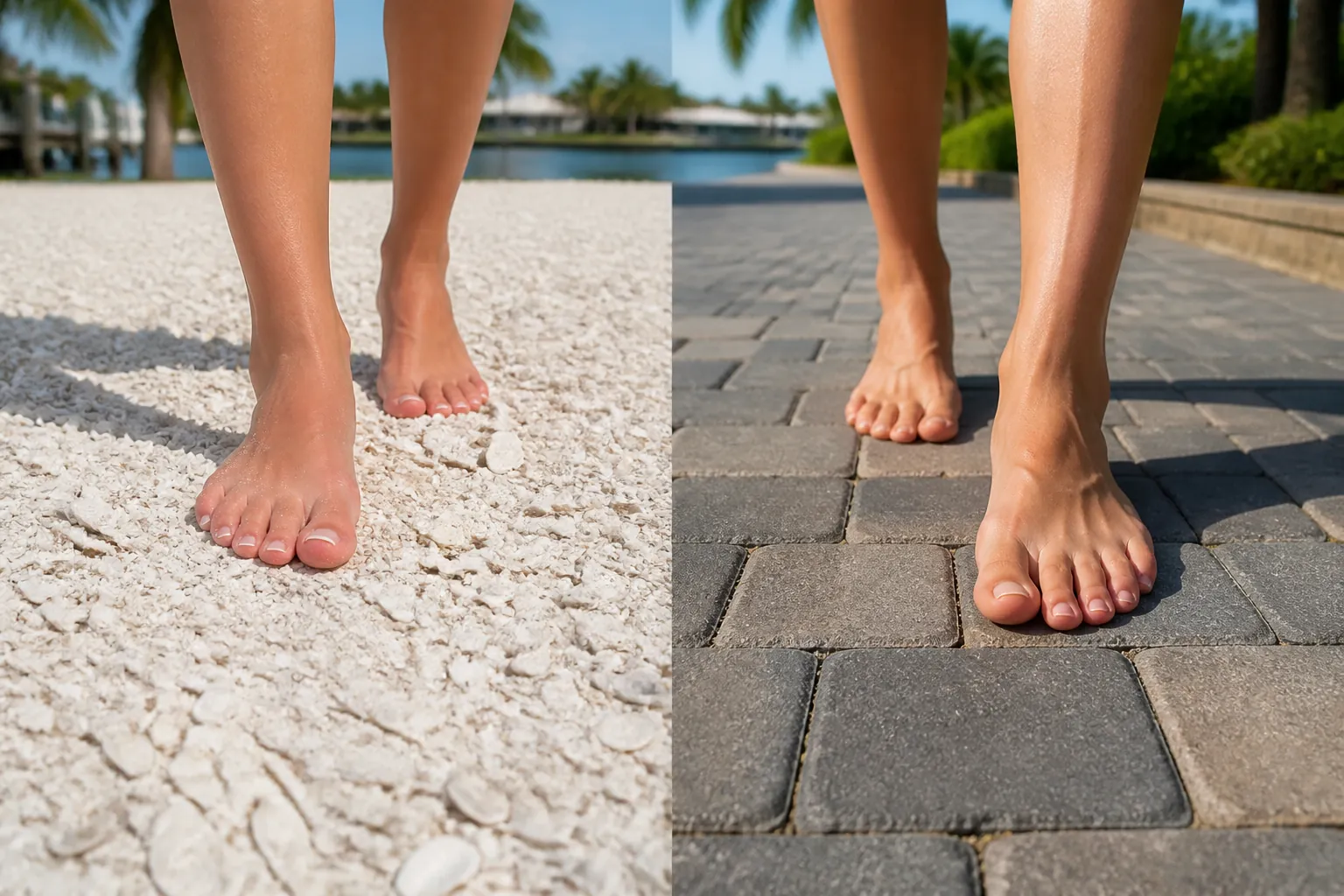
Loose material may move when people turn their feet, drag a hose, or push equipment across it. A shell surface that works well beside a planting bed may not be the right choice for bare feet or small caster wheels. Do not assume every shell product behaves like a smooth, compacted path.
Pavers have individual faces and joints. Their walking feel depends on surface texture, spacing, edge treatment, and how evenly they are laid. Uneven units or settled sections can create trip points, while certain finishes may become slippery under wet conditions.
If practical, examine material samples before ordering. For shell, look beyond color and assess the fragments. For pavers, consider the actual finish rather than judging only a catalog photograph. The right choice should fit your everyday use, not just your preferred visual style.
Drainage Depends On More Than The Surface Material
Florida rainfall makes drainage planning essential. Loose shell may allow water to pass between particles, but that does not mean the entire area will drain well. Soil conditions, compaction, fine material, slope, and the layers underneath all influence where water goes.
Likewise, ordinary pavers are not automatically a permeable pavement system. Permeable systems use suitable units or openings, specified joint materials, and an appropriate base designed to accommodate water. Standard pavers over an unsuitable base can still leave puddles or direct runoff toward unwanted areas.
Inspect the proposed space after rain if possible. Note where water collects, where downspouts discharge, and whether runoff crosses the area from neighboring ground. Covering a persistently wet spot with shell or pavers does not correct the underlying cause.
- Keep planned surface levels from directing water toward doorways or the house foundation.
- Identify irrigation lines, drainage pipes, and utilities before digging or driving edging stakes.
- Avoid blocking existing drainage paths with edging or raised material.
- Check local requirements before changing runoff patterns or creating a larger hardscape area.
For flooding, uncertain grading, or complex runoff issues, seek qualified drainage advice before buying materials. Material selection comes after understanding the site.
Match The Appearance To Your Florida Landscape
Coquina shell often fits a relaxed coastal setting. Its irregular texture can soften the transition between planted areas and open ground. Color and composition can vary, so confirm the current product rather than expecting an exact match to an older photograph.
Pavers offer more deliberate geometry. Repeating shapes, borders, and laying patterns can help define patios and formal routes. They also offer a wider range of manufactured colors and finishes, though availability depends on the product source.
Think about contrast with nearby surfaces. A pale shell area may stand out beside dark foliage or a darker driveway. A paver color that looks appealing in isolation may clash with the house exterior. View samples outdoors, where bright sunlight changes how colors appear.
Shell can complement palms, hibiscus, bougainvillea, ferns, and other tropical plants visually, but visual compatibility does not establish horticultural suitability. Plant selection still needs to reflect sunlight, moisture, soil, and available growing space.
Consider Plant Health Before Using Shell Around Beds
Shell contains calcium carbonate and can influence soil chemistry over time, depending on the material and site conditions. That matters when nearby plants prefer acidic soil. Do not treat coquina shell as an interchangeable substitute for every mulch or soil amendment.
A soil test can help you understand the starting conditions. Consider the needs of each plant rather than assuming that all tropical species respond the same way. Palms, hibiscus, bougainvillea, and ferns differ in their requirements, and species within those groups can differ as well.
Keep shell from piling against trunks, stems, or plant crowns. Leave room to inspect the base of each plant and reach irrigation components. Avoid burying an existing root flare or raising the surrounding grade without understanding the consequences.
If you are planting yourself, choose the location and prepare the planting area before adding the surrounding decorative material. Water according to the plant’s needs and check moisture in the root zone rather than judging only the surface appearance. Tropical Yards sells tropical plants; planting and ongoing care remain the buyer’s responsibility.
What To Expect From DIY Preparation
Both materials require preparation, but they involve different tasks. Shell projects usually center on defining the area, preparing the ground, selecting containment, and distributing bulk material. Paver projects also require careful attention to base construction, bedding, laying patterns, joints, and edge restraint.
For either option, start with accurate measurements and a review of site conditions. Identify roots and buried services before excavation. Do not cut major tree roots or compact heavily within a tree’s root zone without appropriate guidance.
With shell, decide what the area needs to accomplish before choosing the preparation method or depth. A decorative bed surface and a frequently walked path may need different approaches. Ask about the actual material being supplied, then choose a method appropriate to that material and the site.
With pavers, follow the manufacturer’s instructions and relevant local guidance. Base requirements vary with soil, expected loads, and pavement type. A generic online diagram may not fit your project, particularly for vehicle use or permeable paving.
Landscape fabric is another decision that should not be automatic. It may separate materials in some applications, but it does not eliminate weeds and can complicate later planting. Match any separator to the project rather than using it as a substitute for sound preparation.
Use Edging And Transitions To Control Movement
Loose shell benefits from a clearly defined boundary where it meets lawn, walkways, or other landscape materials. Without suitable containment, fragments can spread into grass, onto adjacent paving, or toward drains. Edging should suit the site and remain safe for people using the area.
Consider mowing as you plan the boundary. Shell scattered into turf can become a problem around mowing equipment. A distinct transition helps you see where the lawn ends and makes it easier to keep material in its intended area.
Pavers also need edge restraint appropriate to the system. The border helps hold units in position, but it must work with the base and finished elevation. Decorative edging alone is not necessarily a substitute for structural restraint.
- Plan entrances so shoes do not immediately carry shell onto indoor flooring.
- Keep transitions easy to see and avoid abrupt changes in height along walking routes.
- Allow access to irrigation valves, utility covers, and drainage features.
- Check whether edging will interfere with water moving through or out of the area.
Where shell meets pavers, treat the junction as part of the project rather than an afterthought. A clean boundary supports both appearance and practical use.
Measure Coquina Shell Before Placing Your Order
Bulk material ordering starts with area and intended depth. Measure rectangular sections by multiplying length by width. Break irregular spaces into simpler shapes, calculate each section, and add them together. Exclude areas you will leave uncovered.
To estimate volume in cubic yards, multiply area in square feet by depth in feet, then divide by 27. Convert inches to feet before calculating. This produces a geometric estimate, not a promise about finished coverage.
For example, an area measuring 12 feet by 20 feet contains 240 square feet. If your chosen plan calls for a 2-inch layer, the calculation is 240 × (2 ÷ 12) ÷ 27, or approximately 1.48 cubic yards. The 2-inch depth is only an arithmetic example, not a recommendation for every shell application.
Uneven ground, settling, and the material’s composition can affect the quantity you need. Explain the intended use when discussing your order. Confirm the selling unit, current material characteristics, and available delivery quantity before relying on your estimate.
For product and ordering information, visit the Tropical Yards coquina shell page. Keep your dimensions and intended application handy so the purchasing conversation stays focused on the material you need.
Plan Dump Trailer Delivery Before Project Day
A bulk order needs a practical unloading plan. Tropical Yards offers dump trailer delivery of plants and coquina shell from St. Augustine to Daytona Beach. Confirm your address, access conditions, and unloading arrangements before scheduling.
Delivery is not installation. Plan who will move the shell from the unloading location to the project area, what equipment they will use, and how long that work may take. A nearby unloading point can reduce handling, but access and safe unloading conditions come first.
- Describe gates, narrow driveways, sharp turns, overhead branches, and wires when discussing access.
- Identify a firm, suitable unloading location and disclose slopes, soft ground, or other concerns.
- Keep parked vehicles, household items, and other obstacles out of the agreed access route.
- Ask how much room the trailer needs and whether your proposed unloading point is suitable.
- Discuss how to protect the receiving surface without assuming a tarp or other barrier works for every delivery.
Do not assume material can be unloaded over buried tanks, delicate paving, or underground infrastructure. Explain these conditions ahead of time. If the pile will sit temporarily, keep access to doors, drains, and utility equipment clear.
For plant deliveries, prepare a suitable holding area and a watering plan if you will not plant immediately. Confirm delivery details rather than assuming plants and bulk shell will be handled identically.
Compare Ongoing Care Without Expecting A Care-Free Surface
Shell and pavers both need occasional attention. With shell, you may need to redistribute displaced material, remove windblown debris, and address weeds. Traffic, runoff, and edging performance influence how often those tasks become necessary.
Weeds can grow in debris that collects above a shell layer, even when the ground was prepared carefully. Inspect the area and address unwanted growth using methods appropriate to the surrounding plants. Avoid indiscriminate herbicide use near desirable vegetation.
Paver care may include removing debris, dealing with stains, managing growth in joints, and correcting movement or settlement. Joint materials and cleaning methods should match the specific system. Aggressive cleaning can damage some surfaces or dislodge joint material.
Think about what you are comfortable doing yourself. Neither surface should be chosen on the assumption that it will never need attention. Tropical Yards supplies materials and plants, not cleaning, repairs, trimming, or maintenance plans.
Make The Final Choice And Order With Confidence
Choose coquina shell when an informal, coastal-looking landscape surface fits the intended use and you are comfortable managing loose material. Favor pavers when you need a more stable, defined surface for furniture, frequent walking, or wheeled use, subject to suitable product selection and preparation.
Before buying shell, confirm four essentials: the measured area, the intended application, the material characteristics, and the unloading plan. Resolve drainage or access concerns first so your order supports a workable DIY project.
Tropical Yards provides coquina shell sales, tropical plant sales, and dump trailer delivery of plants and coquina shell from St. Augustine to Daytona Beach. Available plant categories include palm trees, hibiscus, bougainvillea, ferns, and other tropical plants. Contact Tropical Yards to ask about current availability and delivery arrangements.
When you are ready to discuss a coquina shell order, call 772-267-1611. Bring your measurements and a description of the delivery access. You can then make a purchasing decision based on your site, your planned use, and the work you intend to complete yourself.
Call 772-267-1611 to talk through next steps.